
You do not need to risk your life savings to build a profitable enterprise after leaving the corporate world. A simple micro-business provides steady supplemental income while leaving your schedule under your full control.
Older adults account for more than 23% of all new American business owners, according to data from the Ewing Marion Kauffman Foundation. Many begin with little more than decades of workplace experience and a modest initial budget.
You can launch a lucrative retirement venture without spending more than $500 out of pocket. Here are seven low-cost business models you can start immediately.

Why Micro-Businesses Make Sense After 60
Leaving a full-time career often creates an unexpected void in daily structure and social connection. A small service venture fills that space while protecting your hard-earned nest egg.
Traditional startups carry heavy overhead and financial risk that retirees cannot afford to take. By keeping startup expenses under $500, you eliminate the pressure of repaying lenders or draining investment accounts.
Modern platforms and digital communication tools have lowered the cost of commercial entry. You can operate an entire enterprise using a smartphone and your home computer.
“Financial peace isn’t the acquisition of stuff. It’s learning to live on less than you make.”
These smaller operations also allow you to control your workload. You decide how many hours you work each week and which clients you accept.
Self-employment keeps your mind active and leverages professional skills that took decades to refine. It transforms your accumulated wisdom into regular cash flow.

1. Mobile Notary and Loan Signing Agent
A mobile notary travels to homes, hospitals, and offices to verify identities and witness document signings. This flexible service offers consistent demand across every American community.
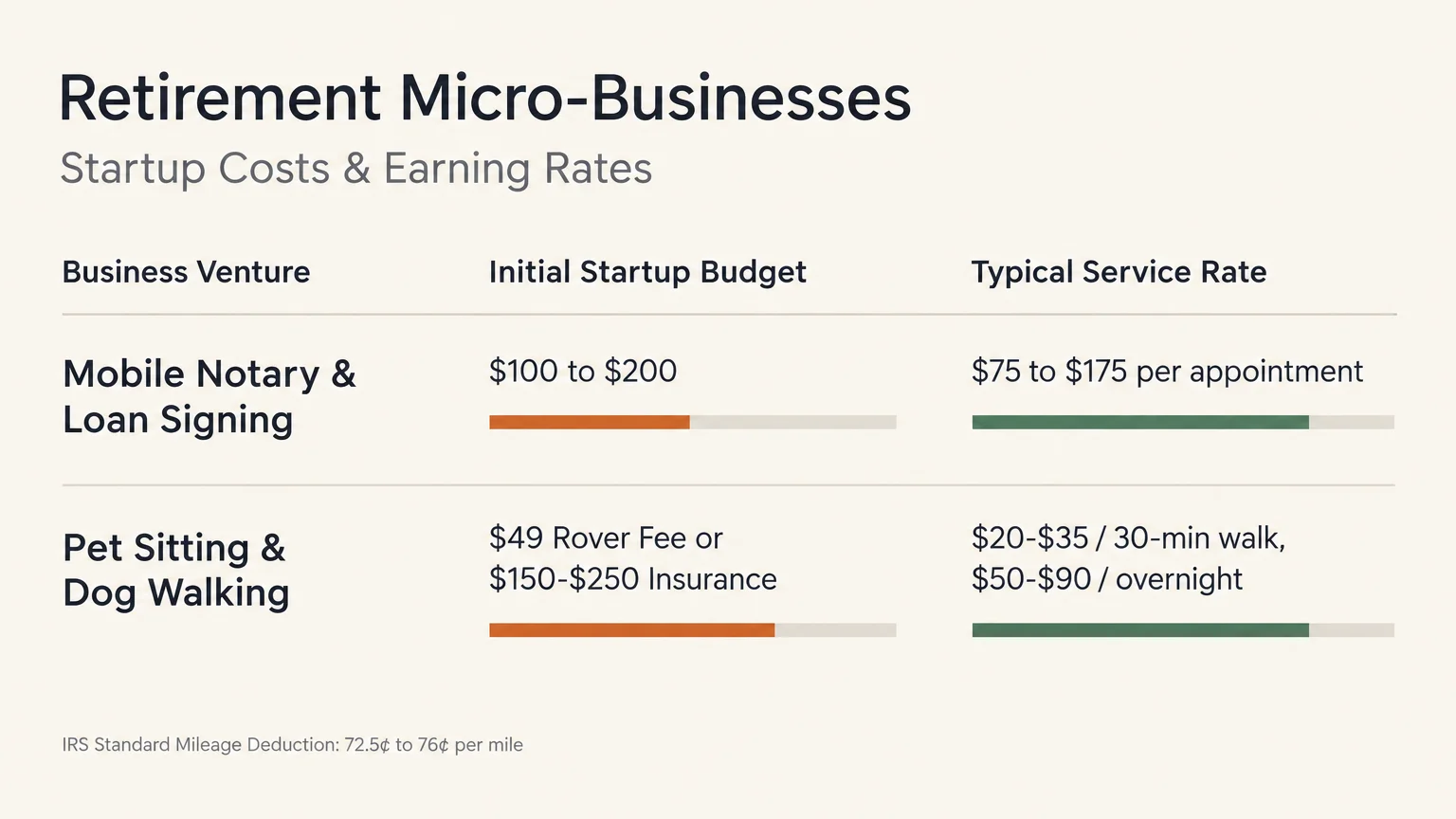
State filing fees and background checks generally range between $20 and $40. Your mandatory surety bond and state-approved notary seal cost an additional $65 to $85.
A durable record-keeping journal and a box of professional pens cost around $25. Your entire basic setup will typically require between $100 and $200.
You can expand into real estate loan signings by taking an inexpensive certification course. Loan signing agents often earn between $75 and $175 per single appointment.
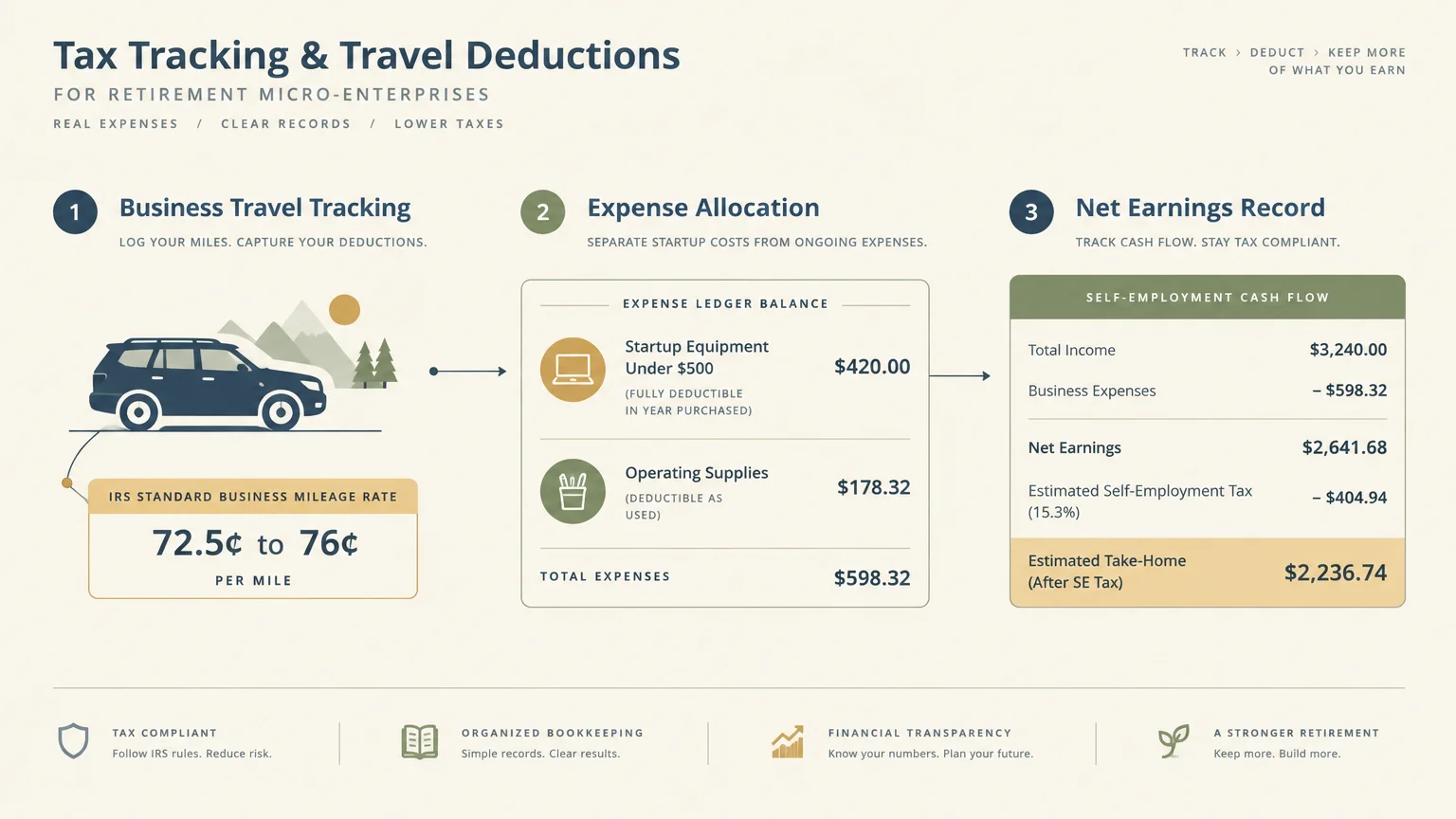
Because you travel to clients, you can track your business travel to claim tax deductions. The Internal Revenue Service sets the standard business mileage rate at 72.5¢ to 76¢ per mile for 2026.
Market your services directly to local elder law attorneys, real estate brokerages, and rehabilitation centers. Word-of-mouth recommendations can quickly fill your weekly calendar.

2. In-Home Pet Sitting and Dog Walking
Pet ownership continues to climb, but busy professionals and travelers frequently need trustworthy caretakers. Active retirees are uniquely positioned to offer reliable, attentive animal care.
You can get started immediately by listing your services on established platforms like Rover. The platform charges a one-time profile review fee of $49 and takes a 20% cut from completed bookings.
If you prefer an independent operation, spend $150 to $250 on annual commercial pet-sitter liability insurance. Print $30 worth of flyers to distribute at veterinary clinics and dog parks.
Dog walkers typically earn between $20 and $35 for a half-hour visit. Overnight in-home pet sitters often charge between $50 and $90 per evening.
This venture requires minimal equipment beyond sturdy walking shoes and spare leashes. It also delivers the health benefits of daily outdoor cardiovascular exercise.
Focus on a tight geographic radius within your immediate neighborhood. Limiting your territory keeps travel times short and maximizes your hourly profit margin.

3. Fractional Consulting and Career Mentorship
You spent decades mastering an industry, whether that was logistics, corporate accounting, school administration, or manufacturing. That institutional knowledge has substantial commercial value to younger professionals and growing firms.
Small companies frequently need specialized strategic advice but cannot afford a full-time executive salary. As a fractional consultant, you sell your insight on an hourly or project basis.
Startup costs for consulting are remarkably low. You only need a professional web domain, basic digital hosting, and a business email account.
A professional domain and a clean website cost between $50 and $180 per year. You can design a clean, functional site using simple site builders in a single weekend.
Update your LinkedIn profile to reflect your independent advisory focus. Reach out to former colleagues and trade associations to announce your availability.
Consultants routinely bill between $75 and $200 per hour depending on industry specialization. Working just ten hours a month can provide substantial supplemental cash.

4. Senior Downsizing and Move Management
Millions of older homeowners want to downsize into smaller residences, condominiums, or active adult communities. However, the emotional and physical burden of sorting decades of belongings can feel overwhelming.
A senior move coordinator guides older adults through the sorting, selling, and packing process. You provide steady organizational direction and compassionate hands-on help.
Your primary initial investment is basic organizational gear. Buy heavy-duty measuring tapes, label printers, colored packing tags, and basic sorting bins for under $120.
Invest roughly $150 in professional liability coverage to protect against accidental property damage during sorting. The total upfront cost easily remains below $300.
Downsizing organizers typically charge between $40 and $75 per hour. You can also coordinate with local estate liquidators and charity donation centers.
Establish relationships with local real estate agents who specialize in senior housing transitions. They frequently refer clients who need help preparing homes for listing.

5. Handcrafted Goods and Niche Digital Products
If you enjoy woodworking, sewing, leatherwork, or digital design, you can monetize your creative hobby. Today’s marketplace allows makers to sell physical goods or downloadable digital files globally.
E-commerce platforms like Etsy make storefront setup extremely accessible. The platform charges a $0.20 listing fee per item and a 6.5% transaction fee upon sale.
If you create physical goods, spend your initial $500 budget on wholesale raw materials and branded packaging. Keep your inventory small to validate customer demand before scaling.
Alternatively, design digital products such as budget spreadsheets, woodworking plans, or event invitations. Digital items require zero physical inventory and can be downloaded indefinitely.
Create free social media accounts to showcase your production techniques and finished projects. High-quality product photos taken with your smartphone provide effective promotional material.
Digital downloads can produce passive recurring revenue while you travel or rest. Handcrafted physical goods let you set custom lead times so work never feels stressful.

6. Garden Coaching and Plant Care Services
New homeowners often want productive vegetable gardens or attractive perennial beds but lack basic horticultural knowledge. If you have spent years gardening, you can teach them how to succeed.
Garden coaching involves visiting a client’s property to evaluate soil quality, sunlight exposure, and drainage. You then build a seasonal planting plan tailored to their goals.
Your upfront costs include a digital soil test kit, pruning shears, and printed client consultation worksheets. These supplies typically cost less than $100.
You can also offer indoor and outdoor plant sitting for vacationing neighbors. Snowbirds and frequent leisure travelers gladly pay reliable caretakers to maintain their landscaping.
Garden consultants generally bill between $40 and $70 per consultation hour. You can charge additional fees for hands-on pruning, bed prep, or container planting.
Distribute business cards at neighborhood nurseries and garden club meetings. Seasonal workshops hosted at local community centers also generate qualified client leads.

7. Personal Concierge and Errand Management
Time-poor households frequently struggle to manage essential daily chores and home appointments. A personal concierge handles routine tasks so working families can reclaim their weekends.
Common tasks include grocery pickups, waiting for home repair technicians, and sorting home deliveries. You might also manage dry cleaning runs and vehicle maintenance appointments.
Startup expenses are minimal because you already own a vehicle and mobile phone. You will need a commercial mileage tracking application and general liability insurance totaling around $200.
Concierge professionals typically charge between $25 and $45 per hour. Some operators bundle their hours into monthly retainers of $250 to $500 per client.
Clients trust mature adults who have established histories of responsibility and punctuality. Your life experience is your most persuasive marketing advantage.
Distribute marketing flyers in nearby affluent subdivisions and local coworking spaces. Busy professionals will happily pay for trusted help that streamlines their households.
Startup Cost and Earnings Comparison
Selecting the right venture requires balancing your personal interests with realistic startup expenses and revenue potential. Review the side-by-side comparison below to evaluate your options.
| Business Idea | Estimated Startup Cost | Typical Hourly Rate | Primary Expense Items |
|---|---|---|---|
| Mobile Notary Public | $100 – $200 | $35 – $75 (or per signing) | State commission, bond, seal, logbook |
| In-Home Pet Care | $50 – $250 | $20 – $35 (per walk/visit) | Background check, insurance, basic gear |
| Fractional Consulting | $50 – $180 | $75 – $200 | Website domain, email hosting, cards |
| Senior Downsizing | $150 – $300 | $40 – $75 | Liability policy, labels, sorting bins |
| E-Commerce & Crafts | $100 – $400 | Varies by product margin | Raw materials, listing fees, packaging |
| Garden Consulting | $75 – $150 | $40 – $70 | Soil testing gear, pruning tools, flyers |
| Personal Concierge | $100 – $220 | $25 – $45 | Mileage app, insurance, marketing materials |
Managing Social Security Earnings Limits and Taxes
Earning independent income requires an understanding of federal tax codes and retirement benefit rules. Failing to prepare for these obligations can lead to unexpected tax bills.
The Internal Revenue Service requires you to file a tax return and pay self-employment tax if net business earnings equal or exceed $400 in a year.
The federal self-employment tax rate is 15.3% on 92.35% of your net profits. This payment covers your mandatory contributions toward Social Security and Medicare.
You can deduct 50% of your total self-employment tax when calculating your Adjusted Gross Income. Keep meticulous records of all business-related expenses to reduce your overall taxable profit.
If you collect retirement benefits before reaching Full Retirement Age (FRA), earnings limits apply. The Social Security Administration updates these thresholds each calendar year.
For 2025, you can earn up to $23,400 before benefit withholding begins. For 2026, that annual limit rises to $24,480.
If you remain under FRA all year, the agency withholds $1 in benefits for every $2 earned above that ceiling. During the calendar year you attain FRA, the limit rises to $65,160 for 2026 ($62,160 in 2025).
Once you reach your official Full Retirement Age, the earnings restriction disappears entirely. You can earn unlimited self-employment revenue without reducing your monthly checks.
Federal employment data published by the Bureau of Labor Statistics highlights that older workers who control their schedules report higher career satisfaction. Knowing the rules preserves that satisfaction.
Costly Mistakes to Avoid
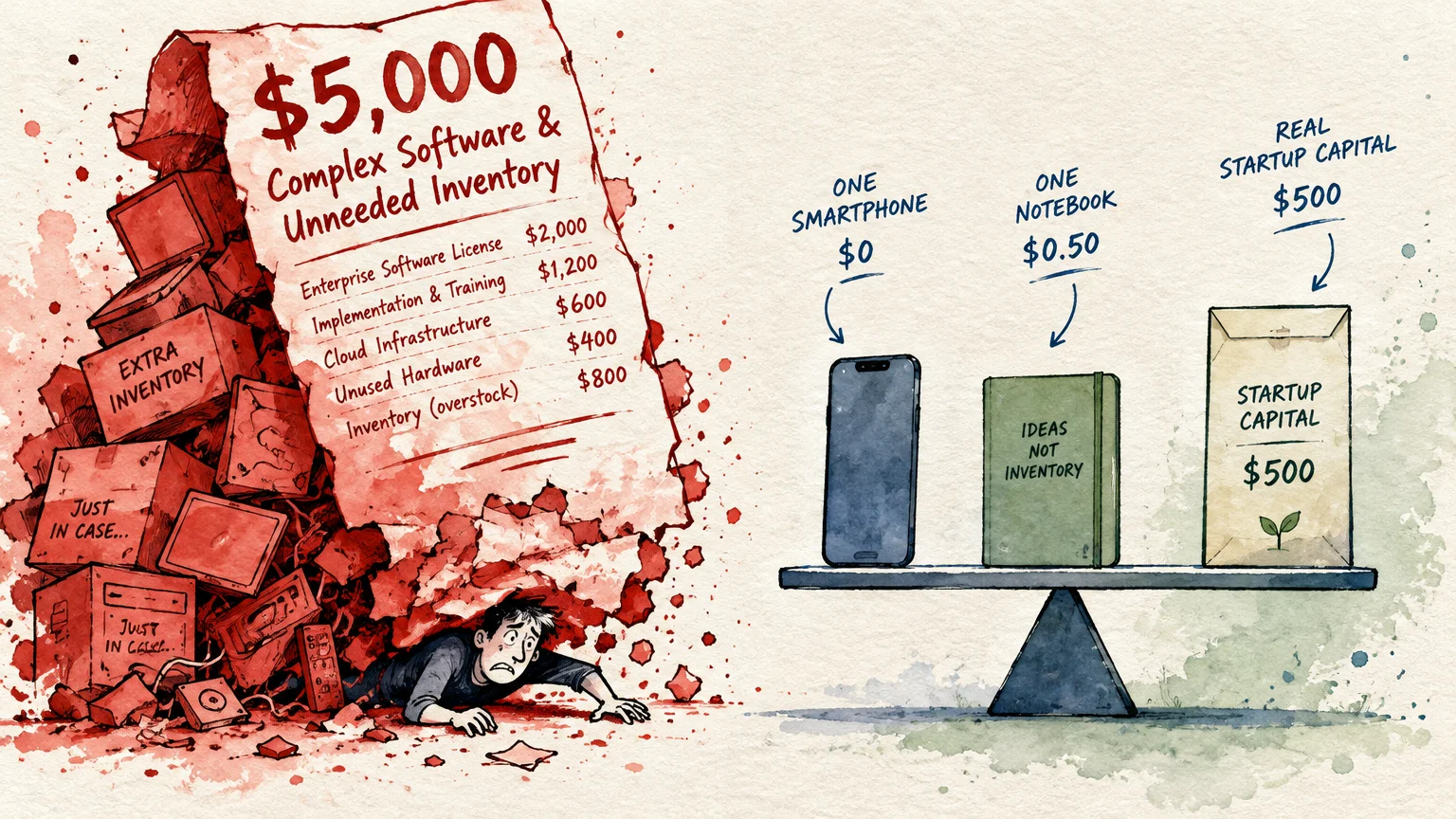
New business owners frequently make administrative errors that consume cash and waste energy. Avoid these four common operational pitfalls when launching your new venture:
- Overspending on branding early: Do not buy expensive logo designs, fancy merchandise, or custom software before generating your first customer revenue.
- Neglecting quarterly estimated taxes: The IRS assesses penalties if you owe more than $1,000 at tax time without making quarterly payments.
- Failing to maintain distinct accounts: Mixing business receipts with household spending complicates accounting and ruins tax deduction records.
- Undercharging out of modesty: Setting prices too low attracts difficult clients and prevents your enterprise from covering basic operating costs.
Open a separate checking account specifically for your venture before taking client payments. Route all business income and operating expenses through this single account.
Set aside roughly 25% to 30% of every dollar earned into a business savings account. This reserve ensures you can cover quarterly tax estimates comfortably.

Don’t DIY These Decisions
Operating a micro-business is straightforward, but certain legal and financial matters require professional expertise. Cutting corners on professional oversight can create significant long-term liabilities.
Consult a Certified Public Accountant (CPA) before launching to review your overall retirement tax picture. Business earnings can push your income into higher tax brackets or trigger higher Medicare Part B premiums.
A licensed commercial insurance broker should evaluate your legal risk. Basic homeowner policies almost never cover claims arising from commercial activities conducted on your property.
If you collect public assistance or veterans benefits, speak with an accredited benefits counselor. Unplanned business income could affect your eligibility for income-restricted programs.
Frequently Asked Questions
Do I need to form an LLC to start a micro-business?
No, you do not need an LLC to begin trading. Operating as a sole proprietor is the simplest, lowest-cost approach for most retirees starting under $500.
You can always form an LLC later as revenue grows. Many micro-business owners simply operate as sole proprietors protected by an inexpensive commercial liability policy.
Will self-employment income increase my Medicare premiums?
It can if your net profit increases your modified adjusted gross income beyond specific federal brackets. Medicare uses income figures from two years prior to determine your monthly Part B and Part D surcharges.
Monitor your annual business profits carefully alongside retirement distributions. Working with a CPA helps prevent your business profits from triggering unexpected surcharges.
Can I deduct a home office if I work part-time?
Yes, provided you use that section of your home exclusively and regularly for business administration. The IRS offers a simplified home office deduction that requires minimal record-keeping.
The simplified method allows a standard deduction of $5 per square foot up to 300 square feet. This deduction directly lowers your net self-employment earnings.
How do I market my business without spending money?
Focus on local neighborhood networks and personal connections. Join free community groups on platforms like Nextdoor and post helpful, non-promotional advice.
Speak directly with local business owners who serve your target audience but do not compete with you. Mutually beneficial referral relationships yield steady clients at zero advertising cost.
Taking Action on Your Retirement Venture
Starting a retirement side business does not require extensive capital or complex commercial planning. Choose an idea that matches your skills, secure your basic supplies, and tell your local network that you are open for business.
Financial outcomes vary based on individual income, credit history, and circumstances. This article provides general guidance only. Consult a qualified financial planner, CPA, or consumer attorney for advice specific to your situation.
Last updated: February 2026. Rates, benefit amounts, and tax rules change—always verify current details at official sources.