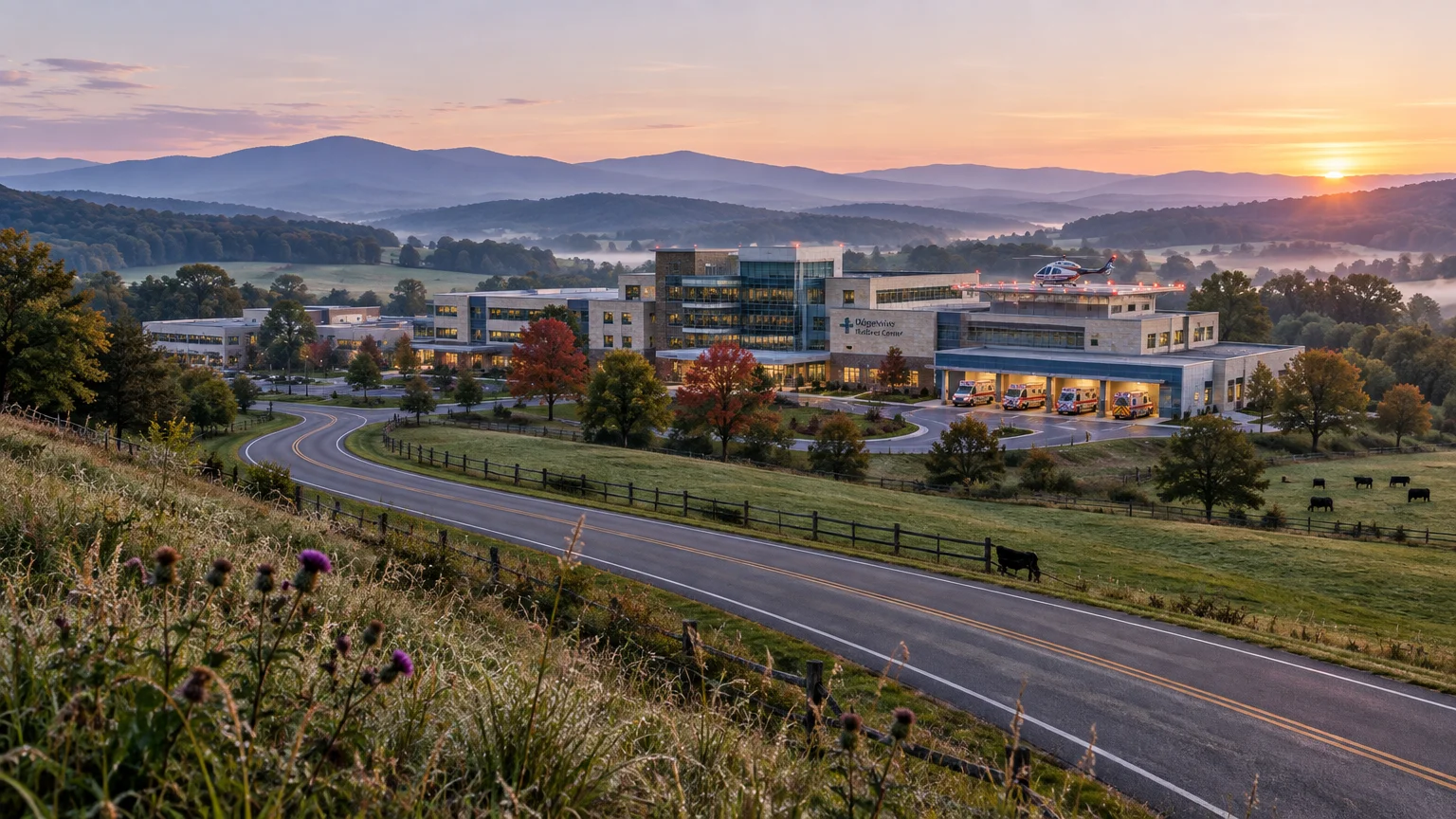
Trading crowded suburbs for rolling pastures should not force you to sacrifice world-class medical treatment. While hundreds of small towns face critical healthcare cutbacks, select rural communities provide exceptional clinical care.
Between 2010 and 2026, over 150 rural hospitals shut down or halted inpatient services nationwide. Yet several unique counties defy this trend by pairing scenic tranquility with elite academic medical centers and award-winning community clinics.
If you plan to retire in the country, choosing one of these high-performing healthcare havens protects your physical wellbeing and preserves your long-term retirement budget.

The Hidden Financial Stake of Rural Healthcare Access
Moving beyond city limits reshapes your household budget in unexpected ways. Lower property taxes and cheaper housing quickly lose their appeal if you must drive two hours for chemotherapy or routine cardiology consultations.
Distance creates hidden expenses that drain fixed retirement incomes. Fuel, hotel stays, and lost workdays for family caregivers transform standard outpatient procedures into substantial financial burdens.
Emergency logistics carry even higher price tags in isolated regions. If a local clinic cannot stabilize a critical event, emergency medical teams must deploy air ambulances.
Even with federal consumer safeguards, ground ambulance rides often result in surprise out-of-pocket bills. The Consumer Financial Protection Bureau documents that unexpected medical debt remains a leading driver of credit distress among older adults.
According to the Chartis Center for Rural Health, over 40% of rural hospitals operate at an ongoing financial loss. Choosing a county with a financially solvent, high-performing medical anchor shields you from sudden facility closures.
How We Evaluated These Medical Outliers
Finding exceptional healthcare access rural regions requires looking past simple bed counts. We evaluated facilities based on federal quality metrics, clinical breadth, and regional stability.
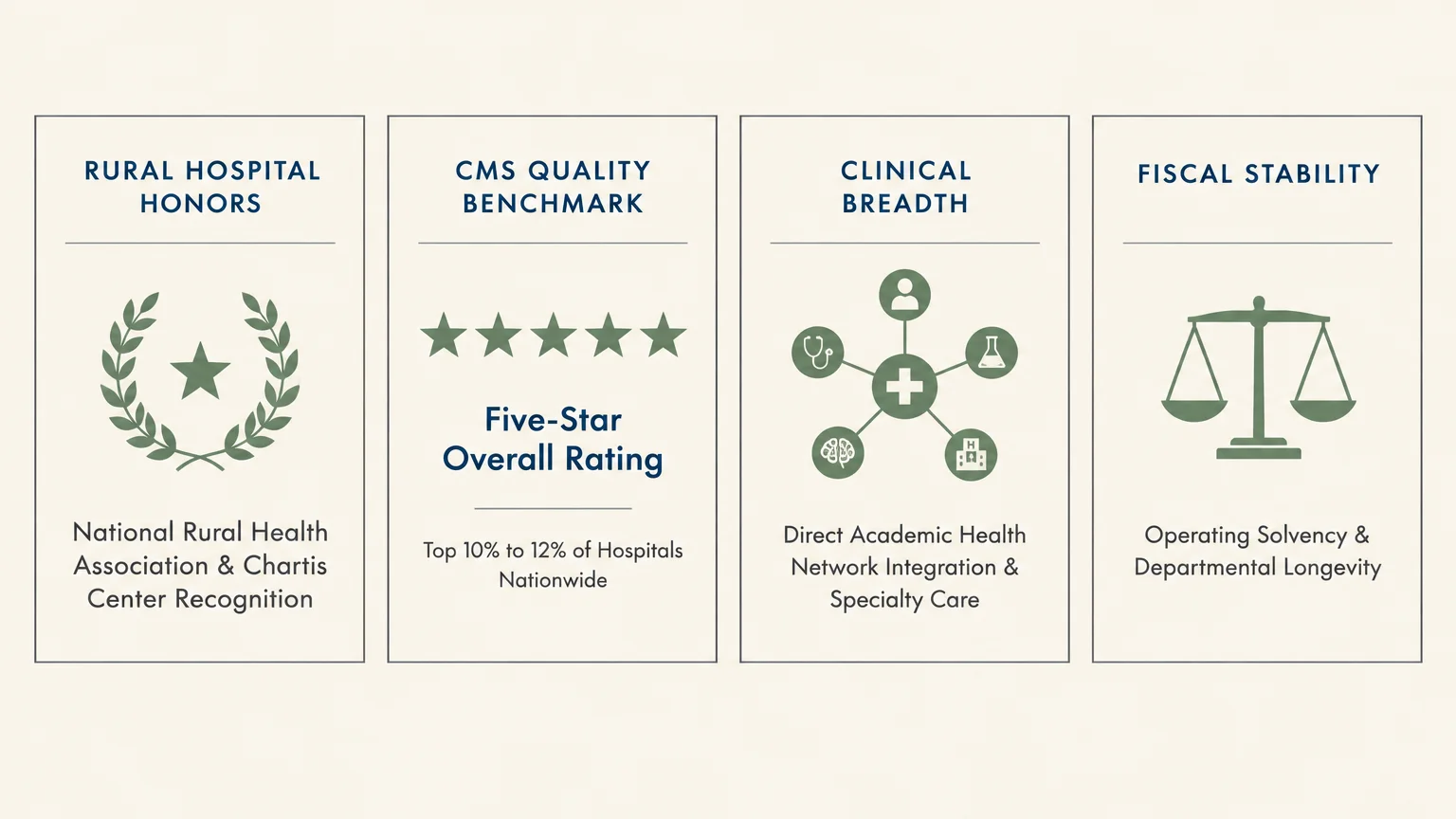
Our analysis draws on data from the National Rural Health Association, the Chartis Center for Rural Health, and federal hospital quality scores. We prioritized counties meeting strict performance benchmarks:
- Consistent inclusion on national lists of top rural and community hospitals.
- Four-star and five-star quality ratings from the Centers for Medicare & Medicaid Services.
- Direct integration with major academic health networks or robust specialty care services.
- Financial stability that minimizes the risk of sudden departmental closures.
Only 10% to 12% of hospitals nationwide achieve a 5-star overall rating from the federal government. The facilities anchoring these eleven counties routinely outperform regional urban centers.

1. Montour County, Pennsylvania
Montour County ranks as Pennsylvania’s smallest county by land area, yet it anchors one of the most sophisticated rural medical networks in the nation. The county seat of Danville serves as the headquarters for the Geisinger Health System.
Geisinger Medical Center operates more than 500 licensed inpatient beds in this rural valley. It functions as a quaternary academic teaching hospital, an accredited Level 1 Trauma Center, and a dedicated pediatric hospital.
Local residents access advanced neurosurgery, comprehensive cardiovascular operations, and clinical oncology trials without leaving the county. You enjoy small-town living while staying minutes away from cutting-edge research facilities.

2. Grafton County, New Hampshire
Nestled against the White Mountains, Grafton County offers a classic northern New England lifestyle alongside world-class academic medicine. The town of Lebanon hosts Dartmouth Hitchcock Medical Center, New Hampshire’s flagship healthcare provider.
This 400-bed facility serves as the state’s only Level 1 Trauma Center. It also houses the Norris Cotton Cancer Care Pavilion, a National Cancer Institute-designated comprehensive cancer center.
Specialists train here through the Geisel School of Medicine at Dartmouth College. Retirees living in Grafton County enjoy easy access to top-tier geriatricians and specialized memory care programs.
3. Otsego County, New York
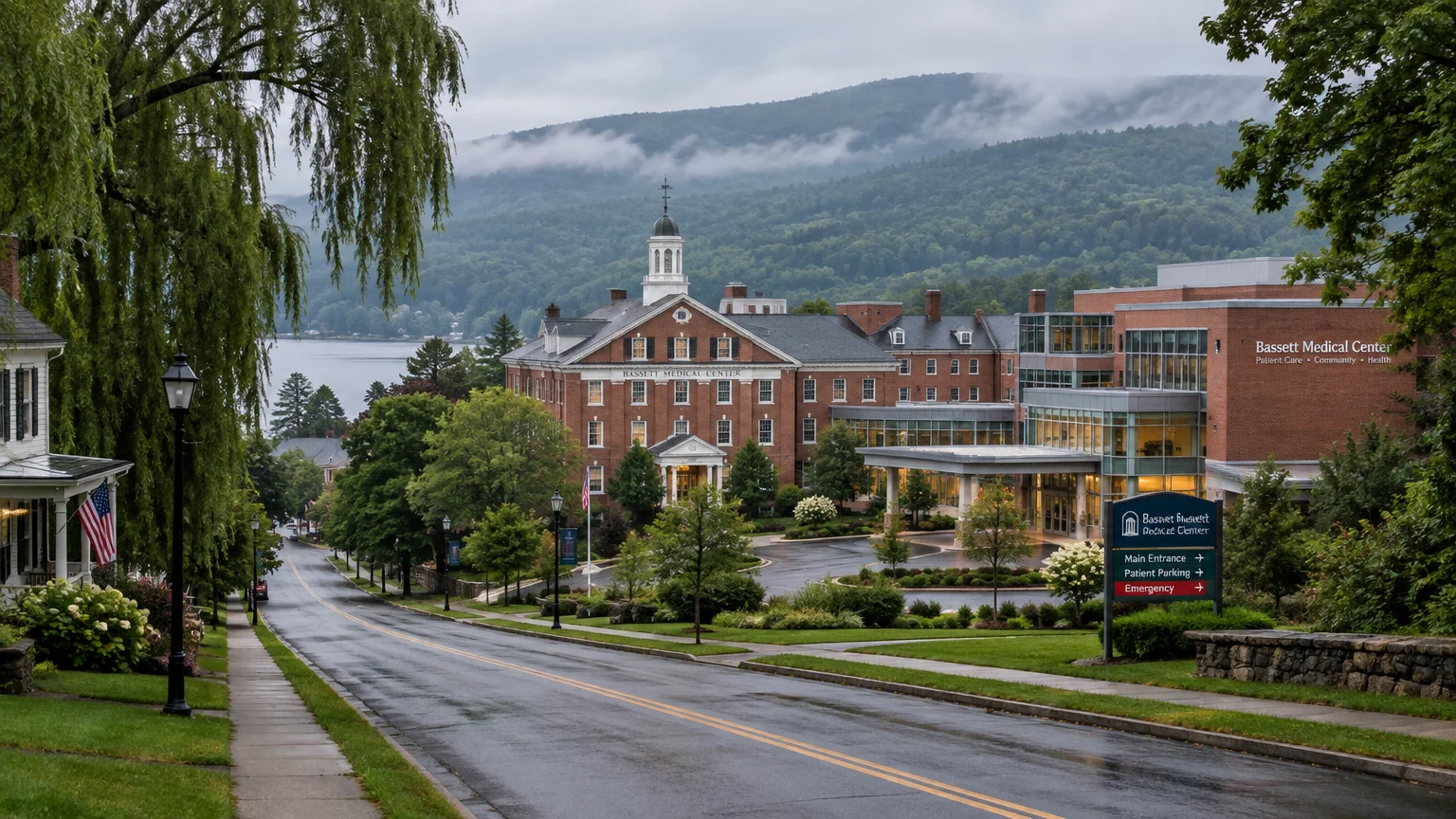
Cooperstown is famous for baseball history, but Otsego County also serves as a premier destination for rural healthcare. Bassett Medical Center anchors the region from its 180-bed acute care campus.
Bassett operates as a major teaching hospital affiliated with Columbia University’s Vagelos College of Physicians and Surgeons. Medical students and surgical residents train directly alongside seasoned attending physicians.
The health network coordinates primary care clinics across several agricultural towns. You receive seamless digital record integration and routine specialist consultations throughout the surrounding countryside.
4. Teton County, Wyoming
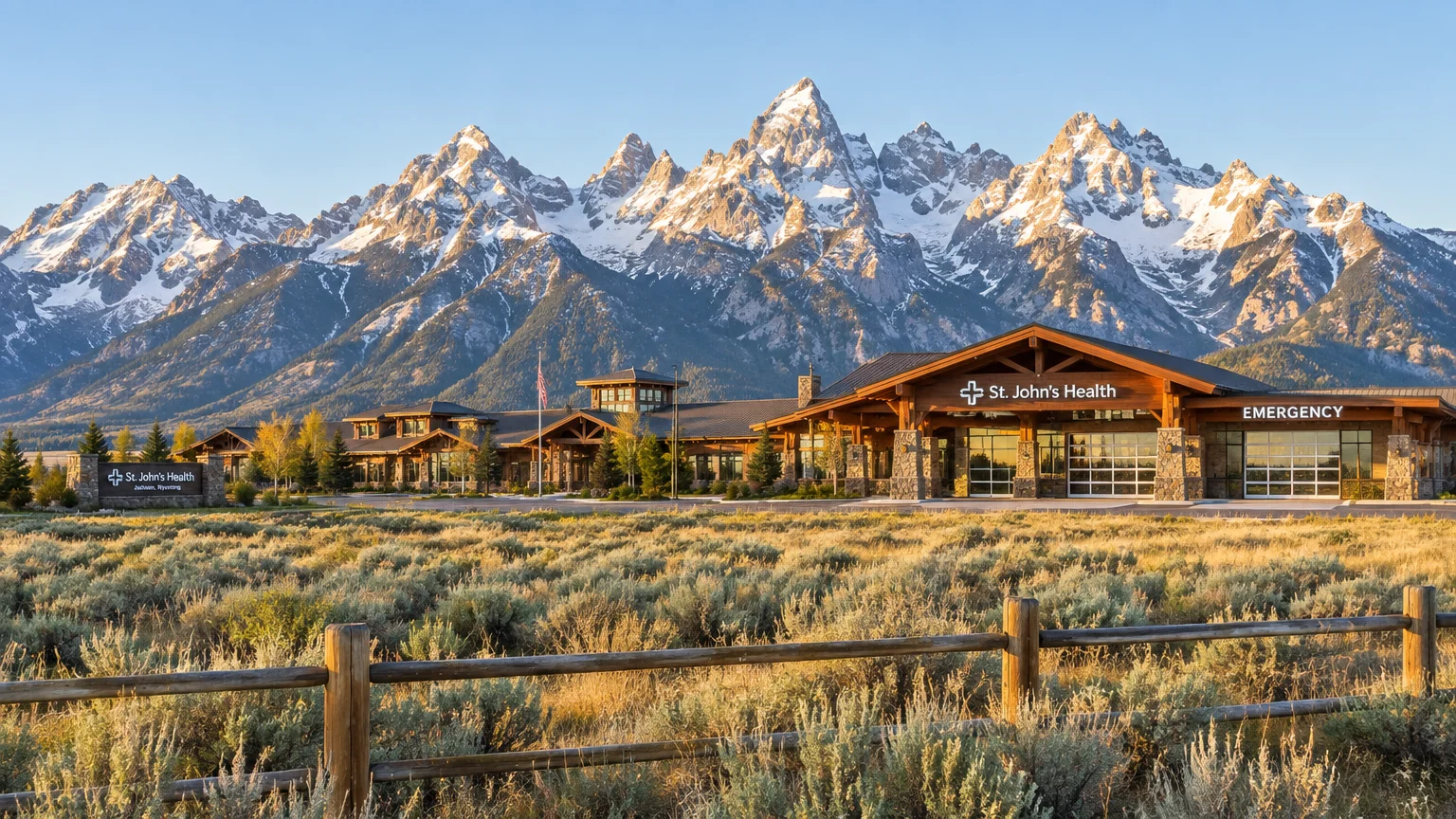
Set against the Teton mountain range, Jackson combines rugged Western landscapes with an unusually affluent healthcare infrastructure. St. John’s Health serves the region as an independent, non-profit community hospital.
The hospital routinely earns 5-star patient satisfaction ratings from federal evaluators. Due to the area’s active population, St. John’s maintains exceptional orthopedic, joint reconstruction, and sports medicine departments.
Its collaboration with regional oncology networks allows cancer patients to receive chemotherapy locally. Teton County ranks among the best rural places to retire if your budget supports mountain-town real estate.
5. Routt County, Colorado
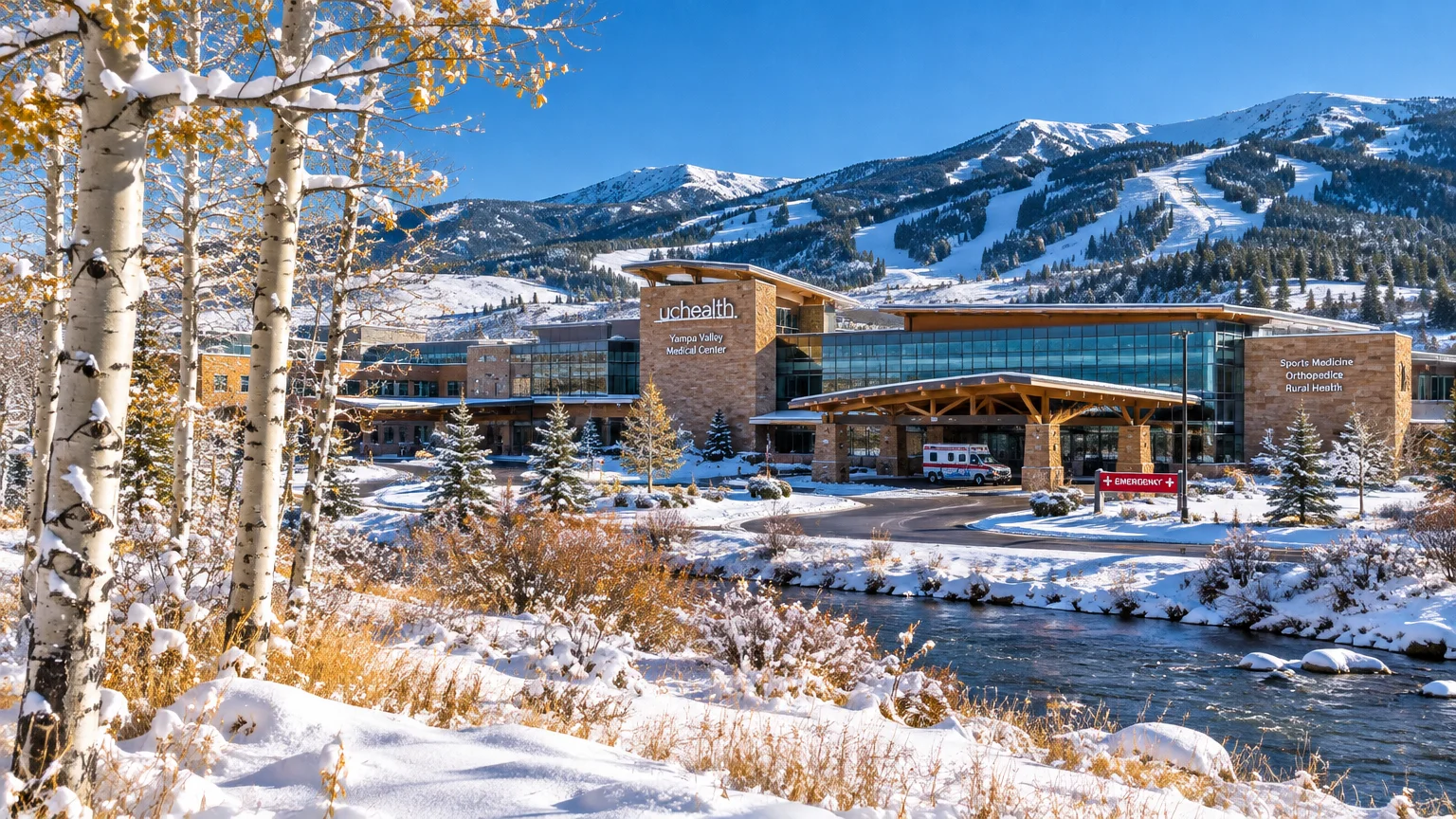
Routt County blends high-altitude ranching heritage with modern amenities in Steamboat Springs. UCHealth Yampa Valley Medical Center provides 39 acute care beds backed by a major university health system.
Patients gain direct entry into the University of Colorado Health network. This partnership brings advanced cardiology, telestroke technology, and visiting oncology specialists straight to the Yampa Valley.
The facility consistently appears on the National Rural Health Association’s roster of top 20 rural hospitals. Residents manage complex health conditions without navigating winter mountain passes to Denver.
6. Door County, Wisconsin
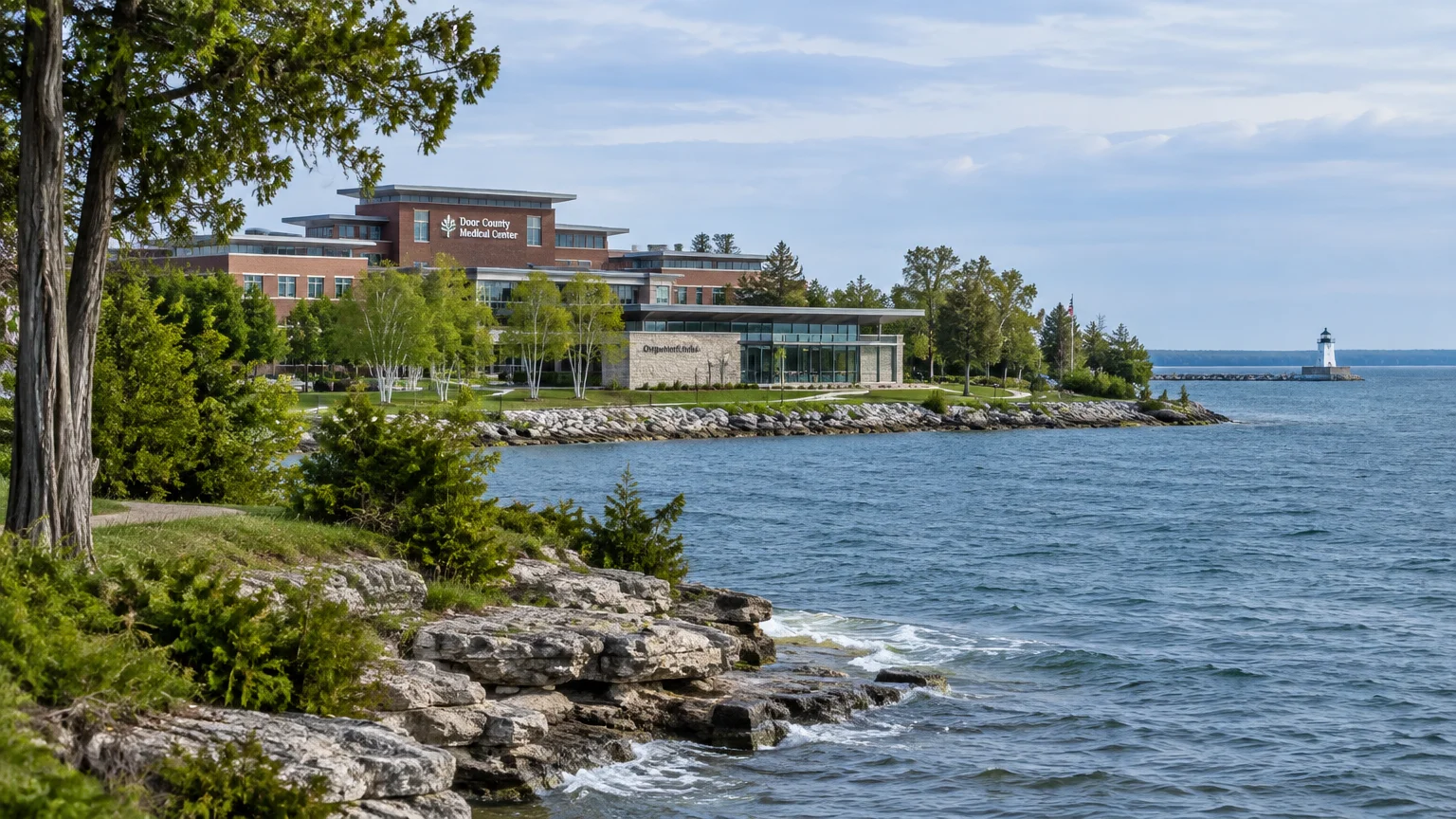
Door County sits on a picturesque peninsula between Green Bay and Lake Michigan, attracting thousands of retirees each year. Sturgeon Bay hosts Door County Medical Center, a model 25-bed Critical Access Hospital.
Despite its small bed capacity, the hospital partners with Hospital Sisters Health System to provide broad specialty coverage. It routinely earns 5-star ratings for patient experience from Medicare review panels.
The facility also achieves top safety grades from independent watchdogs like The Leapfrog Group. Peninsula residents enjoy outpatient surgeries, rehabilitation therapies, and cancer infusions close to home.
7. Douglas County, Minnesota
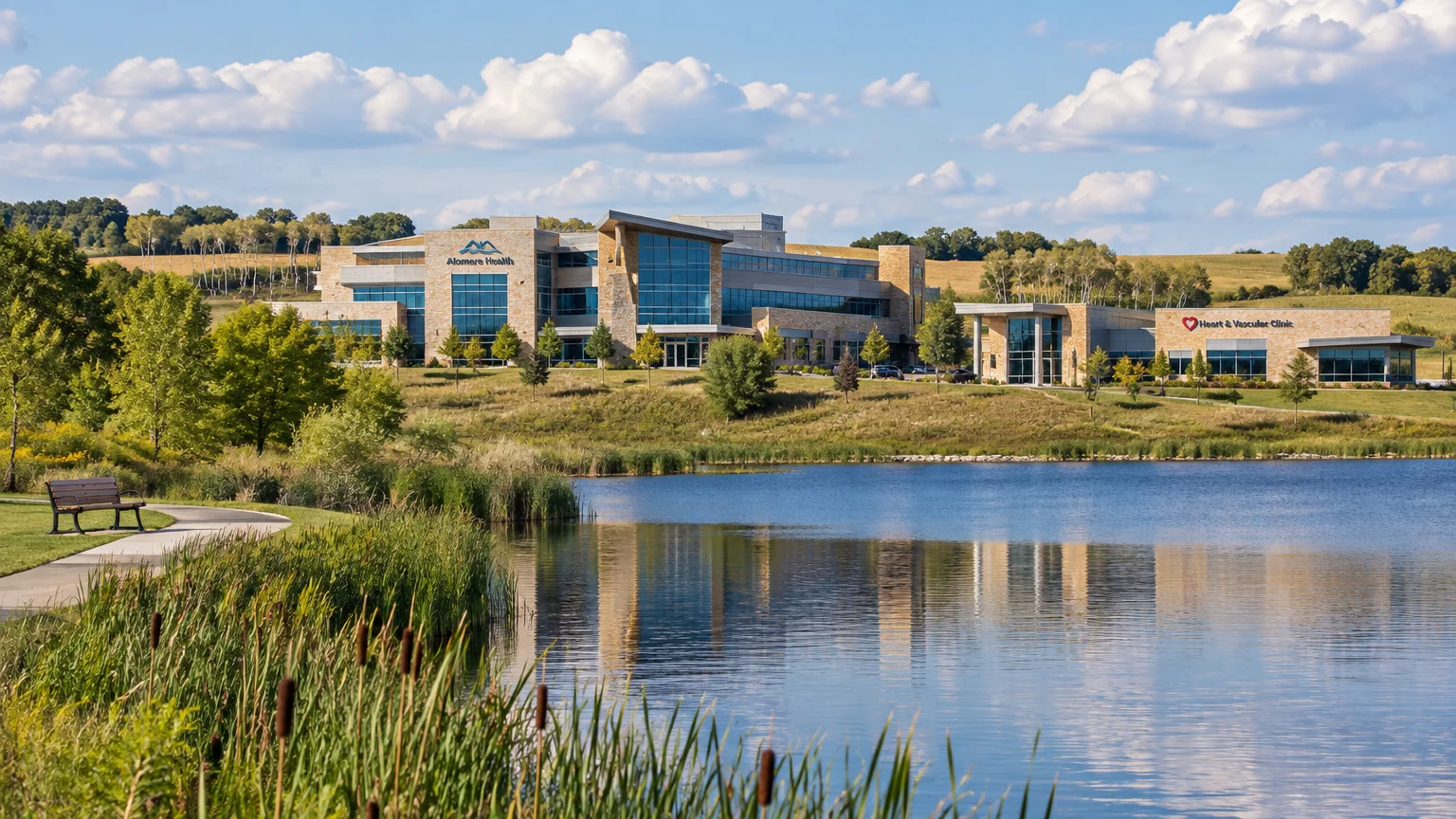
Douglas County sits in central Minnesota’s lake country, centered around the growing hub of Alexandria. Alomere Health serves the community as an independent, publicly owned regional medical powerhouse.
The Chartis Center for Rural Health repeatedly names Alomere a Top 20 Rural & Community Hospital. The health system operates more than 40 medical specialties alongside a full-service regional cancer center.
Patients benefit from advanced robotic surgical systems and comprehensive orthopedic joint replacement programs. You can spend your retirement on the water without compromising on modern healthcare technology.

8. Kerr County, Texas
Located in the Texas Hill Country, Kerr County has earned a reputation as a haven for retirees. Peterson Health anchors Kerrville through a state-of-the-art acute care hospital and outpatient network.
Peterson Regional Medical Center routinely earns spots on national top-hospital lists and maintains patient recommendation rates above 80%. The campus includes a dedicated heart center and a specialized wound-healing clinic.
The facility offers extensive rehabilitative therapy and senior wellness programs tailored to the local retirement demographic. You get dependable medical coverage just an hour northwest of San Antonio.

9. Iron County, Utah
Iron County combines southern Utah’s striking red-rock scenery with the institutional strength of Intermountain Health. Cedar City Hospital anchors the region with 48 licensed beds and a modern surgical wing.
The facility holds regular distinctions as a national Top 20 Rural & Community Hospital. Intermountain’s advanced telehealth network connects local clinicians with specialists in Salt Lake City in real time.
Families and retirees access high-grade emergency medicine, modern maternal care, and physical therapy clinics. You maintain direct ties to one of the most efficient integrated healthcare networks in the nation.
10. Berkshire County, Massachusetts
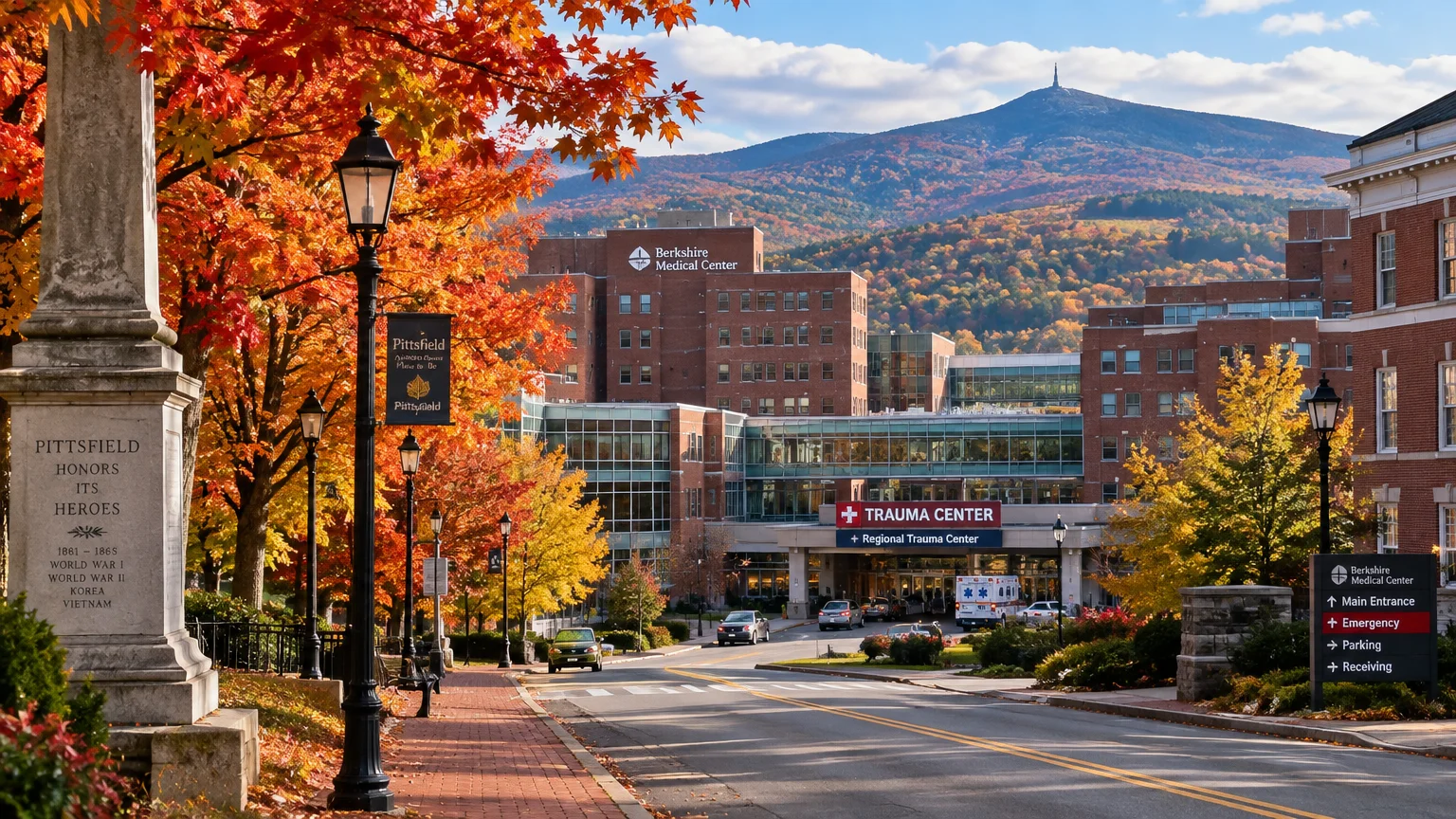
Berkshire County offers a rich cultural environment alongside strong community medical care. Fairview Hospital in Great Barrington anchors the southern portion of the county as a federally recognized Critical Access Hospital.
Fairview operates under Berkshire Health Systems and holds recurring 5-star overall quality ratings from federal evaluators. The hospital excels in ambulatory surgery, emergency care, and orthopedic rehabilitation.
The facility connects rural patients directly to specialized clinical services at Berkshire Medical Center in Pittsfield. It serves as a vital healthcare foundation for retirees drawn to the region’s arts and scenery.

11. Watauga County, North Carolina
Watauga County occupies the high elevations of North Carolina’s Blue Ridge Mountains, centered around the university town of Boone. Watauga Medical Center serves as the primary clinical hub for the surrounding high country.
Operated by UNC Health Appalachian, the 117-bed facility recently completed major investments in modern surgical suites and cardiovascular suites. It brings the research and clinical standards of the UNC Health system to western mountain communities.
The hospital maintains accredited chest pain and stroke response units to handle mountain emergencies swiftly. Local residents receive expert acute care without traveling down the mountain to Winston-Salem.
Key Metrics: Comparing the Top Rural Healthcare Counties
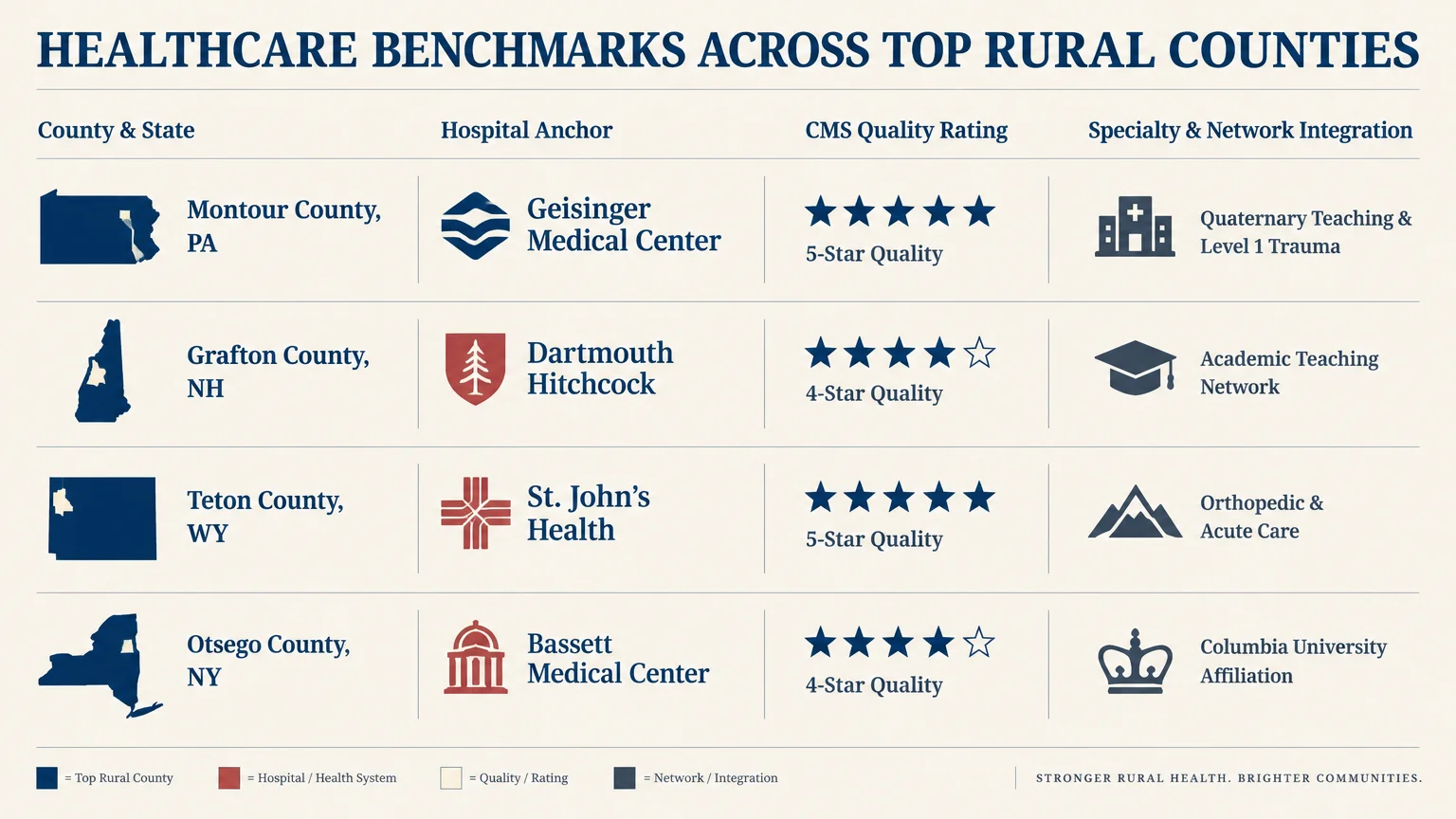
Evaluating potential relocation targets requires reviewing hospital designations and operational strengths. The table below outlines how each featured rural healthcare hub compares across critical operational categories.
| County & State | Anchor Medical Facility | Facility Model | Standout Strength |
|---|---|---|---|
| Montour, PA | Geisinger Medical Center | Academic Hub (500+ beds) | Level 1 Trauma, Quaternary Research |
| Grafton, NH | Dartmouth Hitchcock Medical Center | Academic Hub (400 beds) | NCI Comprehensive Cancer Center |
| Otsego, NY | Bassett Medical Center | Teaching Hospital (180 beds) | Columbia University Clinical Partner |
| Teton, WY | St. John’s Health | Community Hospital | Top-Tier Orthopedics & Sports Rehab |
| Routt, CO | UCHealth Yampa Valley Medical | Regional Acute Care | Direct Academic Telehealth Integration |
| Door, WI | Door County Medical Center | Critical Access Hospital | CMS 5-Star Patient Satisfaction |
| Douglas, MN | Alomere Health | Regional Community Hub | Over 40 On-Site Medical Specialties |
| Kerr, TX | Peterson Health | Community Hospital | Comprehensive Heart & Wound Care |
| Iron, UT | Cedar City Hospital | Community Hospital | Intermountain Health Network Access |
| Berkshire, MA | Fairview Hospital | Critical Access Hospital | Consistently High Leapfrog Safety Grades |
| Watauga, NC | Watauga Medical Center | Regional Health System | New Modern Surgical and Heart Centers |
Understanding these designations helps you identify what care a hospital handles locally and what requires a network transfer. A Critical Access Hospital stabilizes acute events, while academic centers manage complex surgeries directly.
Costly Mistakes to Avoid When Moving to the Country
Relocating to a scenic rural county without auditing the healthcare infrastructure can derail your financial plan. Avoid these critical mistakes before putting down a real estate earnest deposit.
Relying on Narrow Medicare Advantage Networks: Many low-premium Medicare Advantage plans contract with very few rural providers. If you move out of your plan’s metropolitan service area, your regular visits may turn into costly out-of-network claims.
Verify your coverage directly through Medicare.gov before moving. Most rural health financial counselors recommend traditional Medicare paired with a supplemental Medigap policy for unrestricted provider choices.
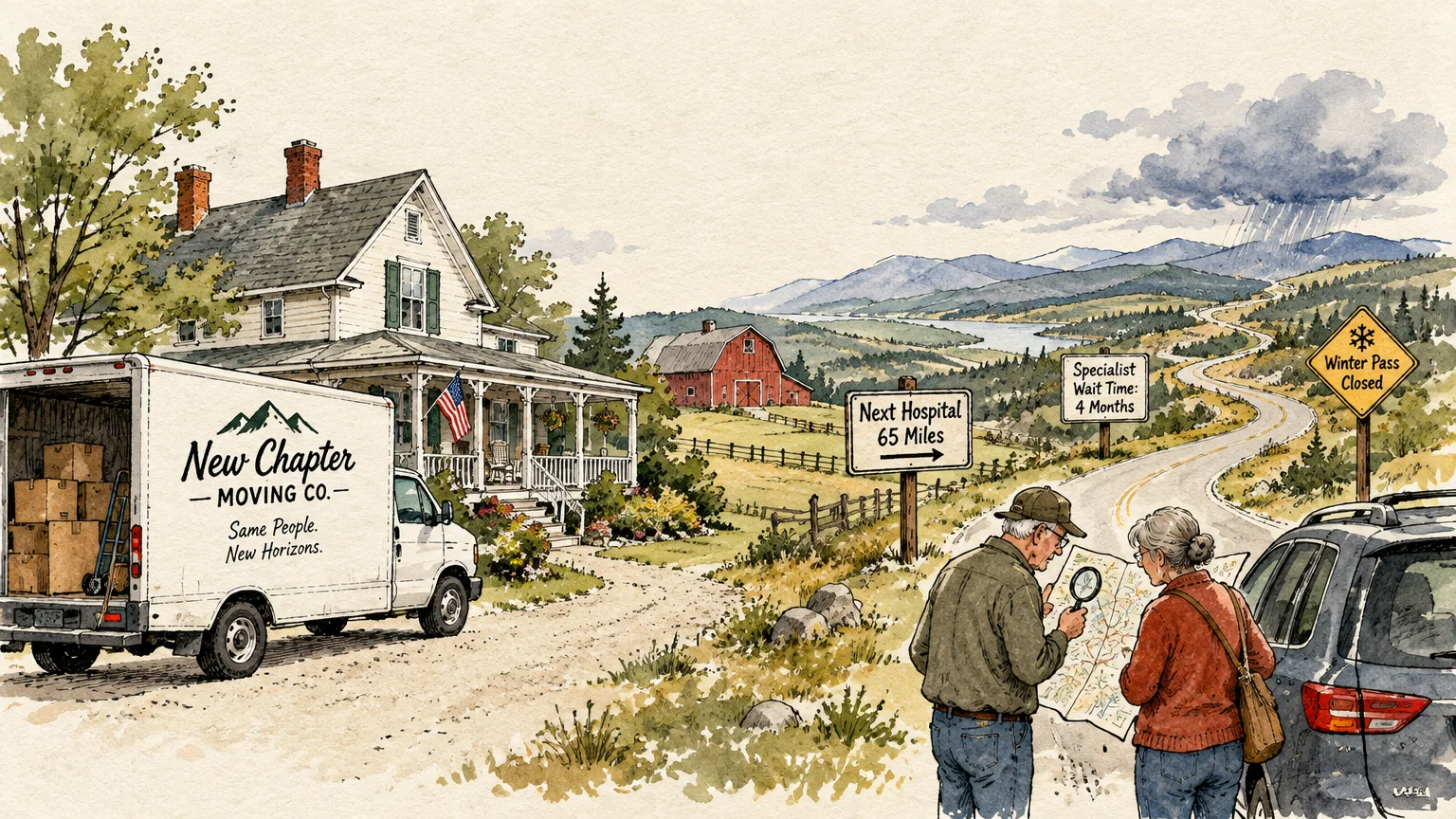
Ignoring Emergency Transport Realities: Living fifteen miles down an unpaved country road can double an ambulance crew’s arrival time. Research local paramedic response times and volunteer rescue squads before selecting a property.
Check whether your insurance policies protect against out-of-pocket air transport charges. Many rural families purchase low-cost regional air-ambulance memberships to protect against emergency transfer expenses.
Overlooking Specialist Wait Times: A county hospital may boast modern imaging equipment but lack full-time specialists. Rural communities often rely on visiting dermatologists, rheumatologists, or endocrinologists who visit once a month.
Call local clinics directly to ask about new-patient wait times for your specific conditions. If booking an appointment takes four months, consider properties closer to regional health centers.

Financial Planning for Rural Healthcare Needs
Managing your healthcare spending requires disciplined budgeting and proactive insurance selection. Small adjustments made before you move can save thousands of dollars in medical costs later.
“The best time to plan for a financial goal was 20 years ago. The second best time is today.”
Begin by analyzing how moving affects your monthly benefit distributions and cash flow. Review your projected retirement income through the Social Security Administration to confirm that your fixed income comfortably covers private supplemental insurance.
Track regional living cost differences using data from the Bureau of Labor Statistics. Lower regional housing costs often free up cash flow to purchase comprehensive supplemental medical coverage.
Fund a dedicated emergency medical savings fund in an accessible, liquid account. Setting aside six months of out-of-pocket medical deductibles shields your retirement portfolio from market downturns during health crises.
Frequently Asked Questions
What makes a hospital a Critical Access Hospital?
The federal government grants Critical Access Hospital status to select rural facilities to reduce financial vulnerability. These facilities maintain 25 or fewer inpatient beds and maintain an average annual length of stay under 96 hours.
Is Medicare Advantage practical for rural retirees?
Medicare Advantage works in rural areas only if regional providers participate in the plan’s network. Retirees who travel frequently or need specialized care often choose Original Medicare with a Medigap policy for greater provider freedom.
How can I check the safety rating of a small community hospital?
You can check hospital performance via the Centers for Medicare & Medicaid Services Care Compare tool. Independent watchdogs like The Leapfrog Group also publish detailed patient safety evaluations and infection rates online.
Do rural teaching hospitals provide better medical care?
Rural teaching hospitals often deliver higher clinical quality by collaborating with major university medical schools. These ties attract top-tier resident physicians, support advanced clinical trials, and bring cutting-edge diagnostic technology to rural regions.
Securing Your Next Chapter
Living in the countryside does not require trading away peace of mind or clinical excellence. Choosing a county backed by an award-winning health system protects your health and your retirement savings.
Schedule an in-person visit to tour local clinics and interview regional primary care providers before signing a property contract. Confirm your insurance acceptance in advance to begin your rural retirement with complete financial and medical confidence.
Financial outcomes vary based on individual income, credit history, and circumstances. This article provides general guidance only. Consult a qualified financial planner, CPA, or consumer attorney for advice specific to your situation.
Last updated: February 2026. Rates, benefit amounts, and tax rules change—always verify current details at official sources.