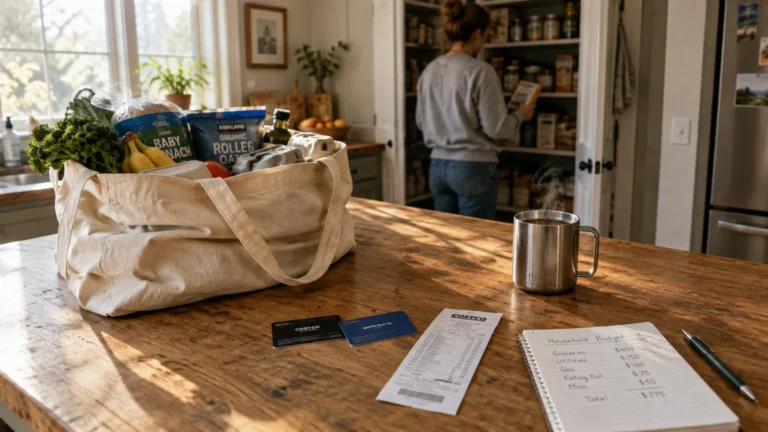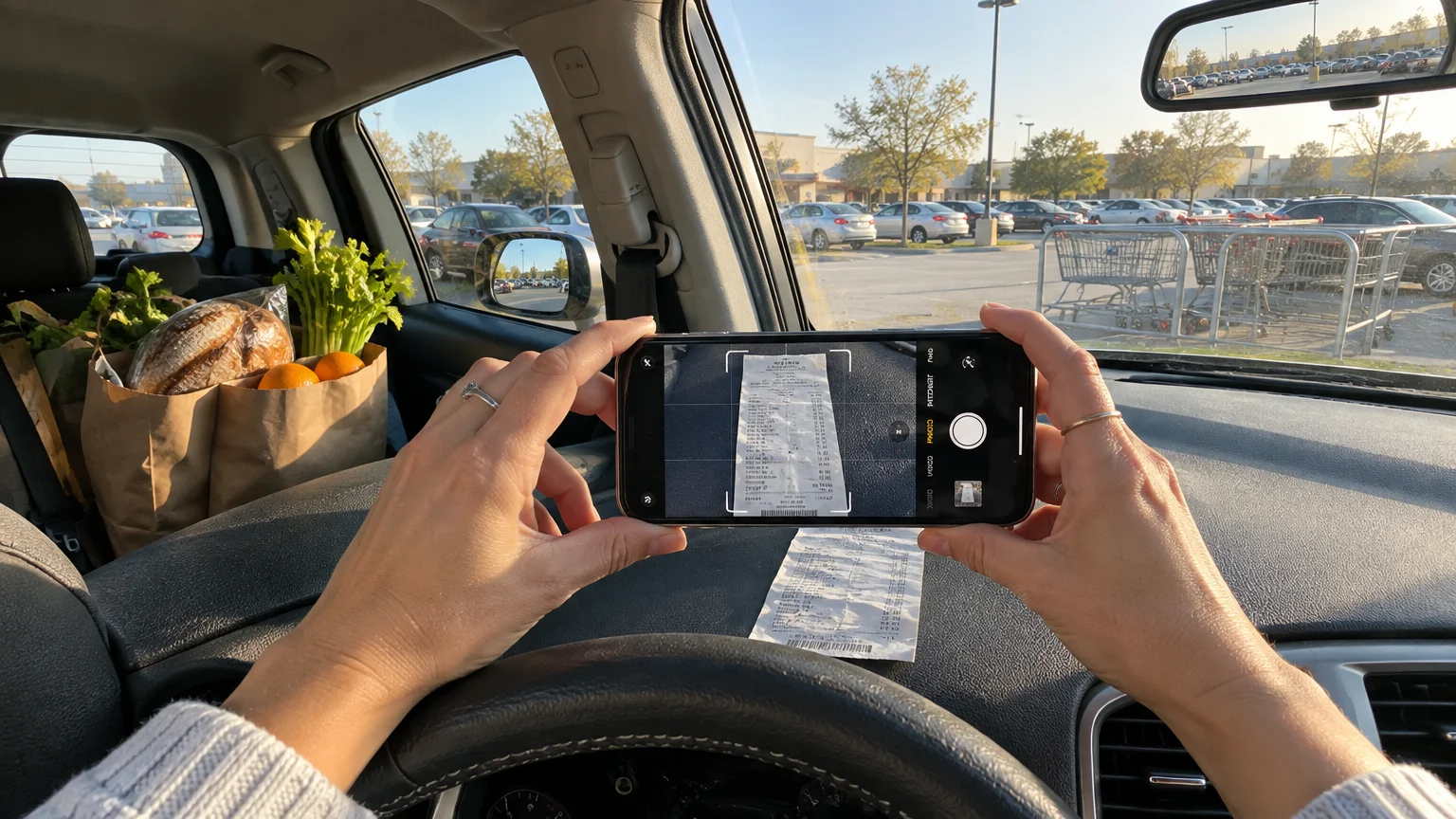
Scanning your grocery receipts can return hundreds of dollars to your household budget every year. With food prices cutting into family finances, grocery cashback apps offer an effortless way to reclaim that spent cash.
Instead of clipping paper coupons, you simply photograph your store receipt or link a loyalty account. The right combination of apps turns routine pantry runs into automated rebates.
Whether you shop at discount supermarkets or regional chains, these digital tools deposit actual money back into your pocket. Here is how the top platforms compare and how you can maximize your returns.
The High Cost of Food at Home
Grocery bills represent one of the largest flexible expenses in any household budget. Managing food spending requires practical tools that deliver measurable results.
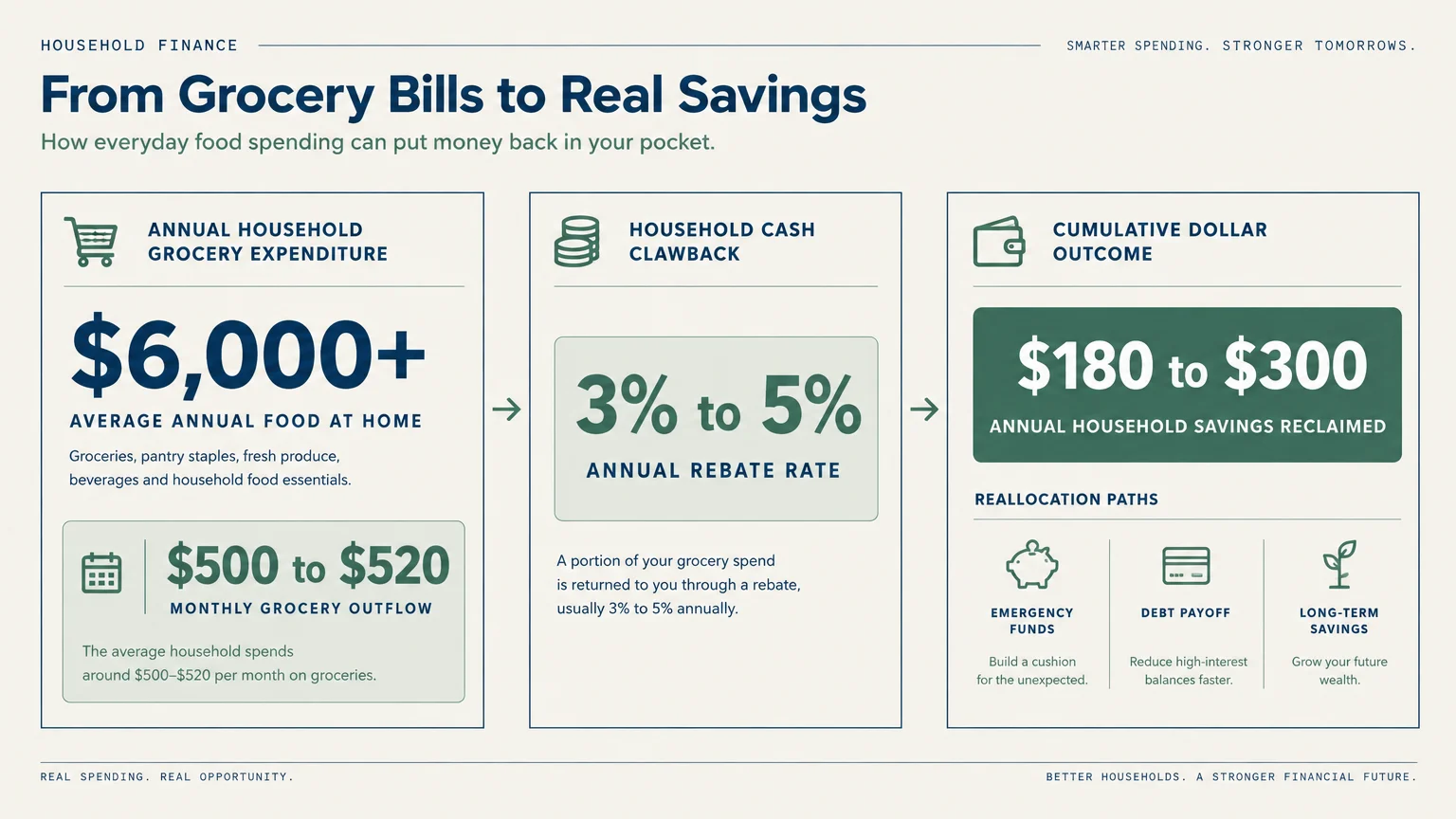
According to the Bureau of Labor Statistics (BLS) Consumer Expenditure Survey, the average American household spends over $6,000 annually on food at home. That equals roughly $500 to $520 per month leaving checking accounts for essential pantry staples.
Using apps that pay you for groceries claws back a meaningful fraction of those unavoidable living expenses. A 3% to 5% rebate across an entire year yields $180 to $300 in clear household savings.
You can redirect those reclaimed dollars toward emergency funds, debt payoff, or long-term investments. Small adjustments in your routine yield compound benefits over time.
“A budget is telling your money where to go instead of wondering where it went.” — John C. Maxwell
How Grocery Rebate Apps Put Cash Back in Your Wallet
Grocery rewards apps partner with major consumer brands and retail chains to influence where you shop. Brands fund rebates as promotional marketing, and the apps share that advertising revenue directly with you.
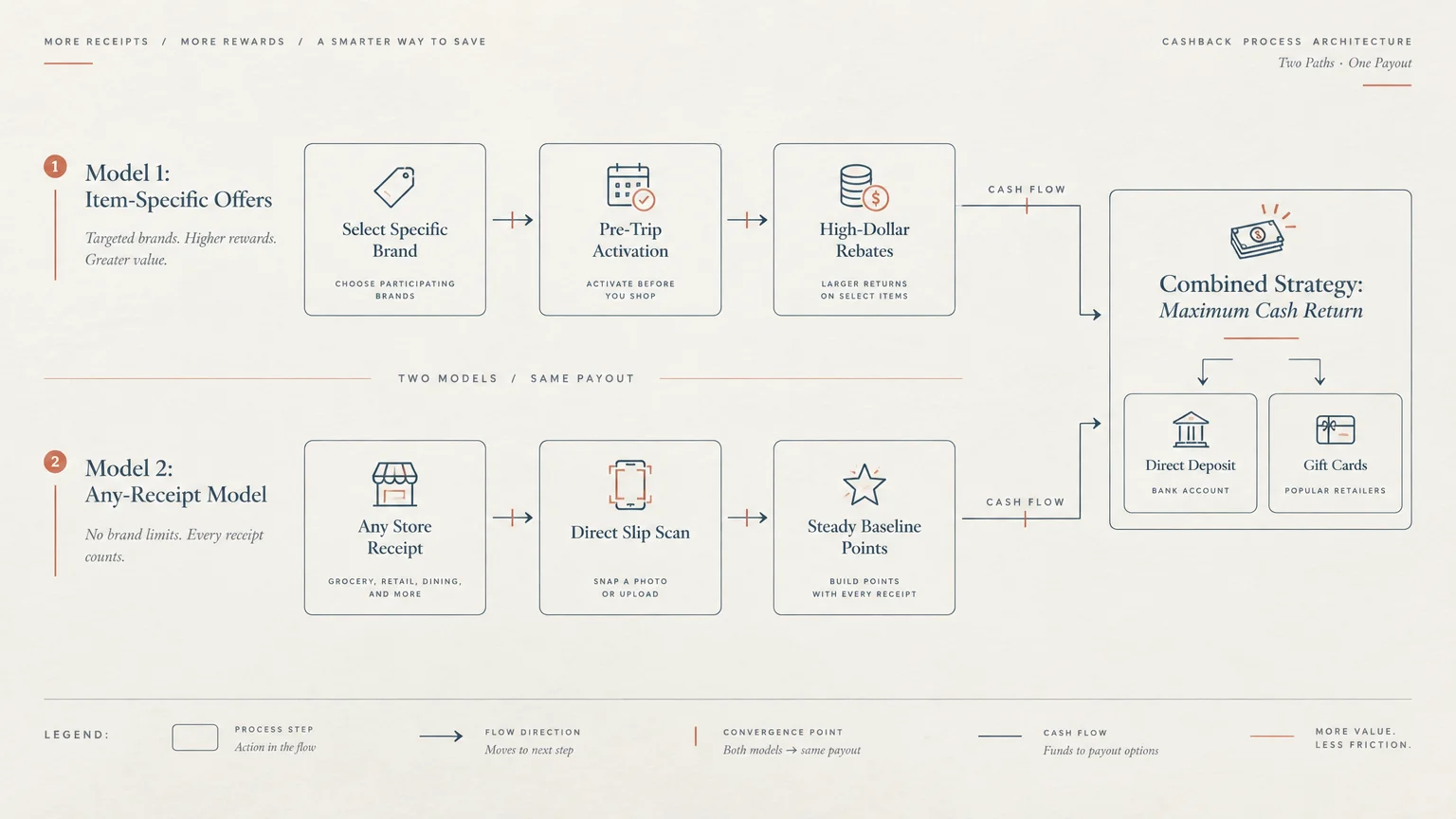
Most platforms operate under one of two primary reward models. Understanding the difference ensures you select the best grocery rebate apps for your shopping style.
The first model relies on item-specific offers. These apps require you to activate rebates on individual brands before or immediately after your store trip.
The second model uses an any-receipt structure. These apps award baseline points for scanning any store receipt, regardless of the brand names on your printed slip.
Combining both models produces optimal savings. You capture high-dollar rebates on selected brand purchases while picking up steady points on basic produce and store brands.
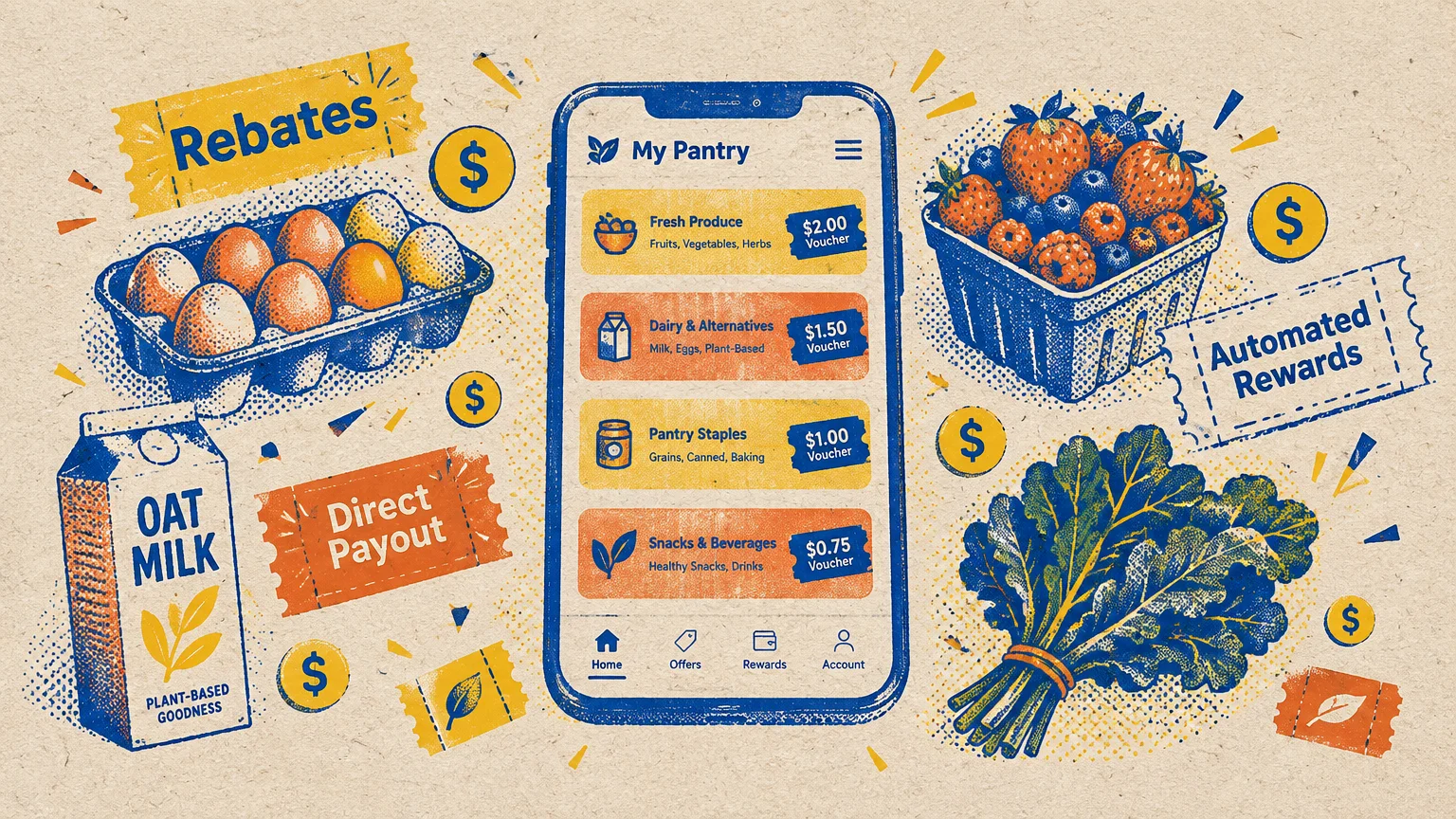
The 8 Best Grocery Cashback Apps Reviewed
Not every rewards app offers the same return on your time. We evaluated payout minimums, ease of redemption, and retail coverage to identify eight platforms worth your attention.
1. Ibotta
Ibotta remains the heavyweight platform among grocery cashback apps. The service provides high-value rebates across thousands of national grocery chains, big-box retailers, and convenience stores.
You browse available offers in the app, add qualifying items to your list, and submit your paper receipt. Alternatively, you can link your supermarket loyalty card for automatic submission.
Ibotta went public on the New York Stock Exchange in April 2024 under the ticker IBTA. The company also powers the native Walmart Cash rewards program embedded directly inside the Walmart app.
You must accumulate a minimum balance of $20.00 before you can withdraw your funds. You must also redeem at least one qualifying offer to unlock your payout.
Earnings transfer directly to your checking account, your PayPal balance, or digital gift cards. Ibotta offers some of the highest single-item payouts available in the grocery sector.
2. Fetch Rewards
Fetch Rewards takes a low-friction approach to earning rewards on supermarket spending. You do not need to pre-select coupons or scan individual item barcodes.
Instead, you snap a photo of any grocery, convenience store, or wholesale club receipt. You earn flat base points for every eligible slip you submit.
Purchasing items from partner brands triggers substantial bonus point multipliers. The standard valuation converts roughly 1,000 points into $1.00 in reward value.
Gift card redemptions begin between 3,000 and 5,000 points, giving you a fast $3 to $5 cashout threshold. You can choose merchant gift cards covering Amazon, Target, and major dining chains.
You must submit your receipts within 14 days of your purchase date. Your accumulated points expire if your account experiences no scanning or redemption activity for 90 consecutive days.
3. Checkout 51
Checkout 51 refreshes its rebate catalog every Thursday morning with brand-sponsored cash incentives. You select your preferred deals, buy the items, and upload your printed receipt.
Offer quantities are sometimes capped, making early-week shopping advantageous. Once you claim an available rebate, the platform credits cash to your profile.
Market consolidation streamlined this platform recently. Owner Neptune Retail Solutions officially shut down the U.S. version of Shopmium in November 2024, migrating active accounts into Checkout 51.
The cashout threshold requires a $20.00 minimum balance. You can receive your earned money through PayPal or request a mailed physical check.
The desktop website matches the smartphone app, letting you upload receipts directly from your home computer. That flexibility benefits shoppers who prefer scanning paper receipts in batches.
4. Upside
Originally known for retail fuel discounts, Upside now provides competitive cash back at regional grocery stores. The app partners directly with local supermarket banners and regional food markets.
Grocery rebates typically offer between 7% and 30% cash back on your entire transaction. That percentage model delivers larger returns on bulk family grocery runs than fixed-cent coupons.
To use Upside, you claim a grocery offer inside the app before shopping. You must check out within the displayed countdown window using a linked credit or debit card.
Upside charges a $1 fee on bank transfers under $10 and PayPal transfers under $15. The app waives that fee once your balance clears those dollar amounts.
Digital gift cards require a flat $10 minimum balance with no processing deduction. Upside excels at returning significant sums on full-basket supermarket transactions.
5. Receipt Hog
Receipt Hog gamifies grocery tracking by transforming physical receipts into digital coins and slot spins. The platform accepts receipts from any grocer, pharmacy, or dollar store.
The app awards coins based on the total register amount printed on your slip. You can also participate in customer surveys to increase your coin balance.
You must upload receipts within 14 days of the transaction date. Older register tapes are rejected by the scanning system.
Redemption tiers begin at 1,000 coins for a $5.00 cash distribution. You can route payments directly to PayPal, Amazon gift cards, or prepaid Visa debit accounts.
Higher coin balances unlock slightly better redemption ratios, rewarding consistent users who hold balances. The app requires minimal effort since item matching is never required.
6. ReceiptPal
ReceiptPal rewards you through virtual point cards. Each digital card contains four open slots that you fill by uploading consumer receipts.
Submitting four valid receipts completes a card and awards you 100 points. You can also connect your email address and online retail accounts to earn points on digital receipts.
The platform accepts receipts from supermarkets, convenience stores, gas stations, and online grocers. The only requirement is that the paper slip clearly shows the store name, date, and total.
Gift card redemptions start at approximately 2,200 points for a $5 retail card. Available gift card partners include major department stores, online retailers, and restaurant groups.
Receipt limits reset weekly, encouraging steady usage. The straightforward point structure makes tracking your progress simple and transparent.
7. Rakuten
While known for online clothing and electronics, Rakuten provides lucrative rebates for online grocery orders and meal delivery. You can save money on groceries by routing digital pantry orders through the platform.
Services like Instacart, Target delivery, and major regional grocers regularly offer 1% to 10% cash back. Rakuten also features an in-store card-linking program for select physical retailers.
Rakuten operates on a rigid quarterly payout schedule rather than on-demand cashouts. Payments process every year on February 15, May 15, August 15, and November 15.
You need an accumulated balance of at least $5.01 to trigger your quarterly distribution. If your balance falls short, your earned cash rolls forward into the following quarter.
You receive payouts via direct PayPal deposit or a physical paper check sent by mail. Households using curbside pickup or home grocery delivery will find consistent value here.
8. Target Circle
Target restructured its loyalty platform to streamline digital grocery discounts for everyday shoppers. The retailer completed a major program relaunch in April 2024.
The update retired the legacy 1% earnings bank for non-cardholders, replacing it with fully automatic coupon application. Target Circle deals now apply instantly at the register when you scan your member barcode.
Manufacturer rebates and store grocery promotions link directly to your account profile. You no longer need to spend time manually saving hundreds of individual digital offers.
Target also introduced Target Circle 360, a paid subscription tier offering unlimited same-day grocery delivery. Standard members retain full access to free curbside pickup and all automatic store deals.
Pairing automatic Target Circle rebates with a Target Circle Card gives you an additional 5% discount at checkout. That combination creates one of the most reliable store-specific grocery discounts available.
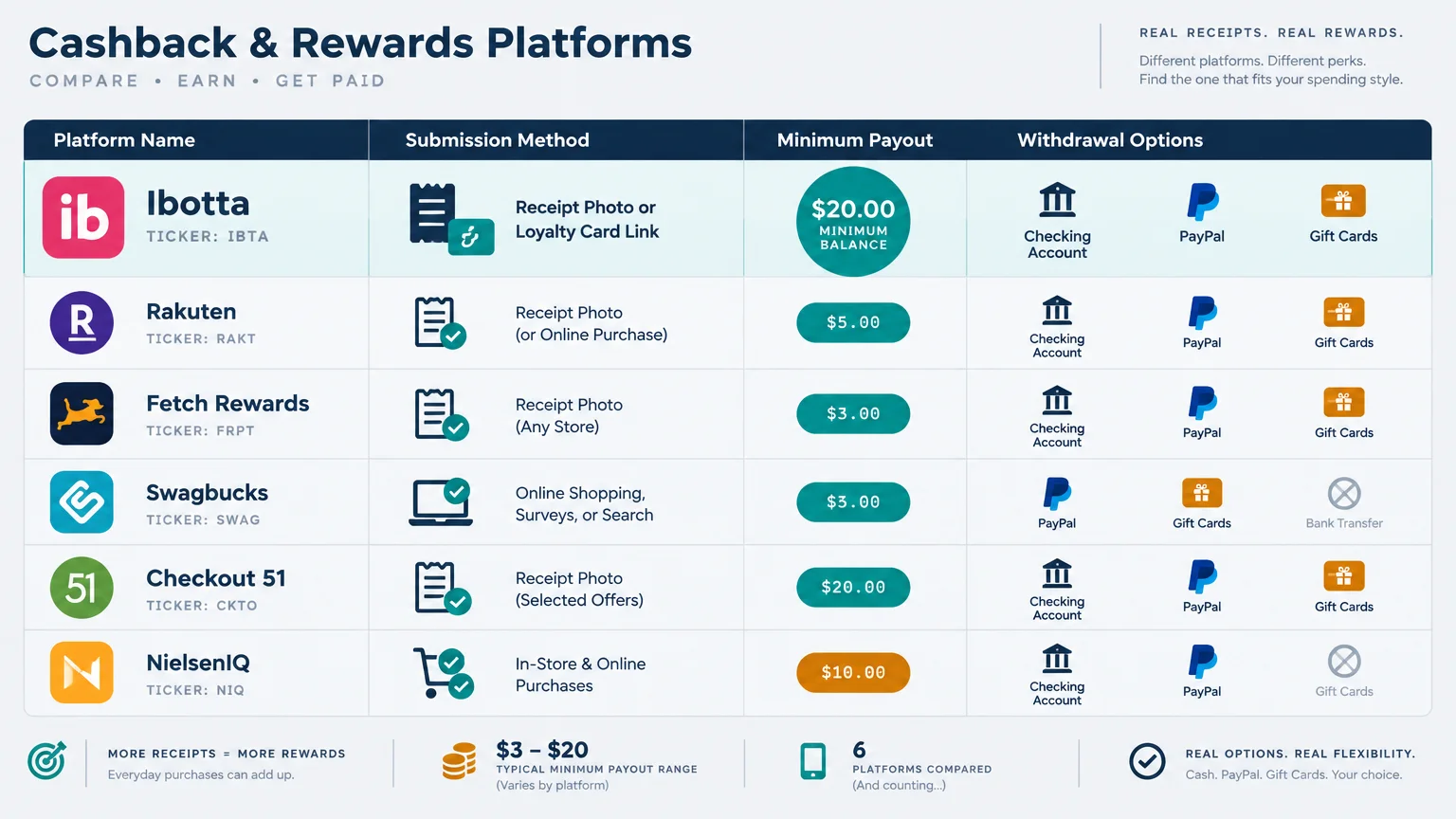
Comparison of the Best Grocery Rebate Apps
Reviewing app specifications side by side helps you prioritize the platforms that best match your shopping frequency. Here is how the top eight options compare across essential financial metrics.
| App Name | Offer Model | Minimum Cashout | Payout Methods | Best Feature |
|---|---|---|---|---|
| Ibotta | Item-Specific & Loyalty | $20.00 | PayPal, Bank, Gift Cards | Powers Walmart Cash; high rebates |
| Fetch Rewards | Any Receipt & Brands | $3.00 to $5.00 | Digital Gift Cards | No pre-clipping required |
| Checkout 51 | Item-Specific | $20.00 | PayPal, Mailed Check | Absorbed Shopmium; weekly resets |
| Upside | Percentage of Basket | $10.00 (Fee-free) | PayPal, Bank, Gift Cards | Large % returns on total grocery bills |
| Receipt Hog | Any Receipt & Games | $5.00 (1,000 coins) | PayPal, Visa, Amazon | Simple coin tracking; slot spins |
| ReceiptPal | Point Cards (4 Receipts) | ~$5.00 (2,200 points) | Retail Gift Cards | Clean interface; e-receipt sync |
| Rakuten | Online Delivery & In-Store | $5.01 | PayPal, Mailed Check | Strong delivery & pickup rebates |
| Target Circle | Automatic Store Rebates | No minimum (Instant) | Instant Register Savings | Automatic discounts at checkout |
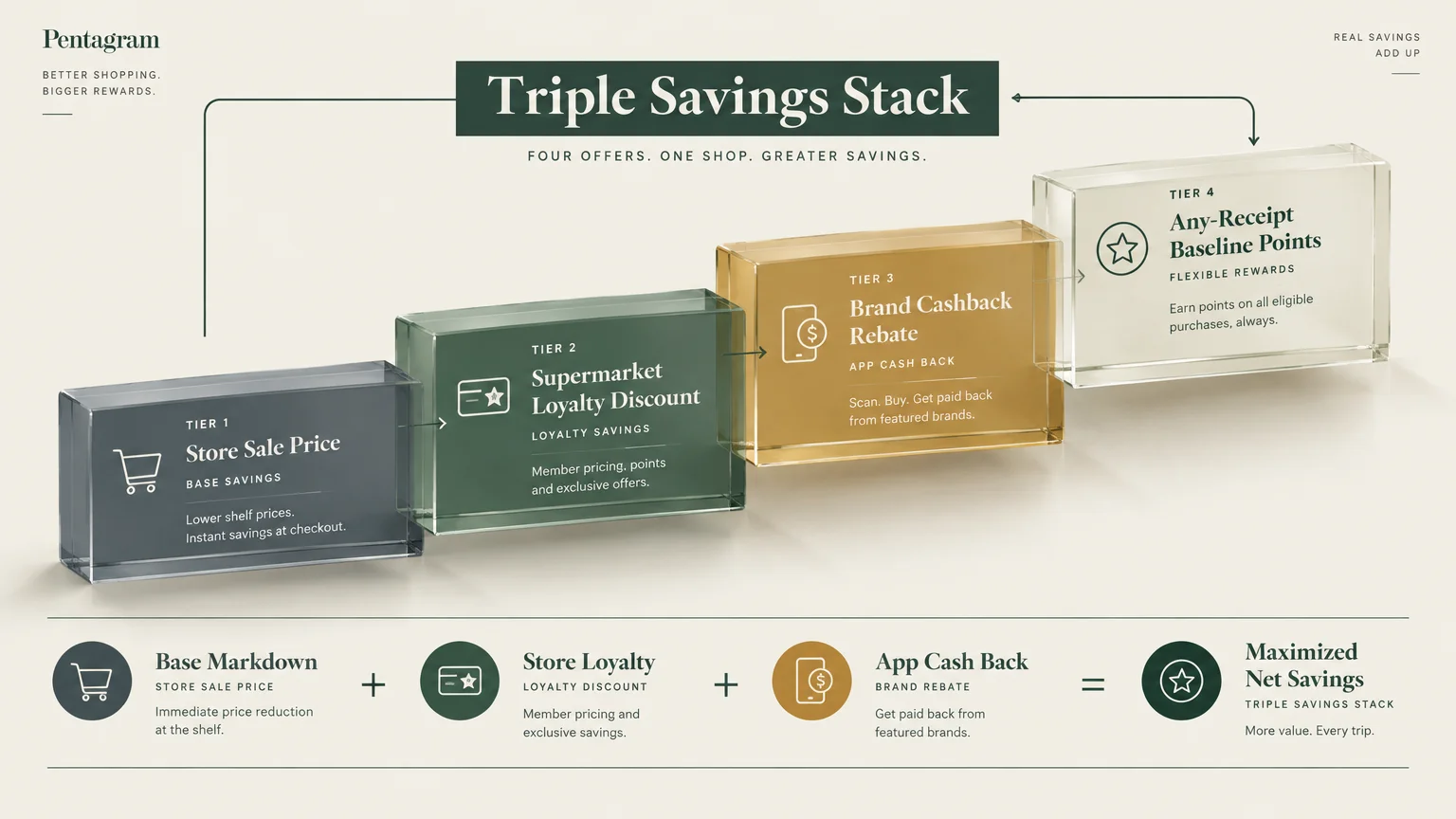
Strategic Stacking: How to Triple Your Savings
The true power of grocery rewards apps emerges when you combine multiple platforms on a single shopping trip. Rebate stacking allows you to collect incentives from several distinct sources simultaneously.
Most rebate platforms operate independently, meaning their rules do not prohibit cross-platform scanning. A single receipt can generate income across four separate financial channels.
Start your stacking strategy at the store level. Scan your store loyalty card, such as Target Circle or a regional supermarket rewards account, to capture base sales.
Pay for your transaction using a credit card that offers bonus cash back on grocery purchases. The Consumer Financial Protection Bureau (CFPB) advises consumers to review reward card terms and pay statement balances in full each billing cycle to prevent interest charges from erasing your savings.
Once you complete checkout, collect your physical register receipt. Open Ibotta or Checkout 51 to claim any item-specific manufacturer rebates you unlocked.
Finally, photograph that exact same receipt inside Fetch Rewards, Receipt Hog, and ReceiptPal. You capture baseline scanning points across all three any-receipt platforms within two minutes.
“It’s not how much money you make, but how much money you keep, how hard it works for you, and how many generations you keep it for.” — Robert Kiyosaki
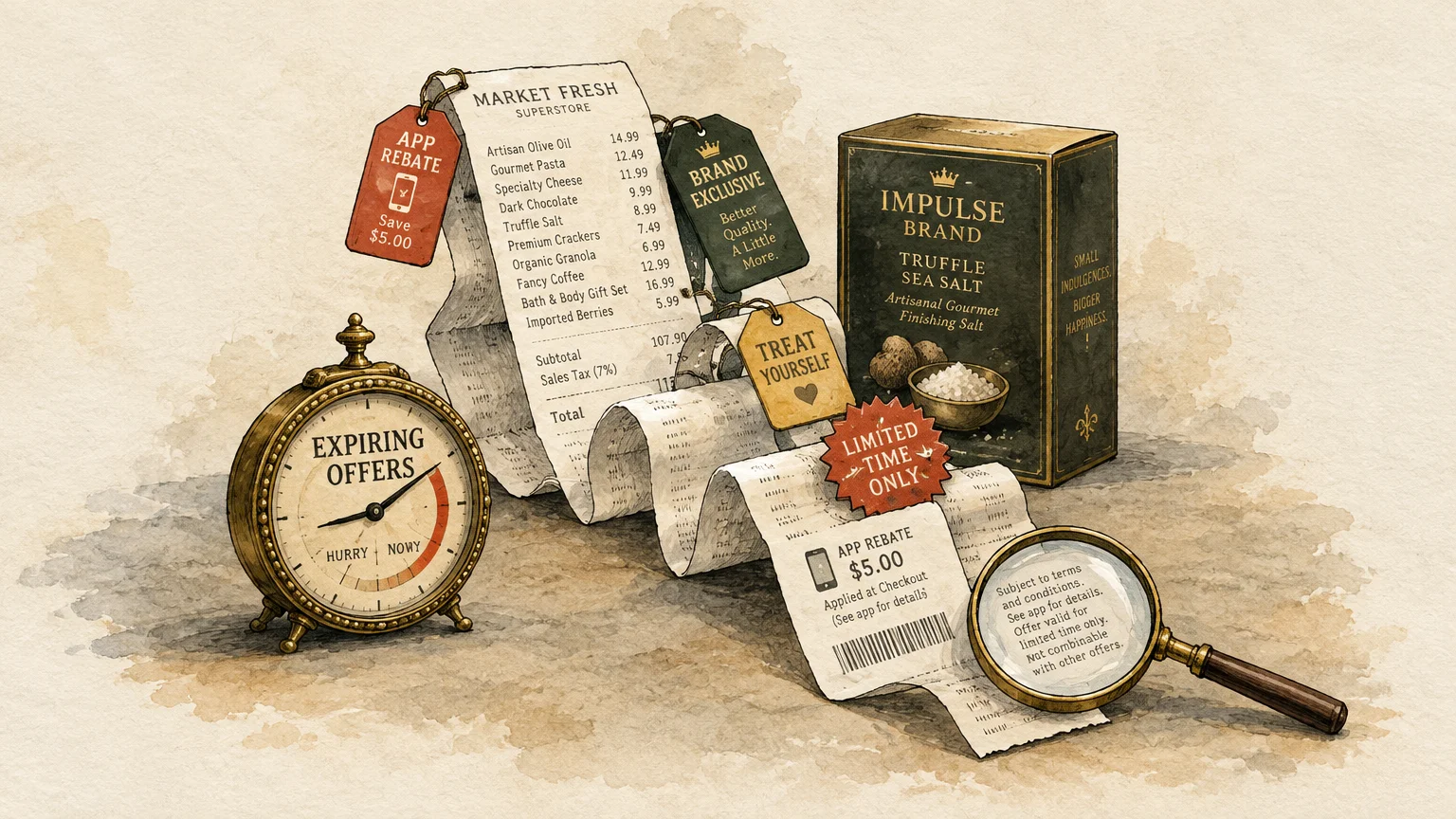
Costly Mistakes to Avoid
Rebate apps are designed to influence your consumer behavior. If you alter your purchasing habits recklessly, you can easily end up spending more money than you earn back.
The most common mistake is purchasing expensive name-brand items simply to unlock a cash rebate. A $1.00 cash rebate on a $5.00 box of cereal remains a poor financial choice if the store brand costs $2.50.
Stick firmly to your regular household shopping list. Only select brand rebates for items your family already planned to purchase.
Another frequent trap involves missing receipt submission windows. Fetch Rewards and Receipt Hog both enforce strict 14-day receipt submission limits from the date of purchase.
Letting receipts sit on your kitchen counter leads to expired opportunities. Designate a specific day each week to scan all your household register tapes at once.
Be mindful of point expiration policies and inactivity rules. Fetch points expire entirely after 90 days of account inactivity, wiping out your accrued balance.
Watch out for low-balance withdrawal fees on apps like Upside. Cashing out small balances triggers avoidable $1 service fees that diminish your earnings.
Finally, protect your private consumer data when linking email accounts. The Federal Trade Commission (FTC) recommends auditing linked apps periodically to ensure digital platforms only access information necessary for loyalty verification.
Frequently Asked Questions
Are grocery cashback apps safe to link to store accounts?
Major grocery apps use secure data encryption and application programming interfaces to connect with store loyalty accounts. They view your purchase history to verify rebates, but they cannot access your underlying payment credentials.
Can you scan the same grocery receipt into multiple apps?
Yes, you can scan the same physical receipt across multiple non-exclusive apps like Fetch, Receipt Hog, and ReceiptPal. However, you should avoid claiming identical manufacturer-sponsored digital coupons across competing item-specific apps if their user agreements forbid it.
Do grocery rebate apps report my earnings to the IRS as taxable income?
The IRS generally treats standard consumer rebates and cash back on personal purchases as price discounts rather than taxable income. However, earnings derived from referral bonuses, sweepstakes, or surveys may trigger taxable reporting if they exceed annual thresholds.
What is the difference between item-specific apps and any-receipt apps?
Item-specific apps like Ibotta require you to buy designated promotional products to earn substantial rebates. Any-receipt apps like Fetch Rewards award baseline points for any store receipt regardless of the specific items you purchased.
Start Reclaiming Your Grocery Dollars
Recovering money from your household food budget does not require hours of extreme couponing. Downloading two or three complementary grocery rebate apps turns ordinary shopping trips into reliable cash back.
Pick one item-specific platform and one any-receipt platform to build your baseline routine. Once scanning receipts becomes a regular habit, layer in additional tools to maximize your annual savings.
This article is for informational purposes only and does not constitute financial, legal, or tax advice. Rates, benefit amounts, and tax rules change regularly—verify current details with the relevant agency or a licensed professional.
Last updated: February 2026. Rates, benefit amounts, and tax rules change—always verify current details at official sources.