High housing costs force millions of households to sacrifice fresh food just to pay rent each month. The national median rent hovers near $1,920, consuming over thirty percent of median earnings.
You can cut your monthly expenses without sacrificing fresh produce or neighborhood connections. Relocating to an affordable community with a vibrant agricultural market revitalizes your health and bank account.
Ten outstanding American towns provide nationally recognized farmers markets alongside rents under $1,400 monthly. Discover where your housing dollars go further and your kitchen table stays full.
Why Local Food Hubs and Low Rent Build Real Wealth
Housing and groceries represent the two largest recurring lines in the standard family budget. Trimming both categories simultaneously yields an immediate compounding effect on your personal savings rate.
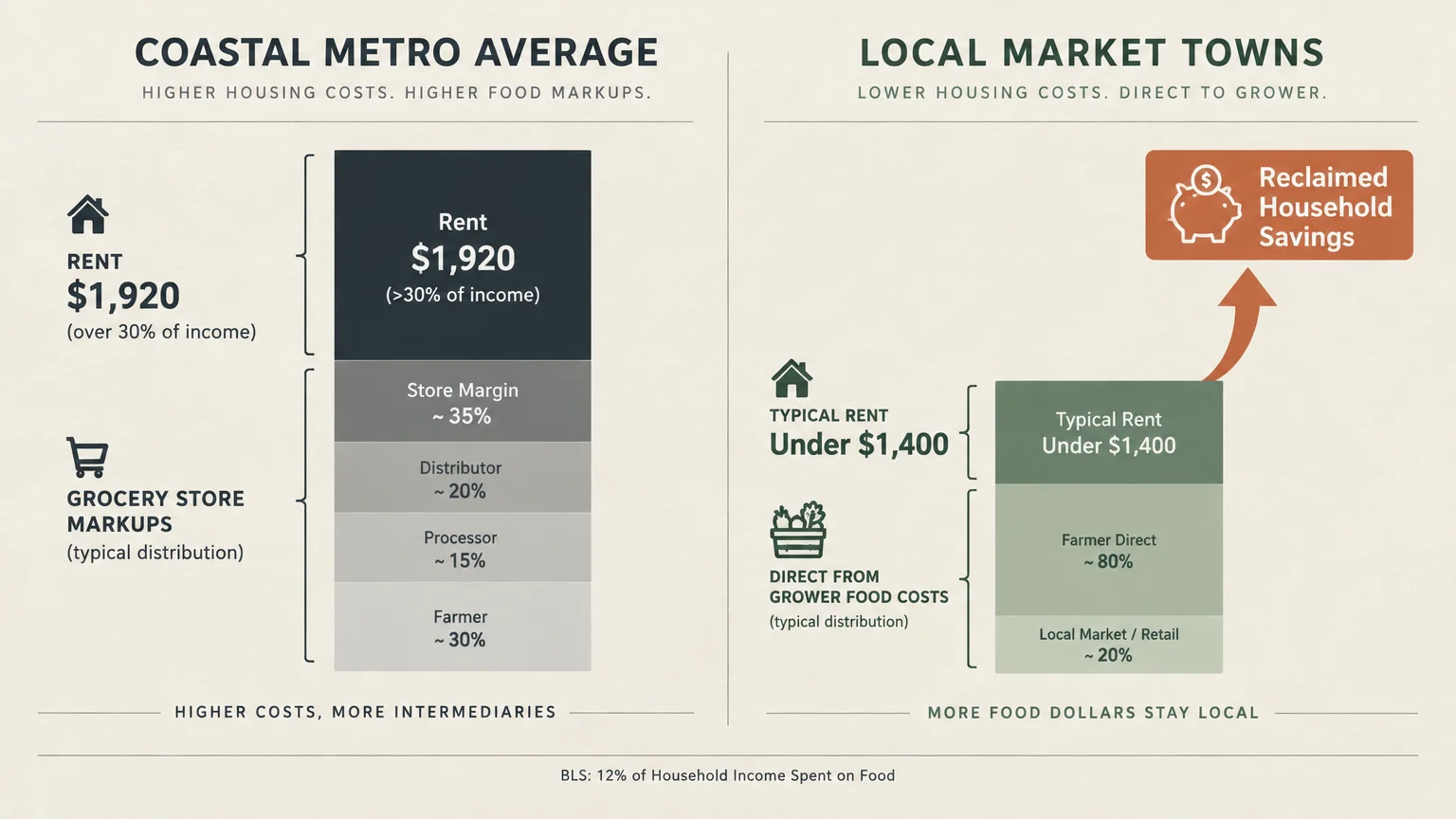
According to consumer spending metrics from the Bureau of Labor Statistics (BLS), average American households allocate over twelve percent of their income to nourishment alone.
Supermarkets add massive distribution overhead, packing fees, and middleman profits onto every vegetable display. In contrast, regional growers sell peak-season crops directly to you at fair prices.
When you pair cut-rate grocery costs with regional rent prices forty percent below coastal averages, you reclaim hundreds of dollars each month. Those savings protect your household against emergencies.
“A budget is telling your money where to go instead of wondering where it went.” — John C. Maxwell
Direct farm transactions also keep your dollars circulating within your immediate hometown ecosystem. You support family-owned orchards while slashing your own monthly cost of living.

1. Flint, Michigan: Historic Urban Agriculture
Flint delivers rich agricultural tradition alongside remarkably accessible residential housing costs. Typical monthly apartment rents range between $960 and $1,025 across the city.
That pricing sits roughly 48% below the current national median benchmark. Lower shelter obligations instantly leave discretionary income in your bank account.
The Flint Farmers’ Market serves as the vibrant social anchor of the downtown district. Established in 1905, this indoor facility operates year-round with over 50 permanent vendor stalls.
Up to 25 additional outdoor merchants arrive during the warm summer harvest weeks. USA Today recognized the venue as one of the Top 10 Public Markets in America.
You can purchase pasture-raised meats, regional Great Lakes fruit, and artisan bread under one climate-controlled roof. The facility also houses an expansive commercial demonstration kitchen.
Living here lets you enjoy urban market architecture on an ordinary working-class salary. You build household equity while dining on seasonal Midwestern harvest yields.
2. Columbia, Missouri: Award-Winning College Town Bounty
Columbia blends the energy of a major university center with deep Midwestern farming connections. Local monthly rents typically sit between $1,200 and $1,395.
That price point tracks 27% below prevailing national lease averages. You enjoy lower fixed costs without losing cultural attractions or strong public parks.
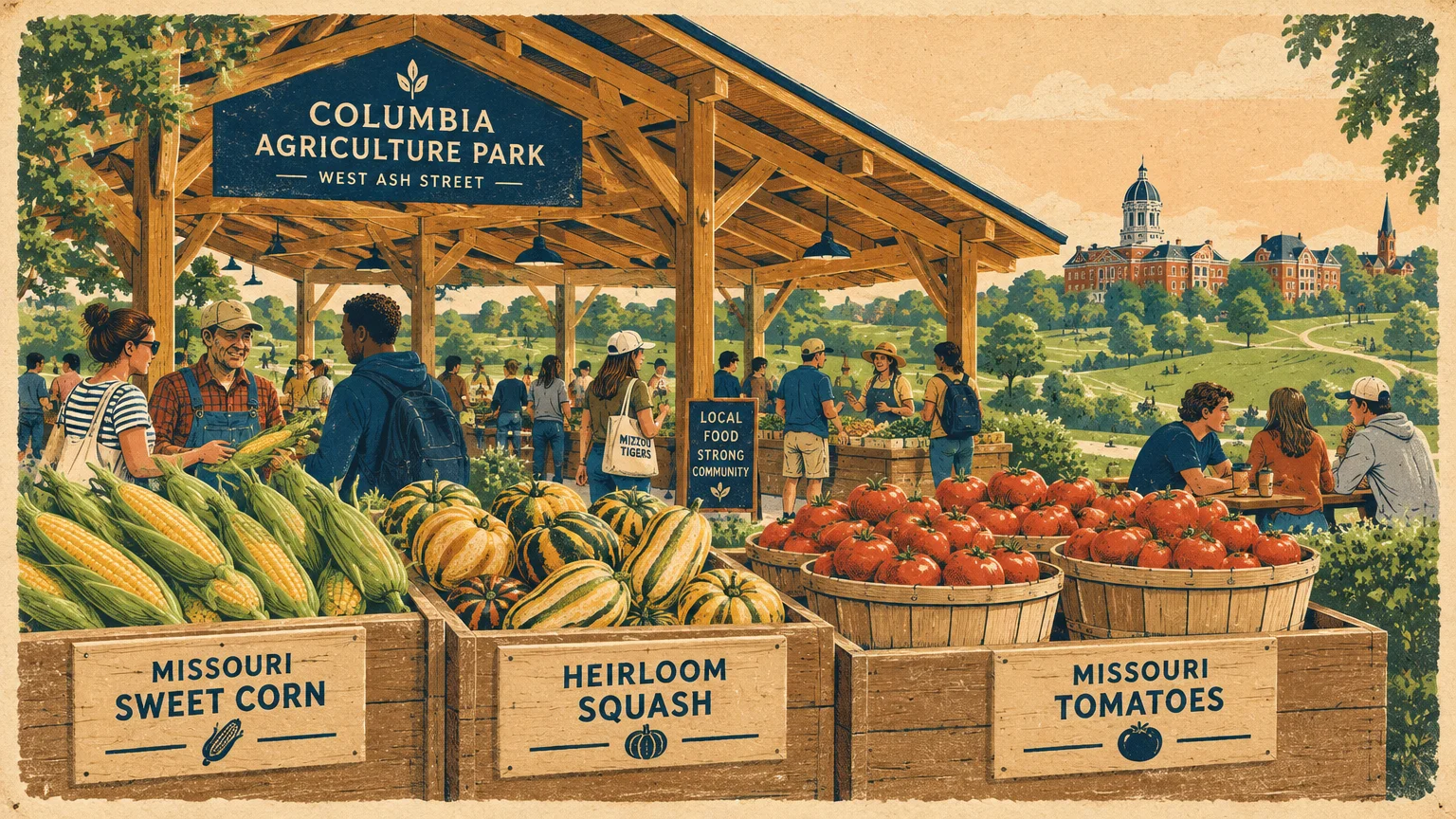
The Columbia Farmers Market anchors Columbia’s Agriculture Park on West Ash Street. Founded in 1980, this producer-only market features approximately 80 regional agricultural and artisan sellers.
The American Farmland Trust voted it the Number 1 People’s Choice Farmers Market in the Nation in 2021. It followed that triumph by ranking second nationwide in 2022.
Stringent standards require vendors to grow or produce every edible item within Missouri soil. You know exactly which regional farmer harvested your weekly basket of sweet corn and heirloom squash.
The covered outdoor pavilion keeps shoppers comfortable through rain or direct summer heat. You can build substantial savings while feeding your family premium whole foods.
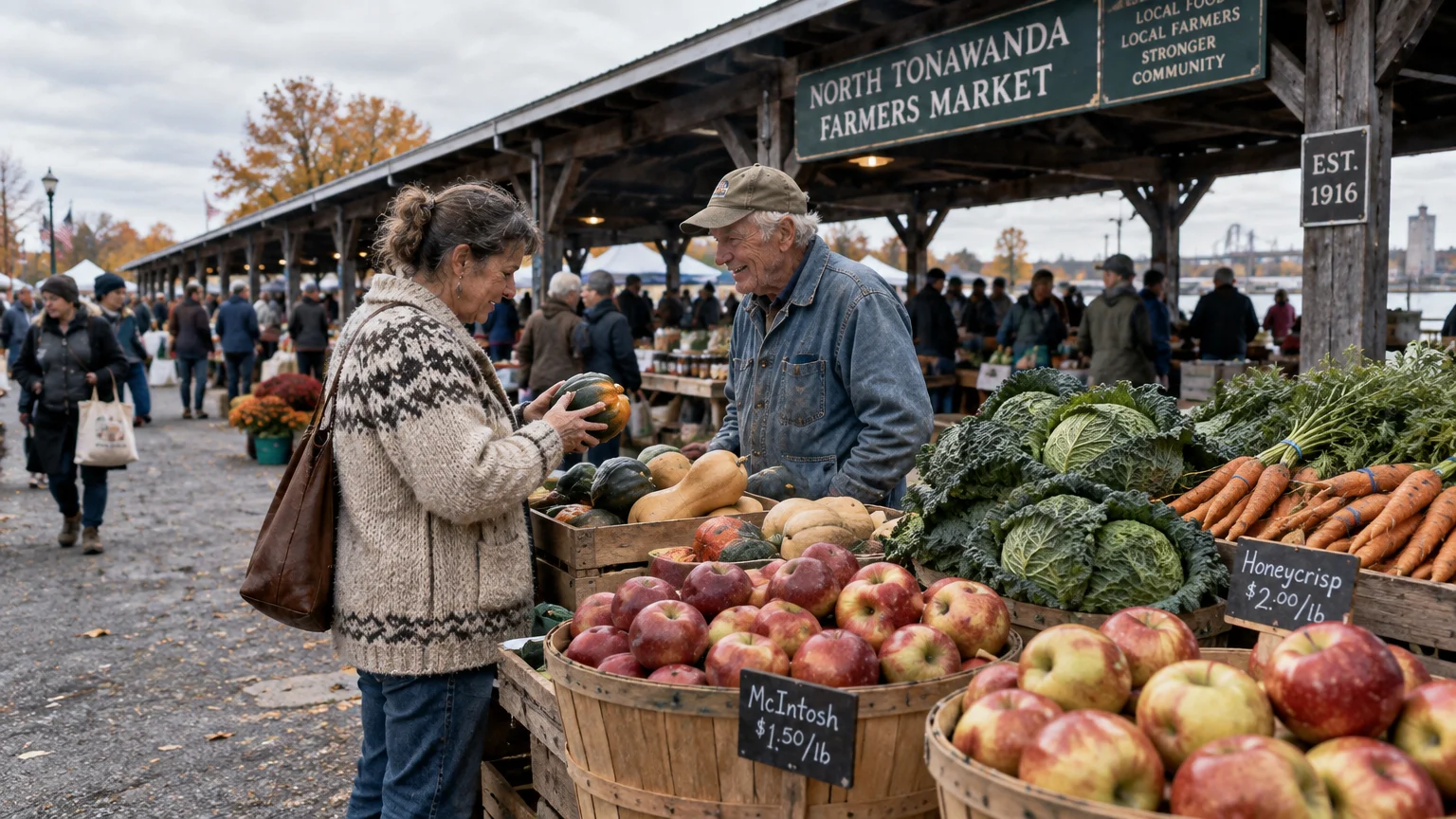
3. North Tonawanda, New York: America’s Top-Voted Market
North Tonawanda sits along the historic Erie Canal between Buffalo and Niagara Falls. Typical local rental rates fall between $1,100 and $1,200 per month.
That provides significant financial breathing room compared to downstate New York markets. You secure stable housing without draining your liquid emergency reserves.
The North Tonawanda City Market has served canal-side residents continuously for more than 115 years. Established in 1908, the venue operates every Tuesday, Thursday, and Saturday.
It captured the Number 1 Best Farmers Market in the United States title during the 2023 America’s Farmers Market Celebration. The market collected over 18,326 verified national votes.
Dozens of regional fruit growers, specialty butchers, and florists gather year-round along Robinson Street. The selection features Niagara County apples, fresh lake fish, and dairy goods.
A move here pairs historic Great Lakes neighborhood charm with exceptional food affordability. Your monthly rent check remains modest while your pantry stays fully stocked.
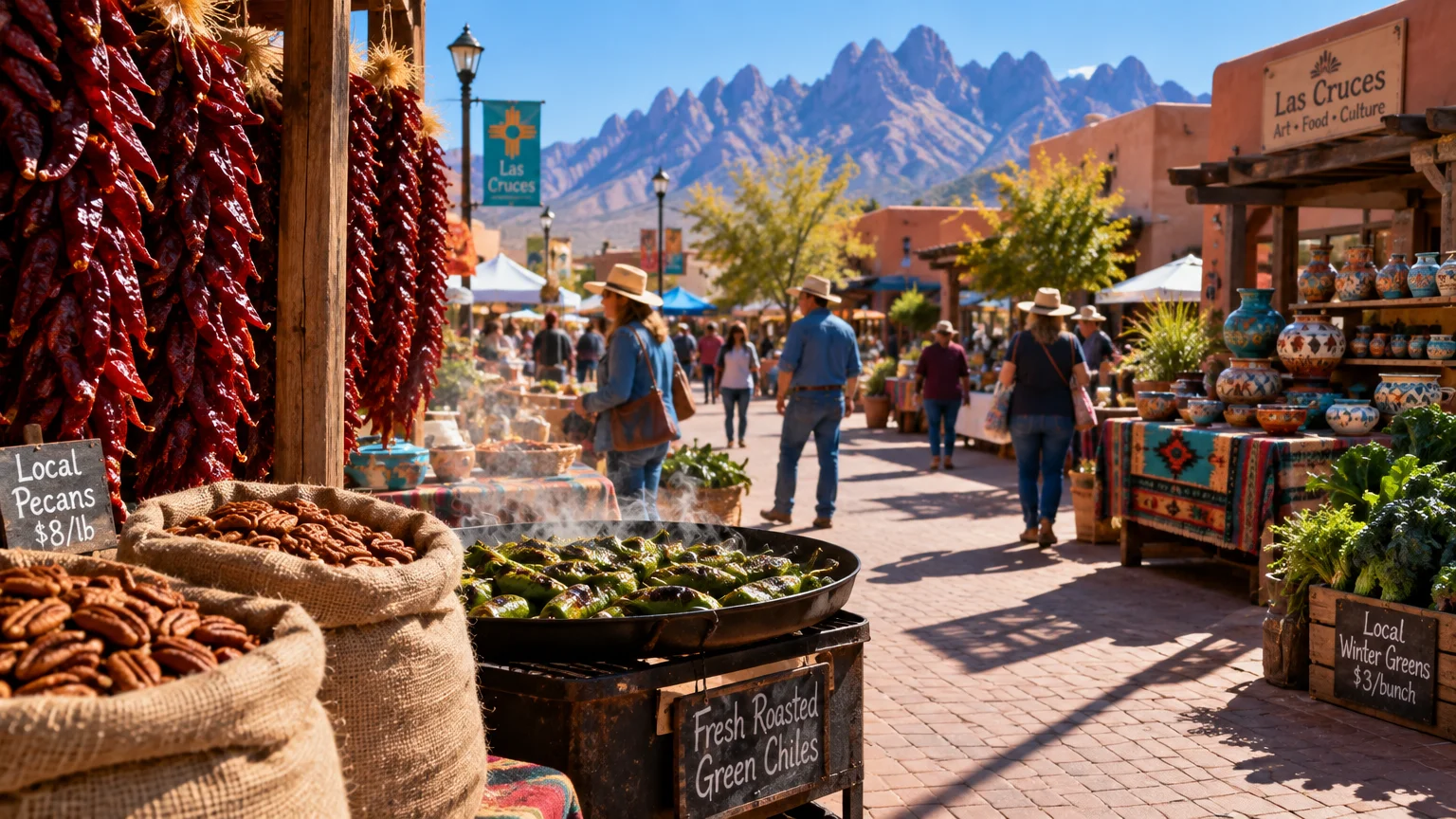
4. Las Cruces, New Mexico: Southwest Culture and Year-Round Sun
Las Cruces offers dramatic Organ Mountain views and some of the lowest housing overhead in the Southwest. Median apartment rents sit between $950 and $1,050 monthly.
Single-bedroom fair market rents often drop near $850 to $900 per month. Those numbers represent a massive discount compared to nearby mountain metro areas.
The Farmers & Crafts Market of Las Cruces runs along seven full blocks of Downtown Main Street. Founded in 1971, this desert open-air market hosts up to 200 regular vendors.
The American Farmland Trust voted it the Number 1 Large Farmers Market in the Nation. It operates every Wednesday and Saturday morning under sunny skies.
Local farmers sell famous Hatch green chiles, roasted pecans, raw desert honey, and prickly pear delicacies. Artisans line the shaded central plazas alongside traditional agricultural stands.
You can comfortably live on a fixed pension or entry-level salary in Las Cruces. Warm weather and low rents make fresh cooking effortless all twelve months.

5. Des Moines, Iowa: Capital City Scale at Heartland Prices
Des Moines provides robust white-collar employment opportunities with remarkably reasonable rental expenses. Monthly apartment rates range between $975 and $1,100 across central neighborhoods.
Those figures track 40% to 45% below the national median rent. You get capital-city amenities at small-town housing rates.
The Downtown Farmers’ Market spans nine entire city blocks within the Historic Court District. Established in 1976, this event hosts nearly 300 regional vendors on Saturday mornings.
Growers arrive from more than 50 separate Iowa counties to sell sweet corn, berries, and artisanal cheeses. National publications consistently rank it among the top five outdoor markets nationwide.
Live street music, breakfast food stands, and family activities fill the streets from May through October. A winter indoor market keeps local options open when temperatures drop.
Choosing Des Moines lets you accelerate debt payoff while enjoying an exceptional community gathering space. Your household gains both financial traction and high nutritional value.
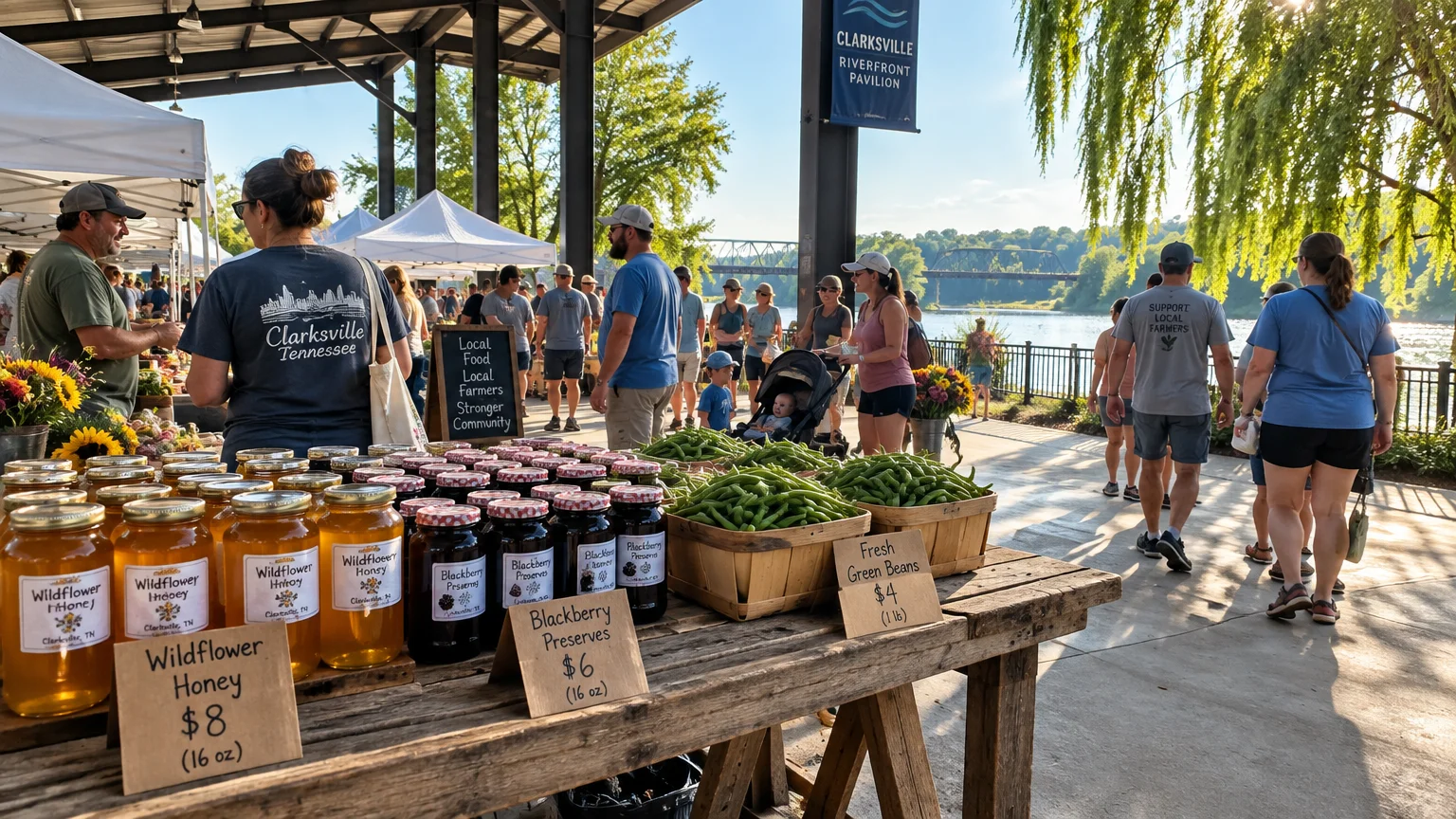
6. Clarksville, Tennessee: Rapid Growth With Small-Town Rental Rates
Clarksville sits along the Cumberland River just northwest of Nashville’s high-cost metropolitan core. Average monthly rental rates run between $1,200 and $1,290.
You avoid the steep rental inflation of Middle Tennessee while retaining access to strong regional job markets. Tennessee also levies no state personal income tax on wages.
The Clarksville Downtown Market operates at Public Square every Saturday from May through October. Established in 2009, this community market hosts between 80 and 100 regional merchants weekly.
The American Farmland Trust crowned Clarksville the Number 1 Market in America during its 2020 national celebration. The market emphasizes direct relationships between shoppers and regional growers.
Vendors supply farm-fresh eggs, grass-fed beef, seasonal peaches, and native honey. Live acoustic bands and rotating food trucks create a welcoming family atmosphere.
You keep more of your paycheck through low rent and zero state income taxes. That leftover cash helps you build an emergency fund faster.
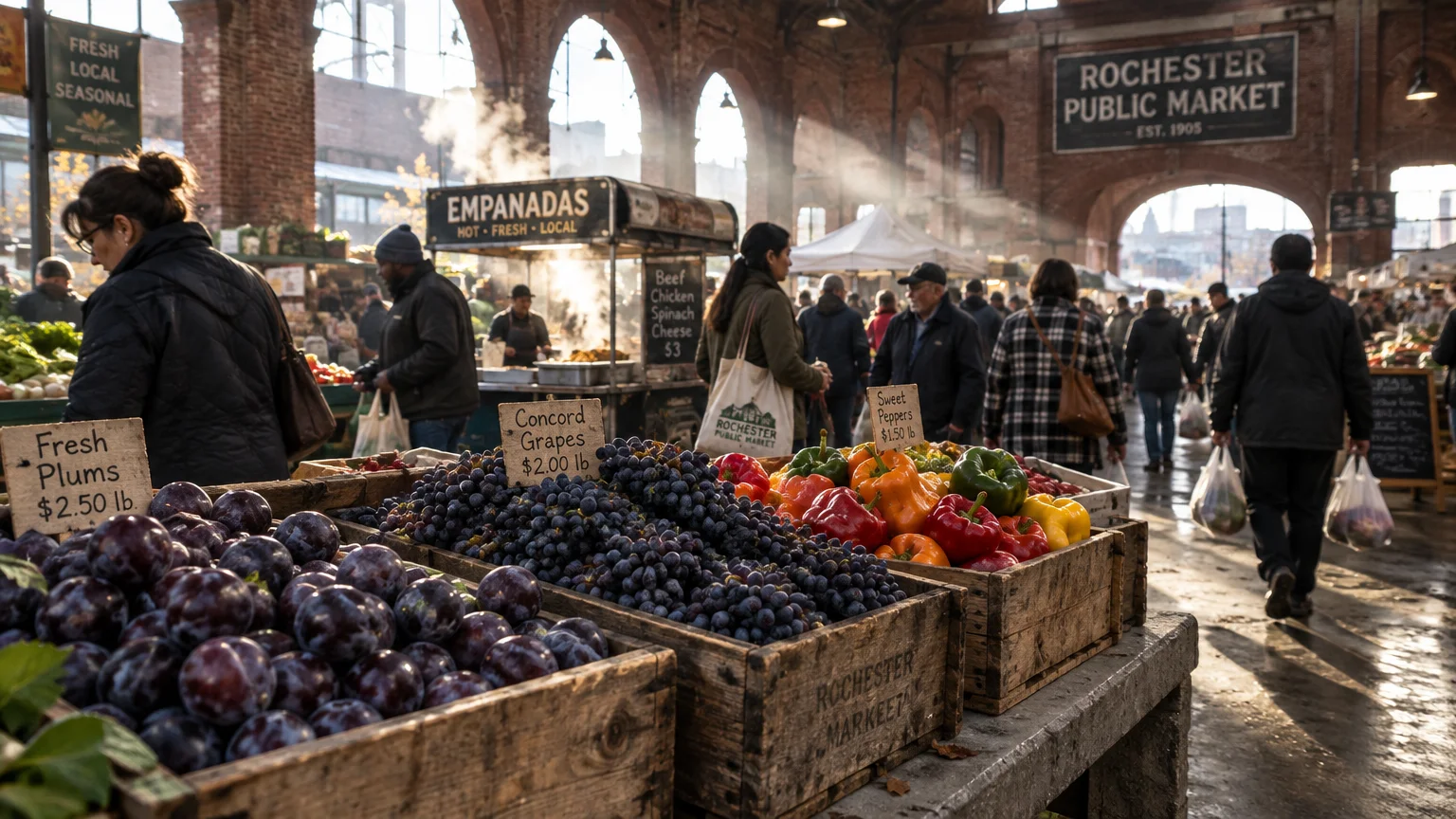
7. Rochester, New York: Historic Public Markets on Lake Ontario
Rochester offers impressive historic residential neighborhoods near the southern shore of Lake Ontario. Typical area rents average between $1,150 and $1,250 per month.
These lease rates give young professionals and retirees an affordable base in upstate New York. Your housing overhead stays manageable throughout the entire year.
The City of Rochester Public Market has served the community continuously since 1905 on Union Street. It operates fifty-two weeks a year on Tuesdays, Thursdays, and Saturdays.
Peak Saturday gatherings draw up to 40,000 enthusiastic regional visitors. The venue won the national title of America’s Favorite Farmers Market from the American Farmland Trust.
Dozens of outdoor sheds cover vendors selling orchard fruit, cold-hardy greens, fresh dairy, and ethnic delicacies. Surrounding brick warehouses feature independent coffee shops, specialty grocers, and bakeries.
Living here allows you to bypass industrial supermarket markups entirely. You enjoy world-class market tradition alongside monthly rental rates that leave room for savings.

8. Green Bay, Wisconsin: Waterfront Living and Evening Gatherings
Green Bay provides lakeside living and dependable Midwestern manufacturing wages. Typical rental units cost between $950 and $1,050 per month.
Housing costs sit nearly 48% below prevailing national median rent figures. You can secure a comfortable suburban or downtown apartment without financial strain.
The Farmers’ Market on Broadway serves as the focal point of mid-week community life. Running for over 20 seasons, the market lines the Broadway District every Wednesday evening.
Between 100 and 120 vendors set up booths, attracting roughly 10,000 visitors each week from May through October. The festive atmosphere combines farm shopping with community networking.
Merchants offer fresh Wisconsin cheese curds, berries, organic greens, and pastured poultry. Saturday morning markets throughout the district continue the farm access across surrounding neighborhoods.
You can walk to mid-week dinners, shop direct from growers, and keep your rent payments low. That stability gives families peace of mind during fluctuating economic cycles.
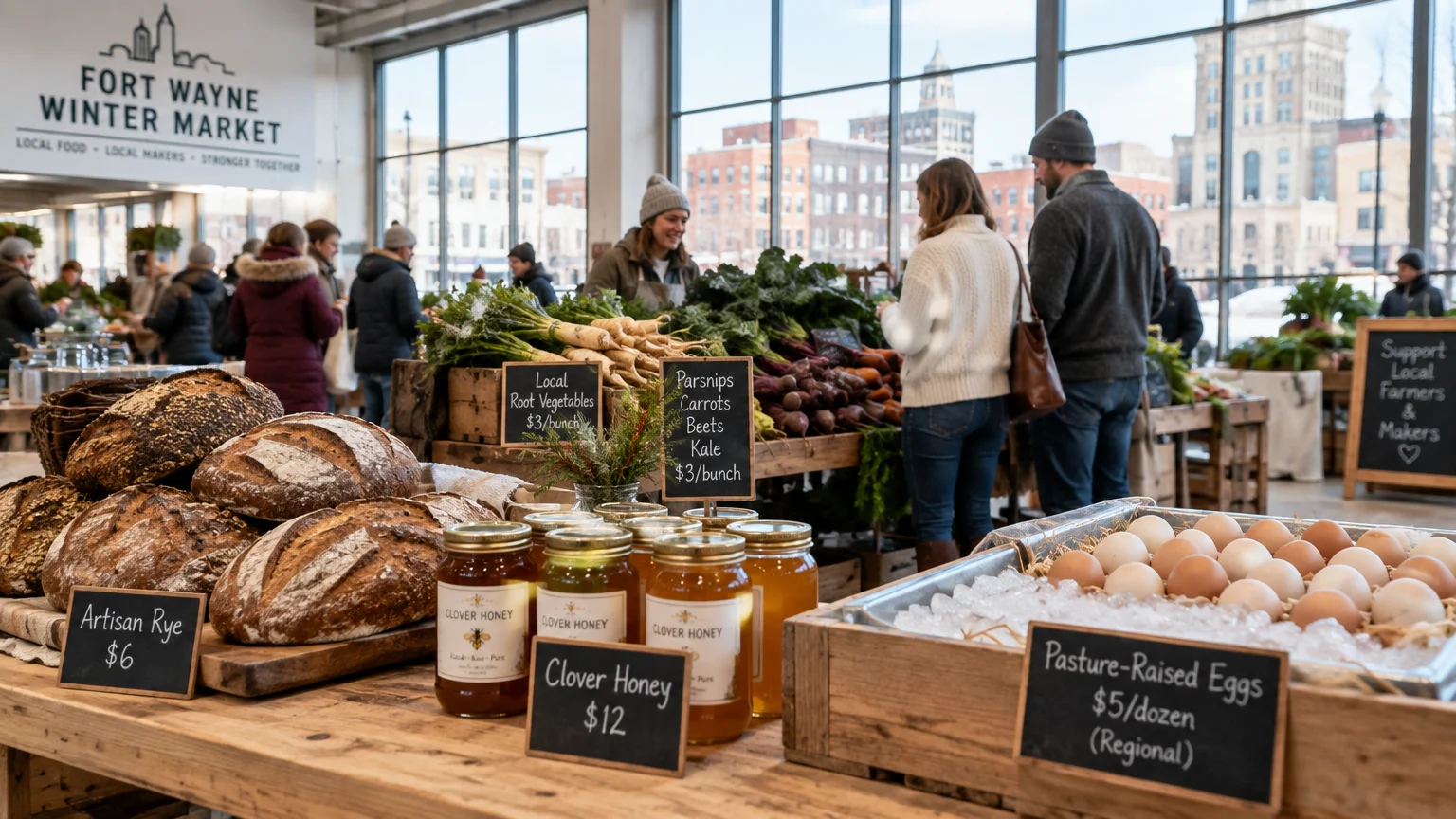
9. Fort Wayne, Indiana: Midwestern Value and Dual Markets
Fort Wayne routinely places among the top five most affordable mid-sized metropolitan areas in America. Monthly apartment rents typically fall between $950 and $1,100.
Low rental overhead allows families to live well below their income baseline. The money you save can fund retirement accounts or home down payments.
The city supports two complementary, high-volume grower hubs: the YLNI Farmers Market and Ft. Wayne’s Farmers Market. Together, these programs operate continuous weekly schedules throughout all twelve months.
More than 100 distinct vendors present seasonal vegetables, artisan cheeses, fresh meat, and native maple syrup. Indoor winter venues guarantee uninterrupted access to locally produced food.
The markets collaborate with local urban farm initiatives to expand fresh nutrition access. You can easily find organic microgreens and fresh bread in the heart of downtown.
Fort Wayne shows that you do not need steep living expenses to enjoy exceptional community resources. Your wallet stays protected while your kitchen enjoys abundant harvests.
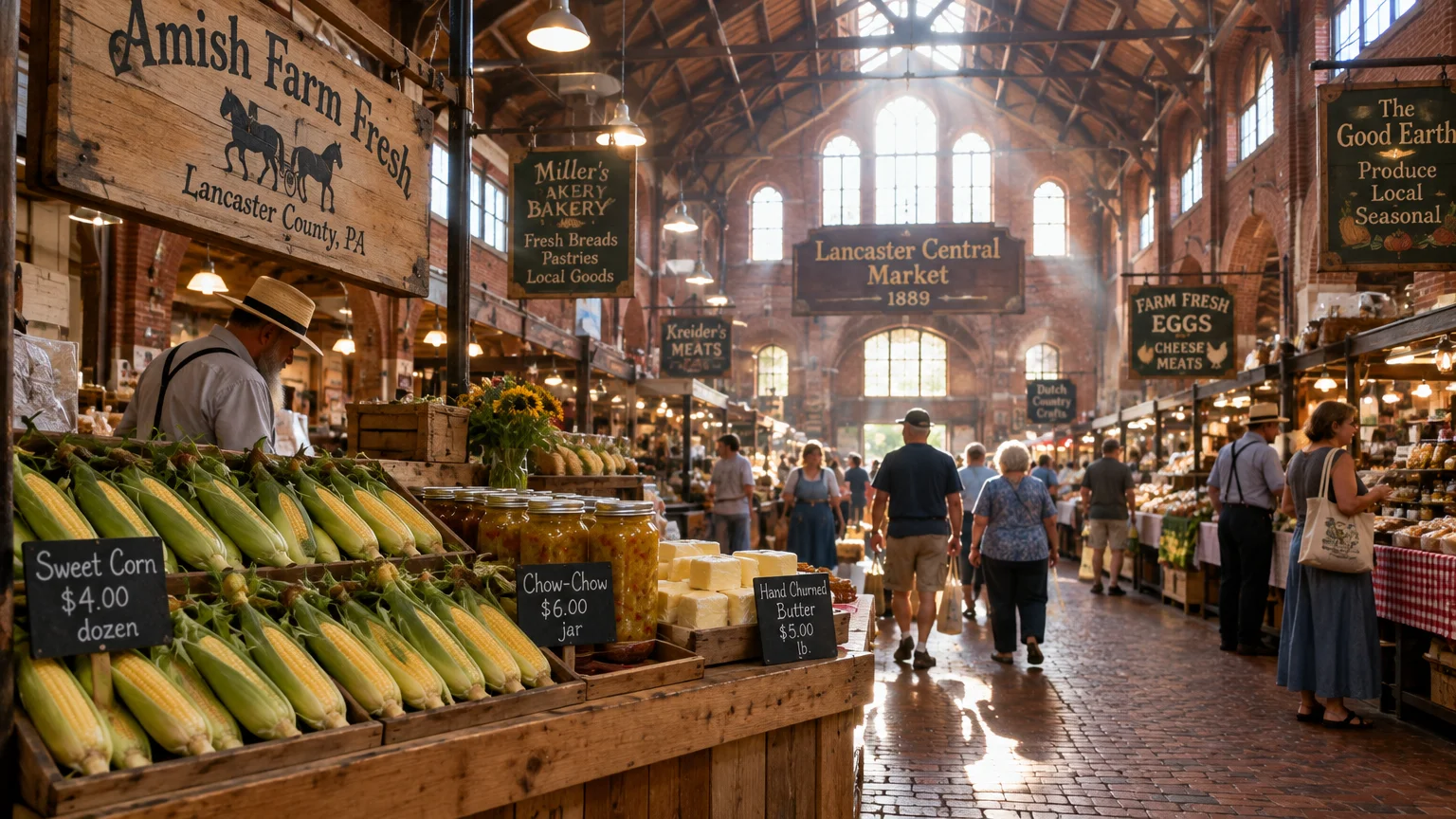
10. Lancaster, Pennsylvania: The Historic Epicenter of Farm-to-Table
Lancaster anchors one of the most productive non-irrigated farming counties in the United States. Typical area rents average between $1,250 and $1,350 per month.
Rental rates remain considerably cheaper than nearby Philadelphia or Baltimore suburbs. You benefit from rich soil, rolling hills, and easy train access to the East Coast corridor.
The Lancaster Central Market is the oldest continuously operated public farmers market in the country. King George II originally chartered the market site back in 1730.
Over 60 local vendors operate inside an iconic 1889 Romanesque revival red-brick building. It opens every Tuesday, Friday, and Saturday in historic Penn Square.
Stands showcase Lancaster County bounty, including PA Dutch poultry, chow-chow, heritage produce, and grass-fed butter. The market represents the gold standard of direct agricultural commerce.
Living near Lancaster allows you to purchase groceries straight from multigenerational family growers. You combine historical charm with affordable lease terms.
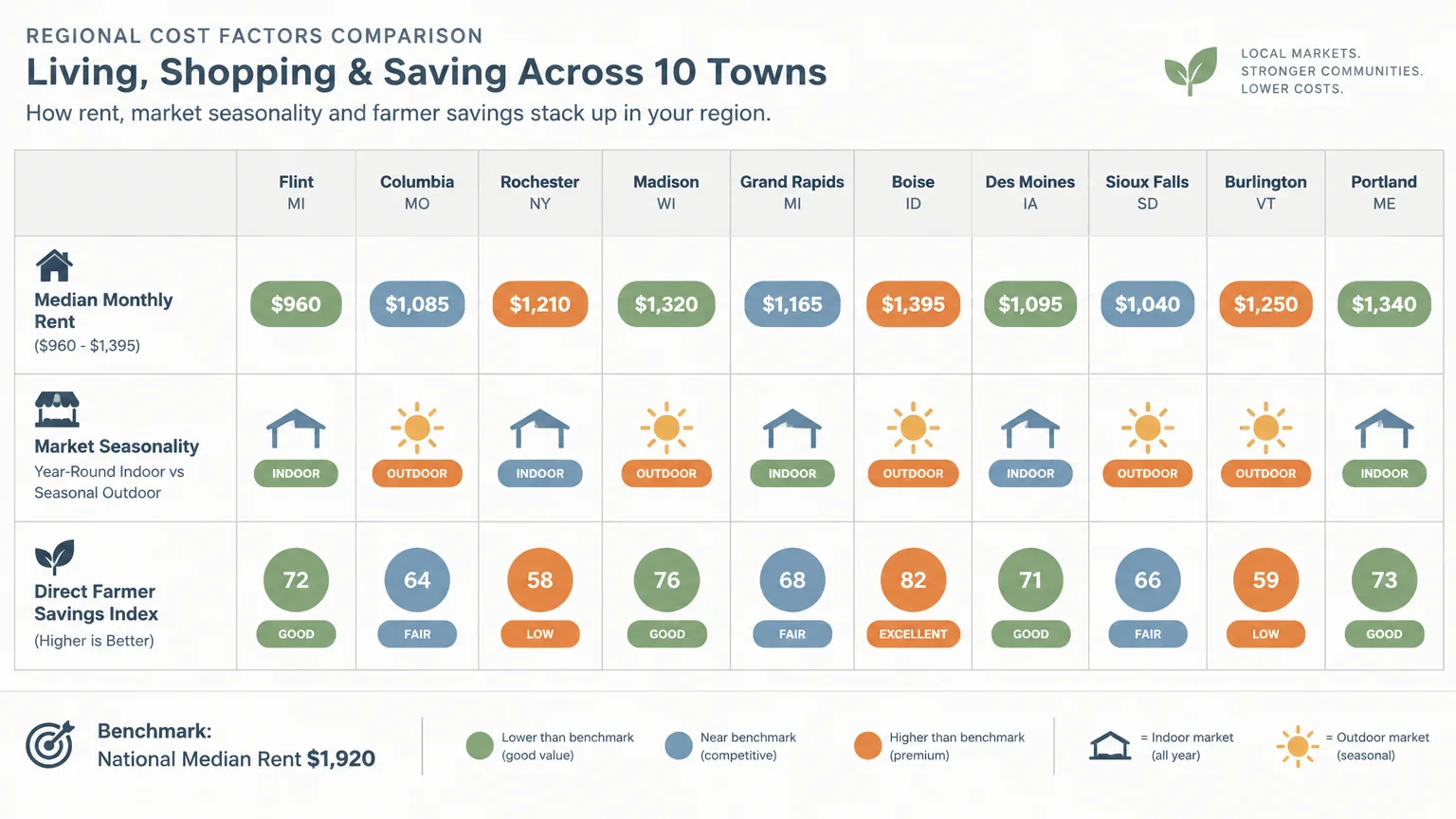
Comparing Rents and Market Features Across All 10 Towns
Every community highlighted offers distinct regional advantages alongside significant rental discounts. Review the comparison breakdown below to match your lifestyle preferences with local cost realities.
| Town & State | Typical Monthly Rent | Market Founded | Key National Distinction |
|---|---|---|---|
| Flint, MI | $960 – $1,025 | 1905 | Top 10 Public Market (USA Today); Year-Round Indoor Hub |
| Columbia, MO | $1,200 – $1,395 | 1980 | #1 People’s Choice Market (AFT 2021); Producer-Only |
| North Tonawanda, NY | $1,100 – $1,200 | 1908 | #1 Best Farmers Market in the US (AFT 2023 Celebration) |
| Las Cruces, NM | $950 – $1,050 | 1971 | #1 Large Market in the Nation (AFT); 7-Block Footprint |
| Des Moines, IA | $975 – $1,100 | 1976 | Nearly 300 Vendors Spanning 9 Downtown City Blocks |
| Clarksville, TN | $1,200 – $1,290 | 2009 | #1 Market in America (AFT 2020); No State Income Tax |
| Rochester, NY | $1,150 – $1,250 | 1905 | America’s Favorite Farmers Market; 40,000 Peak Visitors |
| Green Bay, WI | $950 – $1,050 | 2004 | Wednesday Night Broadway Market; 10,000 Weekly Guests |
| Fort Wayne, IN | $950 – $1,100 | Varies | Dual Year-Round Markets; Top 5 Affordable US Metro |
| Lancaster, PA | $1,250 – $1,350 | 1730 | Oldest Continuously Operated Public Market in the US |
All ten municipalities fall comfortably below the $1,920 national median rent. Moving to any of these destinations can save a household thousands of dollars each year.
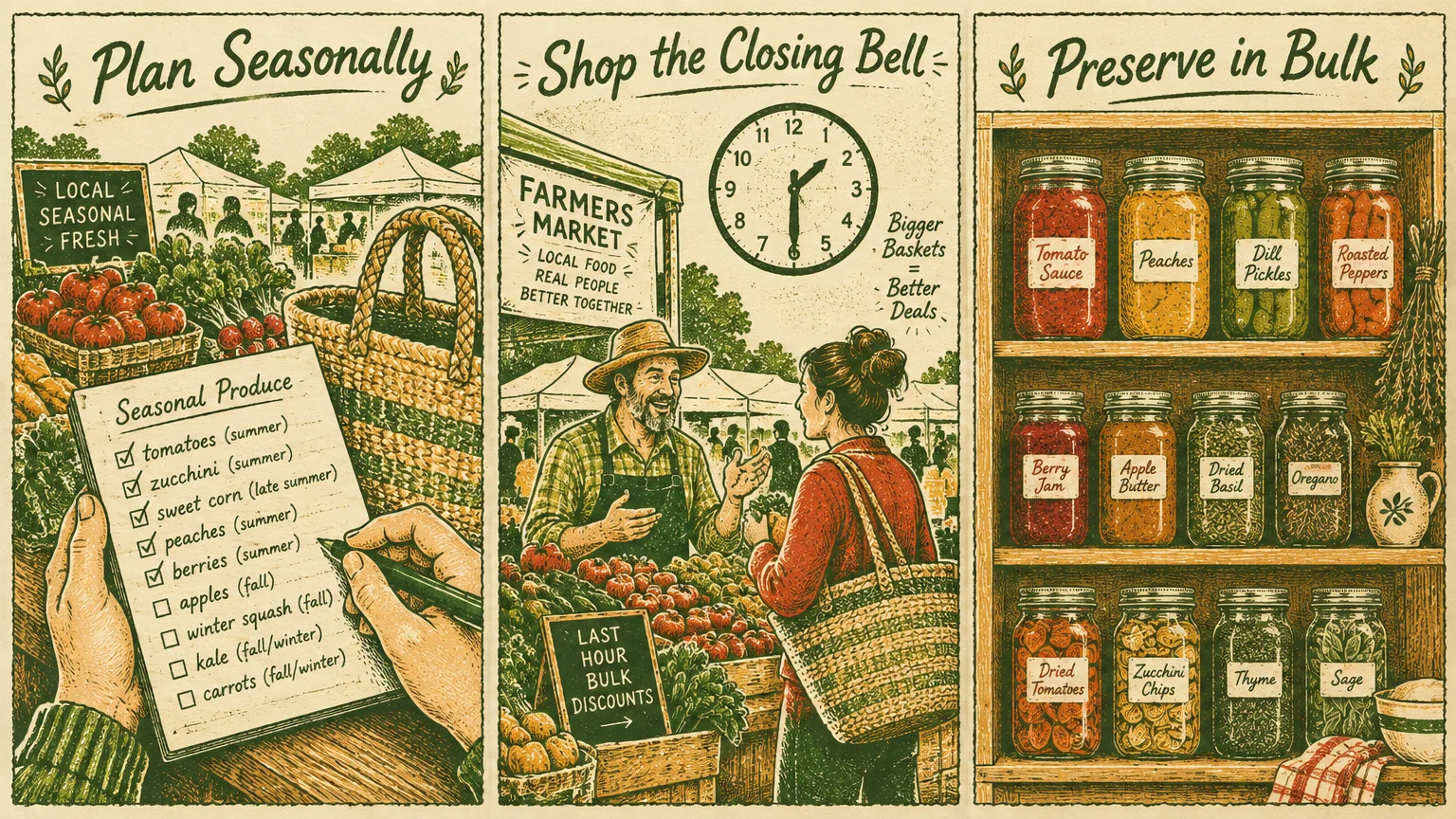
How to Maximize Savings When Shopping at Local Markets
Shopping at community growers markets can trim your food bill when you approach stalls with a plan. Casual shoppers often overspend on artisan crafts rather than buying bulk staples.
Use these practical tactics to extract maximum financial value from your weekend shopping trip:
- Shop the final hour: Growers prefer not to pack up heavy produce crates; ask for discount end-of-day box bundles.
- Ask for canning seconds: Vendors frequently sell cosmetically imperfect tomatoes, berries, or apples at fifty percent discounts.
- Utilize SNAP Double Up Food Bucks: Most premier markets match federal food benefits dollar-for-dollar on fresh local vegetables.
- Buy whole animal cuts: Pasture-raised butchers often discount whole chickens, soup bones, or ground meat packages compared to premium steaks.
- Preserve in season: Buy half-bushels of peppers, corn, and fruit at peak harvest to freeze or can for low-cost winter dining.
Developing direct relationships with individual farmers opens the door to bulk purchasing rates. You eat nutrient-dense meals while protecting your household monthly budget.

When to Get Expert Help Before Relocating
Relocating your household across state lines requires careful financial calculation and credit planning. Moving expenses, utility deposits, and lease application fees accumulate quickly if you do not plan ahead.
If your budget feels tight, connect with a certified counselor through HUD Housing Counseling before signing a lease agreement.
These counselors offer free or low-cost guidance on rental affordability, tenant rights, and long-term savings strategies. They help you calculate realistic moving budgets based on your exact income.
You can also review consumer lending and credit reporting resources through the Consumer Financial Protection Bureau (CFPB).
Knowing your credit rights ensures property managers treat your application fairly when reviewing rental histories. Clear financial records help you secure lower security deposit requirements.
“Financial peace isn’t the acquisition of stuff. It’s learning to live on less than you make.”
Take time to research local employment trends, state tax rules, and heating costs before finalizing your destination. Professional guidance prevents costly relocation errors.
Frequently Asked Questions About Affordable Market Towns
Are farmers markets actually cheaper than commercial supermarkets?
In-season produce purchased directly from growers often beats grocery store pricing because you eliminate middleman transportation and packaging costs.
However, specialty pre-made foods and packaged boutique items carry premiums. Stick to whole raw produce, bulk staples, and seasonal cuts to save money.
Do these affordable markets accept SNAP and EBT benefits?
Yes, all ten featured markets participate in federal nutrition assistance programs. Most also offer matching incentives like Double Up Food Bucks to stretch benefit dollars.
Visit the market information booth when you arrive to exchange EBT balance dollars for fresh market wooden tokens or vouchers.
How do winter climates affect farmers markets in northern towns?
Northern hubs like Flint, Rochester, and Lancaster operate inside dedicated historic indoor brick pavilions that remain warm year-round.
Other communities like Fort Wayne and Des Moines shift to indoor convention spaces or fieldhouses to maintain uninterrupted grower access all winter long.
What hidden expenses should I prepare for when moving to these towns?
Northern locations like Green Bay and North Tonawanda require higher winter home heating allowances and vehicle maintenance for snow.
Calculate state income taxes and winter utility charges alongside your base monthly rent to understand your complete monthly outflow.
Take Control of Your Household Overhead
Slashing your monthly rent while gaining immediate access to fresh local food changes your financial trajectory. Choose one or two towns from this list to research further this weekend.
Look at current rental listings, study local utility averages, and calculate your potential monthly savings. Trimming housing overhead creates durable financial breathing room for you and your family.
Information in this article reflects rules and figures current as of the publication date and may change. Always confirm details directly with your bank, the IRS, the Social Security Administration, or other official sources before making decisions.
Last updated: February 2026. Rates, benefit amounts, and tax rules change—always verify current details at official sources.