Finding a retirement destination that protects your physical safety without draining your nest egg feels increasingly difficult. High home prices and persistent property taxes make staying in place equally challenging for retirees on fixed incomes.
You can stretch your savings significantly by choosing communities where property values remain sensible and neighborhood crime rates stay well below national baselines. Smart geography transforms your monthly cash flow.
We evaluated national housing data, crime statistics, and tax policies to uncover eleven standout towns that deliver safety and genuine affordability.
The High Cost of Staying Put: National Financial Baselines
Retiring comfortably requires balancing housing expenses against predictable monthly income. When home values surge, property taxes and insurance premiums often climb right alongside them.
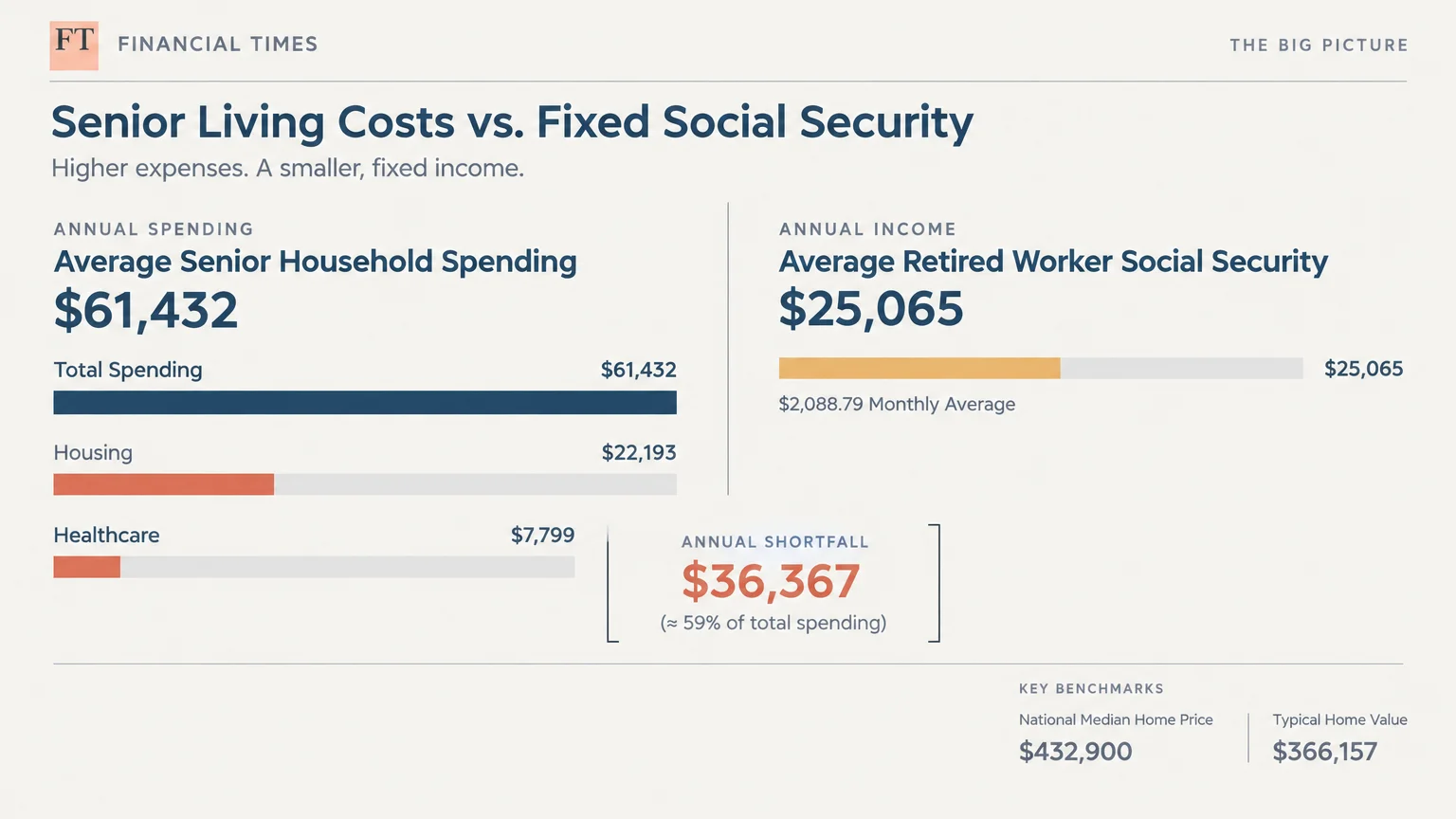
According to the Bureau of Labor Statistics Consumer Expenditure Survey, households headed by someone age 65 or older spend an average of $61,432 per year. Housing alone consumes $22,193 of that budget, while healthcare takes another $7,799.
Meanwhile, the Social Security Administration reports that following the 2.8% cost-of-living adjustment for 2026, the average monthly benefit check for a retired worker sits at $2,088.79. That equals approximately $25,065 annually.
Relying primarily on Social Security leaves a substantial annual shortfall against average senior expenditures. Bridging that gap demands disciplined personal savings, a pension, or lower living overhead.
National real estate benchmarks illustrate why relocating offers relief. As of late 2026, the National Association of Realtors reports a national median existing single-family home price of $432,900.
Data from the Zillow Home Value Index reflects a typical national home value of $366,157, alongside an average monthly rent of $1,932. Staying in high-cost metro areas exposes your savings to accelerated depletion.
Relocating to safe, low-cost regions allows you to cash out accumulated equity. You can purchase a comfortable residence with cash or secure a minimal mortgage while lowering everyday maintenance costs.
“It’s not how much money you make, but how much money you keep, how hard it works for you, and how many generations you keep it for.” — Robert Kiyosaki
State Tax Rules That Preserve Your Fixed Income
Where you live shapes how much tax you owe on retirement distributions, investment returns, and Social Security payments. Choosing your state wisely creates an immediate financial raise.
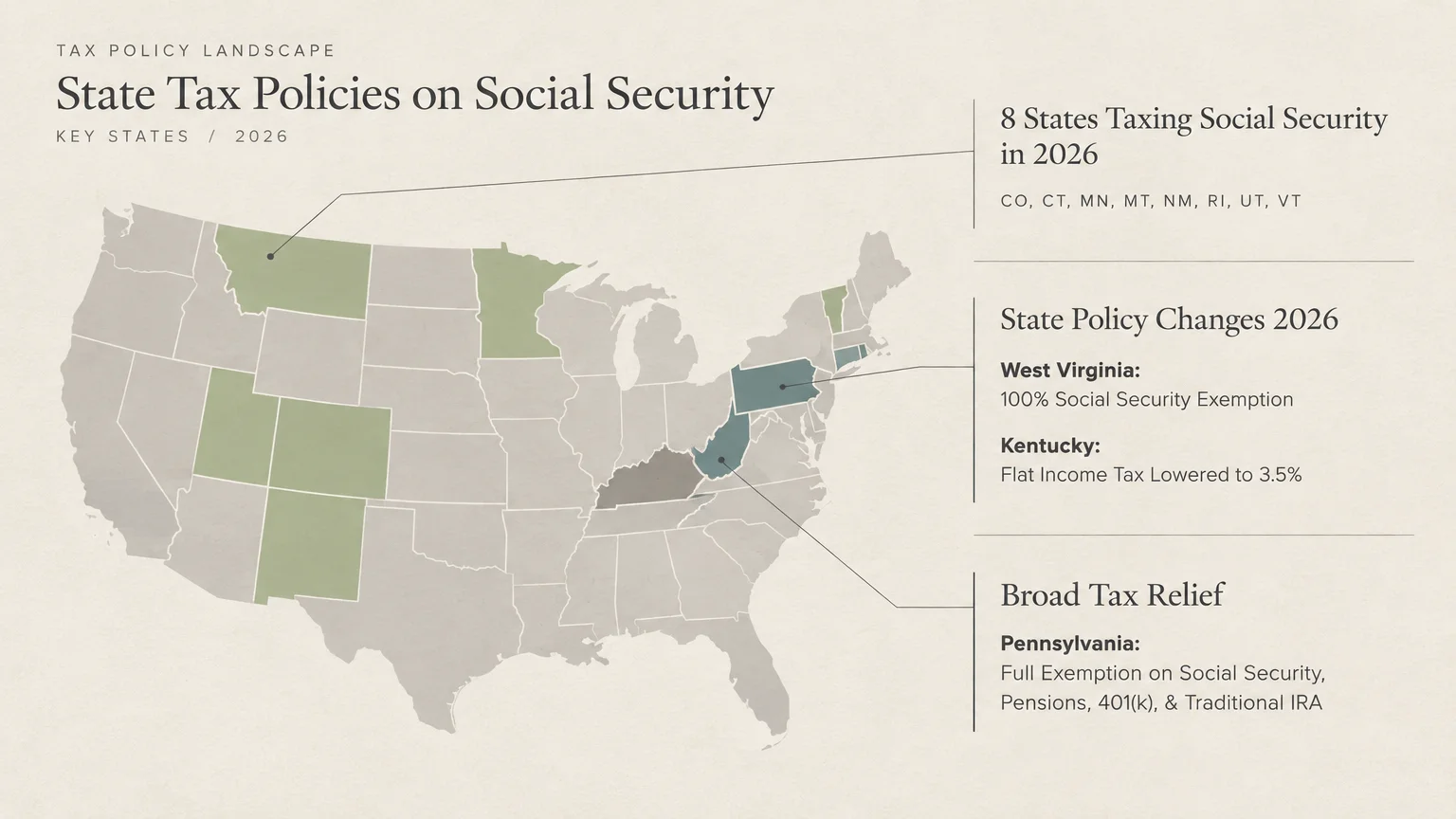
In tax year 2026, only eight states levy taxes on Social Security benefits: Colorado, Connecticut, Minnesota, Montana, New Mexico, Rhode Island, Utah, and Vermont. Most other states exempt these payments entirely.
West Virginia completed its three-year phase-out and fully exempts Social Security benefits starting in the 2026 tax year. This policy shift makes several Appalachian river towns substantially more appealing for value-focused retirees.
Pennsylvania offers one of the most generous tax umbrellas in the country. The state completely exempts Social Security benefits, public and private pensions, and distributions from 401(k) and traditional IRA accounts.
Other states continue to reduce their rates to retain older residents. Kentucky lowered its flat individual income tax rate to 3.5% effective January 1, 2026, reducing the drag on investment income.
Nine states operate without a broad personal income tax: Alaska, Florida, Nevada, New Hampshire, South Dakota, Tennessee, Texas, Washington, and Wyoming. Relocating to these jurisdictions removes state income tax friction from your taxable withdrawals.
You must weigh income taxes against local property taxes and sales levies. A state with no income tax may assess higher property rates, so running a complete household budget remains essential.
11 Retirement Spots With Low Crime and Low Costs
The following destinations combine below-average living expenses with outstanding public safety metrics. They provide robust healthcare access, active communities, and stable housing markets where your money works harder.
1. Midland, Michigan
Midland earned the number-one spot in the U.S. News & World Report 2027 Best Places to Retire rankings and appeared on Forbes’ 2026 Top 25 list. It offers an exceptional combination of security and affordability.
The typical home value in Midland sits at $252,073, with recent median sale prices hovering around $266,500. Both measures fall substantially below national real estate benchmarks.
Public safety stands out as Midland’s primary asset. The overall crime rate is 63.3% lower than the national average, with violent crime tracking roughly 65% below baseline and property crime down 67%.
Retirees enjoy access to MyMichigan Medical Center, an advanced regional hospital affiliated with the University of Michigan Health System. The city also features the 110-acre Dow Gardens and rich civic programming.
2. Weirton, West Virginia
Positioned along the Ohio River between Ohio and the Pennsylvania border, Weirton ranked third nationwide in the 2027 U.S. News retirement evaluation. It represents one of the most economical housing markets in America.
The typical home value in Weirton is $146,292, with median sale prices around $170,000. Renters benefit from sensible pricing as well, with median rents averaging approximately $850 per month.
Safety data reinforces Weirton’s appeal. The city’s overall crime rate is 77.9% lower than the national average, ranking it among the safest municipalities in West Virginia.
West Virginia’s complete exemption of Social Security benefits beginning in 2026 boosts your net income. Weirton Medical Center delivers local care, while Pittsburgh’s world-class medical facilities sit just 35 miles east.
3. Altoona, Pennsylvania
Altoona rests in central Pennsylvania’s scenic Logan Valley and captured the seventh position in national retirement rankings. The city provides historic architecture, quiet neighborhoods, and deep affordability.
Typical home values in Altoona average $140,228, with median closed sale prices near $140,000. These figures allow many incoming retirees to buy outright using proceeds from higher-cost housing markets.
Pennsylvania’s tax code offers massive savings here. The Commonwealth exempts Social Security, defined-benefit pensions, and retirement account withdrawals from state income taxation entirely.
Healthcare access is anchored by UPMC Altoona, a comprehensive regional trauma hospital and specialty center. Local violent crime rates remain well below national metropolitan baselines.
4. Paducah, Kentucky
Paducah sits at the confluence of the Ohio and Tennessee rivers in western Kentucky, earning the eighth spot on U.S. News’s 2027 retirement list. It combines riverfront charm with cultural vibrancy.
The typical home value in Paducah stands at $192,711, with median closing prices around $195,000. Everyday expenses, from groceries to utility services, track below national norms.
Kentucky’s reduced flat income tax rate of 3.5% preserves more of your taxable investment gains and IRA withdrawals. The state also offers broad exclusions for qualified military and civil service pensions.
Designated as a UNESCO Creative City, Paducah supports a thriving arts district, the National Quilt Museum, and excellent healthcare through Baptist Health Paducah and Mercy Health.
5. Green Valley, Arizona
Featured on Forbes’ 2026 Best Places to Retire, Green Valley sits twenty miles south of Tucson along the Santa Rita Mountains. It functions primarily as an age-restricted community founded specifically for retirees.
The median single-family home price in Green Valley sits near $282,000, well below typical Sun Belt resort destinations. Low property crime and dedicated security patrols create an orderly, peaceful environment.
Green Valley Recreation operates over a dozen recreation centers featuring pools, fitness complexes, woodshops, and tennis facilities. Membership fees remain modest compared to private country clubs.
Arizona exempts Social Security benefits from state income taxes. Nearby Tucson provides access to Banner – University Medical Center and specialized geriatric healthcare networks.
6. Homosassa Springs, Florida
Homosassa Springs secured the second overall spot in national retirement rankings, giving budget-conscious retirees a safe foothold on Florida’s Nature Coast. It avoids the intense congestion and inflated pricing of south Florida.
Typical single-family home values remain far below coastal Florida averages. You gain access to Gulf waters, clear natural springs, and extensive state wildlife parks without luxury-resort price tags.
Florida levies zero personal income tax, shielding your investment dividends, capital gains, and pension payments. Property crime rates in Citrus County stay comfortably below statewide urban averages.
Local medical facilities include Bravera Health Seven Rivers, providing routine and emergency services close to home. The surrounding communities offer golf courses and quiet, boat-friendly canals.
7. The Woodlands, Texas
The Woodlands ranked fourth on the U.S. News 2027 list, appealing to retirees who prioritize premier infrastructure, manicured green space, and proactive community policing. It sits just north of Houston.
While home prices track higher than Appalachian towns, housing options range from manageable patio homes to quiet condominiums. Texas levies no state personal income tax on wages or retirement distributions.
The Woodlands features dedicated law enforcement divisions and private security patrols, generating violent crime rates dramatically lower than the broader Houston metroplex.
Medical infrastructure in The Woodlands ranks among the best in the nation. Campuses for Memorial Hermann, Houston Methodist, and St. Luke’s Health provide specialized care minutes from your front door.
8. Spring, Texas
Positioned immediately adjacent to The Woodlands, Spring captured fifth place in the national retirement rankings. It delivers similar geographic advantages at a lower median purchase price.
Typical home values in Spring remain accessible for downsizing households seeking suburban tranquility. Residents share access to the same medical networks and shopping corridors serving The Woodlands.
Neighborhoods in Spring benefit from active municipal utility districts and attentive Harris and Montgomery County sheriff patrols. Violent crime rates across its master-planned subdivisions remain low.
Living in Spring means paying zero Texas state income tax on pension income or IRA withdrawals. That structural advantage helps offset local school and municipal property taxes.
9. Rio Rancho, New Mexico
Rio Rancho ranked sixth nationwide for retirement living, sitting on a high-desert plateau overlooking Albuquerque and the Sandia Mountains. It provides an orderly, modern alternative to its larger southern neighbor.
Housing values in Rio Rancho track well below southwestern resort hubs like Santa Fe or Scottsdale. The city was designed with wide boulevards, quiet residential cul-de-sacs, and extensive public parks.
Rio Rancho operates its own independent police department, maintaining crime numbers far below Albuquerque’s municipal metrics. Safe commercial corridors offer accessible retail and grocery shopping.
Presbyterian Rust Medical Center provides modern acute-care hospital facilities inside the city limits. New Mexico allows income-qualified seniors age 65 and older to deduct substantial portions of their retirement income.
10. Lynchburg, Virginia
Lynchburg claimed the ninth spot in the 2027 national rankings, nestled in the scenic foothills of the Blue Ridge Mountains along the James River. The city offers rich early American history and mild seasonal shifts.
Home values in Lynchburg remain attractive, with median pricing sitting well under the Virginia state average. Modest real estate costs leave retirees with substantial liquidity for leisure and healthcare.
Multiple higher education institutions, including Liberty University and University of Lynchburg, foster stable civic infrastructure and low local crime rates. The downtown riverfront features safe walking trails and restored architecture.
Centra Health operates Lynchburg General Hospital and specialized cardiac facilities. Virginia exempts Social Security benefits from state taxation and allows an income deduction for seniors up to $12,000.
11. Palm Coast, Florida
Rounding out the top ten in national retirement rankings, Palm Coast sits in northeast Florida between historical St. Augustine and Daytona Beach. It offers peaceful coastal living without severe metro congestion.
Planned as a residential community interspersed with saltwater canals, Palm Coast provides homes near golf courses and nature reserves. Housing values remain much lower than counterparts in Palm Beach or Naples.
Violent crime and property offense rates in Flagler County register well below Florida state averages. Miles of protected paved paths connect neighborhoods, making biking and walking safe and convenient.
Retirees pay zero state income tax on their pensions, Social Security, or retirement portfolio distributions. AdventHealth Palm Coast operates modern hospital facilities directly within the township.
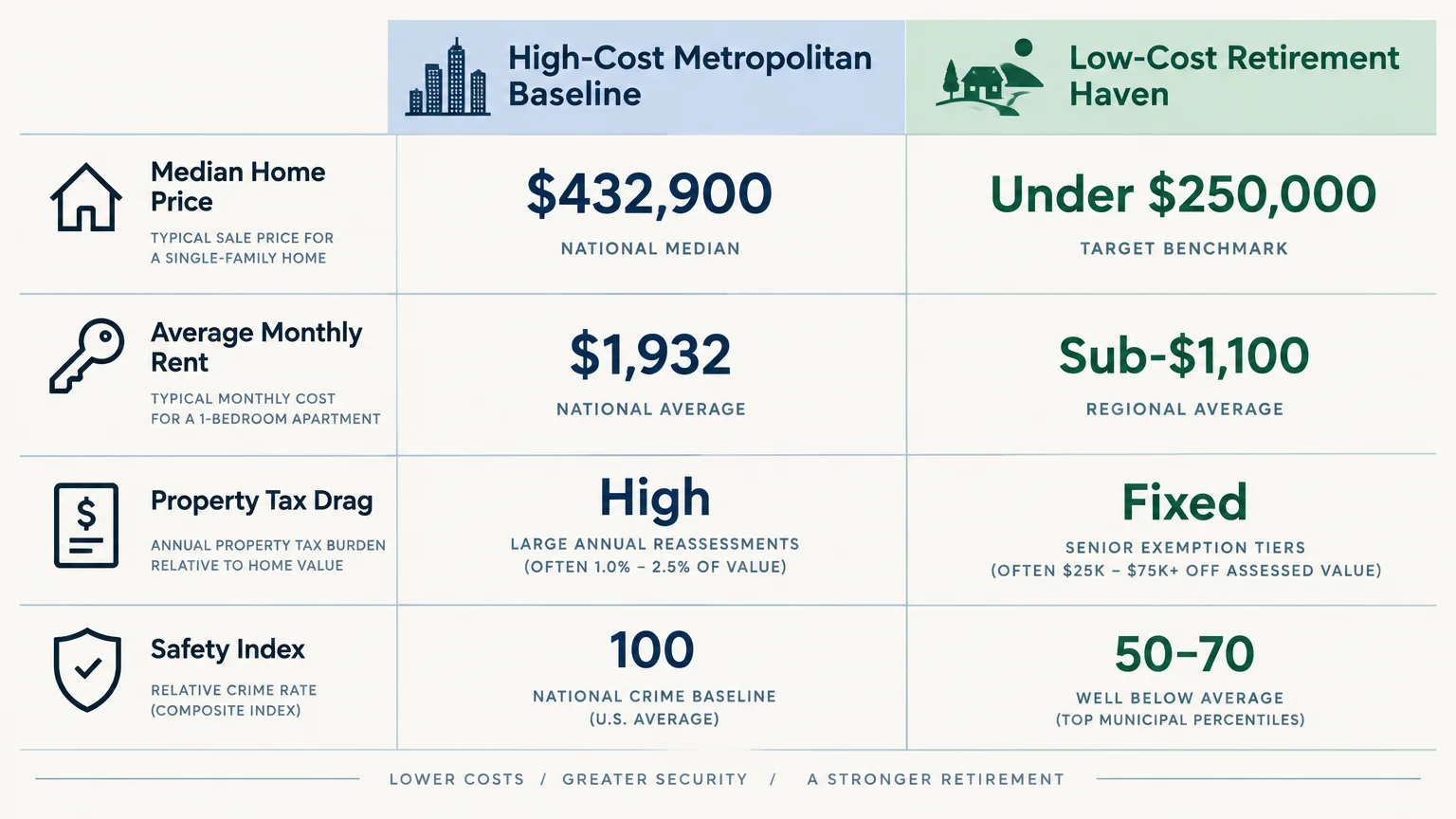
Comparing Housing Costs and Tax Climates
Comparing these destinations side by side highlights the diversity in home prices and state tax treatments. Match these variables against your individual income mix to identify the most efficient location.
| Destination | Typical Home / Benchmark | State Income Tax on Pensions | Social Security Tax Status | Safety Advantage |
|---|---|---|---|---|
| Midland, MI | $252,073 (ZHVI) | Flat 4.25% (exclusions apply) | Exempt | Crime 63.3% below US average |
| Weirton, WV | $146,292 (ZHVI) | Graduated (up to 5.12%) | Exempt (Effective 2026) | Crime 77.9% below US average |
| Altoona, PA | $140,228 (ZHVI) | 0% (Fully exempt) | Exempt | Well below national baselines |
| Paducah, KY | $192,711 (ZHVI) | Flat 3.5% (effective 2026) | Exempt | Quiet, stable community |
| Green Valley, AZ | $282,000 (Median) | Flat 2.5% | Exempt | Age-restricted security patrols |
| Homosassa Springs, FL | Below Florida average | 0% (No state income tax) | Exempt | Low rural/coastal crime index |
| The Woodlands, TX | Premium master-planned | 0% (No state income tax) | Exempt | High-visibility local policing |
| Spring, TX | Moderate suburban | 0% (No state income tax) | Exempt | Low violent crime rate |
| Rio Rancho, NM | Below regional average | Graduated (exemptions apply) | Taxed (subject to income caps) | Far safer than Albuquerque core |
| Lynchburg, VA | Well below VA average | Graduated (up to 5.75%) | Exempt | Protected college-town setting |
| Palm Coast, FL | Moderate coastal | 0% (No state income tax) | Exempt | Below-average county crime index |
Always verify local county assessment rules before purchasing. While home purchase prices may be modest, local property tax rates and insurance costs alter total monthly ownership outlays.
“A budget is telling your money where to go instead of wondering where it went.” — John C. Maxwell
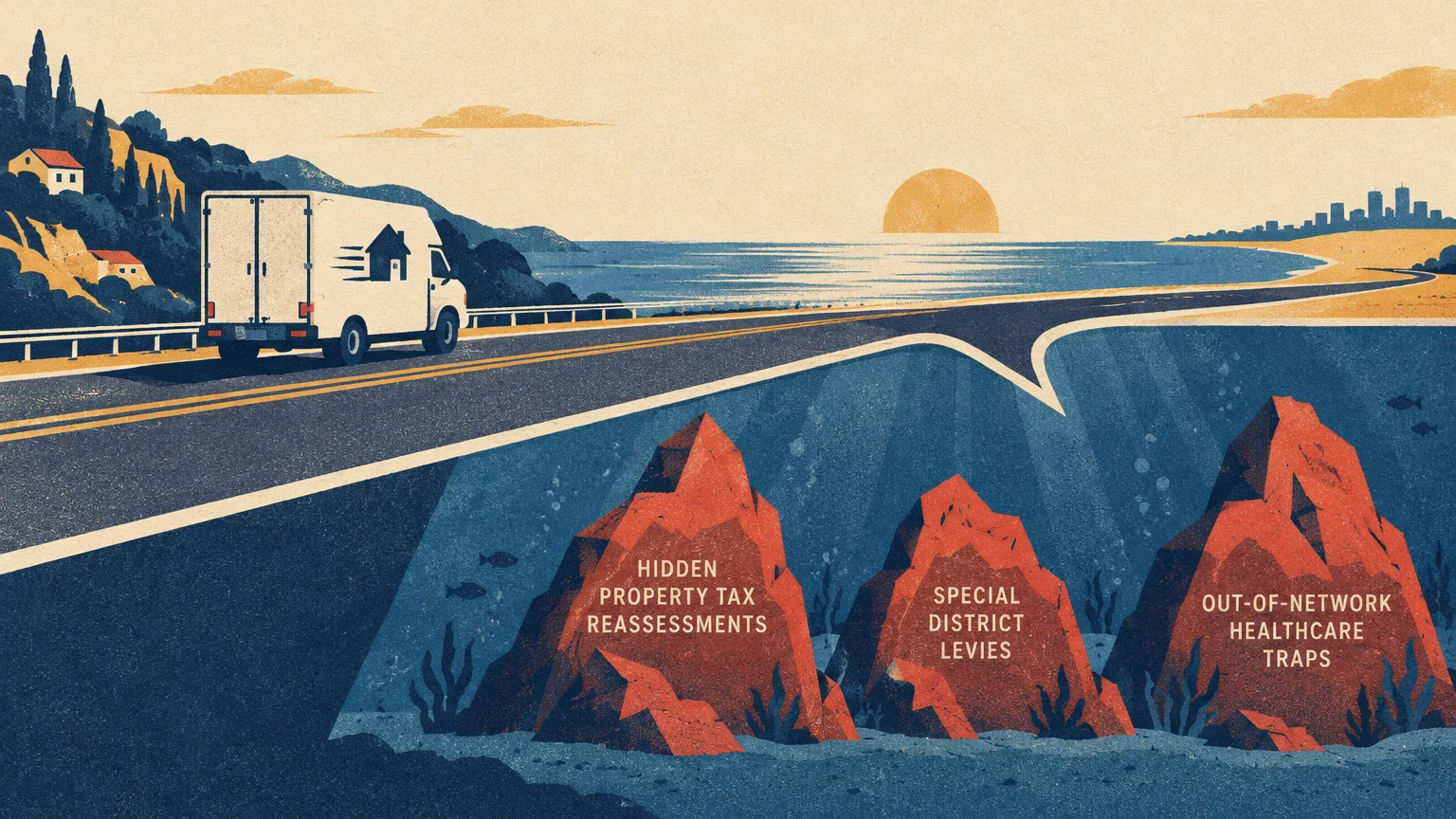
Costly Mistakes to Avoid When Relocating
Relocating your household represents a permanent financial decision with significant transaction friction. Avoiding common miscalculations ensures your move protects your capital rather than eroding it.
- Overlooking Property Insurance and Hazard Premiums: A cheap home in Florida or along coastal waterways can carry crushing property and flood insurance rates. Obtain firm insurance quotes during your contingency period.
- Focusing Exclusively on State Income Taxes: States without personal income taxes frequently collect necessary revenue via elevated sales and property taxes. Always compute your total tax footprint, not just income tax.
- Underestimating Distance to Specialized Medical Care: Rural towns may offer cheap housing but require two-hour drives to reach specialized cardiac or oncological care. Verify local hospital capabilities and specialist networks first.
- Rushing to Buy Before Renting: Moving straight into homeownership locks you into a neighborhood before you understand local traffic, seasonal climate, and community dynamics. Renting for six months eliminates expensive buyer’s remorse.
- Ignoring Moving and Transaction Overhead: Real estate commissions, title charges, closing costs, and moving vans easily total 8% to 10% of home value. Ensure your projected cost reductions amortize these expenses quickly.
You can research regional mortgage lending conditions and protections through the Consumer Financial Protection Bureau. Taking your time prevents hasty decisions you cannot easily reverse.

Don’t DIY These Decisions: Assembling Professional Guidance
Relocating across county or state lines alters your legal, tax, and estate planning structures. Attempting to navigate interstate transitions without professional advice introduces expensive blind spots.
Work with a Certified Public Accountant (CPA) familiar with both your departing state and your new destination. Your CPA will clarify partial-year residency filings and ensure you optimize state pension exemptions.
Engage a fee-only, fiduciary financial planner to stress-test your revised retirement cash flow. A fiduciary evaluates how home equity reallocation and lower living expenses impact your portfolio longevity.
Before purchasing real estate, speak with a HUD-approved housing counseling agency if you have questions about loan structures or equity conversion. These non-profit counselors provide impartial analysis of home purchase costs.
Finally, update your estate planning documents with an attorney licensed in your new state. Wills, health care directives, and powers of attorney must comply with local state statutes to remain legally enforceable.
Frequently Asked Questions
Which state is most tax-friendly for retirees on a modest budget?
Pennsylvania stands out because it completely exempts Social Security benefits, public and private pensions, and 401(k) or traditional IRA distributions from state income tax. This policy provides immediate financial relief.
How does moving to a zero-income-tax state impact my overall retirement budget?
Moving to states like Florida or Texas eliminates state levies on taxable portfolio distributions. However, you must carefully monitor local property taxes, homeowner insurance rates, and sales taxes to verify net savings.
Are small, low-cost retirement towns safe from property crime?
Many smaller communities report violent crime rates well below national baselines, but property crime rates vary by neighborhood. Research local police district incident reports and speak with neighbors before selecting a home.
What is the minimum annual budget required to live in these low-cost towns?
In low-cost markets like Weirton or Altoona, a retired couple owning their home mortgage-free can live comfortably on $30,000 to $36,000 annually. This budget covers utilities, maintenance, food, healthcare, and property taxes.
Taking the Next Step Toward Your Secure Retirement
Protecting your retirement requires making decisive adjustments before financial pressures force your hand. Identifying towns with low property costs and verified low crime rates gives you control over your financial future.
Start by selecting two or three target communities from this list that match your lifestyle and medical needs. Plan an exploratory multi-week visit to experience neighborhoods, meet residents, and evaluate everyday amenities firsthand.
Financial outcomes vary based on individual income, credit history, and circumstances. This article provides general guidance only. Consult a qualified financial planner, CPA, or consumer attorney for advice specific to your situation.
Last updated: November 2026. Rates, benefit amounts, and tax rules change—always verify current details at official sources.