
High living costs and relentless urban congestion prompt many households to reconsider their geographic footprint. Downsizing to a quieter community can unlock substantial wealth and permanently reduce your recurring monthly overhead.
If you own property in a competitive metro area, built-up equity may allow you to purchase a home debt-free. You gain immediate financial breathing room while eliminating your single largest monthly expenditure.
Deciding to relocate requires balancing balance-sheet advantages against lifestyle adjustments. Recognizing key financial and personal indicators helps you determine whether moving to a small town aligns with your long-term plans.
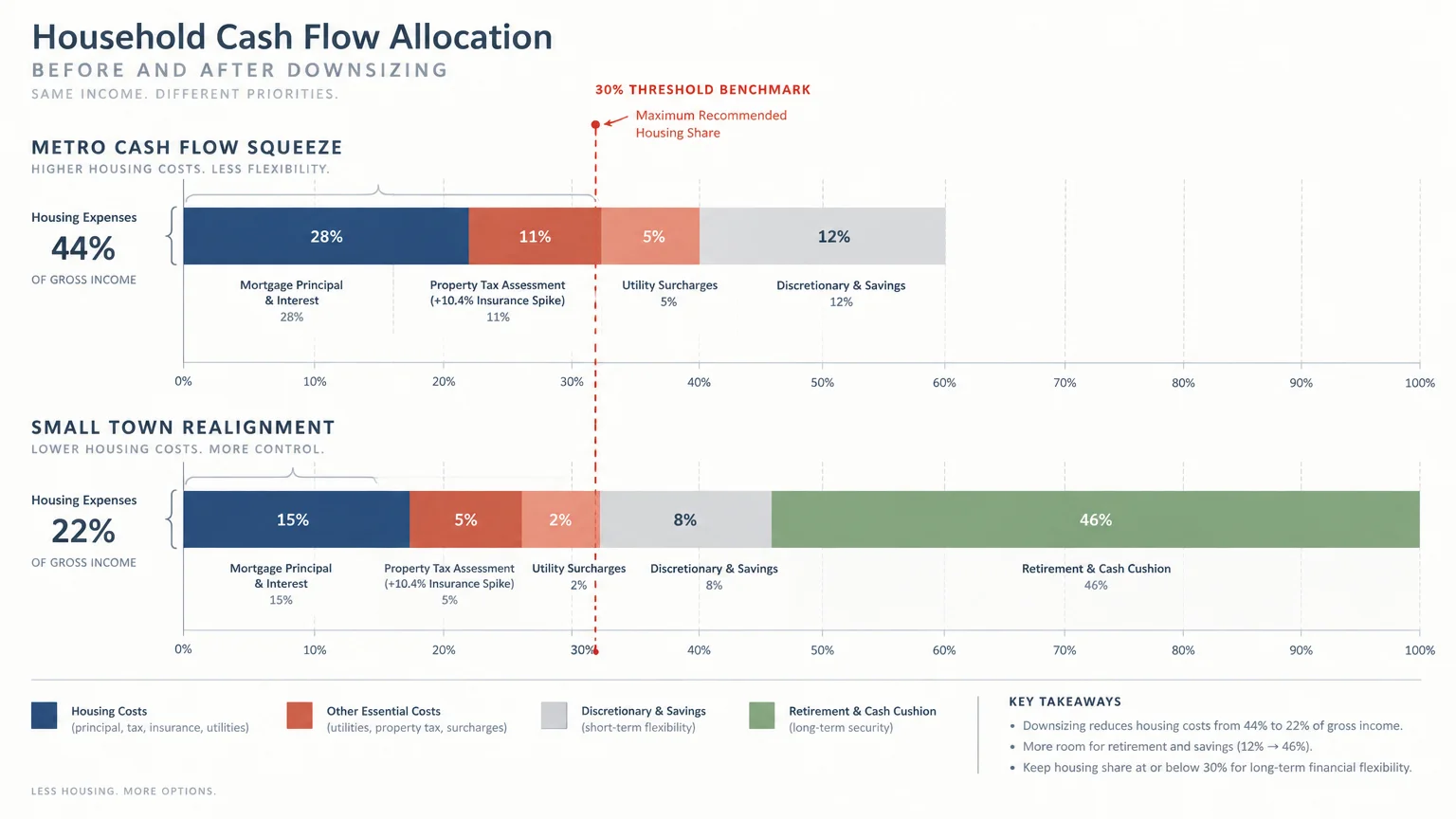
1. Your Housing Costs Consume an Outsized Share of Cash Flow
Housing expenses should ideally account for less than thirty percent of your gross household income. When mortgage payments, local property taxes, and utility spikes climb past that threshold, your budget loses resilience.
Carrying costs on large metropolitan residences have escalated rapidly across recent assessment cycles. Annual property insurance costs rose 10.4% for homeowners retaining their existing carriers, according to the ICE Mortgage Monitor.
Escalating taxes squeeze fixed budgets and working households alike. A municipality funding extensive urban infrastructure routinely passes those capital expenditures down through steep residential tax millage hikes.
Relocating to a smaller community often cuts your property tax liabilities in half. These structural reductions create permanent monthly margin that you can allocate toward emergency savings or retirement accounts.
When high utility rates, special district assessments, and insurance surcharges dictate your daily spending choices, your home controls you. Relocating resets those numbers in your favor.

2. You Have Substantial Equity Locked in an Expensive Market
Surging real estate valuations have produced record amounts of illiquid net worth for long-term owners. Total U.S. mortgage holder equity reached $18 trillion, with $11.7 trillion classified as tappable equity across 47.5 million borrowers.
According to the ICE Mortgage Monitor, eligible homeowners hold an average of $212,000 in tappable equity. In expensive coastal or primary metro areas, individual homeowners frequently hold two or three times that average.
Data from the National Association of Realtors shows sellers nationwide stay in their homes for a median of 11 years. Older Boomers average 15 years of tenure, accumulating significant unencumbered gains.
You can liquidate that appreciation to fund an outright cash purchase in an affordable town. Eliminating a mortgage isolates your household from broader interest rate shocks and market swings.
Federal tax policy provides an exceptional advantage for qualifying sellers under IRS Section 121. Single filers can exclude up to $250,000 of capital gains, while married couples filing jointly can exclude up to $500,000.
To qualify for this exclusion, you must have owned and used the property as your primary residence for two of the five years preceding the sale. Review the exact filing criteria directly on the Internal Revenue Service (IRS) portal before listing.
“It’s not how much money you make, but how much money you keep, how hard it works for you, and how many generations you keep it for.” — Robert Kiyosaki

3. High-Paced Urban Amenities No Longer Justify the Cost
Metropolitan living carries an invisible surcharge on virtually every discretionary transaction. You pay higher base sales taxes, parking fees, and inflated dining prices to fund accessibility to cultural venues.
Track your actual monthly spending patterns over the previous six months. Many homeowners discover they rarely take advantage of the cultural nightlife, theater tickets, or high-end dining options surrounding them.
If your weekends now center on gardening, quiet cooking, family gatherings, or outdoor recreation, you are subsidizing amenities you do not consume. That misalignment drains capital without delivering personal satisfaction.
Smaller municipalities offer accessible local parks, regional farmer markets, and civic centers at minimal cost. You replace steep cover charges and expensive parking decks with natural spaces and neighborhood gatherings.
Shifting your spending toward low-cost, authentic interests immediately alters your wealth trajectory. You stop paying urban density premiums for experiences you have naturally outgrown.

4. Maintaining Your Square Footage Feels Like an Unpaid Job
A sprawling floor plan makes sense when raising a growing family or housing multiple generations. Once children leave or household routines simplify, unused square footage transforms into expensive empty volume.
Every unoccupied bedroom requires regular heating, cooling, insurance, and routine cleaning. Furnishing, carpeting, and repainting rooms you enter twice a year wastes both your labor and liquid capital.
Exterior maintenance demands escalate relentlessly as residential properties age. Managing sprawling roof planes, multi-zone HVAC units, and large suburban lawns consumes valuable weekend hours.
Downsizing to a well-built cottage, ranch, or townhome in a small town consolidates maintenance demands into manageable routines. Routine chores take minutes rather than entire Saturdays.
Capital expenditure reserves also drop considerably when structural surface areas decrease. Replacing a 1,400-square-foot roof costs substantially less than resurfacing a multi-tier 3,500-square-foot roofline.

5. You Crave Genuine Community and Slower Living
Dense cities offer millions of neighbors alongside surprising levels of daily anonymity. Many homeowners spend years living next door to individuals whose names they never learn.
When you crave meaningful civic engagement and authentic relationships, a small town provides an ideal environment. Local volunteer boards, library committees, and small-business associations welcome active community members.
The National Association of Realtors Generational Trends report confirms this trend among mature households. Baby Boomers comprise 42% of buyers and 55% of sellers, with 41% relocating to downsize or move closer to loved ones.
Participating in small-scale civic life creates deep personal satisfaction and lasting resilience. You become an active participant in your community rather than an anonymous commuter navigating crowded streets.
Knowing your postal carrier, local grocer, and local town councilors fosters safety and belonging. Those everyday interactions form the social bedrock that major cities struggle to replicate.

6. Your Career or Retirement Offers Location Independence
Commuting distance historically determined where American families purchased real estate. The expansion of high-speed rural fiber networks and remote employment policies has decoupled income generation from central business districts.
If your employer provides permanent remote status, maintaining a residence near an expensive commercial core is unnecessary. Moving your primary residence allows you to capture metro-level compensation while paying small-town prices.
For those preparing to retire to small town environments, geographic flexibility serves as a cornerstone of longevity planning. Transitioning away from high-tax jurisdictions protects retirement account distributions against premature depletion.
Lower baseline overhead decreases your required annual retirement portfolio withdrawal rate. A sustainable 4% withdrawal rate stretches further when your base property taxes and utilities total half their former cost.
Consult regulatory resources at the Consumer Financial Protection Bureau (CFPB) to compare financing structures if you plan to carry a modest mortgage during relocation.
“Financial peace isn’t the acquisition of stuff. It’s learning to live on less than you make.”

7. Daily Congestion and Density Drain Your Energy
Chronic traffic congestion imposes measurable physiological and financial tolls on daily life. Wasting hours idling on expressways burns expensive fuel while elevating chronic baseline stress.
When the simple prospect of running an evening errand feels exhausting due to traffic, your location no longer serves you. Daily logistics should support your household routine rather than complicate it.
Small-town layouts prioritize accessibility over sprawl. Running errands to the bank, post office, or grocery store rarely involves navigating tollways or searching for parking garages.
Reclaiming an hour or two each day transforms your personal well-being. That restored time allows for consistent exercise, home-cooked meals, reading, or family engagement.
Shedding transit-related exhaustion is one of the most immediate benefits relocators report. Life slows down to an intentional, humane cadence.

Cost Comparison: Major Metro vs. Small Town Living
Evaluating a move requires examining line-item budget differences rather than relying on general assumptions. Relocating reduces major carrying charges, though specific isolated categories may shift slightly.
The table below highlights typical cost dynamics between major metropolitan centers and small communities based on current market trends.
| Expense Category | Major Metro Area | Affordable Small Town | Financial Impact |
|---|---|---|---|
| Median Home Price | $550,000 – $900,000+ | $225,000 – $375,000 | Substantial equity release and mortgage elimination. |
| Annual Property Taxes | $6,500 – $14,000+ | $1,800 – $4,500 | Saves $400 to $800 in monthly recurring expenses. |
| Homeowners Insurance | Elevated; severe rate hikes | Moderate; lower replacement costs | Mitigates annual carrier premium volatility. |
| Commuting & Parking | High tolls, parking, transit passes | Low mileage, free street parking | Lowers auto wear and recurring transportation costs. |
| Specialized Healthcare | Extensive local hospital networks | Regional clinics; travel needed | May require planned travel budgets for specialists. |
| Discretionary Entertainment | High event fees and dining costs | Community events, outdoor recreation | Encourages natural spending reductions. |
Examining these categories side-by-side reveals where your greatest savings materialize. Eliminating high housing overhead provides margin that easily absorbs occasional travel back to metropolitan hubs.
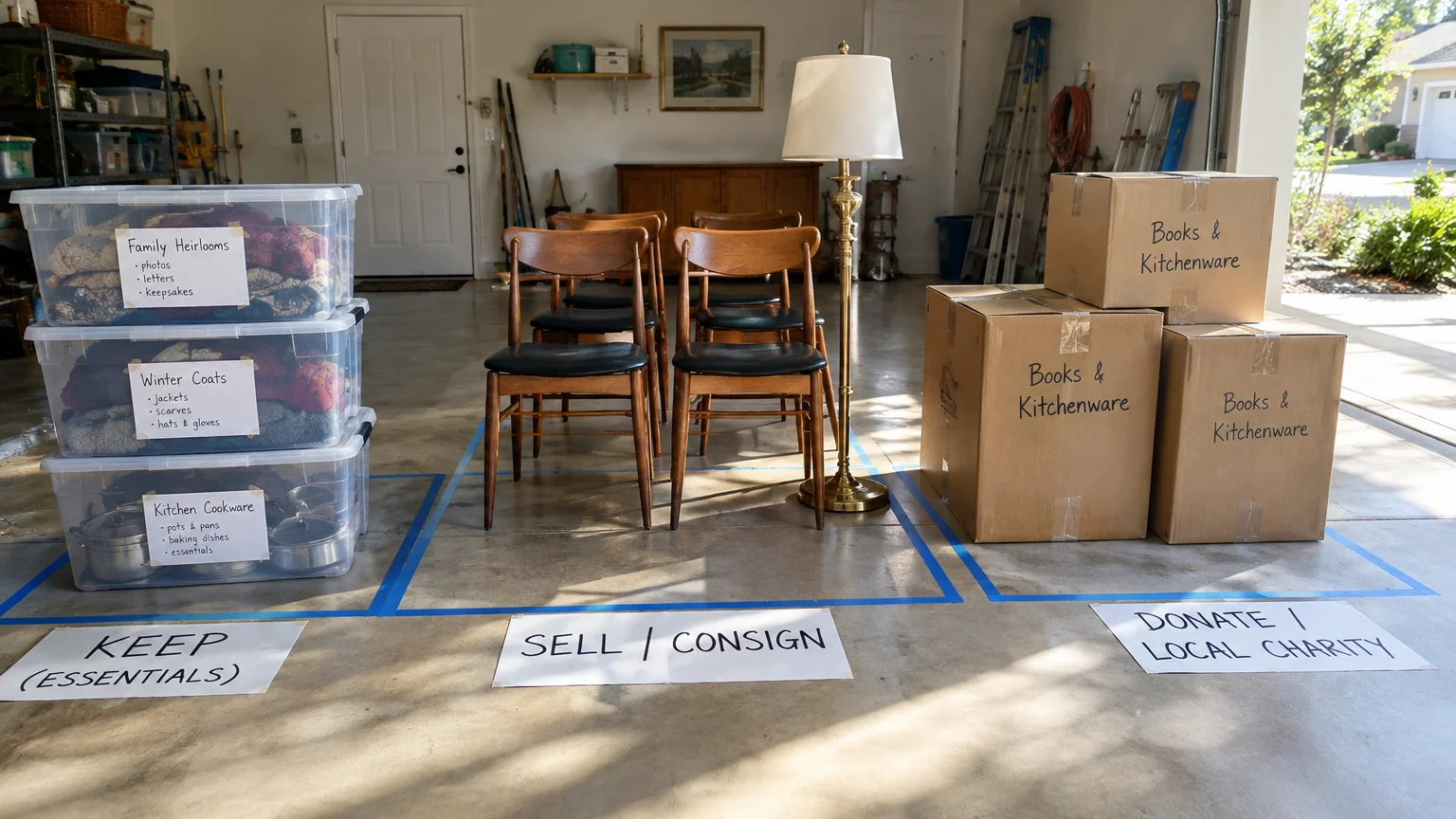
Practical Downsizing Tips Before You Move
Downsizing physical possessions demands systematic execution to prevent moving-day paralysis. Attempting to clear decades of household accumulation in a single week causes burnout and rash disposal decisions.
Apply these structured downsizing tips six to twelve months before listing your current property for sale:
- Execute the Room-by-Room Method: Tackle one enclosed room per week, sorting items into definitive categories: keep, sell, donate, or recycle.
- Audit Furniture Dimensions: Measure the floor plan of your target home size before moving bulky sectional sofas, oversized dining tables, or heavy hutches.
- Digitize Sentimental Paperwork: Scan tax records, family photographs, and certificates to encrypted cloud storage to eliminate filing cabinets.
- Test-Drive the Destination: Rent a furnished home in your target small town for a month during off-peak seasons to evaluate authentic daily living conditions.
- Involve Family Early: Give adult children a firm deadline to retrieve childhood keepsakes stored in your basement or attic before you donate them.
Approaching physical decluttering methodically keeps moving costs predictable. Professional movers price services based on weight and volume, making every discarded surplus item a direct cash savings.

Errors That Cost Families Thousands
Relocating your household without investigating community infrastructure can trigger costly surprises. Small towns offer peace and affordability, but municipal service structures differ fundamentally from urban centers.
Failing to evaluate healthcare infrastructure represents the most dangerous financial mistake. Rural hospital closures and specialist shortages require households with chronic medical conditions to travel long distances for care.
Investigate local hospital networks and provider directories on Medicare.gov before purchasing real estate. Moving out of network can radically increase your annual out-of-pocket medical liabilities.
Overlooking rural property infrastructure maintenance creates sudden financial shocks. Properties outside city utility lines rely on private wells, septic tanks, and delivered fuels like propane.
Replacing a failing septic field costs between $7,000 and $25,000 depending on soil composition. Always condition home offers on thorough, independent well and septic inspections.
Rushing into a purchase without understanding local property resale liquidity traps your capital. Small-town real estate moves slower than urban markets, meaning listing and selling later requires patience.
Renting for six months before buying protects you from purchasing in an incompatible neighborhood. Spending a small sum on rent prevents catastrophic six-figure buyer remorse.

When to Get Expert Help
Executing a significant geographic move involves intertwined tax, real estate, and financial planning decisions. Engaging qualified professionals ensures you avoid regulatory traps and protect accumulated equity.
Retain a Certified Public Accountant (CPA) to structure your home sale under IRS Section 121 rules. Professional tax planning prevents unexpected liabilities, particularly if you operated a home business or rented rooms.
If you carry a mortgage or face housing challenges, consult a certified counselor through HUD Housing Counseling. These specialists offer independent guidance on managing property transfers and credit health.
Work with a fee-only Certified Financial Planner (CFP) to map out how reduced living expenses alter your portfolio sustainability. Adjusting your asset allocation alongside lowered living costs extends retirement longevity.
Enlist a local, experienced real estate broker who resides within your target community. An established local agent understands micro-market dynamics, zoning quirks, and upcoming county tax re-assessments.
Frequently Asked Questions
How much money can you save by downsizing to a small town?
Most households reduce recurring living costs by twenty to forty percent after moving. Savings stem primarily from lower property taxes, affordable homeowners insurance, cheaper utilities, and eliminated mortgage debt.
What is the biggest hidden cost of moving to a rural community?
Transportation and maintenance represent the largest hidden expenses. You will drive longer distances for groceries, specialized medical visits, and home repair services, which increases fuel and vehicle maintenance costs.
How does downsizing impact Medicare coverage?
Original Medicare coverage applies nationwide across any participating provider. However, Medicare Advantage plans and Part D prescription drug networks are county-specific, requiring you to enroll in new local plans upon relocating.
Should I rent or buy when moving to a small town?
Renting for six to twelve months before buying is the safest approach. Renting lets you experience local seasonal weather shifts, community culture, and neighborhood nuances without committing substantial capital upfront.
Transitioning to a smaller town unlocks equity, removes structural overhead, and restores daily time. Audit your household balance sheet, explore candidate communities, and take deliberate steps toward financial independence.
Financial outcomes vary based on individual income, credit history, and circumstances. This article provides general guidance only. Consult a qualified financial planner, CPA, or consumer attorney for advice specific to your situation.
Last updated: October 2026. Rates, benefit amounts, and tax rules change—always verify current details at official sources.