
Choosing where to live in 2027 directly shapes your household wealth, everyday purchasing power, and long-term financial security. Relocating to the right city can cut your housing expenses significantly while unlocking better career prospects.
Elevated mortgage rates and persistent living costs have fundamentally reshaped the American economic map. Finding an affordable home requires looking past crowded coastal hubs toward communities offering strong job growth and reasonable property taxes.
This comprehensive guide examines verified government metrics and independent data to highlight the best places to live 2027 alongside cities facing steep economic headwinds. Discover where your hard-earned dollars can work hardest this coming year.
The 2027 Housing Market and Relocation Economics
Relocating today requires a clear-eyed assessment of national real estate conditions and borrowing costs. Your physical location dictates your tax obligations, insurance premiums, and daily commuting expenses.
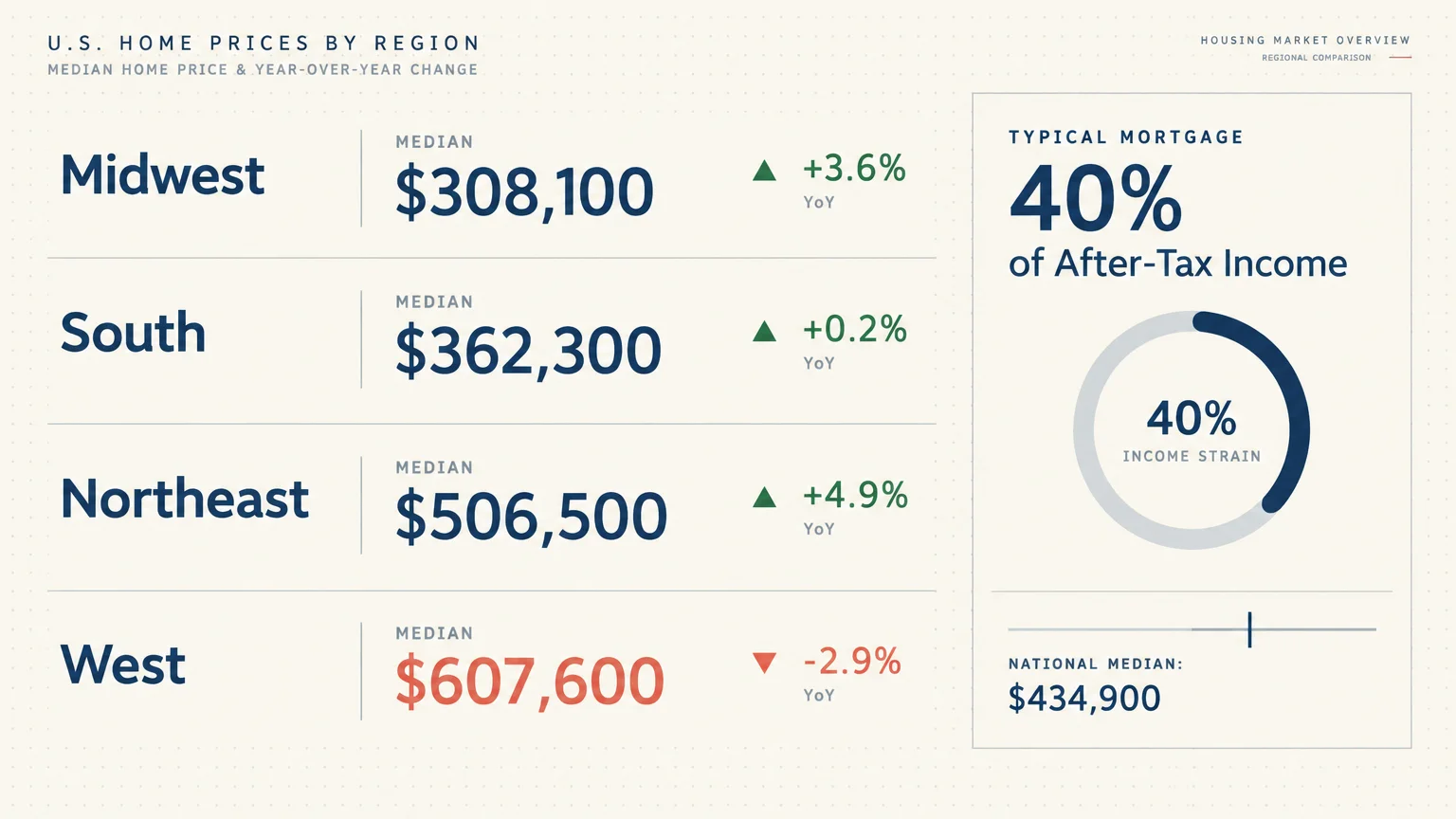
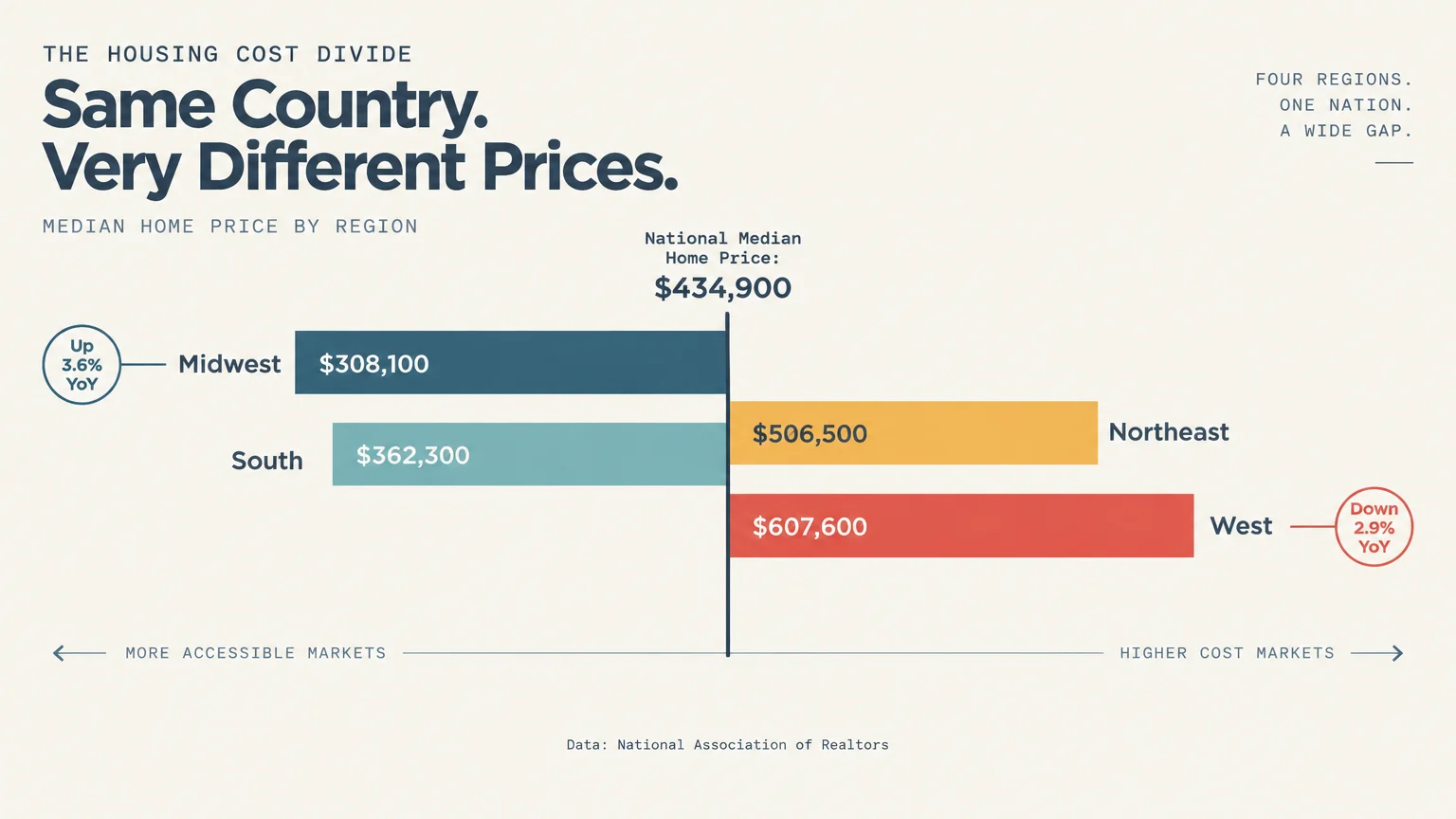
According to the National Association of Realtors, the national median existing single-family home price reached $434,900 in mid-2026 before settling near $435,000 late in the year. Meanwhile, Zillow reported an average overall home value of $366,157.
Housing affordability varies dramatically across geographic regions. Understanding these baseline prices helps you identify areas that align with your financial goals.
Data from the National Association of Realtors shows the regional divide across the country:
- Midwest: Median sales price of $308,100, up 3.6% year-over-year.
- South: Median sales price of $362,300, up 0.2% year-over-year.
- Northeast: Median sales price of $506,500, up 4.9% year-over-year.
- West: Median sales price of $607,600, down 2.9% year-over-year.
Mortgage volatility continues to alter household budgets nationwide. While 30-year fixed rates hovered between 6.23% and 6.66% during mid-2026, daily averages climbed to 7.43% by late October 2026.
Pantheon Macroeconomics estimated in late 2026 that a typical monthly mortgage payment on a median-priced home consumes 40% of average after-tax income. That figure represents a steep jump from 35% recorded earlier in the year.
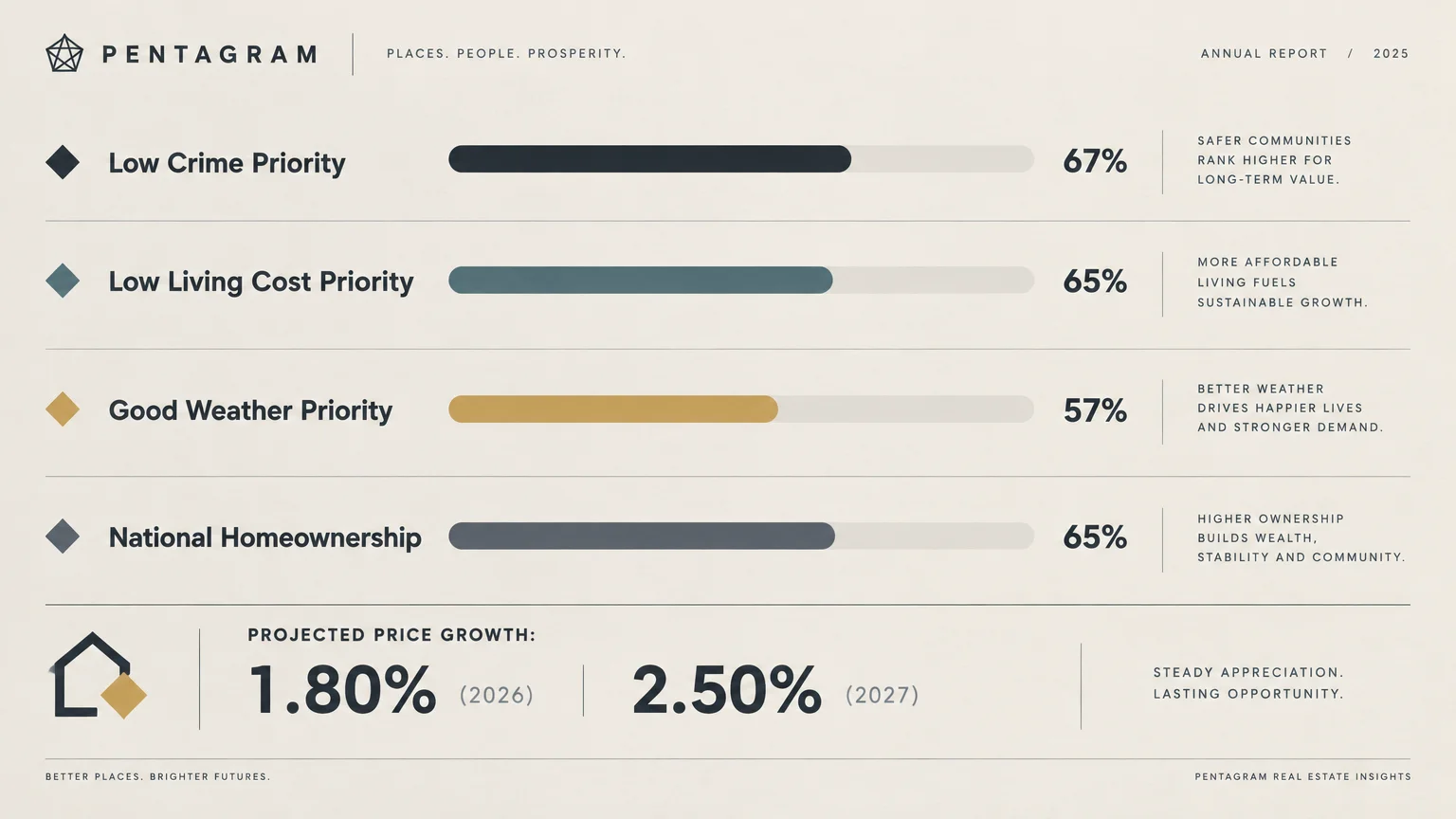
Because borrowing costs remain elevated, first-time homebuyers accounted for just 21% of transactions in 2026—a historic low. The national homeownership rate currently hovers near 65%, according to the Federal Reserve.
Forecasters expect home values to experience moderate growth rather than explosive spikes. A Reuters survey of housing analysts projects home prices to rise 1.80% across 2026 and an additional 2.50% in 2027.
“It’s not how much money you make, but how much money you keep, how hard it works for you, and how many generations you keep it for.” — Robert Kiyosaki
Consumer preferences have adapted quickly to these financial realities. In a Clever Real Estate relocation study, 67% of surveyed Americans cited low crime and 65% cited low living costs as their top priorities.
Good weather, which previously dominated relocation decisions, dropped ten points to 57%. Households now prioritize economic resilience and neighborhood stability over sunny skies.

Top 10 Best Places to Live in 2027
The latest U.S. News & World Report evaluations analyzed 250 metropolitan areas across value, quality of life, job market strength, and overall desirability. For the first time in the ranking’s history, two adjacent Midwestern suburbs captured the top spots.
These leading communities balance high median wages against manageable home prices. They provide working families with top-tier public school districts and robust civic infrastructure.
1. Carmel, Indiana
Carmel earned the number one overall ranking in the nation. The city pairs a median household income of $144,615 with a median home price of $477,625.
Residents benefit from an extensive roundabout network that cuts commute delays and reduces traffic collisions. Strong corporate investment in the Meridian Street Corridor keeps municipal services well-funded without overburdening local property owners.
2. Fishers, Indiana
Carmel’s neighboring suburb, Fishers, secured the second spot nationwide. Fishers maintains an accessible median home price of $405,882 against a median household income of $136,502.
The city has converted itself into a modern tech and entrepreneurship hub. Families appreciate extensive park systems, low crime rates, and property values that offer substantial room for equity expansion.
3. Flower Mound, Texas
Flower Mound achieved the third position due to its vibrant business climate and superior schools. The town maintains a 3% unemployment rate alongside a median home price of $553,334.
Located near Dallas-Fort Worth International Airport, the community appeals to corporate professionals. Texas levies no state personal income tax, allowing high earners to retain more of their monthly cash flow.
4. Ankeny, Iowa
Ankeny delivered the lowest unemployment rate among the top ten cities at just 2.3%. Its affordable housing stock and low municipal tax assessments make it an outstanding destination for young professionals.
The Des Moines metropolitan economy provides dependable employment in insurance, financial services, and agritech. Ankeny delivers exceptional public school outcomes without demanding coastal price tags.
5. Johns Creek, Georgia
Johns Creek ranks fifth nationally, offering an exceptional suburban lifestyle in the northern Atlanta metro area. The city stands out for top-rated healthcare facilities and exemplary high school graduation metrics.
High household incomes support pristine local parks along the Chattahoochee River. The area provides consistent property appreciation for families seeking stable housing equity.
6. Hoover, Alabama
Hoover offers southern living with manageable residential property tax burdens. The city serves as an economic anchor south of Birmingham, featuring diverse retail, commercial, and engineering employers.
Buyers can secure spacious single-family properties at prices well below the national median. Hoover’s extensive public library system and community athletic complexes make it an attractive landing spot for expanding households.
7. Rochester Hills, Michigan
Rochester Hills represents one of the Midwest’s most stable suburban economies. The city combines mature tree-lined neighborhoods with access to automotive technology and healthcare corridors in Oakland County.
The local government operates with zero municipal debt, ensuring low long-term tax liabilities for homeowners. Families gain access to premier public schools and extensive trail networks.
8. Leander, Texas
Leander continues to draw thousands of relocations from across the nation into the Austin metropolitan area. The city delivers master-planned subdivisions, regional rail transit connections, and modern municipal infrastructure.
Residents take advantage of central Texas technology employers while avoiding downtown Austin real estate prices. The local school district consistently ranks among the top performers in the state.
9. Frisco, Texas
Frisco remains an economic powerhouse in the northern Dallas corridor. The city attracts multinational corporate headquarters, world-class athletic training complexes, and upscale retail destinations.
While home prices sit above state averages, high household earnings balance housing ratios. Strong job creation across logistics, finance, and sports management ensures dependable long-term employment.
10. Sugar Land, Texas
Sugar Land rounds out the top ten by providing exceptional value in the greater Houston region. The master-planned community features outstanding medical facilities, diverse dining, and mature neighborhoods.
Energy, biomedical, and chemical manufacturing sectors support the local labor force. Sugar Land offers high municipal safety scores alongside competitive real estate valuations.

Walkable Communities and Urban Standouts
Suburban master-planned communities are not the only locations performing well. Independent research from Niche identified standout cities and neighborhoods where walkability and urban amenities thrive.
Naperville, Illinois captured the number one spot on Niche’s Best Cities to Live list for the third consecutive year. The city provides a historic downtown riverwalk, top-tier schools, and express rail access into downtown Chicago.
Other top-tier urban centers include Cambridge, Massachusetts; The Woodlands, Texas; Arlington, Virginia; and Bellevue, Washington. These markets require higher housing investments but offer exceptional public transit and proximity to high-wage employers.
Niche also highlighted thriving, walkable urban pockets across the country:
- Atlantic Station (Atlanta, Georgia): Dense retail, transit accessibility, and walkable office spaces.
- Colonial Village (Arlington, Virginia): Historic courtyard condominiums minutes from the nation’s capital.
- Evergreen Park and Downtown North (California): High-amenity neighborhoods with proximity to Silicon Valley employers.
- Clarendon Hills (Illinois): A compact commuter suburb offering premier schools and pedestrian-friendly commercial districts.
Financial Comparison of the Best Cities in 2027
Comparing raw housing costs against earnings potential is essential when choosing where to live 2027. The table below details key metrics for top-ranked communities across the nation.
| City & State | Median Home Price | Median Household Income | Key Economic Advantage |
|---|---|---|---|
| Carmel, IN | $477,625 | $144,615 | Low property taxes and exceptional infrastructure |
| Fishers, IN | $405,882 | $136,502 | Affordable housing and rapid tech sector expansion |
| Flower Mound, TX | $553,334 | $148,200 | Zero state income tax and 3% unemployment |
| Ankeny, IA | $325,000 | $98,500 | Lowest unemployment in top 10 at 2.3% |
| Johns Creek, GA | $645,000 | $151,700 | Premier school districts and healthcare access |
| Hoover, AL | $375,000 | $95,400 | Low real estate taxes and accessible home costs |
| Rochester Hills, MI | $425,000 | $110,800 | Debt-free city management and tech employment |
| Leander, TX | $465,000 | $118,500 | Commuter rail connectivity to Austin tech hub |
| Frisco, TX | $685,000 | $145,900 | Major corporate headquarters and job creation |
| Sugar Land, TX | $435,000 | $123,200 | Mature master-planned layout and diverse economy |
| Naperville, IL | $535,000 | $143,700 | Express rail transit and top-tier public schools |
These best cities 2027 highlight a decisive trend. Top destinations combine sensible home price-to-income multiples with efficient municipal services.

The Best Places to Retire in 2027
Relocating during retirement demands a different financial strategy than moving during your peak earning years. Retirees must balance fixed incomes against healthcare costs, local sales taxes, and state taxes on retirement distributions.
The U.S. News 2027 Best Places to Retire rankings weighted affordability and retiree tax structures heavily across more than 850 evaluated cities. Mid-sized regional centers dominated the results.
Midland, Michigan retained the number one overall retirement spot for the second straight year. The city provides accessible housing, low traffic congestion, and specialized geriatric healthcare networks.
Homosassa Springs, Florida took the second spot, driven by mild winter weather and zero state income tax on Social Security or pension benefits. Weirton, West Virginia placed third, offering some of the lowest median home prices in the eastern United States.
Paducah, Kentucky made a significant leap into the top ten, securing the eighth position nationally. Paducah provides an affordable cost of living, an active arts district, and low property taxes along the Ohio River.

The 10 Worst Places to Live in the US in 2027
Understanding which cities face severe economic hurdles is just as crucial as finding top-ranked destinations. The worst places to live us struggle with elevated violent crime, decaying infrastructure, severe tax burdens, and limited upward mobility.
WalletHub analyzed 182 American municipalities across 45 metrics covering affordability, socioeconomic stability, safety, and school systems. The bottom ten locations present substantial financial risks for working families.
Ranked from the bottom up, the ten lowest-scoring cities are:
- Detroit, Michigan (Rank 182): Faces severe municipal poverty, elevated property tax millage rates, and struggling public school outcomes.
- Memphis, Tennessee (Rank 181): Strained by persistent violent crime rates, low household income growth, and high property insurance premiums.
- Cleveland, Ohio (Rank 180): Hampered by legacy municipal debt, high local income taxes, and aging housing stock requiring costly repairs.
- Gulfport, Mississippi (Rank 179): Vulnerable to escalating coastal homeowners insurance premiums and depressed regional wages.
- Baltimore, Maryland (Rank 178): Features property tax rates double the surrounding county average, driving middle-class taxpayers out.
- Newark, New Jersey (Rank 177): Burdens residents with exorbitant property taxes, high living costs, and limited homeownership opportunities.
- Jackson, Mississippi (Rank 176): Continues to battle recurring municipal water utility crises, road deterioration, and a depleted commercial tax base.
- Shreveport, Louisiana (Rank 175): Experiencing ongoing population loss, stagnant industrial hiring, and elevated personal property crime rates.
- Birmingham, Alabama (Rank 174): Divided by severe income inequality and underperforming city school systems despite regional medical growth.
- Hialeah, Florida (Rank 173): Suffers from a severe housing affordability mismatch where escalating rents outstrip local service-industry wages.
Clever Real Estate’s sentiment research confirms that households actively avoid these economic conditions. In their survey, 73% of movers named high crime as a complete dealbreaker, followed by high living costs (68%) and excessive taxes (66%).
Chicago, Illinois was cited as the least desirable major city by 27% of survey respondents. Relocating households expressed frustration with Cook County property tax reassessments and persistent municipal budget deficits.
Economic Disparities Between American Cities
The gap between top-performing and struggling municipalities has widened into an economic canyon. A family’s ability to build generational wealth often hinges on which side of this divide they land.
According to WalletHub’s data, Columbia, Maryland boasts a cost-of-living-adjusted median family income 3.1 times higher than Detroit, Michigan. This purchasing power difference dictates whether a household can fund retirement accounts and college savings plans.
Disparities in family poverty rates are equally striking. Overland Park, Kansas has a poverty share 7.9 times lower than Detroit, ensuring well-funded municipal parks, emergency services, and public libraries.
Small cities frequently outshine major metropolitan centers in financial efficiency. WalletHub’s study of 1,318 small cities ranked Lexington, Massachusetts number one overall, followed closely by Saratoga Springs, New York.
These smaller communities maintain higher per-capita investments in public safety and infrastructure. Their local tax dollars translate directly into tangible neighborhood value rather than servicing legacy debt.

How to Evaluate Where to Live in 2027
Evaluating us city rankings requires analyzing hard economic numbers rather than relying on promotional travel brochures. You must weigh five specific variables before committing to a long-distance relocation.
First, analyze the local income-to-home-price multiple. In balanced housing markets like Ankeny or Fishers, median home prices hover between 3.0 and 3.5 times annual median household earnings.
In high-cost coastal markets, that multiple often climbs past 8.0 or 10.0. Taking on an outsized mortgage multiple leaves your budget vulnerable to unexpected income interruptions.
Second, review state and municipal tax structures. Moving from a high-tax state to a zero-income-tax state like Texas or Florida can save thousands of dollars annually.
However, you must verify that lower income taxes are not offset by high property taxes. Texas school district property tax rates often exceed 1.8% of assessed value annually.
Third, examine the regional labor market through the Bureau of Labor Statistics. Look for cities with unemployment rates below the national average and healthy diversification across multiple industrial sectors.
Fourth, investigate local homeowners insurance trends. Severe weather risks across the Gulf Coast and wildfire zones in the West have caused property insurance premiums to triple in recent years.
Finally, measure your true commuting expenses. Living far from corporate centers can quickly turn affordable suburban housing into an expensive transportation trap.
“A budget is telling your money where to go instead of wondering where it went.” — John C. Maxwell
Common Money Traps When Moving to a New City
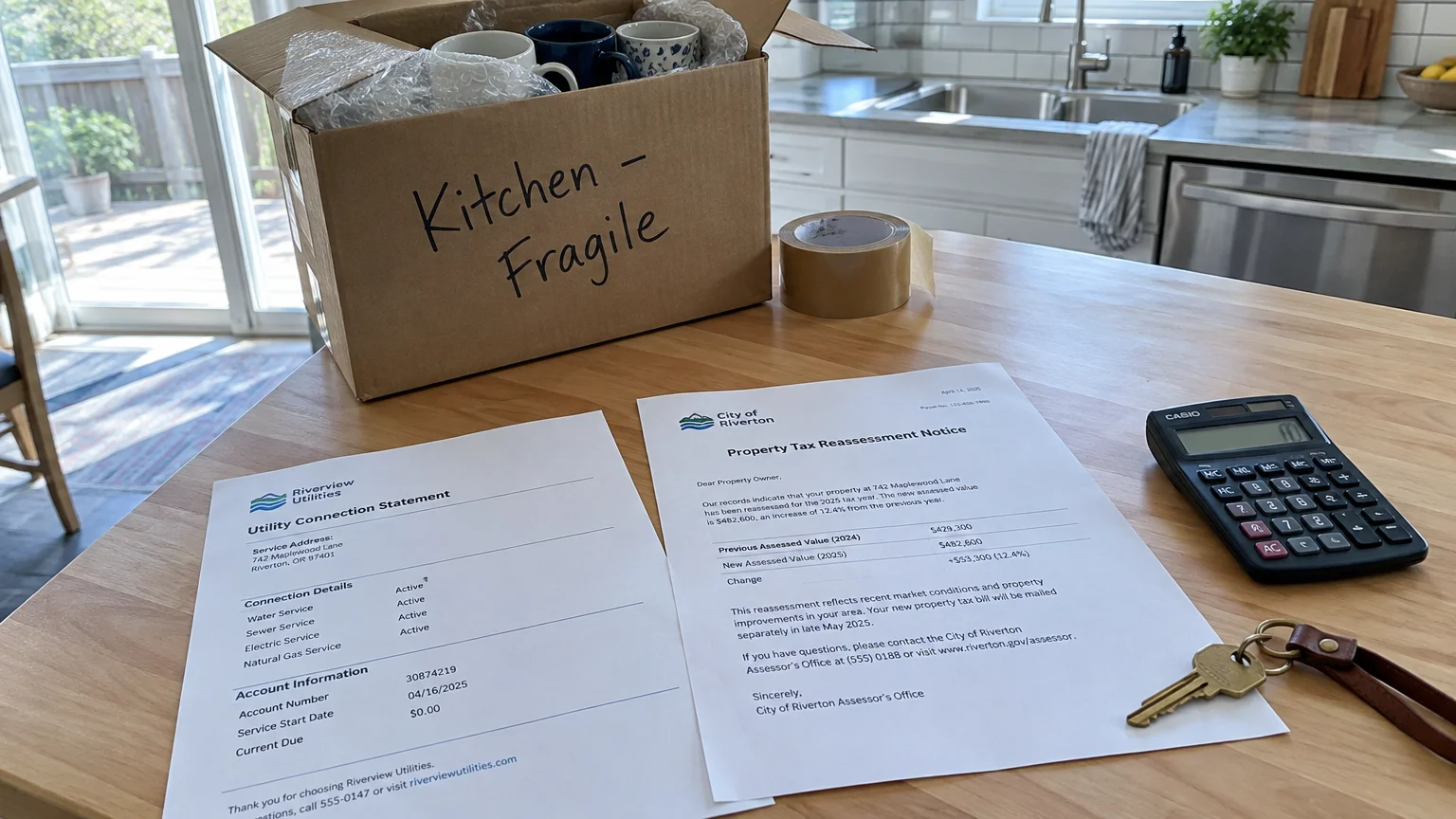
Relocating often leads to unforeseen budget leaks if you fail to calculate indirect municipal costs. Sidestepping these common financial pitfalls protects your hard-earned relocation capital.
The most frequent trap involves ignoring municipal property tax reassessment rules. Many buyers budget based on the seller’s previous tax bill, only to face an escrow shortage when the county reassesses the home at its new purchase price.
Another common mistake is underestimating utility charges and municipal service fees. Water connection fees, sewer taxes, and private trash collection can add several hundred dollars to your monthly housing overhead.
Buyers also frequently overlook localized automobile insurance adjustments. Moving from a quiet suburb into an urban center with higher vehicle theft rates can double your monthly auto policy premium.
Finally, failing to secure a thorough home inspection in older housing markets creates instant financial distress. Aging foundations, obsolete electrical panels, and failing sewer mains can quickly erase the savings gained from a lower purchase price.

When to Consult a Professional
Navigating an interstate move involves complex financial, tax, and legal considerations that benefit from experienced counsel. Reaching out to qualified specialists prevents costly administrative errors.
You should consult a Certified Public Accountant (CPA) when moving across state lines while working remotely. A CPA ensures your employer withholds income taxes correctly and helps you establish legal residency in your new state.
If you are buying your first home or facing tight lending limits, connect with a HUD-approved housing counselor through HUD Housing Counseling. They provide impartial guidance on loan terms, down payment grants, and debt-to-income benchmarks.
When restructuring your investment portfolio or assessing retirement relocation timelines, hire a fee-only Certified Financial Planner (CFP). A fee-only advisor provides fiduciary guidance without pushing proprietary investment or insurance products.
If you encounter unfair lending terms or credit reporting discrepancies during the mortgage application process, contact the Consumer Financial Protection Bureau. They enforce federal consumer finance laws and provide direct channels for resolving lender disputes.
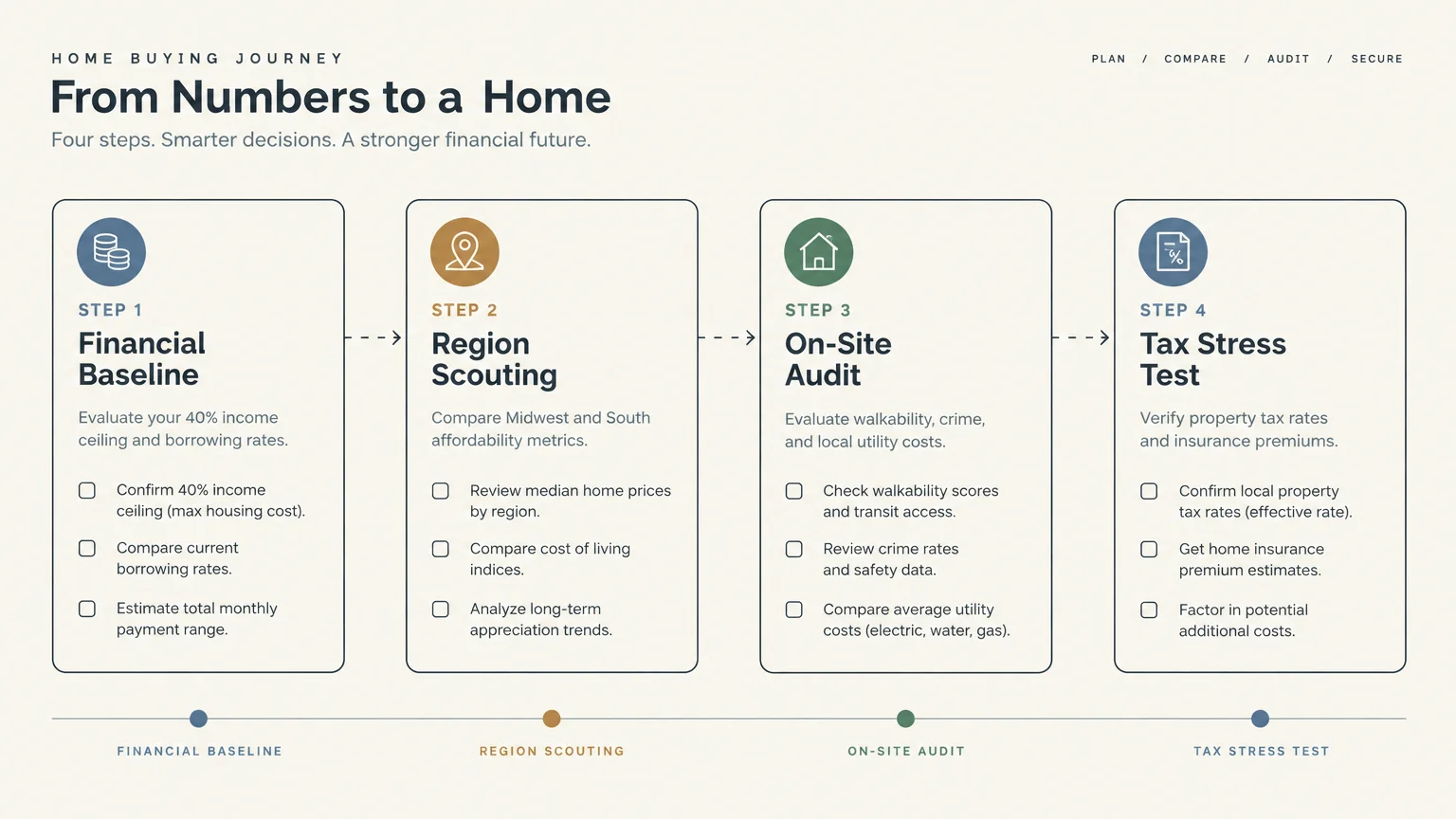
Actionable Relocation Checklist for 2027
Executing a successful move requires disciplined financial planning months before loading a moving van. Follow this sequential framework to protect your family’s budget.
- Audit Your Total Debt-to-Income Ratio: Ensure your projected principal, interest, taxes, and insurance do not exceed 28% of your gross monthly earnings.
- Establish a Dedicated Relocation Reserve: Build a liquid emergency fund containing at least six months of living expenses plus estimated physical moving costs.
- Run Property Tax Scenarios: Contact the local county tax assessor to determine exact millage rates applied to recent purchase transactions.
- Obtain Insurance Binder Quotes Early: Request binding home and auto insurance quotes for specific addresses before removing contract contingencies.
- Test the Commute During Rush Hour: Visit your prospective neighborhood on a Tuesday or Thursday morning to experience authentic traffic delays.
- Verify Municipal Debt and School Ratings: Review local municipal bond ratings and school district funding levels to verify long-term community health.
Frequently Asked Questions About US City Rankings
How do elevated mortgage rates impact the best places to live in 2027?
Elevated mortgage rates place a premium on overall housing affordability. Cities with median home prices below $480,000 and high local incomes, such as Carmel and Fishers, now rank higher than expensive coastal metros.
When borrowing costs consume 40% of after-tax income on a median home, households must seek markets where property prices align closely with annual earnings.
Why do Midwestern suburbs dominate recent national livability lists?
Midwestern suburbs provide an unmatched balance of affordable real estate, low municipal debt, and top-tier public school systems. Cities like Carmel, Indiana and Ankeny, Iowa maintain unemployment rates well below national figures.
These communities invest heavily in public amenities and infrastructure while keeping property taxes predictable for working families.
What factors make a city rank among the worst places to live?
Cities at the bottom of national rankings suffer from high violent crime rates, underfunded public school systems, and declining tax bases. Municipalities like Detroit, Memphis, and Cleveland also burden homeowners with high effective tax rates that discourage business investment.
These conditions suppress home equity growth and create significant financial friction for resident households.
How should retirees choose where to live 2027?
Retirees should prioritize cities with low property taxes, zero state tax on retirement distributions, and accessible healthcare facilities. Regional markets like Midland, Michigan and Homosassa Springs, Florida deliver quiet living without demanding high housing costs on a fixed income.
Next Steps for Your Household Move
Choosing where to live 2027 is one of the most consequential financial decisions you will ever make. Do not let emotions or short-term trends dictate where you plant your roots.
Review your household budget, calculate your post-move take-home pay, and focus on communities offering balanced growth and stable municipal balance sheets. Take control of your relocation journey today by running detailed numbers on your top three prospective cities.
This article is for informational purposes only and does not constitute financial, legal, or tax advice. Rates, benefit amounts, and tax rules change regularly—verify current details with the relevant agency or a licensed professional.
Last updated: October 2026. Rates, benefit amounts, and tax rules change—always verify current details at official sources.