
Acquiring a second passport gives your family global mobility, alternative residency options, and an international financial safety net. Direct citizenship by investment programs currently require capital starting from $130,000 to well over $1 million.
Sweeping price agreements and legal changes have significantly raised the threshold for acquiring dual nationality. Understanding these total out-of-pocket costs helps you protect your hard-earned household savings.
This breakdown reveals what you will actually pay across 15 popular nations offering citizenship or golden visa programs, along with critical tax realities for Americans.
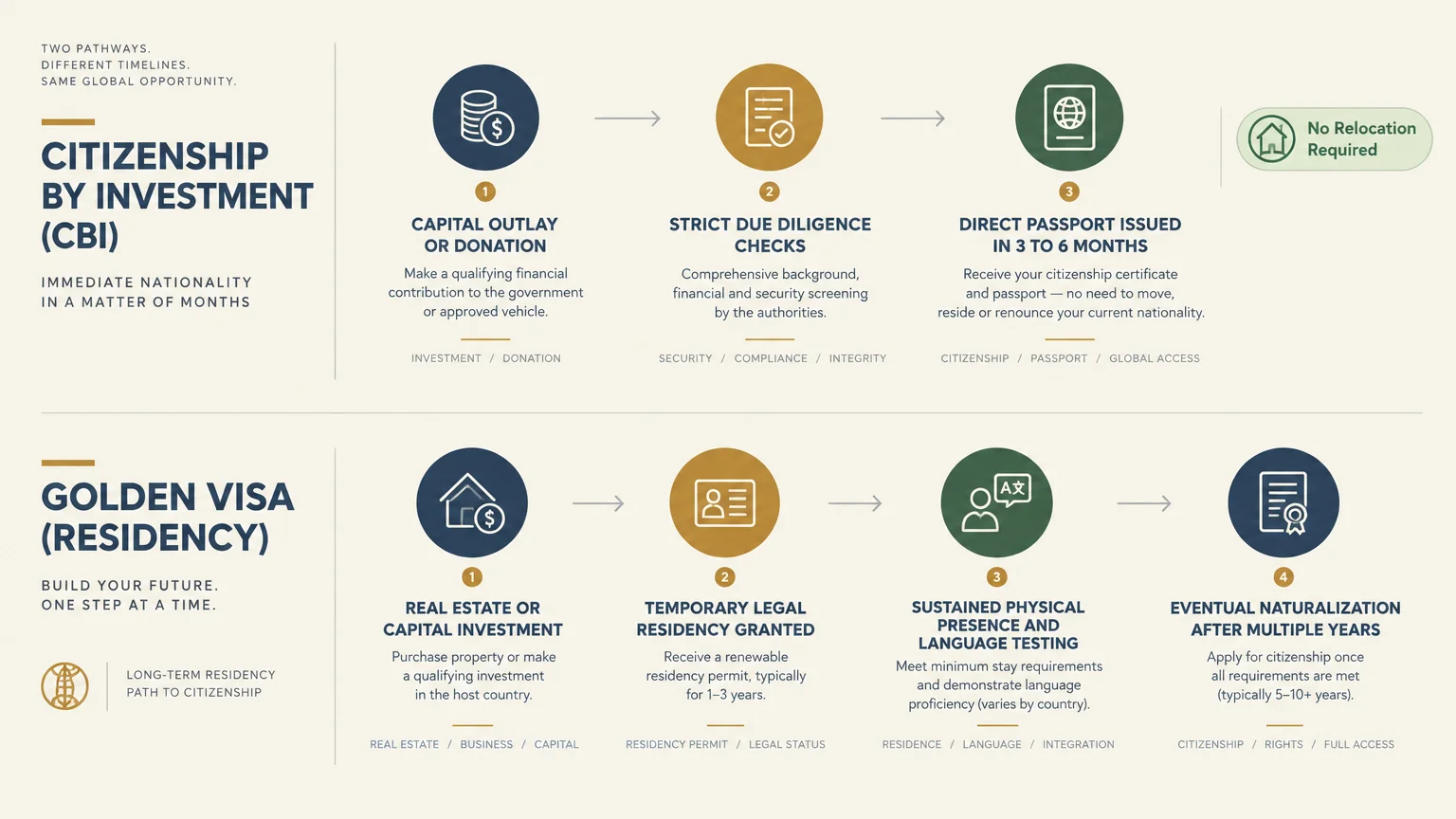
Citizenship by Investment vs. Golden Visas: Key Distinctions
Direct citizenship by investment programs grant full nationality and a passport without requiring you to move abroad. You make a verified donation or approved investment, clear background checks, and receive citizenship within three to six months.
Golden visa programs, by contrast, offer legal residency rather than immediate nationality. You secure the right to live and work in the country, but citizenship requires years of residency, language proficiency, and tax integration.
For American families, confusing these two pathways creates expensive misunderstandings. While residency programs often feature lower initial outlays, direct citizenship delivers immediate sovereign protection and travel flexibility.
“It’s not how much money you make, but how much money you keep, how hard it works for you, and how many generations you keep it for.” — Robert Kiyosaki
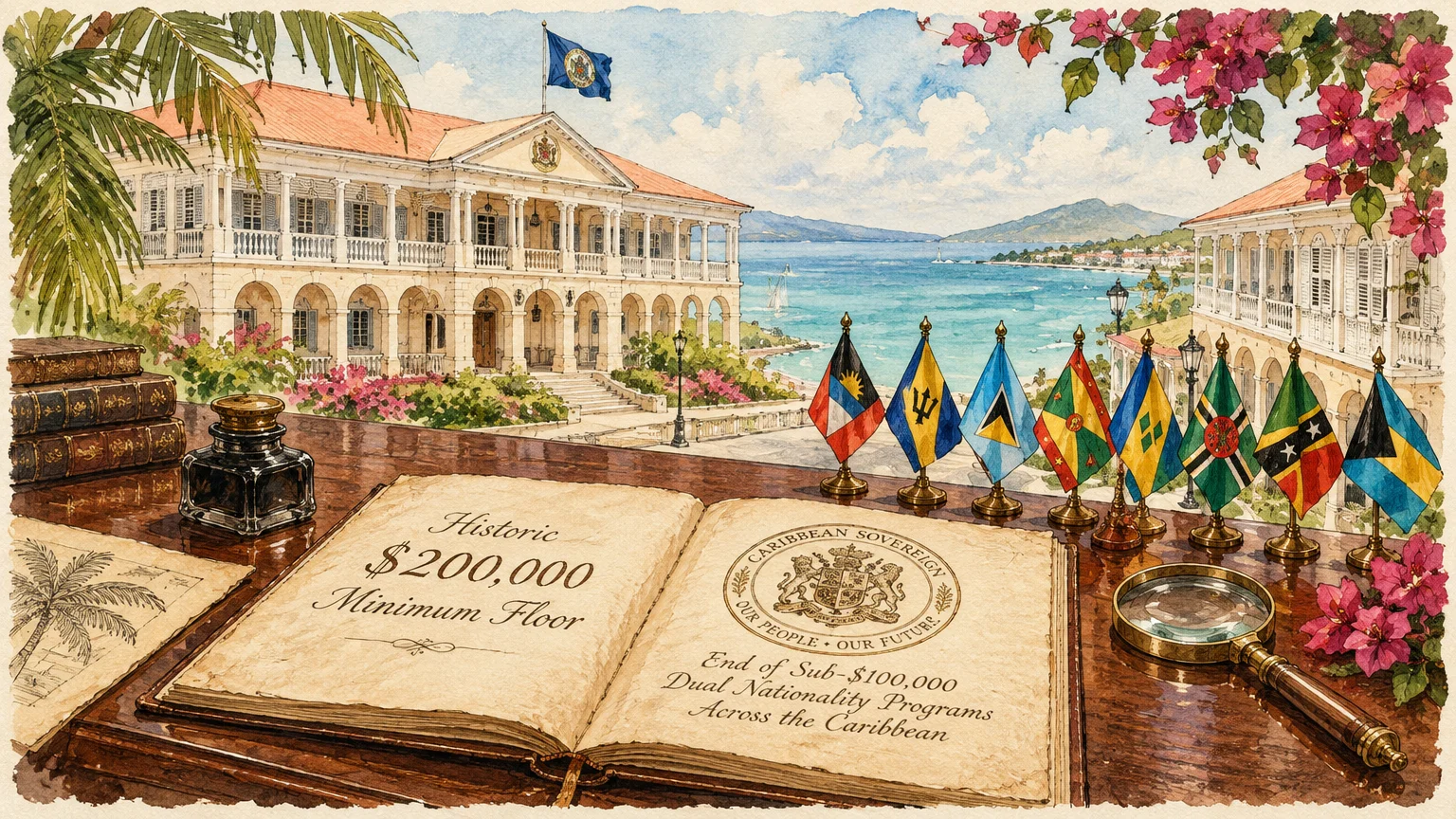
The Caribbean Programs: The $200,000 Price Floor
In early 2024, leaders of the five Eastern Caribbean nations signed a historic Memorandum of Agreement. This pact established a strict $200,000 minimum investment floor, permanently ending sub-$100,000 Caribbean citizenship options.
1. Dominica
Dominica provides one of the oldest economic citizenship routes in the world. The country offers visa-free travel to prominent commercial hubs across several continents.
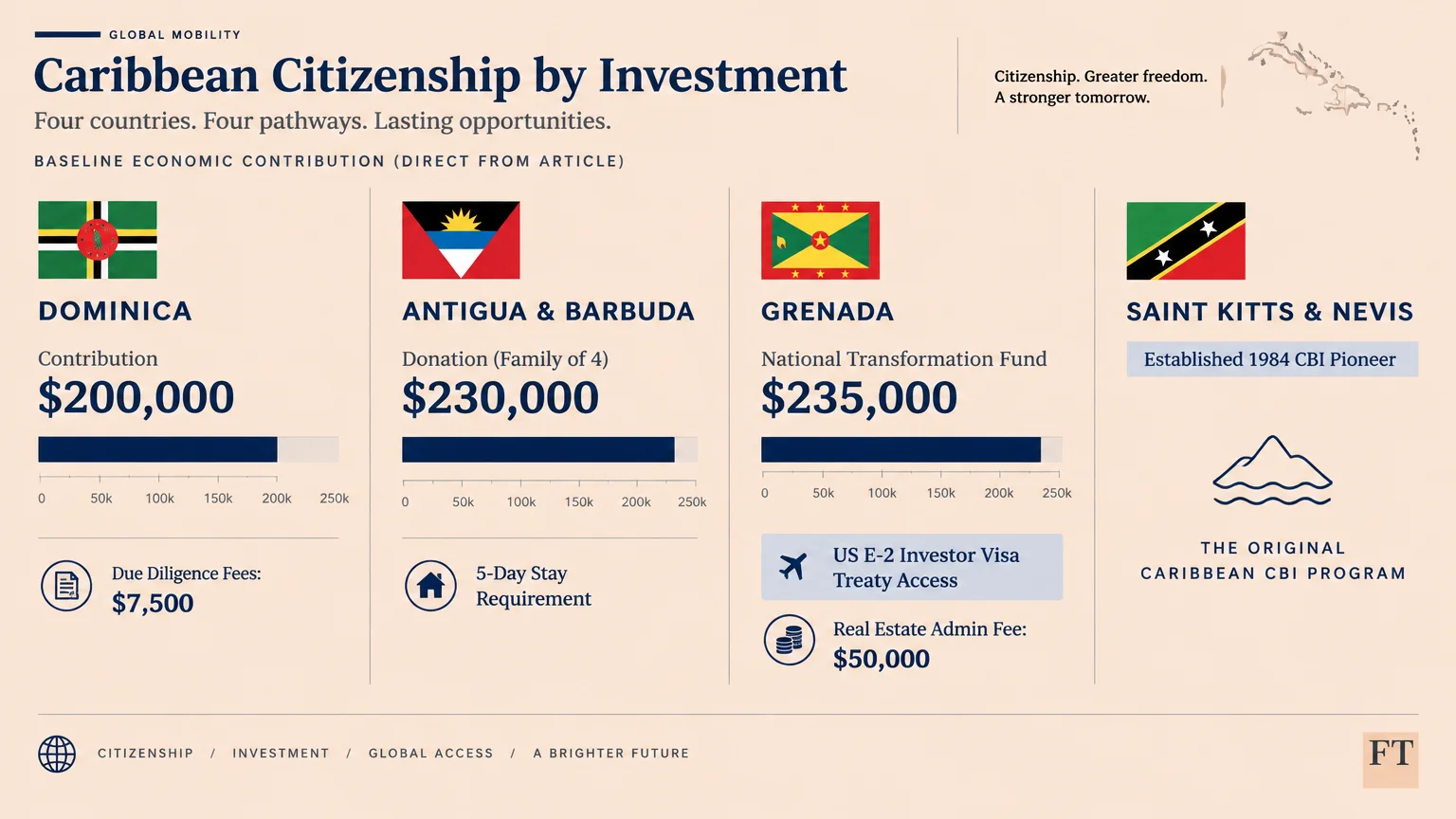
A single applicant must make a non-refundable contribution of at least $200,000 to the Economic Diversification Fund. If you prefer tangible assets, qualifying government-approved real estate shares start at $200,000.
Due diligence fees run $7,500 for the main applicant and $4,000 per dependent aged 16 or older. Processing typically takes three to five months from initial submission.
2. Antigua and Barbuda
Antigua and Barbuda remains a premier choice for larger families seeking cost-effective dual nationality. The passport grants visa-free access to more than 150 jurisdictions.
The program requires a minimum $230,000 donation to the National Development Fund for a family of up to four. Alternatively, approved real estate investments start at $300,000.
To maintain citizenship, you and your family must spend at least five days in the country during the first five years. Government processing and due diligence add roughly $30,000 to your total budget.
3. Grenada
Grenada offers a rare benefit among citizenship by investment programs: an active E-2 Investor Visa treaty with the United States. This treaty allows Grenadian citizens to launch businesses and reside in America.
The National Transformation Fund route requires a minimum non-refundable contribution of $235,000 for a single applicant. Qualifying real estate purchases start at $270,000 in government-approved resort developments.
Real estate investors must pay a flat $50,000 government administration fee in addition to property costs. Due diligence and application fees add approximately $10,000 for an individual investor.
4. Saint Kitts and Nevis
Saint Kitts and Nevis operates the world’s longest-running citizenship by investment program, established in 1984. The program carries a reputation for rigorous due diligence and rapid processing.
The Sustainable Island State Contribution requires a minimum non-refundable donation of $250,000 for an individual. Approved private real estate purchases start at $325,000, requiring a seven-year mandatory holding period.
Government processing fees add $25,000 for the primary applicant and $15,000 for a spouse. Most applicants complete the entire vetting and passport issuance process in four months.
5. Saint Lucia
Saint Lucia provides multiple pathways for applicants, including the only sovereign bond investment option in the Caribbean. Its passport delivers broad international access without physical residency obligations.
A direct contribution to the National Economic Fund requires a minimum investment of $240,000 for a single applicant. Real estate investments in approved luxury developments start at $300,000.
Investors can also purchase non-interest-bearing National Action Bonds starting at $300,000, which you must hold for five years. Due diligence checks cost $8,000 for the principal applicant.

European Citizenship and Direct Naturalization
European Union citizenship grants the constitutional right to live, work, study, and bank anywhere across the 27 EU member states. Direct naturalization options carry rigorous vetting and significantly higher financial hurdles.
6. Malta
Malta offers the only direct route to an EU passport through its Exceptional Services by Direct Investment framework. Applicants undergo the world’s strictest background screening process before receiving approval.
The standard route requires a €750,000 government contribution after 12 months of residency, or €600,000 after 36 months. You must also donate €10,000 to an approved Maltese charity.
Additionally, you must purchase residential property valued at €700,000 or enter a five-year lease costing at least €16,000 annually. Total out-of-pocket costs regularly exceed €900,000.
7. North Macedonia
North Macedonia sits in Southeast Europe and offers a streamlined direct citizenship framework for foreign investors. While not yet an EU member, the nation remains an official candidate country.
You can secure citizenship by contributing €200,000 per adult into a government-administered national innovation and development fund. Alternatively, you can invest €400,000 into a local business that creates at least 10 domestic jobs.
Due diligence fees run roughly €10,000 per applicant. The processing window averages six months without requiring local residency or language testing.

Middle East and Latin America CBI Programs
Several emerging nations outside the Caribbean provide sovereign nationality through direct financial participation. These programs appeal to business owners seeking geographic diversification and alternative trade relationships.
8. Turkey (Türkiye)
Turkey offers one of the most commercially active citizenship programs straddling Europe and Asia. The Turkish passport grants access to regional banking networks and commercial markets.
The program requires a minimum real estate purchase of $400,000, raised from previous lower limits. Properties must remain in your ownership for at least three consecutive years.
Alternatively, you can deposit $500,000 into a Turkish bank account or purchase $500,000 in government debt instruments. The government processes complete files within four to six months.
9. Egypt
Egypt established a formal citizenship by investment framework to attract hard foreign currency reserves. The program offers several structured entry points for qualified individuals.
The direct donation route requires a non-refundable contribution of $250,000 paid directly to the Egyptian state treasury. Real estate purchasers must invest a minimum of $300,000 in state-approved projects.
You must maintain ownership of real estate assets for five years to protect your citizenship status. Application review and background vetting typically conclude within six to nine months.
10. Jordan
Jordan offers direct economic naturalization to stimulate direct investment in local industries and employment. The passport provides strategic access across Middle Eastern and Arab League markets.
Applicants must invest a minimum of $750,000 in an enterprise located within the country, creating at least 10 local jobs. Alternatively, you can deposit $750,000 into the Central Bank of Jordan for three years.
Due diligence checks focus heavily on legitimate asset origin and business ownership history. Applications generally process within three to five months once capital transfers clear.
11. Vanuatu
Vanuatu operates the fastest direct citizenship by investment program in the South Pacific. Applicants routinely receive approvals and passport documentation in under two months.
The Development Support Program requires a non-refundable contribution starting at $130,000 for an individual or $180,000 for a family of four. Vetting procedures are swift and completed entirely online.
Be aware that the European Union and the United Kingdom revoked Vanuatu’s visa-free access due to screening concerns. Holders now require standard travel visas to enter the Schengen Area.
12. El Salvador
El Salvador launched its Freedom Visa program to attract global wealth and technology entrepreneurs. The program stands out as the world’s first cryptocurrency-funded nationality route.
The government requires a non-refundable donation of $1,000,000 paid exclusively in Bitcoin or Tether (USDT). The initiative is legally limited to 1,000 successful applicants per calendar year.
Accepted applicants bypass standard naturalization wait times and receive full sovereign citizenship immediately. Your family members can be included on the same donation threshold.
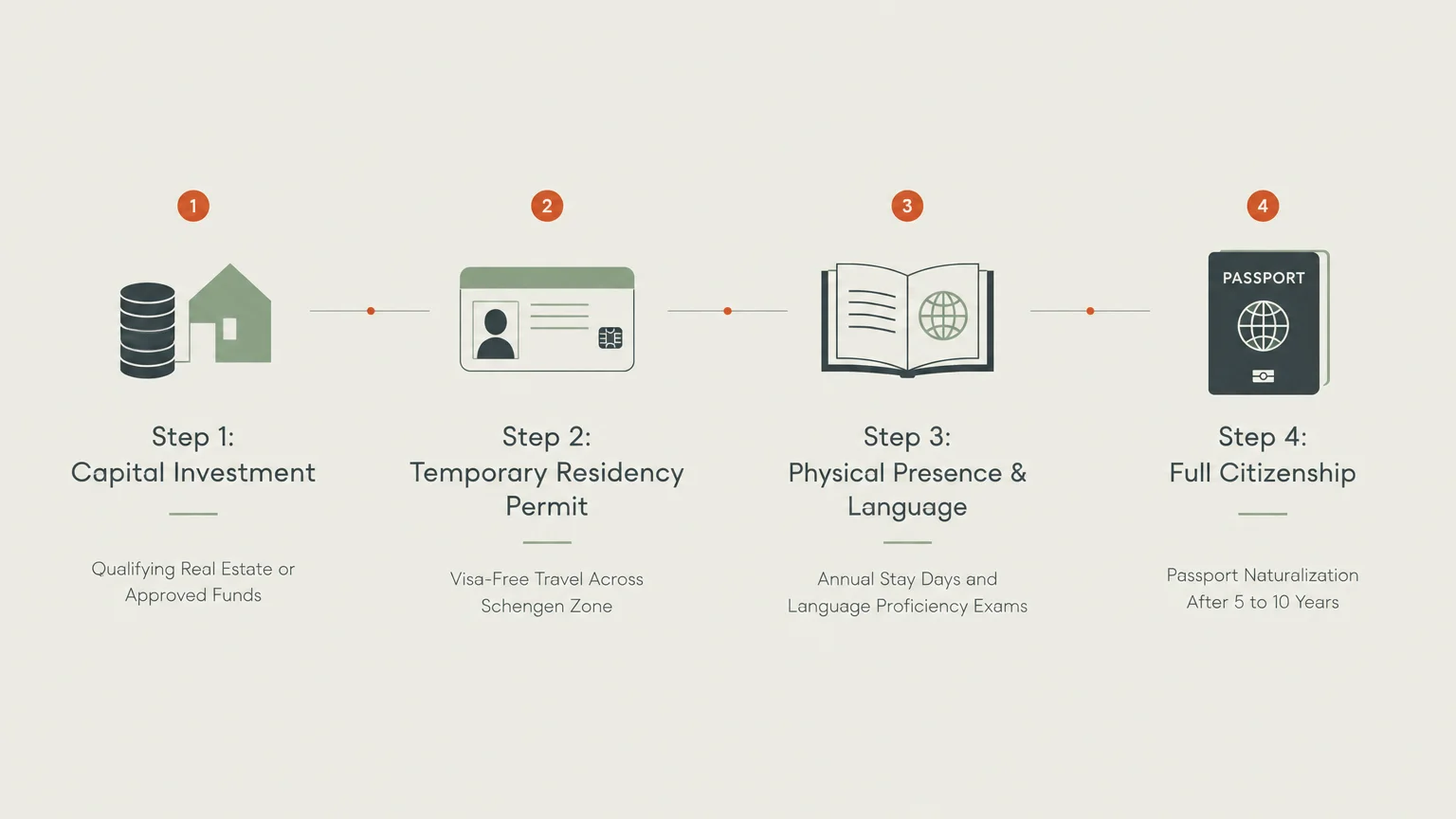
European Golden Visas: The Residency-to-Citizenship Path
If you prefer a European lifestyle without spending millions on direct naturalization, residency programs provide a structured bridge. You secure legal residency today and pursue citizenship after fulfilling physical and cultural milestones.
13. Portugal
Portugal remains a premier European destination for American families seeking long-term options. The program grants legal Schengen Area travel and a five-year pathway to citizenship.
Portugal abolished all real estate investment routes to combat domestic housing inflation. Applicants must now invest €500,000 into non-real-estate venture capital funds or €250,000 into cultural heritage projects.
You only need to spend an average of seven days per year in the country to maintain residency status. Naturalization after five years requires passing a foundational A2-level Portuguese language examination.
14. Greece
Greece provides legal European residency through structured real estate investments. Successful applicants enjoy unrestricted mobility across the European Union’s Schengen Area.
A tiered pricing framework mandates an €800,000 property purchase in prime regions like Athens, Thessaloniki, Mykonos, and Santorini. Less populated mainland districts carry a €400,000 entry minimum.
A €250,000 threshold remains available only for historical property restorations or commercial-to-residential conversions. Applying for Greek citizenship requires seven years of actual physical residency and language fluency.
15. Italy
Italy’s Investor Visa attracts high-net-worth families looking to establish roots in Southern Europe. The framework pairs well with Italy’s flat-tax regime for foreign-source income.
The lowest threshold requires a €250,000 investment into an innovative Italian tech startup registered with the government. Alternatively, you can invest €500,000 in an Italian limited company or €2,000,000 in government bonds.
Holding permanent residency can lead to Italian citizenship after 10 years of documented legal residence. Applicants must demonstrate Italian language proficiency at the B1 intermediate level.
Citizenship by Investment Cost Comparison
Reviewing upfront capital requirements, processing timeframes, and physical stay mandates helps you evaluate program feasibility. The table below outlines core benchmarks across all 15 nations.
| Country | Minimum Capital Outlay | Time to Passport | Physical Stay Required? | Status Granted |
|---|---|---|---|---|
| Vanuatu | $130,000 | 2–3 months | None | Direct Citizenship |
| Dominica | $200,000 | 3–5 months | None | Direct Citizenship |
| North Macedonia | €200,000 | 6 months | None | Direct Citizenship |
| Antigua & Barbuda | $230,000 | 3–5 months | 5 days in 5 years | Direct Citizenship |
| Grenada | $235,000 | 3–5 months | None | Direct Citizenship |
| Saint Lucia | $240,000 | 3–5 months | None | Direct Citizenship |
| Saint Kitts & Nevis | $250,000 | 4 months | None | Direct Citizenship |
| Egypt | $250,000 | 6–9 months | None | Direct Citizenship |
| Turkey | $400,000 | 4–6 months | None | Direct Citizenship |
| Portugal | €250,000 | 5 years | 7 days/year | Residency First |
| Greece | €250,000 | 7 years | Residency required for passport | Residency First |
| Italy | €250,000 | 10 years | Residency required for passport | Residency First |
| Jordan | $750,000 | 3–5 months | None | Direct Citizenship |
| Malta | €750,000+ | 12–36 months | Residency stage mandatory | Direct EU Citizenship |
| El Salvador | $1,000,000 | 1–2 months | None | Direct Citizenship |

The IRS Reality Check for American Families
A common myth suggests that securing foreign nationality frees you from American tax responsibilities. The United States enforces citizenship-based taxation, taxing citizens on their worldwide income regardless of where they live.
Holding a secondary passport does not change your federal tax bracket or filing deadlines. You must continue filing annual tax returns with the IRS every calendar year.
Opening bank accounts or holding real estate abroad triggers strict federal disclosure obligations. You must submit FinCEN Form 114 (FBAR) if aggregate foreign account balances exceed $10,000 at any point.
Failure to declare foreign financial assets can trigger severe civil and criminal penalties under FATCA rules. You can review sovereign tax filing standards through USA.gov Money and Taxes.
Relinquishing U.S. citizenship to end tax liabilities is an extreme legal step governed by IRC Section 877A. High-net-worth expatriates face steep exit taxes calculated on unrealized capital gains.

Costly Mistakes to Avoid
Navigating international nationality programs requires strict compliance and careful financial discipline. Avoid these frequent missteps when evaluating foreign programs.
- Budgeting only for the sticker price: Due diligence fees, background investigations, legal retainer agreements, and translation costs routinely add $15,000 to $50,000 per application.
- Confusing residency with a passport: Assuming a golden visa delivers immediate travel rights leads to costly travel disruption. You cannot hold a national passport until completing naturalization.
- Overpaying for designated real estate: Developers frequently mark up qualifying CBI real estate units above fair market value. Ensure you run independent property appraisals before wiring funds.
- Failing to track wire transfers safely: Wire transfers across international clearinghouses carry counterparty risks and currency fees. Verify foreign escrow account details with consumer resources at the Consumer Financial Protection Bureau.
- Neglecting family succession rules: Some programs do not permit future grandchildren to inherit naturalized citizenship automatically. Always confirm long-term lineage transmission laws before investing.

Don’t DIY These Decisions
Attempting to manage foreign nationality applications without professional support exposes your household to substantial fraud risks. Rogue brokers and unaccredited intermediaries often market invalid citizenship schemes.
Work exclusively with licensed immigration attorneys authorized by the respective host government. These vetted firms maintain sovereign licenses and manage official submission channels.
You also need a cross-border CPA or tax attorney familiar with dual-resident compliance. They ensure your international financial structures do not trigger IRS audits or punitive excise taxes.
Finally, align your second passport with your broader estate plan alongside a fiduciary financial planner. This coordination protects family generational wealth and keeps cross-border inheritance smooth.
Frequently Asked Questions
Is it legal for U.S. citizens to buy a second citizenship?
Yes. The United States government permits dual nationality, and you do not forfeit your American passport simply by acquiring another citizenship.
What is the cheapest country to buy citizenship in 2026?
Vanuatu offers the lowest entry price for a single applicant at $130,000. In the Caribbean, Dominica sets the baseline donation at $200,000.
Can my family be included on a single citizenship application?
Yes. Most programs allow you to include a legal spouse, dependent children up to age 30, and elderly parents for additional government fees.
Will a second passport help me reduce my U.S. income taxes?
No. American citizens face taxation on worldwide income regardless of foreign citizenship, unless they formally expatriate and renounce their U.S. nationality.
Next Steps for Your Global Strategy
Securing a secondary citizenship represents a generational investment in your family’s safety, financial resilience, and personal freedom. Start by auditing your household balance sheet to decide whether a non-refundable contribution or real estate asset fits your goals.
Contact an authorized marketing agent and schedule a consultation with an international tax CPA before moving forward. This article is for informational purposes only and does not constitute financial, legal, or tax advice. Rates, benefit amounts, and tax rules change regularly—verify current details with the relevant agency or a licensed professional.
Last updated: February 2026. Rates, benefit amounts, and tax rules change—always verify current details at official sources.