
More than half of U.S. shoppers say the economy is shaping their 2026 holiday budgets, and 82% are actively cutting costs. Instead of putting gifts and travel on high-interest credit cards, you can generate fast extra cash from home.
Several work from home side gigs pay out within days or two weeks, letting you cover seasonal expenses before December bills arrive. Even modest weekly earnings can protect your household budget without draining your emergency fund.
Below, you will find six realistic holiday side hustles, their verified 2026 pay rates and platform fees, and the banking and tax steps needed to keep more of what you earn.
What You Need to Know Before Picking a Holiday Side Hustle
Seasonal spending adds pressure to budgets that are already stretched thin. An October 2026 National Retail Federation survey found that 56% of shoppers expect the economy to affect their holiday plans, while Pew Research Center reports 4 in 10 Americans struggle with basic necessities.
Bankrate also found in February 2026 that 81% of Americans did not grow their emergency savings this year. Adding temporary income helps you avoid pulling from savings or carrying balances into January.
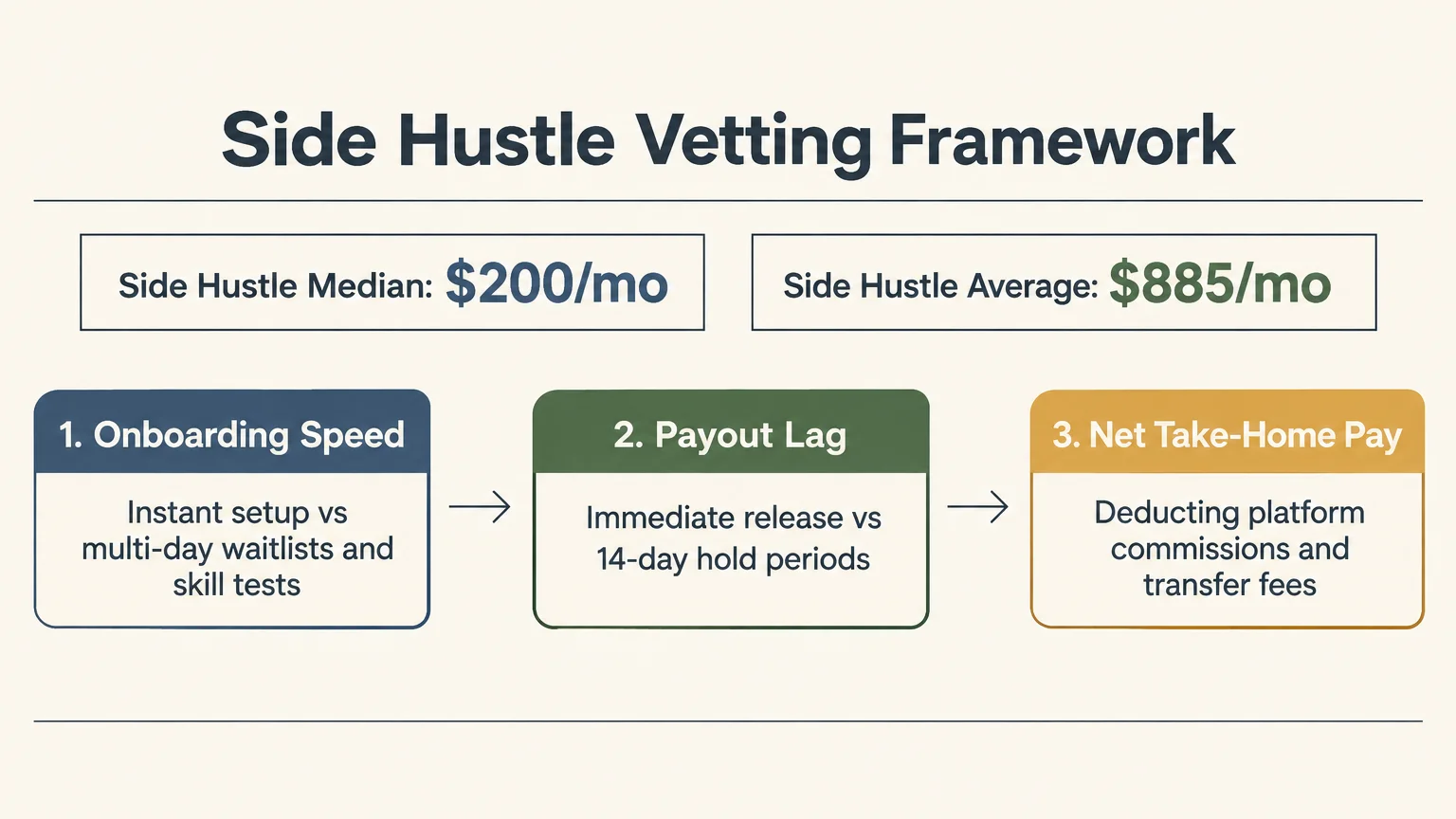
Setting realistic earnings targets prevents frustration during a short holiday sprint. According to Bankrate, the 27% of U.S. adults with a side hustle earn a median of $200 per month and an average of $885 per month.
To turn quick cash ideas into net profit before the holidays, weigh three factors before you apply:
- Onboarding speed: Some platforms approve you in minutes, while others require unpaid skill tests or place new applicants on waitlists.
- Payout lag: Finishing a task on December 10 does not help with December 15 gift shopping if the platform holds funds for 14 days.
- Net take-home pay: Marketplace commissions, commercial payment processing fees, and instant-transfer charges can quickly shrink your hourly rate.
1. Resell Unused Household Items and Apparel Online
Decluttering closets, garages, and basements remains one of the fastest ways to make extra money holidays bring on, because you do not have to wait for client approvals. Holiday shoppers actively hunt for discounted winter coats, electronics, toys, and giftable housewares throughout November and December.
Your net profit depends heavily on where you list your items. Each major resale marketplace uses a distinct 2026 fee structure and payout schedule:
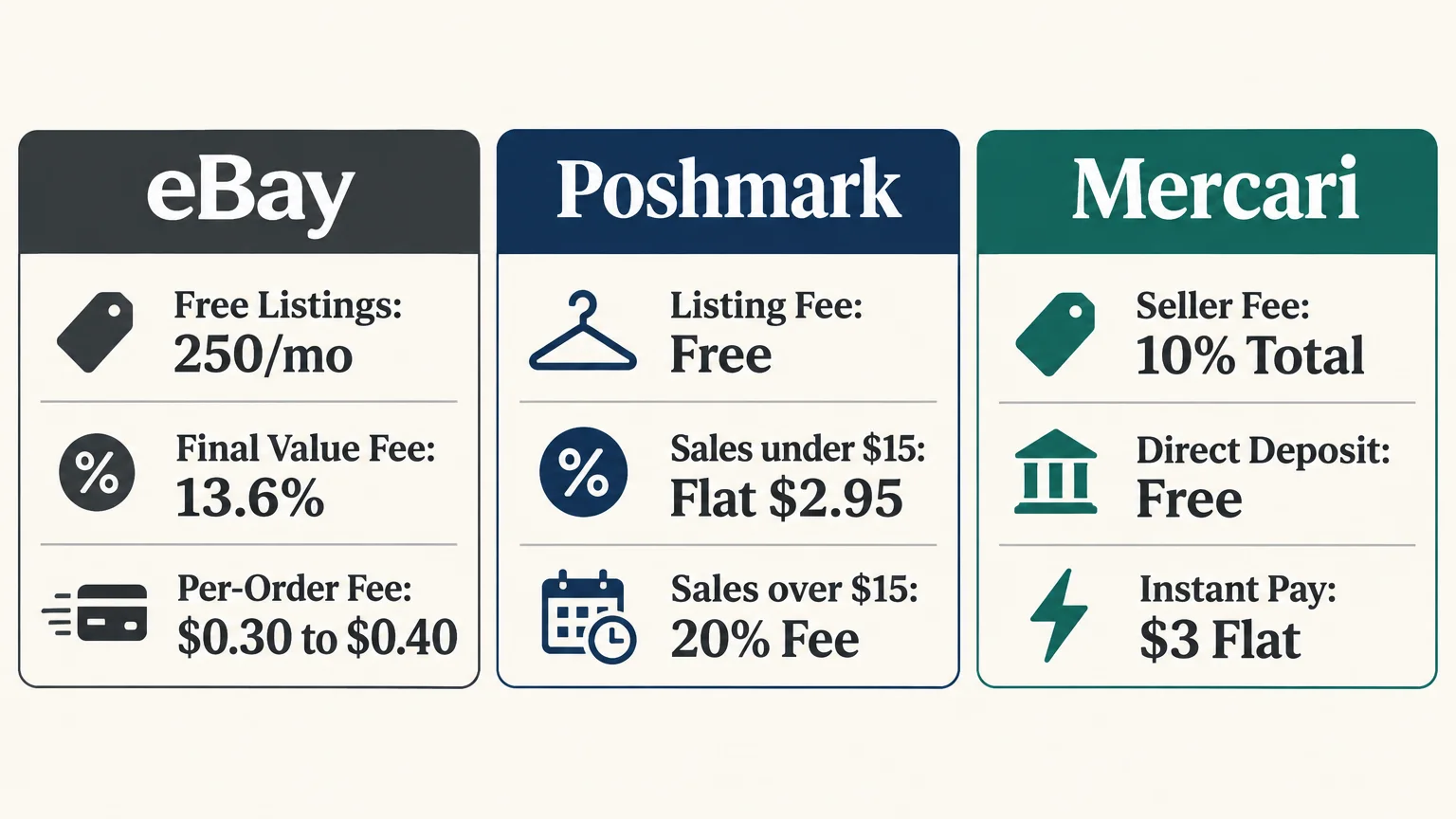
- eBay: Sellers receive 250 zero-insertion-fee listings per month, then pay $0.35 per listing in most categories. When an item sells, eBay charges a standard final value fee of 13.6% in most categories—or 15.3% for books, movies, and music—on the total transaction including shipping and sales tax, plus $0.30 per order of $10.00 or less or $0.40 over $10.00.
- Poshmark: Listing apparel, accessories, and home decor is free. Poshmark deducts a flat $2.95 fee on sales of $15 or less and takes 20% on sales above $15.
- Mercari: Under rules effective January 6, 2026, Mercari charges sellers 10% of the total sale price including buyer-paid shipping and no longer charges a separate seller payment-processing fee. Standard direct deposit is free, while Instant Pay costs $3 per payout.
To get paid quickly, photograph items in bright natural light and ship within one business day. Most resale platforms release your funds only after tracking confirms delivery or the buyer accepts the package.
Keep receipts or rough estimates of what you originally paid for items you sell. If you sell personal items for less than their original purchase price, you generally do not owe income tax on the proceeds, though flipping items bought for resale is taxable business income.

2. Train AI Models and Complete Data Annotation Tasks
Technology companies rely on remote contractors to evaluate chatbot answers, rank search results, and fact-check AI responses. These easy online jobs require a reliable computer and strong reading comprehension rather than formal sales experience.
DataAnnotation lists starting pay at $20 or more per hour for multilingual projects and $25 to $30 per hour—with select listings up to $50 per hour—for general non-coding work. Applicants with coding, STEM backgrounds, or professional licenses can earn $40 to $150 or more per hour.
Before earning, DataAnnotation requires an unpaid starter assessment lasting one to three hours. Once approved, you log work flexibly and request payouts through PayPal.
Outlier, operated by Scale AI, follows a similar model with 30 to 90 minutes of initial onboarding. Outlier pays weekly through PayPal, Airtm, or U.S. ACH bank transfer, though standard hourly rates vary by project rather than appearing on a single public rate sheet.
Skip older microtask advice that points you toward Amazon Mechanical Turk. Amazon shut down Mechanical Turk on September 30, 2026, so focus your application time on active platforms instead.
3. Take on Seasonal Remote Customer Support or Virtual Assisting
With U.S. holiday retail sales projected to reach $1.013 trillion in 2026—a 4.2% increase over 2025—retailers and small businesses face surging customer inquiries. The National Retail Federation projects retailers will hire 325,000 to 375,000 seasonal workers for the 2026 season, and many support roles operate remotely.
According to the U.S. Bureau of Labor Statistics, the median wage for customer service representatives stood at $21.53 per hour, or $44,770 per year, as of May 2025. Virtual assistants earn an average of $23.24 per hour in 2026, based on Indeed wage data.
Remote customer support roles often hire you as a seasonal W-2 employee, meaning your employer withholds payroll taxes and pays on a biweekly schedule. Virtual assisting for small business owners, by contrast, usually runs as independent contract work.
If you work as an independent virtual assistant, send clear invoices outlining your hourly rate, completed hours, and payment due date. Asking new clients for weekly billing or a 50% upfront retainer keeps cash flowing into your account before the holidays.
Pay attention to how clients pay your invoices. Accepting commercial goods-and-services payments through PayPal costs 2.99% plus $0.49 per transaction—or 3.49% plus $0.49 through PayPal Checkout or invoicing—whereas direct bank ACH transfers often cost nothing to receive.
4. Tutor Students Online in High-Demand Subjects
Parents often book extra tutoring hours in November and December to help students finish semester exams, college essays, and math units strong. If you hold strong skills in English, algebra, science, test prep, or a second language, online tutoring offers higher hourly rates than most entry-level gigs.
On Wyzant, tutors set their own hourly rates and keep 75% of what they charge. The platform retains a flat 25% fee, though Wyzant waives that cut if you refer a brand-new student to the platform yourself.
Students also pay a 9% service fee per lesson on Wyzant. A November 2026 SpeakDuo review of more than 390 English tutors on the platform found a median listed rate of $62 per hour, giving qualified tutors roughly $46.50 per hour before taxes.
You can speed up your first paycheck by offering targeted short packages, such as three-session final-exam reviews. Make sure your profile headline states the exact grade levels, exams, or software tools you teach so families can book right away.
5. Test Websites, Apps, and Academic Research Studies
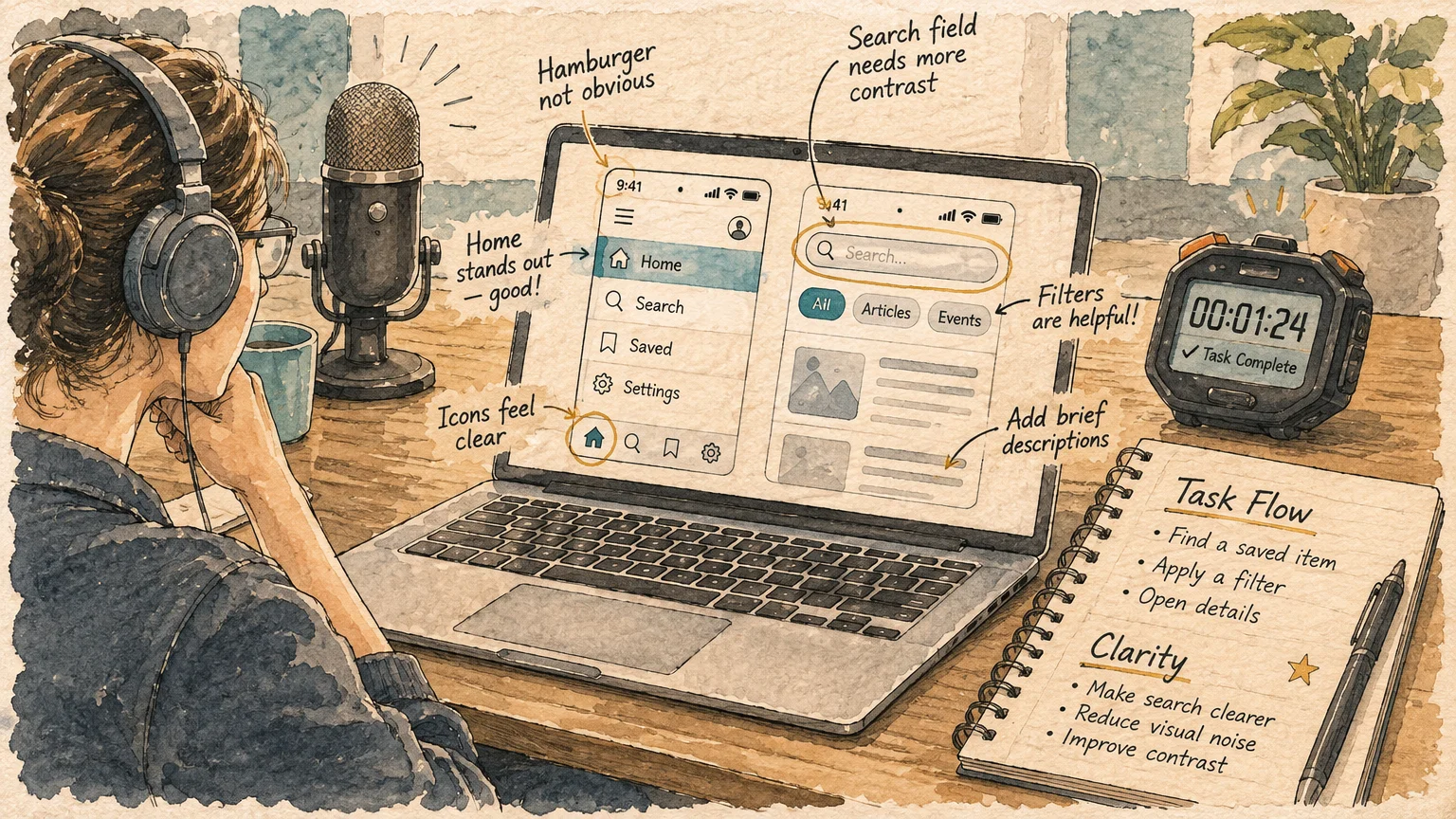
If you prefer bite-sized tasks you can fit around a full-time job or childcare, user testing and paid research studies turn spare evening minutes into spending money. Companies and university researchers pay participants to test checkout flows, review mobile prototypes, or answer behavioral surveys.
UserTesting displays the payout for each test inside your dashboard before you begin, with scheduled live video conversations paying more than standard recorded tests. Payouts arrive exclusively through PayPal exactly 14 days after you finish a test, so start by early December if you want the cash before year-end.
Prolific connects participants with academic and market research studies and enforces a strict minimum pay floor of $8.00 per hour, with $12.00 per hour recommended under its October 2026 pricing policy. Unlike typical survey sites, Prolific requires researchers to pay you even if an in-study screener disqualifies you partway through.
You can cash out Prolific earnings to PayPal once your balance reaches $6. Keep in mind that Prolific places new applicants on a waitlist, so apply early and pair it with a faster gig while your account is reviewed.
6. Offer Direct Freelance Admin, Bookkeeping, or Holiday Prep Services
You do not need an online marketplace to earn quick cash from home if you sell practical skills directly to local small businesses or busy families. In the Intuit QuickBooks 2026 Entrepreneurship Study, 47% of surveyed adults earned side-hustle income and 40% planned to launch a side business or hustle in 2026.
Small retail shops, solo contractors, and local service firms often fall behind on year-end invoicing, spreadsheet cleanup, email inbox management, or holiday newsletter scheduling. Busy households also pay for remote help with holiday card addressing, travel itinerary research, or gift tracking spreadsheets.
Direct freelancing eliminates the 10% to 25% platform cuts charged by major marketplaces. You set the price, negotiate payment within three to seven days, and build repeat contacts who may hire you again in January.
When clients pay you through consumer payment apps, avoid losing money to unnecessary transfer charges. PayPal and Venmo let you move funds to a linked bank account for free via standard transfer—taking one to three business days on Venmo—while instant transfers cost 1.75% on both apps, subject to a $0.25 minimum and $25 maximum on Venmo.
Cash App similarly charges 0.5% to 1.75% for instant payouts. Planning your cash-outs two or three days before you shop lets you keep every dollar of your earnings.
Side-by-Side Comparison: Speed, Pay, and Payout Fees
Matching your calendar to each gig’s approval time and payout rules helps you avoid cash crunches right before holiday deadlines. Use the table below to compare typical 2026 rates, onboarding speed, and payout terms across all six options.
| Side Gig | Verified Pay Benchmark (2026) | Startup Time | Payout Speed | Key Platform or Payout Fees |
|---|---|---|---|---|
| Online Reselling | Varies by item value | Same day | Upon delivery or acceptance | eBay 13.6% + $0.30–$0.40; Poshmark $2.95 or 20%; Mercari 10% ($3 Instant Pay) |
| AI Training and Annotation | $20–$30+/hr general; $40–$150+/hr STEM/coding (DataAnnotation) | 30 min to 3 hr unpaid test | Weekly (Outlier) or on request (DataAnnotation) | Free standard PayPal/ACH; 1.75% for PayPal instant bank transfer |
| Remote Support or Virtual Assisting | $21.53/hr median support; $23.24/hr avg VA | 1 to 3 weeks | Biweekly (W-2) or per invoice | PayPal commercial fees: 2.99% + $0.49 (or 3.49% + $0.49 invoicing) |
| Online Tutoring (Wyzant) | $62/hr median listed English rate | Few days to 1 week | Scheduled direct deposit | 25% platform fee (0% if you refer the student) |
| Website Testing and Studies | $8/hr minimum to $12+/hr recommended (Prolific) | Same day to waitlist | 14 days (UserTesting); $6 min cashout (Prolific) | PayPal payouts; 1.75% only if you choose instant bank transfer |
| Direct Freelance Services | Set your own hourly or project rate | 1 to 7 days | Upon completion or deposit | Free via bank ACH; 0.5%–1.75% for instant app transfers |
Manage Your Side-Gig Cash Like a Micro-Business
Even a short-term holiday side hustle triggers real business and household cash-flow decisions. Treating your side income separately from your grocery and mortgage money makes tax filing easier and shows whether your hourly effort truly pays off.
Separate your side-hustle cash from your household checking account on day one, because mixing the two hides real expenses and leaves you guessing when tax season arrives.
Follow four practical steps to protect your household finances while running a holiday gig:
- Open a dedicated checking account: Deposit all gig payouts into a separate checking account insured by the FDIC or an NCUA-insured credit union so you can track revenue and transfer net profits cleanly to your family budget.
- Keep your business entity simple at first: Most solo holiday freelancers operate as sole proprietors by default with zero state registration fees. Consider forming an LLC through your state Secretary of State—and paying state filing fees—only if you carry ongoing liability risk, such as handling sensitive client financial data or turning the gig into a year-round business.
- Build a tax and operating reserve: Before spending your gig payouts on gifts, leave enough cash in your side-gig account to cover self-employment taxes, income taxes, and recurring costs like shipping tape or software subscriptions.
- Log every deductible business expense: Keep digital receipts for shipping boxes, printer ink, home internet allocation, tutoring prep materials, and marketplace fees, because legitimate business deductions lower your taxable net profit.
Separating personal and business liabilities matters if you expand beyond casual holiday tasks. If you sign ongoing client contracts in the new year, review whether a formal business structure and dedicated business banking make sense for your family’s risk tolerance.
2026 IRS Tax Rules for Holiday Side Hustles
Tax reporting thresholds changed for 2026, creating widespread confusion among casual sellers and gig workers. Knowing the difference between receiving a tax form and owing tax prevents an unpleasant April surprise.
For payments made after December 31, 2025, businesses must issue Form 1099-NEC—and most 1099-MISC forms—only when they pay a contractor $2,000 or more during the year, up from the former $600 threshold. Meanwhile, payment apps and online marketplaces face a federal Form 1099-K reporting threshold requiring both more than $20,000 in gross goods-and-services payments and over 200 transactions for tax year 2026.
Skipping a 1099 threshold does not make your earnings tax-free. Per the IRS, you must report all taxable income on your return regardless of whether a platform or client mails you a form.
Anyone with $400 or more in net self-employment earnings—your gross gig income minus valid business expenses—must file a federal tax return and pay self-employment tax. The self-employment tax rate is 15.3%, consisting of 12.4% for Social Security on combined wages and net gig earnings up to the 2026 cap of $184,500, plus 2.9% for Medicare.
The IRS calculates that 15.3% tax on 92.35% of your net self-employment profit, in addition to your regular federal and state income tax brackets. If your holiday side hustle pushes your total unpaid tax liability up significantly, you can make a fourth-quarter estimated payment by January 15, 2027, or ask your day-job employer to withhold a little extra tax from December paychecks.
Don’t Make These Mistakes
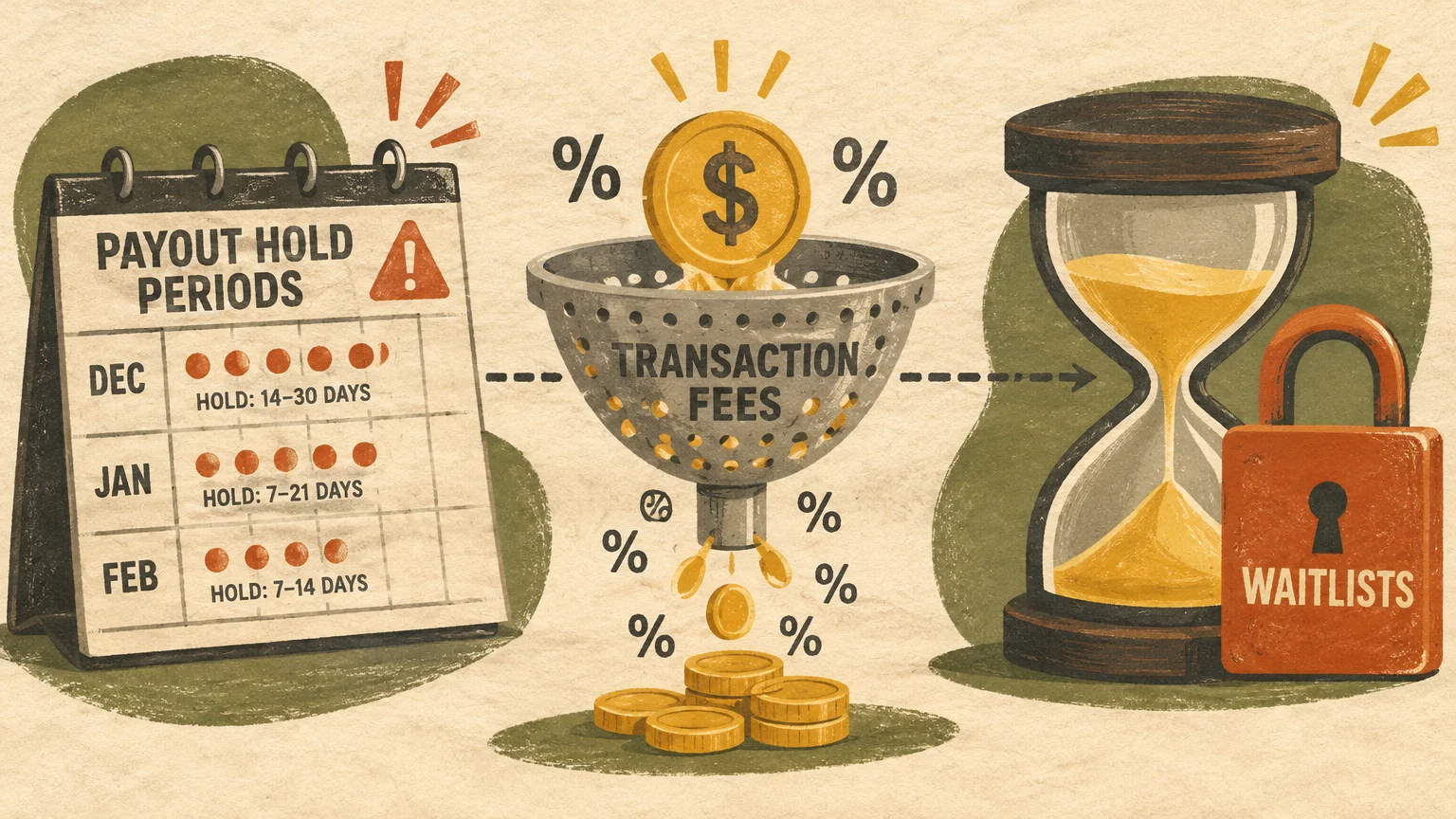
Rushing for quick cash during November and December makes people vulnerable to avoidable fees, tax snags, and outright fraud. Watch out for these four common pitfalls:
- Paying to apply or buy starter kits: Legitimate remote employers, tutoring marketplaces, and AI annotation platforms never charge application fees or ask you to deposit a check and wire back part of the funds. Review job-scam warning signs through FTC Consumer Advice before sharing your Social Security number or bank login.
- Draining earnings on instant transfer fees: Paying 1.75% on PayPal or Venmo—or $3 on Mercari—every time you cash out small balances cuts directly into your hourly profit. Batch your payouts and wait one to three business days for free ACH deposits whenever possible.
- Ignoring marketplace fees when pricing items: Listing a jacket for $40 on Poshmark or eBay without factoring in 13.6% to 20% fees and shipping materials can leave you with far less cash than expected. Calculate your net proceeds before accepting a buyer’s offer.
- Spending 100% of gross payouts on holiday gifts: Treating every dollar received from independent contracting as spendable cash leaves you short when federal and state taxes come due. Transfer only your after-tax profit into your holiday gift fund.
When Professional Advice Is Worth It
For a simple $300 holiday closet cleanout or a few hours of online user testing, free IRS instructions and clean spreadsheet tracking are usually enough. You do not need to pay an advisor just to sell old electronics or pass a few research studies.
Consulting a CPA or enrolled agent becomes worthwhile if your side hustle clears several thousand dollars, blends W-2 wages with multiple 1099-NEC streams, or approaches the $184,500 Social Security wage base where self-employment calculations shift. A tax professional can also calculate accurate quarterly estimated payments and verify home-office or equipment deductions.
If your holiday side hustle grows into a steady consulting or e-commerce venture, consider speaking with a business attorney or local small-business advisor about whether forming an LLC makes sense. Paying a modest fee for tailored advice upfront often costs far less than fixing misclassified income, underpayment penalties, or commingled business accounts later.
Frequently Asked Questions
Which work-from-home side gig pays the fastest for the holidays?
Direct freelance services, DataAnnotation payouts on request, and Mercari or Poshmark sales of fast-shipping items typically put cash in your bank within days. UserTesting holds payouts for 14 days via PayPal, and W-2 seasonal customer service jobs usually follow a standard biweekly payroll cycle.
Do I owe taxes if I sell personal items on eBay or Poshmark for holiday cash?
If you sell used household items or clothing for less than you originally paid, the IRS generally treats that as a personal loss rather than taxable income, even if you exceed reporting thresholds. However, if you sell items at a profit or flip inventory for business income, those net gains are taxable.
Will I receive a 1099-K or 1099-NEC for a small 2026 holiday side hustle?
For tax year 2026, businesses generally issue Form 1099-NEC only when they pay you $2,000 or more, and payment apps issue Form 1099-K federally only if you exceed both $20,000 in gross payments and 200 transactions. Even without a form, you must report taxable net self-employment income of $400 or more.
How can I avoid instant transfer fees when cashing out side-gig pay?
Select standard bank transfers or direct ACH deposits instead of instant debit-card payouts on PayPal, Venmo, Cash App, and Mercari. Standard transfers take one to three business days but keep you from losing 0.5% to 1.75%—or flat $3 fees—on every withdrawal.

Your Next Step for Debt-Free Holiday Cash
Pick one gig that fits your calendar this week—whether listing ten unused items tonight, taking an AI annotation assessment, or offering admin hours to a local business—and open a separate bank account before your first payout arrives. Setting aside taxes first lets you enjoy the rest of your earnings without worrying about January bills.
This article is for informational purposes only and does not constitute financial, legal, or tax advice. Rates, benefit amounts, and tax rules change regularly—verify current details with the relevant agency or a licensed professional.
Last updated: November 2026. Rates, benefit amounts, and tax rules change—always verify current details at official sources.