Yes, your surviving dependent children can receive monthly cash payments from your Social Security record after you pass away. In fact, an eligible child can receive up to 75% of your full retirement benefit amount.
The Social Security Administration provides these survivor benefits to replace lost household income and support your family during critical developmental years.
Qualifying depends on your child’s age, marital status, and school enrollment, alongside your accumulated work credits. Understanding these rules ensures your family never leaves vital financial support on the table.
The Bottom Line Up Front
Social Security child survivor benefits provide essential income replacement if you die while raising a family. Review the foundational rules below to understand how this program protects your household.
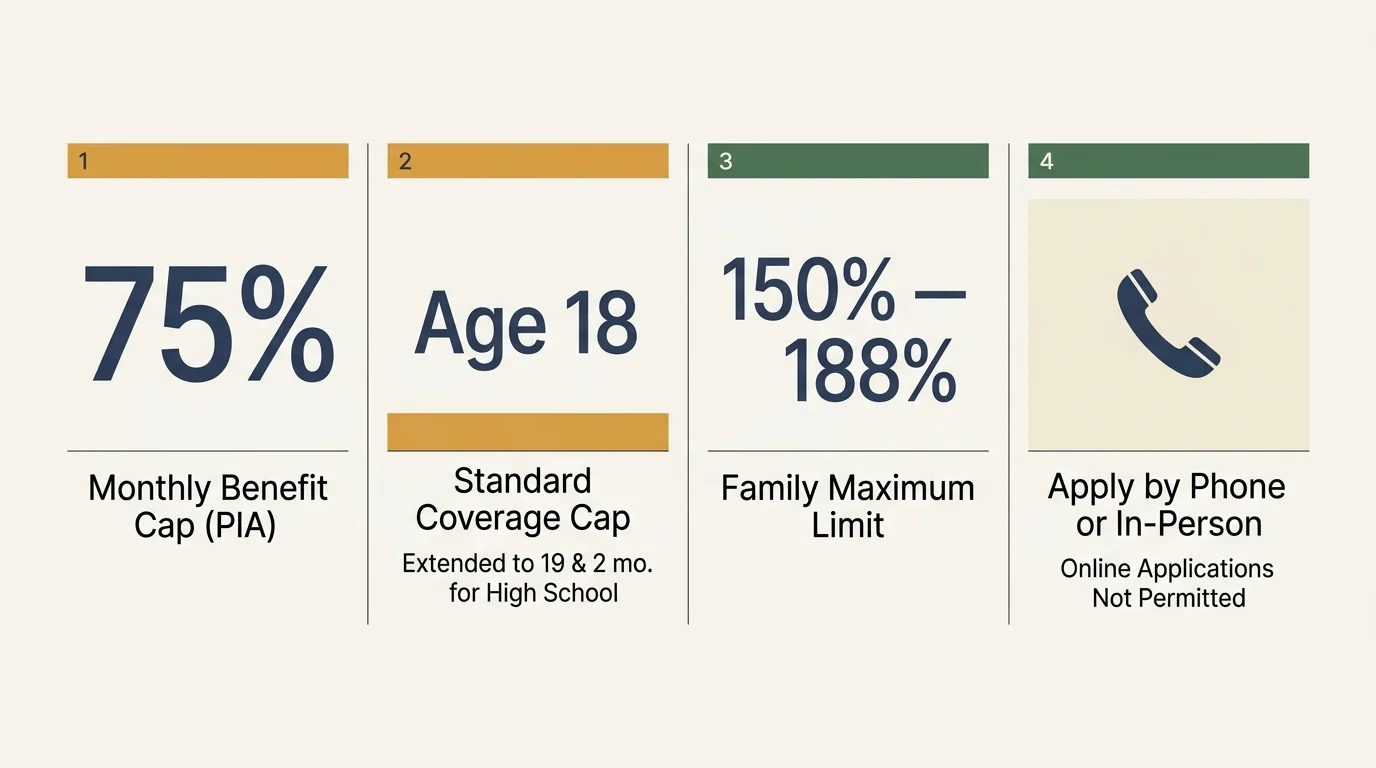
- Monthly Benefit Amount: Eligible children can collect up to 75% of your Primary Insurance Amount (PIA).
- Standard Age Cap: Children qualify automatically until they reach age 18.
- High School Extension: Full-time secondary students can receive benefits until age 19 and 2 months.
- Special Needs Protection: Adults with disabilities that began before age 22 can qualify indefinitely.
- Family Maximum Limits: Total monthly family payouts generally cap between 150% and 188% of your base benefit.
- Application Method: You must apply by phone or in person; online applications are not permitted.
Who Qualifies for Social Security Child Survivor Benefits?
The Social Security Administration (SSA) maintains strict eligibility standards for surviving dependents. To qualify for monthly payments, your child must be unmarried and satisfy specific age or medical criteria.
Nearly 2 million dependent children receive survivor benefits across the United States every month. The program pays an average monthly benefit of approximately $1,175 to $1,180 per qualifying child.
1. Minor Children Under Age 18
Any unmarried child under the age of 18 qualifies for survivor payments based on your earnings record. Their benefits begin immediately upon approval following your death.
These monthly payments continue automatically until the month before your child turns 18. At that point, benefits stop unless the child meets secondary education or disability criteria.
2. High School Students Ages 18 to 19
If your child turns 18 while still attending elementary or secondary school, their benefits do not end immediately. They can continue receiving benefits until graduation or two months after turning 19, whichever happens first.
Your child must attend school full-time, which the SSA generally defines as at least 20 hours per week. College or vocational school attendance does not qualify for this benefit extension.
3. Disabled Adult Children (DAC)
An adult child can receive permanent survivor benefits if they developed a qualifying disability before turning 22. This vital protection is known as the Disabled Adult Child (DAC) benefit.
The adult child must remain unmarried and meet the strict federal definition of total disability. These payments provide lifelong financial security to adults who cannot maintain substantial gainful employment.
Qualifying Family Relationships Beyond Biological Children
Survivor benefits extend beyond biological sons and daughters. Federal regulations protect several dependent categories, provided you established legal or financial dependency before your death.
The rules vary depending on the child’s legal relationship to you and whether you provided substantial financial support.
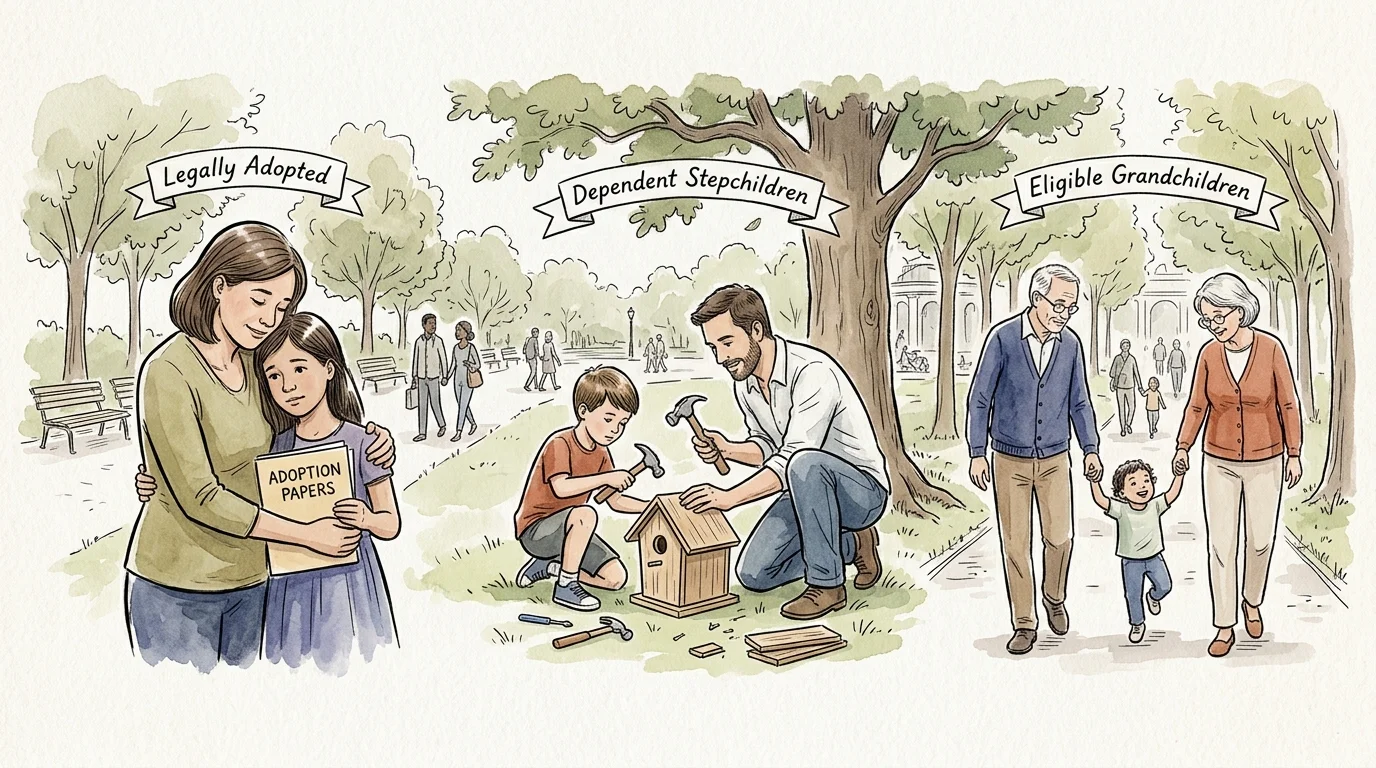
- Legally Adopted Children: Adopted children enjoy the exact same survivor benefit rights as biological children, with no additional dependency tests required.
- Stepchildren: Stepchildren can qualify if they were receiving at least half of their financial support from you at the time of your death.
- Grandchildren and Step-Grandchildren: Grandchildren qualify if their biological parents are deceased or disabled, and you provided regular support while the child lived with you.
- Children Born After Death: Biological children born after your death qualify for full benefits once their birth certificate is established.
Work Credit Requirements: How Parents Earn Coverage
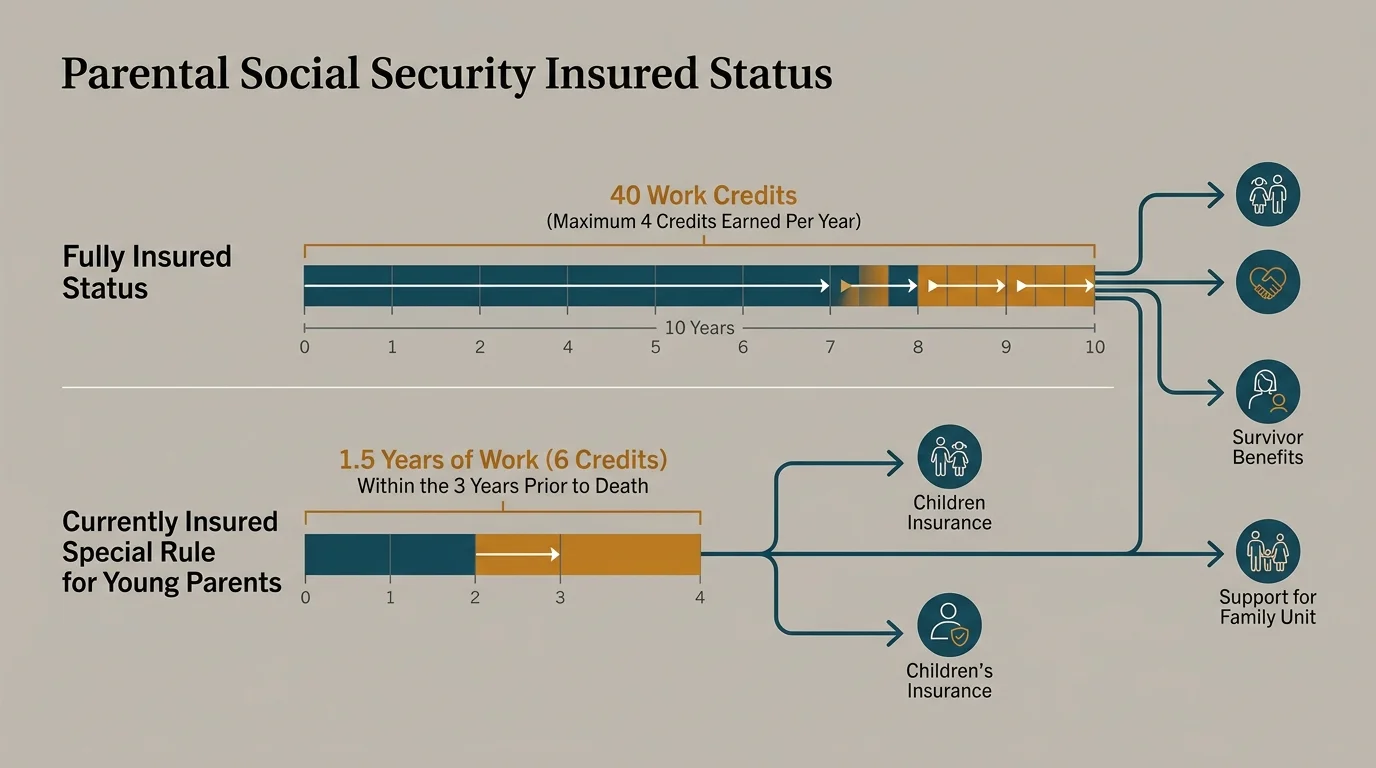
Your children can only claim survivor benefits if you earned sufficient work credits through Social Security covered employment. You earn up to four credits per calendar year by paying FICA payroll taxes on your wages.
Most workers need 40 lifetime credits—representing roughly 10 years of covered work—for their dependents to achieve fully insured status. However, federal law provides a critical exception for younger parents who die early in their careers.
Under the special currently insured rule, your children qualify if you earned at least 6 credits during the 3 years immediately preceding your death. This safety net ensures young families receive protection even if a parent had a short work history.

Calculating Payments and the Maximum Family Benefit
Each eligible child can receive up to 75% of your Primary Insurance Amount (PIA). The PIA represents the monthly benefit you would receive at your full retirement age.
If you leave behind multiple dependents, total monthly payouts are constrained by the Maximum Family Benefit (MFB). The MFB limits aggregate household benefits to between 150% and 188% of your base benefit.
When the sum of all individual survivor claims exceeds this cap, the SSA reduces each child’s payment proportionally. Benefits paid to a qualifying surviving ex-spouse do not count toward your family maximum limit.
| Beneficiary Category | Standard Benefit Percentage | Key Eligibility Criteria | Duration of Payments |
|---|---|---|---|
| Minor Child | Up to 75% of worker PIA | Unmarried; under age 18 | Until 18th birthday |
| High School Student | Up to 75% of worker PIA | Unmarried; full-time high school student (grade 12 or below) | Until graduation or age 19 and 2 months |
| Disabled Adult Child | Up to 75% of worker PIA | Unmarried; permanent disability started before age 22 | Lifelong, as long as disability continues |
| Surviving Parent (Child Care) | Up to 75% of worker PIA | Caring for deceased worker’s child under age 16 | Until youngest child turns 16 |

The One-Time $255 Lump-Sum Death Benefit
In addition to recurring monthly survivor payments, the SSA offers a statutory one-time lump-sum death benefit of $255. This modest payment helps offset immediate burial or transition costs.
The SSA pays this sum directly to a surviving spouse who lived with the worker. If there is no surviving spouse, the $255 payment transfers directly to the worker’s eligible dependent children.
If multiple children qualify, the SSA divides the $255 equally among them. You or your family representative must file the claim for this payment within two years of the date of death.
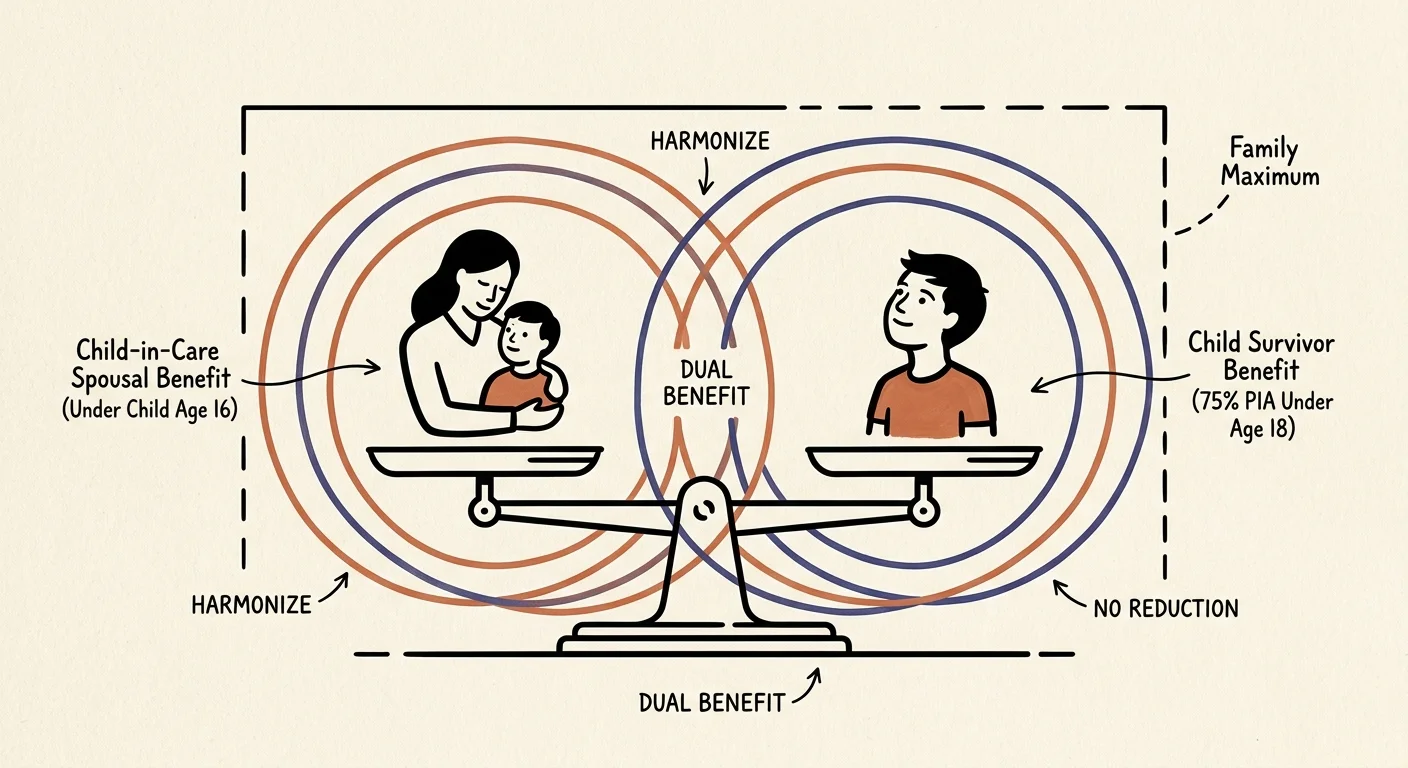
How Child Benefits Interact with Surviving Spouse Benefits
If you leave behind a surviving spouse who cares for your young children, your household may qualify for dual benefits. A surviving spouse caring for your child under age 16 can receive up to 75% of your PIA.
This payment is officially called a mother’s or father’s benefit. It provides critical cash flow while a surviving parent manages single-parent household duties.
Both the spouse’s benefit and the children’s benefits draw from your single earnings record. The combined payments must remain within your household’s Maximum Family Benefit cap.
Families can track exact disbursement dates using the official SSA Payment Schedule to plan their monthly household cash flow accurately.

How to Apply for Social Security Child Survivor Benefits
You cannot apply for Social Security survivor benefits through the agency’s website. The surviving parent, legal guardian, or adult representative must contact the SSA directly to start a claim.
You can initiate the application by calling the national toll-free line at 1-800-772-1213. Alternatively, you can schedule an in-person appointment at your local Social Security field office.
Preparing the correct documents in advance accelerates the review process and prevents payment delays. Keep certified copies of all vital records ready for your appointment.
- Proof of Death: A certified death certificate or official notice from the funeral home.
- Identification Documents: Social Security numbers for the deceased parent, surviving parent, and all applying children.
- Proof of Relationship: Official birth certificates, final adoption decrees, or paternity documents for each child.
- Tax Information: The deceased worker’s most recent W-2 forms or federal self-employment tax returns.
- School Attendance Verification: Form SSA-1372 signed by school administrators for students aged 18 or 19.
- Direct Deposit Details: Bank routing and account numbers for the child’s custodial account.
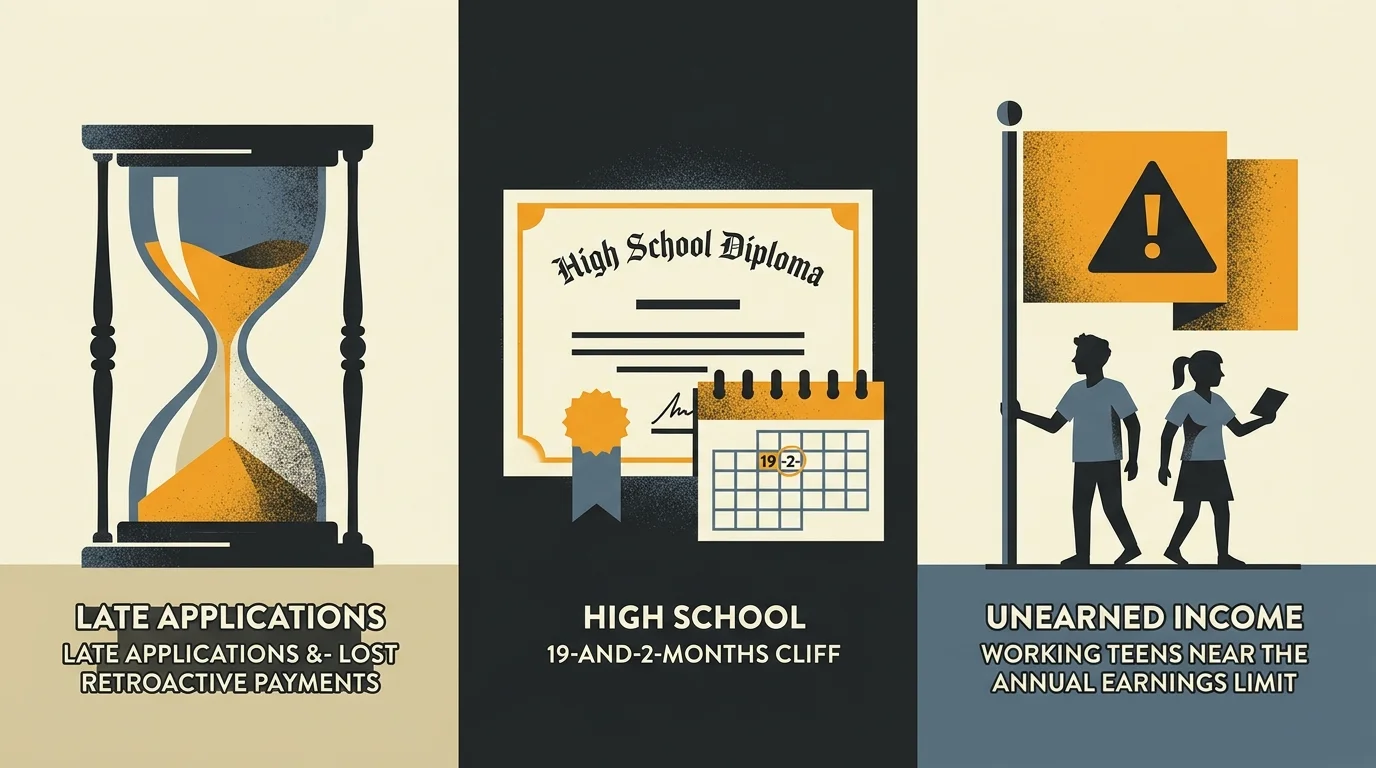
Common Money Traps to Avoid
Navigating federal benefit rules during a period of grief can lead to costly administrative errors. Avoiding common missteps preserves full financial support for your family.
1. Delaying the Application Process
Survivor benefits generally take effect starting the month you apply. The SSA rarely pays retroactive child benefits beyond a limited six-month window.
Delaying your application can permanently forfeit thousands of dollars in household assistance. Contact the SSA as soon as you receive the official death certificate.
2. Forgetting High School Enrollment Paperwork
The SSA automatically halts child benefits the month a minor turns 18. Benefits do not continue into the senior year of high school without active paperwork.
You must submit Form SSA-1372 several months before your child’s 18th birthday. This document proves full-time secondary school enrollment and keeps monthly payments flowing smoothly.
3. Missing the Age 22 Disability Deadline
Qualifying for Disabled Adult Child benefits requires documented medical proof that the disability began before age 22. Proving this timeline decades later can prove exceptionally difficult.
Gather comprehensive medical histories, individualized education programs (IEPs), and physician evaluations while your child is young. This documentation protects their long-term benefit eligibility.
4. Misunderstanding Teenage Earnings Limits
Surviving children who work part-time jobs are subject to the federal Retirement Earnings Test. Earning above the annual statutory limit can temporarily reduce their monthly benefit checks.
Check the current annual threshold before your working teen accepts extensive overtime or high-paying seasonal work. Review income guidance from the Consumer Financial Protection Bureau (CFPB) to structure family earnings effectively.

Tax Rules for Social Security Survivor Benefits
Survivor payments received by a child belong legally to the child, not to the surviving parent. This legal distinction offers substantial income tax advantages for your household.
A child only pays federal income tax on survivor benefits if their total annual income exceeds the standard deduction threshold. Most dependent children owe zero federal tax on their monthly survivor checks.
Surviving parents do not include their children’s survivor benefits on their personal Form 1040 tax returns. Consult the IRS guidelines to ensure accurate annual reporting.

When to Consult a Professional
While standard minor child claims remain straightforward, complex family dynamics demand professional advice. Knowing when to engage an expert saves time and prevents benefit forfeiture.
Consider consulting a professional under the following circumstances:
- Special Needs Estate Planning: Work with an estate attorney to build a third-party special needs trust before DAC benefits begin, preventing disqualification from Medicaid.
- Blended Family Disputes: Consult a family law attorney if stepchildren, biological children from prior marriages, or legal guardians contest benefit distributions.
- Comprehensive Cash Flow Planning: Hire a fee-only CERTIFIED FINANCIAL PLANNER™ (CFP®) to integrate survivor payments into your family’s broader investment, college savings, and tax strategy.
“It’s not how much money you make, but how much money you keep, how hard it works for you, and how many generations you keep it for.” — Robert Kiyosaki
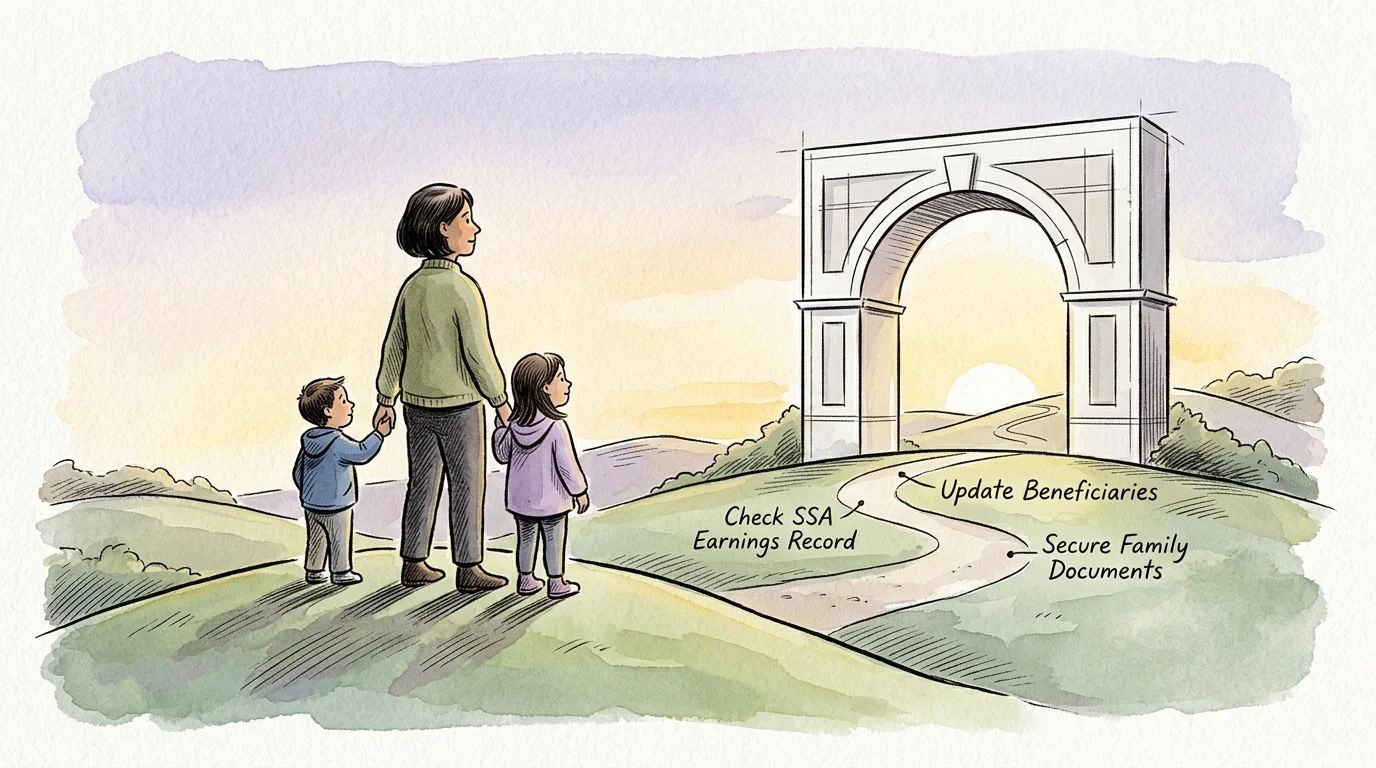
Next Steps for Protecting Your Family’s Financial Future
Social Security child survivor benefits serve as an indispensable safety net, providing reliable cash flow when your family faces tragic loss. Review your Social Security earnings statement annually to ensure your credits remain accurate and up to date.
Take time today to organize your family’s vital documents, account numbers, and estate plans in a secure, accessible location. Clear preparation gives your children the stability and support they deserve, no matter what tomorrow brings.
This article is for informational purposes only and does not constitute financial, legal, or tax advice. Rates, benefit amounts, and tax rules change regularly—verify current details with the relevant agency or a licensed professional.
Last updated: February 2026. Rates, benefit amounts, and tax rules change—always verify current details at official sources.