
Your monthly Social Security check provides a guaranteed income stream, but inflation and fixed expenses dictate where that money actually flows. In 2025, the average retired worker receives roughly $1,975 each month from the program.
About half of older Americans count on these monthly payments for at least 50% of their total household revenue. Knowing how other retirees allocate their funds helps you protect your cash flow and stretch every dollar further.
Here is a breakdown of the 11 most common ways retirees spend their benefits, along with tactical ways to optimize your own monthly budget.
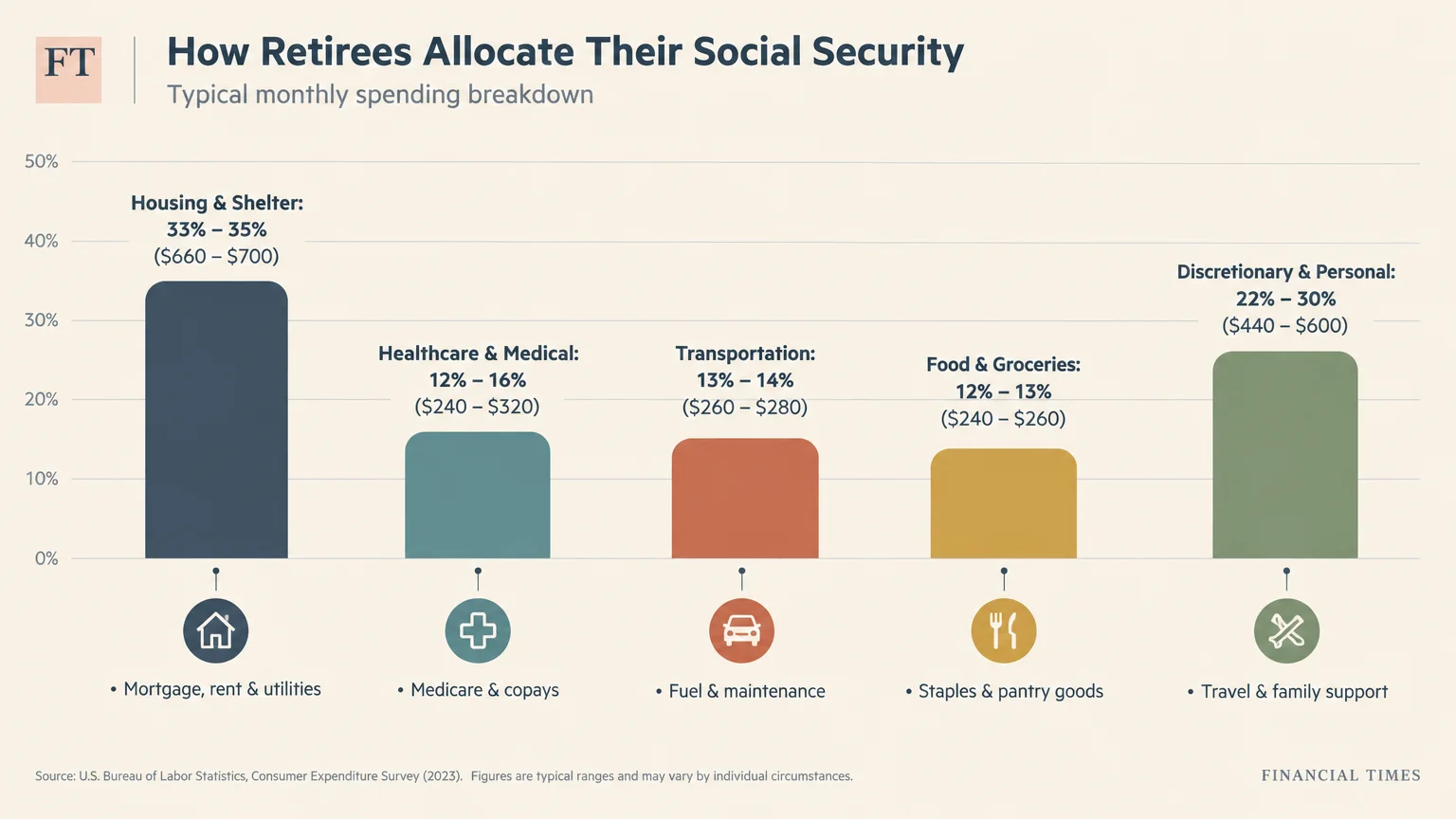
How the Average Retiree Allocates Monthly Income
According to the Bureau of Labor Statistics Consumer Expenditure Survey, older households spend the vast majority of their funds on four essential categories.
Housing, medical care, transportation, and food absorb more than two-thirds of the typical senior budget.
The following table outlines how typical retirees divide their monthly income across common spending categories.
| Expenditure Category | Share of Senior Budget | Estimated Monthly Allocation ($2,000 Benefit) | Primary Budget Driver |
|---|---|---|---|
| Housing and Shelter | 33% – 35% | $660 – $700 | Mortgage balances, rent, utilities, and property taxes |
| Healthcare and Medical | 12% – 16% | $240 – $320 | Medicare premiums, prescription drugs, and copays |
| Transportation | 13% – 14% | $260 – $280 | Vehicle insurance, fuel, repairs, and public transit |
| Food and Groceries | 12% – 13% | $240 – $260 | Supermarket staples and essential household goods |
| Discretionary and Personal | 22% – 30% | $440 – $600 | Travel, debt elimination, savings, and family gifting |
When you rely on Social Security for a substantial portion of your cash flow, even slight price swings disrupt your balance.
Reviewing specific spending channels reveals where your dollars create security and where they leak away.

1. Covering Fixed Housing and Utility Expenses
Housing represents the single largest drain on your monthly Social Security income.
Many retirees continue paying off existing mortgages, while renters face annual lease increases that outpace inflation adjustments.
Even homeowners who own their properties outright must allocate checks toward soaring property taxes and home insurance premiums.
Utility bills for electricity, heating fuel, and water also demand a consistent portion of each direct deposit.
2. Absorbing Mandatory Medicare Premiums and Healthcare
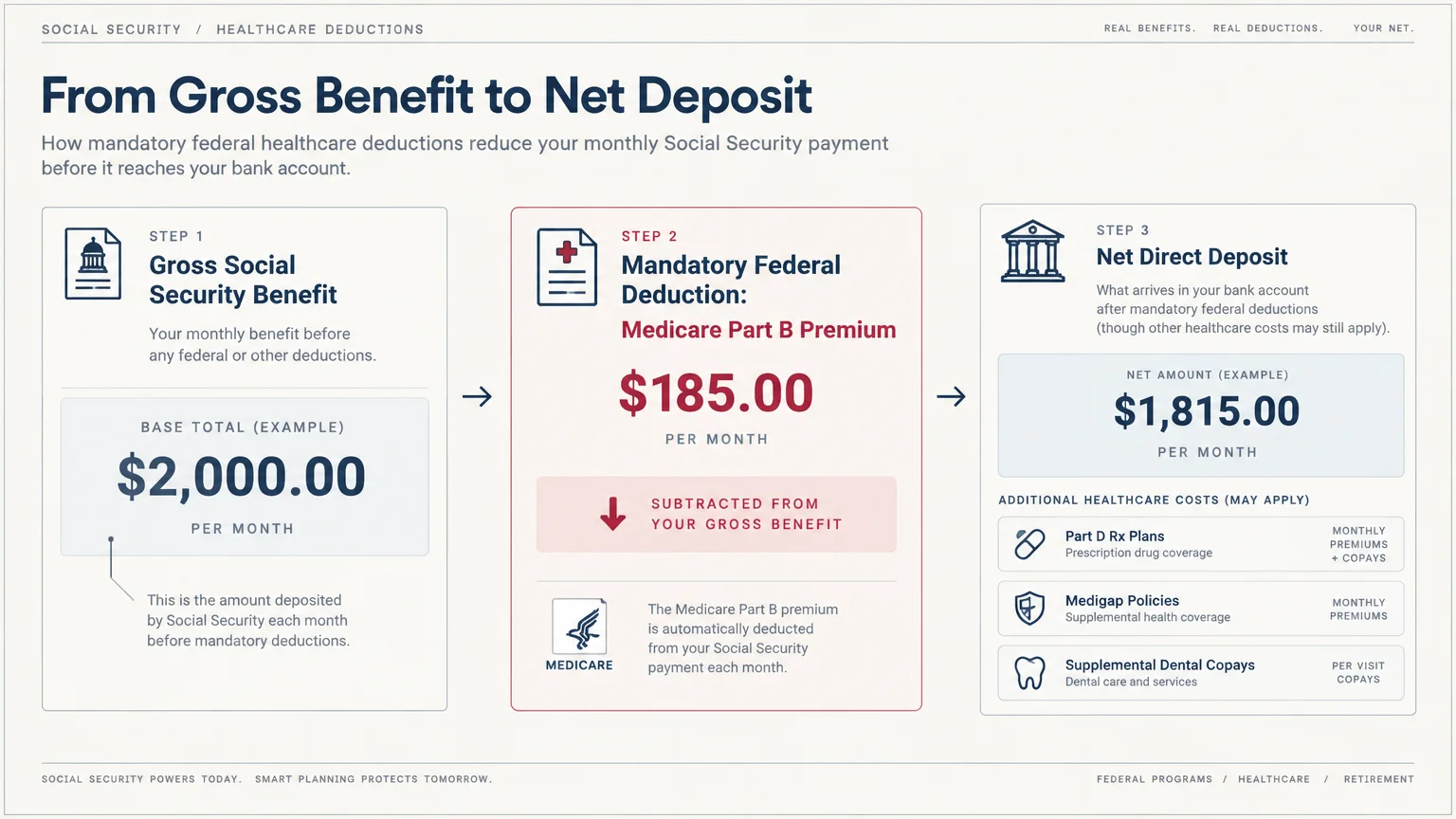
Most retirees never see the full gross amount of their monthly benefit.
The federal government automatically deducts standard Medicare Part B premiums before your check reaches your bank account.
In 2025, that standard Part B premium is $185.00 per month, leaving you with less disposable cash.
Beyond Part B, seniors use their funds to pay for Medicare Advantage, Medigap policies, Part D drug plans, and dental care.
Check current coverage rules directly on Medicare.gov to ensure your supplemental policies fit your medical needs.

3. Securing Groceries and Everyday Nutrition
Food inflation hits fixed-income households hard, making grocery store visits a priority for Social Security checks.
Older adults spend roughly 12% to 13% of their monthly income on food and pantry supplies.
Many retirees adapt by buying staple goods in bulk, clipping coupons, and preparing home-cooked meals to stretch each dollar.
Dining out becomes an intentional luxury rather than an everyday habit when managing a tighter monthly cash flow.

4. Funding Transportation and Vehicle Upkeep
Maintaining personal mobility requires steady capital, whether you drive a personal vehicle or use public transit.
Transportation costs consume between 13% and 14% of the average retiree budget each year.
Retirees funnel benefit money into car insurance, gas, scheduled oil changes, and tire replacements.
Those living in walkable communities or transit-friendly cities redirect these vehicle savings toward other personal priorities.
5. Paying Down Pre-Retirement Debts
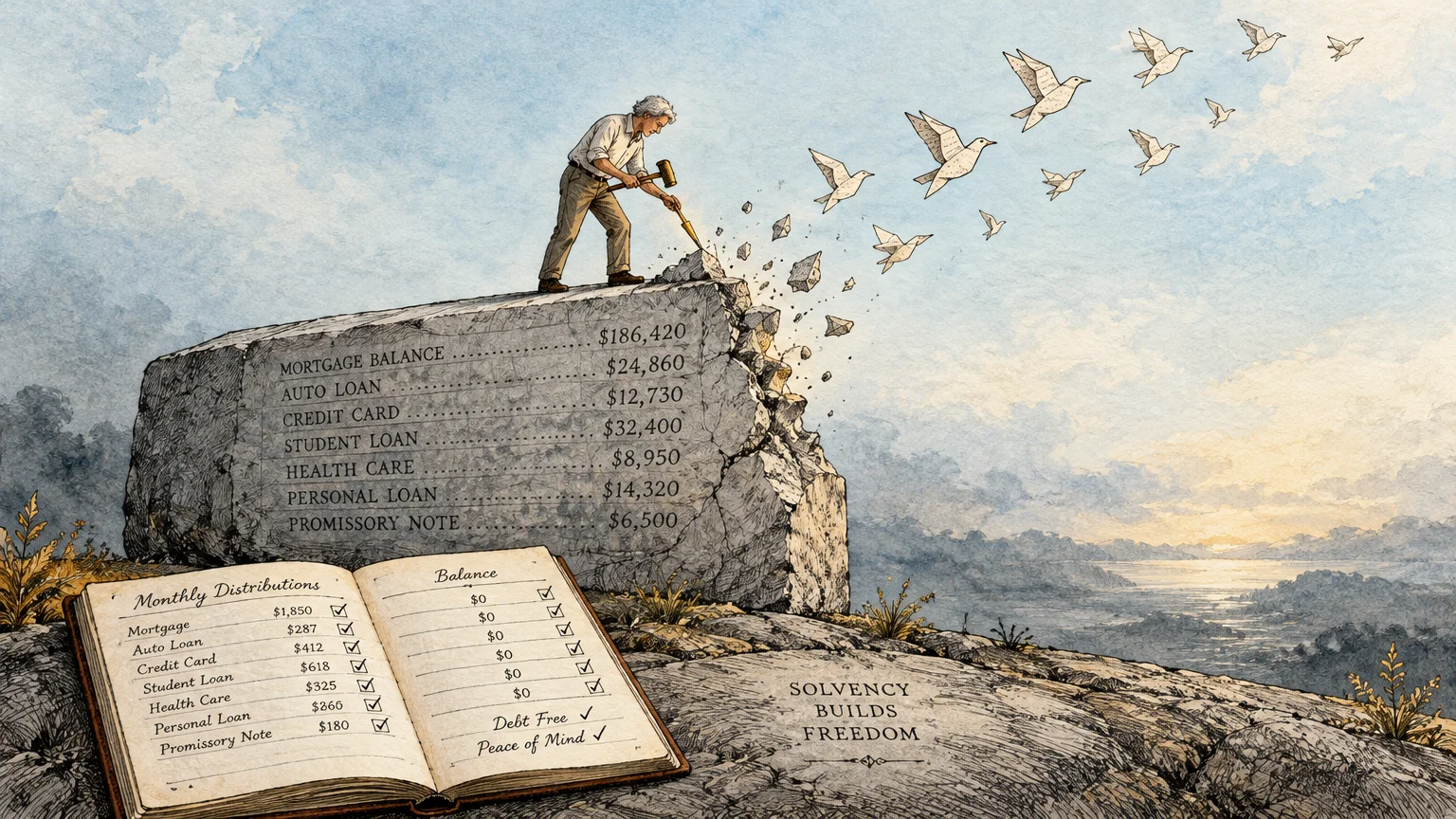
Entering retirement with consumer debt strains your monthly payment schedule.
Many seniors use portions of their Social Security income to pay down credit card balances and personal loans.
Eliminating high-interest debt frees up recurring cash that you can reallocate to healthcare or living expenses.
A disciplined debt payoff plan protects your fixed benefits from aggressive finance charges.

6. Building Liquid Emergency Savings
Unexpected costs do not stop when you exit the traditional workforce.
Prudent retirees route a portion of each monthly check into high-yield savings accounts to build safety buffers.
Having cash reserves prevents you from selling long-term investment assets during market downturns to pay emergency bills.
“A budget is telling your money where to go instead of wondering where it went.” — John C. Maxwell
Automating small transfers on payment day ensures you build savings before spending discretionary cash.

7. Sponsoring Travel and Bucket-List Experiences
Retirement grants you time flexibility, prompting many seniors to earmark check surpluses for travel.
Older adults frequently take advantage of off-peak travel discounts for road trips, cruises, and overseas flights.
Treating travel as a planned line item keeps your excursions from threatening your everyday living budget.
Even modest domestic weekend trips provide rich experiences without requiring massive capital reserves.

8. Assisting Children and Grandchildren Financially
Many retirees prioritize family support, directing surplus benefits toward children and grandchildren.
Common uses include funding 529 college savings accounts, contributing to birthday funds, and helping with down payments.
Some seniors step in during family emergencies to help younger relatives overcome temporary financial distress.
However, you must safeguard your own retirement solvency before extending substantial cash gifts to relatives.
9. Handling Federal and State Income Taxes
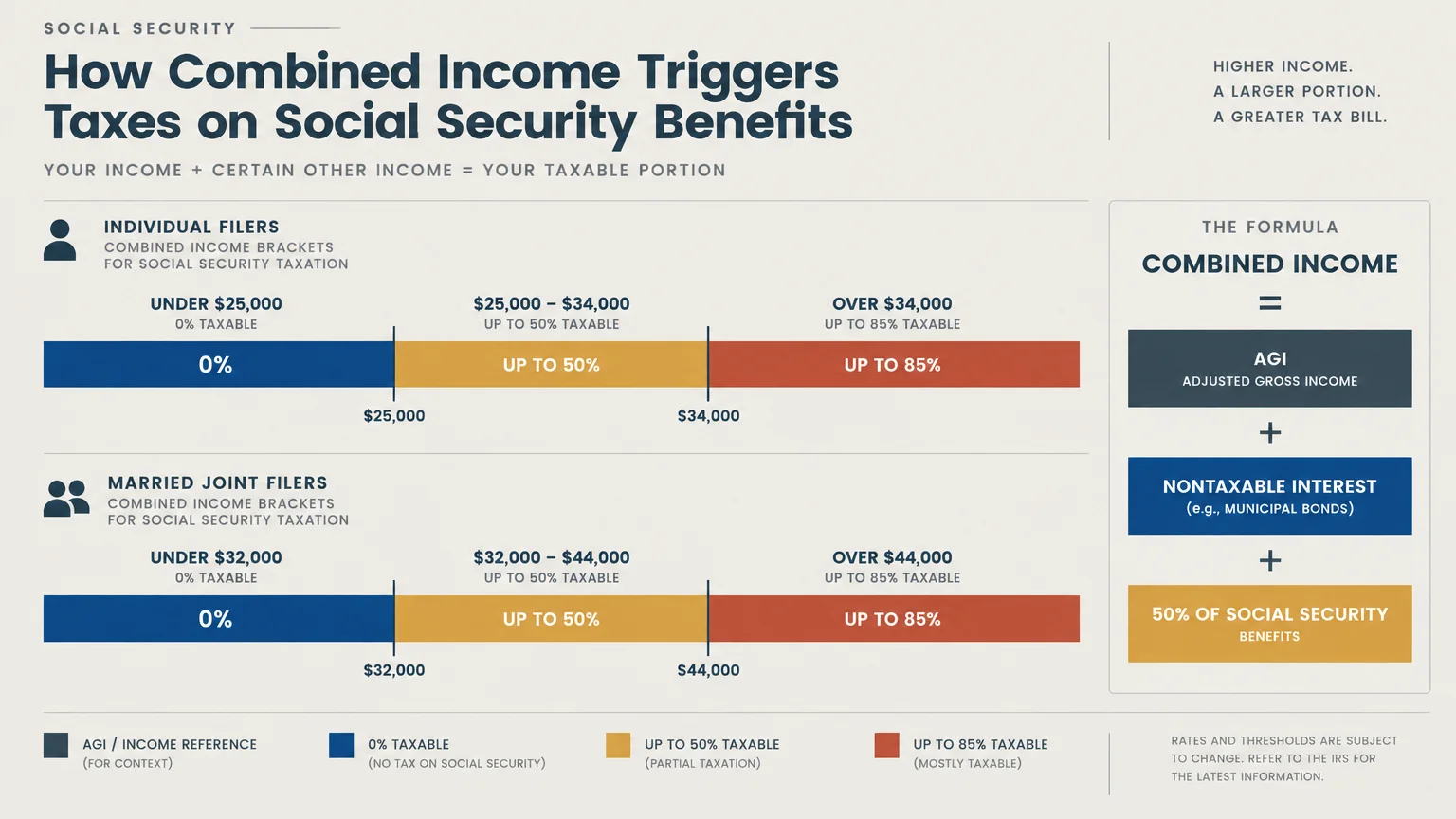
Many retirees are shocked to discover that Social Security benefits are often taxable.
Up to 85% of your benefits face federal income tax if your combined income exceeds statutory limits.
Single filers with combined income over $34,000 and couples over $44,000 face the highest tax tier.
To avoid surprises, retirees submit Form W-4V to the IRS to withhold taxes directly from monthly checks.

10. Funding Home Modifications for Aging in Place
Staying in your beloved home often requires structural changes as mobility needs evolve.
Retirees channel funds into walk-in bathtubs, wheelchair ramps, stair lifts, and non-slip flooring.
Investing in these upgrades early prevents debilitating falls and reduces future assisted-living expenses.
These targeted home renovations protect both your physical safety and your financial independence.

11. Supporting Charitable Causes and Local Communities
Philanthropy remains a major life priority for millions of American retirees.
Seniors regularly donate benefit dollars to local religious congregations, community food banks, and charitable organizations.
Consistent giving reinforces a sense of community connection and purpose during post-work years.
“Do not save what is left after spending, but spend what is left after saving.” — Warren Buffett
Budgeting donations alongside living expenses ensures your generosity aligns with your overall financial stability.

Errors That Cost Families Thousands
Failing to understand the operational rules of Social Security can permanently damage your monthly cash flow.
Avoid these critical errors when planning your benefit spending strategy:
- Violating the earnings limit before Full Retirement Age: In 2025, earning over $23,400 results in $1 withheld for every $2 earned above the threshold.
- Ignoring taxable thresholds: Combined income limits of $25,000 for single filers and $32,000 for joint filers have never been adjusted for inflation.
- Overlooking automatic Medicare deductions: Forgetting to budget for Part B premiums ($185 monthly in 2025) leaves households short on cash.
- Depleting reserves on family bailouts: Over-subsidizing adult children forces retirees into high-interest credit card debt when emergencies arise.
Review your status on the official Social Security Administration portal to verify your accurate benefit numbers.

When to Get Expert Help
Managing multiple retirement income streams alongside taxes requires careful technical execution.
Consult a fee-only certified financial planner or CPA if your combined income triggers benefit taxation.
A professional helps coordinate withdrawals from 401(k) plans, traditional IRAs, and Social Security to minimize tax liabilities.
State health insurance assistance programs also offer free benefits counseling to navigate Medicare enrollment choices.
Frequently Asked Questions About Social Security Spending
How much does the average retiree receive each month?
As of 2025, the average monthly Social Security benefit for retired workers ranges between $1,975 and $2,005.
Are Medicare premiums automatically deducted from Social Security?
Yes, if you enroll in Medicare Part B, the standard monthly premium ($185.00 in 2025) comes directly out of your gross benefit.
Can you spend your Social Security check on anything?
Yes, once the money reaches your personal bank account, you have complete freedom to spend, save, or gift your funds.
How much can you earn while collecting Social Security?
If you are below Full Retirement Age in 2025, you can earn up to $23,400 without forfeiting any benefit payments.
Your monthly Social Security check serves as the bedrock of your retirement financial plan.
Take time this week to track your monthly spending against these eleven categories and optimize your cash flow.
This article is for informational purposes only and does not constitute financial, legal, or tax advice. Rates, benefit amounts, and tax rules change regularly—verify current details with the relevant agency or a licensed professional.
Last updated: February 2026. Rates, benefit amounts, and tax rules change—always verify current details at official sources.