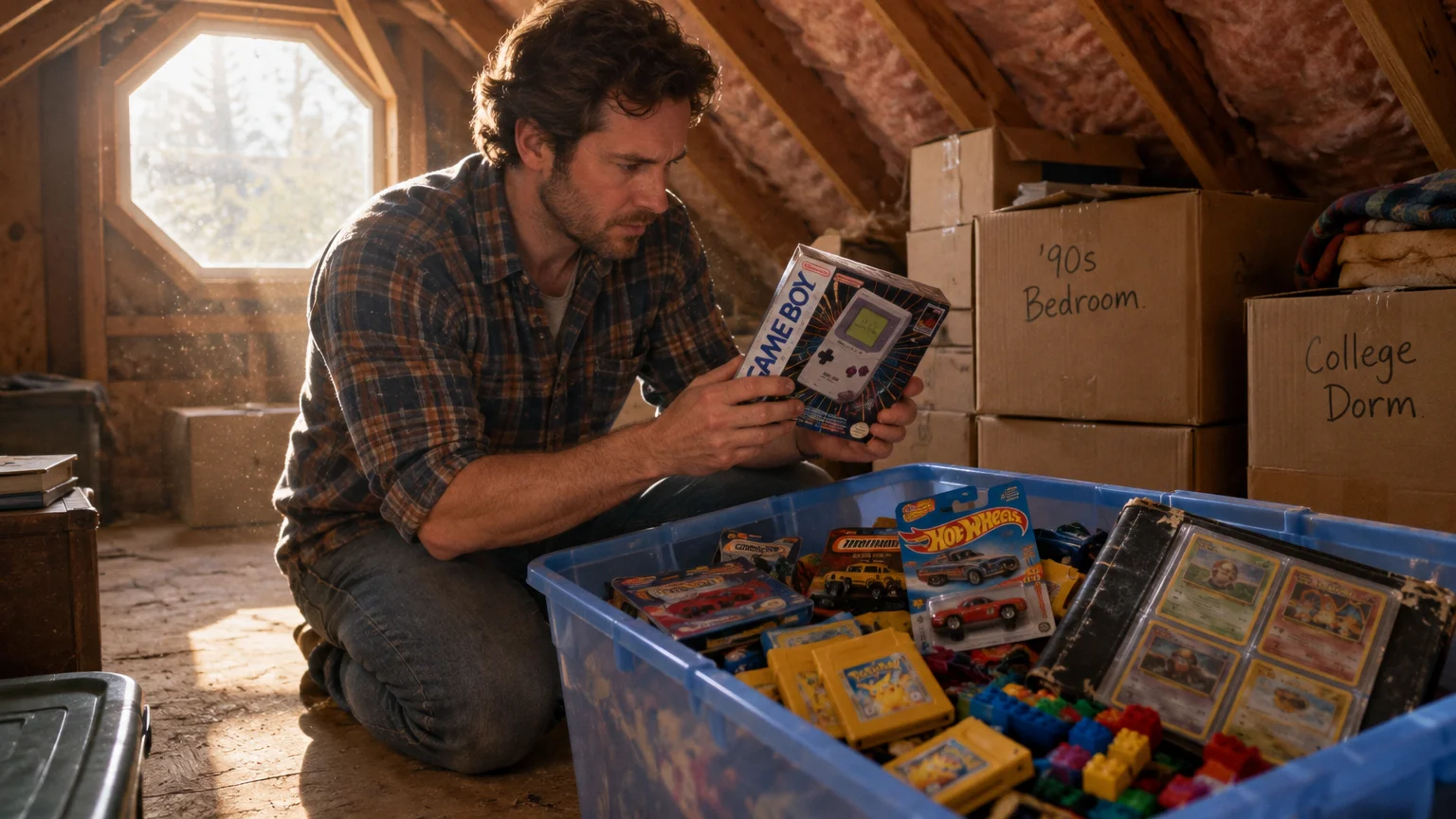
That plastic storage bin sitting in your attic could hold thousands of dollars in hidden cash. Millennial nostalgia and adult collectors have turned ordinary childhood playthings into valuable financial assets.
Before you donate old storage boxes to a thrift shop or host a yard sale, inspect your inventory carefully. Certain pristine items from thirty years ago now command remarkable prices on secondary auction platforms.
You can turn forgotten clutter into cash for an emergency fund, home renovations, or your retirement portfolio. Here is what you need to know before selling your vintage toys.
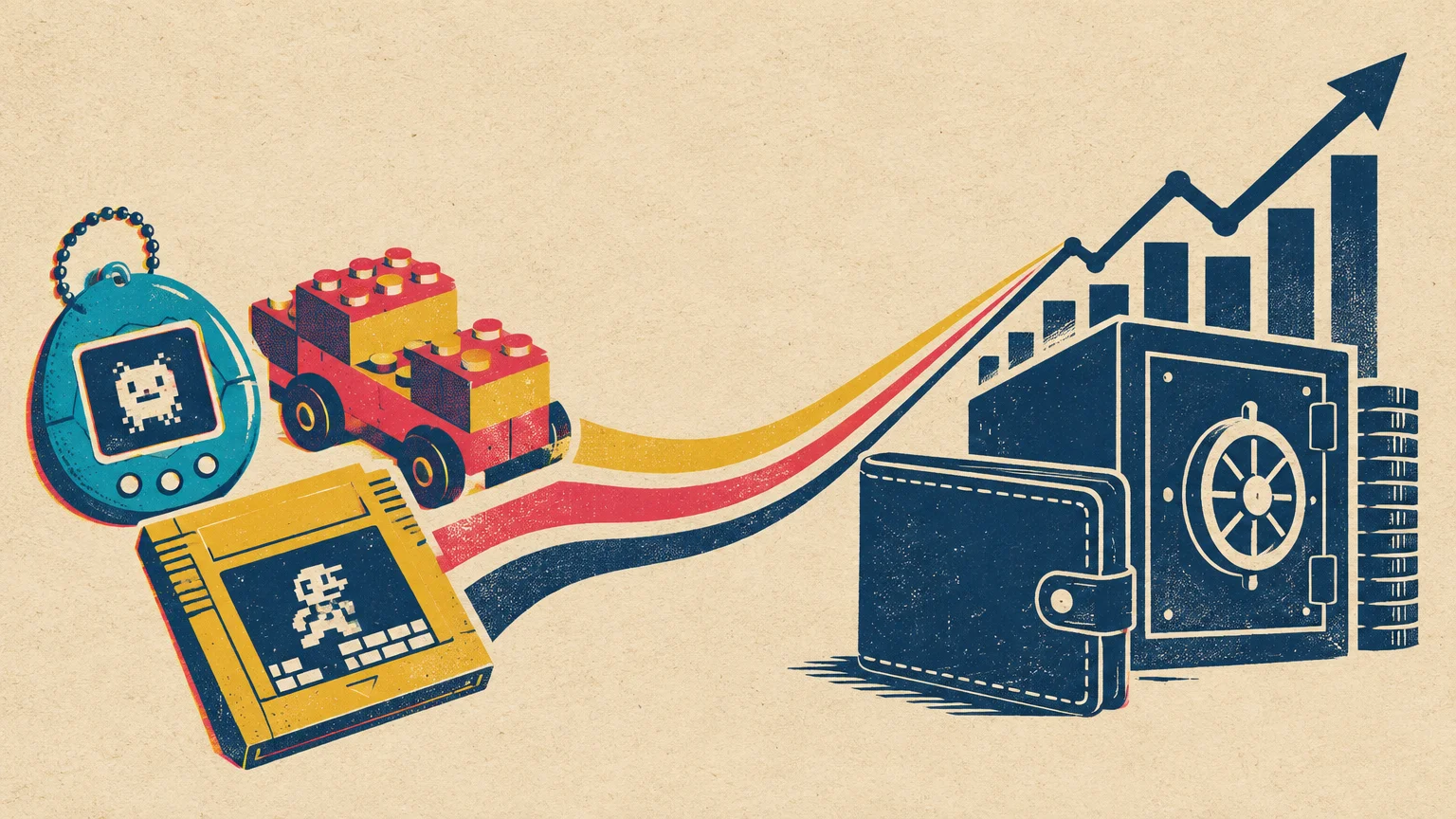
Why 1990s Nostalgia Drives Real Secondary Market Value
The market for vintage toys has transformed dramatically over the past decade. Adults in their thirties and forties now possess substantial disposable income and want to reclaim items from their youth.
Pop culture preservation has also turned childhood playthings into a recognized alternative asset category. High-grade items sealed in original factory blister packs attract serious investors seeking tangible storehouses of value.
However, condition dictates everything in this marketplace. While a heavily played-with toy holds primarily sentimental value, an unblemished specimen can fund a substantial household savings goal.
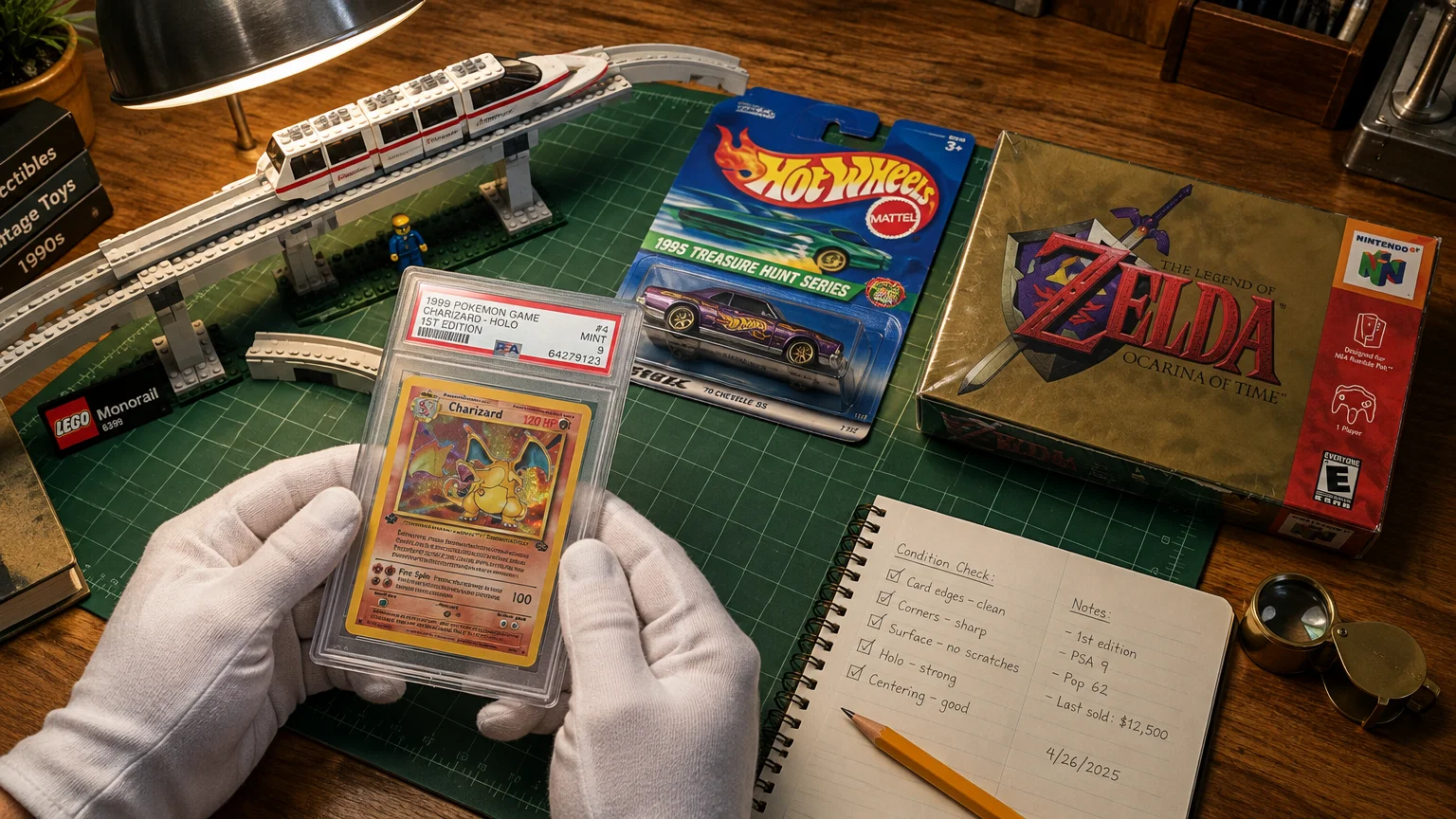
13 ’90s Toys That Could Be Worth Serious Money
1. 1999 Pokémon Base Set Trading Cards
The 1999 Wizards of the Coast Base Set established a high-water mark for modern trading card collecting. Charizard card number four remains the premier prize for serious hobbyists and financial investors.
An ungraded, near-mint 1st Edition Shadowless Charizard currently commands between $3,000 and $6,000. Professionally graded PSA 8 and PSA 9 copies regularly fetch between $15,000 and $37,000 at specialized auctions.
Flawless PSA 10 Gem Mint copies set public auction records, selling for $550,000 in December 2025 and topping $1 million in 2026. Extreme rarities like the 1998 Pikachu Illustrator card have reached $5.275 million privately.
Check your old binders for the distinctive 1st Edition stamp and the lack of a drop shadow beneath the character frame. These specific printing quirks separate common childhood cards from five-figure windfalls.
2. Vintage Nintendo 64 and ’90s Video Games (1996)
Unopened video games from the 1990s represent some of the highest-performing collectibles in modern secondary markets. Complete-in-box or factory-sealed ’90s games average $467 across online resale platforms.
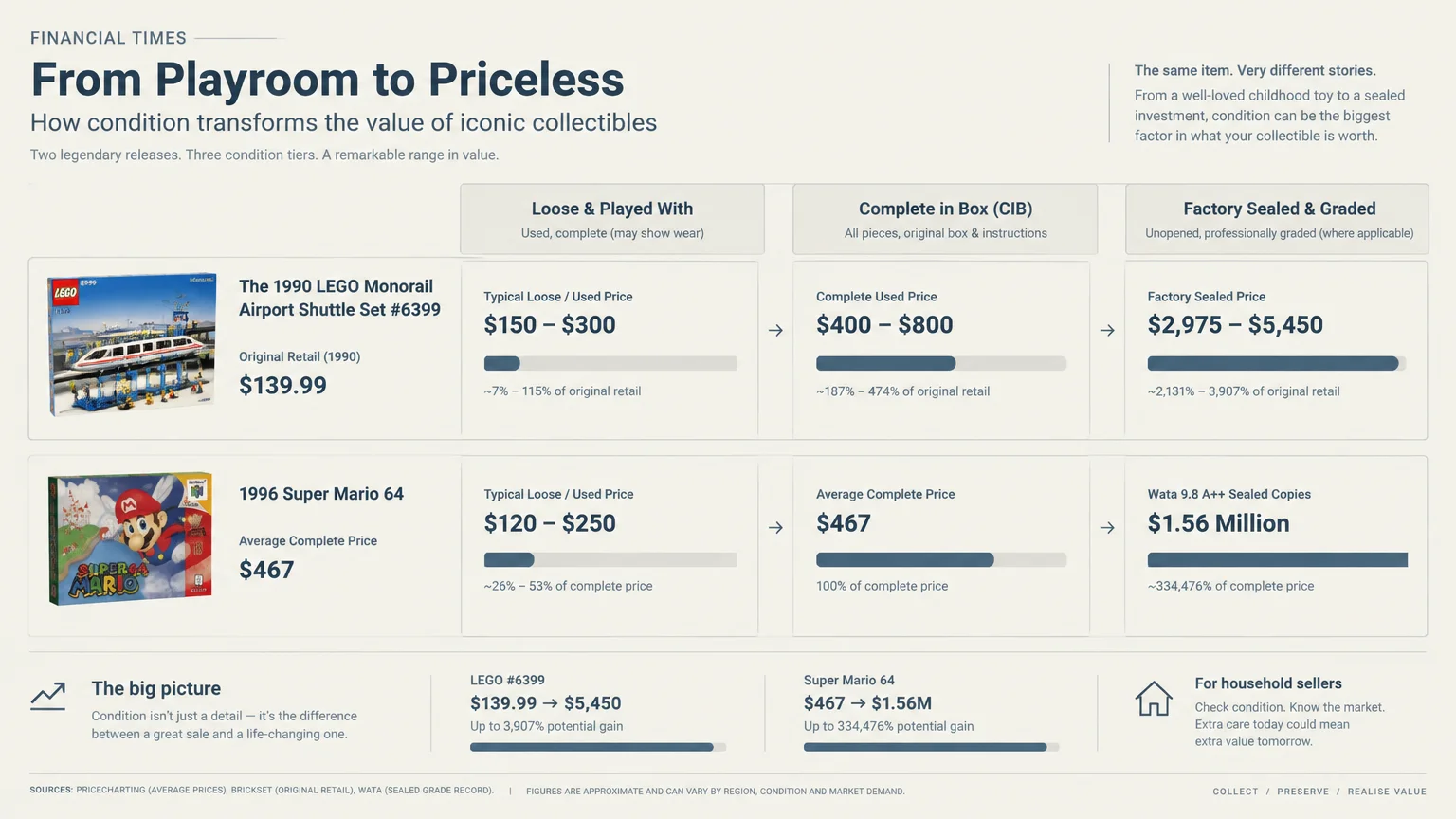
Sealed copies in pristine condition trade at historic valuation levels. A sealed copy of 1996’s Super Mario 64 graded Wata 9.8 A++ sold at Heritage Auctions for $1.56 million in July 2021.
Cartridges preserved inside crisp boxes without crushed corners or ripped cellophane yield significant collector interest. Other iconic releases like The Legend of Zelda and GoldenEye 007 also generate four-figure prices when fully sealed.
3. LEGO Monorail Airport Shuttle Set #6399 (1990)
Released in 1990, the LEGO Monorail Airport Shuttle Set #6399 originally retailed for $139.99. Today, this 786-piece engineering marvel stands as one of the most coveted vintage building sets ever designed.
A used set containing complete track sections, working electric motors, and intact mini-figures easily sells for $400 to $800. If you kept one factory-sealed in its original box, current market values range from $2,975 to $5,450.
Because LEGO discontinued its specialized monorail manufacturing decades ago, individual replacement track pieces alone command high resale prices. Complete sets with crisp instruction booklets represent top-tier building block investments.
4. Hot Wheels Treasure Hunt Series (1995)
Mattel introduced its inaugural Treasure Hunt line in 1995, strictly limiting production to 10,000 units per vehicle casting. Collectors still scour estate sales and flea markets for these distinctive green-stripe packages.
The 1995 ’67 Camaro serves as the undeniable holy grail of the collection, averaging $1,220 to $1,270 on collector exchanges. Pristine, unpunched carded copies have captured sale prices reaching up to $4,500.
Other models from that original twelve-car series also maintain solid liquidity. A carded 1995 ’63 Split Window Corvette regularly commands between $110 and $145 among dedicated die-cast enthusiasts.
5. Rare Ty Beanie Babies (1993–1999)
Roughly 99% of mass-produced Beanie Babies are worth under $5 today, despite misleading asking prices online. However, authenticated early production variants and genuine manufacturing errors can yield significant cash payouts.
A first-edition Royal Blue Peanut the Elephant, created during a brief 1995 color dye mix-up, sells for $2,500 to $5,000. Once Ty switched the fabric to light blue, the original dark shade became an instant collector legend.
Authenticated prototypes and rare employee-exclusive bears also command between $5,000 and $10,000. Unless your plush toy features documented provenance or verified early-generation swing tags, expect modest returns.
6. Original Furby Electronic Pets (1998)
Tiger Electronics created massive shopping hysteria when it debuted the talking, animatronic Furby in 1998 for $35. Common first-generation models sealed in original hexagonal boxes typically fetch $50 to $100 today.
Scarce promotional editions and limited production variations capture far higher financial sums. Rare variants like the Kid Cuisine Furby or Rainbow Furby sell for $500 to over $6,000 depending on condition.
A factory-sealed 1999 Bejeweled Furby, adorned with genuine jewelry accents, achieved a sale price near £5,000, or roughly $6,500. Check your childhood models for special edition numbered ear tags before deciding to sell.
7. American Girl Dolls (Pleasant Company Era)
Before Mattel acquired the brand in 1998, original manufacturer Pleasant Company crafted detailed historical dolls with hand-finished clothing. Complete pre-Mattel dolls in good condition average over $130 on secondary auction platforms.
Early first-edition releases of characters like Kirsten Larson, Samantha Parkington, and Molly McIntire attract serious money. Mint specimens preserved in original white presentation boxes with complete accessories command between $500 and $2,495.
Check the back of the doll’s neck for the Pleasant Company imprint rather than modern Mattel branding. Original clothing tags marked with the Pleasant Company logo confirm authentic 1990s production origin.
8. Mighty Morphin Power Rangers Figures and Zords (1993–1995)
Bandai’s Mighty Morphin Power Rangers toys became an overnight commercial juggernaut following the 1993 television premiere. Pre-owned, complete action robots like the 1993 Deluxe Dino Megazord or Dragonzord sell for $100 to $250.
Unopened retail packaging elevates these nostalgic robotics into serious financial windfalls. Factory-sealed 1993 Deluxe Megazords and original Power Morpher sets regularly clear $350 to $1,000 in completed eBay sales.
Rare variants like the 1995 Gold Team figures also demand hundreds of dollars from devoted collectors. Ensure that delicate joints, decals, and original chrome weapons remain completely intact to capture maximum value.
9. Larami Super Soakers (1990–1997)
Pressurized water guns invented by aerospace engineer Lonnie Johnson revolutionized backyard play throughout the 1990s. An original 1990 Super Soaker 50 sealed in its retail packaging commands $150 to $200 today.
The most lucrative blaster from this era is the famous 1996 Constant Pressure System 2000, or CPS 2000. Larami quickly discontinued the model after concerns surfaced regarding its potent water output.
Used CPS 2000 blasters in clean, working condition fetch $150 to $300, while factory-sealed units command $500 to $800. Always ensure the internal firing bladder holds pressure without leaking before offering one for sale.
10. Polly Pocket Bluebird Compacts (1989–1998)
British manufacturer Bluebird Toys produced original Polly Pocket compacts featuring tiny figures under one inch tall before Mattel redesigned the line. Common complete compacts with original figures fetch $40 to $75.
Rare releases and unopened packaging produce substantially higher market returns. Standout sets like the 1993 Polly’s Golden Dream or the 1997 Royal Bracelet sell for $150 to $350 on secondary exchanges.
Elaborate playsets, including illuminated castles or the 1999 Disney Cinderella Enchanted Carriage, regularly exceed $500 to $1,000. Having all original micro-dolls and working internal lighting units maximizes your return.
11. Tamagotchi Generation 1 and Japanese Variants (1996–1998)
Bandai launched the virtual pet craze in 1996, prompting millions of children to feed digital keychain creatures. Standard Generation 1 and Generation 2 models sealed in original blister cards fetch $40 to $130.
Niche Japanese editions and scarce late-decade spin-offs attract much higher price tags from digital pet collectors. Rare releases like the 1998 Yasashii Tamagotchi or the Devilgotchi regularly trade for $200 to $500.
Early 1997 Bandai Digimon virtual pets also fetch $200 to $400 in clean, working condition. Make sure old alkaline batteries have not leaked or corroded the internal contacts before listing your device.
12. Collectible ’90s Barbie Dolls (1992–1997)
Specialty Barbie editions from the 1990s remain highly sought after by fashion doll collectors across the country. The 1992 Totally Hair Barbie, the bestselling Barbie in history, sells for $150 to $250 sealed.
Box condition remains paramount for capturing these price tiers. Packaging that shows crushed plastic display windows or creased cardboard edges will significantly reduce what a collector pays.
Other limited releases from that decade also retain steady liquidity. The 1997 Barbie Loves Elvis doll set and designer Bob Mackie couture collaborations consistently trade between $100 and $300.
13. Tiger Electronics Handhelds and “Dear Diary” Organizers (1994–1999)
Before personal smartphones became ubiquitous, electronic organizers and LCD gaming units dominated tween culture. Working, pre-owned 1994 to 1996 Tiger Dear Diary and Talkback Dear Diary units sell for $35 to $65.
Factory-sealed versions from late-decade pop-culture tie-ins command significantly higher collector interest. Brand-new sealed units like the 1997 Clueless Fashion Organizer or Really Dating editions regularly fetch $110 to $279.
Classic Tiger Electronics handheld video games also attract steady buyer interest. Nostalgic arcade and superhero titles in working order trade for $30 to $80 among retro gaming fans.
Bonus: First-Edition Harry Potter Books (1997–1998)
Do not forget to inspect your family bookshelves alongside old toy chests. A hardcover first printing of the 1998 U.S. Scholastic edition of Harry Potter and the Sorcerer’s Stone can fetch up to $6,500.
To confirm this valuable printing, check the copyright page for the number line reading 1 3 5 7 9 10 8 6 4 2. It must also list the year 1998 alongside correct publisher credits.
True 1997 U.K. first printings of Harry Potter and the Philosopher’s Stone represent an elite financial tier. These rare original printings with the 10-to-1 number sequence have commanded over $55,000 at public auction.
Valuation Breakdown: What 1990s Collectibles Sell for Today
Secondary values depend heavily on whether a toy remains sealed in original packaging or shows signs of play wear. The table below outlines verified market pricing based on completed auction results.
| Collectible Item | Release Era | Typical Used Value | Pristine or Sealed Value |
|---|---|---|---|
| Pokémon 1st Edition Charizard (#4) | 1999 | $3,000 – $6,000 (Ungraded NM) | $15,000 – $1,000,000+ (PSA 8–10) |
| Nintendo 64 Video Games (Sealed CIB) | 1996–1999 | $35 – $95 (Loose Cartridge) | $467 avg ($1.56M record for Mario 64) |
| LEGO Monorail Airport Shuttle #6399 | 1990 | $400 – $800+ (Complete Used) | $2,975 – $5,450 (Factory Sealed) |
| Hot Wheels 1995 ’67 Camaro Treasure Hunt | 1995 | $150 – $350 (Loose Mint) | $1,220 – $4,500 (Carded Mint) |
| Ty Royal Blue Peanut the Elephant | 1995 | $500 – $1,200 (Worn Tags) | $2,500 – $5,000 (Authenticated Mint) |
| Original Furby (Special Editions) | 1998–1999 | $20 – $40 (Loose Working) | $500 – $6,500 (Bejeweled / Limited) |
| Pleasant Company American Girl Dolls | 1990–1998 | $130+ (Gently Used Complete) | $500 – $2,495 (Boxed 1st Editions) |
| Power Rangers Deluxe Megazord Sets | 1993–1995 | $100 – $250 (Complete Loose) | $350 – $1,000+ (Factory Sealed) |
| Larami Super Soaker CPS 2000 | 1996 | $150 – $300 (Working Used) | $500 – $800+ (New in Box) |
| Polly Pocket Bluebird Rare Sets | 1989–1998 | $40 – $75 (Complete Compact) | $150 – $1,000 (Sealed / Castles) |
| Bandai Tamagotchi & Japanese Variants | 1996–1998 | $25 – $50 (Loose Tested) | $130 – $500+ (Sealed / Devilgotchi) |
| Totally Hair Barbie / Designer Sets | 1992–1997 | $25 – $50 (De-boxed Complete) | $100 – $300+ (Pristine Sealed) |
| Tiger Electronics Clueless / Organizers | 1994–1997 | $35 – $65 (Tested Working) | $110 – $279 (Factory Sealed) |
Costly Mistakes to Avoid
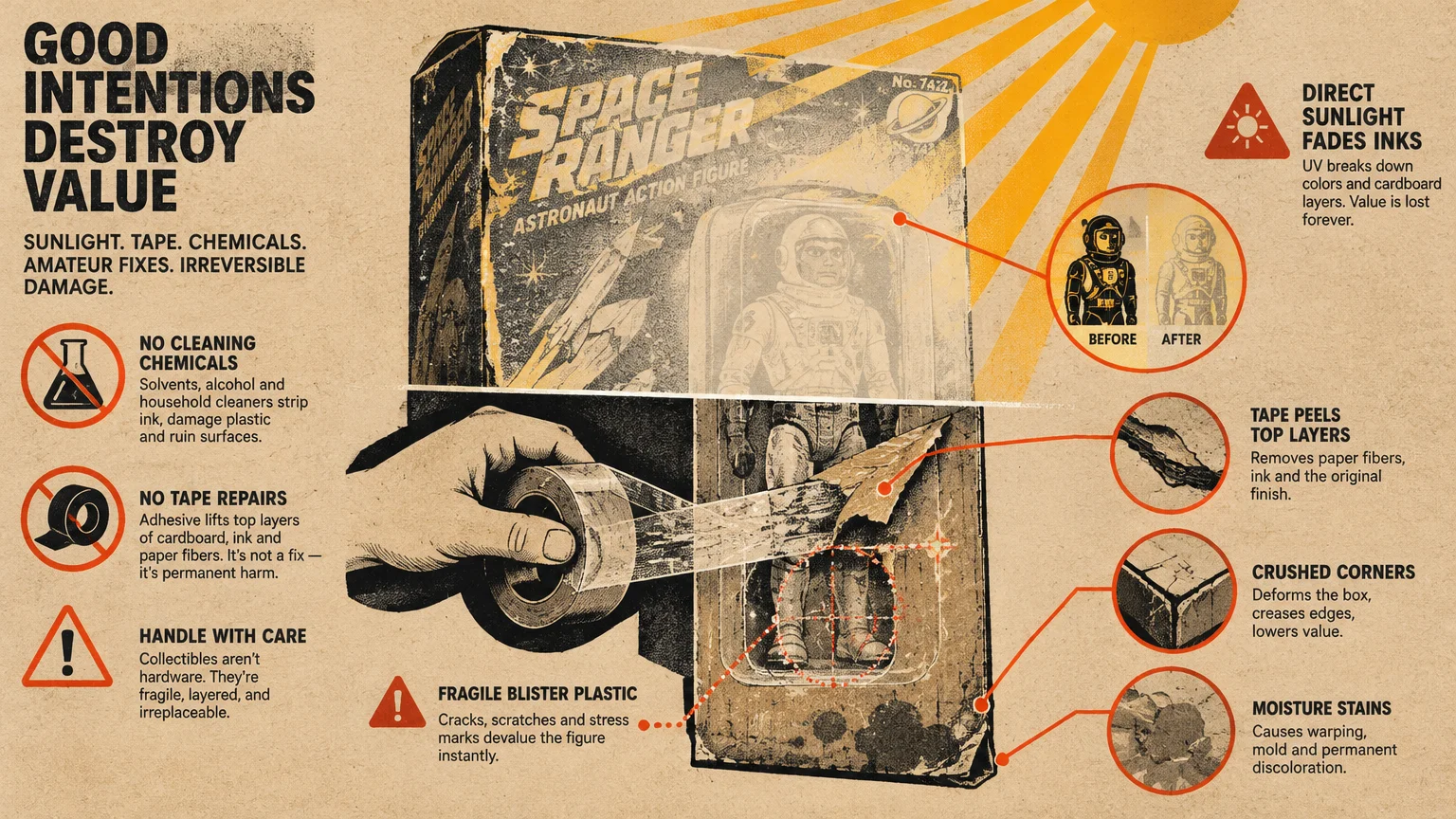
Liquidating childhood treasures without proper market research often leaves hundreds or thousands of dollars on the table. Avoid these common financial traps when preparing your items for resale.
- Trusting Active Listing Prices: Anyone can list a Beanie Baby for $500,000, but that does not reflect actual market value. Always filter online marketplaces by completed and sold listings to discover genuine cash sales.
- Aggressive Cleaning and Restoration: Do not attempt to scrub plastic, wash doll hair, or iron packaging. Harsh household chemicals frequently strip paint, dissolve original adhesives, and destroy valuable collector grades.
- Opening Sealed Vintage Packaging: Breaking a factory seal cuts an item’s secondary market value by 50% to 90% instantly. Preserve tape seals and blister bubbles exactly as you found them.
- Discarding Original Accessories: Miniature weapons, instruction sheets, cardboard inserts, and original boxes carry immense standalone value. Keep every accompanying piece together with the main toy.
- Neglecting Insured Shipping: Mailing high-value collectibles via standard ground shipping without full declared insurance invites financial disaster. Always purchase full tracking, signature confirmation, and carrier insurance.
Careless handling before listing can erase decades of appreciation in seconds. Always treat vintage items with the same care you would give fine art or precious jewelry.
IRS Reporting Rules and Capital Gains Taxes on Collectibles
Selling high-value collectibles triggers specific federal reporting and tax requirements that affect your net financial return. You must understand your tax obligations before transferring profits into your primary bank account.
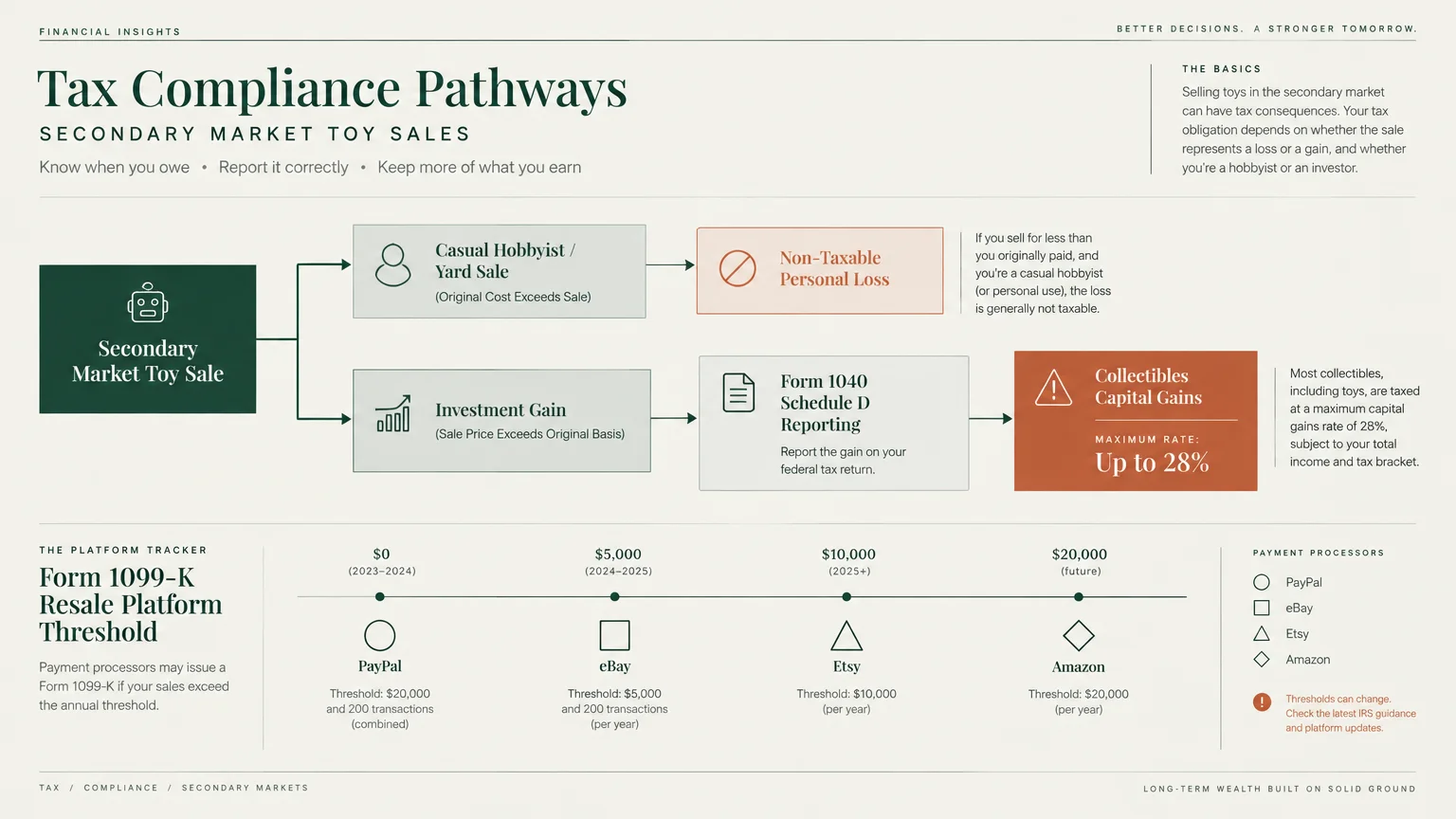
Under the One Big Beautiful Bill Act enacted in July 2025, federal reporting thresholds changed significantly. The Form 1099-K reporting threshold for payment processors and marketplaces reverted to over $20,000 in gross payments and more than 200 transactions.
This statutory change eliminated the previously planned IRS phase-in limits of $2,500 and $600. Even without receiving a 1099-K, you remain legally obligated to report all net capital gains on federal returns.
If you sell childhood toys at a loss compared to their original retail cost, you owe zero income taxes. However, selling items for a net gain over their purchase price produces taxable capital gains.
The IRS classifies vintage toys held longer than one year as collectibles. Long-term capital gains on collectibles face a maximum federal tax rate of 28%, depending on your overall income bracket.
Review official tax guidance on USA.gov Money and Taxes to understand basic tax filing procedures. Keep clear records of your sale receipts, shipping fees, and original acquisition costs.
Don’t DIY These Decisions
Navigating the liquidation of a high-value vintage toy collection requires professional support when substantial sums are involved. Relying strictly on self-guided internet research can lead to costly appraisal errors and tax penalties.
Consult a certified public accountant (CPA) if your annual collectible sales exceed several thousand dollars in net profits. A tax professional helps you calculate your cost basis accurately and navigate state and federal capital gains liabilities.
Engage a credentialed third-party grading service before attempting to sell top-tier items like first-edition Pokémon cards or sealed video games. Professional encapsulation from established grading authorities validates authenticity and establishes an objective grade that serious buyers trust.
Speak with an insurance agent if you plan to keep five-figure collectibles inside your home. Standard homeowner policies frequently cap personal property categories, meaning you need a dedicated collectibles rider to ensure full protection.
Consult the Federal Trade Commission (FTC) Consumer Advice resource to identify common wire fraud and payment escrow scams. Professional guidance prevents costly errors when transferring large amounts of money.
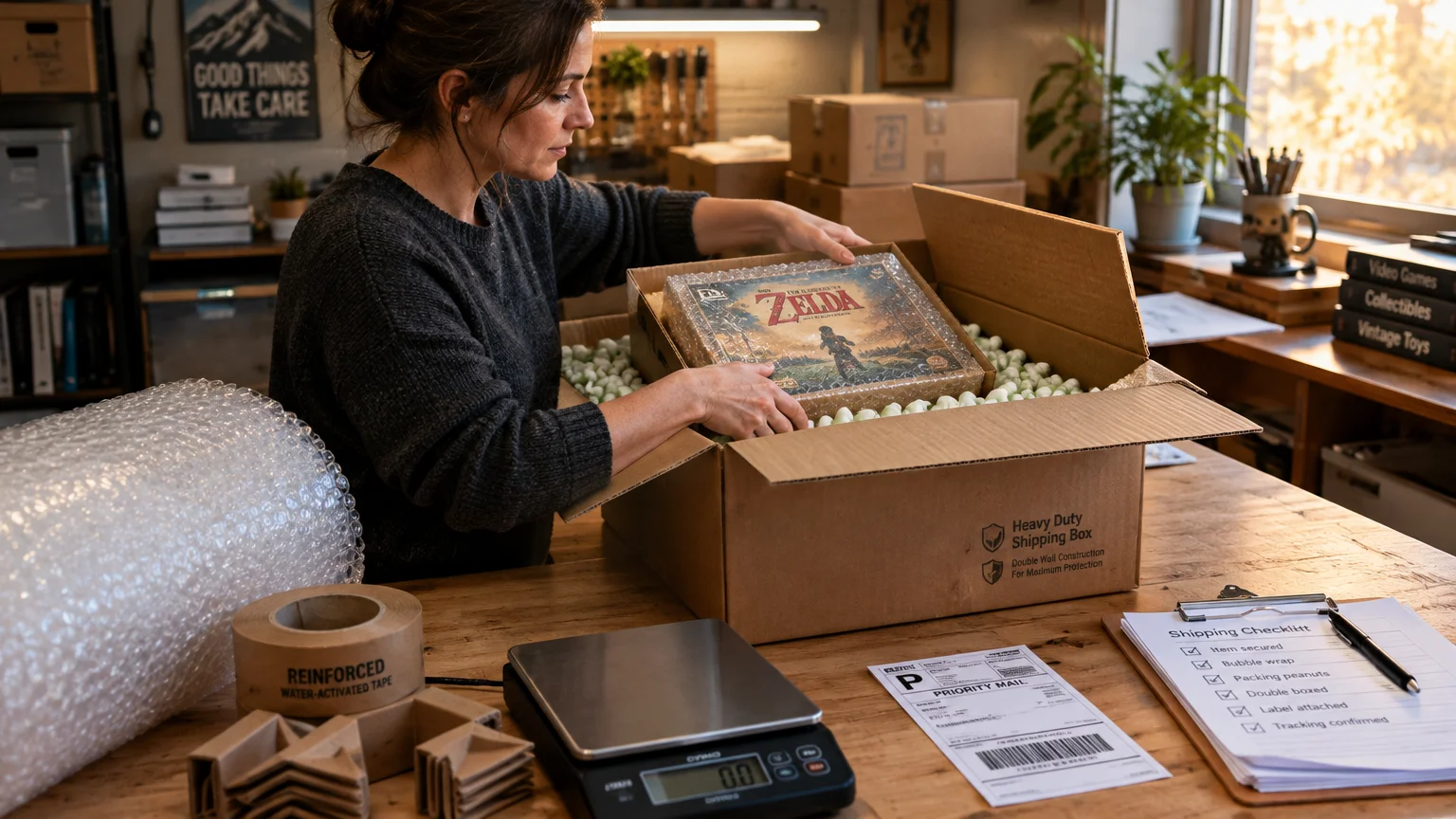
How to Safely Liquidate Your Vintage Toy Collection
Transforming vintage attic finds into real household cash requires a structured, deliberate sales strategy. Following proven liquidation steps protects both your time and your profit margins.
Start by photographing every item under bright, natural daylight from multiple angles. Showcase factory seals, corner wear, copyright markings, and any manufacturing defects with complete transparency to avoid future buyer disputes.
Choose the sales platform that best matches your collection’s overall valuation tier. For mass-market items worth $50 to $200, online marketplace platforms offer convenience and wide consumer exposure.
For items valued above $5,000, specialized auction houses provide superior marketing reach, dedicated authentication, and secure escrow services. Consignment fees prove worthwhile when marketing to qualified high-net-worth bidders.
“It’s not how much money you make, but how much money you keep, how hard it works for you, and how many generations you keep it for.” — Robert Kiyosaki
Once funds clear your account, allocate the proceeds toward high-impact household balance sheet priorities. Paying down high-interest credit card balances or funding a tax-advantaged retirement account creates lasting long-term wealth.
Frequently Asked Questions About 1990s Toys
How can I verify whether my Beanie Baby has real market value?
Check the generation of the red heart-shaped swing tag attached to the ear. First, second, and third-generation tags without gold star accents represent the most valuable production runs.
Look for confirmed manufacturing variations such as the 1995 Royal Blue Peanut the Elephant. Be aware that common production spelling errors on later tags rarely command substantial premiums despite online rumors.
Does opening a sealed 1990s toy destroy its resale value?
Opening a vintage sealed toy drastically reduces its market price, often wiping out 50% to 90% of its collector value. Factory tape, plastic shrink wrap, and unpunched card stock command massive premiums.
If you discover an unopened box from the 1990s, keep it sealed under all circumstances. Preserving the original factory packaging ensures you capture the highest possible price from serious collectors.
Where should I sell valuable 1990s toys for the best return?
Standard items selling under $1,000 perform well on major auction sites when you use tracked, insured shipping. These platforms provide immediate access to national buyer pools willing to pay market rates.
For items worth several thousand dollars or more, partner with dedicated collectibles auction houses like Heritage Auctions or Goldin. These firms manage professional marketing, bidder vetting, and secure payment processing on your behalf.
Do I need to pay income tax on vintage toys I sell?
Selling childhood items at a personal loss incurs no federal tax obligations. However, selling an item for a net gain over its original acquisition cost represents a taxable capital gain.
Under federal tax regulations, long-term gains on collectibles held longer than one year face a maximum 28% tax rate. Consult a qualified CPA to calculate your exact cost basis and reporting requirements.
Turning Yesterday’s Playthings into Today’s Financial Security
Take time this weekend to open those dusty storage bins and inventory your childhood playthings. What looks like simple plastic clutter could easily bolster your family emergency fund or help eliminate credit card debt.
Information in this article reflects rules and figures current as of the publication date and may change. Always confirm details directly with your bank, the IRS, the Social Security Administration, or other official sources before making decisions.
Last updated: October 2026. Rates, benefit amounts, and tax rules change—always verify current details at official sources.