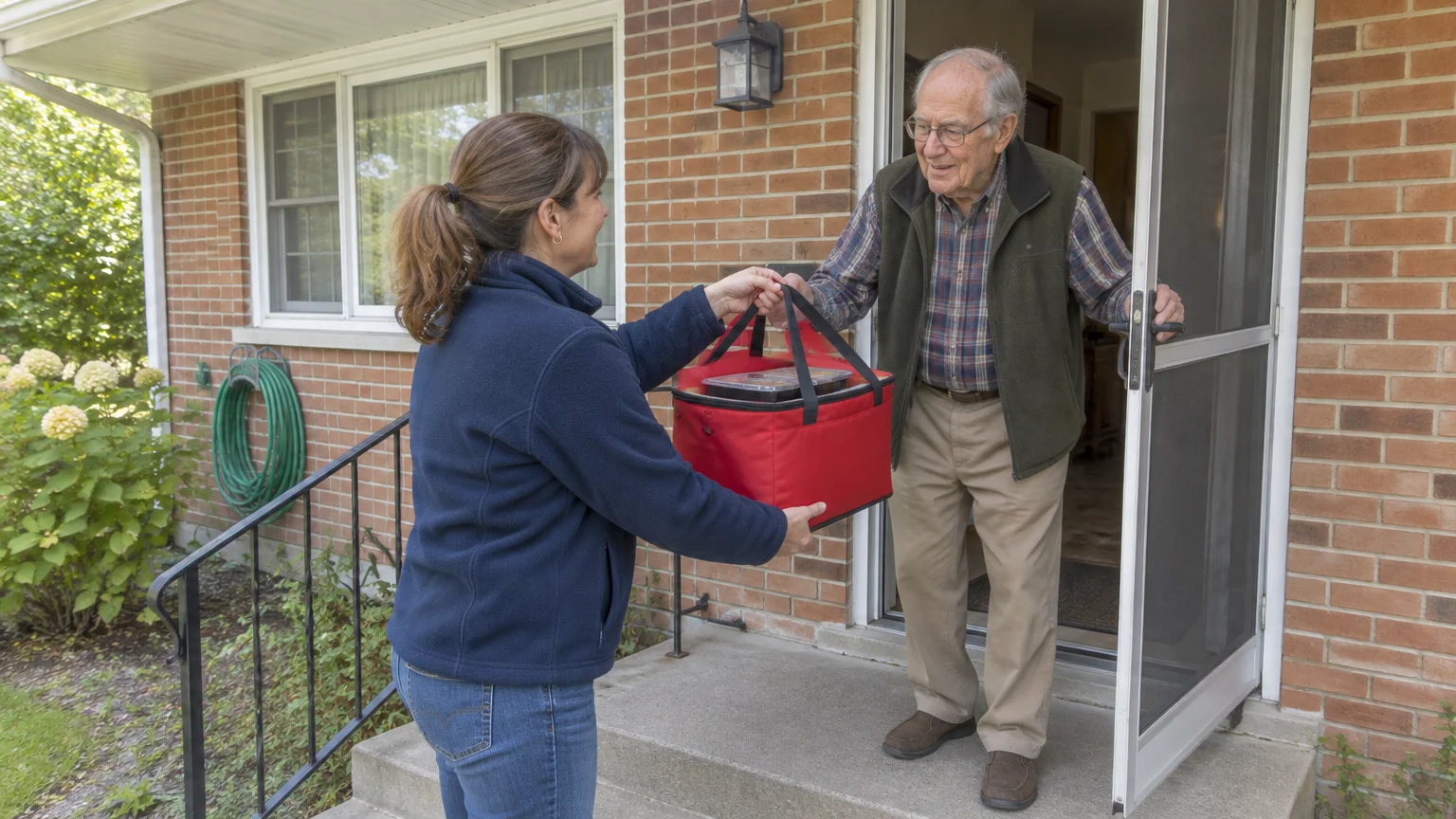
Caring for an aging parent often turns daily cooking and grocery shopping into an expensive logistical strain. Balancing your own household budget with eldercare means reliable meal support protects both your parent’s health and your monthly cash flow.
Federal and local senior meal programs deliver nutritious food to your loved one’s door for little or no money. Understanding Meals on Wheels eligibility helps your family skip costly private-pay subscriptions.
You can request a needs assessment in minutes once you know where to call and what details to gather. Here is who qualifies, what the service costs, and how to handle local waitlists.

Who Qualifies for Meals on Wheels
Under Title III-C2 of the Older Americans Act, federal baseline Meals on Wheels eligibility applies to adults age 60 or older who are frail or homebound. Your parent qualifies if illness, disability, or isolation makes shopping and preparing meals unsafe.
Federal law strictly prohibits income or asset testing for Older Americans Act nutrition programs. Your parent’s Social Security benefits, retirement savings, or home equity cannot disqualify them from receiving home delivered meals.
Even without a financial cap, providers must prioritize seniors facing the greatest economic or social need. Applicants who reside in rural areas, speak limited English, or risk nursing home placement receive priority consideration.
Several other household members can also receive meals under federal rules. A spouse of an eligible participant qualifies at any age, and an adult under 60 with a disability living at home qualifies when it benefits the older adult.
Applicants must live within the provider’s delivery zone and complete an intake screening. Seniors who can travel easily can visit Title III-C1 congregate dining sites for meals without a homebound requirement.
Nationwide, roughly 5,000 community providers deliver 244 million meals annually to 2.6 million seniors, with 97 percent offering at least five meals weekly.
What Home Delivered Meals Cost and How Insurance Pays
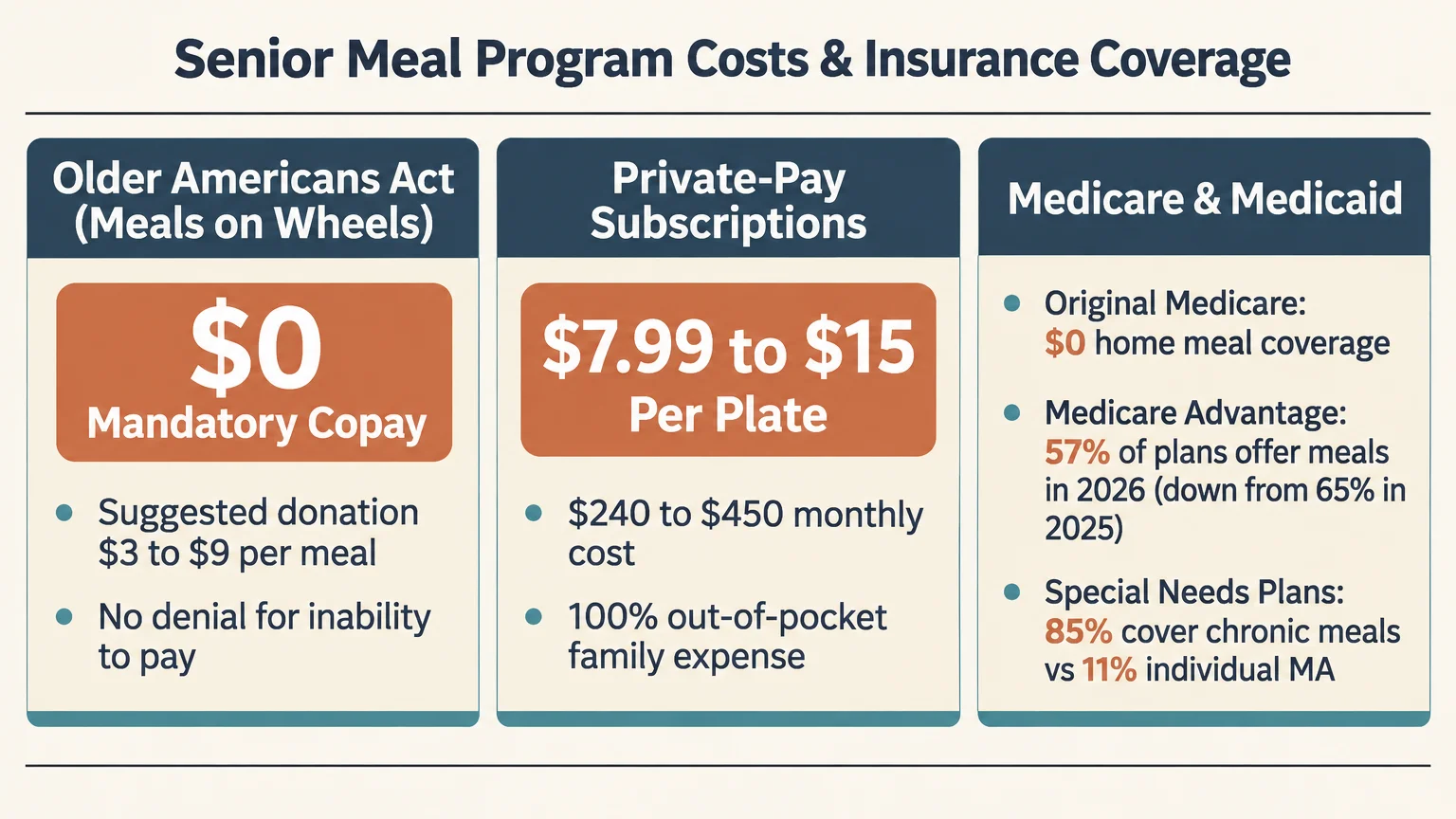
Federal regulations bar Older Americans Act programs from charging mandatory fees or sliding-scale copays. Providers instead offer participants an opportunity to make confidential, voluntary contributions toward the actual meal cost.
Suggested donations typically run $3 to $9 per meal, and programs encourage contributions from participants whose income equals or exceeds 185 percent of the Federal Poverty Level. However, providers can never deny food to an eligible senior who cannot pay.
Private-pay meal companies charge $7.99 to $15 per plate, totaling $240 to $450 monthly for one daily meal. Using nonprofit delivery preserves your household cash flow for childcare or retirement goals.
Original Medicare does not cover ongoing senior meal programs at home. As Medicare.gov explains, Parts A and B pay for meals only during inpatient hospital or skilled nursing facility stays.
Medicare Advantage plans sometimes include limited post-hospital meal delivery, though coverage narrowed recently. KFF analysis of federal plan files shows 57 percent of plans offer a meal benefit in 2026, down from 65 percent in 2025.
Ongoing chronic-illness meal coverage is rare outside specialized plans. In 2026, 85 percent of Special Needs Plans include chronic-condition food benefits, versus just 11 percent of individual Medicare Advantage plans.
Medicaid pays for ongoing delivery only in states whose Home and Community-Based Services waivers include meals. Your parent must satisfy strict income limits, meet nursing-home level-of-care standards, and get meals authorized in their care plan.
| Program or Payer | Who Qualifies | Out-of-Pocket Cost | Coverage Limits |
|---|---|---|---|
| Older Americans Act Meals on Wheels | Homebound adults 60+ (no income test) | $0 required ($3–$9 suggested) | Ongoing within delivery zone |
| Original Medicare (Parts A and B) | Inpatient hospital or skilled nursing patients | Not covered at home | Zero home meal delivery |
| Medicare Advantage (Part C) | Enrollees in participating plans (57% in 2026) | $0 when covered | Short-term post-discharge; 11% of individual plans cover chronic food |
| Medicaid HCBS Waivers | Low-income seniors needing nursing-home care level | $0 when authorized | Subject to state waiver slots |
| Private-Pay Meal Services | Any paying household | $7.99–$15.00 per meal | No waitlist or age minimum |
Treating elder nutrition as a planned family budget item early prevents preventable weight loss from turning into a costly hospital stay.

How to Sign Up Step by Step
You do not need a physician’s referral to request home delivered meals for a loved one. A senior, adult child, caregiver, or neighbor can start the enrollment process with one call.
Begin by locating the Area Agency on Aging that serves your parent’s ZIP code. Calling the national Eldercare Locator connects you directly with the regional office managing local delivery routes.
- Gather key household details: Write down your parent’s full name, street address, birth date, emergency contact, and any food allergies or medical diet needs.
- Contact the local gateway: Call 1-800-677-1116 Monday through Friday from 9 a.m. to 8 p.m. Eastern, or search by ZIP code at eldercare.acl.gov or mealsonwheelsamerica.org.
- Complete the intake screening: A case manager conducts a phone or home visit to verify mobility limits, nutrition risks, and priority status.
- Arrange delivery logistics: Confirm drop-off windows, frozen weekend packs, and whether drivers perform routine wellness checks.
Those brief doorstep visits protect families managing care from afar. Roughly 96 percent of local programs train drivers to check on clients’ general health, and 93 percent of surveyed recipients report the program helps them live independently.
While setting up meals, verify that your parent’s monthly income covers other household essentials. You can check benefit payment schedules at the Social Security Administration and review broader assistance programs on USA.gov.

Navigating Waitlists and Backup Food Help for Seniors
Applying before a health crisis hits is critical because rising food and fuel costs strain local budgets. Data from September 2026 shows one in three providers carries a waitlist averaging more than four months.
Roughly 36,000 older adults sit on waitlists across surveyed providers nationwide. If your parent faces a delay—or needs more than one meal per day—layer in federal food help for seniors at zero cost.
- SNAP for adults 60+: Households with an older or disabled member bypass the 130 percent gross income limit, needing only to meet the 100 percent net income test with higher asset caps. Standard SNAP covers groceries, though not hot prepared meals.
- Commodity Supplemental Food Program (CSFP): Adults 60 and older with incomes up to 130 percent of the Federal Poverty Level receive a free monthly 30-pound box of shelf-stable USDA staples.
- Senior Farmers Market Nutrition Program (SFMNP): Seniors 60 and older earning up to 185 percent of poverty—about $2,461 monthly for one person in 2026–2027—get $50 to $100 yearly for fresh produce.
Pairing a monthly CSFP pantry box with occasional private-pay frozen entrees bridges most delivery waitlists affordably. Ask the Area Agency on Aging intake worker to screen your parent for all three programs during your first call.
Common Money Traps When Budgeting for Elder Nutrition
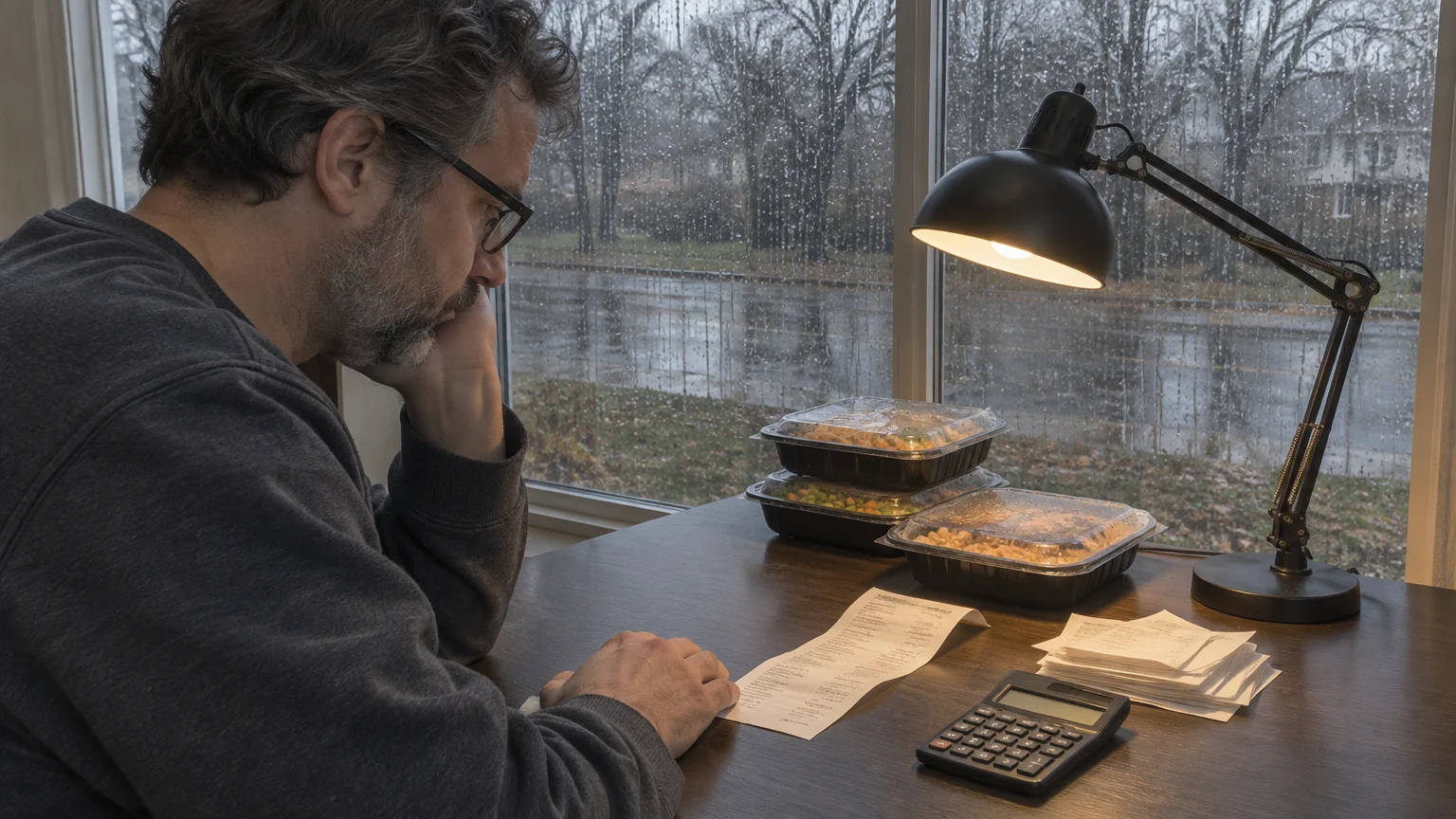
Adult children frequently absorb a parent’s meal bills onto personal credit cards before checking free public support. Watch for these costly mistakes when organizing eldercare cash flow.
- Assuming home equity disqualifies a parent: Federal rules prohibit asset tests for Older Americans Act meals, so owning a paid-off home never blocks eligibility.
- Paying commercial prices indefinitely: Retail senior meal deliveries run $8 to $15 per meal, while local nonprofit routes rely strictly on voluntary contributions.
- Overlooking tax dependency rules: Paying for a parent’s groceries yields no tax break unless they qualify as your dependent and you itemize medical deductions.
- Missing financial exploitation clues: An empty fridge paired with unpaid utility bills can signal cognitive decline or third-party financial abuse.
If unpaid bills or odd withdrawals accompany poor nutrition, check elder protection guides from the Consumer Financial Protection Bureau. Adding a trusted contact to bank accounts safeguards household cash flow.
Frequently Asked Questions
Can my parents qualify for Meals on Wheels if they have retirement savings?
Yes, because federal law strictly bans income and asset tests for Older Americans Act nutrition programs. Your parents’ savings accounts, pensions, and home equity cannot disqualify them.
Do home delivered meals accommodate diabetes or low-sodium diets?
Local providers note dietary restrictions during the intake assessment. Federal standards require every meal to meet current Dietary Guidelines for Americans and supply at least one-third of daily Dietary Reference Intakes.
How long does it take to start receiving deliveries?
When local routes have open slots, deliveries can begin soon after the intake assessment. In underfunded areas with active waitlists, however, waiting times average over four months.
Can someone receive Meals on Wheels temporarily after surgery?
Check your parent’s Medicare Advantage plan first, as 57 percent of plans offer a meal benefit in 2026. Local Meals on Wheels offices also serve temporary post-surgery clients when routes have capacity.

Take Action Today
Call 1-800-677-1116 or visit eldercare.acl.gov today to find your parent’s Area Agency on Aging and request an intake assessment. Securing a spot early while adding SNAP or CSFP food boxes protects both your parent’s independence and your family’s budget.
This article is for informational purposes only and does not constitute financial, legal, or tax advice. Rates, benefit amounts, and tax rules change regularly—verify current details with the relevant agency or a licensed professional.
Last updated: November 2026. Rates, benefit amounts, and tax rules change—always verify current details at official sources.