Entering retirement with monthly debt obligations can quickly drain your fixed income. According to the Federal Reserve, roughly two out of three American households aged 65 to 74 still carry debt.
While a low-cost mortgage in retirement is often manageable, high-rate consumer loans create severe cash flow strain. Paying off toxic balances before your final paycheck protects your nest egg.
Understanding benchmarks for senior debt average balances helps you prioritize what to pay first. You do not need to eliminate every liability, but targeting expensive debt is essential.
The Senior Debt Average: How Much Older Households Owe
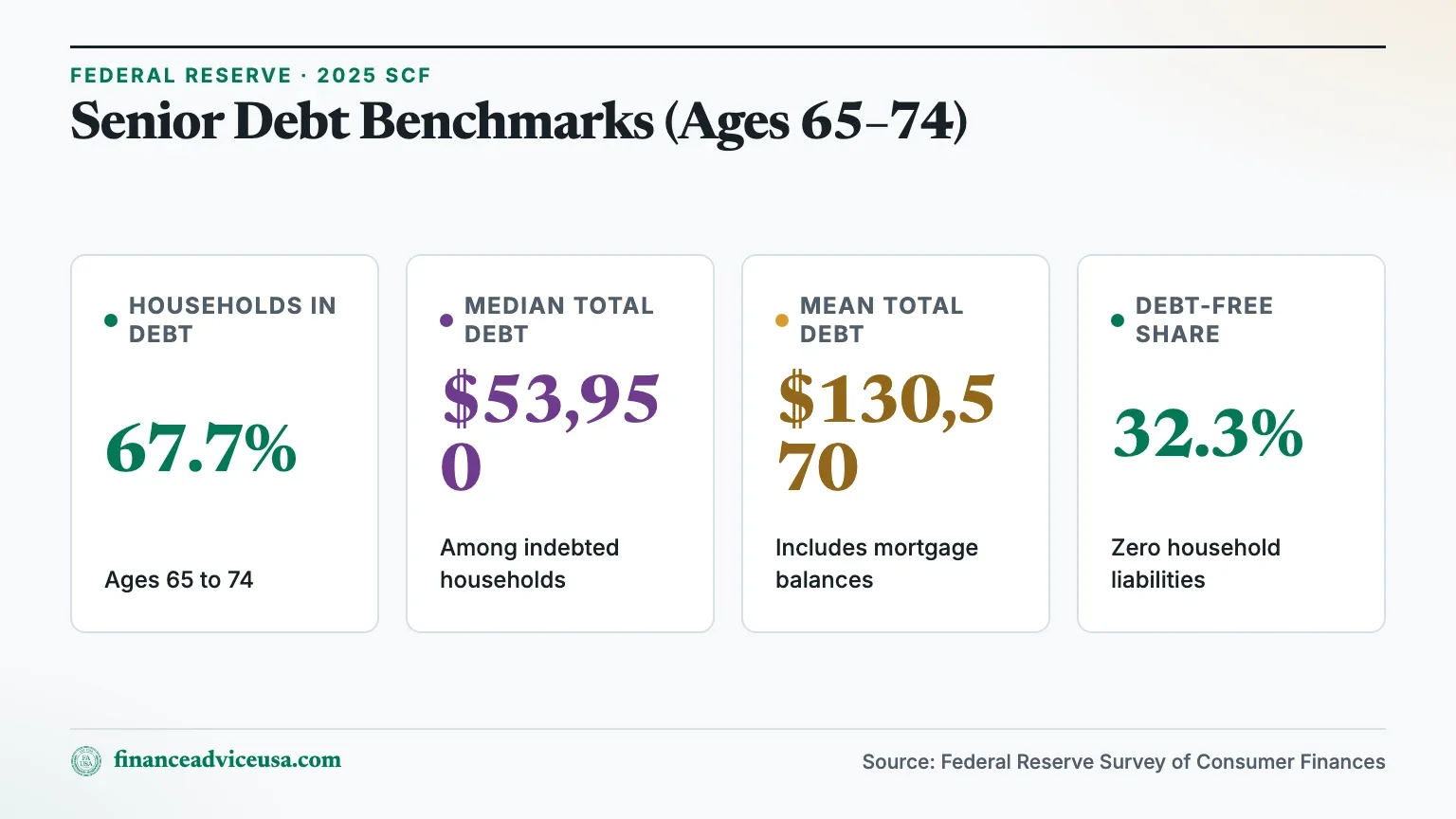
The 2025 Survey of Consumer Finances from the Federal Reserve shows that 67.7% of households aged 65 to 74 carry debt. That share is up from 64.8% in 2022 and 49.6% in 1989.
Among indebted families in this age group, the median total debt stands at $53,950. Meanwhile, the mean debt climbs to $130,570 due to a smaller group carrying significant mortgages.
At the same time, 32.3% of households in this bracket carry zero debt. Debt incidence tends to drop as retirees age, falling to 52.2% among households 75 and older.
By comparison, pre-retiree households aged 55 to 64 carry a median debt of $101,000. The transition into retirement clearly forces a steady reduction in overall liabilities.
Retirement Debt Breakdown: Mortgages vs. Credit Cards
To build an effective payoff plan, you must distinguish between secured property loans and revolving consumer debt. Not all retirement debt poses the same threat to your monthly budget.
In 2025, 37.2% of households aged 65 to 74 carried a mortgage or home equity balance, with a median balance of $120,000. Among all senior homeowners, roughly 60% own their property mortgage-free.
Conversely, 37.8% of 65 to 74 households carried unpaid credit card balances. These households carried a median credit card balance of $3,000 and an average balance of $7,990.
High-rate revolving debt triggers real payment distress. Federal Reserve data reveals that 7.3% of indebted households aged 65 to 74 fell 60 or more days behind on loan payments in 2025.
For adults aged 70 and older, serious credit card delinquencies climbed to 6.3% in 2026. By contrast, serious mortgage delinquency remained at a low 0.8% for the same age bracket.
Unchecked interest charges erode fixed retirement distributions faster than normal living costs.
“Financial peace isn’t the acquisition of stuff. It’s learning to live on less than you make.”
High-Rate Debt to Target Before Retiring
If you plan to retire soon, attacking your balances by interest rate preserves liquid capital. High interest compounds rapidly when you no longer earn active employment income.
| Debt Category | Typical APR (Late 2026) | Retirement Risk Level | Recommended Action |
|---|---|---|---|
| Credit Card Balances | 22.36%–24.00% | Critical | Eliminate completely before retirement. |
| Personal Unsecured Loans | 11.90%–12.48% | High | Pay off rapidly or consolidate. |
| Used & New Auto Loans | 7.30%–11.00% | Moderate | Pay off early if vehicle must last decades. |
| Mortgages & HELOCs | 3.00%–7.47% | Low to Moderate | Maintain if payments fit within fixed income. |
Credit card balances should always sit at the top of your hit list. With average rates exceeding 22%, carrying revolving charges into retirement guarantees unnecessary wealth loss.
Use the debt avalanche method to systematically eliminate these balances:
- List all accounts by interest rate, placing the highest APR at the top.
- Pay the absolute minimum balance on lower-rate accounts each month.
- Direct every surplus dollar toward the debt carrying the steepest interest rate.
- Roll payments forward into the next balance once an account hits zero.

Overlooked Liabilities: Medical Debt and Student Loans
Credit cards are not the only threat to older households. According to the Consumer Financial Protection Bureau, 3.9 million seniors held $53.8 billion in unpaid medical debt.
Medical collections can damage your credit score and complicate your transition to Medicare. Always audit medical bills for billing errors before agreeing to a payment schedule.
Student loans also affect older families, with 5.3% of 65 to 74 households holding education debt. Many seniors carry Parent PLUS loans taken out on behalf of their children.
Defaulted federal student debt poses unique dangers because the government can offset up to 15% of your Social Security monthly benefits. Address these obligations immediately.
Common Money Traps
Avoid these dangerous traps when tackling debt near retirement:
Emptying your 401(k) to pay off a low-rate mortgage. Large lump-sum retirement withdrawals trigger substantial income taxes and can push you into a higher tax bracket.
Ignoring high-rate credit cards while prepaying your home. Paying down a 3.5% mortgage while carrying 22% credit card balances destroys your monthly cash flow.
Cosigning new loans for adult relatives. If the primary borrower misses payments, lenders will pursue your retirement income and damage your credit profile.

When to Consult a Professional
Managing debt alongside retirement withdrawals requires careful coordination. Complex balances often call for objective outside expertise.
Consult a fee-only fiduciary financial planner to create a withdrawal schedule that avoids sudden tax penalties. A planner ensures debt payoff does not deplete your essential emergency savings.
If you struggle with housing payments, contact a HUD-approved housing counselor. They provide free or low-cost guidance on refinancing and loan modifications.
If collectors threaten legal action or garnishment, speak with a qualified consumer rights attorney. Legal specialists can identify violations and safeguard protected benefits.
Frequently Asked Questions
Should I pay off my mortgage before I retire?
Not necessarily. If you locked in a low fixed interest rate, keeping your mortgage in retirement may be wiser than depleting liquid cash reserves.
Can credit card companies garnish my Social Security check?
No, federal law protects Social Security benefits from private debt collectors and credit card issuers. Only government debts, such as federal student loans and back taxes, trigger offsets.
How much cash cushion should I keep while paying off debt?
Maintain three to six months of basic living expenses in liquid savings while tackling high-rate debt. That cushion prevents you from turning back to credit cards during emergencies.
Take Control of Your Pre-Retirement Balances
Review your credit card statements, auto loans, and outstanding notes today. Rank every balance by interest rate and dedicate your pre-retirement earnings to eliminating expensive double-digit debts first.
Financial outcomes vary based on individual income, credit history, and circumstances, and this article provides general guidance only. Consult a qualified financial planner, CPA, or consumer attorney for advice specific to your situation.
Last updated: November 2026. Rates, benefit amounts, and tax rules change—always verify current details at official sources.