Spreading your holiday shopping into four easy payments sounds harmless before Cyber Monday. Yet hidden fees, stacked payment dates, and bank overdrafts can turn quick bargains into lasting holiday debt.
Adobe Analytics projects shoppers will spend a record $1.09 billion through Buy Now, Pay Later plans on Cyber Monday alone. Before you click to split your checkout total, you need to know how these loans work.
A zero-percent offer does not always mean zero risk. Understanding the fine print protects your cash flow and safeguards your credit score impact throughout the new year.

The Real Math Behind 0% Promotions
Many holiday shoppers assume every point-of-sale loan comes with zero interest. Federal Reserve data reveals that only 63% of BNPL loan volume carried 0% interest in 2025.
Longer monthly installment plans often charge interest rates reaching up to 36% APR. Even a small balance can cost significantly more when stretched across six to twelve months.
Some providers also add upfront service charges or installment costs. For example, Zip charges $1 per installment, while Sezzle charges monthly membership fees for premium access.
Comparison of Major BNPL Providers
Terms, late penalties, and credit reporting vary widely across platforms. Review this breakdown before choosing a provider at checkout this holiday season.
| Provider | Late Fees | Upfront or Account Fees | Credit Bureau Reporting |
|---|---|---|---|
| Affirm | $0 | $0 | Reports loans to Experian and TransUnion |
| Klarna | Up to $7 (capped at 25%) | $0 | Reports monthly financing; Pay in 4 not reported |
| Afterpay | Up to $8 after 10 days (capped at 25%) | $0 | Does not report standard loans to U.S. bureaus |
| PayPal Pay in 4 | $0 | $0 | Pay in 4 not reported; monthly plans may report |
| Zip | $5 to $7 per late payment | $1 per installment fee | Does not routinely report standard orders |
| Sezzle | Up to $10 late plus $6.95 failed fee | Optional $13.99 to $19.99 monthly plans | Reports only if enrolled in Sezzle Up |
Always check your loan agreement before confirming your order. Fee structures change, and small charges quickly add up across multiple purchases.
Loan Stacking and Overdraft Penalties
The biggest hazard with holiday microloans is buying too many items across different apps. LendingTree found that one in four users carries three or more active installment loans.
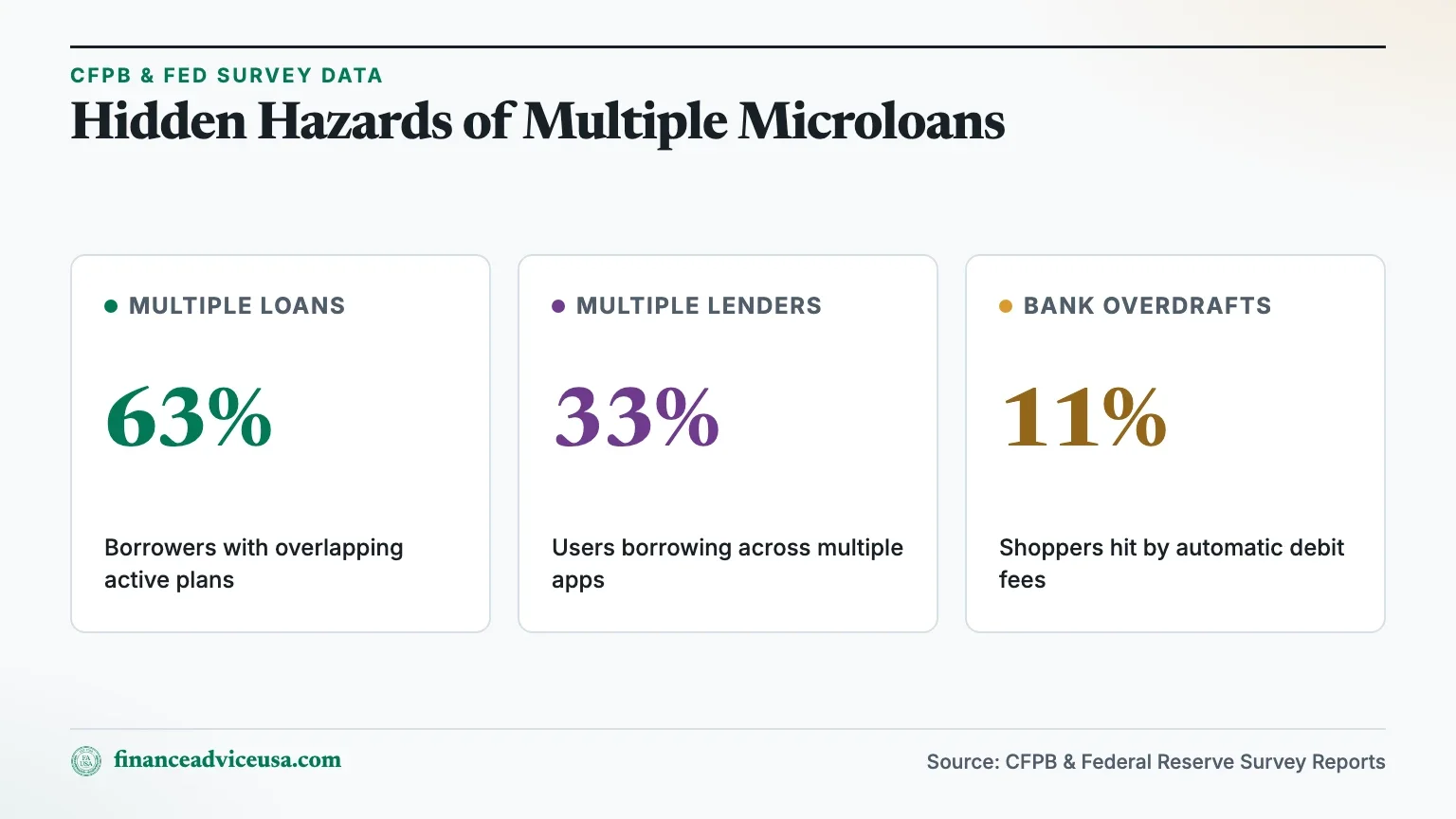
According to a Consumer Financial Protection Bureau report, 63% of borrowers held multiple simultaneous loans. Another 33% borrowed from more than one company at the same time.
This habit creates a dangerous blind spot in your checking account. Staggered autopay dates can drain your cash balance unexpectedly between paychecks.
A Federal Reserve survey revealed that 11% of users suffered bank overdraft or insufficient-funds fees from automatic debits. A single thirty-dollar bank fee can wipe out any holiday sale savings instantly.
Credit Score Impact and Bureau Reporting
Many buyers think these quick loans never touch their credit history. The reality is more complicated as the credit reporting system evolves.
FICO announced FICO Score 10 BNPL and 10T BNPL to track installment activity. However, most mainstream lenders still rely on older scoring models that ignore on-time payments.
Affirm reports all loans to Experian and TransUnion. Yet most other services do not share routine on-time pay-in-4 records with credit bureaus.
This means on-time payments rarely help build your credit profile. However, unpaid balances sent to collections will severely damage your record for up to seven years.
You can check your credit reports for free every week at AnnualCreditReport.com. Watching your files ensures no surprise collection accounts slip through after the holidays.
Lost Federal Protections on Disputed Returns
Holiday returns create unexpected headaches when using installment plans. CFPB data shows that nearly 14% of these loans involved a returned or disputed order.
On May 12, 2025, the CFPB withdrew its rule granting credit-card dispute rights to installment apps. As a result, federal laws do not guarantee automatic payment pauses during disputes.
While Affirm and Klarna pause billing during disputes, PayPal Pay in 4 does not. You must continue making scheduled payments until the merchant approves your refund.
If you stop payments during a dispute, the lender may assess late fees or report a default. Always review merchant return rules before placing your holiday order.
Costly Mistakes to Avoid
Steering clear of standard traps will keep your household budget safe this season. Watch out for these four common pitfalls at checkout:
- Stacking loans across platforms: Opening separate plans with different apps makes tracking upcoming due dates nearly impossible.
- Linking an empty debit card: Surprise autopay debits can trigger cascading bank overdraft charges on your primary account.
- Ignoring return policies: Returning merchandise does not instantly stop your loan balance with the third-party lender.
- Carrying holiday debt into the spring: Using installment loans to buy gifts often drags old balances into the new year.
Surveys show that 38% of Americans still owe money on last year’s holiday shopping. Avoiding these errors ensures you celebrate without lasting financial stress.
Smart Habits for Cyber Monday Shopping
You can enjoy holiday sales without falling into an expensive debt spiral. Setting firm limits before you log in keeps your spending in check.
“A budget is telling your money where to go instead of wondering where it went.” — John C. Maxwell
Decide your total holiday gift allowance before browsing online deals. Treat any installment option as real debt that requires dedicated cash reserves.
Set calendar alerts for every installment due date across December and January. Setting reminders helps you maintain a cash cushion in your checking account.
Frequently Asked Questions
Does using Buy Now, Pay Later hurt my credit score?
Routine on-time payments rarely hurt your score, but they rarely raise it either. However, defaulting on payments can lead to collection accounts that damage your credit for seven years.
Can I return a Cyber Monday item bought with a payment plan?
Yes, but the return process takes longer. You must process the return with the merchant while monitoring your installment app to ensure payments pause or cancel.
What happens if I miss a scheduled payment?
Missing a payment can trigger late fees between $5 and $10 depending on the lender. Your bank may also assess overdraft fees if your account lacks sufficient funds.
Enjoy your Cyber Monday shopping by treating installment plans with healthy caution. Track every payment closely so your holiday bargains do not turn into costly headaches.
Financial outcomes vary based on individual income, credit history, and circumstances. This article provides general guidance only. Consult a qualified financial planner, CPA, or consumer attorney for advice specific to your situation.
Last updated: November 2026. Rates, benefit amounts, and tax rules change—always verify current details at official sources.