Grocery prices keep climbing, with food-at-home costs rising 1.8% in the 12 months ending September 2026. Yet most supermarkets discount the same core categories on predictable schedules every seven days.
Learning how the grocery store sales cycle operates lets you capture recurring markdowns without clipping paper coupons or driving across town. You can save money on groceries each week simply by timing what you buy to the store calendar.
Here are nine weekly grocery deals that repeat like clockwork—plus the best days to shop them and safe storage rules for stocking up.
Key Takeaways for Your Weekly Budget
Stretching your monthly food budget starts with matching your meal plan to predictable retail calendars. These core habits deliver the most consistent savings without extreme deprivation.
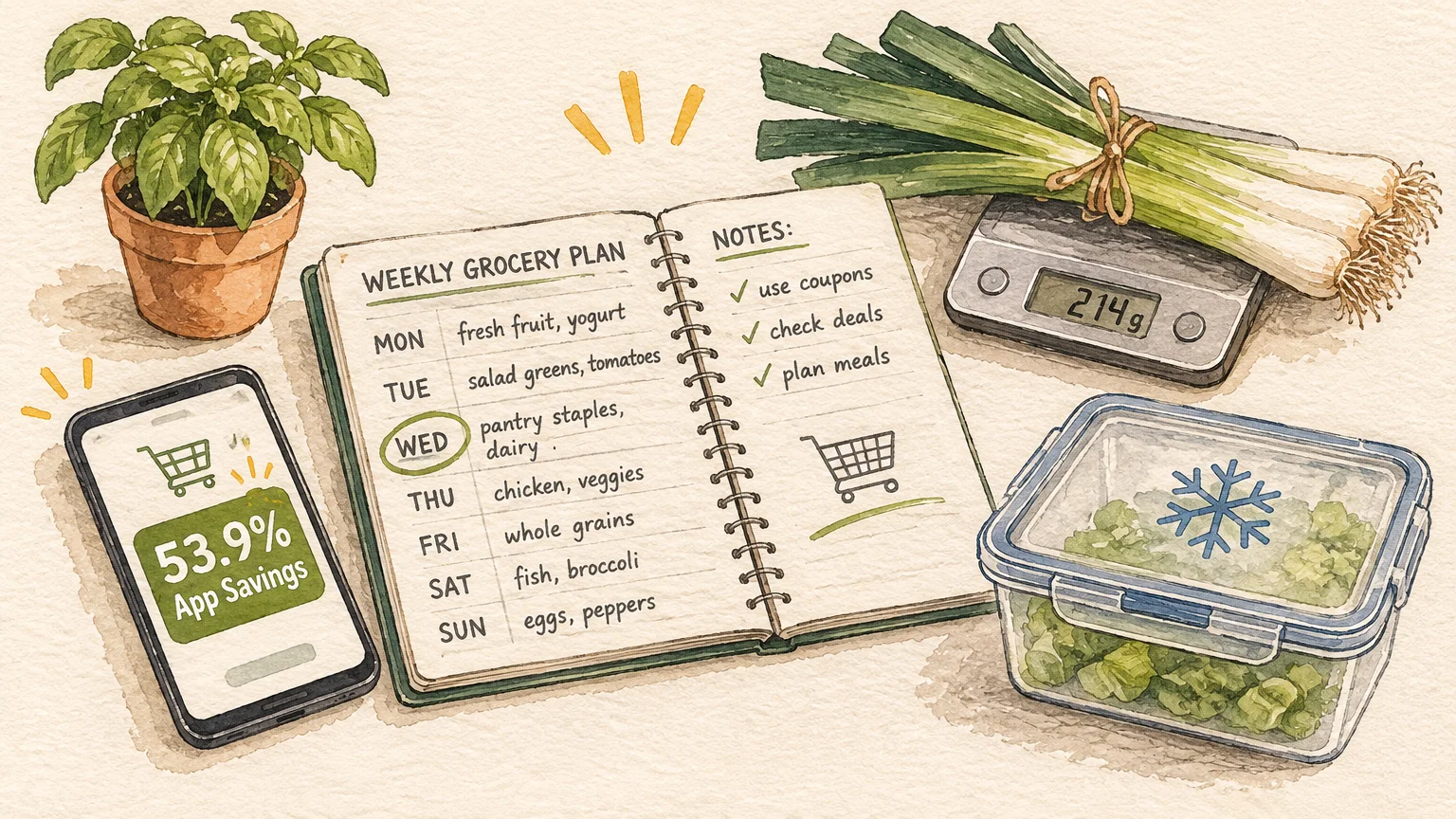
- Midweek resets drive the deepest discounts: Several major chains launch fresh seven-day circulars every Wednesday, creating brief windows to stack overlapping promotions.
- Digital app offers dominate coupon redemptions: Load-to-card discounts accounted for 53.9% of all U.S. coupon redemptions in 2025, replacing traditional newspaper inserts.
- Day-specific promotions reward flexible shoppers: Stores like Whole Foods Market discount specific meal staples every Tuesday and Friday for members.
- Food safety rules protect bulk savings: Keeping your freezer at 0°F or below lets you buy marked-down proteins in bulk without risking spoilage.
Why Supermarkets Run a Weekly Sales Cycle
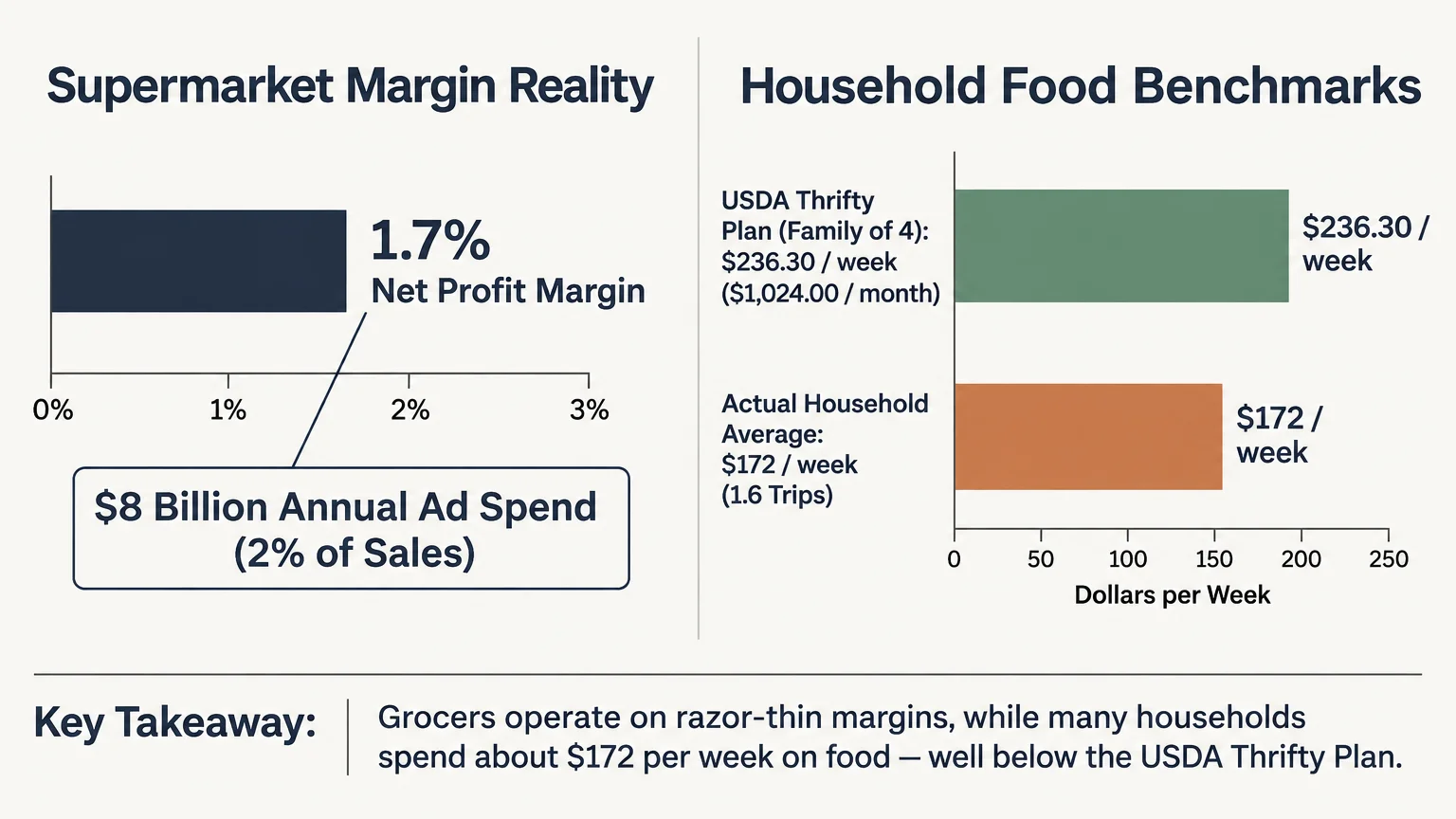
Supermarkets operate on razor-thin margins, leaving little room for random discounting. According to FMI — The Food Industry Association, grocery retailers earned an average after-tax net profit of just 1.7% in 2024.
To bring shoppers through the doors, grocers spend roughly $8 billion a year—about 2% of total sales—on weekly feature ads. A study from the Stanford Graduate School of Business and UCLA found that at least 10% of shoppers pick their store based on that week’s circular.
That weekly battle for your cart happens against rising household food costs. Data tracked by the Bureau of Labor Statistics (BLS) shows the food-at-home Consumer Price Index rose another 0.4% in October 2026 alone.
While restaurant prices climbed 3.5% over the 12 months ending September 2026, cooking at home still requires disciplined cash management. Under the USDA Official Thrifty Food Plan for September 2026, a nutritious home-cooked diet for a reference family of four costs $236.30 per week, or $1,024.00 per month.
Most families spend less than that benchmark by adjusting what goes into the cart. FMI reports that U.S. households spent an average of $169 per week on groceries as of August 2026 and $172 per week in September 2026, averaging 1.6 trips per week.
According to McKinsey’s June 2026 grocery report citing NIQ data, U.S. grocery unit volume fell 1.0% in 2025 even as dollar sales edged up 1.2% due to 2.2% price increases. Shoppers cut impulse buys and leaned harder on store brands and weekly promotions.
Treat your weekly grocery circular like a menu planner rather than an impulse wishlist—building meals around discounted proteins and produce keeps your monthly cash flow predictable.
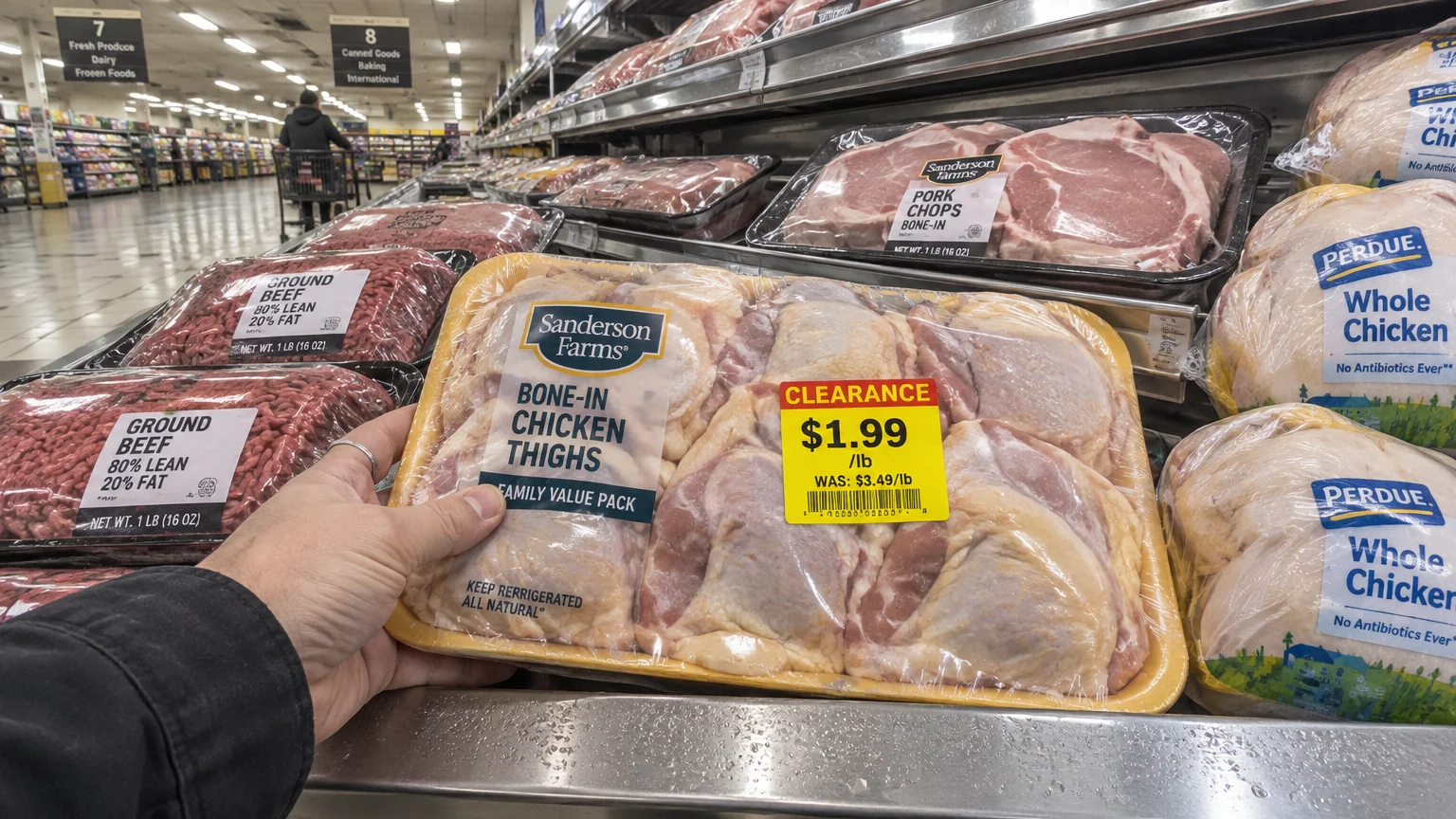
The 9 Grocery Store Deals That Happen Every Week
Every grocery chain designs its weekly calendar to pull you into the store for high-visibility staples while hoping you buy full-price items nearby. Knowing these nine repeating promotions puts you in control of your cart.
1. Wednesday Circular Resets and Midweek Overlap Days
Midweek is one of the best days for grocery deals because multiple regional and national chains flip their promotional calendars on Wednesday. Both ALDI and Sprouts Farmers Market run their weekly circulars from Wednesday through Tuesday.
When a store resets its ad on Wednesday, Tuesday becomes your final chance to grab expiring markdowns before prices revert. Conversely, Wednesday morning gives you first pick of newly discounted produce, meat, and pantry items while shelves are fully stocked.
ALDI also releases a sneak peek of the following week’s ad every Wednesday. Checking that preview before you shop stops you from paying full price for an item scheduled to drop in price seven days later.
Some regional supermarkets, such as ShopRite, run a Sunday-through-Saturday circular instead. If you split your 1.6 weekly trips between a Sunday-reset chain and a Wednesday-reset grocer, you capture two fresh waves of advertised discounts every week.
2. Front-Page Loss-Leader Staples
The items featured in bold print on the first page of every weekly circular are called loss leaders. Stores often price these staples near or below wholesale cost to get you through the door.
Research from Stanford and UCLA confirms that circulars influence store choice most heavily for five packaged categories: cereal, snack chips, pizza, cookies, and hot dogs. Fresh meat cuts and seasonal produce also rotate onto front pages every week.
Because front-page deals rotate across categories rather than repeating on the same item every seven days, resist buying only enough for tonight’s dinner. When cereal, coffee, or chicken breasts hit the front page, buy enough to bridge the gap until the next discount cycle.
To prevent loss leaders from blowing up your budget, shop the perimeter and front-page endcaps with a strict written list. Walking into a store for discounted hot dogs only to add full-price condiments and bakery treats wipes out your savings.
3. Buy-One-Get-One-Free (BOGO) Rotations
Weekly Buy-One-Get-One-Free specials remain a cornerstone of traditional supermarket circulars. Publix builds its weekly ad around BOGO offers alongside digital coupons, and Sprouts Farmers Market routinely weaves BOGO deals into its Wednesday-through-Tuesday rotation.
At many chains, a BOGO promotion simply rings up each item at half price, meaning you do not always have to buy two units to get the discount. Check the shelf tag or store policy before grabbing a pair of perishable items you cannot finish.
Where you must buy two items to trigger the free unit, restrict BOGO purchases to shelf-stable or freezable goods. Pasta sauce, canned beans, frozen vegetables, butter, and dried grains hold their quality long enough for you to use both packages.
Before tossing a BOGO item into your cart, compare the net half-price unit cost against the store’s private-label brand. Sometimes a national brand at half price still costs more per ounce than the everyday store brand right next to it.
4. Day-Specific Fresh Food Discounts on Tuesdays and Fridays
Beyond seven-day circulars, several chains run standing single-day markdowns on prepared foods and fresh proteins every single week. These predictable calendar events let you slash dinner costs on busy weeknights.
Under Whole Foods Market’s Prime promotion running from October 7, 2026 through March 30, 2027, Amazon Prime members get recurring discounts every Tuesday on weeknight staples. Typical Tuesday items include rotisserie chicken, packaged soup, and ground beef.
On Fridays during that same promotional window, Whole Foods Market offers recurring Prime discounts on end-of-week favorites such as oysters, sushi, and pizza. Prime members also unlock more than 30 exclusive weekly deals every week.
Additionally, scanning the Whole Foods or Amazon app at checkout gives Prime members an extra 10% off storewide sale items, excluding alcohol and gift cards. Eligible Prime Visa cardholders also earn 5% back on those purchases.
If you regularly buy convenience meals on Fridays to avoid cooking, shifting that habit to a store with a standing Friday pizza or sushi deal keeps convenience spending from derailing your grocery budget.
5. Load-to-Card Digital App Coupons
Sunday newspaper clipping has largely vanished from modern grocery shopping tips. According to Inmar Intelligence in May 2026, load-to-card digital offers made up 53.9% of all U.S. coupon redemptions in 2025, compared with just 2.3% for newspaper free-standing inserts.
Consumer adoption backs up that shift. FMI’s 2026 trends data shows 77% of shoppers use digital technology before entering the store, 71% use it inside the aisles, and 72% consider their store’s loyalty program essential to staying on budget.
Every week, major chains load fresh digital manufacturer coupons and personalized store offers into their mobile apps. These coupons apply automatically at the register when you enter your phone number or scan your loyalty barcode.
Spend five minutes on ad-reset morning clipping every digital coupon for items you routinely buy. Combining a digital coupon with an active weekly circular price—known as stacking—delivers the steepest legal discount available on packaged foods.
6. Weekly Loyalty Points and Seasonal Multipliers
Supermarket rewards programs increasingly double as direct weekly cash-back engines on both groceries and fuel. Understanding the exact redemption math prevents points from expiring unused at month’s end.
On June 25, 2026, Kroger rebranded its Fuel Points program to Points and expanded checkout savings. Shoppers now earn 1 point per $1 spent on groceries—or 2x for paid Boost members—plus 2 points per $1 on most gift cards and 25 points per qualifying prescription.
You can redeem 100 Points for $1 off groceries at checkout, up to 1,000 points or $10 per day. Alternatively, every 100 Points takes 10 cents off per gallon of fuel, capped at $1 off per gallon on up to 35 gallons, or $35 max per fill-up.
Notice the math between those two options: if your vehicle holds at least 11 gallons, redeeming 100 Points at the gas pump saves $1.10 or more, beating the $1.00 grocery register credit. Note also that Kroger Points expire at the end of the month after you earn them.
Watch your app closely on Fridays for multiplier events. In 2026, Kroger shifted from year-round weekly fuel multipliers to limited-time seasonal 4X Points Fridays—such as its June 12 through July 24, 2026 series and holiday weekend events—which require clipping a digital coupon beforehand.
7. Limited-Quantity Midweek Treasure-Hunt Finds
Discount grocers use rotating weekly merchandise drops to generate urgency without printing traditional coupons. ALDI leads this model by stocking limited-time ALDI Finds on shelves every Wednesday while quantities last.
These weekly drops span seasonal specialty foods, baking ingredients, kitchen tools, and household basics. Because ALDI requires no paid membership and does not accept manufacturers’ coupons, the shelf price on Wednesday morning is already stripped down.
Treating treasure-hunt aisles wisely requires separating genuine household needs from impulse clutter. Check the Wednesday online sneak peek before leaving home so you only buy limited-time staples that replace higher-priced items elsewhere in your budget.
If a seasonal pantry item fits your family’s regular meal rotation—such as specialty broths, holiday baking chocolate, or bulk snacks—grab it early in the week before inventory sells out.
8. Multi-Week Rollback Price Cycles
Not every grocer relies on seven-day loyalty circulars. Walmart anchors its pricing on Everyday Low Prices paired with four- to six-week Rollback and promotional cycles rather than weekly member-only ads.
Because Rollbacks hold steady for a full month or longer, they act as a price ceiling when you compare weekly deals at competing supermarkets. If your traditional grocery store puts pasta or dish soap on a weekly sale, check your Walmart app first.
If the traditional grocer’s weekly sale price still sits above Walmart’s multi-week Rollback price, skip the promotion and pick up the item on your next big-box run. Using Rollbacks as your baseline price anchor protects you from fake urgency.
9. Pre-Reset and Daily Perishable Markdowns
Behind the advertised circular, every grocery store marks down fresh meat, bakery goods, dairy, and bagged salad daily as items approach their store-display deadlines. Shopping just before a store’s weekly circular resets often uncovers extra clearance stickers as staff clear room for incoming deliveries.
Many shoppers hesitate to buy discounted meat or dairy out of safety concerns. Knowing federal labeling rules turns that hesitation into steady monthly savings.
According to the USDA Food Safety and Inspection Service (FSIS), infant formula is the only food with a federally mandated expiration date for safety. All other product date labels are voluntary and measure peak quality rather than food safety.
- Sell-By dates: Tell store staff how long to display a product for inventory management; they are not safety deadlines.
- Best if Used By/Before dates: Indicate when a food delivers peak flavor or texture, as recommended by both the USDA and FDA.
- Use-By dates: Mark the last date recommended for peak quality on standard groceries, and serve as a safety limit only on infant formula.
Labeling rules are also becoming clearer in parts of the country. California Assembly Bill 660, effective July 1, 2026, bans consumer-facing Sell-By dates on food manufactured on or after that date in California, standardizing labels to Best if Used By for quality and Use-By for safety.
Weekly Deal Calendars Across Major Grocery Chains
Matching your shopping trip to the right store calendar prevents wasted fuel and missed promotions. The table below summarizes the recurring deal cycles and membership rules at major U.S. grocery chains.
| Grocery Chain | Weekly Ad Cycle | Primary Weekly Deal Mechanic | Membership or App Requirement |
|---|---|---|---|
| ALDI | Wednesday through Tuesday | Weekly circular plus Wednesday ALDI Finds and next-week sneak peek | None; does not accept manufacturer coupons |
| Sprouts Farmers Market | Wednesday through Tuesday | Produce, meat, seafood, BOGO deals, and digital coupons | Free app and Sprouts Rewards account for digital deals |
| Whole Foods Market | Weekly plus Tuesdays and Fridays | 30+ weekly deals, Tuesday/Friday Prime staples, extra 10% off sale items | Amazon Prime membership and Whole Foods or Amazon app |
| Kroger | Weekly cycle plus seasonal Fridays | Weekly circular, digital coupons, Points rewards, seasonal 4X Points Fridays | Free loyalty account for Points; digital coupon needed for 4X events |
| Publix | Weekly cycle | Buy-One-Get-One-Free (BOGO) specials and digital coupons | Free account required for digital coupons; BOGO open to all |
| ShopRite | Sunday through Saturday | Weekly circular specials and load-to-card digital coupons | Free loyalty card required for digital offers and circular club prices |
| Walmart | 4- to 6-week cycles | Everyday Low Prices and multi-week Rollbacks | None for in-store Rollbacks |
You do not need to visit all seven chains to capture meaningful savings. Pairing one Wednesday-reset store with either a Sunday-reset supermarket or a multi-week Rollback retailer covers nearly every staple on a typical household list.
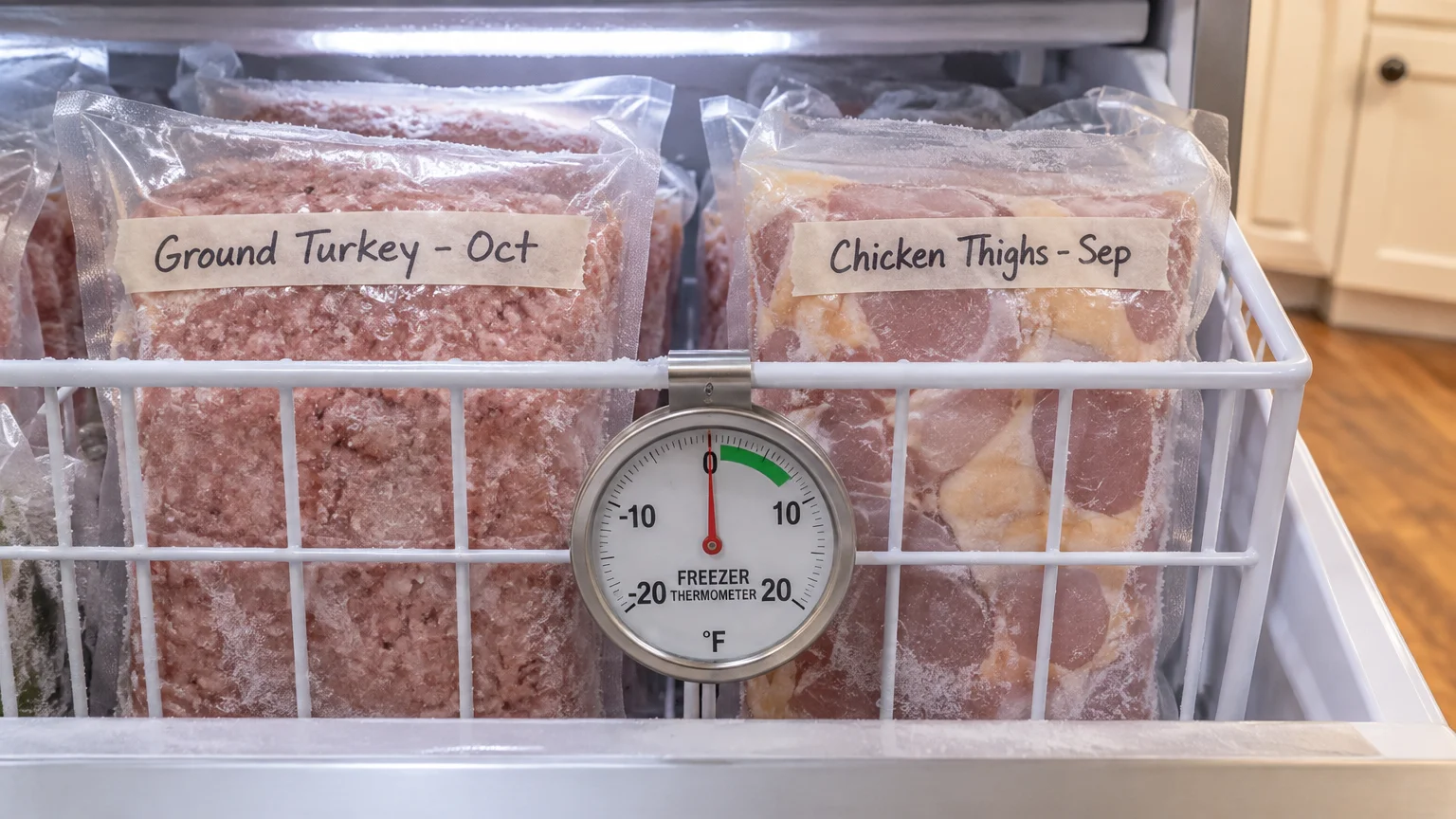
Safe Storage Rules When You Buy Weekly Deals in Bulk
Buying extra ground beef, poultry, or deli meat during a weekly markdown only saves money if you eat it before it spoils. Throwing away discounted food turns a smart purchase into pure cash waste.
Keep your refrigerator at 40°F (4°C) or below and your freezer at 0°F (-18°C) or below. According to the USDA FSIS, FDA, and FoodSafety.gov, foods kept continuously frozen at 0°F or below remain safe to eat indefinitely.
Freezer timeframes listed by federal food-safety agencies measure peak flavor and texture rather than safety. Refrigerator timeframes, however, are strict safety boundaries you should never stretch.
| Food Category | Refrigerator Limit (40°F or below) | Freezer Quality Limit (0°F or below) |
|---|---|---|
| Fresh poultry (whole or pieces) | 1 to 2 days | 9 months (pieces); 1 year (whole) |
| Raw ground meats and raw sausage | 1 to 2 days | 3 to 4 months |
| Fresh steaks, chops, and roasts | 3 to 5 days | 4 to 12 months |
| Deli-sliced lunch meat | 3 to 5 days (opened); 2 weeks (unopened) | Not recommended for texture; use promptly |
| Store-cooked convenience meals and deli salads | 3 to 4 days (meals); 3 to 5 days (deli salads) | Not recommended for deli salads |
| Raw eggs in the shell | 3 to 5 weeks | Do not freeze in the shell |
When you bring home marked-down steaks, chicken, or ground turkey to freeze, pay attention to the packaging. If you plan to freeze meat or poultry in its original store tray for longer than two months, add protective wrapping.
The FDA and USDA advise overwrapping store packages with airtight heavy-duty foil, plastic wrap, or freezer paper, or sealing the package inside a freezer bag. Labeling every package with the date and weight prevents freezer-burned mystery meat from sinking to the bottom shelf.
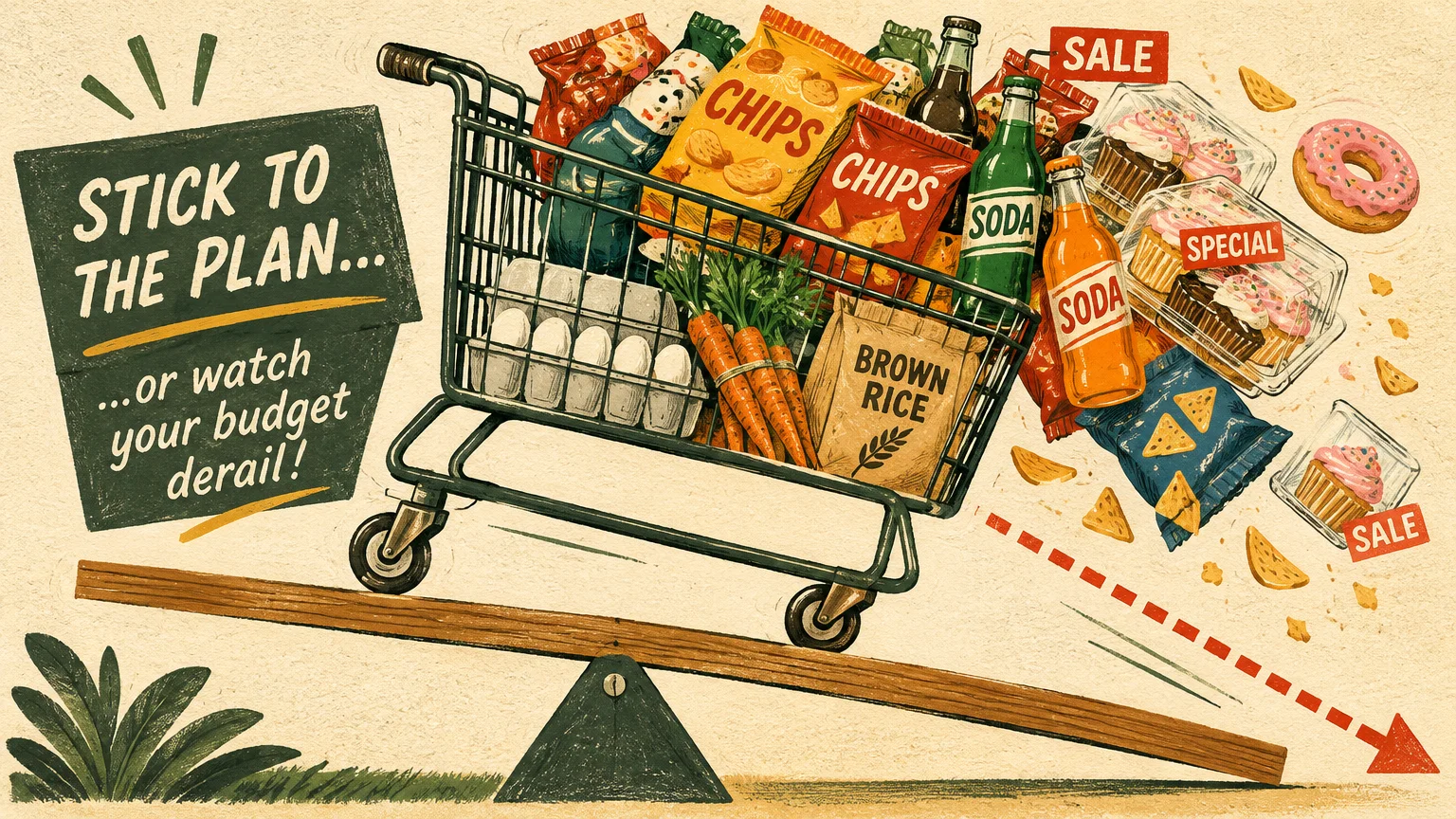
Common Money Traps That Erase Weekly Savings
Supermarkets design weekly promotions to trigger emotional spending alongside legitimate bargains. Watching out for these common pitfalls keeps your grocery savings inside your bank account.
Switching Brands Only Because a Coupon Exists
Capital One Shopping data updated in July 2026 shows 94% of Americans use coupons or used one in the past year, and 71% have switched brands because of a coupon. While switching brands can cut costs, coupons often promote premium lines that remain pricier than store brands.
Always check the unit price per ounce on the shelf tag before redeeming a digital offer. If a $1.00 digital coupon drops a name-brand box of crackers from $4.49 to $3.49 while the store brand sells everyday for $2.29, skip the coupon.
Chasing Deals Across Multiple Stores Without Counting Fuel
Driving across town to save $1.50 on strawberries at one grocer and $2.00 on cereal at another quickly backfires. Vehicle wear, fuel costs, and an extra hour of your evening erode modest price differences.
Consolidate your weekly shopping into one or two adjacent stores along your regular commute. You can also track general household spending patterns and build realistic grocery categories using free budgeting guides from the Consumer Financial Protection Bureau (CFPB).
Falling for Endcap Illusion Pricing
Stores frequently place full-price items on bright endcap displays right beside weekly sale items. Shoppers assume everything at the end of an aisle carries a circular discount and toss extra snacks into the cart without checking the tag.
Read the fine print on every yellow or red promotional sign to verify whether the price is genuinely reduced. The Federal Trade Commission (FTC) Consumer Advice portal offers practical guidance on spotting misleading promotional pricing and managing everyday household purchases.
Buying Perishables in Bulk Without a Freezer Plan
Fresh berries, bagged greens, and deli salads cannot survive long in the refrigerator, even at 40°F or below. Grabbing two packages on a BOGO sale when your household can only finish one within four days doubles your cost per eaten serving.
Reserve multi-buy deals for items you can either freeze safely within 48 hours or store in a dry pantry. You can also review broader household money-management checklists through USA.gov Money to align grocery targets with your monthly savings goals.
Frequently Asked Questions
What is the single best day of the week to shop for grocery deals?
Wednesday is the strongest overall day to shop because chains like ALDI and Sprouts start fresh seven-day circulars and restock newly discounted items. Shopping Tuesday evening at those same stores also lets you catch final markdowns before prices reset.
Do grocery store digital coupons work without a paid membership?
Most supermarket digital coupons only require a free loyalty account tied to your phone number or store app. Paid tiers—such as Amazon Prime at Whole Foods Market or Boost at Kroger—add extra perks like Tuesday/Friday discounts or 2x points, rather than basic ad access.
Are marked-down meats with a close Sell-By date safe to buy?
Yes, provided the meat has been kept cold and smells normal. Federal food-safety guidance notes that Sell-By dates guide store display management rather than food safety; just cook or freeze ground meats and poultry within one to two days of purchase.
How much should a family of four spend on groceries each week?
Under the USDA Official Thrifty Food Plan for September 2026, a nutritious home-cooked diet costs $236.30 per week for a reference family of four. Across all household sizes, FMI reports U.S. households spent an average of $169 to $172 per week in late 2026.
Should I redeem grocery loyalty points at the register or at the gas pump?
Compare the exact dollar value per 100 points before choosing. At Kroger, 100 Points equals $1.00 off groceries or 10 cents off per gallon of fuel—so pumping 11 gallons or more gives you better value at the gas station.
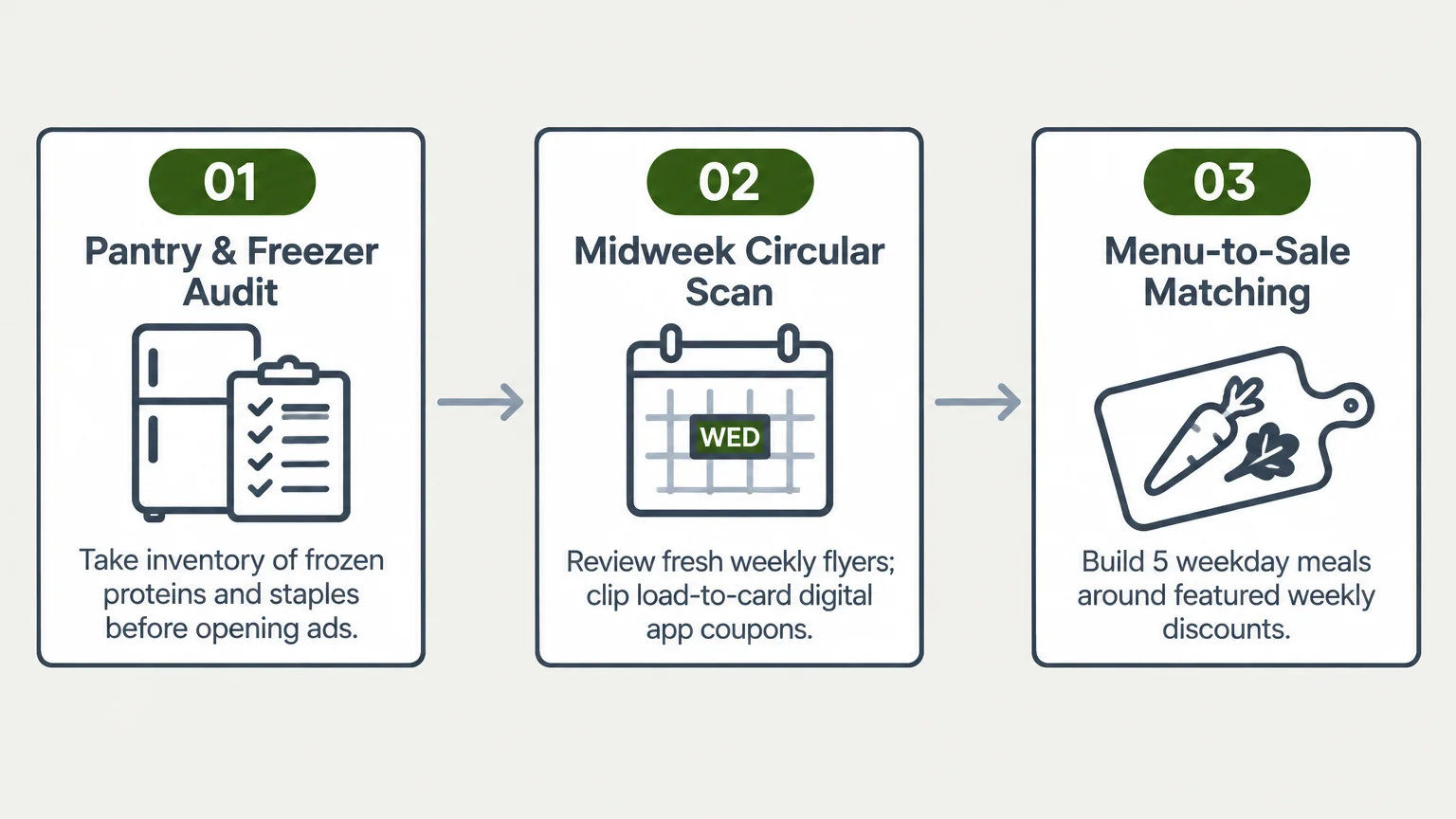
Put This Week’s Ad Calendar to Work
Pick your primary grocery store’s ad-reset day this week, spend five minutes clipping digital app coupons for your staple proteins and produce, and build your next seven dinners around the front page. Locking in even two or three recurring weekly deals frees up real monthly cash flow you can redirect straight into your emergency fund.
This article is for informational purposes only and does not constitute financial, legal, or tax advice. Rates, benefit amounts, and tax rules change regularly—verify current details with the relevant agency or a licensed professional.
Last updated: November 2026. Rates, benefit amounts, and tax rules change—always verify current details at official sources.