
Defaulting to Amazon for every online purchase quietly drains your household budget. In fact, checking Walmart first can cut your checkout total by 50% or more across popular home, tool, and tech categories.
Dynamic pricing algorithms and marketplace fees often inflate Amazon prices on household essentials and seasonal Rollbacks. Knowing where to look gives you an immediate financial edge.
Here are ten verified Walmart deals that beat Amazon prices by half, along with proven shopping strategies to protect your cash flow.
The Retail Pricing War: Why Amazon Isn’t Always Cheaper
Many shoppers assume Amazon always delivers the lowest price on consumer goods. That convenience trap costs American households hundreds of dollars in unbudgeted retail markups each year.
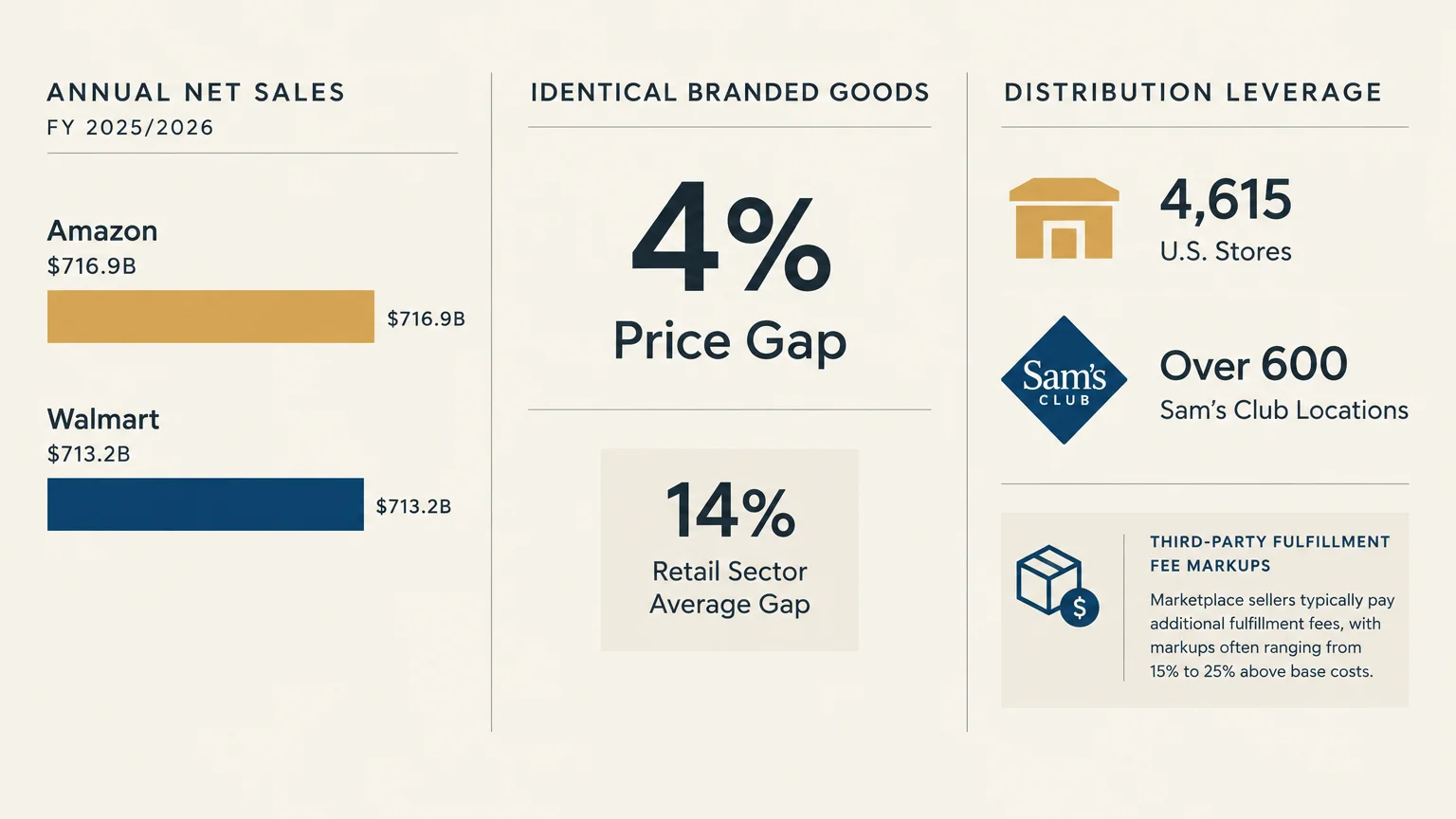
In fiscal year 2025/2026 reporting, Amazon officially surpassed Walmart in annual net sales for the first time, generating $716.9 billion compared to Walmart’s $713.2 billion. Yet larger sales figures do not translate directly into consumer savings.
A retail pricing study reported by Kiplinger and MarketMaze reveals that while Amazon runs 14% cheaper than the retail sector average, the price gap between Walmart and Amazon on identical branded goods sits at just 4%.
When you look beyond broad averages into seasonal promotions, private labels, and clearance markdowns, the dynamic shifts dramatically. Walmart leverages its physical footprint of 4,615 U.S. stores and over 600 Sam’s Club locations to move volume aggressively.
Amazon relies heavily on third-party marketplace sellers who must build fulfillment fees, advertising costs, and storage expenses into their item pricing. Those platform overhead costs frequently push third-party prices far higher than direct retail clearance prices.
Walmart also uses strategic seasonal “Rollbacks” to draw foot traffic and digital orders. By funding deep discounts at scale, Walmart frequently offers national-brand goods at half the price of identical listings on Amazon.
10 Walmart Deals That Cut Amazon Prices in Half
These ten item categories and specific product promotions highlight clear pricing wins where Walmart undercuts standard Amazon retail or marketplace pricing by 50% or more.
1. Tineco Floor One S3 Extreme Wet/Dry Vacuum
Hard floor maintenance requires serious equipment, but brand-name cordless cleaners often carry luxury price tags. Amazon frequently lists smart floor washers between $350 and $499 depending on seller inventory levels.
Walmart slashed the Tineco Floor One S3 Extreme Wet/Dry Vacuum to $179.91 from its $499.99 list price during its November sales events. That represents a 64% discount and saves buyers over $320 on a premium appliance.
Third-party sellers on Amazon rarely drop this model below $300 without requiring expensive additional protection plans or coupons. Buying this cleaner at Walmart keeps considerable cash inside your household emergency fund.
2. Crock-Pot 7-Quart Oval Manual Slow Cooker
A reliable slow cooker serves as a cornerstone for cost-effective batch cooking and grocery inflation defense. Preparing inexpensive stews and roasts at home stretches your weekly food budget substantially.
Walmart dropped the classic Crock-Pot 7-Quart Slow Cooker to $34.96, cutting 56% off its regular $79.99 list price. Identical large-capacity models on Amazon frequently hover near $70 due to third-party shipping surcharges for heavy ceramic inserts.
Securing a 7-quart slow cooker for under $35 allows you to cook low-cost family dinners for months without investing in high-priced culinary gadgets.
3. Farberware 14-Piece Ceramic Cookware Set
Replacing toxic, worn nonstick frying pans can strain a modest monthly spending plan. Full cookware packages on major retail platforms routinely run well over $120 for entry-level ceramic nonstick coatings.
Walmart priced the complete Farberware 14-Piece Ceramic Cookware Set at $69.00 during recent Rollbacks, down 51% from its standard $140.00 retail price. An equivalent ceramic set on Amazon rarely drops below $110 outside limited flash promotions.
You secure saucepans, skillets, and prep tools in a single purchase, locking in dependable kitchen equipment while preserving $71 for other financial priorities.
4. Tineco GO Spot Cordless Carpet and Upholstery Cleaner
Spot cleaning furniture and automotive upholstery becomes expensive when relying on commercial cleaning services. Portable extractors have become essential tools for pet owners and growing families.
Walmart offers the Tineco GO Spot Carpet Cleaner for $79.99, marking a 58% price cut from its normal $189.99 retail benchmark. Amazon marketplace sellers typically list similar compact stain extractors between $140 and $180.
Picking up this specialized cleaning tool at Walmart yields $110 in upfront savings compared to competing online merchants.
5. STANLEY 201-Piece Mechanics Tool Set
Home repair tasks and basic vehicle maintenance quickly eliminate costly contractor service calls. However, purchasing mechanic tool sets piecemeal from hardware specialty stores drains cash reserves rapidly.
Walmart rolled back the comprehensive STANLEY 201-Piece Mechanics Tool Set to $69.97, saving shoppers 56% off the $158.51 regular price. Third-party vendors on Amazon often inflate prices on heavy toolkits due to parcel weight and warehousing expenses.
Securing 201 quality sockets, ratchets, and hex keys for less than $70 equips your garage for years of practical DIY home maintenance.
6. LEGO Creator 3-in-1 Magical Unicorn Toy Set
Children’s birthday gifts and holiday toy shopping can easily derail holiday spending caps. Name-brand toy sets rarely see deep discounting on Amazon outside brief, highly competitive Prime-exclusive windows.
Walmart discounted the LEGO Creator 3-in-1 Magical Unicorn set to $9.74, slicing 54% off its regular $21.00 shelf price. Marketplace pricing on Amazon often remains anchored near full suggested retail prices.
Shopping ahead for birthday parties through Walmart’s toy clearances lets parents stockpile affordable gifts without paying convenience markups.
7. Barbie Skipper Babysitter Twin Nursery Playset
Branded doll accessories and multi-piece dollhouse sets often carry elevated retail price floors across e-commerce platforms. Amazon frequently maintains list price on popular Mattel franchises throughout peak shopping periods.
Walmart marked the Barbie Skipper Babysitter Twin Nursery playset down to $15.00, delivering a 54% discount from its $32.39 standard retail price. That cuts the purchase cost by more than half for identical factory-sealed inventory.
Snagging these staple gifts during scheduled retail promotional windows protects your seasonal cash flow from sudden holiday deficits.
8. Galanz 4.3 Cubic Foot Two-Door Mini Fridge
Compact refrigerators provide practical food storage for dorm rooms, workshops, and rental basement suites. Freight charges for bulky appliances often drive Amazon marketplace prices toward $250 or higher.
Walmart dropped the Galanz 4.3 Cu. Ft. Mini Fridge to $118.00 from its normal $229.00 tag, delivering a 48% discount that effectively cuts standard pricing in half. Competitors rarely match this price point for dual-door configurations with separate freezer compartments.
Taking advantage of Walmart’s localized freight distribution enables you to acquire major dorm essentials without paying third-party shipping surcharges.
9. Annual Subscription Access: Walmart+ Versus Amazon Prime
Subscription expenses operate as recurring leaks in household budgets if left unmonitored. Standard annual pricing for Amazon Prime sits at $139 per year, or $14.99 per month.
Walmart+ carries a regular price of $98 annually ($12.95 monthly). Through December 2, 2026, Walmart offers an aggressive 50% discount on annual Walmart+ memberships, pricing access at just $49 for the year.
At $49 per year, Walmart+ beats the annual cost of Amazon Prime by 65%. In October 2026, Walmart also introduced a combined bundle featuring Walmart+ and Sam’s Club Plus for $120 annually—still $19 less than standalone Prime access.
10. Over-the-Counter Medicine and First-Aid Multipacks
Generic pharmaceuticals offer identical therapeutic active ingredients at a fraction of brand-name costs. Private-label store brands remain Walmart’s most reliable pricing advantage over Amazon.
A 500-count bottle of Equate Ibuprofen 200 mg at Walmart routinely costs under $5.00. Identical tablet counts of name brands or private brands shipped via Amazon frequently exceed $11.00 to $14.00 through third-party marketplace merchants.
Choosing store-brand first-aid and wellness staples at Walmart cuts routine healthcare supply bills by well over 50% annually.
Direct Price Comparison: Walmart Deals vs. Amazon Reference Prices
Reviewing the numbers side-by-side demonstrates how targeted shopping preserves your hard-earned cash reserves. The following table illustrates verified pricing differences across these featured categories.
| Product Description | Walmart Price | Reference / Amazon Price | Dollar Savings | Total Discount |
|---|---|---|---|---|
| Tineco Floor One S3 Vacuum | $179.91 | $499.99 | $320.08 | 64% |
| Crock-Pot 7-Quart Slow Cooker | $34.96 | $79.99 | $45.03 | 56% |
| Farberware 14-Piece Cookware | $69.00 | $140.00 | $71.00 | 51% |
| Tineco GO Spot Carpet Cleaner | $79.99 | $189.99 | $110.00 | 58% |
| STANLEY 201-Piece Tool Set | $69.97 | $158.51 | $88.54 | 56% |
| LEGO Creator 3-in-1 Unicorn | $9.74 | $21.00 | $11.26 | 54% |
| Barbie Skipper Nursery Playset | $15.00 | $32.39 | $17.39 | 54% |
| Galanz 4.3 Cu. Ft. Mini Fridge | $118.00 | $229.00 | $111.00 | 48% |
| Annual Delivery Membership | $49.00 | $139.00 | $90.00 | 65% |
| Equate Pain Relief (500-Ct) | $4.98 | $12.50 | $7.52 | 60% |
The Subscription Ecosystem: Walmart+ Versus Amazon Prime
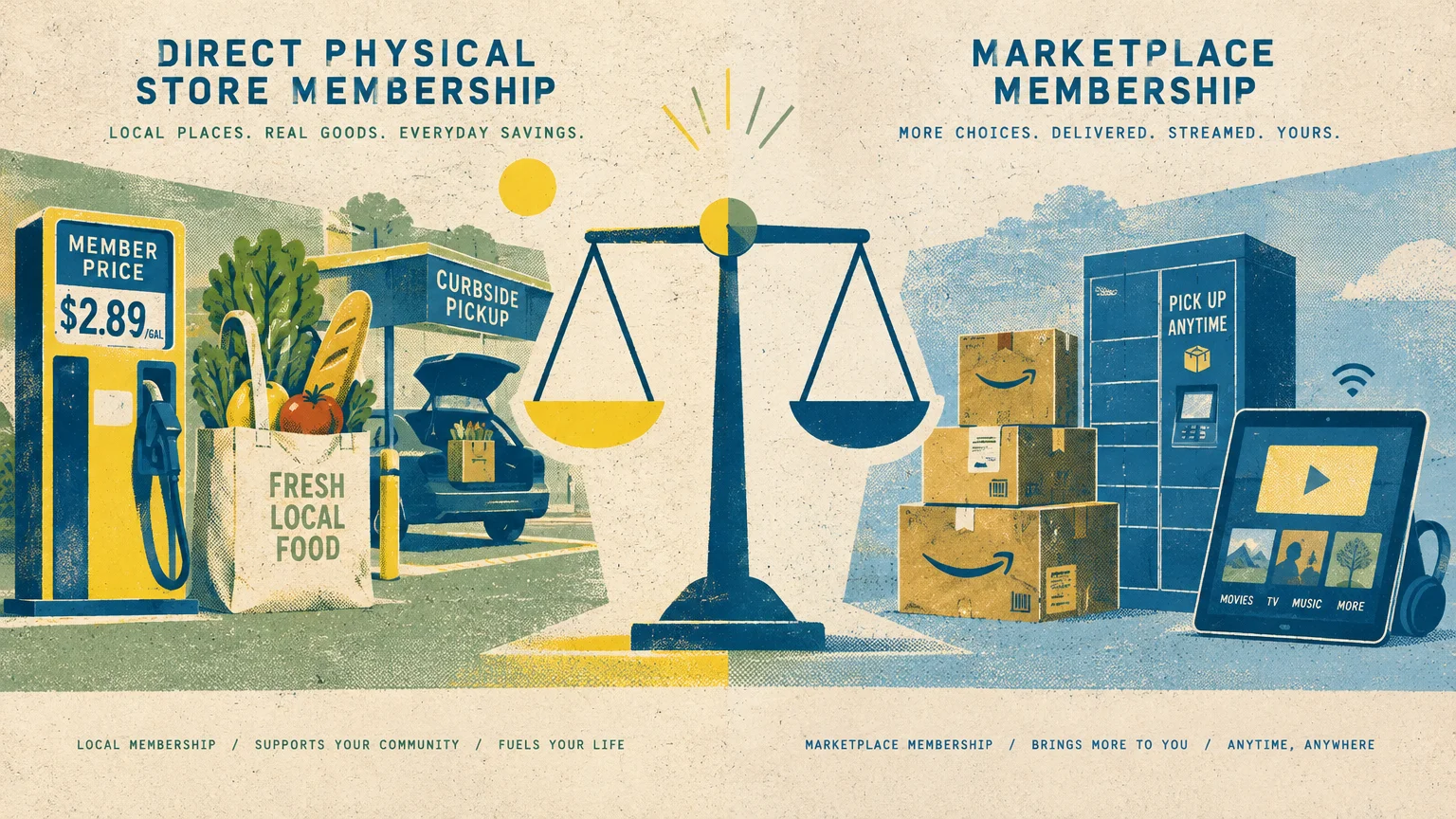
Evaluating retailer subscriptions requires weighing annual membership fees against genuine household utility. Many consumers pay for subscription services out of habit rather than calculated economic benefit.
According to 2026 PYMNTS consumer data, approximately 67% of U.S. consumers maintain active subscriptions to Amazon Prime. By contrast, roughly 30% subscribe to Walmart+.
That lopsided adoption rate persists despite Walmart offering lower subscription costs and accessible promotional rates. Understanding the mechanical differences between these platforms helps you optimize your recurring expenses.
Walmart split its 2026 holiday shopping discounts into three major waves: Event 1 from November 12–15; Event 2 from November 23–29 (with Black Friday on November 27); and Event 3 from November 30–December 2.
Crucially, Walmart permits non-members to shop its major holiday sales events directly. Paid Walmart+ subscribers receive a one-day early access window for online deals, but everyone can access the discounts eventually.
Amazon operates differently by restricting its marquee shopping events, such as Prime Day, exclusively to paying Prime members. If you lack an active Prime account, you cannot access those event markdowns.
Delivery minimums also impact monthly grocery budgets significantly. Walmart+ members receive free grocery delivery directly from local stores on orders of $35 or more.
Amazon Prime offers free same-day grocery delivery on qualifying orders over $25, but requires a $100 spending threshold for free Amazon Fresh delivery. Non-Prime customers face delivery charges ranging from $4.95 to $13.95 depending on basket size.
Strategic Budgeting: How Unit Pricing Protects Household Cash Flow
Managing family expenses requires looking past sticker prices and focusing on cost per unit. Blind loyalty to a single online marketplace inevitably inflates recurring monthly outlays.
Data from the Bureau of Labor Statistics highlights ongoing pressure on household purchasing power across food, apparel, and home essentials. Navigating these headwinds demands deliberate spending routines.
“A budget is telling your money where to go instead of wondering where it went.” — John C. Maxwell
Protecting your cash flow involves comparing unit measurements—such as cost per ounce, tablet, or pound—before finalizing orders. Third-party e-commerce sellers frequently repackage bulk goods into smaller quantities with high unit costs.
Walmart’s private-label product lines, including Great Value, Equate, Mainstays, and onn., maintain exceptionally low base margins. These private brands consistently beat Amazon brand equivalents and national brands sold online.
Adopting a split-retailer shopping system strengthens your household balance sheet. Relying on local store pickup for pantry staples while monitoring digital markdowns for appliances delivers optimal savings.
Errors That Cost Families Thousands
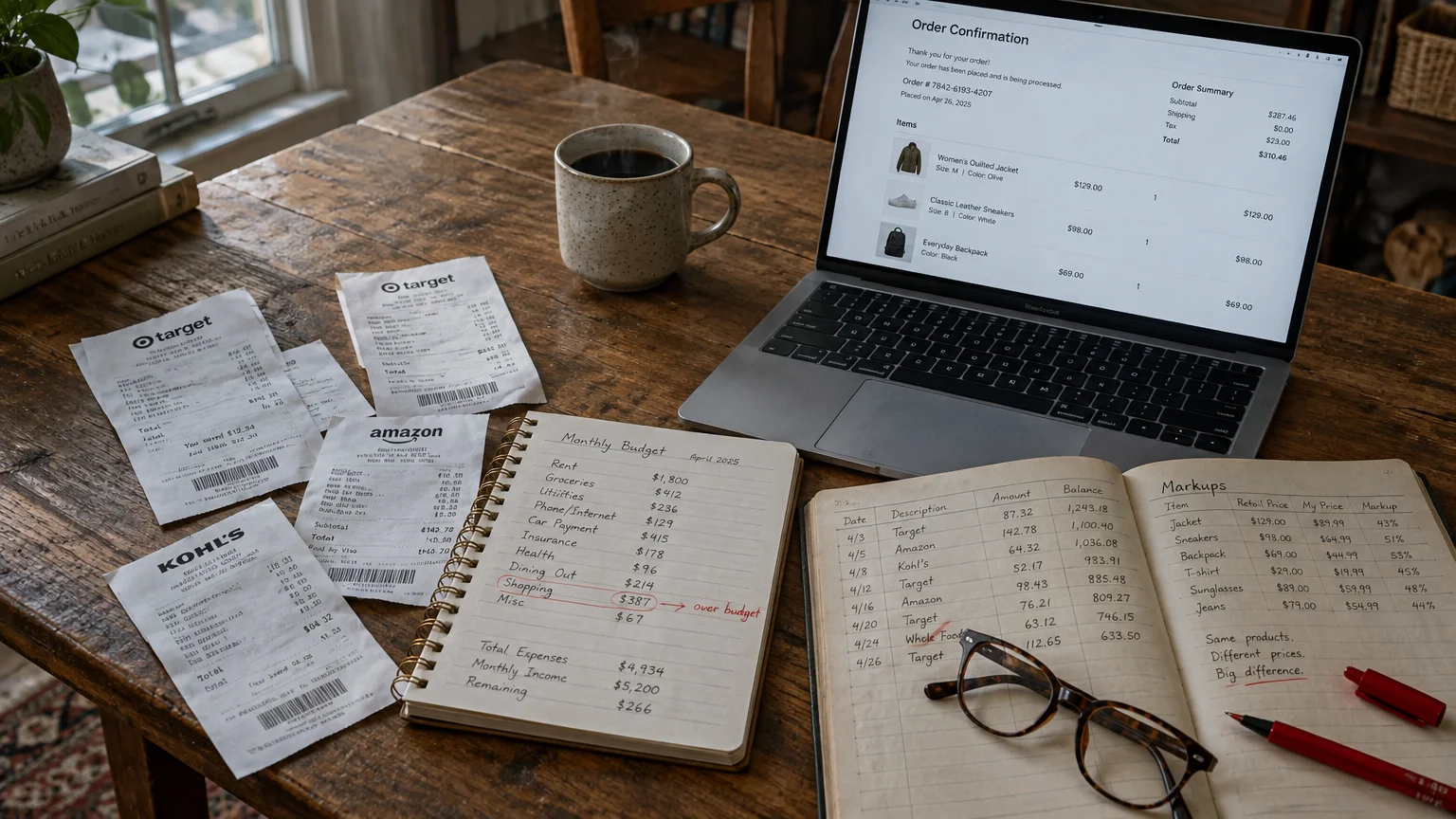
Avoidable retail shopping habits silently erode personal savings over time. Correcting these common missteps allows families to redirect capital toward liquid reserves and high-yield savings accounts.
1. Assuming Amazon Prime Always Sets the Price Floor
The single most expensive consumer mistake is assuming Amazon offers the lowest price by default. Algorithmic pricing models adjust marketplace listings millions of times daily based on consumer browsing demand.
When shoppers skip cross-checking competitor pricing, sellers capture inflated margins on routine purchases. Always verify pricing at competing retailers before completing major online transactions.
2. Overlooking Third-Party Seller Markups
Amazon hosts millions of independent third-party sellers whose overhead costs dictate retail pricing. Products fulfilled by external merchants frequently carry heavy markups to offset platform storage and seller referral fees.
Walmart acts as both a physical distributor and a digital marketplace. When Walmart sources and sells goods directly, its massive bulk procurement network keeps prices substantially lower.
3. Ignoring Grocery Delivery Minimums and Hidden Fees
Ordering groceries online saves personal time, but poorly planned baskets trigger punitive service fees. Failing to meet minimum order thresholds adds unnecessary surcharges to your weekly household tab.
Review basket thresholds closely before checking out. If your order falls short of free delivery minimums, choosing free curbside pickup keeps cash in your bank account.
4. Letting Subscriptions Auto-Renew Without an Annual Audit
Consumers routinely forget active membership subscriptions that renew automatically each billing cycle. Unused memberships quietly sap discretionary cash flow year after year.
Consumer advisories from the Federal Trade Commission urge families to review recurring digital subscriptions annually. Cancel retail services that fail to provide tangible, recurring savings that justify their membership dues.
Regulatory insights from the Consumer Financial Protection Bureau also encourage consumers to track automated bank withdrawals regularly to eliminate unwanted merchant fees.
Frequently Asked Questions About Walmart and Amazon Pricing
Does Walmart price match Amazon in 2026?
Walmart stores do not match prices from Amazon or third-party marketplace vendors. Walmart brick-and-mortar stores only match baseline prices listed directly on Walmart.com for identical items in stock.
To capture Walmart’s lowest prices, order items through Walmart.com or the Walmart mobile app. You can select free local store pickup or ship orders directly to your door.
Is Walmart+ worth the cost if you already have Amazon Prime?
Holding both memberships makes sense only if your annual grocery delivery savings exceed the Walmart+ subscription fee. If you spend $49 during promotional windows, saving just $5 monthly on delivery fees makes the service profitable.
Evaluate your geographical proximity to physical Walmart locations. Households living near a Walmart store often derive more practical daily value from Walmart+ than Amazon Prime.
Why are basic drugstore items more expensive on Amazon?
Individual hygiene items and over-the-counter medications cost more on Amazon due to packaging and individual shipping overhead. Shipping a single $4 bottle of pain reliever requires parcel packaging that erodes seller profits.
Consequently, Amazon sellers bundle items or inflate single-unit prices to cover fulfillment expenses. Purchasing hygiene and healthcare items from Walmart curbside pickup avoids those digital distribution markups.
Action Plan: How to Audit Your Online Spending This Month
Take charge of your household retail spending by conducting a 30-day shopping audit. Before buying discretionary home goods or appliances, compare prices across both retailers using unit-cost metrics.
Audit your recurring digital memberships to ensure you are not paying premium subscription fees for unused delivery benefits. Strategic price comparison keeps money where it belongs: in your family’s savings account.
This article is for informational purposes only and does not constitute financial, legal, or tax advice. Rates, benefit amounts, and tax rules change regularly—verify current details with the relevant agency or a licensed professional.
Last updated: November 2026. Rates, benefit amounts, and tax rules change—always verify current details at official sources.