
Trimming your recurring household expenses right now creates immediate breathing room before winter utility spikes hit your checking account. Making three strategic phone calls this week can safely liberate $100 to $200 in monthly cash flow.
Most service providers count on customer inertia; they quietly raise rates every single autumn, assuming you will never challenge the invoice. You hold far more leverage than you realize.
This guide reveals how to slash your broadband, auto insurance, and home energy expenses before freezing weather arrives. We provide exact word-for-word scripts that get real results.
The Looming Winter Utility Squeeze on Household Cash Flow
Colder weather consistently drains household budgets across the United States. Preparing your finances in advance prevents seasonal deficits from derailing your long-term goals.
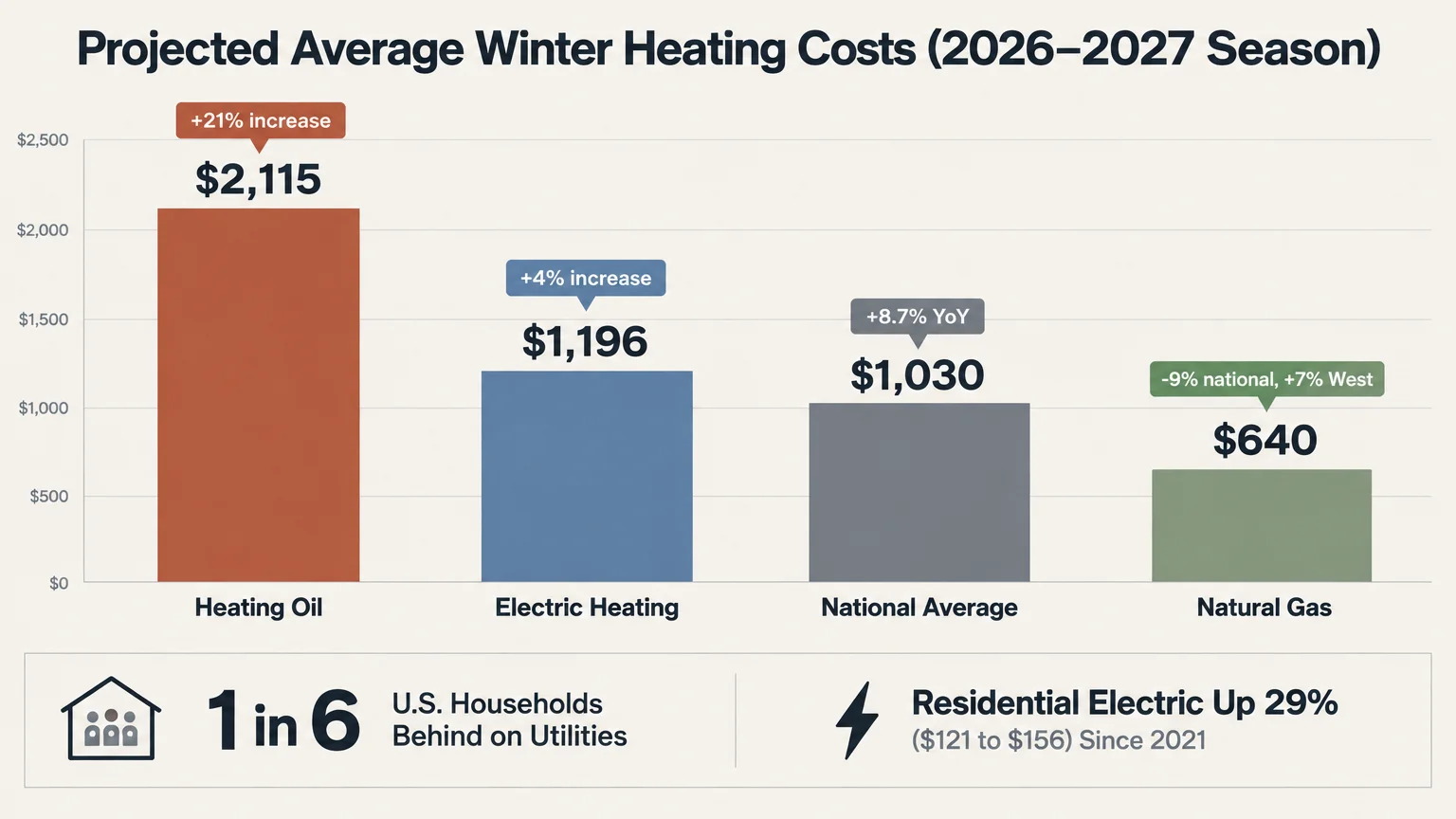
The U.S. Energy Information Administration projects a dramatic divide in household heating expenses for the 2026–2027 winter season. Families relying on heating oil face an expected 21% jump, driving average seasonal costs to $2,115.
Electric heating bills will rise roughly 4% to an average of $1,196. While natural gas costs may decrease 9% nationally to $640, western states face a projected 7% increase due to severe regional cold spells.
Data from the National Energy Assistance Directors Association indicates that overall home heating costs will average $1,030 this winter. That represents an 8.7% jump over last year.
NEADA also reports that roughly 1 in 6 American households is currently behind on their utility bills. Rising baseline energy rates have exacerbated this burden significantly over recent years.
Between 2021 and 2025, the average monthly residential electric bill climbed nearly 29%, rising from $121 to $156 per month. According to expenditure surveys from the Bureau of Labor Statistics, fixed utility costs now consume an expanding portion of middle-class earnings.
“A budget is telling your money where to go instead of wondering where it went.” — John C. Maxwell
You cannot control global fuel supply chains or regional weather patterns. You can, however, aggressively reduce your other fixed monthly commitments before these winter invoices arrive.
Bill #1: Home Internet and Broadband Services
High-speed internet is an essential utility for remote work, education, and household management. It is also one of the easiest monthly expenses to negotiate downward.
Broadband providers rely on promotional expiration schedules to boost their margins. A customer signs up for a discounted rate, forgets the calendar date, and absorbs quiet price increases indefinitely.
In 2026, the national average monthly broadband bill sits at $81.16, with some service analyses reporting typical bills as high as $91.27. That adds up to roughly $1,000 annually per household.
A recent industry survey found that 47% of American adults experienced an internet price hike over the past twelve months. Those increases averaged $16.58 more per month, quietly adding nearly $200 to yearly expenses.
Federal regulations now require internet providers to display standardized Broadband Consumer Labels showing speed tiers, introductory discounts, and post-promotional rates. These disclosures give you total transparency when negotiating.
Under an FCC rule update, customer service agents on the phone can provide conversational summaries of these pricing terms. You can demand those clear figures immediately during your call.
Pre-Call Preparation for Internet Providers
Before dialing customer service, spend five minutes researching competing broadband providers in your zip code. Note their advertised introductory prices, download speeds, and equipment rental fees.
Log in to your provider account to view your recent billing statements. Identify your base subscription rate, modem rental charges, and any unbundled add-ons you no longer use.
If you currently pay $15 monthly for a leased router, consider purchasing your own compatible hardware. Owning your modem pays for itself within six to eight months.
What to Say: Broadband Negotiation Script
Call your provider’s main support number and immediately choose the prompt for “canceling service” or “downgrading service.” This routes your call directly to customer retention agents who possess authorized discount codes.
You: “Hello, my name is Alex. I am auditing my household bills before winter and noticed my monthly rate jumped from $55 to $85.”
Representative: “I see your initial twelve-month promotional discount expired on your last statement.”
You: “I understand that, but local competitors currently offer 500-megabit speeds for $50 per month with no equipment fees. I prefer to stay with you, but I cannot justify paying $35 more each month.”
Representative: “I understand. Let me check if we have any standard speed promotions available for your area.”
You: “Thank you. Please review your retention offers or loyalty credits; if we cannot match that $50 rate, I need to schedule a disconnection date for next Friday.”
Representative: “I found an active loyalty promotion for existing customers that lowers your monthly cost to $55 for the next twelve months.”
You: “That works well. Please confirm that this rate includes my current speeds and send an updated service confirmation to my email before we disconnect.”

Bill #2: Auto Insurance Premiums
Auto insurance costs skyrocketed across the country over the last two years, catching millions of household budgets off guard. Premium hikes averaged 17.13% in 2024 and jumped another 7.56% in 2025.
Fortunately, auto insurance rates stabilized across the country in 2026, rising just 0.67% nationwide. In fact, premiums actually dropped in more than half of all U.S. states.
That pricing stabilization creates an exceptional opportunity for drivers to renegotiate renewals or shop the market. The national average cost for full coverage sits at $208 per month, while minimum liability averages $76 monthly.
Insurers often apply price optimization models, meaning they gradually raise premiums on customers who rarely comparison-shop. Challenging your premium disrupts that pricing cycle.
The Federal Trade Commission provides comprehensive guidance on avoiding deceptive fees and unfair add-ons during policy renewals. Reviewing your policy line by line protects your bottom line.
Key Levers to Lower Your Auto Premium
Insurers price policies based on risk metrics, but lifestyle changes can significantly lower your risk score. Informing your carrier about these changes triggers meaningful discounts.
- Annual Mileage Adjustments: If you transitioned to hybrid or remote work, report your lower annual commuting mileage immediately.
- Deductible Restructuring: Increasing your comprehensive and collision deductibles from $500 to $1,000 can lower annual premiums by 10% to 15%.
- Defensive Driving Courses: Many states mandate insurance discounts of 5% to 10% for completing an approved online driver safety refresher.
- Affiliation Discounts: Ask about non-advertised discounts for alumni associations, professional unions, credit unions, or civic organizations.
What to Say: Auto Insurance Negotiation Script
Contact your current insurance carrier or independent agent roughly thirty days before your semi-annual or annual renewal date. Keep your current declarations page open in front of you.
You: “Hello, my renewal invoice arrived, and I want to review my account discounts to keep my coverage affordable this winter.”
Representative: “Certainly, I can look over your current policy details right now.”
You: “First, my commute changed, and I now drive only 7,500 miles annually instead of 14,000. Let’s update my primary rating tier to reflect low-mileage usage.”
Representative: “I updated your mileage classification, which immediately reduces your premium by $14 per month.”
You: “Excellent. I also obtained a comparable quote from another carrier for identical liability and collision limits at $45 less per month. What policy bundling or customer retention discounts can we apply today?”
Representative: “If we adjust your comprehensive deductible to $1,000 and apply our safe-driver loyalty discount, your monthly premium drops by a total of $38.”
You: “That keeps my policy competitive. Please email me the revised declarations page showing those exact coverage limits and the new premium.”
Bill #3: Electric and Natural Gas Utility Services
Many consumers assume that public utility bills are non-negotiable. While you cannot negotiate baseline kilowatt-hour distribution tariffs, you can restructure your billing schedule and eliminate excess fees.
The simplest method to stabilize your winter utility bills is enrolling in Levelized or Budget Billing. This free program averages your previous twelve months of energy consumption across equal monthly payments.
Instead of enduring $300 heating invoices in January followed by $70 bills in May, you pay an even $145 each month. This structural smoothing shields your winter emergency fund from seasonal shocks.
Homeowners in states with deregulated retail energy markets can also choose their underlying power generator. Shopping the competitive supply market can lock in lower generation rates before peak winter demand hits.
If your household income qualifies, federal energy assistance programs can provide substantial relief before temperatures drop. For the 2026–2027 season, the federal government released $3.63 billion in initial Low Income Home Energy Assistance Program (LIHEAP) funds.
LIHEAP eligibility caps federal income limits between 110% and 150% of Federal Poverty Guidelines, covering up to $49,500 for a family of four. Check program criteria through USA.gov to verify state-administered benefits.
Critical Policy Update: Federal Tax Credits Expired
Many homeowners plan winter energy efficiency upgrades expecting federal tax offsets. Do not count on the federal Energy Efficient Home Improvement Credit (Section 25C) this winter.
While previously scheduled to run through 2032, federal legislation (Public Law 119-21) terminated the credit early on December 31, 2025. You cannot claim Section 25C federal credits for equipment or weatherization installed in 2026.
Instead of relying on federal tax write-offs, ask your utility representative about direct utility-level equipment rebates and weatherization credits. Many local gas and electric companies provide free smart thermostats and discounted attic insulation programs.
What to Say: Utility Company Budget and Rate Script
Dial your electric or natural gas provider’s customer service department during regular morning business hours. Ask to speak with a billing specialist regarding rate plans and energy efficiency rebates.
You: “Hello, I am reviewing my upcoming winter energy costs and want to optimize my account billing structure.”
Representative: “I can certainly help you review your account options and payment programs.”
You: “First, I would like to enroll in your budget billing program to balance my seasonal payments into predictable monthly installments.”
Representative: “I can set that up for you right now. Based on your historical usage, your fixed monthly payment will be $132.”
You: “Thank you. Second, what time-of-use rate schedules do you offer that could lower my off-peak electricity rates this winter?”
Representative: “We offer a flexible time-of-use plan that cuts rates by 35% between 9:00 PM and 6:00 AM if you shift heavy appliance use.”
You: “Let’s review if that makes sense for my household. Also, does the utility offer direct rebates for programmable thermostats or free home energy audits?”
Representative: “Yes, we offer a $75 instant rebate on smart thermostats and provide a free digital home energy audit with free weatherstripping materials.”
Estimated Annual Household Savings Potential
Auditing these three primary expenses takes less than two hours of total phone time. The compounding financial returns provide substantial relief for everyday cash flow.
The table below illustrates realistic monthly and annualized savings across these three service categories for a typical American household in 2026.
| Expense Category | 2026 National Monthly Average | Realistic Monthly Reduction | Estimated Annual Cash Saved |
|---|---|---|---|
| Home Broadband Internet | $81.16 – $91.27 | $20.00 – $35.00 | $240 – $420 |
| Auto Insurance (Full Coverage) | $208.00 | $30.00 – $55.00 | $360 – $660 |
| Electric & Gas Heating Management | $156.00 (Electric baseline) | $25.00 – $45.00 | $300 – $540 |
| Total Combined Impact | $445.16 – $455.27 | $75.00 – $135.00 | $900 – $1,620 |
Reallocating $1,000 or more in recurring annual overhead can fully offset seasonal heating surges. It also protects your emergency reserves during high-inflation cycles.
“Do not save what is left after spending, but spend what is left after saving.” — Warren Buffett
Automate your newfound monthly savings into a high-yield savings account the moment your bills drop. Diverting cash before you spend it ensures long-term wealth building.
Four Golden Rules for Successful Bill Negotiation
Negotiating recurring bills is an acquired skill that requires practice and patience. Following structured negotiation protocols dramatically increases your chances of securing immediate discounts.
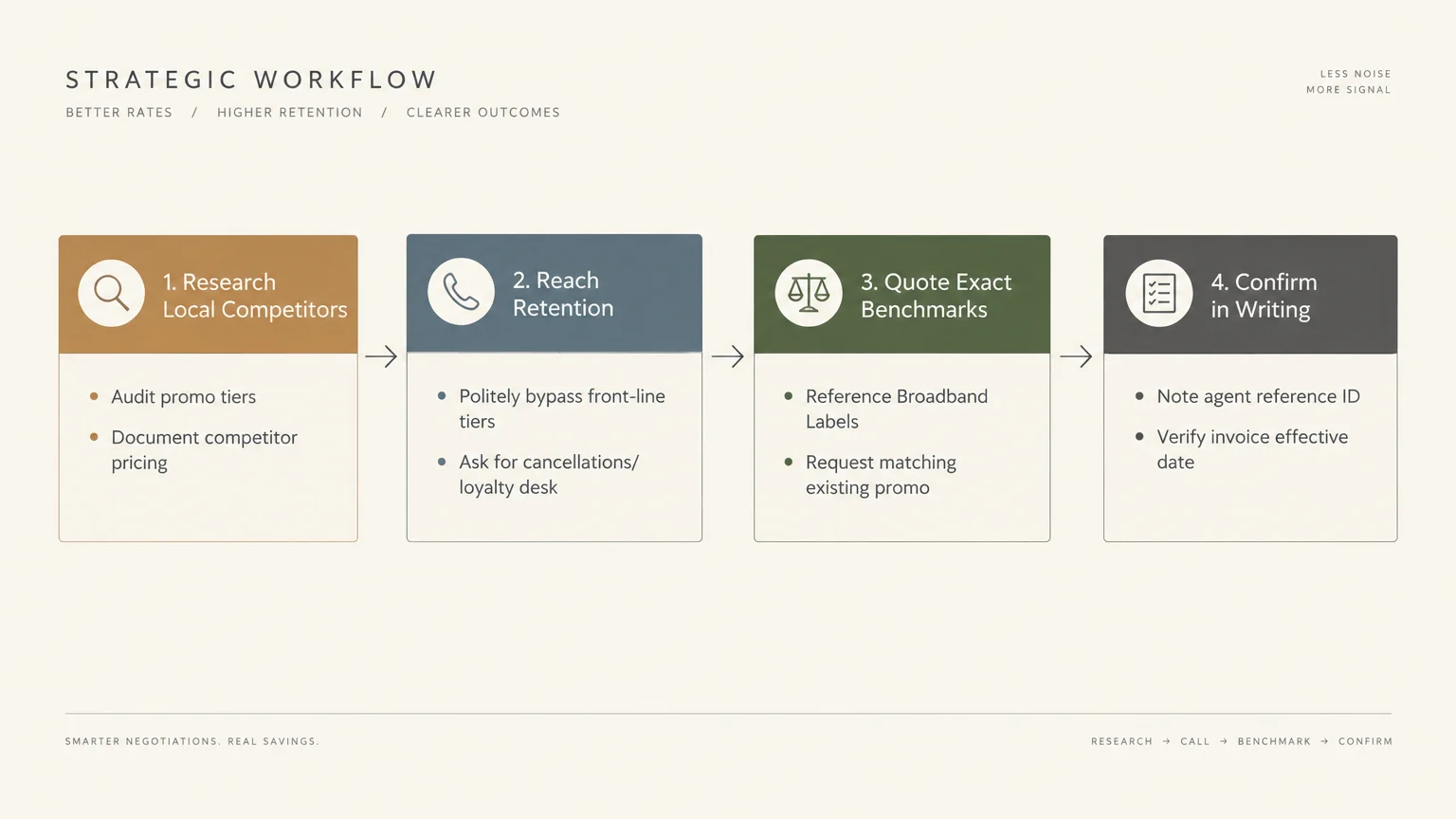
1. Always Reach the Retention Department
Front-line customer service agents rarely possess authorization to offer significant promotional discounts. Their primary job is answering operational questions and handling general payments.
Retention representatives, however, are evaluated on customer preservation metrics. They control dedicated promotional tiers, billing credits, and rate discounts designed to prevent account cancellations.
2. Anchor Your Request with Competitor Pricing
Never call a service provider simply asking for a vague price cut. Always cite specific dollar amounts and promotional offers from direct competitors operating in your service area.
Quoting exact prices proves you are an informed consumer prepared to switch providers. It forces the representative to match real market conditions.
3. Master the Power of Strategic Silence
After stating your request and naming your competitor rate, stop talking. Wait patiently for the representative to review their computer system and respond.
Amateur negotiators often fill uncomfortable silence by backpedaling or weakening their demands. Polite, confident silence encourages the agent to search harder for authorized credits.
4. Demand Confirmation in Writing
Never conclude a negotiation call without obtaining a reference confirmation number and a revised billing statement via email. Verbal promises frequently fail to appear on subsequent invoices.
Verify that your new discount rate does not quietly introduce unexpected administrative fees or restrictive contract lock-ins. Thorough verification guarantees your savings materialize.
Common Money Traps to Avoid When Cutting Overhead
In your effort to reduce monthly overhead, avoid making hasty adjustments that compromise your financial security. Watch out for these common consumer traps.
Trap 1: Sacrificing Crucial Auto Insurance Coverage
Dropping down to state-minimum liability coverage may save a few dollars per month, but it exposes your household to catastrophic risk. A single at-fault collision can trigger devastating lawsuits and asset garnishment.
Instead of slashing liability limits, reduce premiums by increasing physical damage deductibles or trimming unnecessary add-ons like roadside assistance. Maintain robust liability limits to preserve your financial foundation.
Trap 2: Predatory Third-Party Energy Suppliers
In deregulated energy markets, retail electricity and natural gas marketers often promise massive short-term discounts. These introductory teaser rates frequently transition into volatile variable rates without warning.
A variable energy contract can triple your heating rate in the middle of a January cold snap. Never sign a third-party supplier contract without checking exit fees and rate caps.
Trap 3: Assuming Online “Click-to-Cancel” Is Active
Many consumers believe federal regulations now require companies to make canceling subscriptions as simple as clicking a single button online. That convenience is not currently available.
Although the FTC finalized a federal Click-to-Cancel rule in 2024, the Eighth Circuit Court of Appeals vacated the rule in 2025 before it took effect. In March 2026, the FTC restarted the rulemaking process from scratch.
Most telecom, streaming, and insurance companies still require you to call retention agents directly to cancel or modify services. Allocate dedicated phone time to secure your savings.
Trap 4: Accepting Long-Term Equipment Lock-Ins
Broadband and security companies frequently offer small rate discounts in exchange for signing new multi-year contracts. These agreements often carry early termination penalties exceeding $200.
Avoid locking your household into lengthy service contracts when competitive fiber networks and wireless home internet options are expanding rapidly. Maintain personal flexibility whenever possible.

When to Consult a Professional
Most bill negotiations can be handled independently using basic research and phone scripts. Certain complex financial scenarios, however, warrant professional assistance.
If you face imminent utility shut-offs or severe arrears, contact a HUD-approved housing counseling agency or a local Community Action Agency. These certified counselors manage emergency fuel grants and hardship utility funds.
The Consumer Financial Protection Bureau provides free resources and complaint systems if service providers charge unauthorized fees or violate credit reporting rules. You can submit formal complaints directly through their portal.
When restructuring substantial debt or overhauling an unstable household budget, consider working with an Accredited Financial Counselor (AFC) or a fee-only financial planner. Professional cash-flow guidance delivers objective, long-term stability.
Frequently Asked Questions
How often should I negotiate my recurring household bills?
You should review your recurring household bills at least once every twelve months. Autumn is the ideal negotiation season, allowing you to reset rates before peak winter expenses arrive.
Will negotiating my bills hurt my credit score?
Negotiating existing terms with your current service providers does not affect your credit score. Only switching providers or financing new equipment that triggers a hard credit inquiry can cause a temporary credit dip.
What if the customer service representative refuses to lower my rate?
If a representative states they have no available promotions, remain polite and conclude the call. Dial back a few hours later to speak with a different agent, or request an immediate transfer to customer retention.
Can I lower my bills if I am still under a contract?
Yes, you can often negotiate promotional discounts or adjust coverage options while under an existing contract. Providers frequently permit package adjustments or loyalty credits if you maintain active service.
Audit your recurring statements this afternoon, prepare your competitive comparison data, and dial customer retention with confidence. Capturing $100 or more in monthly savings provides immediate insulation against rising winter heating costs.
Information in this article reflects rules and figures current as of the publication date and may change. Always confirm details directly with your bank, the IRS, the Social Security Administration, or other official sources before making decisions.
Last updated: November 2026. Rates, benefit amounts, and tax rules change—always verify current details at official sources.