
Planning your dream getaway should not threaten your monthly retirement cash flow. All-inclusive resorts and packaged tours provide price certainty, letting you lock in lodging, meals, and entertainment upfront.
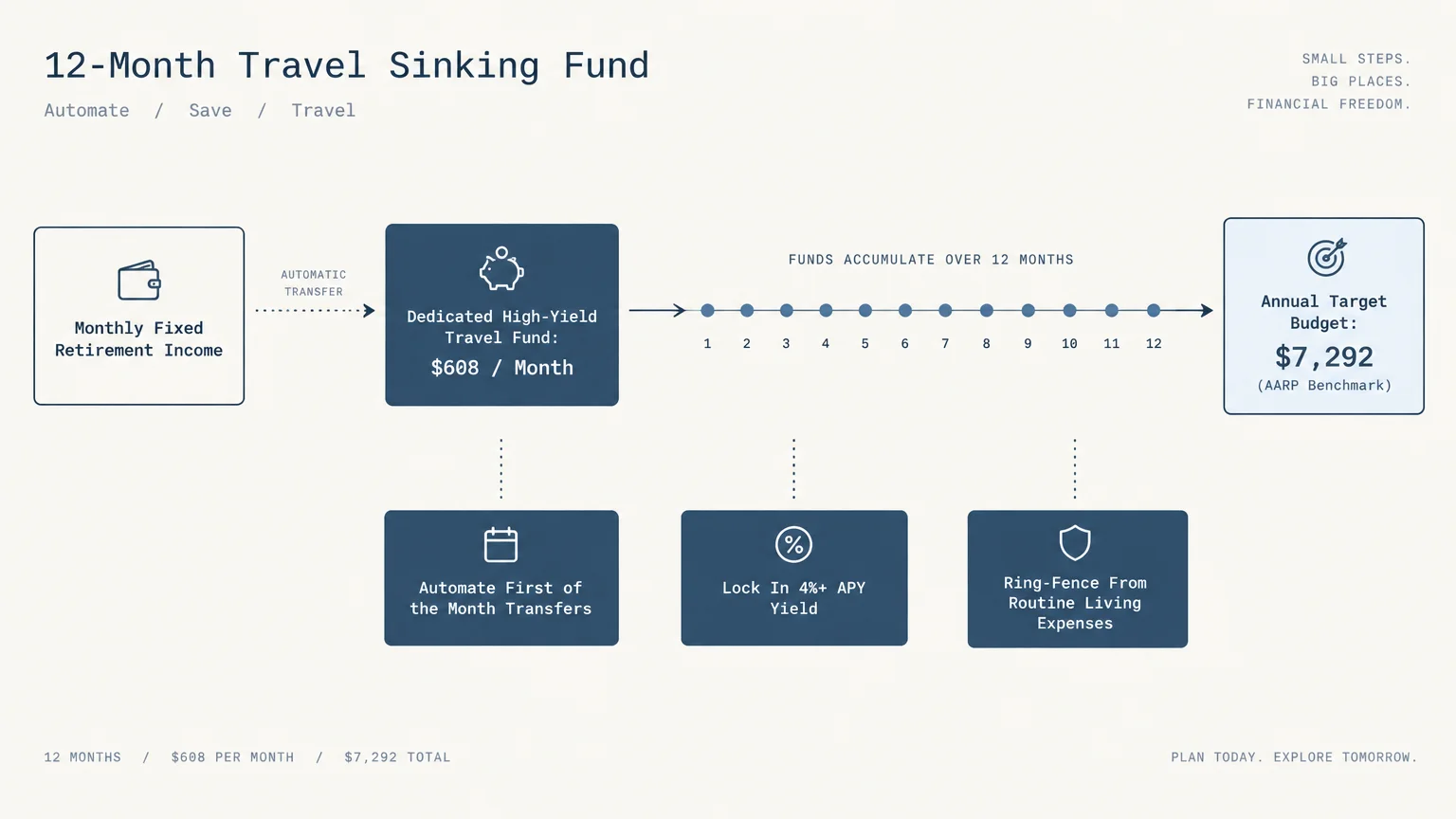
According to AARP research, older travelers allocate an average annual travel budget of $7,292, with 86% ranking trips among their highest spending priorities.
You can experience world-class destinations without draining your nest egg by targeting value-rich all-inclusive options designed for predictable spending. Here are five exceptional getaways that fit comfortably inside a realistic retirement budget.
Why All-Inclusive Travel Fits a Fixed Retirement Budget
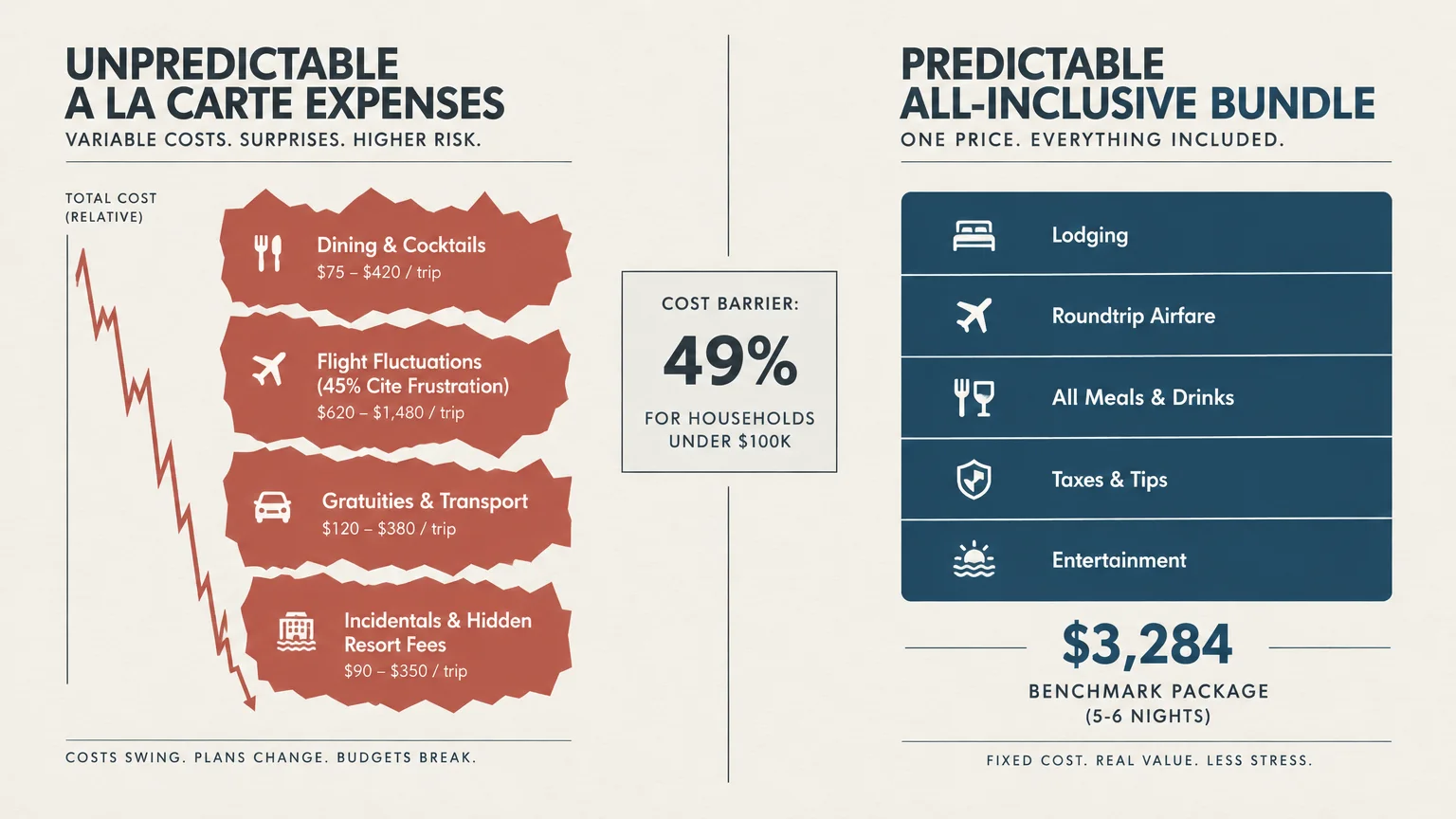
Fixed incomes demand cost predictability. Traditional travel often causes stress because incidental costs like dining, tips, and daily transport accumulate quickly throughout a trip.
All-inclusive packages solve this problem by consolidating major vacation expenses into a single payment. You know your baseline outlay before you leave home.
Cost remains the top barrier for 39% of older leisure travelers, rising to 49% for households earning under $100,000 annually. Packaging your expenses eliminates financial surprises.
Unpredictable airfare frustrates 45% of older vacationers. Bundling flights into an all-inclusive resort package often secures lower contracted airline rates than booking commercial flights alone.
Bargain hunting is common among older Americans; 89% actively search for deals, and 16% use artificial intelligence tools to find vacation discounts. Packaging remains the most dependable strategy.
The national benchmark cost for a five- to six-night all-inclusive package sits at $3,284. This average covers airfare, resort lodging, all meals, drinks, and scheduled entertainment.
“A budget is telling your money where to go instead of wondering where it went.” — John C. Maxwell
Discretionary leisure spending requires structured planning. Spending benchmarks from the Bureau of Labor Statistics show that setting spending limits prevents travel from disrupting routine household finances.
Retirees aged 60 to 69 increased their annual travel allocations by 11.6% recently. Spending those funds through all-inclusive models ensures you stay within designated limits.

1. Cancun and the Riviera Maya, Mexico
Mexico remains the most cost-effective international destination for American retirees seeking beach getaways. A five- to six-night all-inclusive package averages $3,153 across popular resort regions.
Regional rates show remarkable affordability. Average packages cost $3,097 in Cancun, $3,131 along the Riviera Maya, and $3,075 in Cabo San Lucas.
Cancun offers short, nonstop flights from dozens of American gateway airports. Minimal flight times reduce physical fatigue and limit stress for travelers managing joint discomfort.
Resorts in this corridor feature accessible infrastructure, including step-free access, elevators, and paved beach pathways. Zero-entry swimming pools make swimming safe and accessible.
Because dining and drinks are prepaid, you never worry about dinner checks. You can enjoy beachside lunches, sit-down dinners, and room service without calculating tip rates each meal.
To avoid loud crowds, book adults-only resorts or quiet club-level sections within larger properties. These quieter areas feature peaceful pools away from rowdy activity centers.
Many Mexican all-inclusive resorts provide direct doctor-on-call services and private shuttles. These amenities give travelers managing chronic health conditions added peace of mind.

2. Punta Cana, Dominican Republic
The Dominican Republic offers another high-value Caribbean escape tailored to retirement budgets. Package vacations average $3,245 for a comprehensive five- to six-night stay.
In Punta Cana, packages average $3,256, granting you access to wide white-sand beaches, calm ocean surf, and expansive resort grounds.
Most Punta Cana properties operate as secure, self-contained communities. Everything from casual cafes and fine dining to medical clinics and evening entertainment sits behind secure resort gates.
Staying on a self-contained property limits incidental ground transportation costs. You avoid paying for regional taxis or navigating unfamiliar transit networks.
Resort kitchens cater well to special dietary needs. Buffets and specialty restaurants routinely label sugar-free, low-sodium, and gluten-free items for guests with dietary restrictions.
Consider traveling during the shoulder season between mid-April and June. You will find reduced prices and enjoy uncrowded pools and cooler morning walking weather.
Select resorts also feature flat landscapes with electric cart transportation, letting you move easily between your room, the beach, and restaurants.

3. Road Scholar Educational and Cultural Tours
Not every retiree wants to spend their vacation lounging next to a swimming pool. Road Scholar provides all-inclusive learning adventures designed for curious older adults.
This non-profit educational travel organization designs programs specifically for seniors. Its dedicated budget collection includes domestic programs priced under $1,500.
If you prefer domestic exploration, a six-day cultural journey through New Orleans starts around $2,299. It includes historic accommodations, expert lectures, private museum admissions, and regional meals.
For international exploration, a nine-day educational tour through Costa Rica starts around $2,649. Commercial all-inclusive resort packages in Costa Rica average $3,948 by comparison.
Road Scholar packages include lodging, most meals, educational lectures, field trips, and all gratuities. You never deal with awkward tipping moments during group excursions.
Solo travelers benefit from fair rooming policies. Road Scholar pairs solo guests with same-sex roommates to waive single-supplement fees, or offers discounted single rooms.
Activity levels are clearly rated from easy walking to vigorous hiking. You can select an itinerary that matches your personal physical comfort level.

4. Senior-Discounted Ocean and Repositioning Cruises
Modern cruise ships function as floating all-inclusive resorts that visit multiple ports while you sleep. Your fare covers ocean transit, stateroom accommodations, meals, and theatrical entertainment.
Major cruise lines offer targeted senior discounts. Carnival, Royal Caribbean, and Celebrity Cruises offer senior rates starting at age 55 on select sailings.
These promotions usually require only one guest in the stateroom to meet the age minimum. You can book the lower rate even if your traveling companion is younger.
MSC Cruises provides a Senior Club discount of up to 10% off for staterooms where all guests are aged 65 or older. This discount applies directly to double staterooms.
Repositioning cruises provide exceptional per-day value. Cruise lines relocate ships between regions each spring and autumn, offering extended ocean crossings at substantial savings.
To keep cruise spending predictable, look for bundle promotions that cover Wi-Fi, port taxes, and crew gratuities upfront. Bundling prevents unexpected charges on your final bill.
Standard ocean cruises charge extra for alcoholic beverages and specialty dining. Sticking to main dining venues and included beverage packages protects your vacation budget.

5. Scenic Rail Journeys and National Parks
Rail travel provides an unhurried, scenic alternative to crowded airport security checkpoints and highway congestion. Packaged rail tours combine train transit, regional hotels, and park excursions.
Amtrak offers a nationwide 10% discount on standard coach rail fares for travelers aged 65 and older. This discount helps reduce regional transit costs.
On cross-border routes operated jointly with VIA Rail Canada, the 10% senior rail discount begins at age 60. This applies to popular routes connecting American and Canadian cities.
Certain regional lines offer even deeper fare discounts. You can receive a 50% discount on the Amtrak Downeaster in New England or a 15% discount on California Corridor routes.
Pair rail travel with the America the Beautiful Senior Pass. U.S. citizens and permanent residents aged 62 and older can buy an annual pass for $20 or a lifetime pass for $80.
The Senior Pass grants free entry to over 2,000 federal recreation sites for you and your vehicle passengers. It also provides a 50% discount on select camping and amenity fees.
Private rail package operators bundle Amtrak coach or sleeper travel with hotel rooms and guided excursions into national parks like Glacier, Grand Canyon, or Zion.
Comparing Your All-Inclusive Vacation Choices
Choosing the right getaway requires balancing upfront package prices against included amenities and physical accessibility. Each option meets different retirement lifestyle needs.
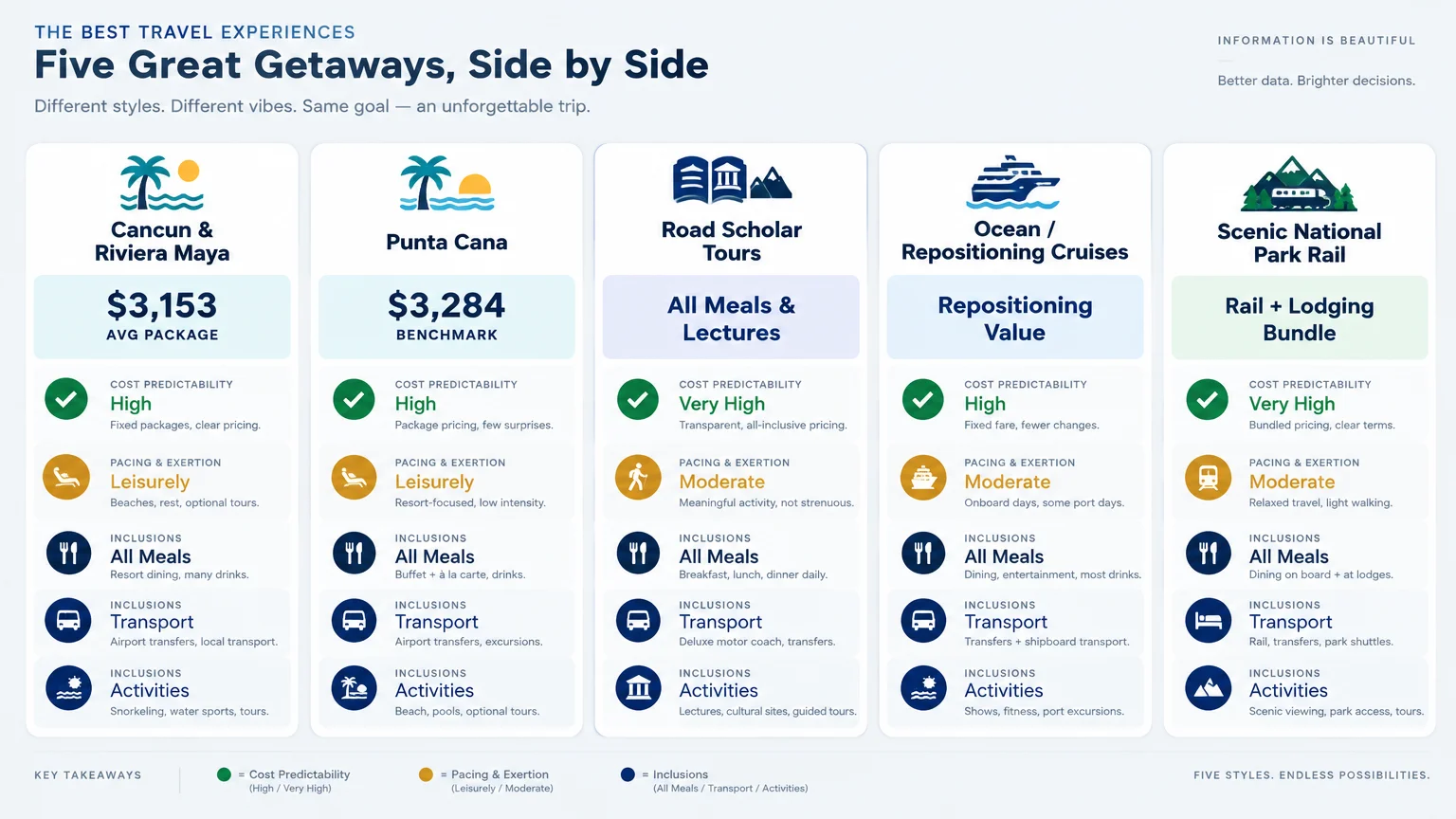
The table below compares baseline costs, senior incentives, and primary inclusions across all five retirement vacation styles.
| Vacation Type / Destination | Average Cost (5-6 Nights) | Senior Discounts & Eligibility | Key Value Inclusions |
|---|---|---|---|
| Cancun & Riviera Maya | $3,097 – $3,153 | Resort-specific AARP rates | Airfare, lodging, meals, alcohol, non-motorized watersports |
| Punta Cana, DR | $3,245 – $3,256 | Seasonal promotional rates | Gated resort community, dining, entertainment, airport transfers |
| Road Scholar Tours | $1,500 – $2,649 | Programs built for seniors | Accommodations, lectures, field trip entry, meals, all tips |
| Discounted Cruises | $1,200 – $2,800 | Ages 55+ (most lines) / 65+ (MSC 10% off) | Ocean travel, stateroom, main dining, production shows |
| Rail & National Parks | $1,400 – $2,500 | Amtrak 10% (65+), Senior Pass (62+) | Train fares, hotel lodging, federal park admissions |
Review total outlays rather than headline promotional rates alone. Factoring in flights, local transit, and daily meals helps you identify the most cost-effective package.
Independent travelers often prefer the convenience of packaged rail and national parks. Travelers looking for deep relaxation often prefer all-inclusive beach resorts.

Navigating Healthcare and Medicare Abroad
Medical emergencies abroad represent the biggest financial risk for retired vacationers. Original Medicare Parts A and B offer no medical coverage outside the United States and its territories.
If you face a sudden illness or fall at an international resort, foreign clinics will expect upfront payment. Many facilities require a credit card deposit before admitting patients.
Maritime medical care follows strict federal rules. Medicare Part B covers emergency medical services on a cruise ship only while the ship sits in a U.S. port or within 6 hours of one.
Once a ship travels more than six hours from an American port, Medicare coverage stops. Cruise infirmary charges can quickly add thousands of dollars to your credit card.
Supplemental Medigap policies provide limited international emergency coverage. Standard Medigap Plans C, D, F, G, M, and N cover 80% of foreign emergency costs after a $250 annual deductible.
This Medigap foreign benefit has a $50,000 lifetime cap and applies only during the first 60 days of your international trip. Review terms on Medicare.gov before traveling.
Because Medigap excludes emergency medical evacuations, always buy a standalone travel insurance policy. Air ambulance evacuations from the Caribbean back to the U.S. can exceed $50,000.
Errors That Cost Families Thousands
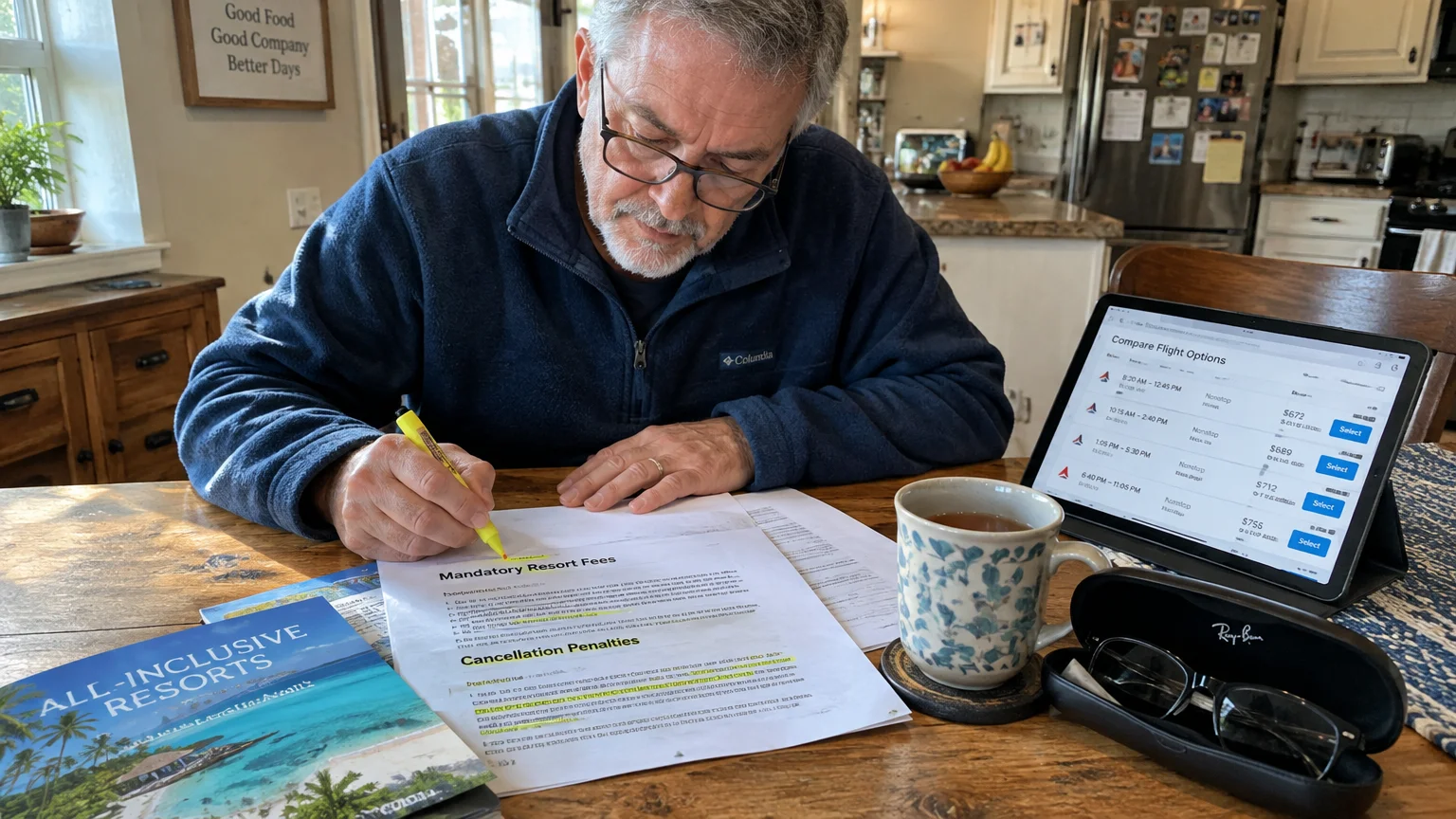
All-inclusive packages help limit spending, but hidden fees can still inflate your final bill. Watching out for common pricing traps protects your travel savings.
Always verify mandatory resort fees before completing your reservation. Some properties advertise low rates online, then bill facility fees of $30 to $60 per night at check-in.
Confirm whether airport transfers are included in your resort package. Booking unvetted airport taxis on arrival can cost three times the standard contracted transfer rate.
Watch out for timeshare promotions disguised as free vacation orientations. The Federal Trade Commission (FTC) warns consumers against aggressive sales pitches that promise discounted stays in exchange for hours of high-pressure meetings.
Always purchase vacation packages using a credit card rather than a debit card or wire transfer. The Consumer Financial Protection Bureau (CFPB) outlines chargeback protections if a travel provider fails to deliver promised services.
Retirees visiting European all-inclusive properties should note that the EU’s biometric Entry/Exit System is fully operational, replacing manual passport stamps with digital scans.
However, the European ETIAS travel authorization program has been delayed until 2027. Avoid unofficial websites trying to charge you application fees for ETIAS permits this year.
“Do not save what is left after spending, but spend what is left after saving.” — Warren Buffett
How to Fund Your Travel Sinking Fund
Never finance leisure travel using high-interest credit cards or emergency savings. A vacation sinking fund inside a high-yield savings account provides a safer way to save.
Automate small monthly deposits from your pension or Social Security distribution into this travel fund. Consistent savings ensure money is ready before booking deadlines arrive.
You can also use credit card rewards earned from routine household purchases. More than half of mature travelers apply loyalty points toward airfare and hotel bookings.
Traveling outside peak school break periods delivers immediate savings. Off-peak travel lowers package rates by 20% to 40% while offering uncrowded resorts and shorter dining lines.
Frequently Asked Questions
What is typically included in an all-inclusive resort package?
A standard package includes your guestroom, all daily meals, snacks, beverages, resort activities, and live entertainment. Some packages also bundle airport shuttles and non-motorized watersports.
At what age do senior travel discounts become available?
Cruise lines offer senior rates starting at age 55 on select itineraries. The federal Senior Pass starts at age 62, while Amtrak discounts apply at age 65.
Does Medicare cover medical bills at international all-inclusive resorts?
Original Medicare Parts A and B provide no foreign coverage. Certain Medigap policies cover 80% of emergency costs after a $250 deductible, up to a $50,000 lifetime maximum.
How can retirees avoid hidden resort charges?
Review the fine print on your booking invoice to confirm resort fees, local tourism taxes, and shuttle charges. Calling the resort before departure clarifies all on-property costs.
Securing Your Next Dream Getaway
Evaluate your annual travel budget and select a vacation style that offers upfront price transparency. Automated monthly savings let you book your next vacation with complete financial confidence.
This article is for informational purposes only and does not constitute financial, legal, or tax advice. Rates, benefit amounts, and tax rules change regularly—verify current details with the relevant agency or a licensed professional.
Last updated: November 2026. Rates, benefit amounts, and tax rules change—always verify current details at official sources.