Escaping freezing winter temperatures does not require spending thousands on overpriced beachfront rentals. By looking beyond crowded resort corridors, you can cut seasonal living expenses by 30% to 40% while enjoying warm sunshine.
Seasonal travel is no longer reserved exclusively for wealthy retirees with secondary homes. Remote work flexibility now allows working-age adults to join retirees in pursuing affordable winter escapes across the southern United States and abroad.
You can secure comfortable lodging, reliable healthcare access, and vibrant communities without breaking your household budget. Here are 11 proven destinations where snowbirds spend significantly less during the cold winter months.
Understanding the Real Cost of Winter Migration
Planning an extended seasonal stay requires balancing double household expenses; you must manage your primary residence while funding your winter outpost.
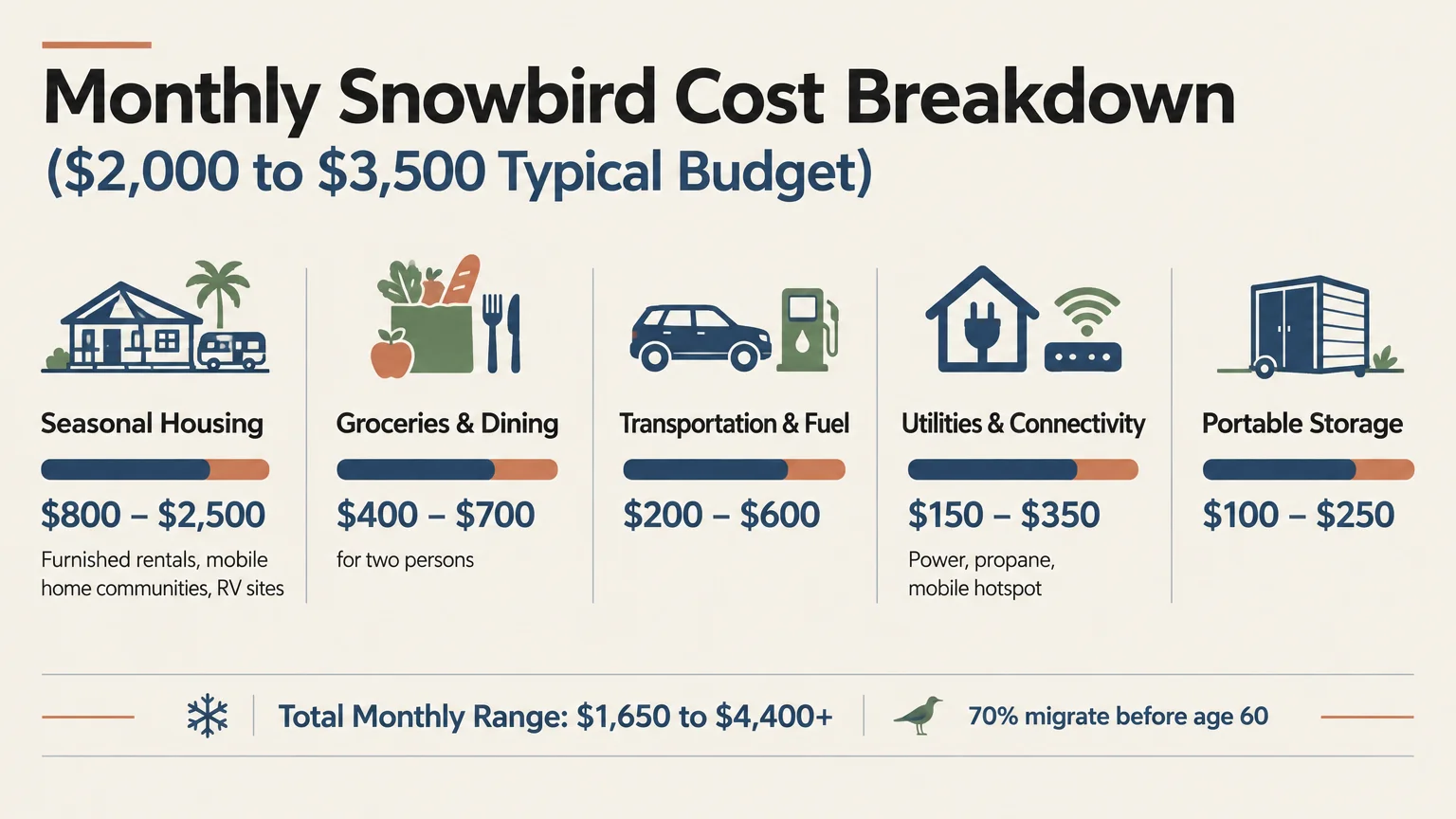
According to 2026 seasonal moving data from PODS, the typical American snowbird budgets between $2,000 and $3,500 per month. Depending on lifestyle preferences and housing style, total monthly costs range from $1,650 to over $4,400.
The demographic profile of seasonal travelers is evolving rapidly. Data from Emergency Assistance Plus reveals that nearly 70% of snowbirds now begin migrating before reaching age 60, largely supported by telework arrangements.
Understanding baseline expenditure categories helps you identify areas where strategic cuts yield the highest savings. Official consumer benchmarks from the Bureau of Labor Statistics (BLS) show housing and transportation consistently dominate seasonal household spending.
- Seasonal Housing: $800 to $2,500 per month for furnished rentals, mobile home communities, or long-term RV sites.
- Groceries and Dining: $400 to $700 per month for a two-person household.
- Transportation and Fuel: $200 to $600 per month, depending on transit needs and driving distances.
- Utilities and Connectivity: $150 to $350 per month, including electricity, propane, and mobile hotspot data.
- Portable Seasonal Storage: $100 to $250 per month for vehicles, gear, or personal items.
Location dictates your greatest cost variance. Choosing inland locations in Texas or New Mexico over coastal Florida reduces your overall monthly spending by 30% to 40%.
“A budget is telling your money where to go instead of wondering where it went.” — John C. Maxwell
11 Budget-Friendly Snowbird Destinations
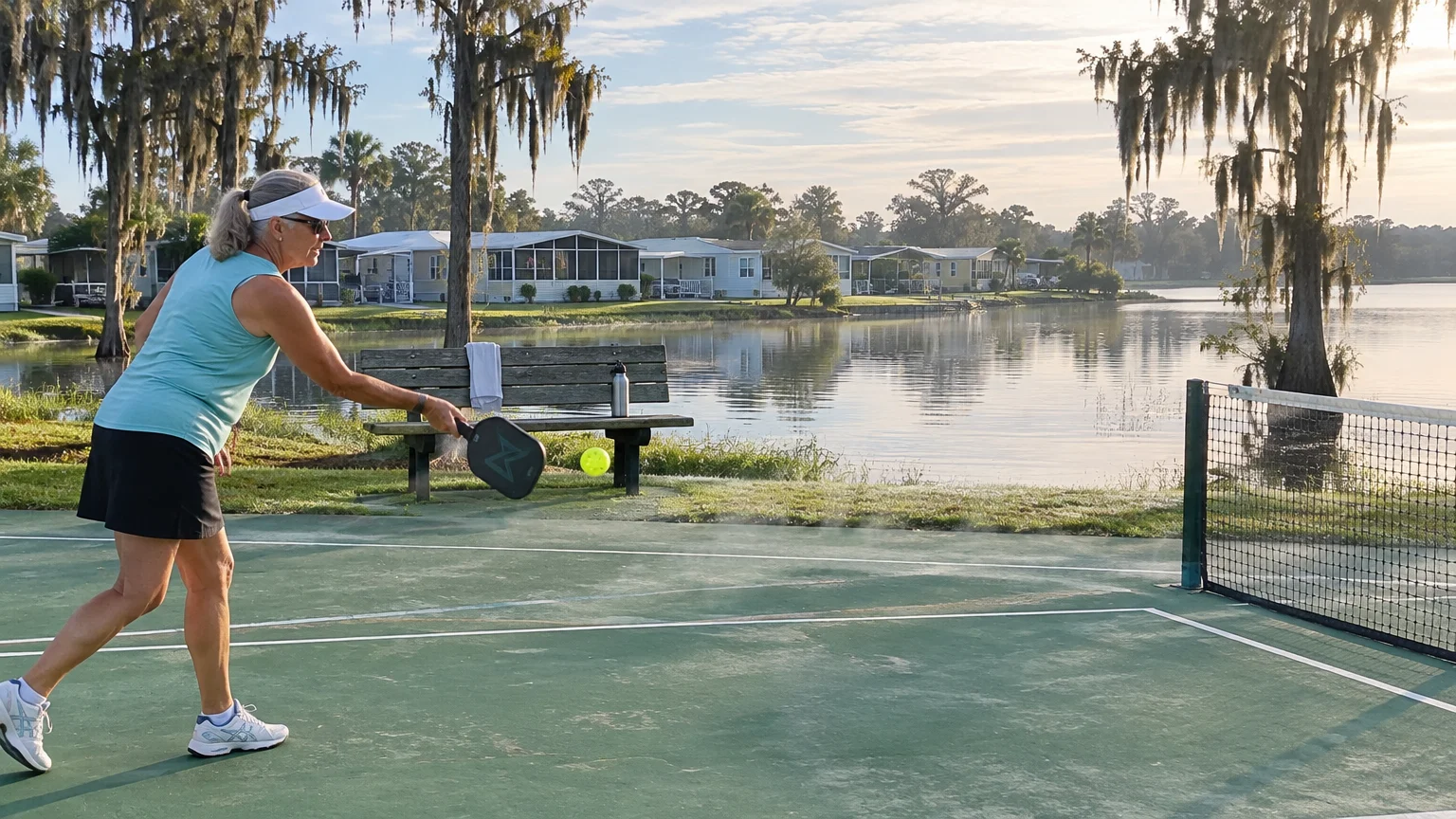
You do not need to settle for sub-freezing winds simply because prime coastal markets demand $4,000 a month. These 11 locations provide outstanding value, mild weather, and strong infrastructure for seasonal visitors.
1. Winter Haven and Lakeland, Florida
Central Florida provides an affordable alternative to costly coastal strips like Sarasota or Naples. In national snowbird rankings evaluating housing affordability, healthcare, and climate, Winter Haven ranked #1 nationwide, while neighboring Lakeland secured the #2 spot.
The area features an interconnected chain of freshwater lakes, golf courses, and dozens of established 55+ communities. You avoid coastal storm surcharges and premium tourist parking fees while staying within an hour of major medical centers in Tampa.
Furnished short-term rentals and manufactured home leases frequently cost 35% less than coastal counterparts. You can easily find active social clubs, pickleball leagues, and organized seasonal community events without paying resort-tier premiums.
2. Avon Park and Sebring, Florida
Located in rural Highlands County, Avon Park and Sebring represent deep inland Florida value. StorageCafe recognized Avon Park as Florida’s second most affordable snowbird destination, with average monthly rent running $921 and a median home value of $145,000.
Sebring ranked #3 in state affordability, offering tranquil lakeside recreation and state parks. Both towns maintain a relaxed, historic pace that contrasts sharply with congested coastal highways.
Long-term mobile home parks and seasonal rentals in this region cater heavily to budget-conscious winter visitors. You gain access to clean freshwater fishing, affordable public golf, and warm subtropical days on a modest monthly budget.
3. The Rio Grande Valley, Texas
The Rio Grande Valley—encompassing Mission, McAllen, and Brownsville—stands as the traditional capital for budget-minded “Winter Texans.” Texas accounted for 25 of the nation’s top 100 snowbird cities, driven largely by southern border affordability.
This sub-tropical region sits at the southernmost tip of Texas, offering warm winter temperatures comparable to central Florida. Local grocery prices, dining costs, and healthcare services remain among the lowest in the United States.
Dozens of dedicated seasonal RV resorts offer fully furnished park models and full-hookup sites for $450 to $700 per month. The vibrant community organizes daily dances, woodshop classes, and cooperative excursions that keep entertainment costs minimal.
4. Quartzsite and Yuma, Arizona
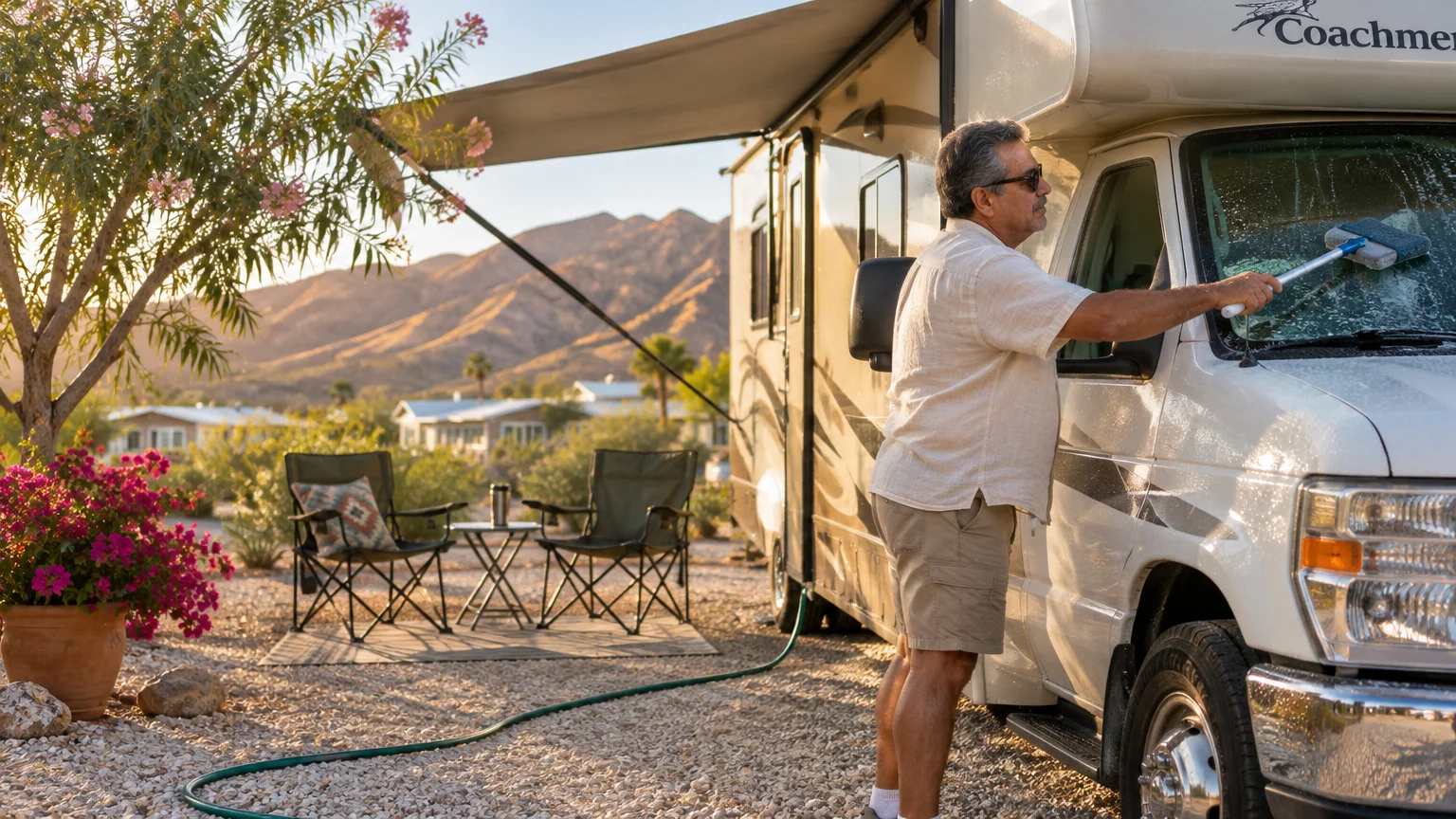
If you travel by recreational vehicle, western Arizona provides the most economical winter escape in North America. The federal Bureau of Land Management (BLM) operates Long-Term Visitor Areas (LTVAs) near Quartzsite and Yuma.
A seasonal LTVA permit costs just $180 for up to seven months of continuous dry camping from September 15 through April 15. A short-term 14-day permit costs only $40.
While LTVA camping requires self-contained solar power and water management, the financial savings are unmatched. By contrast, conventional private RV resorts in the Phoenix metro area charge $1,450 per month during peak winter months.
Both Quartzsite and Yuma provide dedicated community dump stations, potable fresh water, and vibrant outdoor flea markets. Yuma also features full-service private RV parks that rent for half the price of Tucson or Scottsdale facilities.
5. Texas Coastal Bend: Rockport and Port Aransas
If you crave ocean breezes without Florida price tags, explore the Texas Coastal Bend. Towns like Rockport, Fulton, and Port Aransas offer immediate Gulf access at reasonable seasonal rates.
Full-hookup RV sites in North Central Texas and along the Coastal Bend average $500 to $650 per month plus electricity. That stands in stark contrast to waterfront sites in southern Florida, which routinely exceed $2,000 monthly.
The region is celebrated for world-class birdwatching, calm bay fishing, and fresh seafood markets. You can rent affordable ground-level cottages or park an RV near protected coastal waterways with minimal overhead.
6. Lake City, Florida
Situated in north-central Florida near the intersection of Interstate 75 and Interstate 10, Lake City is Florida’s most economical winter hub. StorageCafe ranked Lake City as Florida’s most affordable snowbird destination, highlighting a median home value of approximately $185,000.
While northern Florida experiences cooler overnight lows than the Everglades, daytime winter temperatures routinely reach the mid-60s and low 70s. You trade tropical humidity for crisp sunshine and access to crystal-clear freshwater springs.
Seasonal campground fees, cottage leases, and casual dining spots cost significantly less than properties located south of Orlando. The town also serves as a strategic base if you prefer exploring state parks rather than commercial theme parks.
7. Las Cruces and Southern New Mexico
Southern New Mexico provides an affordable Southwest mountain-desert retreat with dramatic scenery and mild weather. Las Cruces enjoys more than 300 days of annual sunshine framed by the Organ Mountains.
Selecting New Mexico over coastal Florida cuts overall monthly living expenses by 30% to 40%. Utilities, fuel, and short-term residential leases remain affordable throughout the winter corridor.
Las Cruces hosts New Mexico State University, which provides access to cultural exhibits, lifelong learning classes, and high-quality regional medical centers. Nearby state parks and national monuments deliver endless low-cost outdoor hiking and camping.
8. Lake Chapala and Central Mexico
International destinations unlock remarkable value if you are willing to venture south of the border. Lake Chapala, located south of Guadalajara, hosts the largest concentration of American and Canadian expatriates in the world.
The high altitude provides spring-like daytime temperatures in the mid-70s year-round without requiring indoor heating or air conditioning. Furnished rentals, locally sourced groceries, and private healthcare cost a fraction of domestic equivalents.
U.S. citizens can stay in Mexico visa-free for up to 180 days using a Forma Migratoria Múltiple (FMM) tourist permit. The official FMM fee is 983 Mexican pesos (approximately $54 USD) for visits exceeding seven days.
Mexican immigration authorities no longer grant 180 days automatically at border checkpoints. You must show printed return travel tickets and verifiable long-term lodging reservations to receive your requested length of stay.
9. Central Valley, Costa Rica
Costa Rica has emerged as a premier warm-weather sanctuary for snowbirds seeking eco-tourism, temperate climates, and modern infrastructure. Towns across the Central Valley—such as Atenas, Grecia, and San Ramón—offer daytime temperatures averaging 75 to 80 degrees.
Under current immigration directives, U.S. and Canadian citizens enter Costa Rica visa-free for up to 180 calendar days. This extended duration eliminates the need to complete expensive border runs every three months.
To qualify for the 180-day stay, border officials require proof of onward travel and evidence of financial solvency of at least $100 USD per month. High-quality private clinics, dependable internet access, and fresh open-air farmers markets make seasonal budgeting seamless.
10. The Algarve, Portugal
Southern Europe offers an appealing winter destination if you enjoy Mediterranean culture and mild coastal climates. Portugal’s Algarve region receives over 300 days of sunshine annually, with winter temperatures hovering in the low-to-mid 60s.
Off-season winter rents in coastal towns like Tavira, Lagos, and Olhão drop by 50% to 70% compared to summer rates. A fully furnished seaside apartment often rents for less than an ordinary condo in Arizona or Florida.
Under Schengen Area rules, American tourists can stay up to 90 days within any rolling 180-day window without a residency visa. This framework aligns perfectly with a three-month winter getaway.
Starting in late 2026, the European Union is rolling out the European Travel Information and Authorisation System (ETIAS). This online pre-travel authorization costs €7, remains valid for three years, and is waived for travelers under 18 or over 70.
11. Coastal Vietnam: Da Nang and Nha Trang
If you want the absolute lowest cost of living without sacrificing modern comforts, Southeast Asia delivers unmatched buying power. Coastal cities like Da Nang and Nha Trang feature tropical winter warmth, clean sandy beaches, and exceptional healthcare services.
Expat cost-of-living data shows a single adult can live comfortably in coastal Vietnam on $760 to $1,200 USD (€700 to €1,100) per month. Furnished modern one-bedroom apartments within walking distance of the beach rent for $275 to $750 per month.
Healthy street food and restaurant dining cost just $2 to $5 per meal. American citizens can secure a 90-day multi-entry e-visa online, providing a straightforward legal pathway for a comprehensive winter stay.
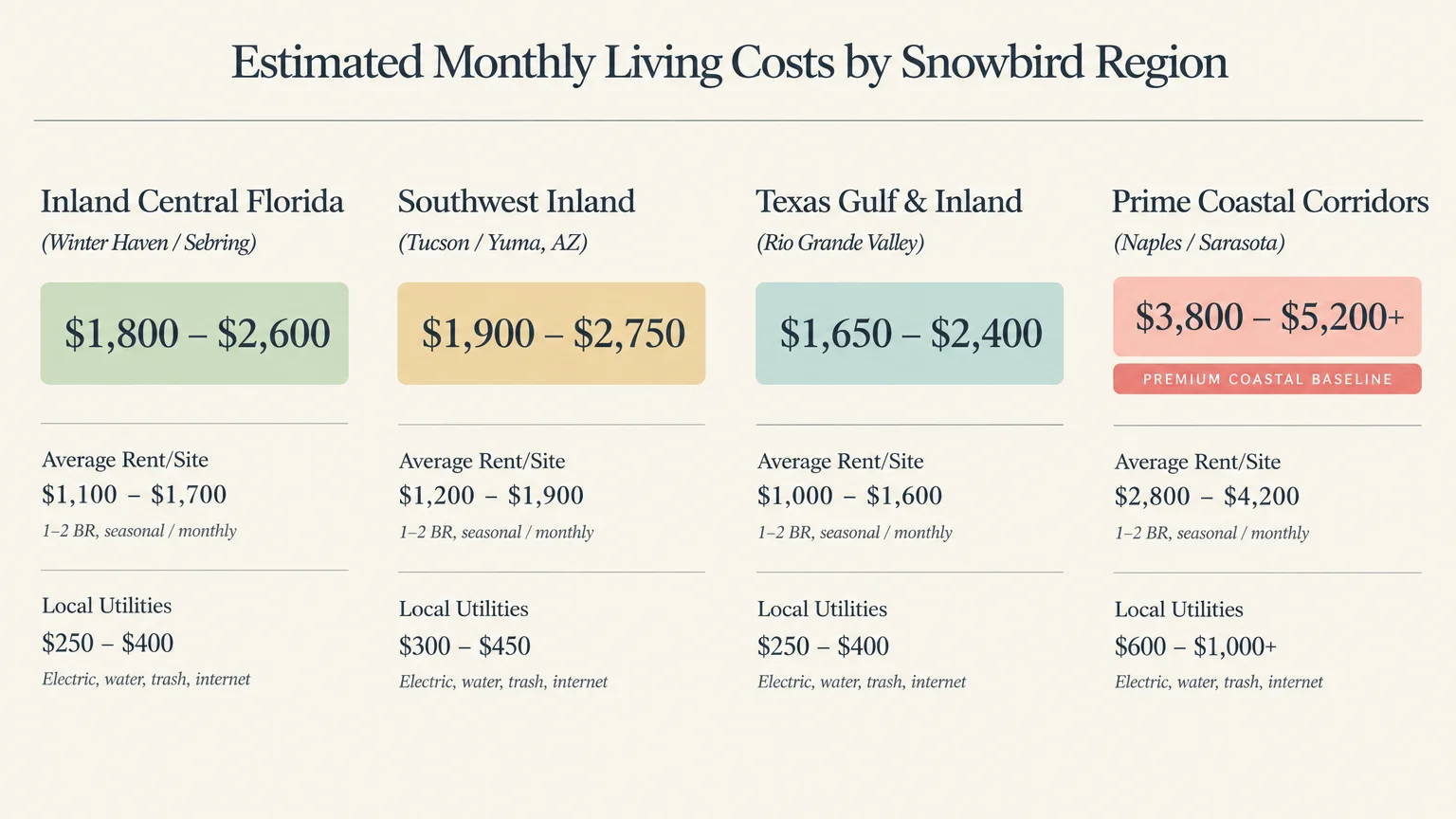
Comparing Monthly Snowbird Costs Across Popular Regions
Analyzing costs across various domestic and international hubs helps you match your savings goals with personal lifestyle preferences. Real-world expenses fluctuate based on accommodation type, transit choices, and dining habits.
The comparison table below details typical monthly budgets across representative budget destinations for the 2026–2027 seasonal cycle.
| Destination | Primary Housing Style | Average Monthly Lodging | Estimated Total Monthly Budget | Key Entry or Permit Rule |
|---|---|---|---|---|
| Winter Haven / Lakeland, FL | Furnished 55+ Rental | $1,100 – $1,600 | $2,200 – $2,800 | None (Domestic) |
| Avon Park / Sebring, FL | Park Model / Apartment | $900 – $1,300 | $1,900 – $2,400 | None (Domestic) |
| Rio Grande Valley, TX | RV Park / Mobile Home | $500 – $800 | $1,500 – $2,100 | None (Domestic) |
| Quartzsite / Yuma, AZ | BLM LTVA Dry Camping | $30 (Permit amortized) | $1,100 – $1,600 | $180 7-Month BLM Permit |
| Rockport, TX | Coastal RV Resort | $550 – $750 | $1,650 – $2,250 | None (Domestic) |
| Lake Chapala, Mexico | Furnished Villa / Casita | $600 – $1,100 | $1,400 – $2,000 | $54 FMM Tourist Card; Up to 180 Days |
| Central Valley, Costa Rica | Furnished Cottage | $700 – $1,200 | $1,500 – $2,200 | 180-Day Stay; $100/mo Solvency Proof |
| The Algarve, Portugal | Off-Season Beach Condo | $800 – $1,300 | $1,700 – $2,400 | 90-Day Schengen Cap; €7 ETIAS |
| Da Nang, Vietnam | Modern Coastal Condo | $300 – $700 | $800 – $1,300 | 90-Day E-Visa |
Practical Strategies to Lower Your Winter Expenses
Choosing an affordable geographic destination is only your initial step. You can implement several practical measures to control ongoing overhead while away from home.
Locking in multi-month rental commitments well before the winter rush yields substantial leverage. Property owners often prefer reliable tenants who stay three or four months over erratic short-term weekend tourists.
- Book Directly With Owners: Skip commercial vacation rental portals to bypass 12% to 20% platform service charges.
- Winterize Your Primary Home: Adjust your home thermostat to 55 degrees, shut off the main water valve, and suspend seasonal home services like trash pickup or cable.
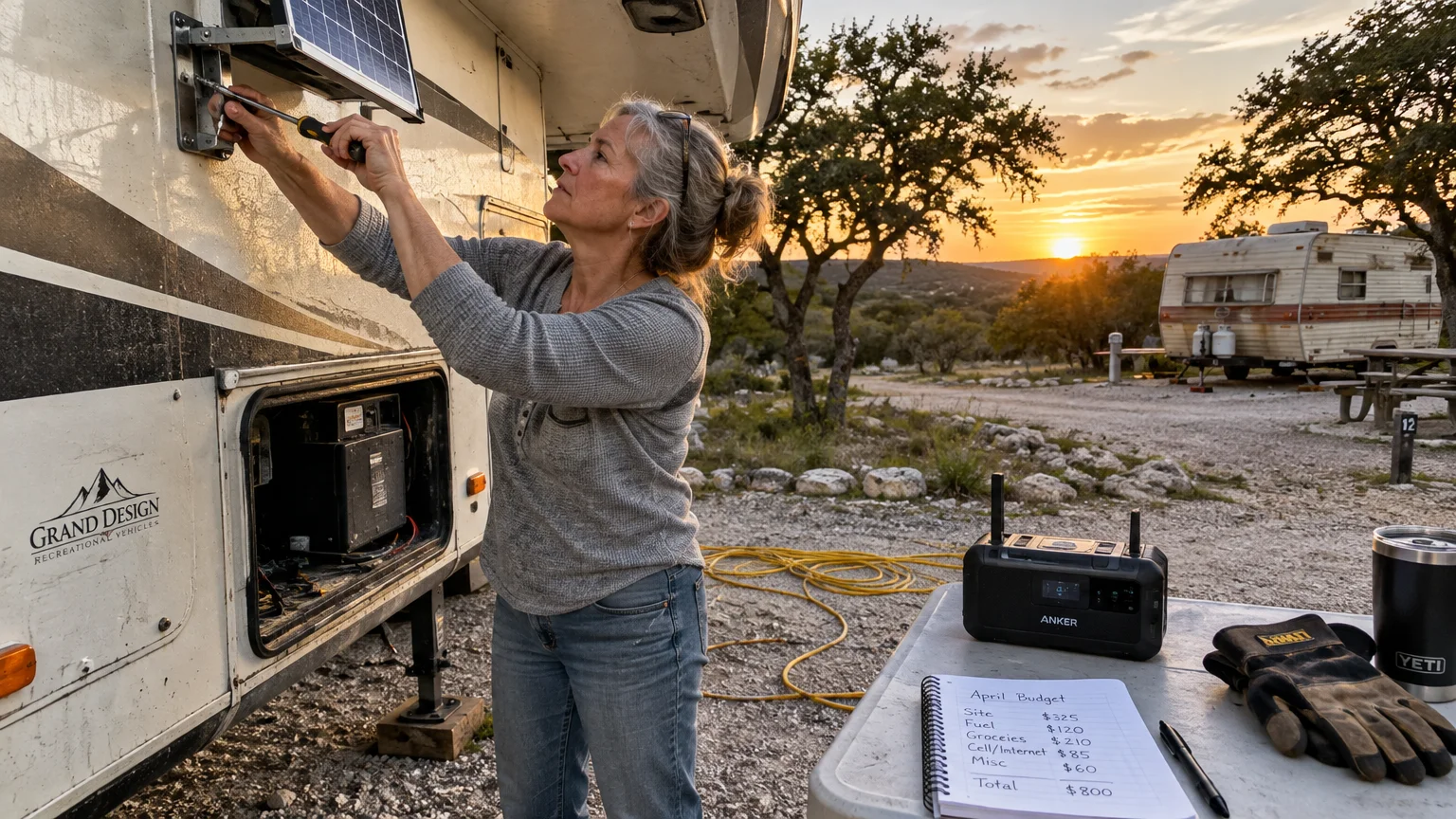
- Leverage Public Lands: Equip your travel trailer or motorhome with lithium batteries and solar panels to take full advantage of BLM dry camping permits.
- Cook Local Produce: Avoid imported packaged foods when traveling abroad or out of state; regional farmers markets slash monthly grocery costs.
Every dollar you preserve on core living expenses protects your principal investment balances. Developing intentional spending systems allows you to enjoy warm winters while building long-term wealth.
“Do not save what is left after spending, but spend what is left after saving.” — Warren Buffett
Don’t Make These Snowbird Financial Mistakes
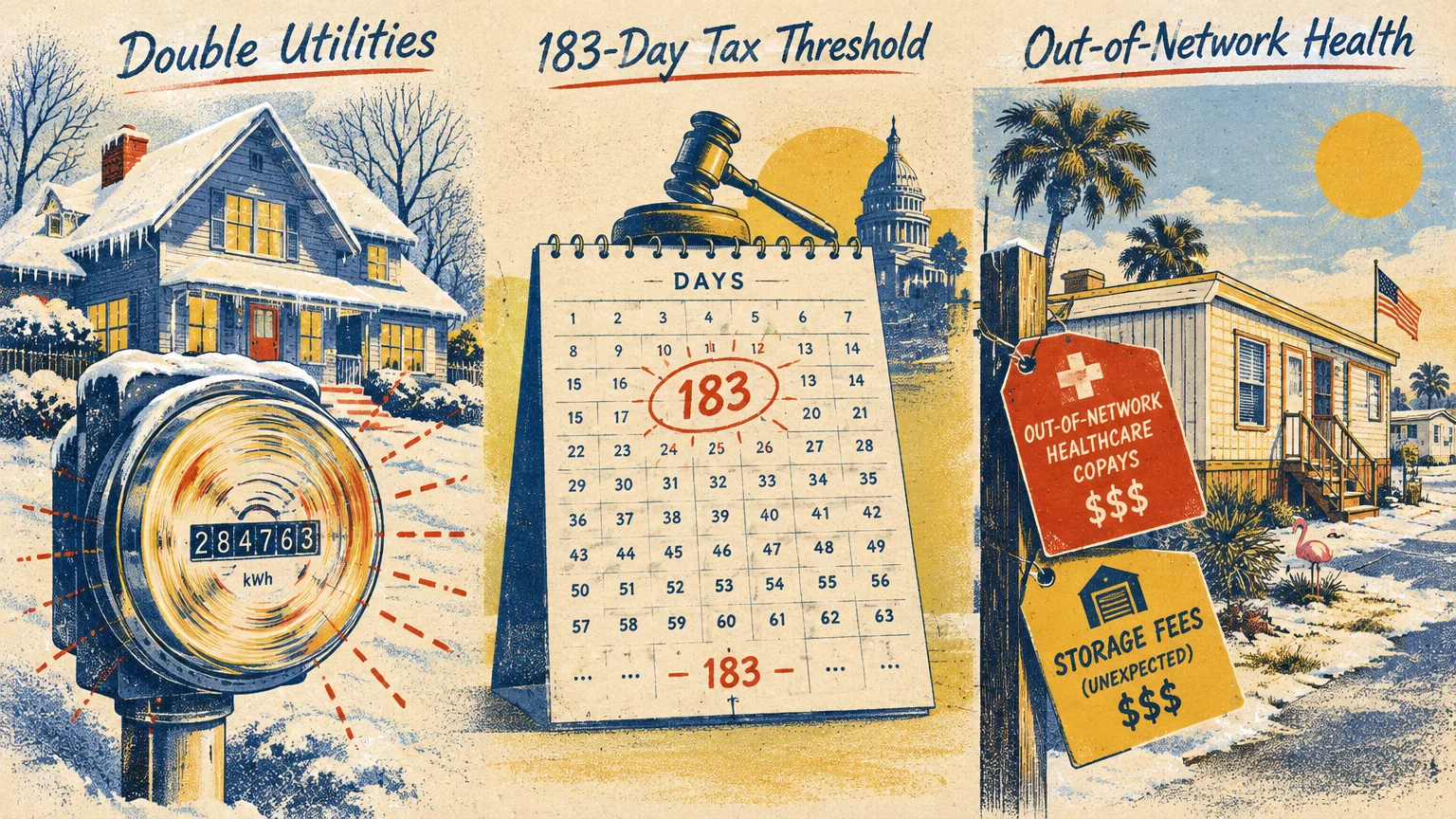
Extended travel introduces unique operational and financial risks that caught unprepared travelers off guard. Addressing these common pitfalls protects both your wallet and your health.
Healthcare coordination across state and national borders remains a critical point of vulnerability. If you rely on private Medicare Advantage plans, your regional network may deny coverage for non-emergency routine visits while away.
Verify coverage limitations directly through Medicare.gov before departure. Traditional Medicare combined with a Medigap policy generally provides uniform nationwide doctor access wherever standard Medicare is accepted.
Short-term rental wire scams represent another persistent danger for seasonal travelers. Unscrupulous scammers frequently copy real estate photos and list fake winter leases on social platforms and classified boards.
Always verify property ownership records through county appraisal databases before sending deposits. The Consumer Financial Protection Bureau (CFPB) advises against using irreversible payment methods like peer-to-peer wire transfers or gift cards for rental deposits.
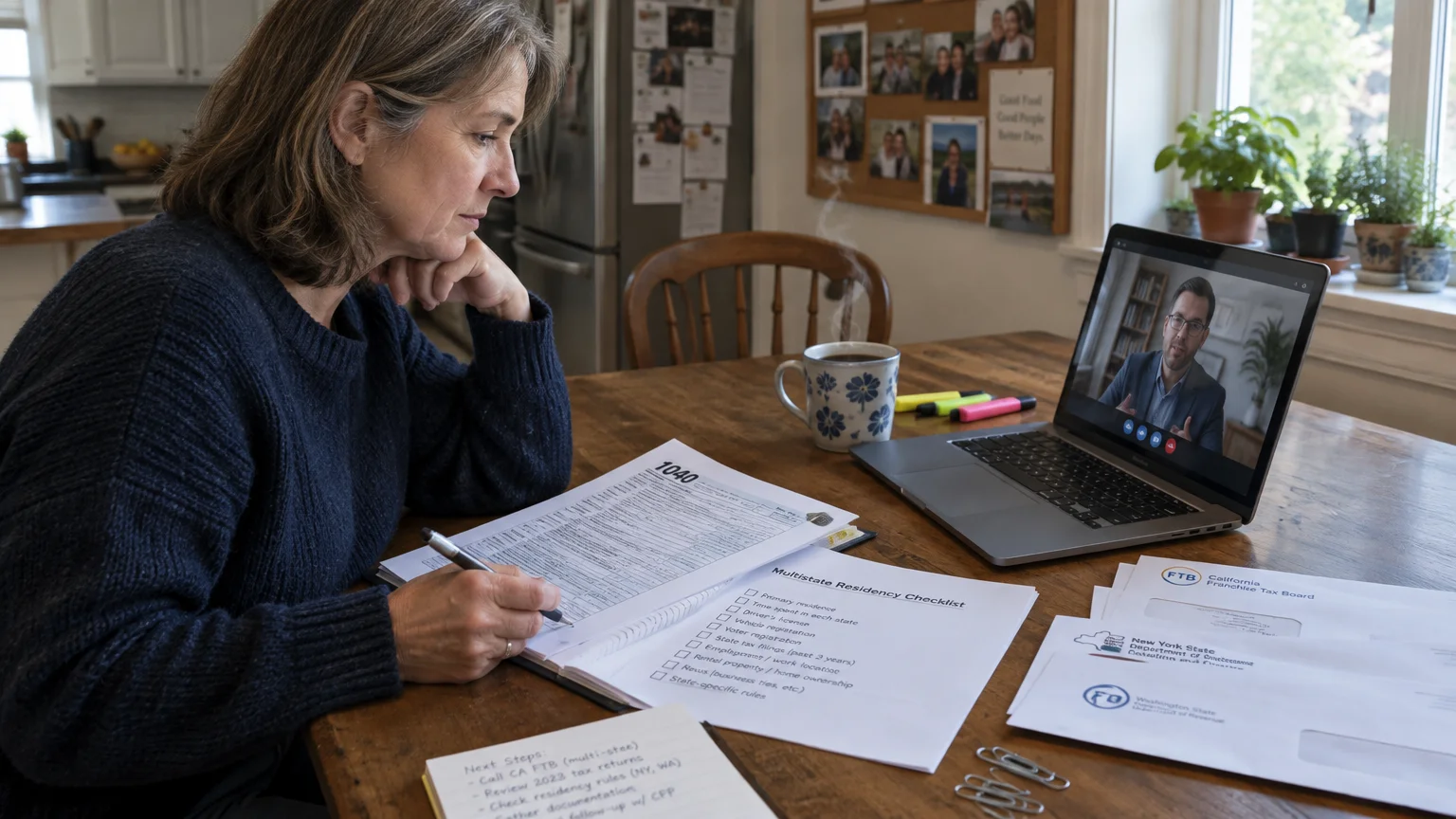
Monitor your state tax residency rules carefully if you maintain residences in multiple states. Staying in certain jurisdictions for more than 183 days can trigger statutory residency, exposing your total income to unexpected state income taxes.
When Professional Advice Is Worth It
Managing two living arrangements across state or national borders occasionally demands professional guidance. Knowing when to hire an expert prevents costly legal, housing, or tax blunders.
If you spend extended time abroad or own seasonal real estate in another state, consult a Certified Public Accountant (CPA). A qualified CPA helps you allocate state tax deductions properly and ensures compliance with foreign bank account reporting rules.
If you are exploring the purchase of a seasonal home or balancing a primary mortgage with seasonal leases, work with a certified housing counselor. You can find free or low-cost guidance through HUD Housing Counseling agencies.
Frequently Asked Questions About Budget Snowbirding
What is the cheapest way to live as a snowbird?
The cheapest snowbird option in the United States is self-contained dry camping on BLM Long-Term Visitor Areas in Arizona or California. A 7-month seasonal permit costs just $180, which drops your monthly housing expense to under $30.
Can remote workers travel as snowbirds without state tax issues?
Most states tax income earned by non-residents who perform work physically inside their borders beyond specific time thresholds. Consult your employer’s human resources department and a CPA to establish compliant state withholding arrangements.
How long can U.S. citizens stay in Mexico during the winter?
U.S. citizens can stay in Mexico for up to 180 days on an FMM tourist card. However, you must present printed proof of lodging and return flights, as border agents no longer grant 180 days by default.
Does standard health insurance work while traveling domestically?
Coverage depends entirely on your specific policy structure. Preferred Provider Organizations (PPOs) and Original Medicare offer broad national coverage, whereas Health Maintenance Organizations (HMOs) generally restrict non-emergency care to local geographic service networks.
Taking Action on Your Winter Migration Plans
Escaping harsh winter weather does not require elite wealth or excessive debt. Start by calculating your baseline monthly budget and reviewing properties in affordable hubs like Central Florida, the Texas border, or southern Arizona.
Take concrete steps today by researching off-season rental discounts, testing remote work arrangements, and auditing your seasonal medical coverage. Strategic early planning transforms a warm winter retreat into an affordable annual reality.
Financial outcomes vary based on individual income, credit history, and circumstances. This article provides general guidance only. Consult a qualified financial planner, CPA, or consumer attorney for advice specific to your situation.
Last updated: October 2026. Rates, benefit amounts, and tax rules change—always verify current details at official sources.