
Paying a bill does not always close the ledger for good. You can legally reverse paid charges and get refunds on bills already paid across medical, tax, and utility accounts.
Federal regulations and state consumer rules protect older adults who overpaid before updating their life status or claiming rightful exemptions. Companies rarely advertise these lookback policies, but the legal remedies remain open.
If you settled an invoice without your senior discounts or retirement exemptions, substantial cash may belong back in your wallet. Here are seven expenses you can contest after payment.

Key Takeaways for Retirees Seeking Retroactive Refunds
Paying an invoice prematurely does not forfeit your statutory rights to mandatory consumer protections or income-based discounts.
Federal and state programs provide formal lookback windows ranging from 30 days to three full tax years.
Qualifying life changes—such as retiring or dropping below state income thresholds—trigger retroactive adjustments on previously remitted payments.
Securing these refunds requires submitting official agency forms and proof of income rather than standard customer service requests.
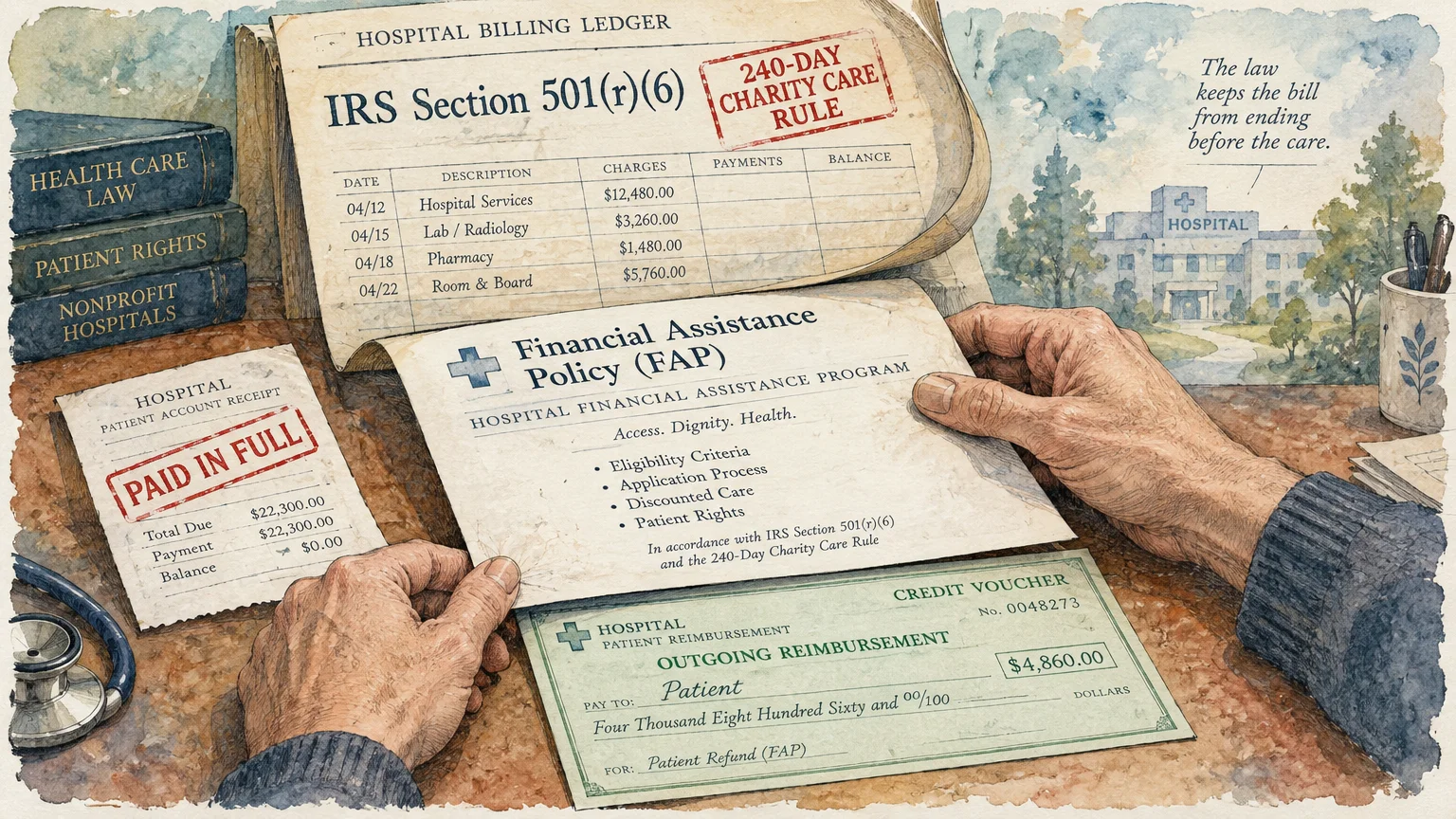
1. Hospital Invoices and the 240-Day Charity Care Rule
Medical emergencies often cause older adults to pay steep hospital invoices out of fear or confusion. However, non-profit healthcare systems operate under strict federal charity care rules.
Under IRS Section 501(r)(6), non-profit hospitals must provide patients a 240-day application period from the date of the first post-discharge billing statement.
These non-profit facilities comprise roughly 60% of all community hospitals across the United States. They must maintain a written Financial Assistance Policy (FAP) to protect their tax-exempt status.
If you paid an out-of-pocket medical bill and later qualify for financial assistance within that 240-day window, the law protects you. The hospital must refund all payments exceeding your revised obligation.
To claim this reimbursement, request the hospital’s Financial Assistance Policy and application from their billing department. You will need to provide proof of current household income and your recent tax filings.
Review your hospital paperwork carefully to identify whether the facility operates under non-profit rules. You can verify their organizational standing through the IRS database.
2. Medicare Part B and Part D IRMAA Surcharges
High-earning pre-retirees often face steep Income-Related Monthly Adjustment Amount (IRMAA) surcharges on their Medicare Part B and Part D premiums.
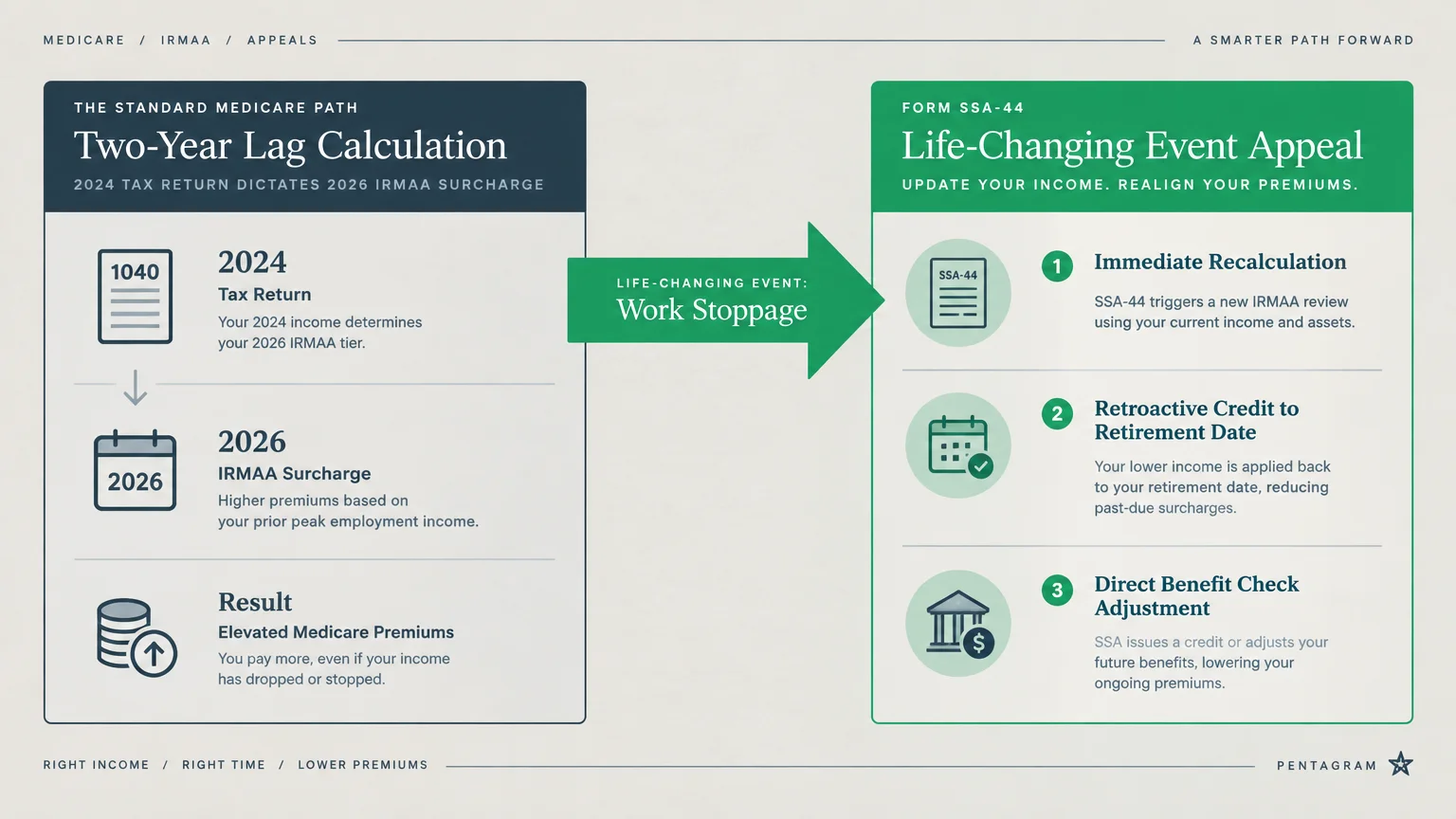
The government calculates these surcharges using tax returns from two years prior. For example, your 2024 tax filing dictates your 2026 Medicare surcharges.
When you stop working, your actual income drops immediately, but the government still bills you based on your former peak corporate earnings.
You do not have to absorb these excessive monthly charges. You can lower retiree bills after payment by filing Form SSA-44 directly with the Social Security Administration.
Form SSA-44 recognizes specific life-changing events, including official work stoppage and work reduction. Filing this document alerts the agency to your actual post-retirement income level.
Once approved, the government recalculates your premium and applies the adjustment retroactively to your qualifying retirement date. Social Security will credit your monthly benefit check or issue a direct refund payment.
3. Prescription Out-of-Pocket Expenses Through LI NET
Navigating prescription drug coverage during retirement transitions can lead to costly out-of-pocket pharmacy receipts. Many seniors pay full cash prices while their low-income assistance applications pend.
The federal government provides a safety net known as the Limited Income Newly Eligible Transition (LI NET) program. Administered permanently through Medicare, LI NET reimburses eligible prescription expenditures.
If you qualify for the Part D Extra Help program, LI NET can reimburse pharmacy charges incurred up to 30 days prior to your official enrollment date.
For seniors dually eligible for Medicare and full Medicaid or Supplemental Security Income, the lookback period is even broader. These dual-eligible retirees can recover covered prescription costs paid up to 36 months retroactively.
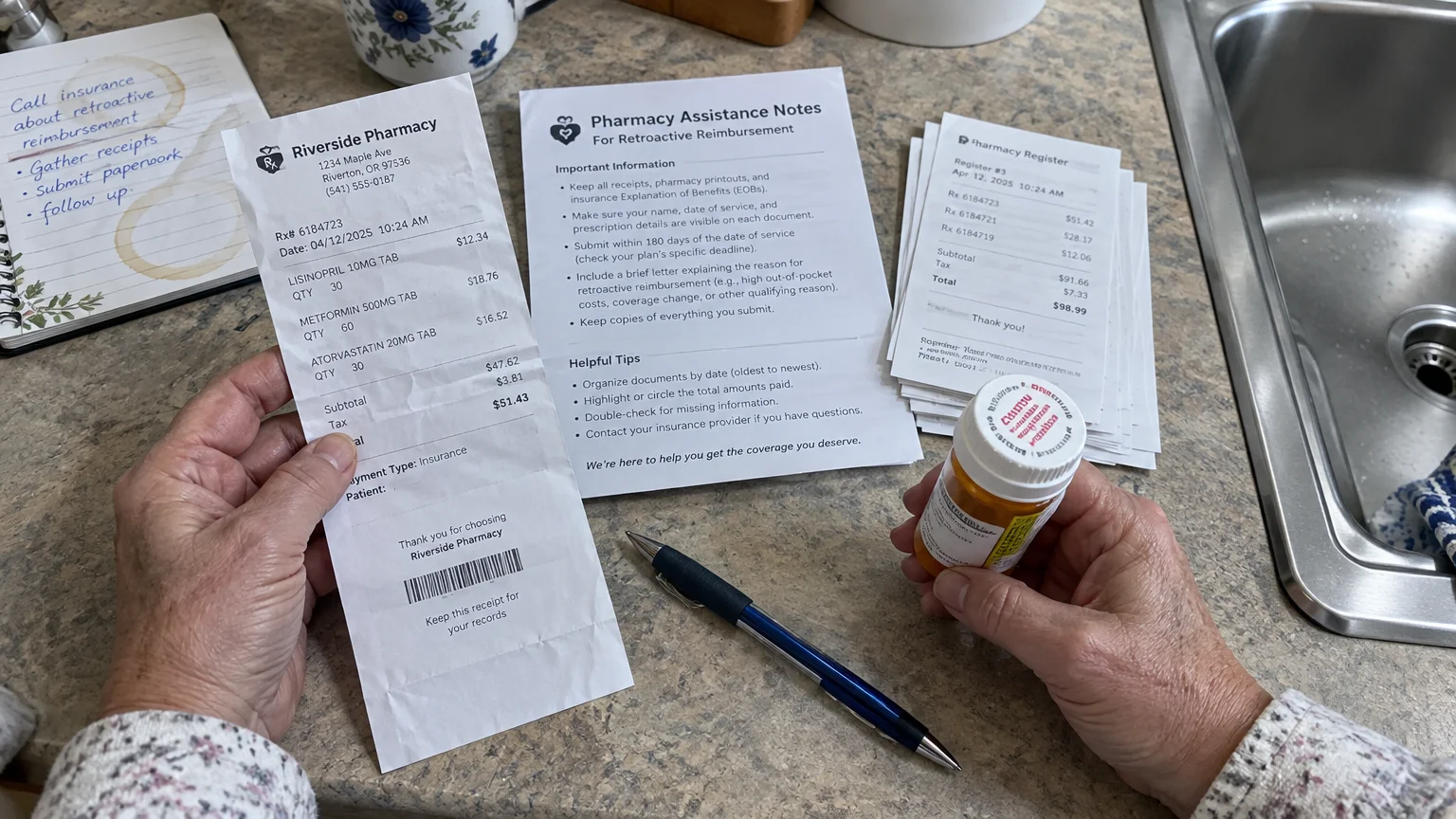
To collect these retroactive bill refunds, gather your pharmacy receipts showing the National Drug Code (NDC), date of service, and paid amount. Then, submit a standard prescription reimbursement claim directly to LI NET.
4. Prior Healthcare Bills Under Medicaid Retroactive Coverage
Unexpected healthcare events often drain personal savings before an older adult formally applies for state Medicaid benefits. Fortunately, federal law accommodates this reality.
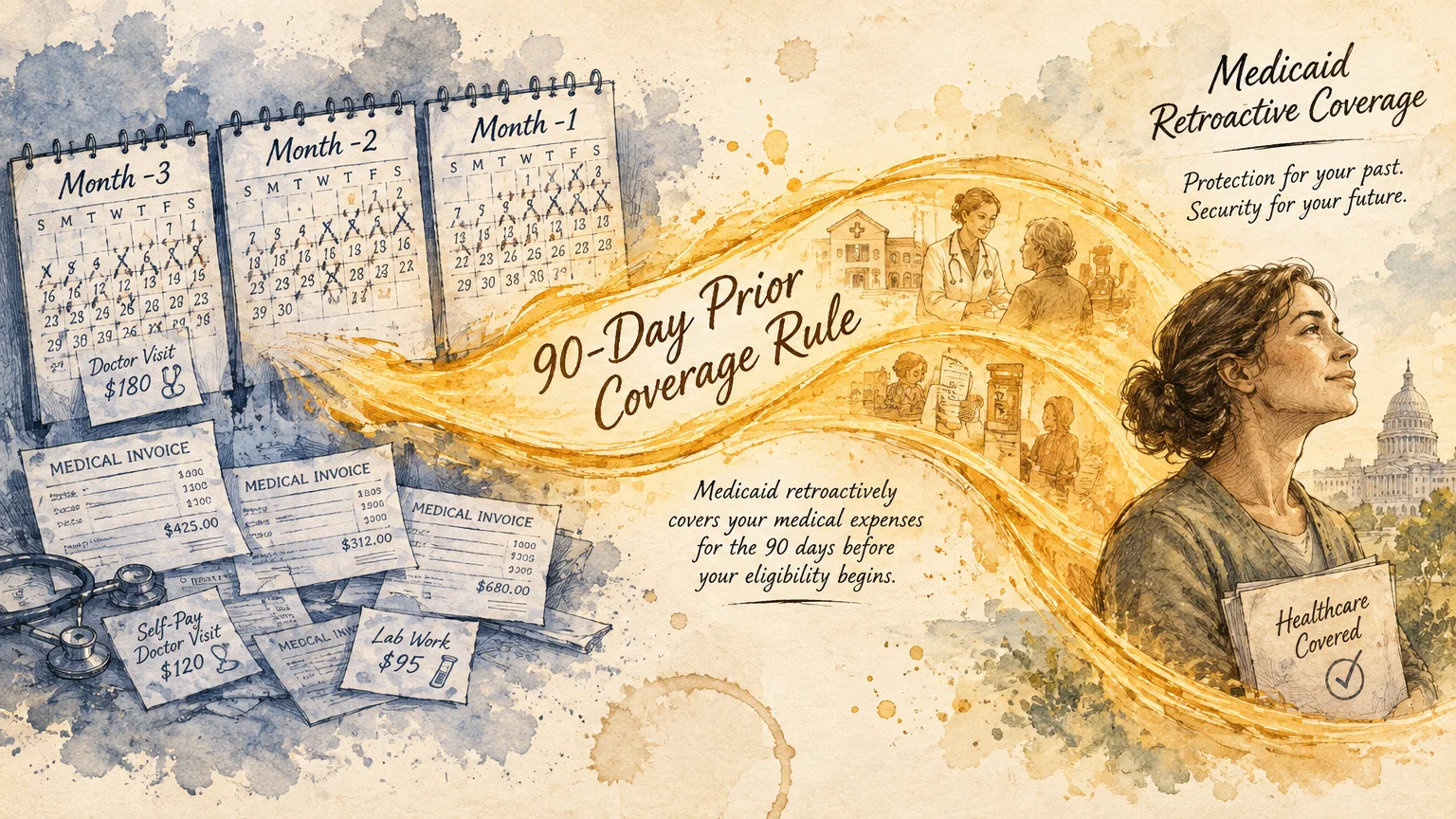
Section 1902(a)(34) of the Social Security Act establishes up to three months of retroactive Medicaid coverage prior to your application month.
To qualify for this lookback window, you must have met the state’s financial eligibility requirements during the exact months you received care.
If you paid cash to doctors, laboratories, or hospitals during those three prior months, providers can rebill Medicaid directly.
Once Medicaid processes and pays the statutory claims, the medical providers must refund the out-of-pocket payments you originally disbursed.
Contact the billing office of each provider immediately after your Medicaid approval is finalized. Provide your new Medicaid identification number and demand that they re-adjudicate your previous payments.
“It’s not how much money you make, but how much money you keep, how hard it works for you, and how many generations you keep it for.” — Robert Kiyosaki

5. Overpaid Property Taxes via Missed Senior Exemptions
Property taxes represent one of the heaviest ongoing liabilities for fixed-income homeowners. Many retirees pay their full tax bills for years without realizing they qualify for senior exemptions.
Most counties and municipalities provide senior homestead exemptions, assessment freezes, or tax circuit-breakers once you reach age 61, 62, or 65.
Overlooking these relief programs when you first qualify does not mean your hard-earned money is lost forever. Many taxing authorities allow taxpayers to claim exemptions retroactively.
In Texas, for instance, Section 11.431 of the Tax Code allows homeowners to claim senior homestead exemptions up to two years after the tax delinquency date.
Similarly, Cook County, Illinois permits eligible older adults to file Certificates of Error. This procedure yields retroactive property tax refunds spanning up to three preceding tax years.
Check with your local county appraisal district or tax assessor-collector to review their retroactive filing rules. Submitting proof of age and primary residency can trigger substantial property tax refund checks.
6. Auto Insurance Premiums After Commuting Ends
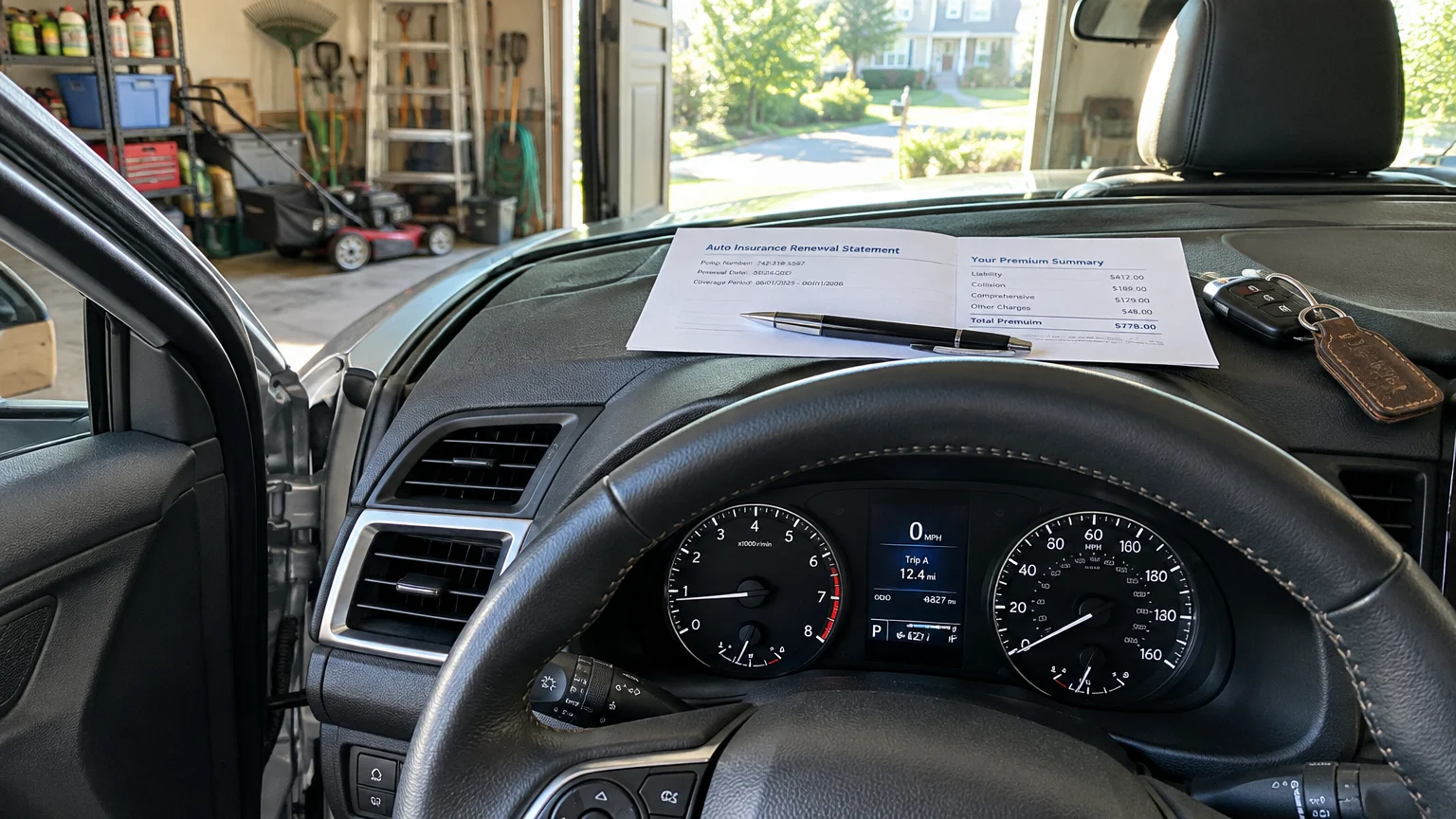
Most motorists pay auto insurance premiums in six-month or annual installments. When you retire mid-policy, your daily driving pattern changes drastically overnight.
Data from the Federal Highway Administration shows that drivers aged 65 and older log roughly 7,600 miles annually. Working-age adults drive between 13,500 and 15,000 miles per year.
Insurance carriers calculate your rates heavily based on annual mileage and your vehicle’s designation as a daily work commuter vehicle.
When you transition from commuter to pleasure use, your risk profile drops significantly. State insurance regulations require insurers to recalculate your risk and return unearned premiums.
Notify your insurer immediately upon your retirement date and report your updated, lower estimated mileage. Ask your carrier to reclassify the vehicle and issue a prorated refund for the prepaid policy term.
Many major insurers will credit the overpayment directly back to your bank account or apply it as a surplus balance toward future coverage.
7. Regulated Utility Bills and Missed Senior Tariffs
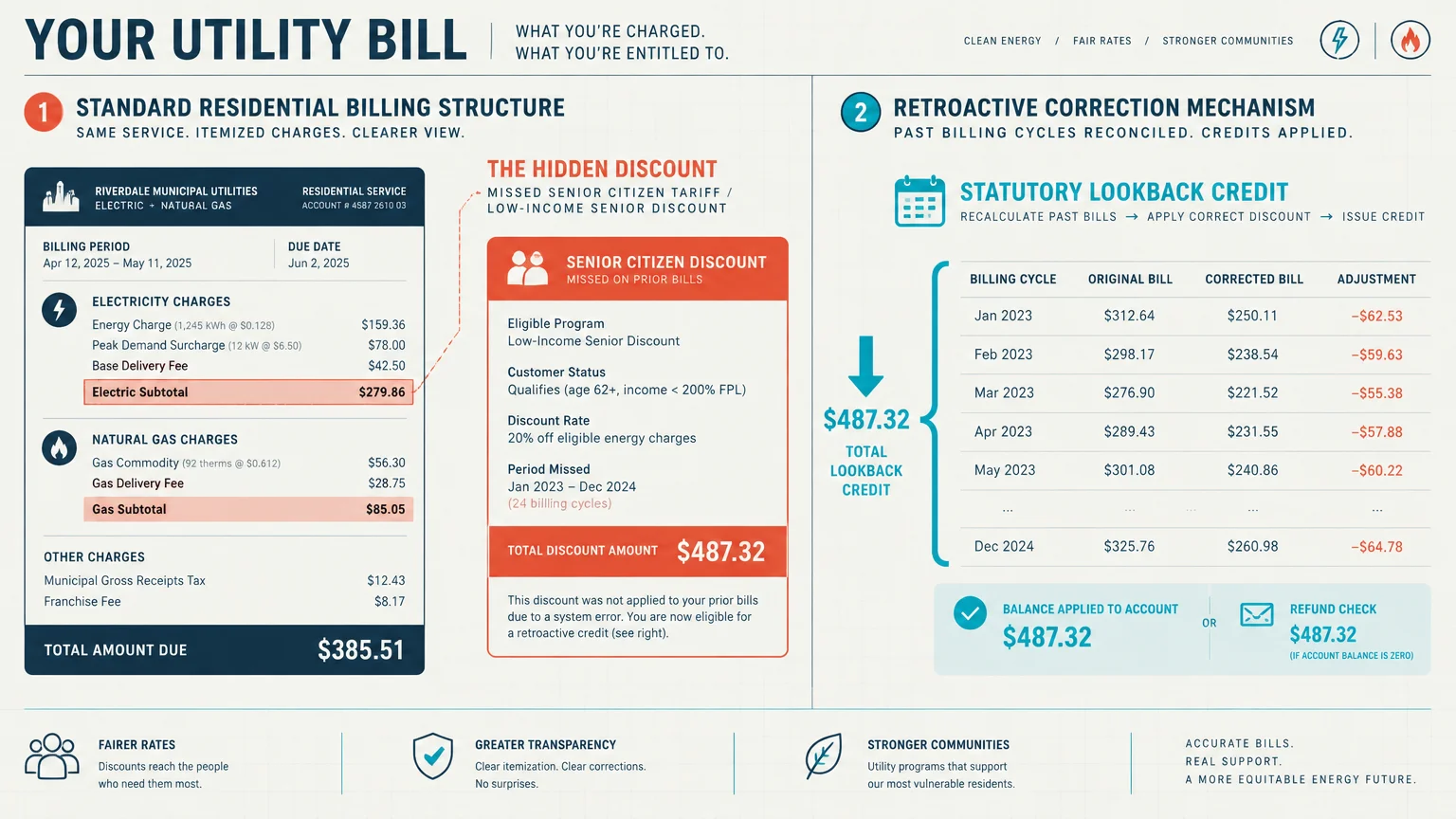
Utility bills often creep upward during retirement as you spend more hours inside your home. Yet, many retirees unknowingly pay commercial or standard residential rates when discount tariffs exist.
Regulated electric and gas providers maintain specialized low-income and senior discount tariffs. These discount structures often coordinate with the Low-Income Home Energy Assistance Program (LIHEAP).
If you were eligible for a discounted senior rate class but were billed under a standard rate, state regulations protect you.
Most state Public Utility Commissions (PUCs) establish mandatory billing correction windows ranging from 12 to 36 months. Utilities must issue retroactive account credits or refunds when customer billing classifications are incorrect.
Review your monthly statements for retiree billing errors or missing discount codes. The Consumer Financial Protection Bureau provides helpful guidance on disputing billing inaccuracies across consumer services.
Call your utility provider’s consumer advocacy department and request a formal rate audit. If they overlooked your senior status, demand a retroactive adjustment covering their regulatory lookback window.
Summary of Retroactive Bill Relief Programs
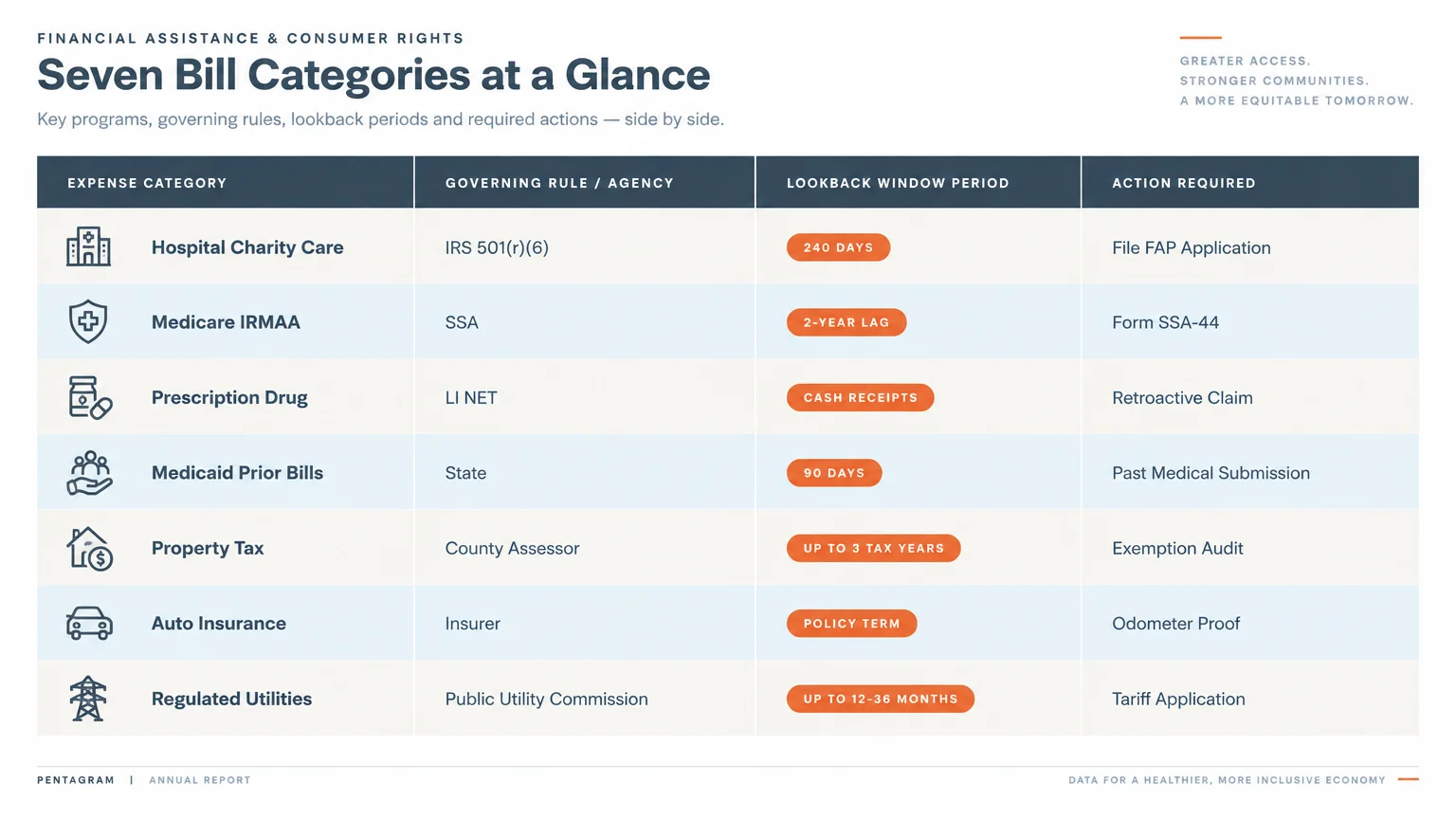
Understanding which bills offer refund windows helps you prioritize your dispute efforts. Use this reference table to identify applicable programs, regulations, and lookback periods.
| Bill Category | Legal or Regulatory Authority | Lookback Window | Refund Resolution Method |
|---|---|---|---|
| Non-Profit Hospital Bills | IRS Section 501(r)(6) | 240 days from first bill | Cash refund from hospital billing |
| Medicare Part B and D IRMAA | Social Security Act / Form SSA-44 | Up to start of qualifying tax year | Direct deposit or Social Security credit |
| Prescription Medications | Medicare LI NET (CMS) | 30 days to 36 months | Direct reimbursement check from LI NET |
| Past Medical Expenses | Social Security Act § 1902(a)(34) | 3 months prior to application | Provider refund after Medicaid rebilling |
| County Property Taxes | State Tax Codes (e.g., Tex. Tax Code § 11.431) | 1 to 3 tax years | Check from county treasurer |
| Auto Insurance Premiums | State Insurance Department Rules | Remaining prepaid term | Prorated check or policy premium credit |
| Regulated Utilities | State Public Utility Commission Tariffs | 12 to 36 billing cycles | Utility account credit or refund check |

Overpaid Bills Refund Tips
Securing retroactive refunds requires a structured approach and clear documentation. Taking proactive steps prevents billing departments from dismissing your legitimate requests.
- Maintain a life-transition folder: Store your official retirement letters, final paystubs, pension notices, and proof of age in one central location.
- Request complete itemized invoices: Avoid settling balances based on single-line summary bills; request full billing ledgers that display all applied tariff codes.
- File formal administrative appeals: Avoid relying on casual telephone conversations with front-line call center workers when submitting statutory refund forms.
- Monitor statutory filing deadlines: Track the calendar closely to ensure your requests arrive before statutory lookback windows expire.
Taking organized action ensures you capture every dollar allocated under consumer relief laws.
Don’t Make These Mistakes
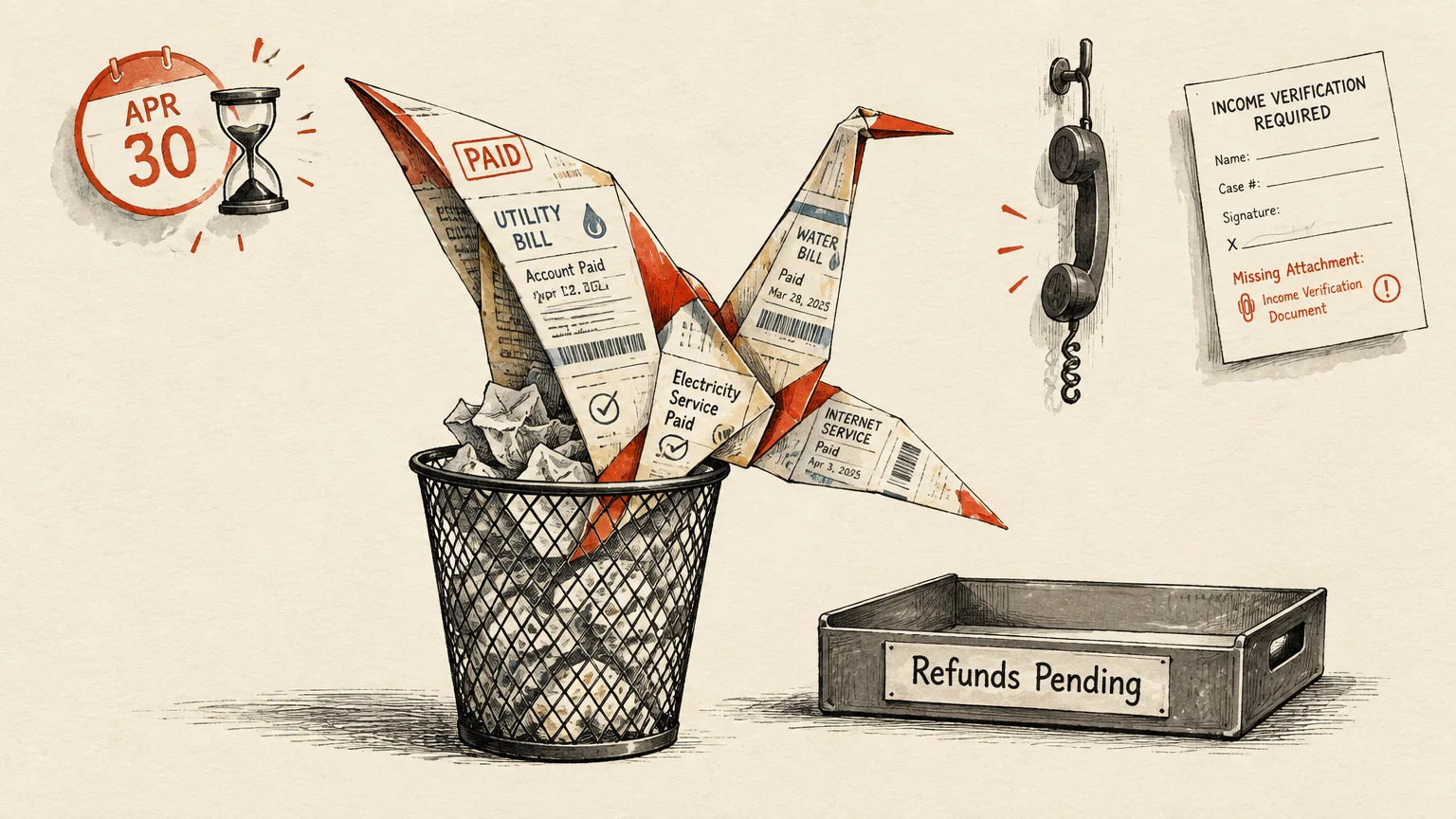
Many seniors surrender hundreds or thousands of dollars simply because they misunderstand billing laws. Avoiding common administrative traps preserves your hard-earned retirement savings.
Do not assume that paying an invoice forfeits your legal right to contest the charges. Statutory consumer protections explicitly allow audits and retroactive reimbursements after payment.
Never rely on verbal promises from customer service representatives. Always submit written requests alongside certified documentation and track your correspondence through certified mail or secure portals.
Do not wait until the end of the year to review your expenses. Missing statutory filing deadlines—like the 240-day hospital window—permanently forfeits your refund rights.

When Professional Advice Is Worth It
Recovering overpaid funds is often straightforward, but complex situations demand specialized assistance. Professional guidance ensures you do not leave money on the table.
Consult a Certified Public Accountant (CPA) if your income changes involve complex capital gains or deferred compensation affecting your Medicare IRMAA calculations.
Work with a State Health Insurance Assistance Program (SHIP) counselor if you encounter resistance filing LI NET prescription claims or Medicaid retroactive appeals.
Contact a consumer attorney or legal aid organization if a non-profit hospital refuses to comply with IRS Section 501(r) financial assistance mandates.
“Do not save what is left after spending, but spend what is left after saving.” — Warren Buffett
Frequently Asked Questions
Can a non-profit hospital refuse a refund if I willingly paid my balance?
No. Under IRS Section 501(r)(6), non-profit hospitals must process financial assistance applications submitted within 240 days of the first post-discharge bill.
If your approved financial assistance reduces your payment obligation, the hospital is legally required to refund the excess amount you already paid.
How long does Social Security take to process an IRMAA refund?
The Social Security Administration typically processes Form SSA-44 requests within 60 to 90 days of receipt.
Once approved, the agency either deposits a direct reimbursement into your bank account or credits your upcoming monthly retirement payments.
Will auto insurance companies backdate my low-mileage refund to my retirement date?
Many carriers backdate policy changes if you supply written verification of your retirement date or an updated odometer inspection.
If the company refuses retroactive credit, they must still issue a prorated refund for the remainder of your prepaid policy term.
What records do I need to claim retroactive property tax exemptions?
You generally need your recorded property deed, proof of age such as a driver’s license, and evidence of primary homestead occupancy.
Your county tax assessor will provide specific forms, such as an application for retroactive homestead exemption or a certificate of error.
Next Steps for Your Household Budget
Begin by reviewing your past twelve months of bank statements, tax records, and medical invoices. Identifying overlooked senior benefits puts your money back where it belongs.
Financial outcomes vary based on individual income, credit history, and circumstances. This article provides general guidance only. Consult a qualified financial planner, CPA, or consumer attorney for advice specific to your situation.
Last updated: February 2026. Rates, benefit amounts, and tax rules change—always verify current details at official sources.