
A sudden 20% drop in your portfolio right before retirement can derail decades of diligent saving in weeks. Watching your hard-earned wealth contract forces an immediate reassessment of your plans.
The 2022 bear market delivered brutal reminders about asset volatility, inflation spikes, and cash reserves. Knowing these realities helps you insulate your savings from the next inevitable economic shock.
These key retirement lessons learned from the last market downturn show you exactly how to protect your nest egg. Adopting these adjustments will keep your long-term plans firmly on track.
1. Sequence of Returns Risk Can Break an Early Retirement
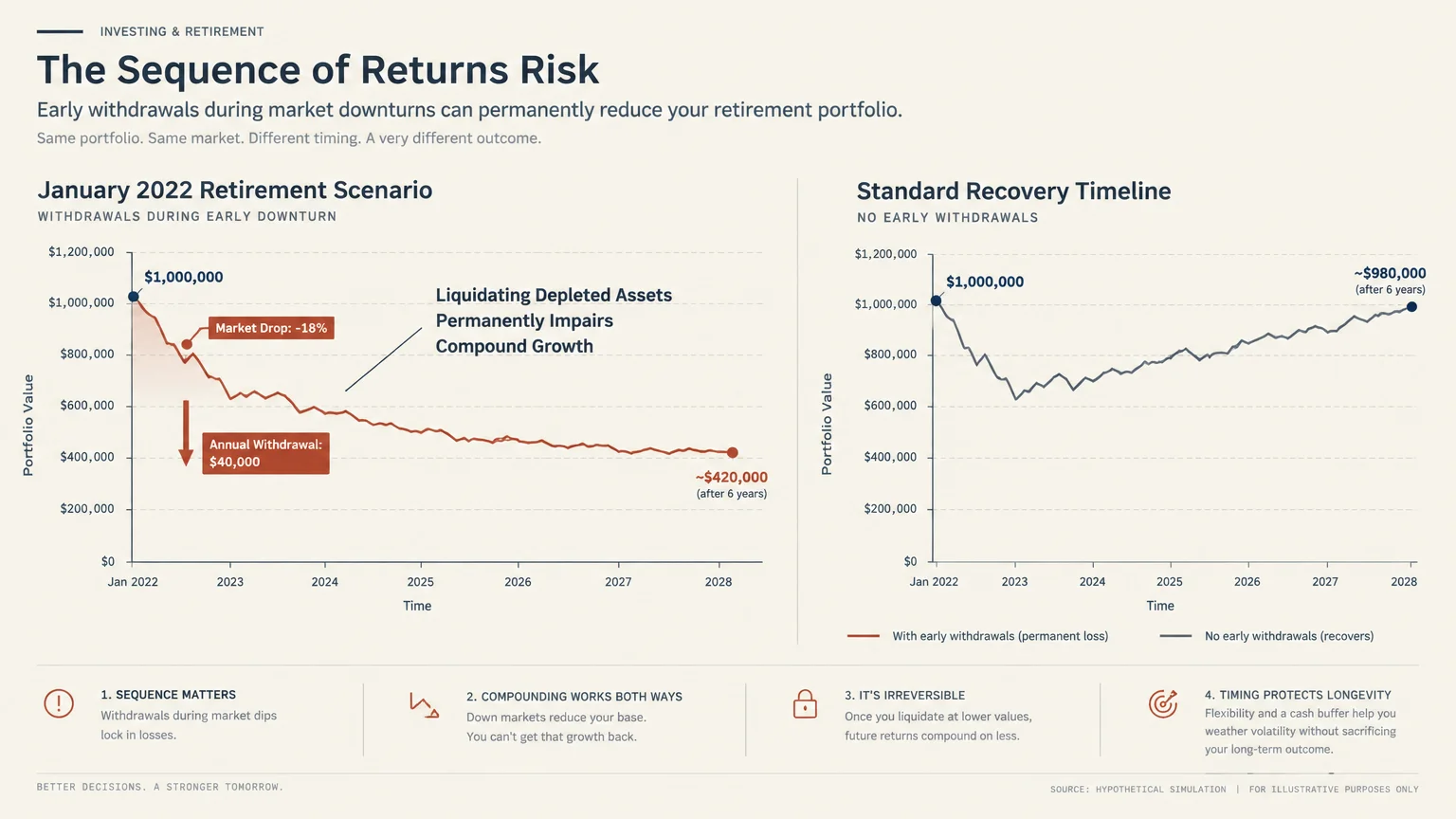
The timing of market drops matters just as much as your long-term average annual return. Suffering steep losses in the first few years of retirement creates severe sequence of returns risk.
When you withdraw money from a falling portfolio, you permanently liquidate assets at depressed prices. Those liquidated shares can never recover to generate future compound growth for your household.
Consider an individual who retired in January 2022 with a $1,000,000 portfolio. Withdrawing $40,000 while the market plummeted 18% caused lasting damage compared to retiring during a bull market run.
To survive market downturns early in retirement, you must build flexible withdrawal plans. Reducing your withdrawals during bad years prevents you from depleting your nest egg prematurely.
2. Traditional 60/40 Portfolios Need Active Rebalancing
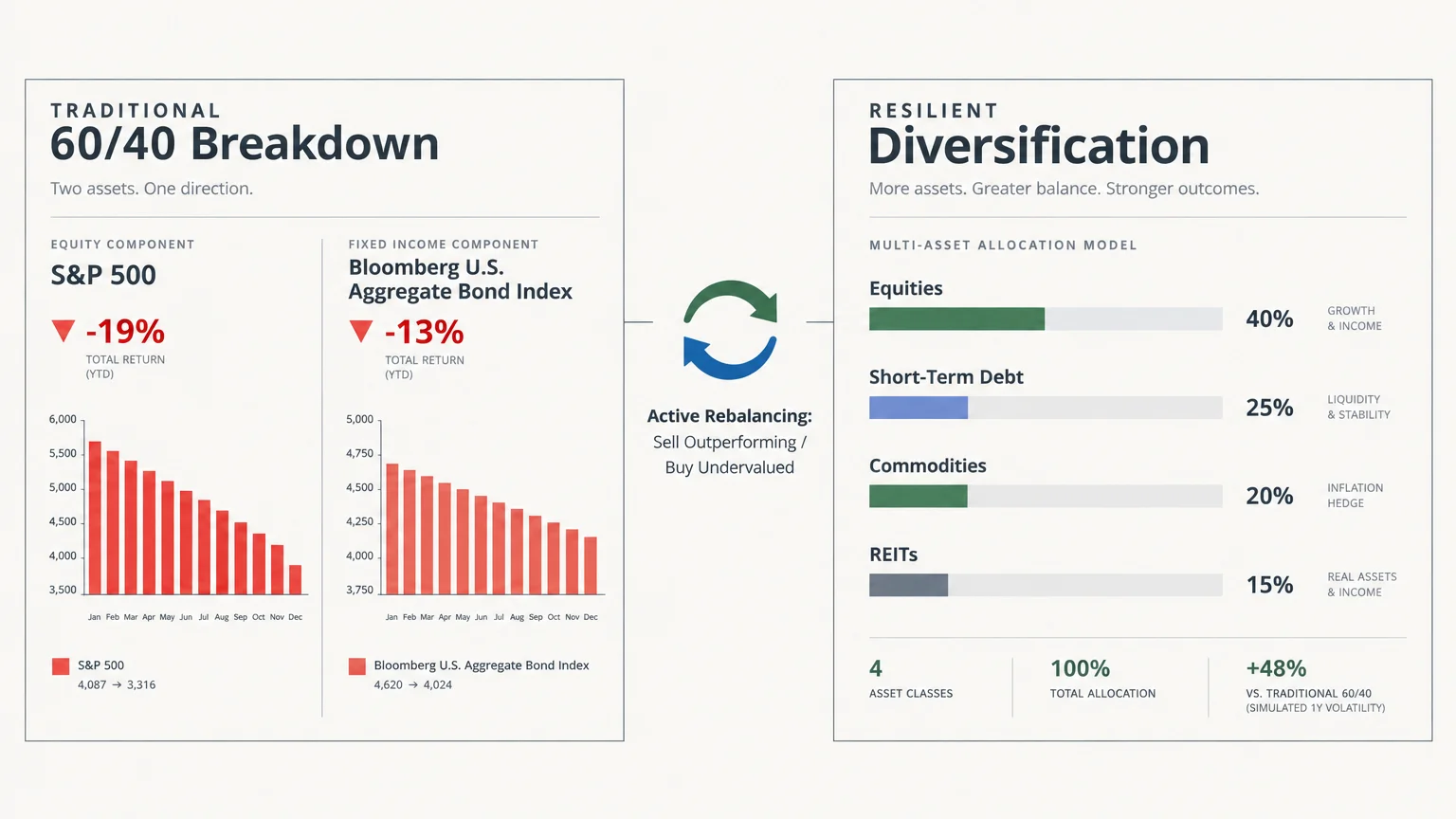
For decades, financial planners treated the 60/40 stock-and-bond allocation as an all-weather safety shield. The 2022 downturn shattered that assumption when both equities and fixed-income assets dropped simultaneously.
The S&P 500 plunged roughly 19%, while the Bloomberg U.S. Aggregate Bond Index fell more than 13%. Investors who expected bonds to cushion equity losses faced unexpected double-digit declines across their entire portfolio.
This breakdown highlighted why passive buy-and-hold strategies require disciplined rebalancing. Disciplined rebalancing forces you to sell outperforming assets and buy undervalued holdings at regular intervals.
Portfolio resilience requires broader diversification beyond simple index funds. Integrating short-term debt instruments, commodities, and real estate investment trusts can provide genuine uncorrelated returns during severe market dislocations.

3. Cash Buffers Prevent Forced Selling at Market Lows
Liquid cash reserves represent your first line of defense during an economic downturn. When market prices crater, a dedicated cash cushion allows you to cover everyday expenses without selling depreciated stocks.
Retirees who maintained two to three years of living expenses in cash slept soundly through recent market turmoil. They spent down cash while waiting for their equity positions to stage a full recovery.
Modern cash management also yields meaningful interest income. With policy interest rates set by the Federal Reserve, high-yield savings accounts and Treasury bills offer solid risk-free yields.
Structure your reserves into distinct liquidity tiers. Keep three to six months of expenses in an immediate checking account and another 18 to 24 months in short-term certificates of deposit or Treasury bills.

4. Static Withdrawal Rates Fail in High-Inflation Environments
The classic 4% rule assumes you increase annual dollar withdrawals alongside official inflation numbers. When annualized inflation reached 9.1% in mid-2022, rigid inflation adjustments placed unsustainable strain on declining portfolios.
Blindly adjusting spending upward while portfolio values collapse accelerates the depletion of your assets. Market crash retirement scenarios demand dynamic withdrawal methodologies instead of rigid mathematical rules.
Adopting guardrail systems preserves long-term portfolio longevity. If your withdrawal rate exceeds 5% of your remaining balance due to market drops, you cut discretionary spending immediately.
Conversely, if strong bull markets push your withdrawal rate below 3%, you can reward yourself with higher distributions. Flexibility protects capital far better than outdated static formulas.
5. Bond Duration Matters More Than Most Investors Realized
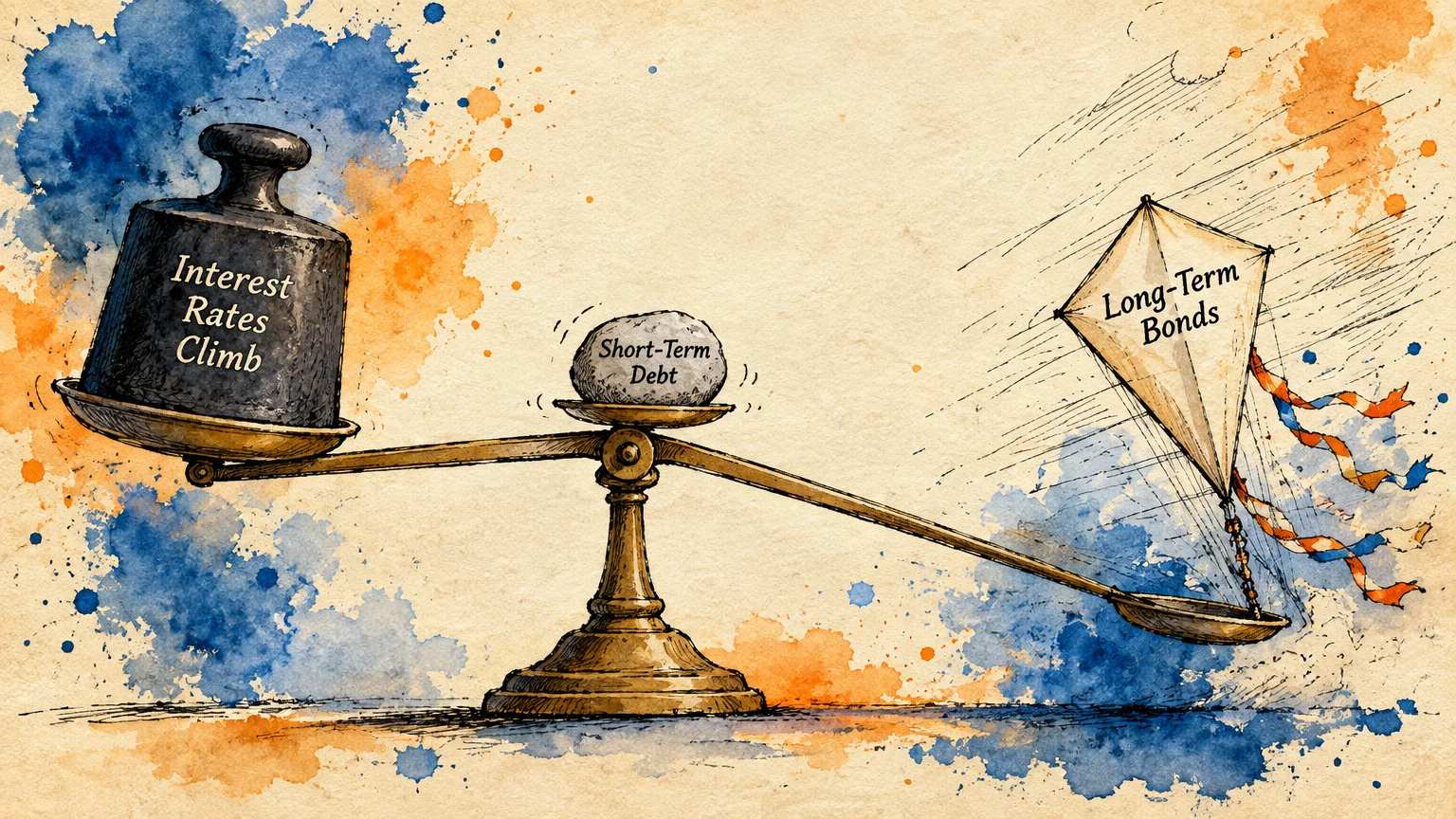
Many pre-retirees bought aggregate bond funds assuming that fixed income carried minimal risk of principal loss. Rapid interest rate hikes quickly proved that long-duration bond funds can experience stock-like crashes.
Bond prices move inversely to interest rates, with longer-maturity bonds experiencing the sharpest swings. Funds heavy in 10-year and 30-year paper suffered catastrophic paper losses throughout 2022 and 2023.
Retirees seeking safety learned to emphasize short-duration debt instruments instead. Ultra-short bond funds and individual Treasury bills protected principal while offering yields above 4%.
Building a personalized bond ladder gives you predictable cash flows and guaranteed return of principal at maturity. Holding individual bonds to maturity shields your principal from daily price volatility entirely.

6. Guaranteed Income Floors Provide Unmatched Peace of Mind
Relying exclusively on investment portfolios for essential living expenses creates unnecessary emotional stress. Downturns proved that a strong floor of reliable, guaranteed income provides psychological and financial stability.
Maximize your monthly baseline benefits through the Social Security Administration (SSA) before touching volatile investment accounts. Delaying your claim until age 70 increases your monthly benefit check by up to 8% annually.
Calculate your non-negotiable living costs, including housing, food, insurance, and medical care. Ensuring that Social Security, pensions, or reliable annuities cover these essentials prevents panic during sharp market contractions.
When guaranteed income covers your basic survival needs, your equity portfolio can experience severe volatility without threatening your daily shelter or food security.
7. Tax-Loss Harvesting Turns Down Markets Into Tax Savings
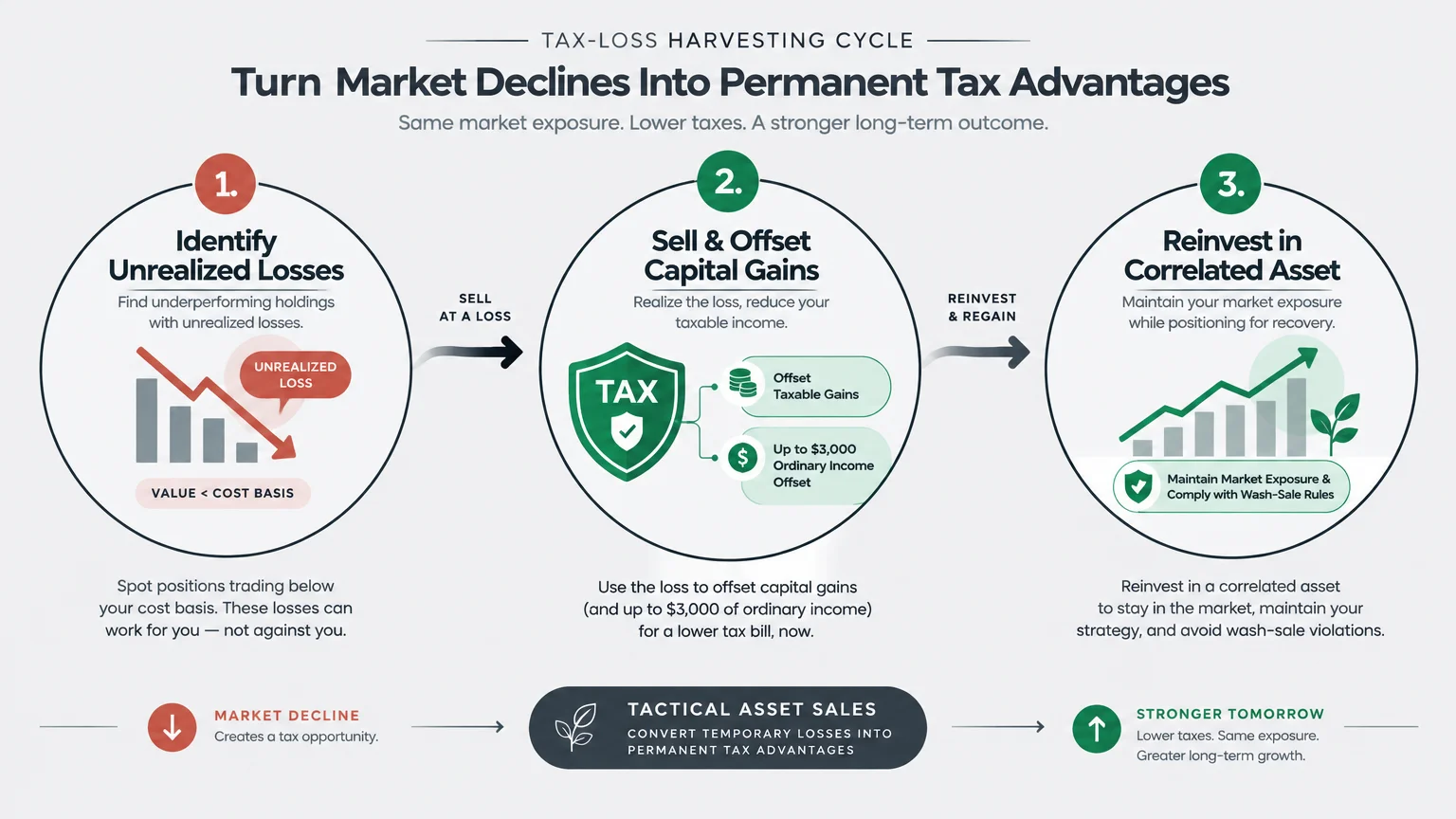
Market drawdowns present valuable opportunities to optimize your overall tax liability. Tax-loss harvesting allows you to convert temporary market declines in taxable brokerage accounts into permanent tax savings.
You can offset realized capital gains dollar-for-dollar using realized capital losses. Under rules enforced by the IRS, you can also offset up to $3,000 of ordinary income annually, carrying forward unused losses indefinitely.
The key is reinvesting proceeds into similar, but not substantially identical, assets to maintain market exposure. This strategy avoids the 30-day wash-sale rule while preserving your portfolio’s ability to rebound.
Downturns also create ideal windows for strategic Roth conversions. Moving beaten-down equities from a traditional IRA to a Roth IRA lets you pay taxes on lower asset values before the market recovers.

8. Emotional Discipline Trumps Tactical Market Timing
Reacting emotionally to scary financial headlines represents the single greatest threat to your retirement wealth. Investors who panicked in late 2022 and fled into cash missed the historic market rebound that followed.
Data consistently proves that market timing fails because the best trading days cluster immediately around the worst drops. Missing just the ten best market days over a decade cuts your total returns substantially.
“Do not save what is left after spending, but spend what is left after saving.” — Warren Buffett
Investing through a bear market requires accepting paper drawdowns as the price of admission for long-term equity growth. Creating a written investment policy statement prevents impulsive decision-making during emotional market peaks and troughs.
Turn off daily financial news broadcasts when volatility surges. Reviewing account balances once a month or once a quarter helps prevent panic-driven mistakes.

9. Debt Management Becomes Critical When Rates Climb
Carrying variable-rate debt into retirement is hazardous during inflationary cycles. As central banks raise benchmark rates to combat inflation, variable credit lines and adjustable-rate mortgages become significantly more expensive.
According to research from the Consumer Financial Protection Bureau (CFPB), rising interest rates place immense pressure on older households relying on fixed incomes. Eliminating consumer balances before retiring removes fixed monthly drains on your savings.
Retirees who carried fixed 3% mortgage rates weathered recent economic turbulence far better than peers with variable obligations. Predictable housing expenses reduce the portfolio cash flows required to sustain your lifestyle.
Pay off high-interest debt aggressively before stepping away from full-time employment. Debt freedom creates operational margin when your investment returns turn temporarily negative.
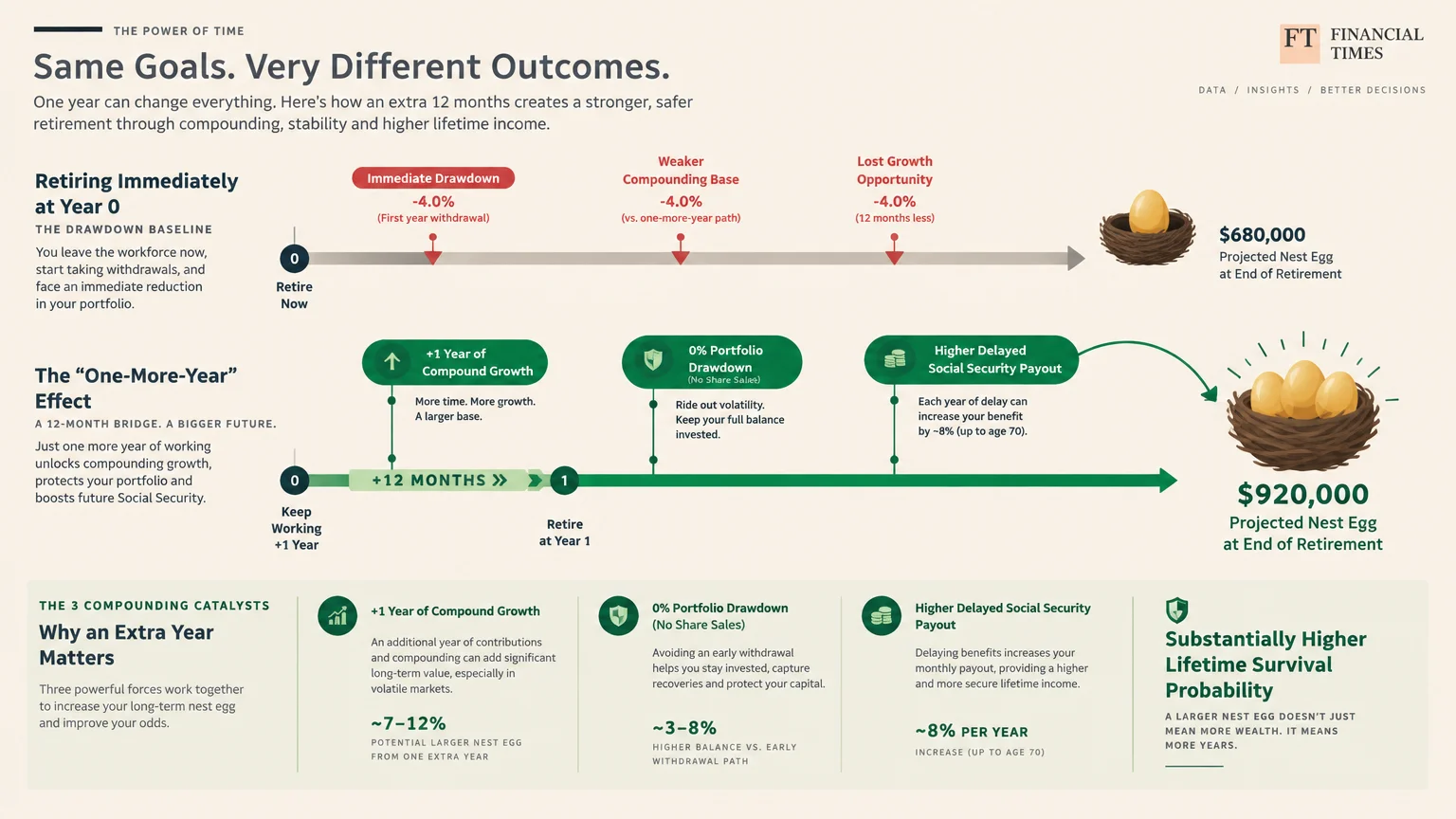
10. Working Just One More Year Dramatically Alters the Math
The decision to delay retirement by 12 to 24 months during a bear market pays compounding dividends. Postponing your exit date provides a three-part financial advantage that cushions against poor market conditions.
First, continuing to work eliminates the need to sell depressed assets to pay living expenses. Second, it allows you to make maximum retirement contributions at discounted market valuations.
Third, delaying retirement shortens the overall distribution horizon your savings must support. That single additional year of earnings often transforms a marginal retirement plan into an exceptionally robust one.
Consider negotiating a part-time phased retirement or consulting arrangement if full-time work feels exhausting. Earning even $1,500 monthly dramatically reduces portfolio withdrawals during fragile transitional periods.
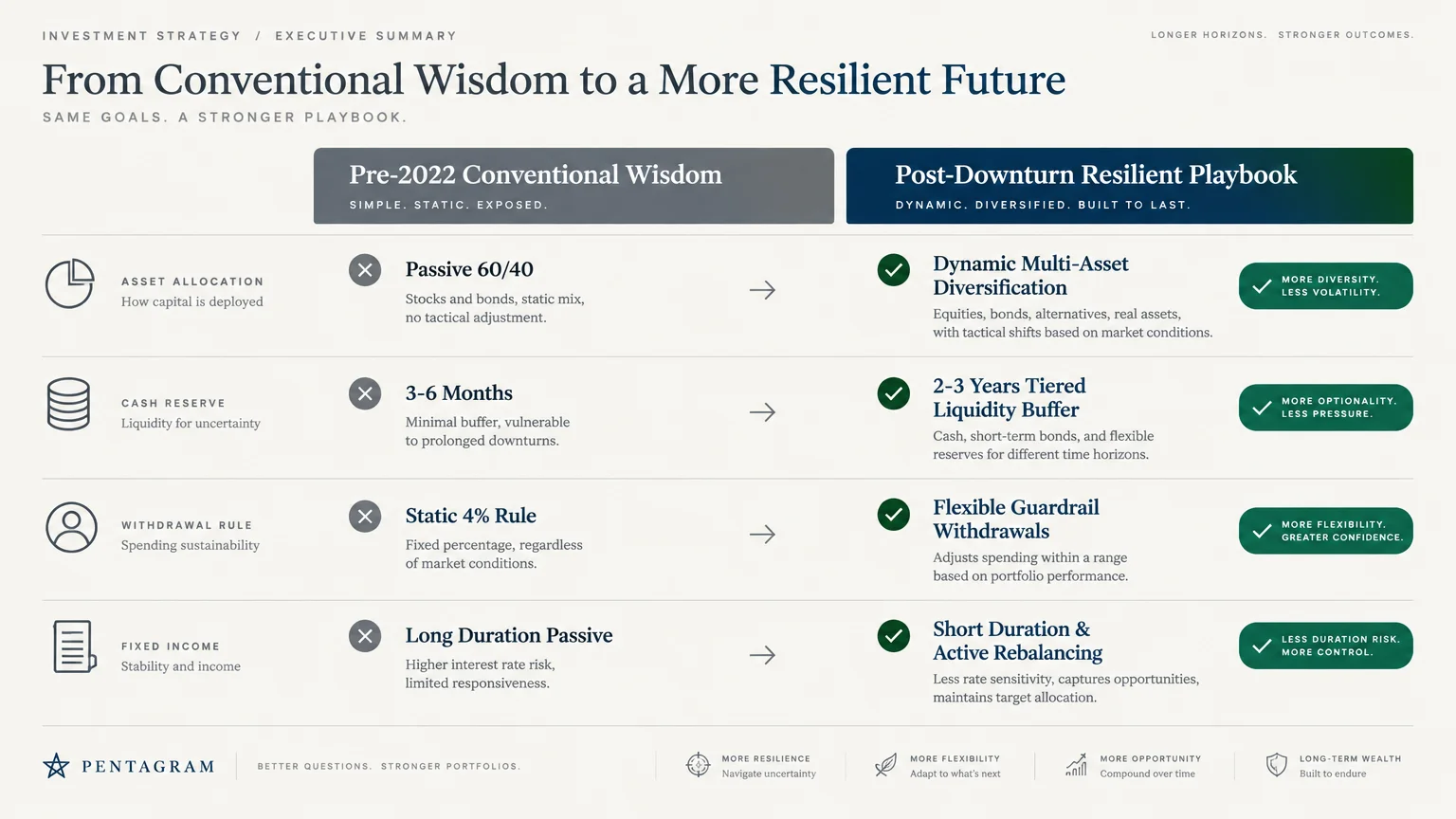
Comparing Retirement Strategies Before and After a Market Shock
Reviewing how conventional assumptions compare against battle-tested approaches clarifies necessary portfolio adjustments. Use this breakdown to evaluate your household’s financial plan.
| Planning Area | Conventional Pre-Downturn View | Battle-Tested Post-Downturn Strategy |
|---|---|---|
| Cash Cushion | 3 to 6 months of living expenses. | 1 to 3 years of tiered liquid reserves. |
| Withdrawal Strategy | Rigid 4% annual inflation adjustments. | Dynamic spending guardrails based on performance. |
| Fixed Income | Broad aggregate long-duration bond funds. | Short-duration bond ladders and Treasury bills. |
| Bear Market Plan | Sell evenly across all portfolio holdings. | Spend cash and harvest tax losses while stocks recover. |
| Income Source | Heavy dependence on portfolio withdrawals. | Maximized Social Security and guaranteed floors. |
Adapting your allocation to this resilient framework preserves capital through varying economic environments. Making small shifts today shields your lifestyle from unexpected macroeconomic volatility tomorrow.

Costly Mistakes to Avoid
Steering clear of common behavioral traps protects your retirement balance as much as selecting strong investments. Avoid these costly mistakes during challenging market cycles:
- Liquidating equities at the bottom: Converting paper declines into permanent losses locks in financial impairment and prevents recovery.
- Underestimating inflation risk: Holding 100% cash guarantees purchasing power erosion over extended 30-year retirements.
- Ignoring sequence of returns risk: Drawing high distribution percentages during market drops rapidly drains your primary capital base.
- Carrying high-interest variable debt: Exposing your monthly budget to fluctuating borrowing costs squeezes essential cash reserves.
- Failing to adjust discretionary outlays: Maintaining luxury travel or expensive renovations during sharp drawdowns strains vulnerable accounts.
Regular stress-testing keeps your household from falling into these destructive traps. Review your risk tolerance before market declines occur, not after prices plunge.

Don’t DIY These Decisions
Navigating tax rules, healthcare transitions, and portfolio preservation often demands specialized expertise. A single mistake during an economic downturn can cost tens of thousands of dollars.
Collaborate with a fee-only Certified Financial Planner (CFP) who operates under a strict fiduciary standard. Fiduciary advisors provide unbiased withdrawal plans without pushing high-commission financial products.
Consult a Certified Public Accountant (CPA) when executing complex tax-loss harvesting or Roth conversion strategies. Tax laws change frequently, and miscalculating taxable income triggers unwanted brackets or Medicare surcharges.
If you face challenging mortgage decisions, engage a HUD-approved housing counselor for objective housing guidance. Professional guidance ensures every move aligns with your long-term personal interests.
Frequently Asked Questions
What is sequence of returns risk, and why does it matter?
Sequence of returns risk is the danger that market declines occur early in your retirement. Withdrawing money during downturns locks in losses and permanently impairs your portfolio’s future growth potential.
How much cash should I keep in retirement?
Most financial experts recommend holding one to three years of essential living expenses in cash equivalents. This buffer ensures you can pay bills without being forced to sell depressed stocks.
How does inflation affect the traditional 4% withdrawal rule?
The traditional 4% rule increases annual dollar withdrawals by official inflation numbers. In periods of high inflation combined with falling markets, this approach drains principal at an unsustainable rate.
Should I stop investing in stocks once I retire?
No, completely eliminating stocks exposes your money to severe purchasing power loss over decades. Maintaining 40% to 60% equity exposure helps your portfolio outpace inflation throughout a 30-year retirement.
Taking Control of Your Financial Future
Market downturns are an unavoidable reality of long-term investing, but they do not have to disrupt your retirement dreams. Implementing disciplined cash reserves, dynamic withdrawal rules, and diversified portfolios positions you for enduring success.
Take time this week to review your liquid savings and determine your baseline income floor. Making proactive adjustments today ensures you navigate the next bear market with complete confidence.
This article is for informational purposes only and does not constitute financial, legal, or tax advice. Rates, benefit amounts, and tax rules change regularly—verify current details with the relevant agency or a licensed professional.
Last updated: February 2026. Rates, benefit amounts, and tax rules change—always verify current details at official sources.