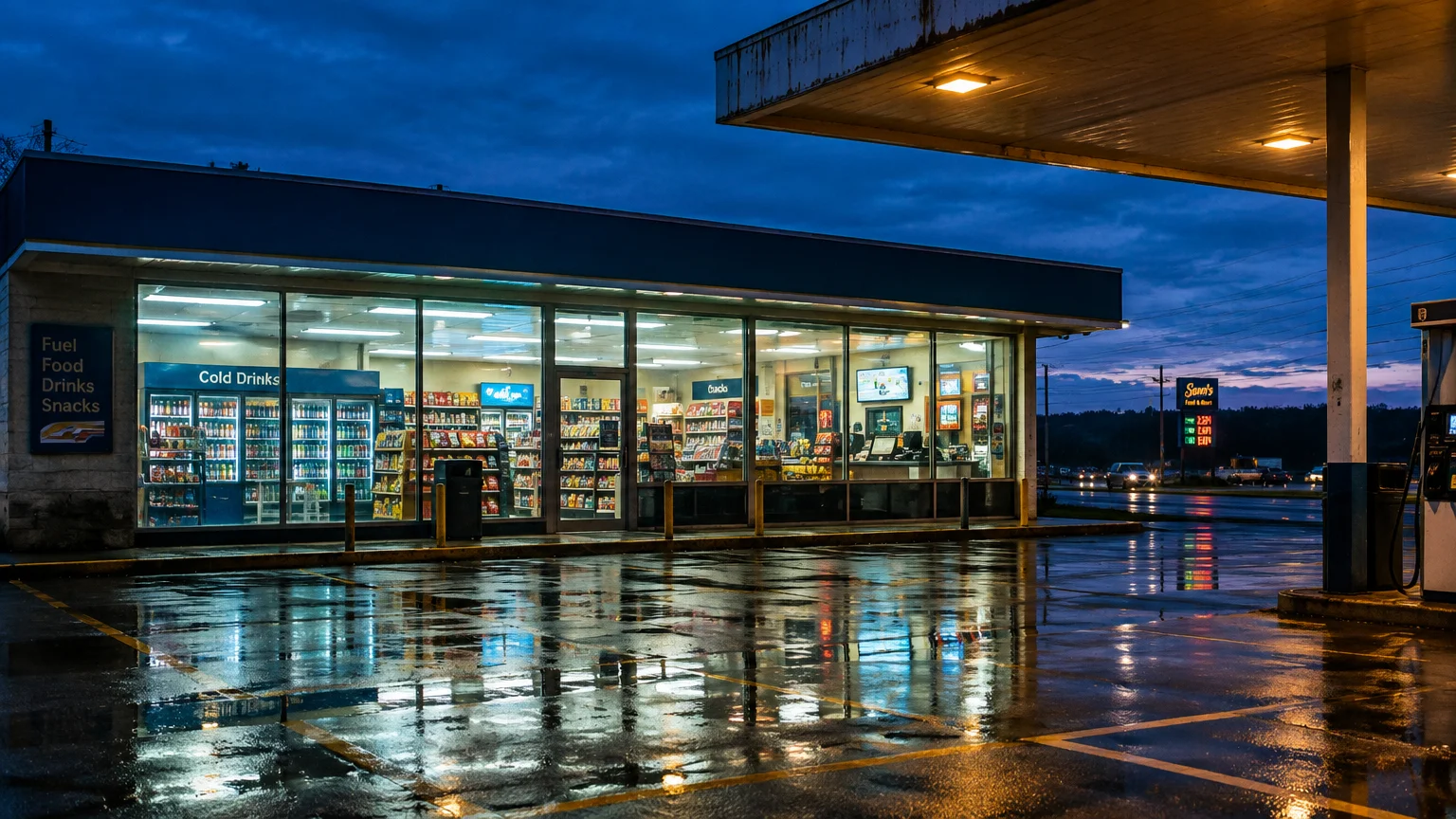
A quick stop for fuel often turns into an accidental budget trap. Grabbing a cold drink, a phone charger, or headache pills at the pump costs significantly more than buying those same essentials elsewhere.
Retailers price these items for speed and proximity, not household savings. Paying double or triple retail prices eats away at your weekly discretionary income without adding real value to your life.
Understanding which convenience store markups hurt your wallet most helps you keep more cash in your checking account. Here is what you should avoid buying at your local corner store.
The Hidden Economics Behind Convenience Store Markups
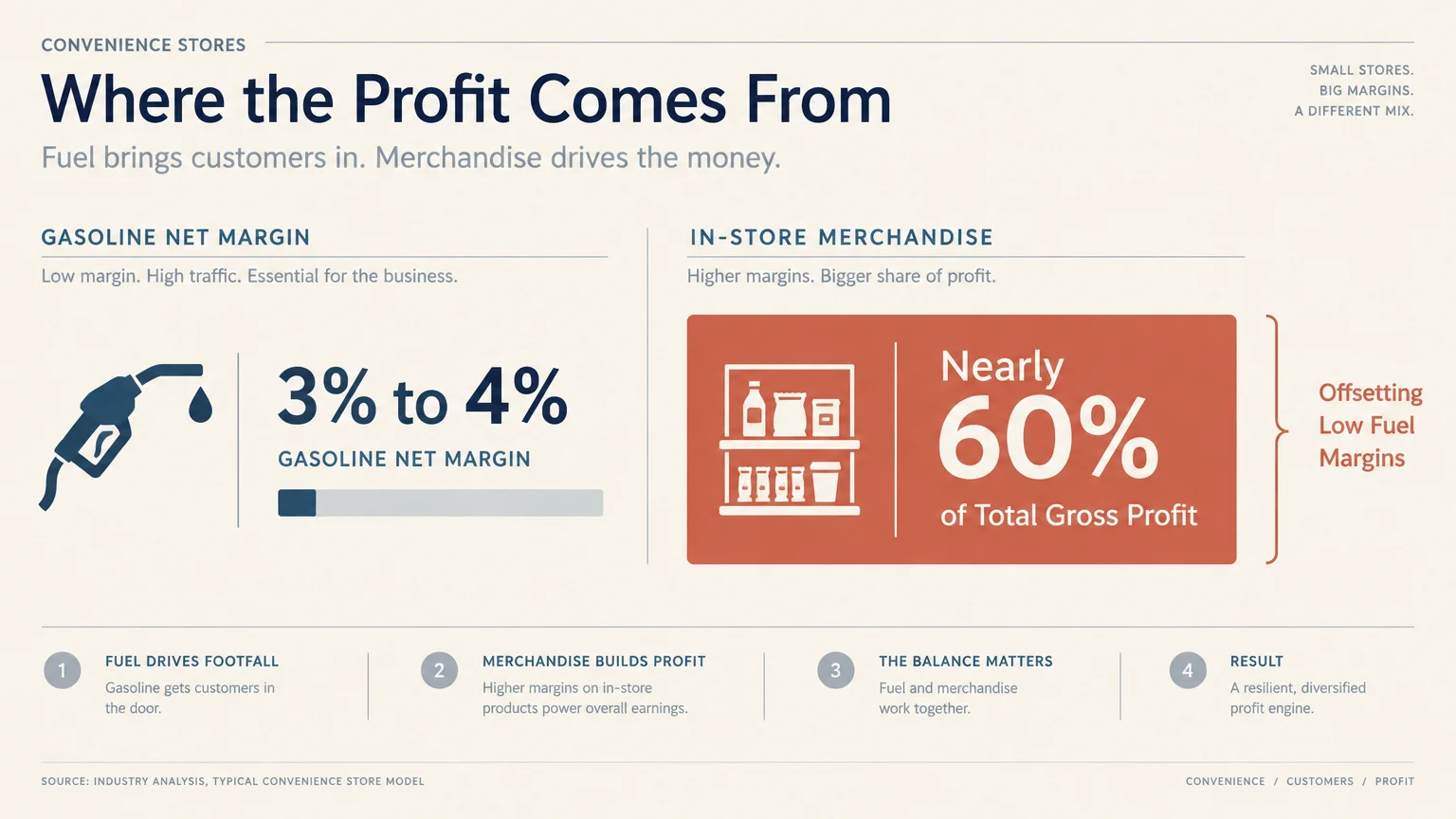
Gas stations operate on razor-thin margins at the fuel pump. Fuel retailers typically earn an average net margin of just 3% to 4% per gallon after credit card processing fees.
Those fuel pennies barely cover operating expenses, station maintenance, and utility bills. To turn a sustainable profit, operators rely heavily on in-store merchandise sales.
Data from the National Association of Convenience Stores (NACS) shows that in-store merchandise generates nearly 60% of total gross profit dollars. Operators intentionally mark up shelf inventory to offset weak fuel margins.
You pay a steep premium for immediate access and effortless parking. When you understand these retail markups, you can easily protect your household budget from avoidable leaks.
“A budget is telling your money where to go instead of wondering where it went.” — John C. Maxwell
1. Over-the-Counter Pain Relievers and Cold Medicine
Few markups match the sheer cost per dose of gas station medicine racks. Convenience stores package pain relievers into small, two-to-four caplet blister packets designed for urgent relief.
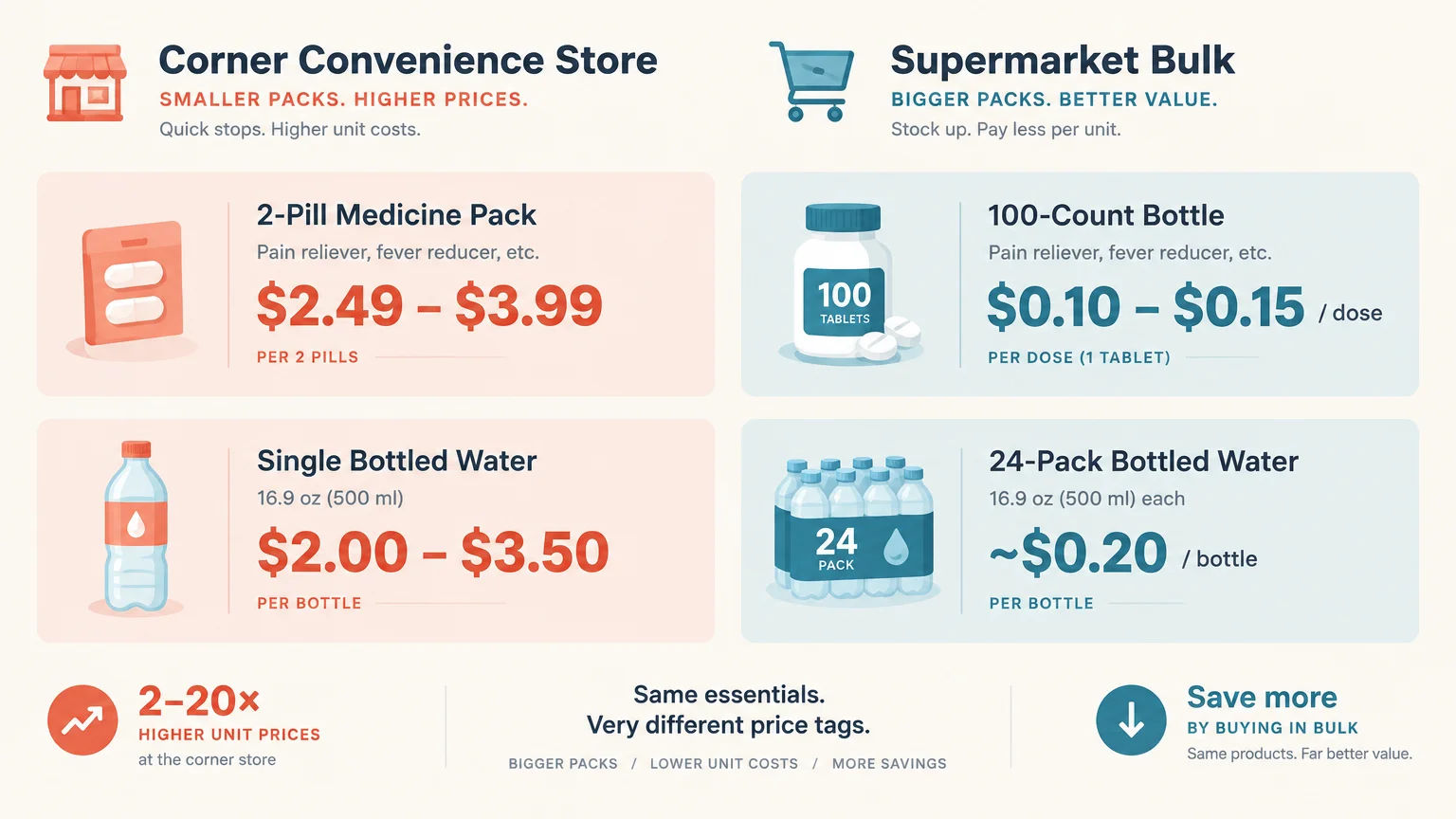
A two-pill pouch of Advil or Tylenol routinely retails for $2.49 to $3.99 at the counter. That pricing means you pay between $0.75 and $1.50 for a single dose.
Buying a 100-count bottle at a pharmacy or supermarket costs roughly $10.00 to $12.00. That brings your cost down to just $0.10 to $0.15 per dose.
Gas station pricing represents a 500% to 1,000% premium over bulk medication. Retailers know that when a migraine strikes on the road, price sensitivity completely disappears.
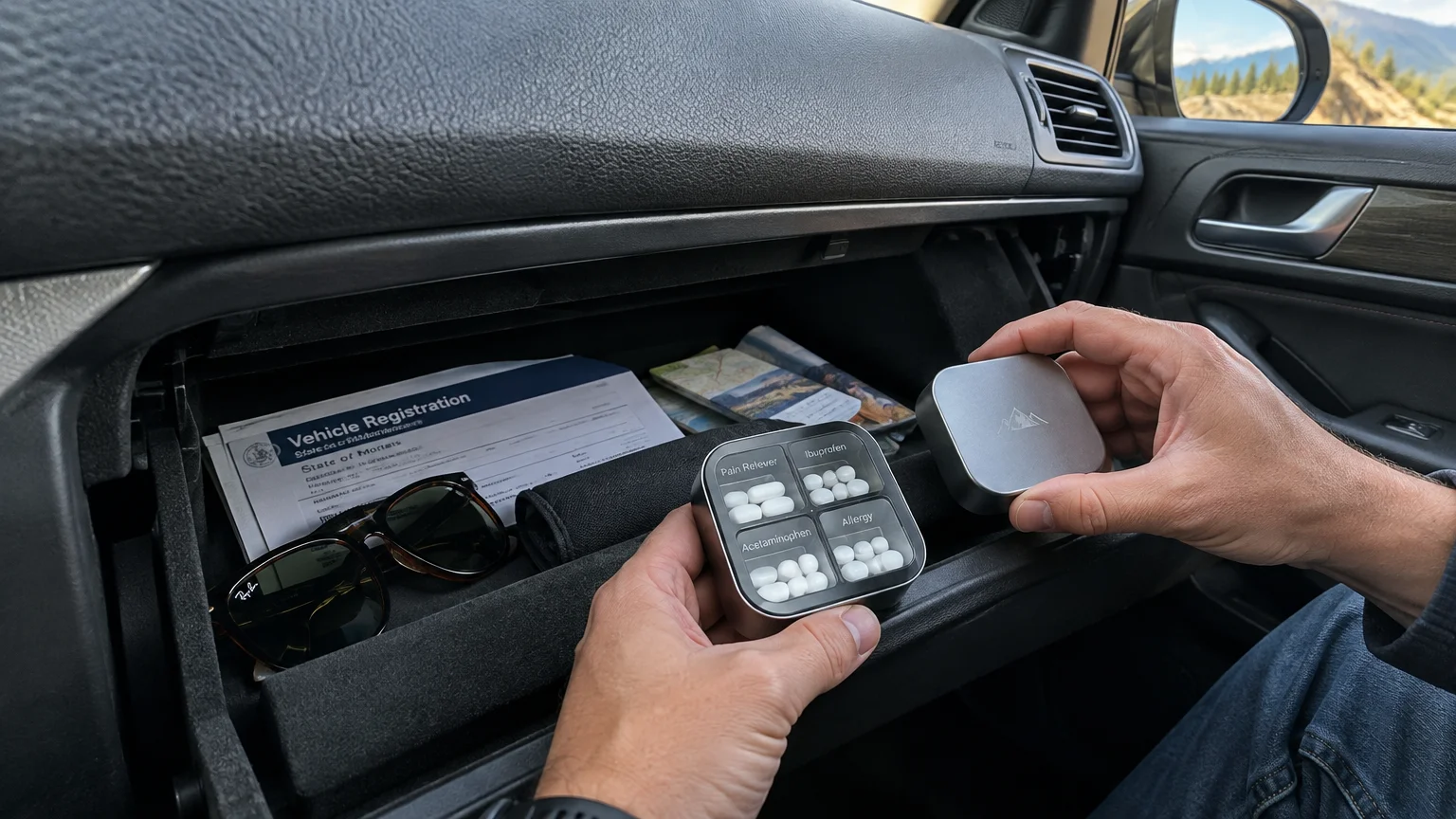
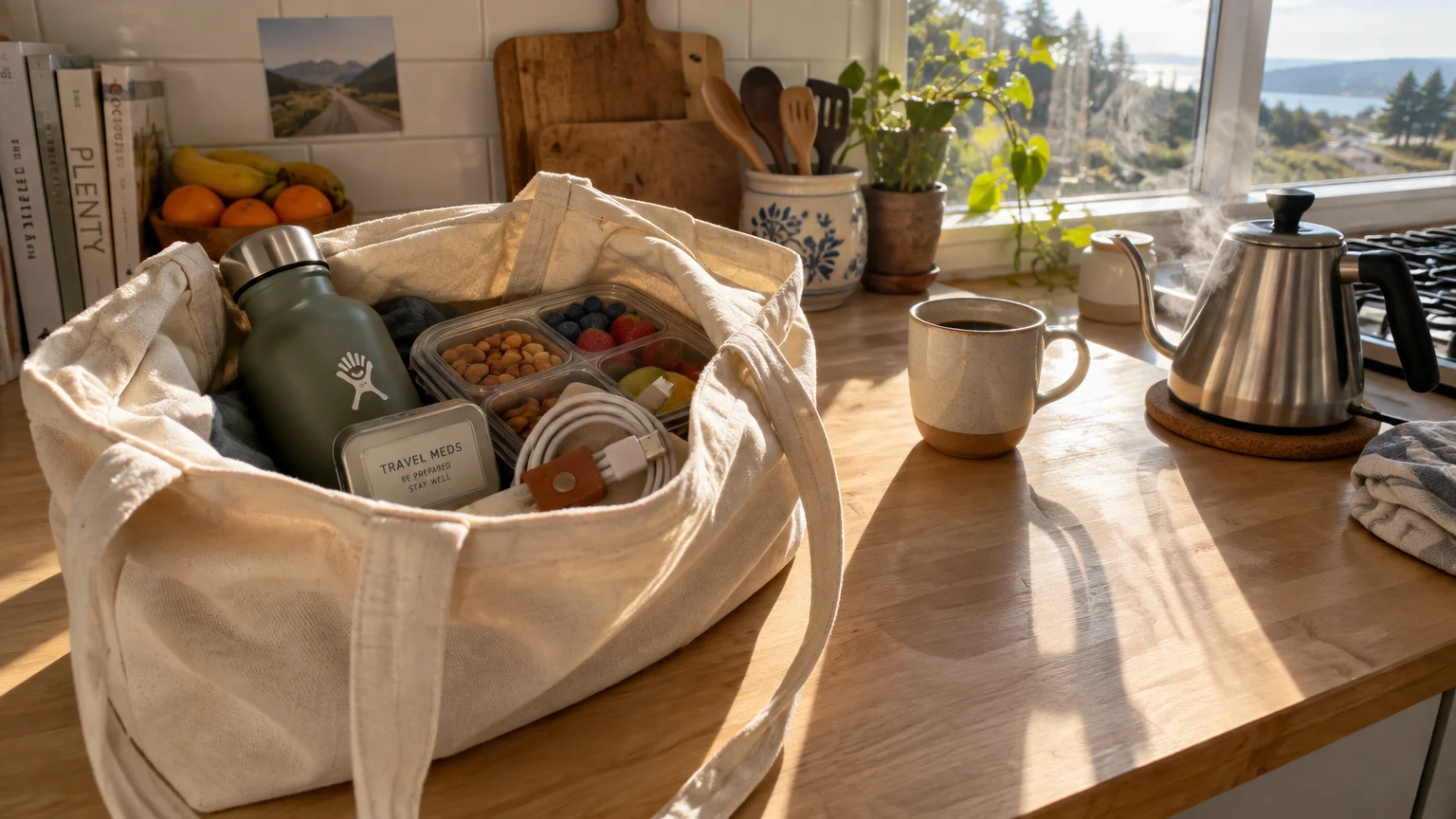
To avoid this distress markup, assemble a small travel medicine container for your glove compartment. Refilling a small travel tin from home saves you dozens of dollars each year.
2. Single-Serve Bottled Water
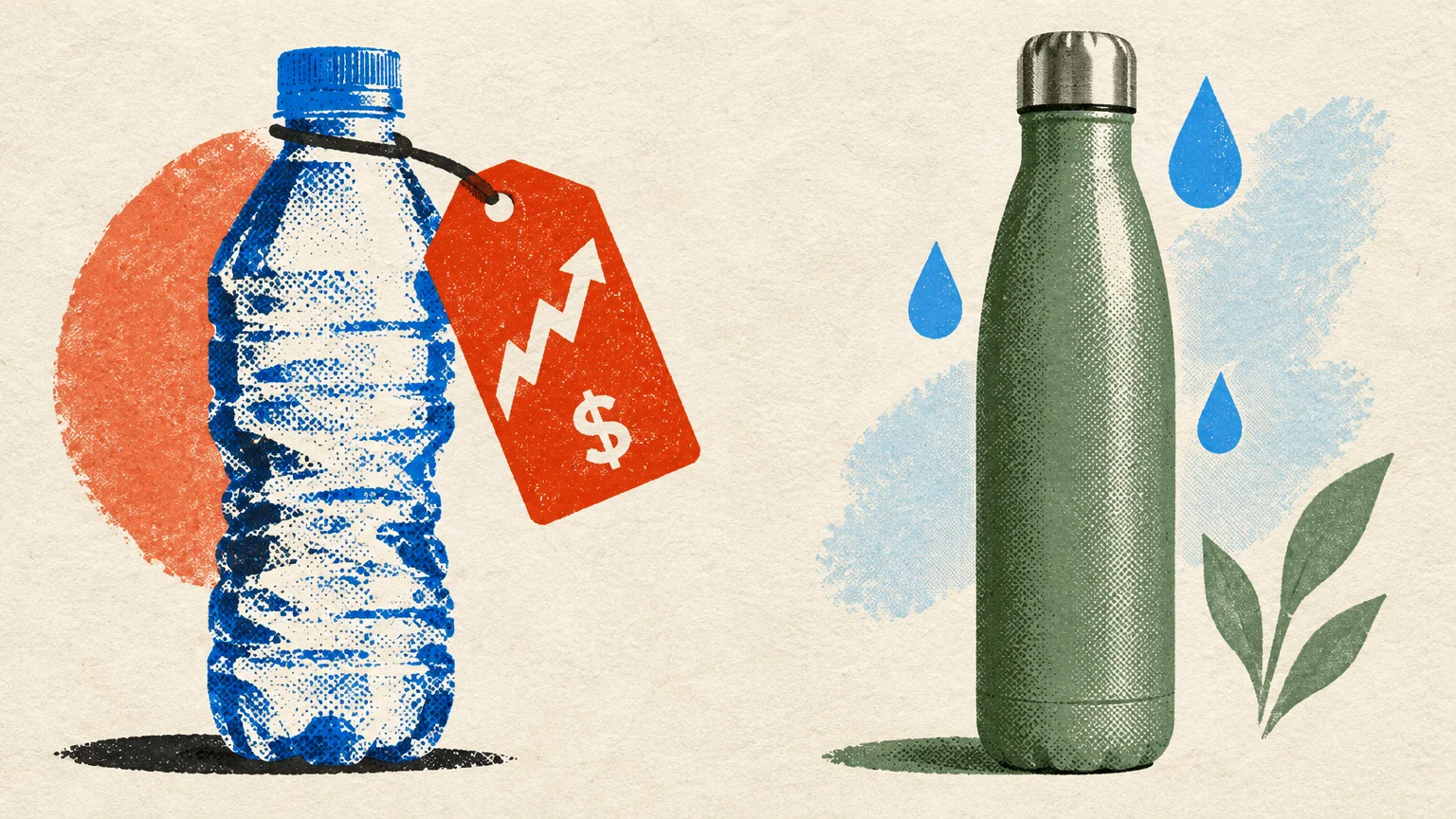
Single-serve bottled water is one of the most profitable products inside any convenience store. A single chilled 20-ounce or 1-liter bottle routinely sells for $2.00 to $3.50.
These individual beverage sales deliver gross profit margins between 50% and 60% for store owners. You are paying pure profit margins for chilled tap or spring water.
A full 24-pack of bottled water costs between $4.50 and $6.00 at standard grocery chains. That equals roughly $0.20 per bottle for the exact same purified water.
Buying cold water at the pump means accepting a markup exceeding 1,000% per ounce. Over a summer of commuting, that habit costs a household hundreds of dollars.
Carry a durable, double-walled insulated water bottle whenever you travel. Filling your bottle at home keeps your water cold all day without wasting money.
3. Smartphone Charging Cables and Tech Accessories
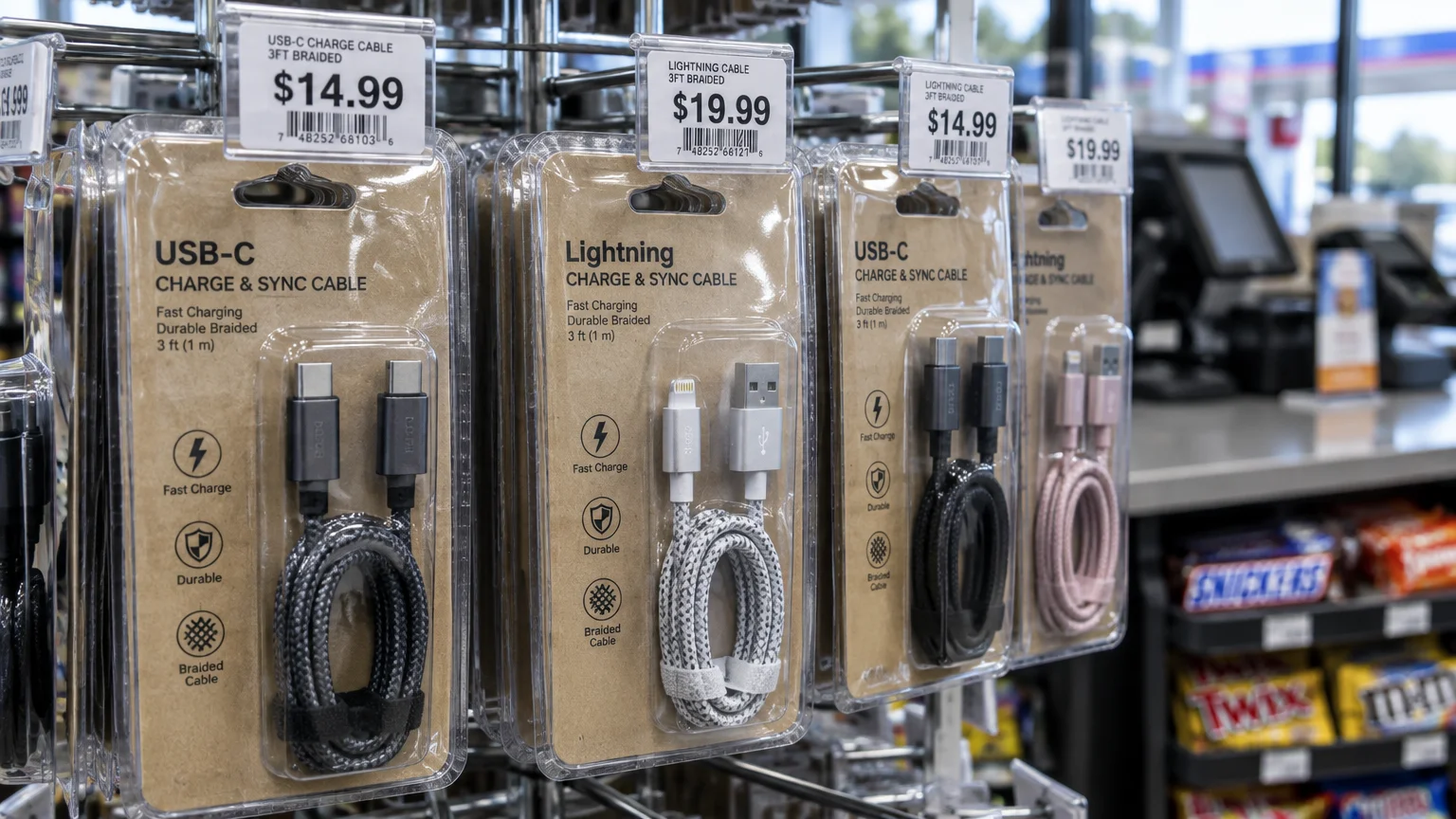
Tech accessories hanging near the checkout register target stranded drivers with dying battery screens. Low-tier Lightning and USB-C cables typically sell for $12.99 to $19.99 each.
These unbranded cords often lack proper durability testing and certification. Many fail after a few weeks of use, forcing you to replace them again.
Certified multi-packs from discount retailers or online sellers cost roughly $3.00 to $6.00 per cable. You pay a 200% to 400% markup solely for immediate battery power.
Keep a dedicated charging cable and adapter inside your vehicle console permanently. Proactive planning eliminates the urge to buy low-quality emergency cords at the counter.
4. Windshield Washer Fluid and Automotive Essentials
Motorists expect gas stations to supply basic automotive fluids, but convenience stores charge heavily for that availability. Automotive products carry an average retail markup of 93% over wholesale.
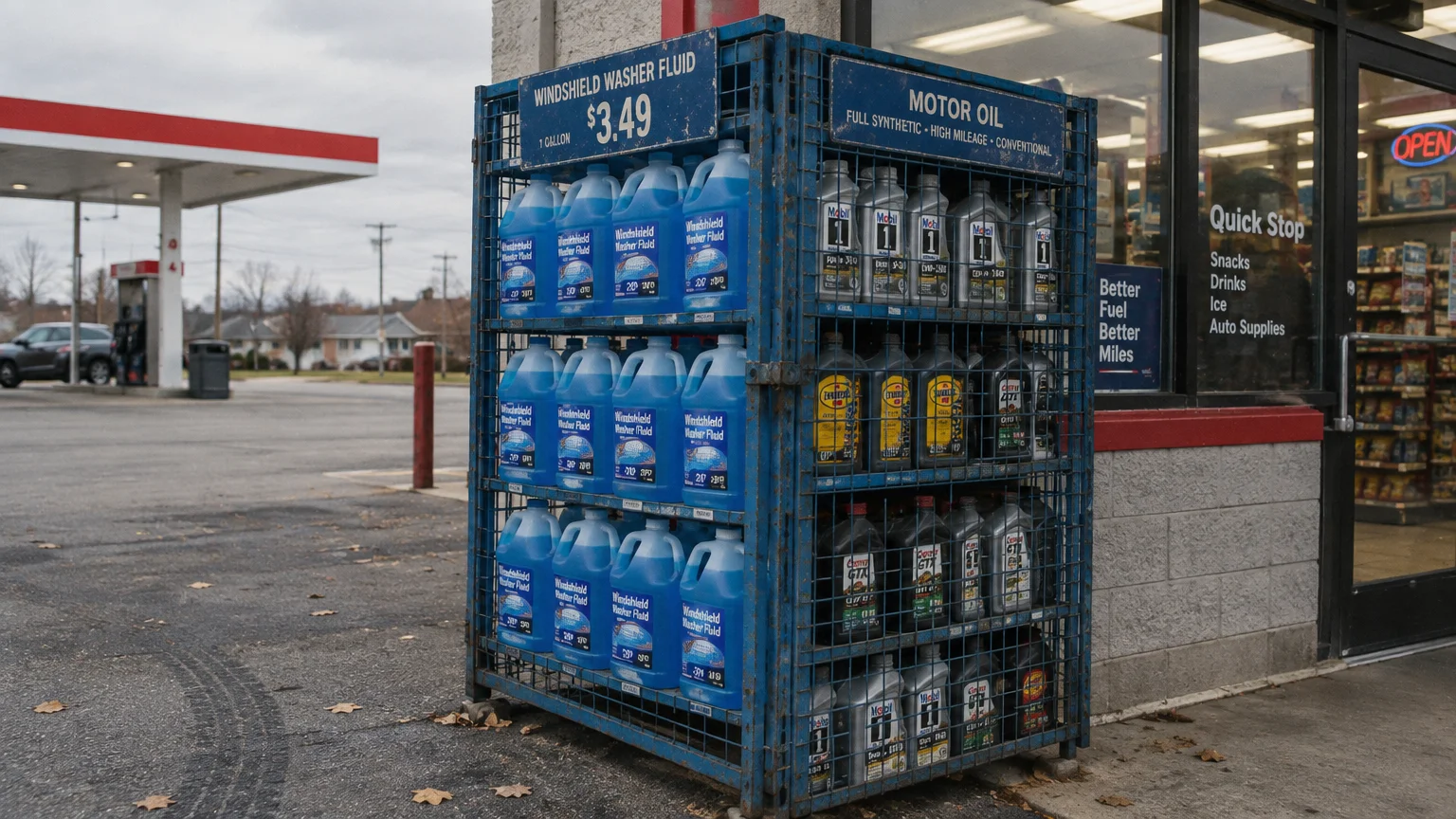
A gallon of standard blue windshield washer fluid retails for $5.99 to $7.99 at gas stations. The identical formula costs between $2.80 and $3.50 at discount department stores.
Motor oil and tire pressure gauges carry similar retail premiums. Retailers exploit the fact that drivers only buy motor oil after a dashboard warning light flashes.
Check your vehicle fluids once a month in your own driveway. Keeping an extra jug of washer fluid in your trunk prevents high-priced emergency purchases on the highway.
5. Fluid Milk and Basic Dairy Staples
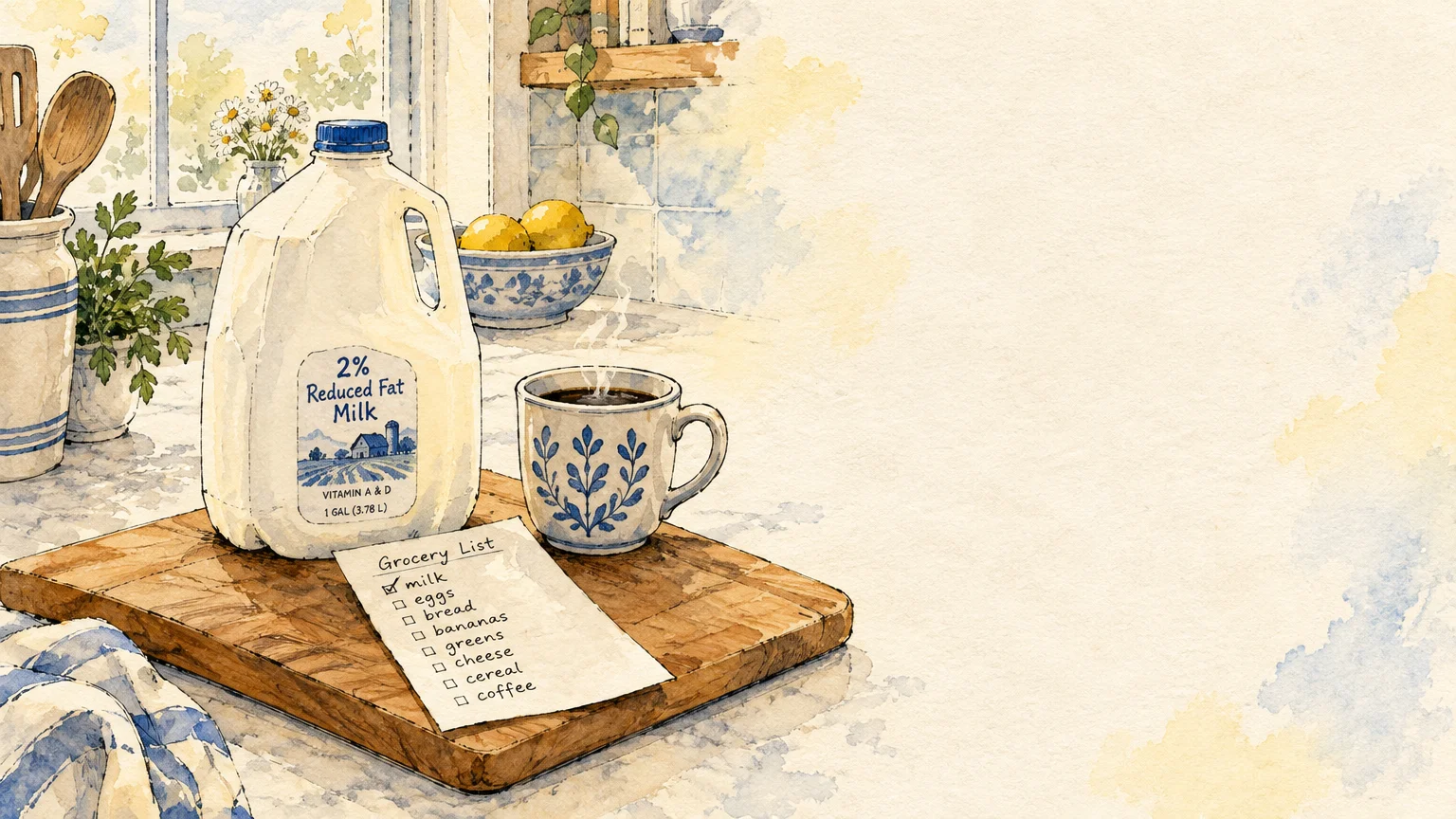
Running out of milk often prompts a fast trip to the nearest corner market. That convenience comes with a substantial markup on everyday household dairy products.
A gallon of whole or 2% milk costs between $4.99 and $6.49 at convenience outlets. Meanwhile, national grocery data tracked by the Bureau of Labor Statistics (BLS) reflects typical supermarket prices near $3.80 to $4.20 per gallon.
Smaller containers like pints and quarts feature even steeper markups per ounce. Convenience stores price dairy items as non-negotiable emergency groceries rather than staple nutrition.
Track your household dairy consumption carefully during your primary grocery trips. If you run low frequently, keep shelf-stable powdered or evaporated milk in your pantry for emergencies.
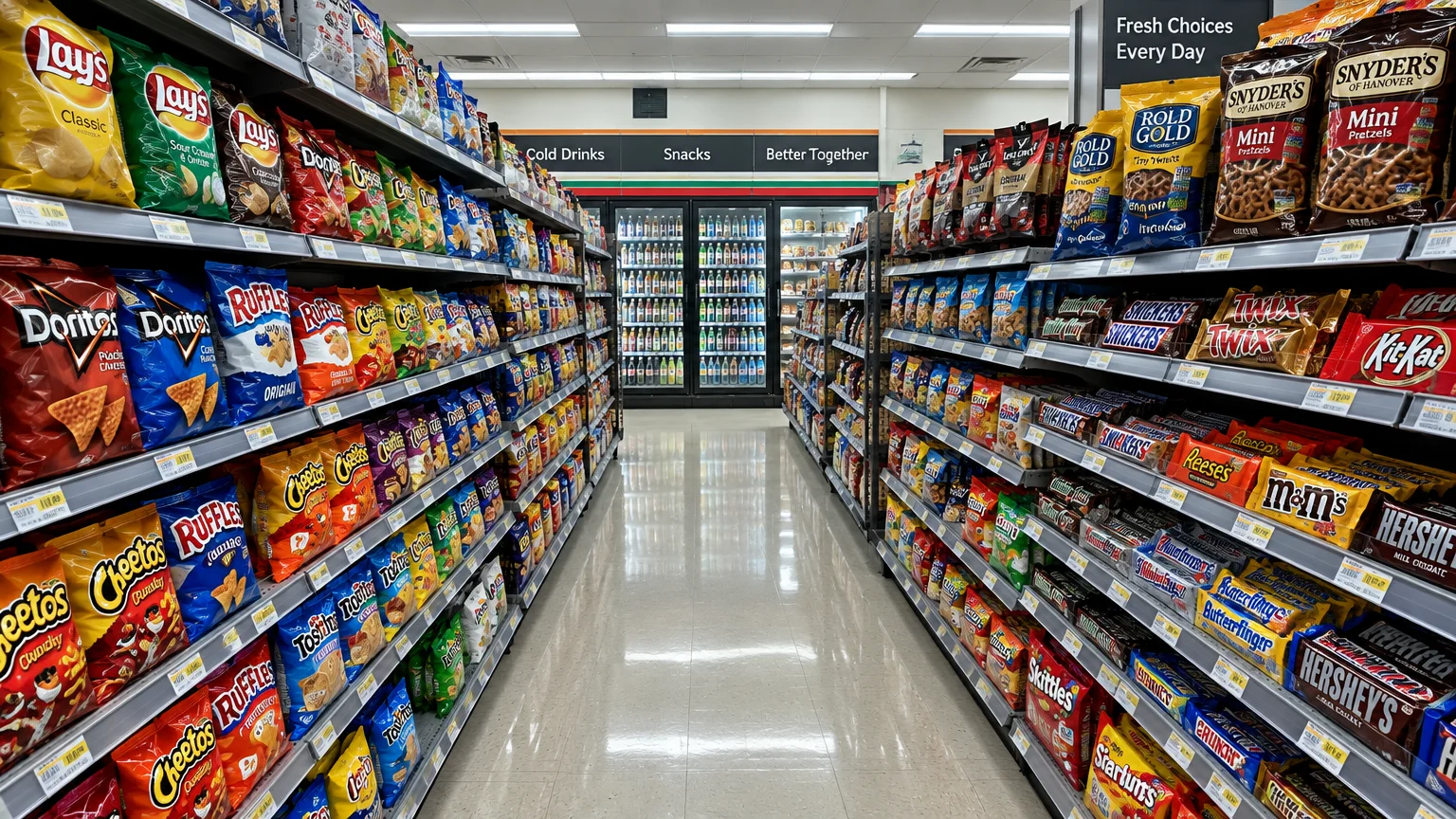
6. Single-Serve Snack Chips and Packaged Candy
Impulse snack foods generate enormous profits for convenience chains across the country. NACS industry benchmarks show that candy and packaged snacks average a 100% markup over wholesale cost.
A standard 1.5-ounce to 2-ounce grab-and-go bag of potato chips retails for $2.29 to $2.69. That translates to an expensive unit price of $1.15 to $1.50 per ounce.
A full-size 9-ounce family bag at the supermarket costs roughly $4.00, or roughly $0.44 per ounce. You pay nearly triple the price per ounce for convenient travel packaging.
Buy multi-packs of snacks at warehouse clubs and divide them into reusable storage bags. Keeping pre-portioned snacks in your vehicle prevents expensive checkout counter impulses.

7. Travel-Size Personal Toiletries
Gas station hygiene racks target travelers who forgot essential items at home. Mini deodorants, small toothpastes, and feminine products carry substantial markups in these displays.
A 0.5-ounce travel deodorant frequently retails for $3.49 to $4.49 at gas station counters. That tiny product often costs more than a full-size stick at a standard pharmacy.
Pharmacies and grocery stores sell those same travel-size items in travel bins for $1.25 to $1.99. Gas stations mark up health and beauty items by an average of 132%.
Pack a dedicated toiletry pouch inside your travel bag and restock it from home. Planning ahead keeps simple personal hygiene from straining your travel budget.
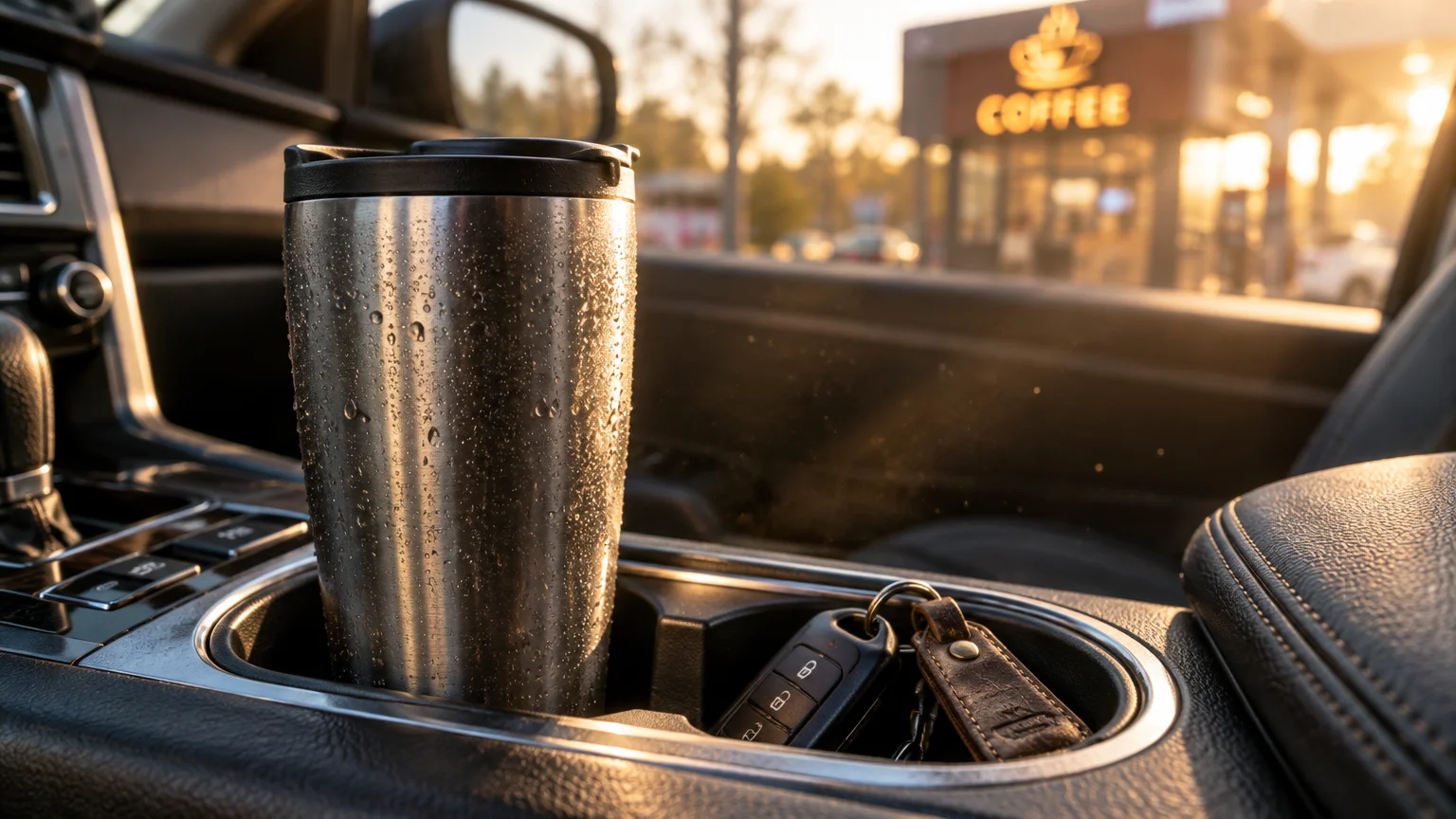
8. Dispensed Fountain Drinks and Brewed Coffee
Dispensed hot and cold beverages carry the highest profit margins in the convenience retail industry. Fountain drinks and drip coffee routinely deliver gross profit margins between 70% and 85%.
The wholesale syrup, carbonated water, cup, lid, and straw cost the retailer roughly $0.35 per serving. Selling that fountain cup for $2.29 creates an enormous markup over basic ingredient costs.
Fresh brewed convenience coffee follows the exact same pricing model. While $2.00 feels cheaper than an artisan cafe latte, home brewing costs roughly $0.25 to $0.40 per mug.
Buying coffee and soda daily at convenience stores quietly costs you $60 to $80 each month. Investing in a quality travel mug pays for itself within two weeks of home brewing.
Price Comparison: Convenience Store vs. Traditional Grocery
Comparing unit prices reveals the true financial impact of convenience purchasing habits. The table below illustrates typical 2026 price differences across common household items.
| Product | Convenience Store Price | Supermarket / Bulk Price | Average Markup Premium |
|---|---|---|---|
| OTC Pain Reliever (Single Dose) | $2.49 to $3.99 (2 caplets) | $0.12 (from 100ct bottle) | 900% to 1,500% |
| Bottled Water (20 oz) | $2.29 to $2.99 | $0.20 (case unit cost) | 1,000%+ |
| USB-C Phone Charging Cable | $14.99 to $19.99 | $4.00 (multi-pack unit) | 275% to 400% |
| Windshield Washer Fluid (1 Gallon) | $5.99 to $7.49 | $2.99 | 100% to 150% |
| Whole Milk (1 Gallon) | $5.29 to $6.49 | $3.95 | 35% to 65% |
| Potato Chips (Per Ounce) | $1.25 to $1.50 / oz | $0.40 to $0.50 / oz | 150% to 200% |
| Travel Deodorant (Mini) | $3.49 to $4.29 | $1.50 | 130% to 185% |
| Fountain Soda (32 oz) | $2.19 to $2.79 | $0.35 (estimated cost) | 500%+ |
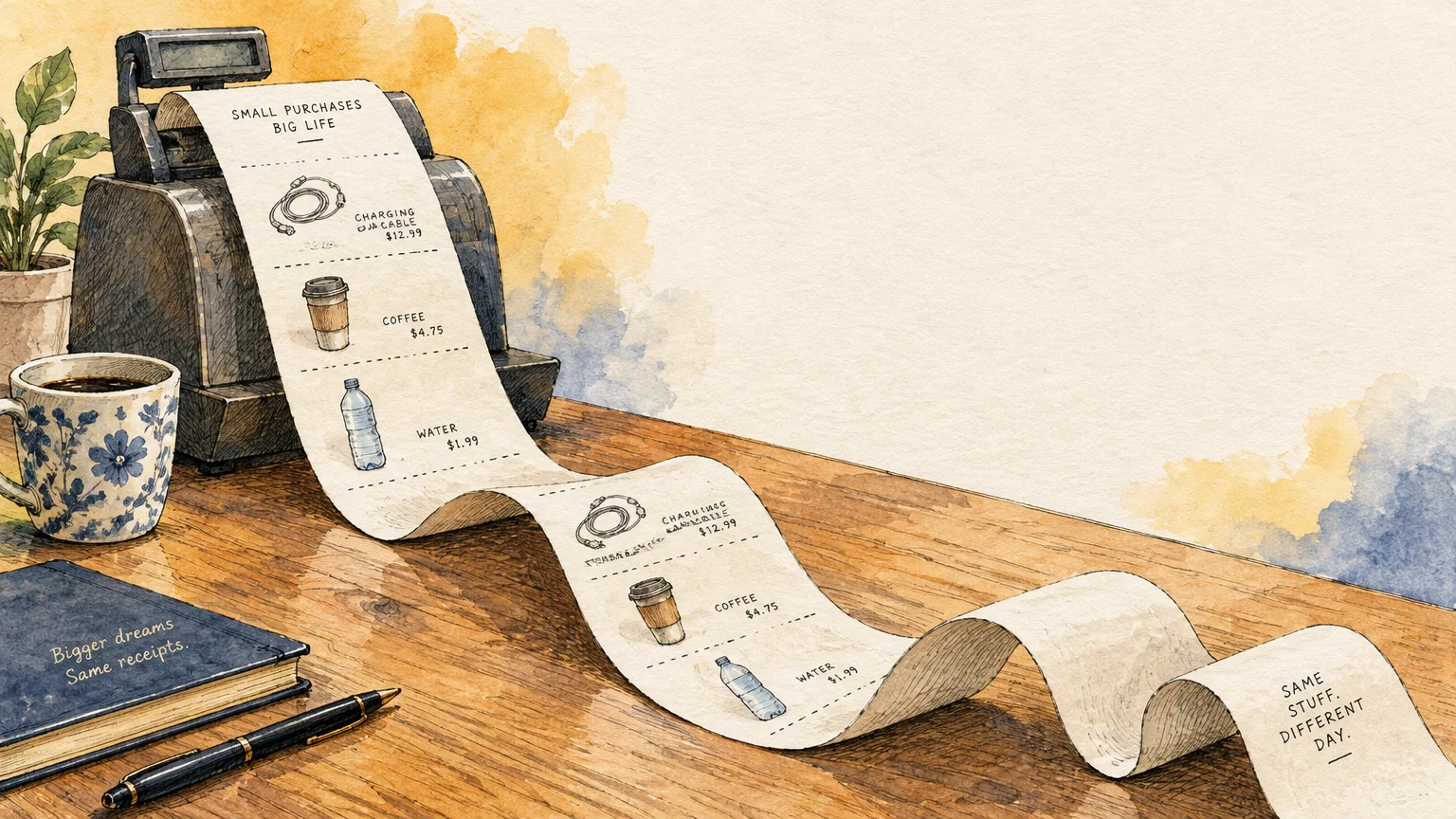
Small price premiums accumulate rapidly across a single week of commuting. Eliminating two marked-up stops per week can easily save an average household over $600 annually.
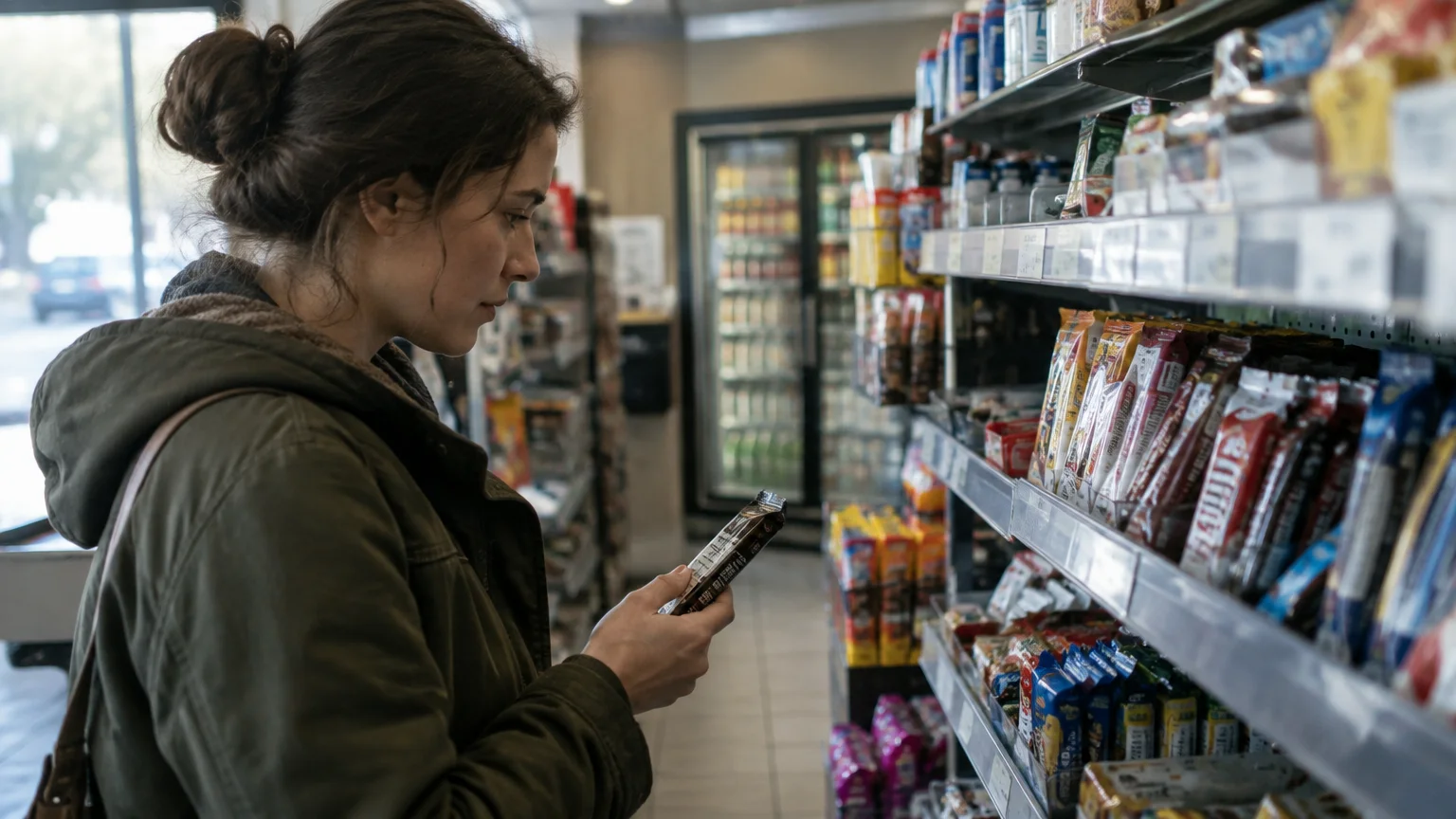
The Retail Psychology of Convenience Store Layouts
Convenience stores carefully design floor layouts to maximize impulse purchases from fatigued drivers. High-margin impulse items always sit directly alongside the checkout register or primary walking paths.
Retailers position cold beverage coolers at the back wall of the store. This layout forces you to walk past candy, chips, and seasonal novelties before reaching basic hydration.
Consumer educational resources from the Federal Trade Commission (FTC) Consumer Advice guide remind consumers to track unplanned micro-spending. Small impulse purchases bypass our normal financial scrutiny because the dollar totals feel harmless.
Bright packaging, limited-time flavors, and strategic lighting intensify sudden cravings during fuel stops. Recognizing these environmental sales tactics helps you maintain purchasing discipline.
Costly Mistakes to Avoid at the Corner Store
Changing your convenience shopping habits requires recognizing where money leaks occur. Avoid these expensive pitfalls during your everyday commute.
- Paying Out-of-Network ATM Fees: Convenience store cash machines charge independent operator fees between $3.00 and $5.00 per withdrawal. Your personal bank may add an additional non-network penalty, costing you $8.00 total for accessing your own cash.
- Falling for Multi-Buy Promotions: Signage offering “Two bags for $5.00” frequently encourages you to spend more cash than planned. If you only intended to spend $2.50, buying extra snacks simply drains your cash flow faster.
- Treating the Corner Store as a Grocery Pantry: Buying eggs, bread, butter, or paper towels at a gas station costs up to 70% more than supermarket retail. Reserve pantry shopping strictly for dedicated grocery stores.
- Using Fuel Stops for Meal Replacement: Prepared hot food counters carry steep retail markups relative to their nutritional value. Pre-packing lunches and highway snacks saves thousands of dollars annually.
Developing mindful driving habits protects your daily wallet from unintentional spending. Every dollar preserved from impulse spending stays available for important financial priorities.
Practical Habits to Save Money on the Road
Eliminating convenience markups does not require sacrificing travel comfort or hydration. Implementing small planning routines prevents retail price gouging while commuting.
Assemble a permanent car travel kit containing certified charging cables, pain relievers, and a reusable water bottle. Store non-perishable snacks like almonds or protein bars in your center console.
Tools published by the Consumer Financial Protection Bureau (CFPB) emphasize the power of tracking recurring daily expenses. Reviewing your bank statements helps identify exactly how much convenience purchases cost your household.
Pay at the pump whenever possible using contactless payment options. Skipping the walk inside the retail station removes 90% of impulse temptation entirely.
Frequently Asked Questions About Convenience Store Pricing
Why are convenience store prices so much higher than grocery stores?
Convenience stores pay higher wholesale costs because they order smaller inventory volumes than supermarket chains. They also operate with high per-customer overhead and must offset tiny profit margins from fuel sales.
Is anything fairly priced at a convenience store?
Basic motor fuel is priced competitively because gas stations display prices on large signs to attract traffic. Promotional fountain soda subscriptions or loss-leader promotional snacks can occasionally offer fair value if used intentionally.
How much money does the average commuter waste at convenience stores?
Buying a daily beverage and snack at a gas station costs between $4.00 and $6.00 per workday. Over a full year, that routine quietly extracts $1,000 to $1,500 from your discretionary household budget.
Do convenience store loyalty apps really save you money?
Loyalty programs provide meaningful fuel discounts of several cents per gallon. However, they frequently send smartphone push alerts designed to lure you inside the store to purchase high-margin snacks.
Protecting Your Everyday Cash Flow
Log into your checking or credit card account today and total your gas station spending from last month. Separate your actual fuel transactions from the in-store merchandise charges.
Seeing that total dollar figure clearly provides the motivation you need to adjust your road habits. Financial outcomes vary based on individual income, credit history, and circumstances. This article provides general guidance only. Consult a qualified financial planner, CPA, or consumer attorney for advice specific to your situation.
Last updated: February 2026. Rates, benefit amounts, and tax rules change—always verify current details at official sources.