Timing your shopping trips around store markdown schedules can slash your household budget by up to 50 percent without sacrificing quality. Big-box retailers and supermarkets rely on predictable inventory cycles to clear shelf space.
When you align your purchases with these internal markdowns, you stop paying full price for identical items. A single change in your shopping routine keeps hundreds of dollars in your household budget each month.
Here are nine high-impact store sections where shopping at the exact right moment yields the deepest possible discounts for your family.
The Bottom Line Up Front
Retail stores follow rigid operational calendars to manage inventory, make room for seasonal goods, and minimize holding costs.
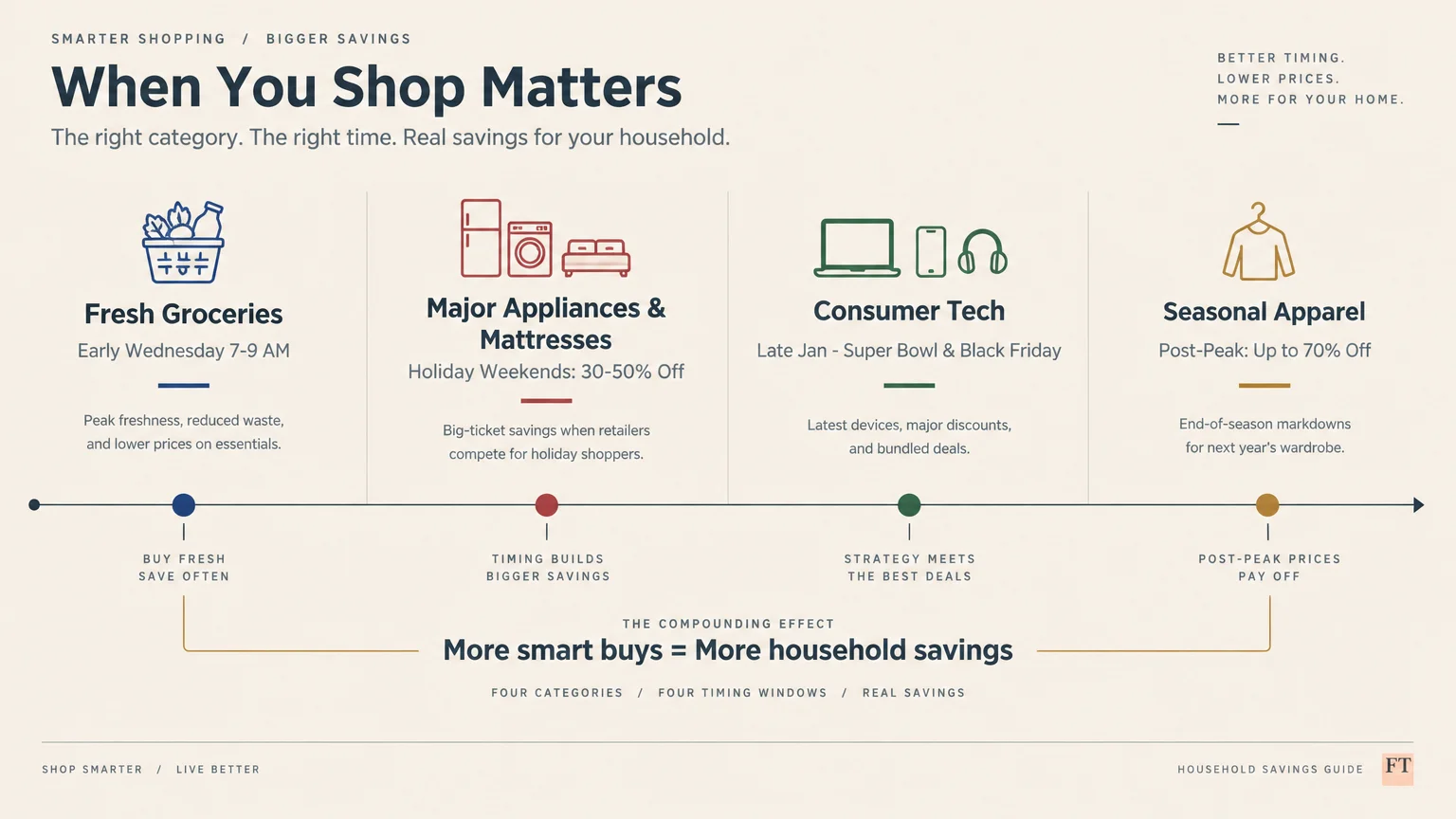
You can capture dramatic savings by tailoring your shopping schedule to these recurring patterns:
- Fresh Groceries: Shop early Wednesday mornings for overlapping weekly circular deals and prime meat markdowns.
- Major Appliances and Mattresses: Buy during three-day holiday weekends and fall inventory resets for price cuts of 30 to 50 percent.
- Consumer Tech: Target late January and early February before major football broadcasts, or wait for Black Friday.
- Apparel and Outdoor Goods: Purchase out-of-season items six to eight weeks after their seasonal peak for clearances up to 70 percent off.
Understanding these retail pricing cycles transforms routine shopping trips into significant financial victories.
1. The Fresh Meat and Seafood Department
The meat counter represents one of the largest ongoing expenses in any household food budget. According to expenditure data from the Bureau of Labor Statistics, animal proteins consistently rank among the most volatile grocery categories.
Supermarkets price fresh cuts to move quickly before their printed sell-by dates arrive. You can capitalize on this daily inventory turnover by adjusting when you visit the counter.
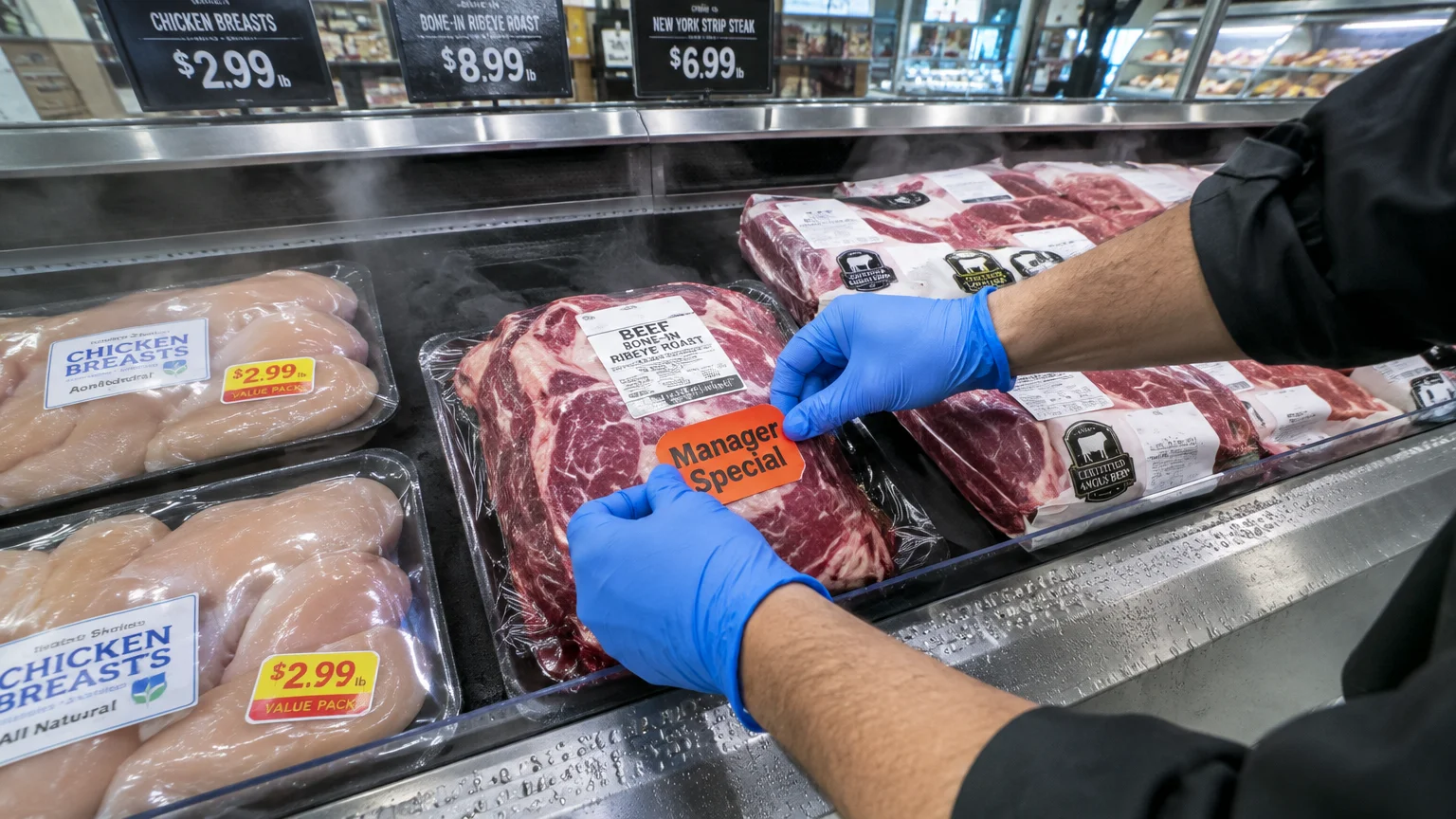
The best time to buy meat is between 7:00 AM and 9:00 AM on weekdays. Department managers audit overnight stock at dawn and attach bright markdown stickers to cuts approaching their expiration dates.
These discount stickers frequently offer 30 to 50 percent reductions on premium roasts, chicken breasts, and ground beef. As long as you cook or freeze the meat immediately, the quality remains completely unaffected.
Wednesday mornings provide a secondary savings advantage. Most national grocery chains launch new weekly sales flyers on Wednesday while honoring discounts from the previous week.
This overlap window allows you to double up on overlapping promotional pricing across high-value proteins.

2. Produce and Bakery Racks
Produce and artisanal baked goods share the shortest shelf life of any retail category. Grocery managers mark down these items aggressively to avoid zero-dollar shrinkage losses.
For fresh produce, store sale timing follows weekly delivery truck schedules. Most stores receive their largest produce shipments late Tuesday evening to prepare for Wednesday circular promotions.
Shopping on Wednesday morning gives you access to the freshest fruit and vegetable stock at promotional entry prices. Meanwhile, older but perfectly edible inventory moves directly to clearance tables at deep discounts.
Bakery timing requires an evening approach. Supermarket bakeries discount fresh bread, rolls, and prepared pastries after 7:00 PM to clear display tables before morning baking cycles begin.
You can buy crusty artisan loaves and sandwich bread at half price, slice them at home, and store them in your freezer. This simple habit keeps your pantry stocked with premium bakery staples at commercial white-bread prices.
3. Major Home Appliances
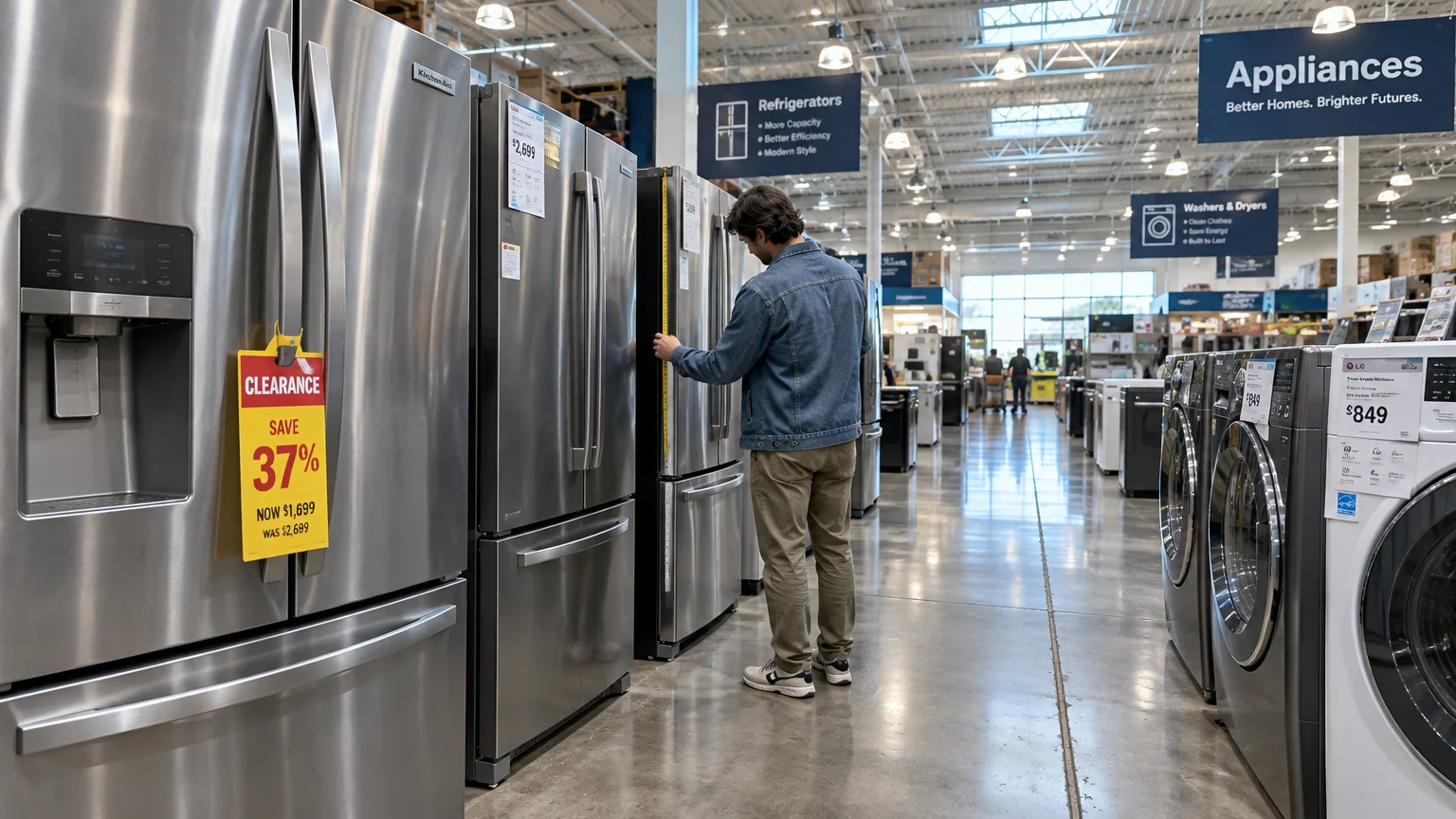
Refrigerators, washing machines, and dishwashers represent substantial capital purchases for homeowners. Buying an appliance during a random weekend can cost you several hundred dollars more than waiting for an inventory transition.
Most major appliance manufacturers unveil their newest product lines in September and October. Retailers must clear valuable showroom floor space to display incoming models.
This fall turnover triggers sweeping price drops on outgoing models. Refrigerator lineups are the single exception; manufacturers consistently introduce new refrigeration models in May.
Federal holiday weekends provide an additional opportunity for deep discounts. Memorial Day, Labor Day, and Black Friday remain the primary promotional windows for major home appliances.
During these promotional events, retailers combine manufacturer price drops with bundle rebates and free home delivery.
Take time to review retail financing disclosures through the Consumer Financial Protection Bureau before accepting deferred-interest promotional credit on large appliance purchases.

4. Mattresses and Bedroom Furniture
Mattress retail markups regularly exceed 50 percent above wholesale production costs. Consequently, this department offers some of the largest raw-dollar savings when timed correctly.
The strongest retail pricing cycles for mattresses occur during January and three-day holiday weekends. January marks the historic retail tradition of “White Sales,” which dates back to the late nineteenth century.
Department stores and mattress showrooms utilize January to clear out bedding collections before spring manufacturing resets. You will encounter genuine markdowns ranging from 30 to 60 percent on premium mattresses and linen bundles.
President’s Day weekend in February and Memorial Day weekend in May serve as prime promotional periods. Retailers fight aggressively for seasonal foot traffic by matching manufacturer rebates with free box springs or adjustable base upgrades.
Never pay list price for a mattress in March, April, or October. Waiting just a few weeks for an established holiday weekend guarantees significant savings.

5. Televisions and Home Electronics
Television pricing follows an exceptionally predictable annual pricing curve. If you purchase a screen in mid-autumn outside of holiday deals, you almost certainly pay too much.
The premier buying window for high-definition displays occurs during late January and early February. Major retailers slash prices across their largest screen sizes to capitalize on consumer interest in professional football championship broadcasts.
Retailers treat this pre-game window as an aggressive inventory liquidation event. They want to exhaust current-year display inventory before international consumer electronics conventions release new model specs.
The secondary window runs from Black Friday through Cyber Monday in November. Black Friday features doorbuster televisions, but examine model numbers closely to ensure you receive a flagship unit rather than an entry-level derivative.
March and April offer a third, under-the-radar buying opportunity. Japanese manufacturers conclude their fiscal year in March, leading to aggressive warehouse clearance of outgoing displays.

6. Seasonal Apparel and Footwear
Clothing departments operate on an advance schedule that runs two full months ahead of the weather. When you learn to dress for the calendar rather than immediate temperatures, your clothing costs drop drastically.
Winter coats, heavy boots, and thermal layers drop to clearance in January and February. Retailers desperately need these bulky garments off the sales floor to install swimsuits and light spring apparel.
Buying your family’s cold-weather gear during late winter yields discounts of 60 to 75 percent. Children can wear items purchased one size up during the subsequent school year.
Conversely, swimwear, athletic shorts, and sandals hit bottom-tier clearance in August and early September. Stores must clear summer apparel before the profitable back-to-school and autumn wardrobe rush arrives.
Shopping on Thursday afternoons gives you first access to these weekend apparel markdowns before clearance racks are picked clean by Saturday crowds.
7. Patio Furniture, Grills, and Garden Supplies
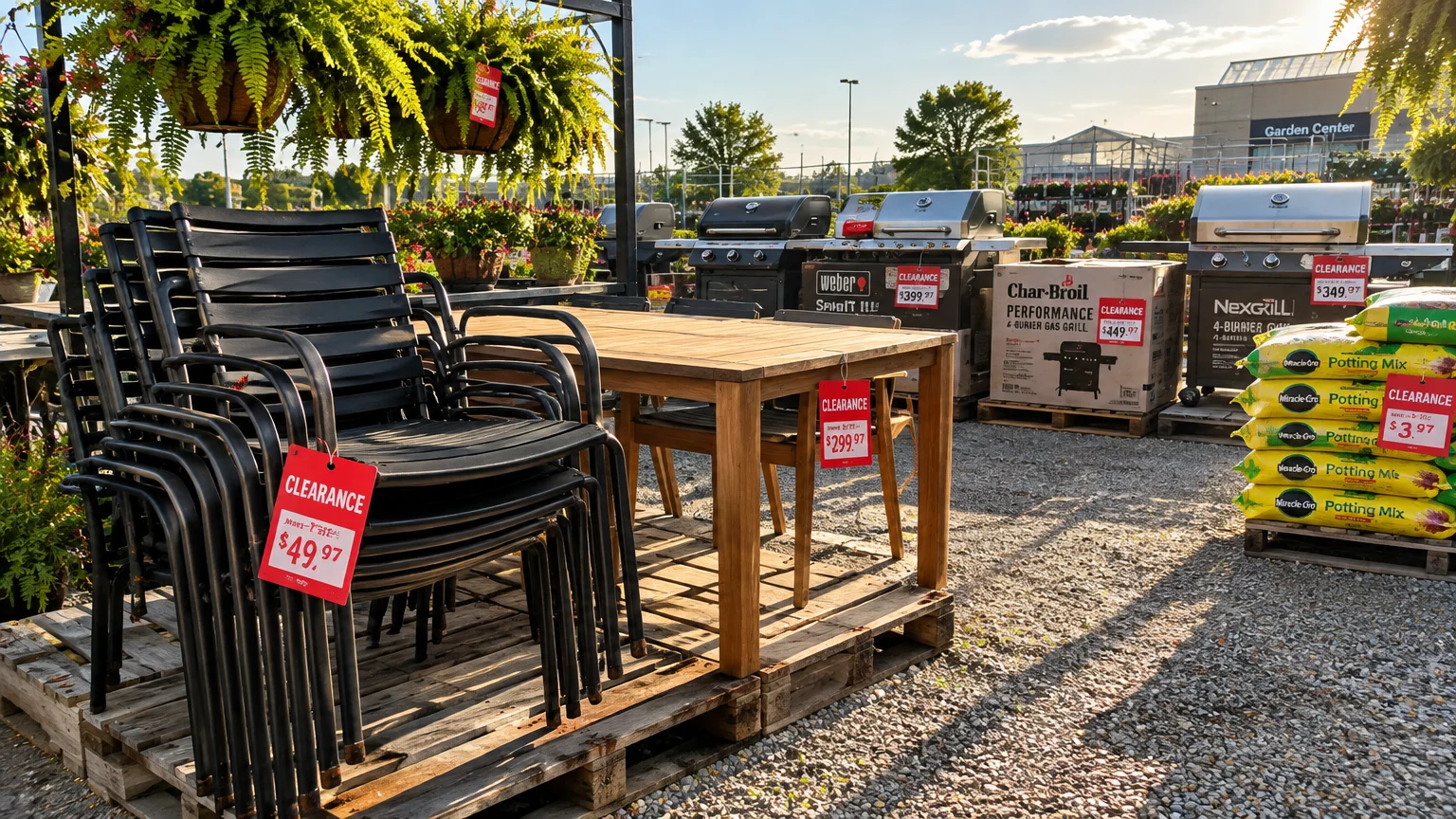
Outdoor living departments occupy immense square footage inside big-box home improvement centers. Because floor space carries a high premium, retailers clear this merchandise with ruthless speed once peak summer ends.
The absolute best time to buy patio dining sets, gas grills, and outdoor power tools is from late July through September. Markdowns escalate rapidly after the Fourth of July weekend concludes.
By mid-August, remaining patio furniture sets generally receive red clearance tags reflecting 40 to 60 percent reductions. Stores require that space for autumn lawn care displays, fire pits, and holiday yard decor.
Garden soils, specialty fertilizers, and perennial plants see parallel markdowns as nurseries prepare for winter dormancy. Purchasing perennials in late September allows root systems to establish before winter while saving you up to 70 percent compared to spring prices.

8. Over-the-Counter Health and Personal Care
Pharmacy and personal care aisles rarely advertise dramatic blowout sales, but their pricing cycles are remarkably structured. You can reduce your healthcare supply costs by matching sales events with manufacturer coupon drops.
January represents the single best month for over-the-counter wellness supplies, vitamins, and fitness accessories. Retailers lean heavily into New Year wellness resolutions by offering buy-one-get-one promotions across preventative health aisles.
September and October bring the second wave of promotional activity for allergy, cold, and flu remedies. Drugstore chains release high-value digital loyalty coupons to secure seasonal foot traffic before illness peaks.
Consult guidance from the Federal Trade Commission Consumer Advice team to avoid misleading pricing tactics when evaluating health and supplement bargains.
Always inspect packaging expiration dates when stocking up on over-the-counter medicine during promotional periods. Ensure your household can realistically consume the product before the active ingredients lose stability.
9. Toys, Games, and Holiday Decorations
General merchandise retailers overhaul their toy and seasonal aisles twice every calendar year. These seasonal resets offer savvy shoppers the steepest inventory liquidations in retail.
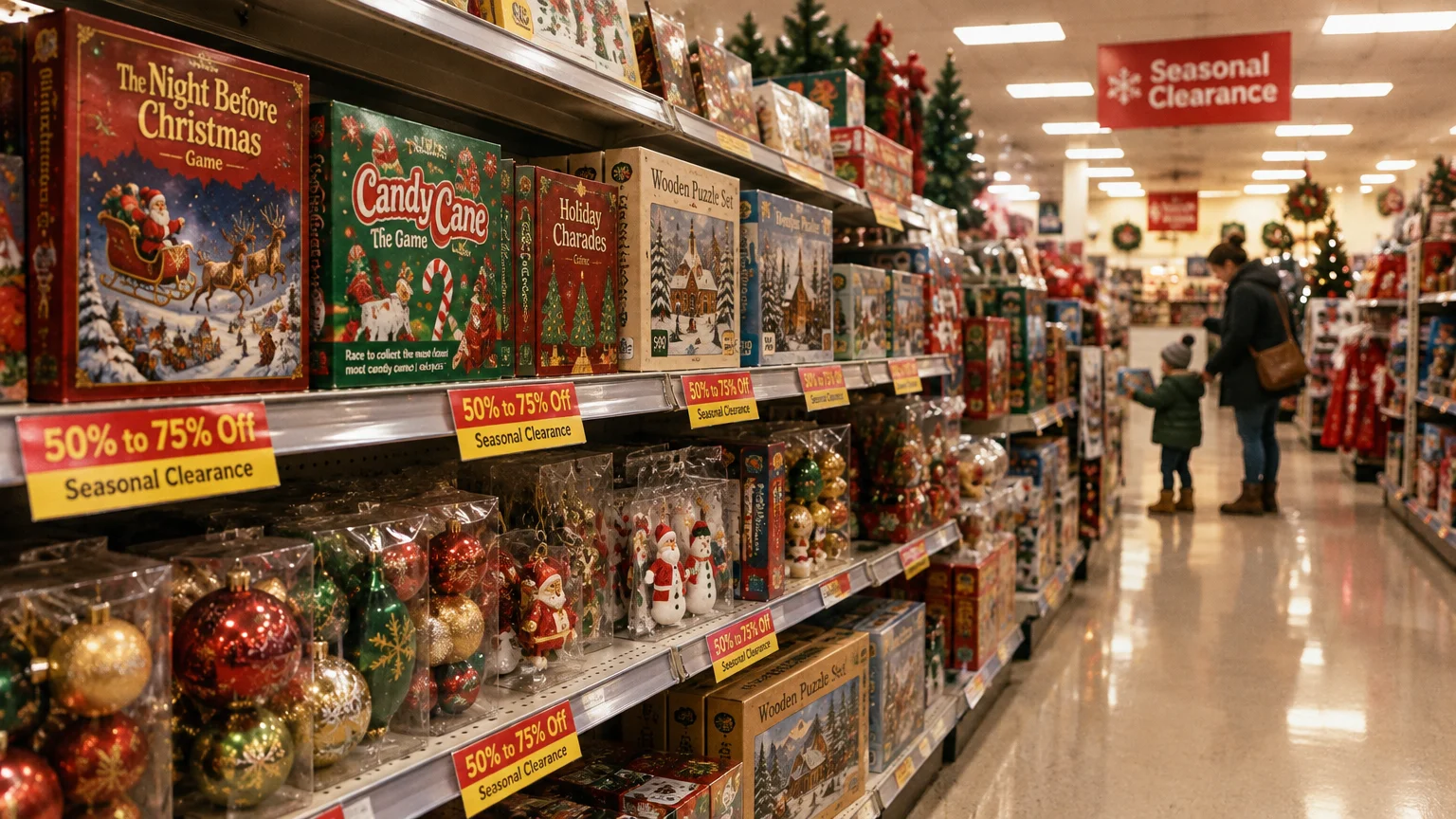
The premier toy buying event occurs throughout mid-to-late January. Major chains clear out surplus holiday toy inventory to reset their planograms for spring merchandise.
During this January reset, major retailers systematically mark down top-brand action figures, building sets, and board games by 50 to 70 percent. Forward-thinking parents use this window to stock up on birthday gifts for the entire upcoming year.
A smaller, parallel toy clearance occurs in late July to make room for inbound holiday inventory. Tracking these two specific windows eliminates the need to pay full retail during the frantic holiday season.
Seasonal decor follows an even stricter discount schedule. Christmas lights and artificial trees drop 50 percent on December 26, reaching 75 to 90 percent off by the first week of January.
Purchasing seasonal supplies twelve months ahead remains one of the simplest ways to protect your holiday spending plan.
“A budget is telling your money where to go instead of wondering where it went.” — John C. Maxwell
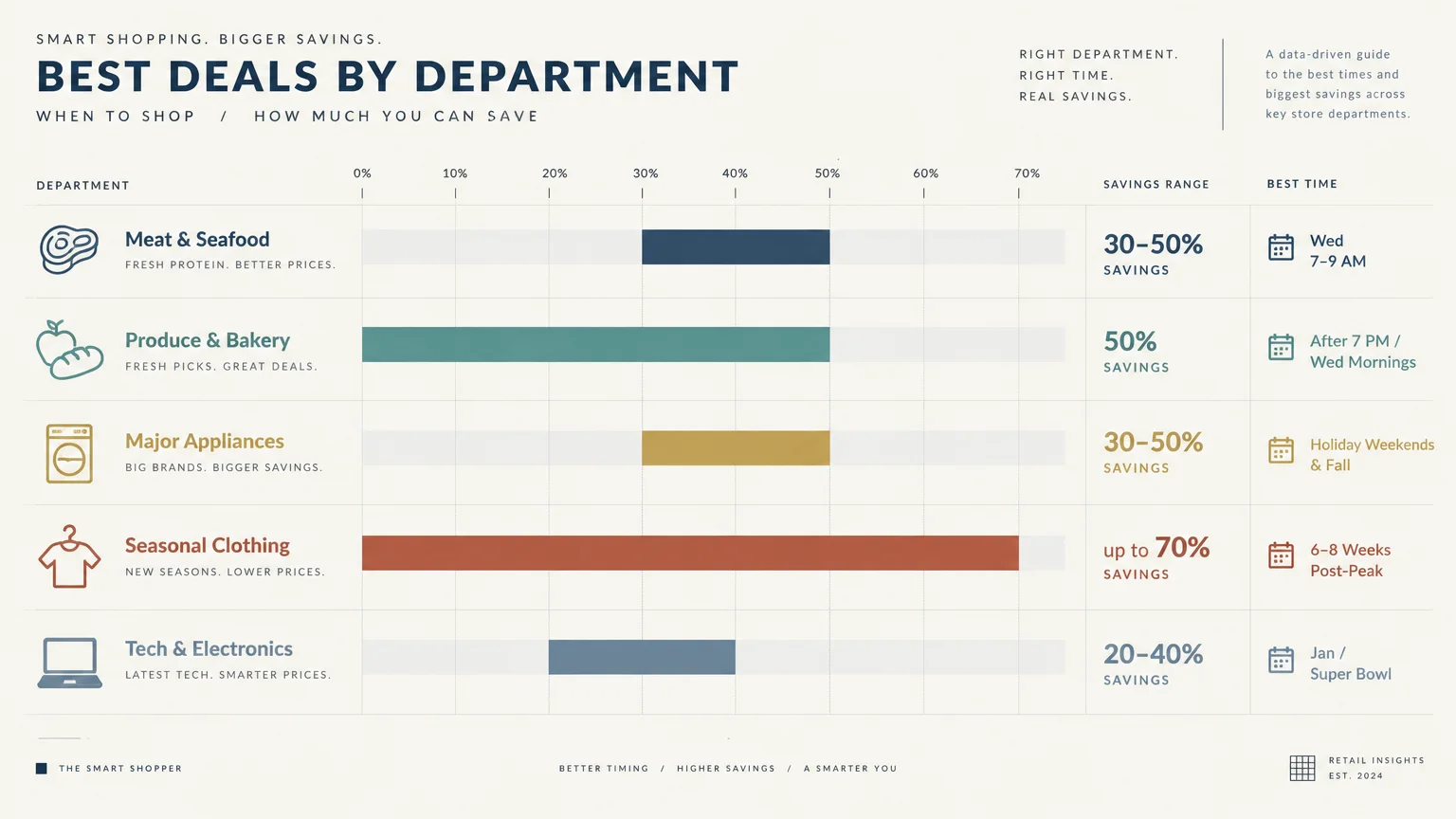
Retail Timing and Expected Savings Breakdown
The timing strategies detailed above produce predictable results across standard retail categories. Use this reference summary to schedule your household capital purchases across the year.
| Store Section | Optimal Time of Year | Optimal Day or Time | Average Savings |
|---|---|---|---|
| Fresh Meat and Seafood | Post-Holiday Inventory Drops | Weekdays, 7:00 AM – 9:00 AM | 30% – 50% |
| Fresh Produce and Bakery | Peak Regional Harvest | Wednesdays; Evenings for Bakery | 25% – 40% |
| Major Appliances | Sept – Oct (May for Fridges) | Holiday Weekends | 20% – 40% |
| Mattresses and Bedding | January White Sales | Holiday Weekends | 30% – 60% |
| Televisions and Electronics | Late Jan – Feb; November | Sunday Ad Launches | 25% – 45% |
| Seasonal Apparel | Jan – Feb; Aug – Sept | Thursday Afternoons | 50% – 75% |
| Patio and Outdoor Living | Late July – September | Mid-Week Mornings | 40% – 70% |
| Health and Personal Care | January and Early Fall | First Sunday of Month | 20% – 40% |
| Toys and Seasonal Decor | Mid-January; Late July | Immediate Post-Holiday Days | 50% – 90% |
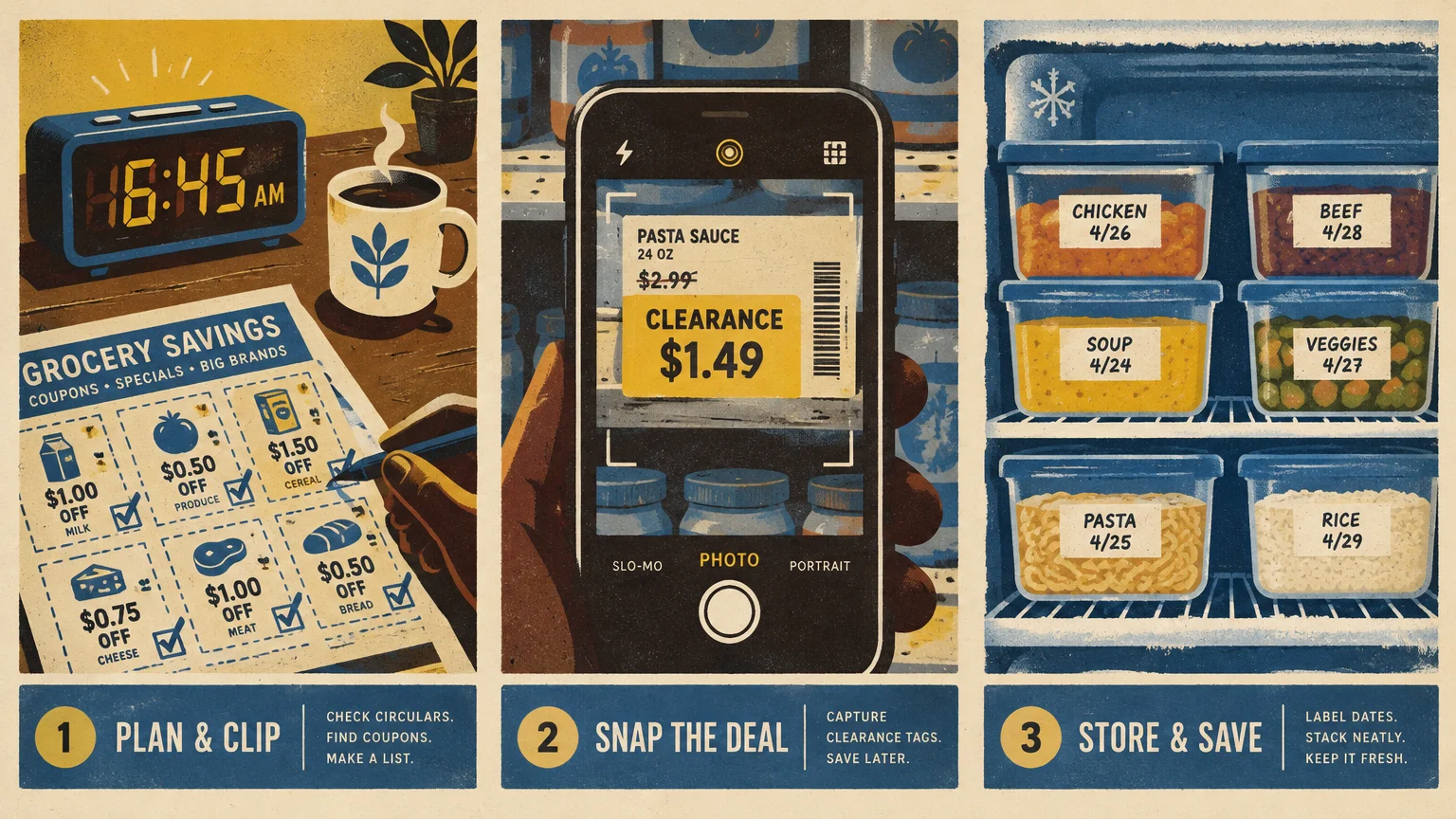
Smart Shopping Timing Tips to Maximize Savings
Executing a timing-based shopping strategy requires minimal effort once you understand how retailers organize price tags and markdowns. Incorporate these foundational habits into your routine.
First, learn to decipher retail clearance stickers. Many national retailers embed mark-down status directly into the final digits of the price tag.
Prices ending in .99 typically indicate full retail pricing. Conversely, endings such as .97, .02, or .00 frequently signify final clearance reductions that store managers will not discount further.
Second, track the flyer rotation of your primary regional grocer. Shifting your main grocery run to the first morning of the ad cycle ensures full inventory availability before shelves empty.
Third, establish a home price log for frequent major expenses. Tracking regular prices across three months prevents deceptive sale marketing from tricking you into premature purchases.
“Do not save what is left after spending, but spend what is left after saving.” — Warren Buffett
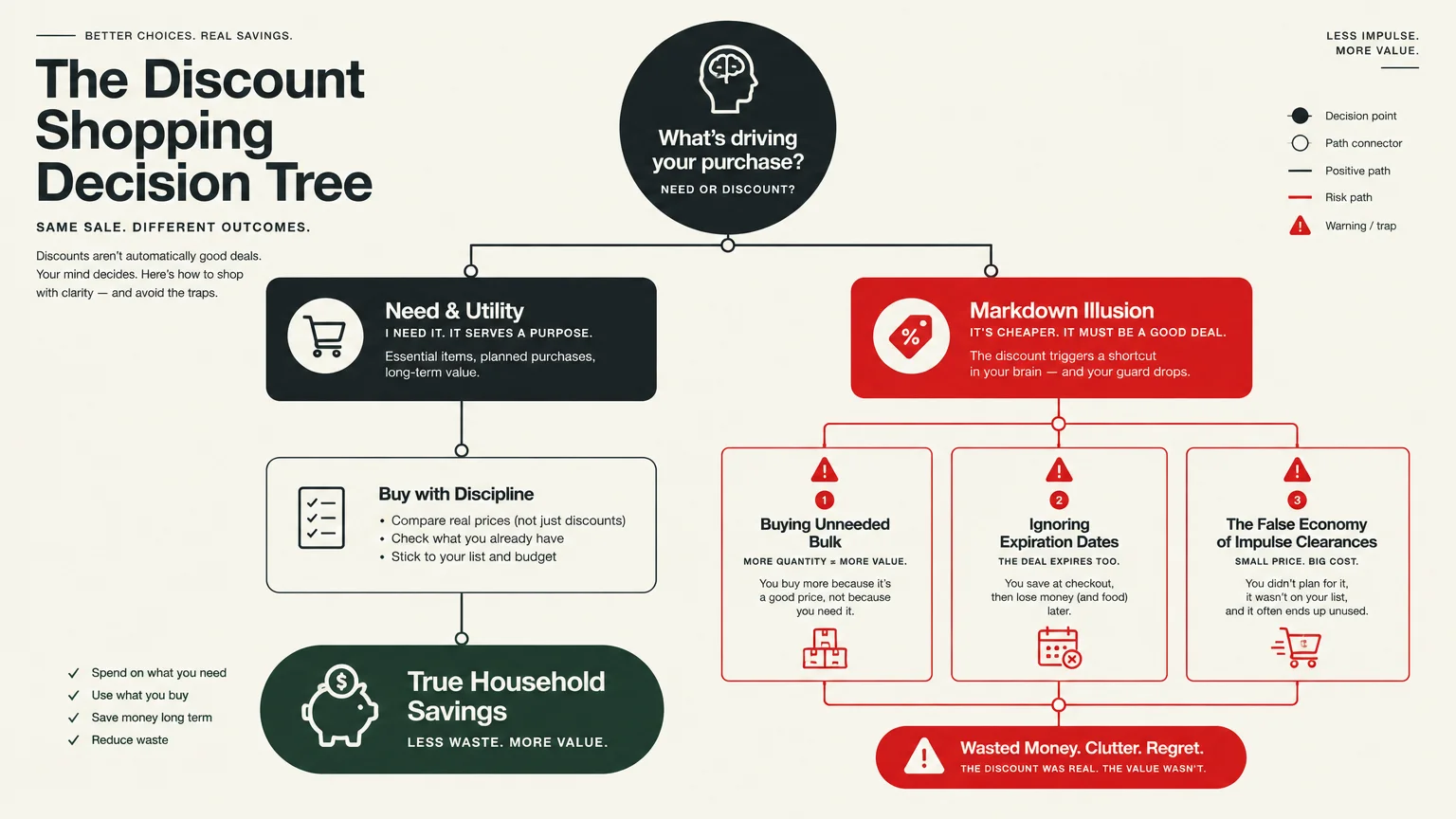
Common Money Traps When Chasing Markdowns
Strategic shopping timing generates substantial savings, but only when you purchase items your family genuinely needs. Avoiding common promotional pitfalls keeps your hard-earned money working for you.
The phantom savings trap is the most common retail error. Saving 70 percent on a patio heater you never intended to purchase is not saving money; it is spending 30 percent unnecessarily.
Another dangerous pitfall involves overbuying perishable inventory. Stocking up on marked-down meat or bulk produce without a direct meal plan or freezer space leads straight to food waste.
Always calculate the true storage cost of oversized clearance goods before swiping your card. If buying bulk items clutters living space or leads to product damage, the discount disappears.
Finally, avoid carrying clearance shopping balances on revolving consumer credit cards. A 30 percent discount evaporates entirely if you accrue double-digit interest charges over several months.
Frequently Asked Questions
What day of the week is best for grocery markdowns?
Wednesday is generally the best day for grocery markdowns across major supermarket chains. Most grocers transition their weekly promotional circulars on Wednesday mornings, creating brief discount overlap periods.
Why do stores clearance items rather than returning them to suppliers?
Shipping bulky, out-of-season, or short-dated goods back to distribution centers costs more in freight and processing than selling them locally at cost. Retailers rely on clearance tags to free up floor space immediately.
Is Black Friday still the best time to buy all electronics?
Black Friday offers competitive prices on small electronics, but it is not universally the best event for premium displays. Late January Super Bowl promotions and spring model clearances frequently match or beat holiday prices on flagship screens.
How do I know if an item on clearance will drop lower?
Inspect the physical tag for markdown dates or tier indicators. If inventory remains heavy and the tag indicates a recent first markdown, prices will often fall further within two to three weeks.
Take control of your household spending this week by picking one store section to purchase on schedule rather than on impulse. Shifting your regular shopping runs by just a few days will immediately reveal lower totals at the register.
This article is for informational purposes only and does not constitute financial, legal, or tax advice. Rates, benefit amounts, and tax rules change regularly—verify current details with the relevant agency or a licensed professional.
Last updated: February 2026. Rates, benefit amounts, and tax rules change—always verify current details at official sources.