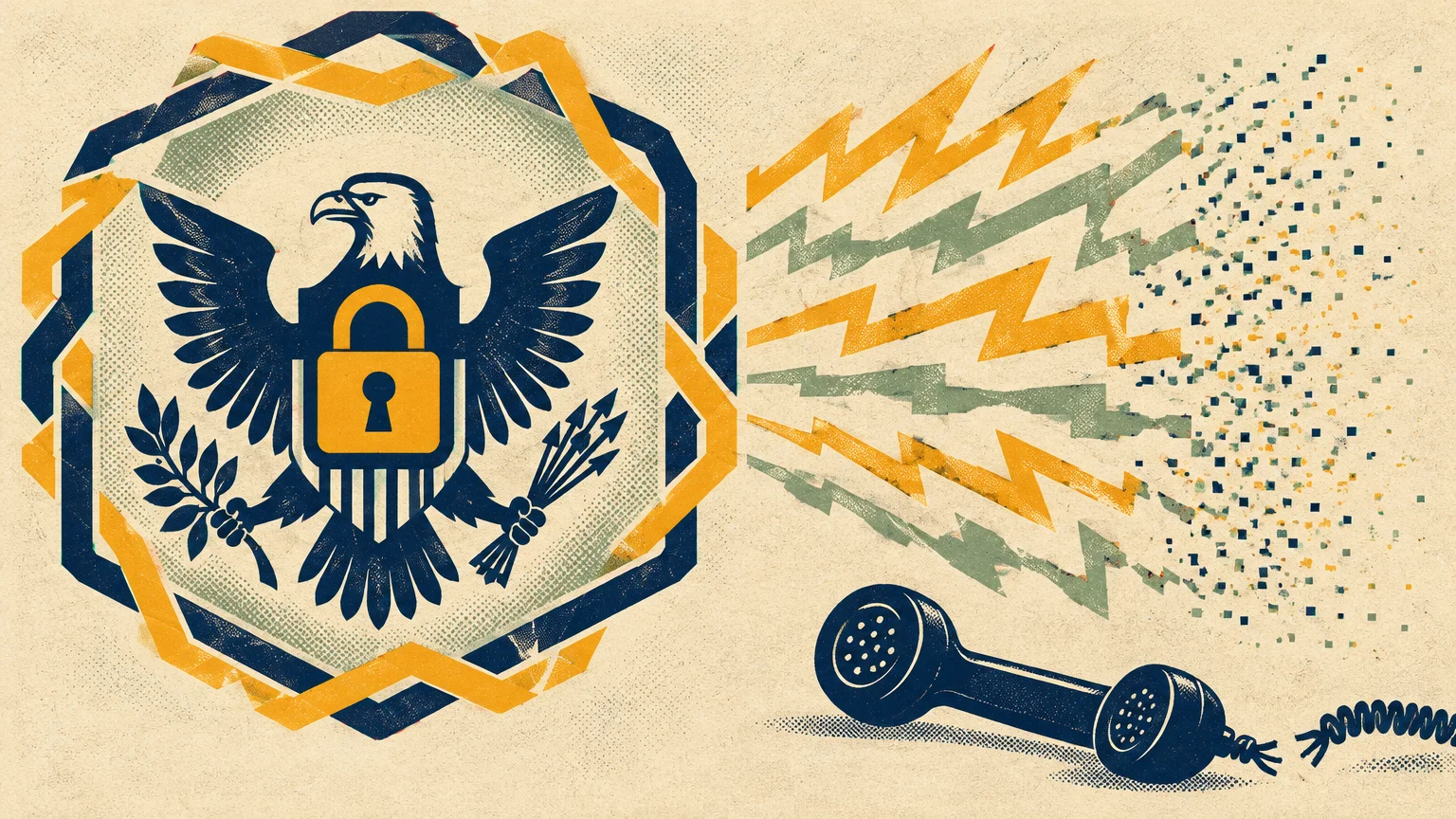
Government imposter scams drained a staggering $920 million from American consumers in 2025 alone. Criminals continue to target monthly retirement checks to steal your hard-earned financial security.
Fraudsters use deceptive tactics to exploit administrative adjustments and trick beneficiaries into surrendering sensitive credentials. Knowing these emerging threats will protect your benefits and keep your household budget secure.
Staying vigilant against aggressive fraud networks preserves the money you spent decades earning. Learning their playbook gives you the power to defend your assets against predatory schemes.
The Surge in Government Impersonation and the Four Ps
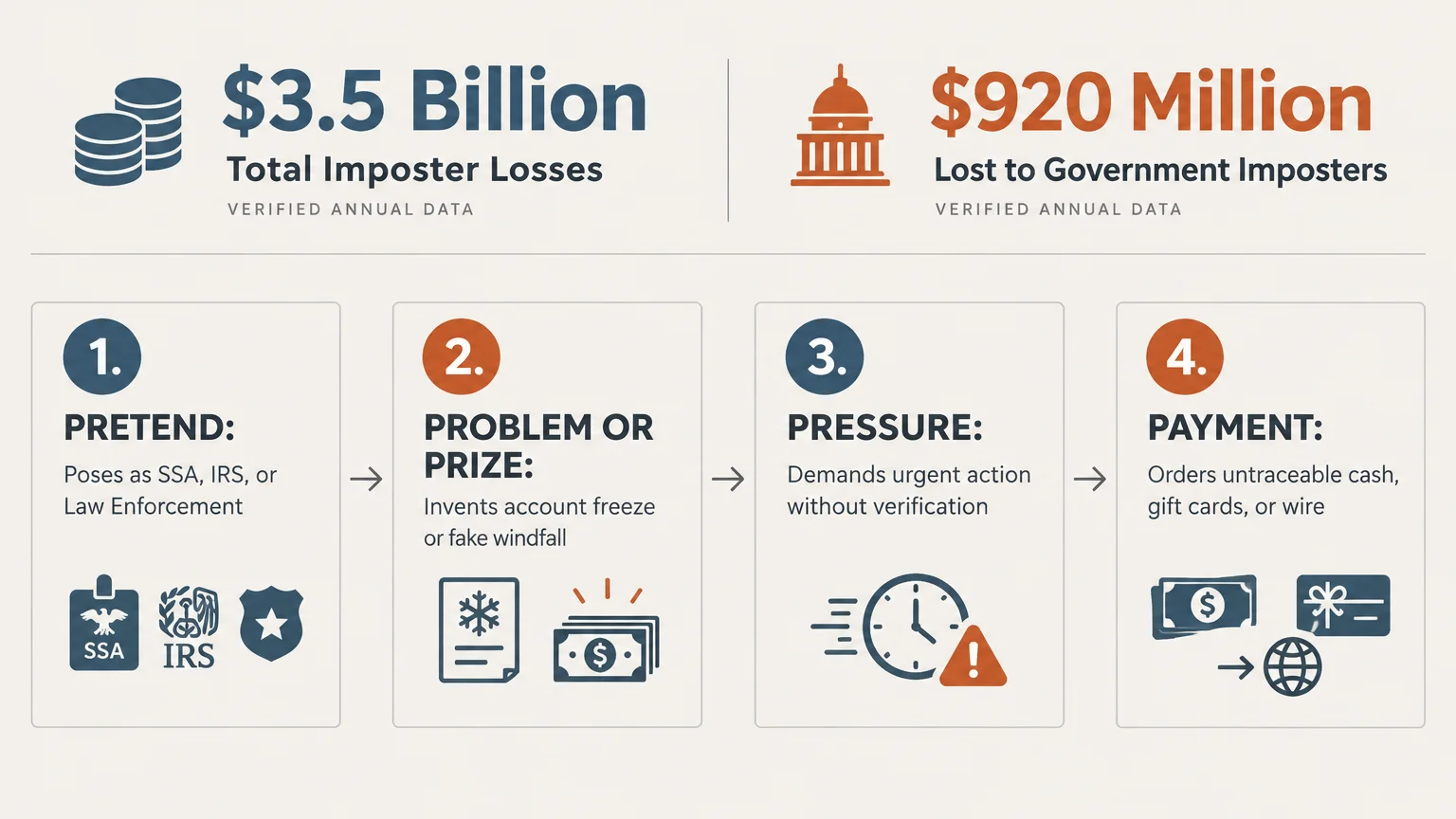
Imposter fraud has reached unprecedented levels nationwide. Data from the Federal Trade Commission reveals that consumers filed over one million imposter scam reports in 2025, yielding record total losses of $3.5 billion.
Federal authorities confirm that Social Security scams remain the most reported federal government imposter scheme in the United States. Con artists deliberately target seniors and vulnerable workers who depend on fixed monthly distributions.
During the annual National Slam the Scam initiative, the Social Security Administration highlights the core framework used by fraudsters. Criminal schemes almost universally rely on the predictable pattern known as the Four Ps.
- Pretend: Scammers pretend to represent an official agency like the Social Security Administration, the IRS, or local law enforcement.
- Problem or Prize: They invent an emergency, such as a frozen account or legal warrant, or promise an unexpected cash windfall.
- Pressure: They pressure you to act immediately, demanding compliance before you have time to consult family members or verify claims.
- Payment: They order you to pay through non-traceable channels, including gift cards, cryptocurrency kiosks, wire transfers, or physical cash.
SSA Commissioner Frank J. Bisignano has repeatedly affirmed that legitimate federal agencies will never conduct business using threats or untraceable transactions. Understanding this standard protects you against nearly every variation of government impersonation fraud.
“It’s not how much money you make, but how much money you keep, how hard it works for you, and how many generations you keep it for.” — Robert Kiyosaki

1. The 2027 COLA “Activation” and Verification Scheme
On October 14, 2026, the federal government officially announced a 3.6% cost-of-living adjustment for 2027. This adjustment raises average monthly retirement payouts by approximately $75 per month starting in January 2027.
Supplemental Security Income recipients see their increased payouts take effect on December 31, 2026. This seasonal transition creates a prime window for sophisticated fraudsters seeking to siphon your funds.
Con artists contact retirees via unsolicited phone calls, text messages, and deceptive emails claiming that cost-of-living increases require immediate manual activation. They insist that you must verify personal data or pay an administrative fee to unlock the higher rate.
The scam manipulates the genuine administrative deadlines publicized by the government. The official deadline to opt into paperless digital notices for the adjustment was November 18, 2026, with paper notices mailed throughout December 2026.
Scammers exploit this timeline by claiming that missed deadlines forfeit your benefit increase unless you pay an expedited filing surcharge. These high-pressure claims are entirely fraudulent.
Cost-of-living adjustments occur automatically under federal law. You do not need to register, verify your account details, or pay processing fees to receive your higher monthly benefit.
2. Login.gov and ID.me Credential Phishing Campaigns
Account security requirements underwent a historic transformation when the agency permanently retired traditional legacy usernames and passwords on June 7, 2025. This mandatory change impacted roughly 46 million user accounts created prior to September 2021.
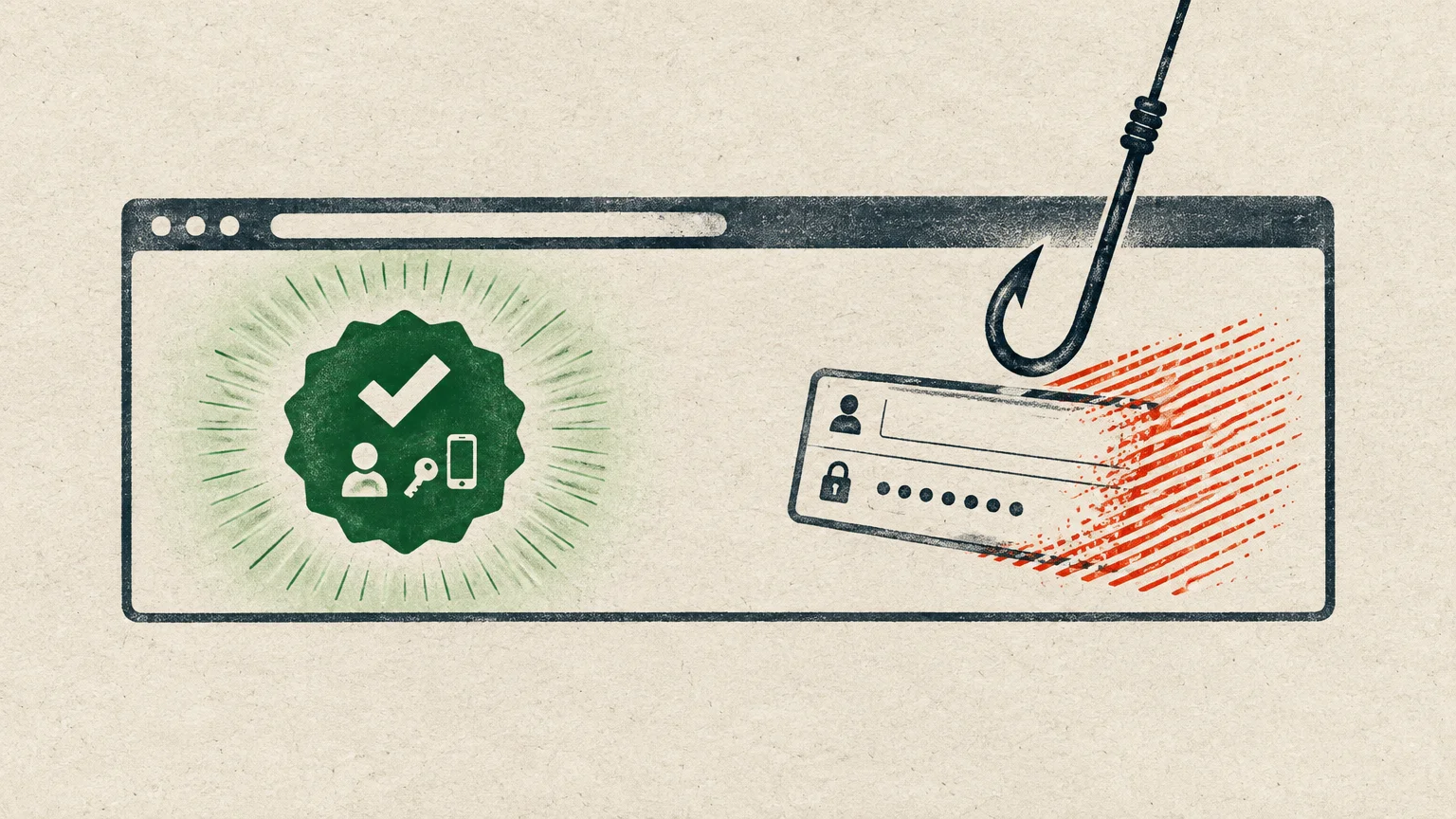
All beneficiaries must now access their personalized portals using either Login.gov or ID.me credentials. Cybercriminals actively exploit public confusion surrounding this digital migration.
Victims receive alarming emails and text notifications stating their accounts face immediate cancellation. The fraudulent messages instruct recipients to click an embedded link to verify their profiles.
These deceptive links lead directly to sophisticated spoof sites designed to replicate official federal landing pages. Once you input your login credentials, the attackers capture your authentication details.
The perpetrators immediately access your portal, alter your residential address, and redirect your scheduled disbursements into criminal-controlled accounts. A single errant click can interrupt your monthly cash flow indefinitely.
Always access your federal benefits portal by navigating directly to official agency tools via the Social Security Administration website. Never authenticate your credentials through unsolicited links sent by text message or email.

3. The Bank-to-SSA “Secure Asset Transfer” Ruse
On July 29, 2026, federal investigators issued an urgent consumer warning detailing a dangerous escalation in financial fraud. Criminals now coordinate deceptive phone handoffs to impersonate multiple trusted institutions during a single phone call.
The scam begins with a frantic phone call or security notification claiming to originate from your personal commercial bank. The caller asserts that criminal actors have compromised your checking accounts or retirement deposits.
To establish false trust, the caller offers to transfer you directly to an official federal investigator. After brief hold music, an accomplice claiming to represent the Office of the Inspector General joins the conversation.
The fake investigator informs you that your federal benefits and private assets face immediate seizure. They direct you to liquidate your personal holdings and move cash into a safe government escrow account.
Victims are instructed to purchase gold bars, deposit cash into specialized Bitcoin kiosks, or wire money overseas to shield their funds. In reality, these funds go straight into criminal offshore accounts.
Legitimate private financial institutions cannot transfer calls directly to federal agencies. If a caller offers to route your call to an inspector general, hang up the phone immediately.
4. Annual Social Security Statement Malware Phishing
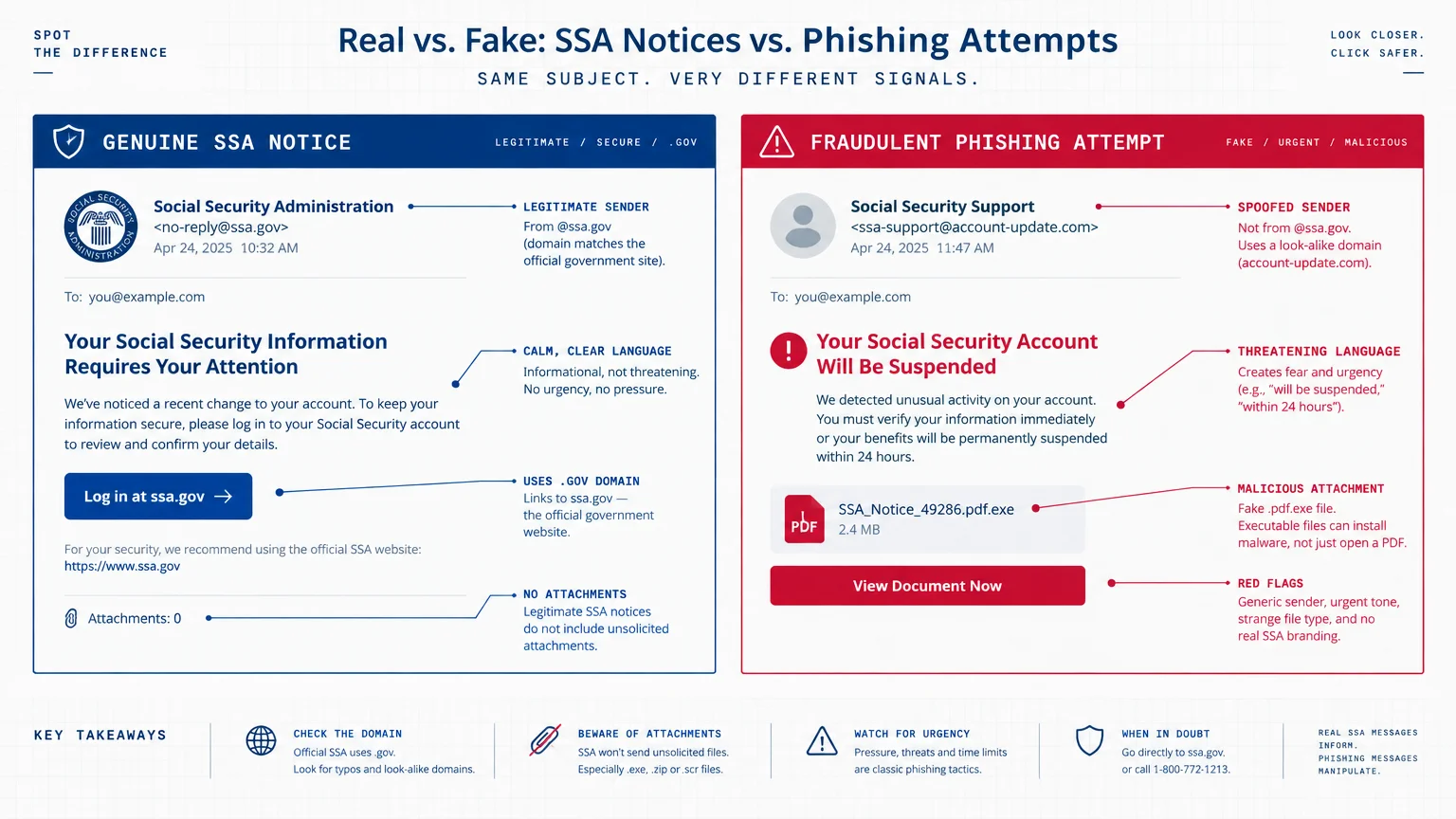
On April 6, 2026, the SSA Office of the Inspector General issued a nationwide public alert regarding targeted digital phishing. Criminal networks distributed millions of fraudulent emails masquerading as automated earnings notifications.
These communications inform recipients that their newly compiled annual Social Security statement is ready for immediate review. The emails contain weaponized attachments or direct links to malicious web pages.
What makes this campaign uniquely deceptive is the attackers’ use of authentic biographical details. Criminals incorporate full names and partial Social Security numbers acquired through commercial data breaches to convince recipients that the message is authentic.
Opening the attached statement downloads malware onto your computer or smartphone. This software logs your keystrokes, tracks banking activities, and extracts stored sensitive documents.
Federal agencies do not send unsolicited statement attachments through unencrypted external emails. If you wish to review your lifetime earnings, view them directly inside your secure personal account.
5. Social Security Fairness Act Back-Pay Fraud
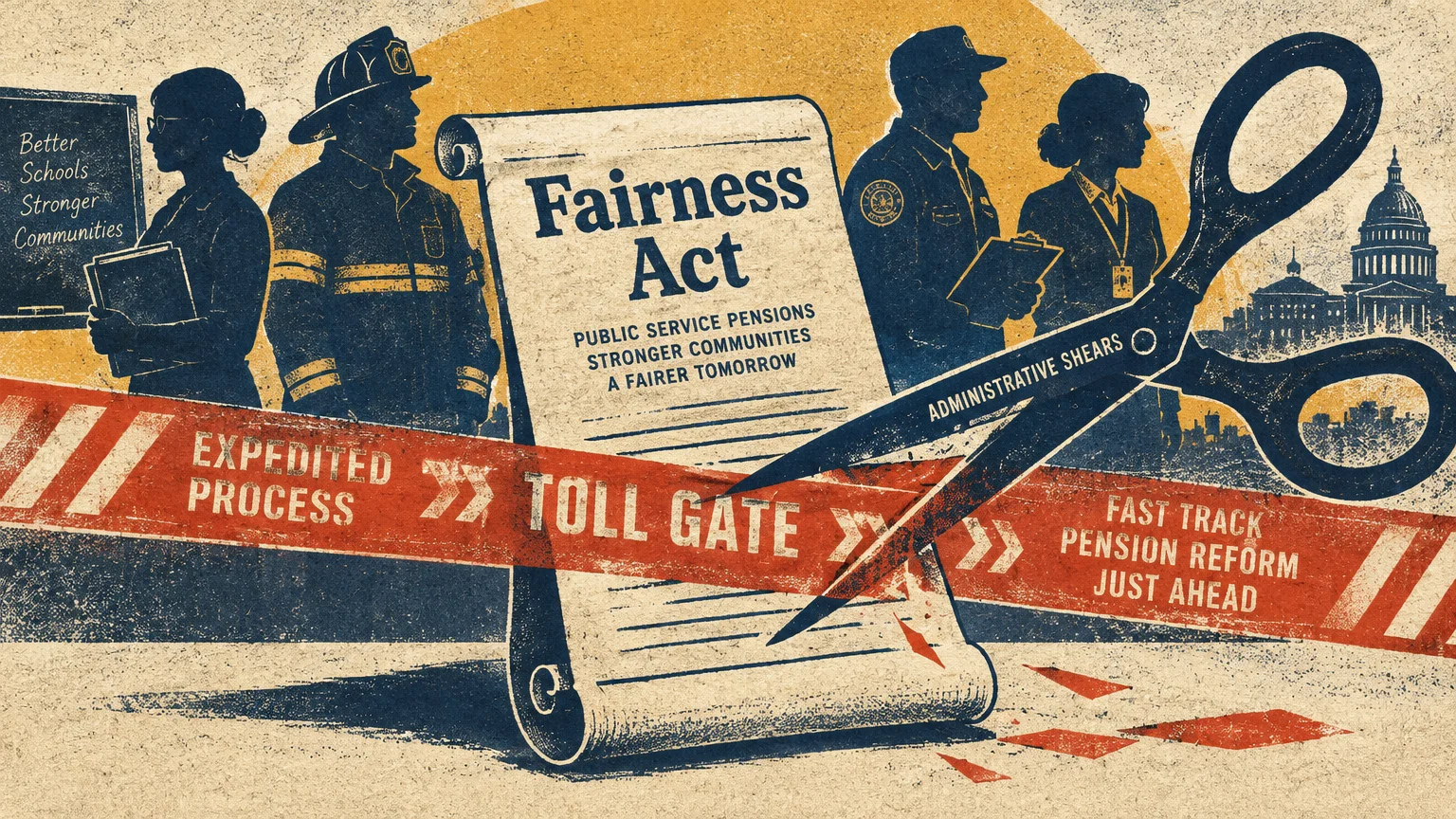
Following the enactment of the Social Security Fairness Act, millions of public sector retirees gained eligibility for revised monthly allocations. This landmark legislation repealed the long-standing Windfall Elimination Provision and Government Pension Offset.
Retired teachers, police officers, firefighters, and municipal personnel have eagerly awaited retroactive recalculations of their monthly entitlements. Predatory fraudsters quickly adapted their operations to target these civil servants.
Scammers contact retired public workers posing as specialized federal caseworkers. They claim that administrative processing backlogs will delay recalculation payments for several years.
The fraudster promises to expedite your back-pay audit and secure immediate lump-sum distributions in exchange for a processing fee. They often demand $500 to $2,500 via wire transfers or prepaid debit cards.
No outside party or fee-based service can expedite statutory recalculations. Federal personnel recalculate and distribute approved statutory adjustments directly without charging processing costs.
6. Direct Deposit Redirection and Account Takeover
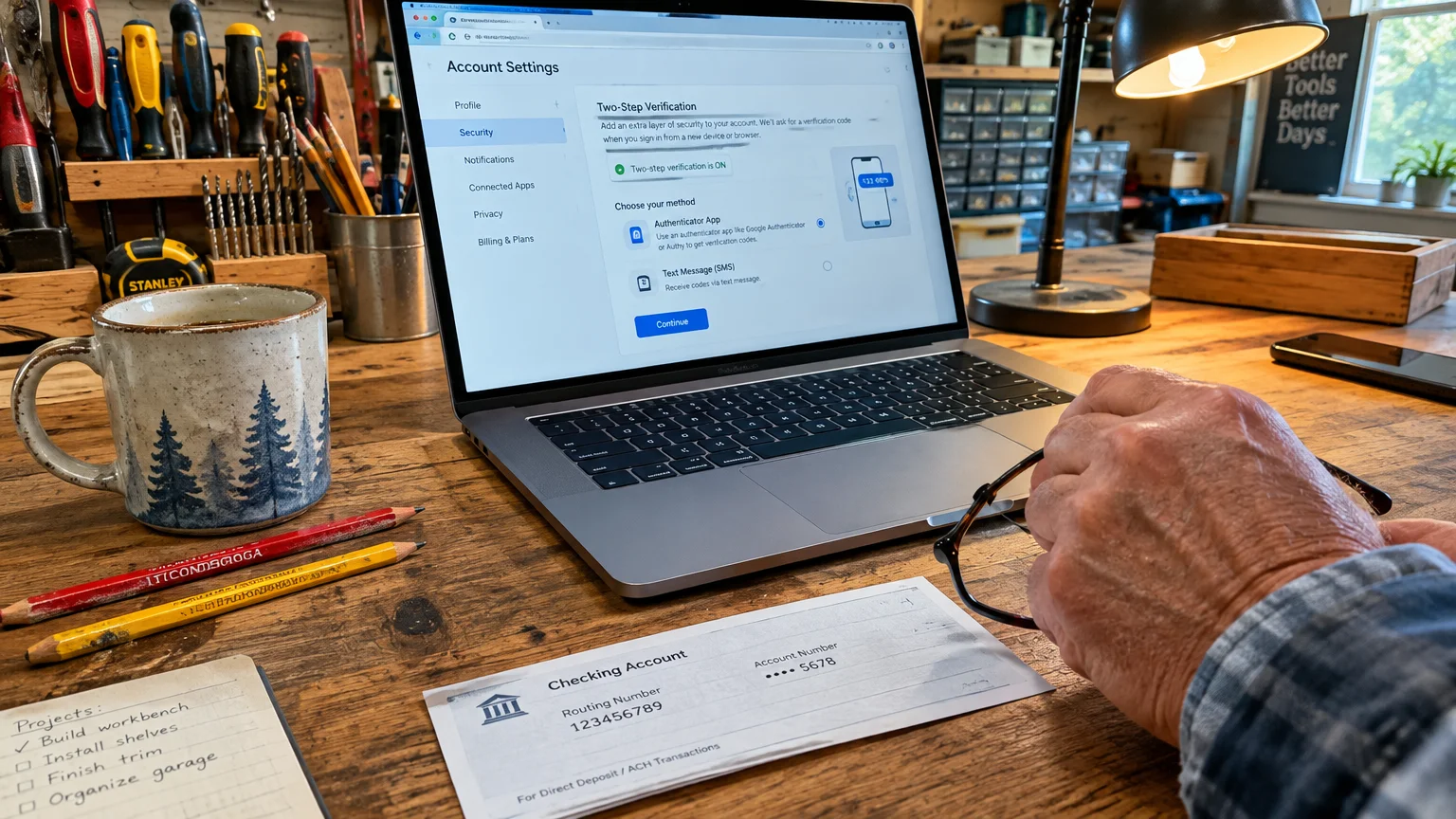
Direct deposit redirection represents one of the quietest yet most financially devastating forms of identity theft. In these operations, scammers do not contact the victim directly until the damage is already done.
Using identities stolen during major corporate data breaches, syndicates create accounts or reset passwords on existing online benefit portals. Once inside the profile, the attacker modifies the direct deposit routing instructions.
The criminal routes your monthly distribution into an unmonitored online fintech account or an illicit prepaid card. The lawful beneficiary discovers the breach only after their expected monthly payment fails to clear.
Resolving fraudulent diversions requires lengthy investigations, leaving families without critical income for food, utilities, and prescription medications. Monitoring your benefit account protects your family from unannounced disruptions.
Review the automated notifications linked to your profile to ensure you receive instant text alerts if someone attempts to modify your banking data. Fast intervention minimizes the financial disruption caused by direct deposit hijackers.
7. The “Suspended SSN” Legal Threat and Warrant Scam
Despite years of public education campaigns, aggressive telephone intimidation tactics remain exceptionally lucrative for offshore call centers. These callers rely on acute psychological panic to bypass critical reasoning.
A caller using spoofed phone technology displays official agency numbers on your caller ID. An automated voice warns that federal law enforcement has suspended your Social Security number due to financial crimes.
When you speak with the operator, an aggressive imposter claims that authorities discovered an abandoned vehicle containing drugs and fraudulent bank accounts registered under your identity. They threaten you with immediate arrest unless you settle the matter instantly.
The fraudster orders you to maintain complete secrecy, warning that speaking with family members or local police violates federal court orders. They then instruct you to liquidate assets to post an electronic bond.
The federal government never suspends Social Security numbers. If a caller threatens you with arrest, badge numbers, or warrants over the phone, terminate the call immediately.
8. Social Media Benefit Grants and Private Messaging Traps
Scammers increasingly rely on modern digital platforms to bypass traditional call filters. FTC data revealed that 30% of all scam victims who lost money in 2025 were initially contacted through social media.
These social media schemes accounted for a staggering $2.1 billion in documented consumer losses. Attackers primarily operate through platforms like Facebook, Instagram, and WhatsApp.
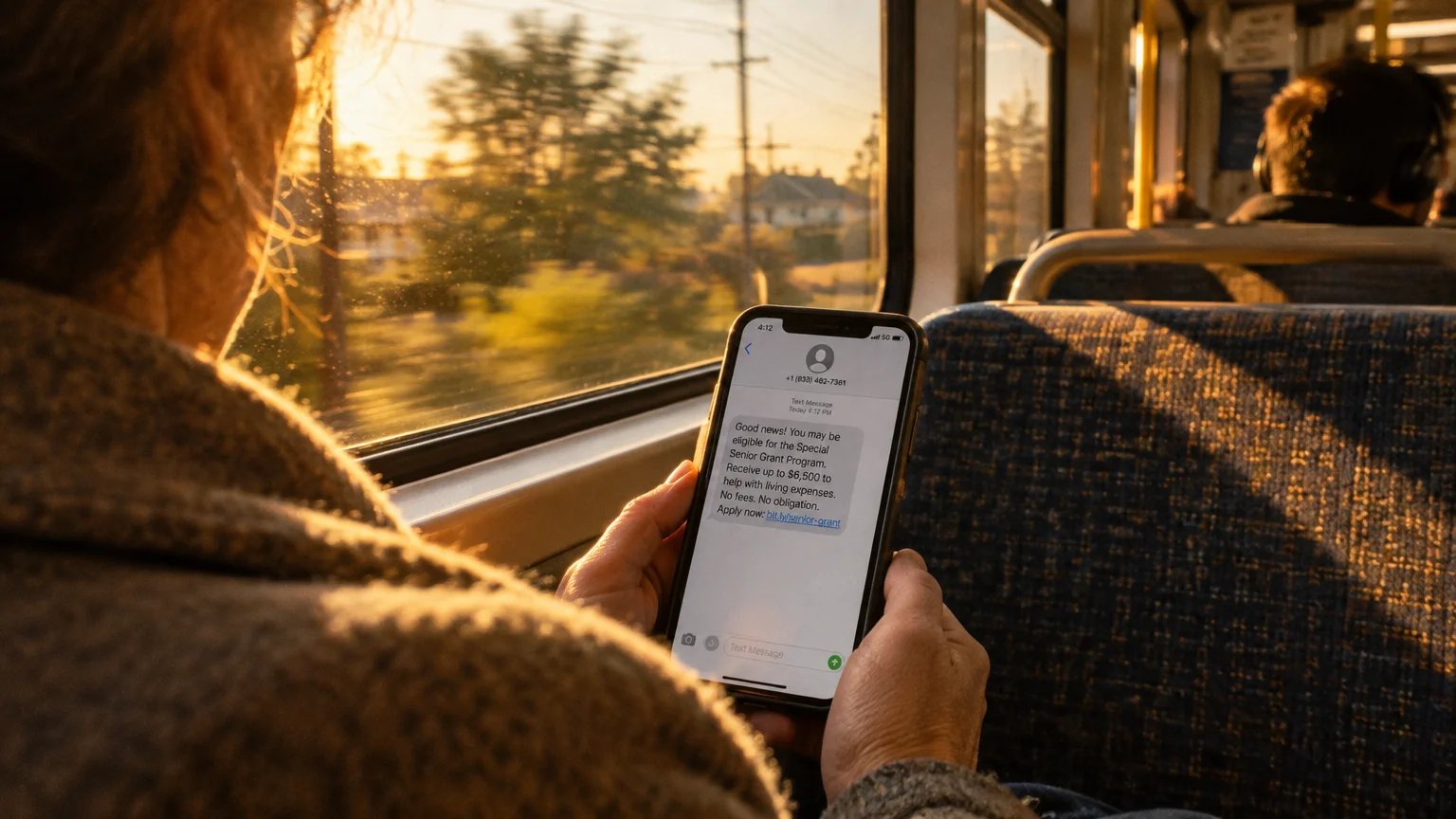
Fraudsters create convincing duplicate profiles of your close friends or establish fraudulent community assistance organizations. They send private messages celebrating a supposed new government grant program designed for older adults.
The message claims the federal government distributes special stimulus money alongside standard monthly benefits. To collect the award, you are directed to a phony website that requests banking credentials and personal identifiers.
Alternatively, the scammer claims that you must pay an upfront delivery surcharge before courier services can deliver your grant funds. The government does not award unsolicited cash grants through direct messages on social media.
Comparing Legitimate SSA Protocols with Scammer Tactics
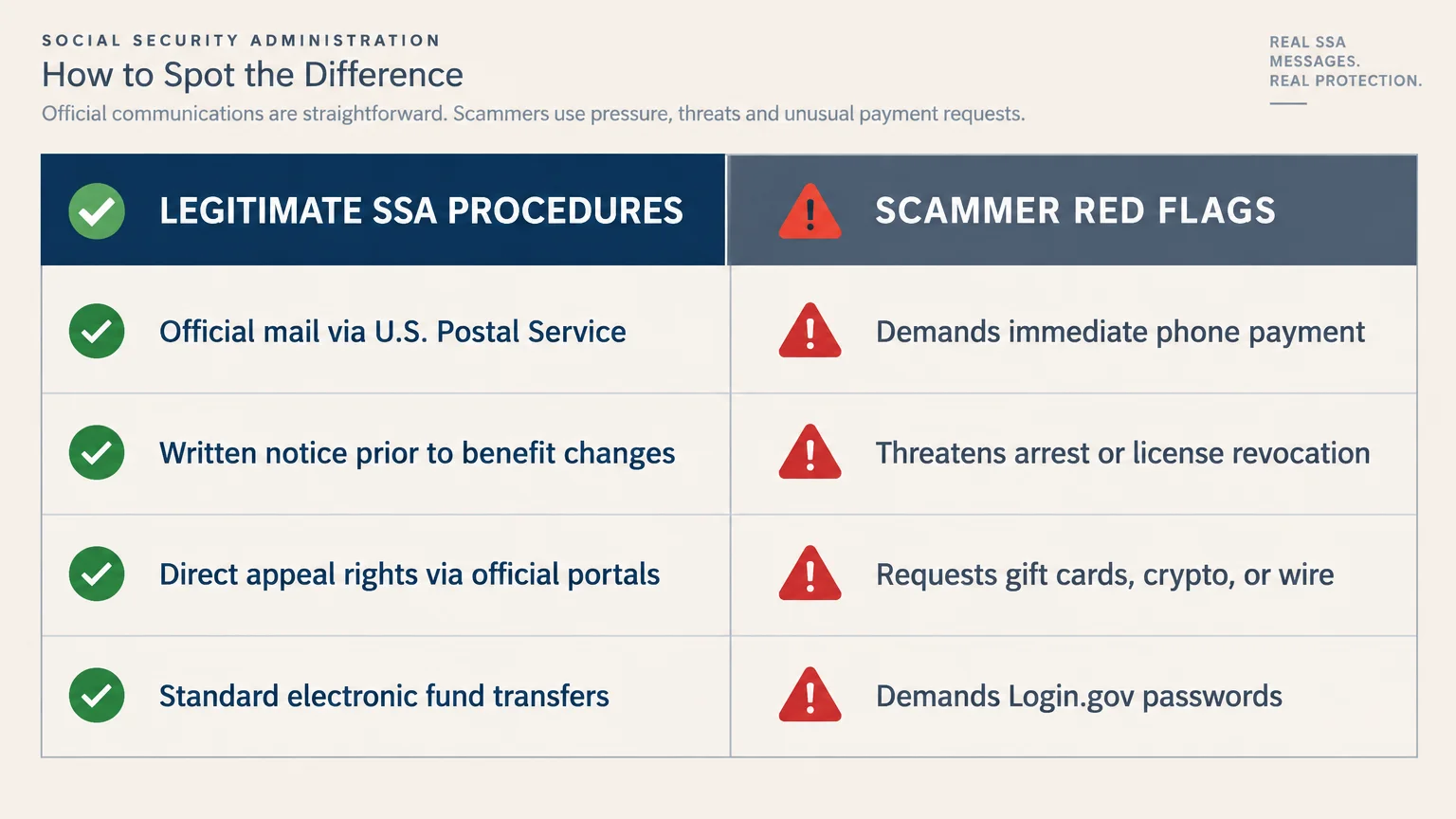
Distinguishing authentic government business from sophisticated fraud requires an understanding of standard administrative rules. The table below illustrates how genuine agencies operate compared to criminal operations.
| Scenario | Legitimate Federal Procedure | Criminal Scammer Approach |
|---|---|---|
| Payment Demands | Sends official paper bill by mail with standard payment options. | Demands immediate settlement using gift cards, Bitcoin, or wire transfers. |
| Account Access | Requires multi-factor login via Login.gov or ID.me. | Sends unverified direct links via text or unsolicited email attachments. |
| COLA Adjustments | Calculates and applies the 3.6% COLA automatically to benefits. | Claims beneficiaries must pay fees or verify information to activate the raise. |
| Law Enforcement Threats | Resolves non-compliance through official mail and formal hearings. | Threatens same-day arrest by local police or immediate account freezing. |
| Communication Routing | Advises callers to dial official phone directories directly. | Offers to transfer private banking calls directly to federal agents. |
Reviewing these standard operational differences provides an immediate defense against imposter attempts. Whenever an interaction deviates from legitimate procedures, break off contact immediately.
Errors That Cost Families Thousands
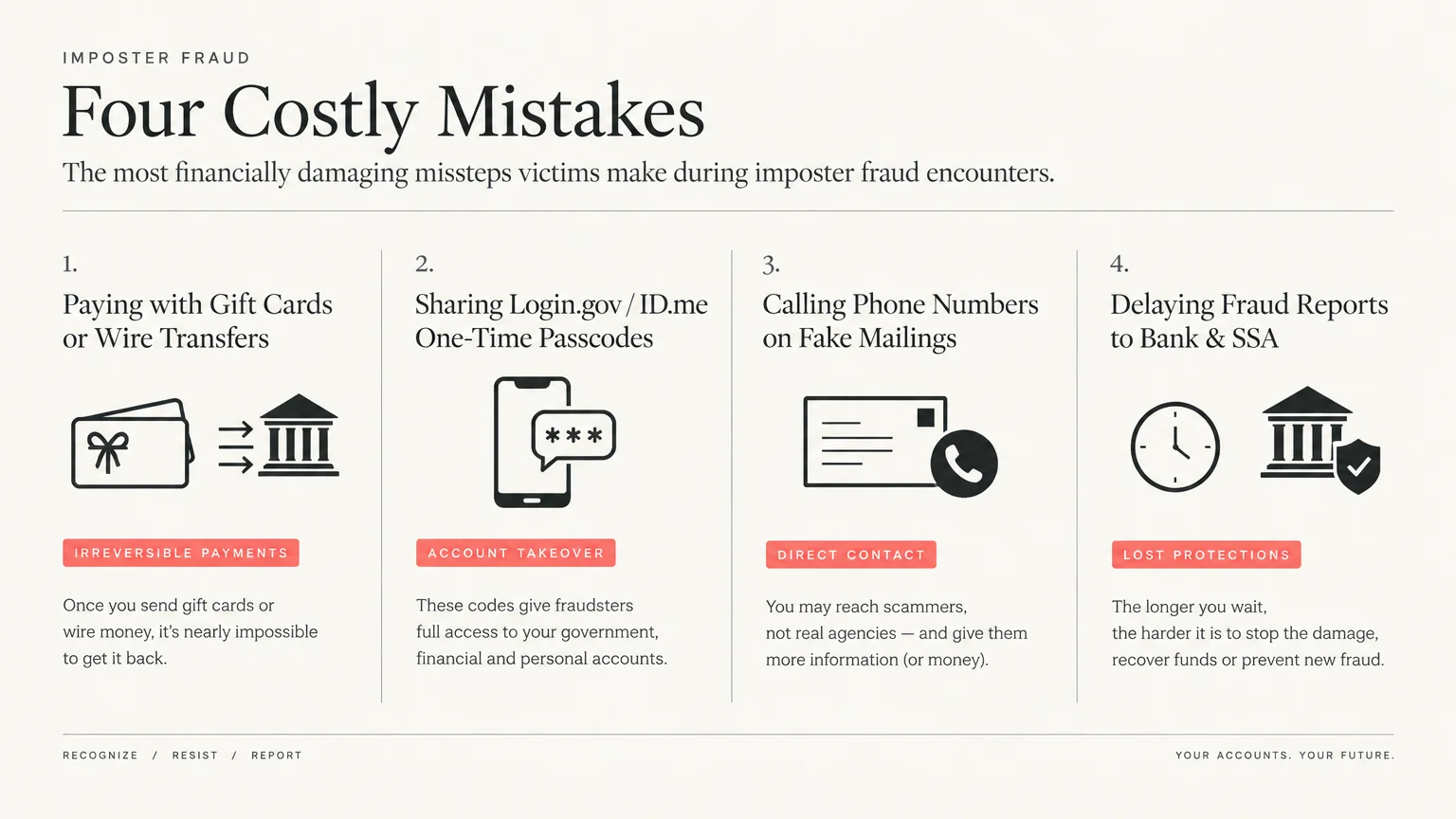
Falling prey to sophisticated imposters is not a matter of intelligence; it is a consequence of engineered psychological manipulation. High-stress environments induce cognitive panic that causes victims to bypass normal caution.
One catastrophic error is trusting incoming caller ID displays. Criminal software easily spoofs legitimate government telephone numbers, tricking even cautious recipients into letting down their guard.
Another common mistake involves complying with secrecy demands. Scammers instruct victims to stay on the phone while traveling to banks, preventing them from consulting trusted advisors or relatives.
Families also lose immense wealth by withdrawing physical cash to purchase gift cards or cryptocurrency. Legitimate government entities will never require asset conversion into alternative payment systems.
Retaining complete financial autonomy requires setting strict family rules regarding incoming calls. Establishing a personal verification policy stops impulsive transactions before money leaves your control.
“A budget is telling your money where to go instead of wondering where it went.” — John C. Maxwell
How to Lock Down Your Identity and Benefits Today
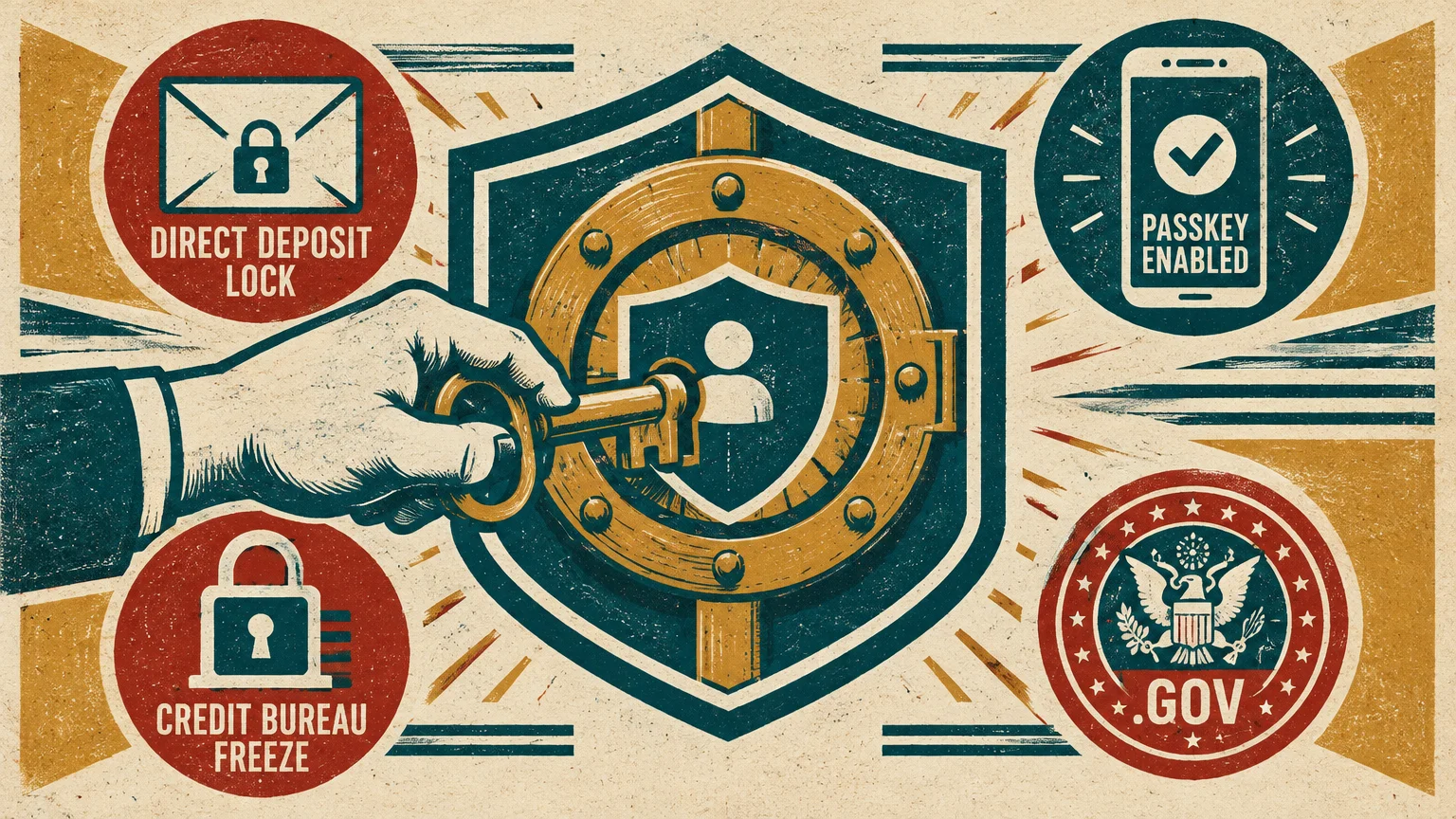
Protecting your retirement income requires proactive operational defenses. Taking decisive steps today shields your accounts against unauthorized intrusions throughout the coming year.
- Claim Your Account Immediately: Create and secure your personal profile using Login.gov or ID.me before someone creates an unauthorized account using your credentials.
- Enable Multi-Factor Authentication: Use an authenticator app rather than basic SMS text messages to safeguard your verification codes against SIM-swap attacks.
- Block Unknown Incoming Calls: Utilize built-in mobile call-filtering features to send unverified phone calls straight to voicemail.
- Freeze Your Credit Reports: Contact Experian, Equifax, and TransUnion to freeze your credit files, preventing fraudsters from opening secondary banking accounts in your name.
- Set Up Direct Deposit Alerts: Configure your private bank account to send immediate mobile push notifications for any incoming or outgoing financial transactions.
Documenting these steps establishes an impenetrable defense around your personal records. Consistent account oversight eliminates the vulnerability window exploited by identity thieves.

When to Get Expert Help
If you suspect an imposter has obtained your Social Security credentials or accessed your banking network, you must act decisively. Contacting the right specialized professionals restores your financial safety.
Immediately report government imposter calls to the SSA Office of the Inspector General through their secure reporting portal at oig.ssa.gov/report. You should also log the incident with the Federal Trade Commission to assist national investigations.
If financial assets or banking routing details were compromised, consult IdentityTheft.gov to create a legally binding identity theft recovery plan. This federal roadmap provides step-by-step assistance to dispute fraudulent bank debits and restore damaged credit scores.
For complex cases involving substantial unauthorized withdrawals, consider hiring a consumer protection attorney or contacting the Consumer Financial Protection Bureau. Legal counsel ensures banking institutions honor their statutory obligations regarding fraudulent electronic transfers.
Frequently Asked Questions
Does the Social Security Administration ever call beneficiaries directly?
The agency communicates primarily through official mail sent via the United States Postal Service. Agency personnel occasionally place phone calls regarding ongoing claims, but they will never threaten you, demand immediate payments, or request gift card numbers.
Can the federal government suspend your Social Security number?
No, the government never suspends Social Security numbers for any reason. Any caller or automated recording claiming that your number is frozen, suspended, or flagged for cancellation is an imposter.
Do I have to apply or pay a fee to receive my 2027 COLA increase?
No, the 3.6% cost-of-living adjustment applies to your benefits automatically starting with January 2027 payouts. Anyone who asks for an administrative fee, banking verification, or application form to unlock your increase is attempting to steal your money.
Can private banks transfer callers directly to the SSA Inspector General?
Private financial institutions and commercial security departments have no technical capability to transfer telephone calls directly to federal law enforcement. If a caller offers to route your call to an inspector general, hang up immediately.
Securing Your Financial Horizon
Protecting your retirement benefits is essential to maintaining your long-term independence. Never allow unsolicited callers or alarming digital messages to bypass your sound financial judgment.
Take time this week to review your online accounts, activate enhanced login security, and discuss these emerging scam patterns with loved ones. Financial outcomes vary based on individual income, credit history, and circumstances. This article provides general guidance only. Consult a qualified financial planner, CPA, or consumer attorney for advice specific to your situation.
Last updated: February 2026. Rates, benefit amounts, and tax rules change—always verify current details at official sources.