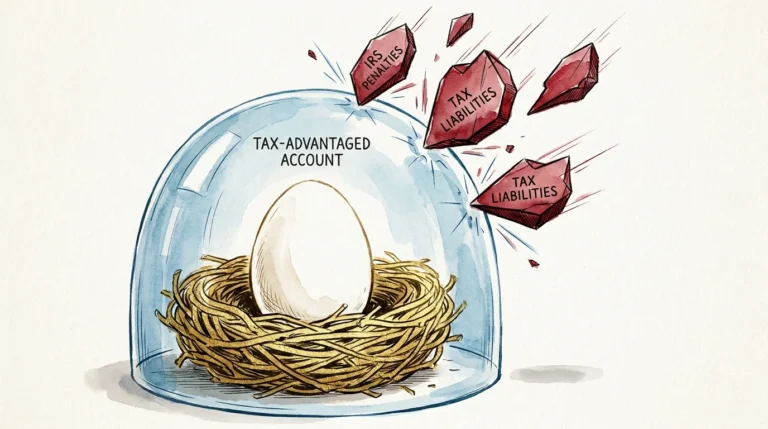
Traditional commercial banks frequently erode retirement cash reserves through hidden service fees and paltry yields. Moving your funds into credit union savings accounts allows you to safeguard your principal while earning higher monthly income.
Unlike profit-driven commercial institutions, credit unions operate as member-owned cooperatives that return operational profits directly to depositors.
More than 145 million Americans currently belong to cooperative financial institutions, and retirees represent one of the fastest-growing demographics. These eight practical advantages explain why making this transition can strengthen your retirement security.
1. Superior Yields on Liquid Cash and Share Certificates
Retirees rely on consistent cash flow to supplement Social Security and retirement account distributions. Earning an extra half-percent or full percentage point on liquid reserves makes a noticeable difference in your household budget.
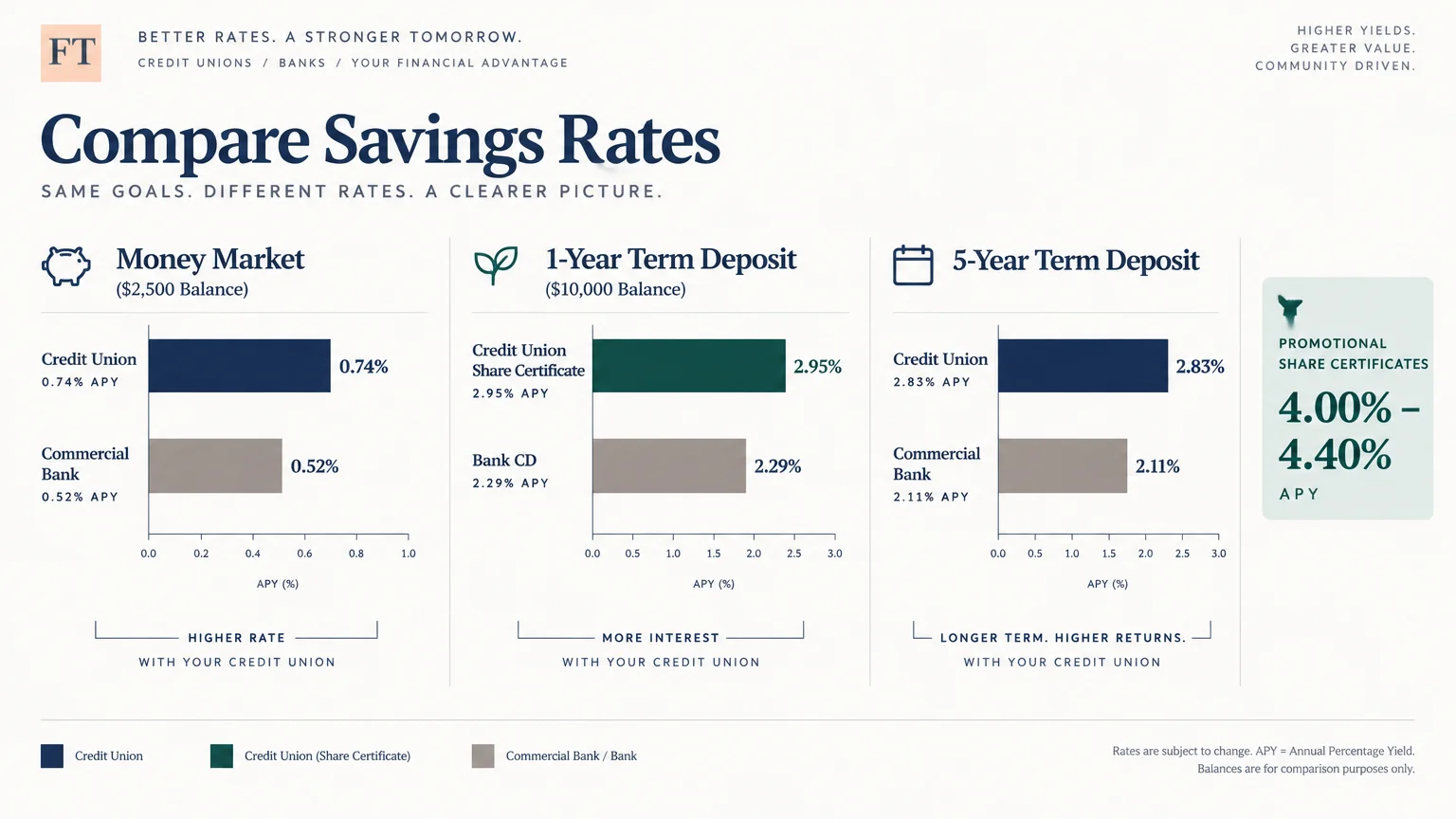
Data from the National Credit Union Administration (NCUA) shows credit unions consistently outperform commercial banks on cash deposit yields. This gap becomes clear when comparing common savings vehicles.
For money market accounts with a $2,500 balance, credit unions average 0.74% APY compared to just 0.52% APY at commercial banks. That yield advantage compounds quietly month after month.
The difference grows even wider when you lock money into term deposits, known as share certificates. Credit unions offer a compelling alternative to low-yielding bank certificates of deposit (CDs).
A one-year share certificate with a $10,000 balance averages 2.95% APY at credit unions, outperforming the bank average of 2.29% APY. That difference puts more spendable cash in your pocket.
Longer commitments show the exact same trend across the banking industry. Five-year share certificates average 2.83% APY at credit unions versus 2.11% APY at traditional banks.
Top-tier institutions offer competitive high-yield savings accounts and promotional share certificates reaching between 4.00% and 4.40% APY. Shopping at a high yield savings credit union helps you secure top-of-market returns.
Those rates give you reliable, predictable cash generation without exposing your principal to stock market volatility. For retirees protecting their lifetime nest egg, that safety is essential.
“It’s not how much money you make, but how much money you keep, how hard it works for you, and how many generations you keep it for.” — Robert Kiyosaki
2. Lower Fees That Protect Fixed Incomes
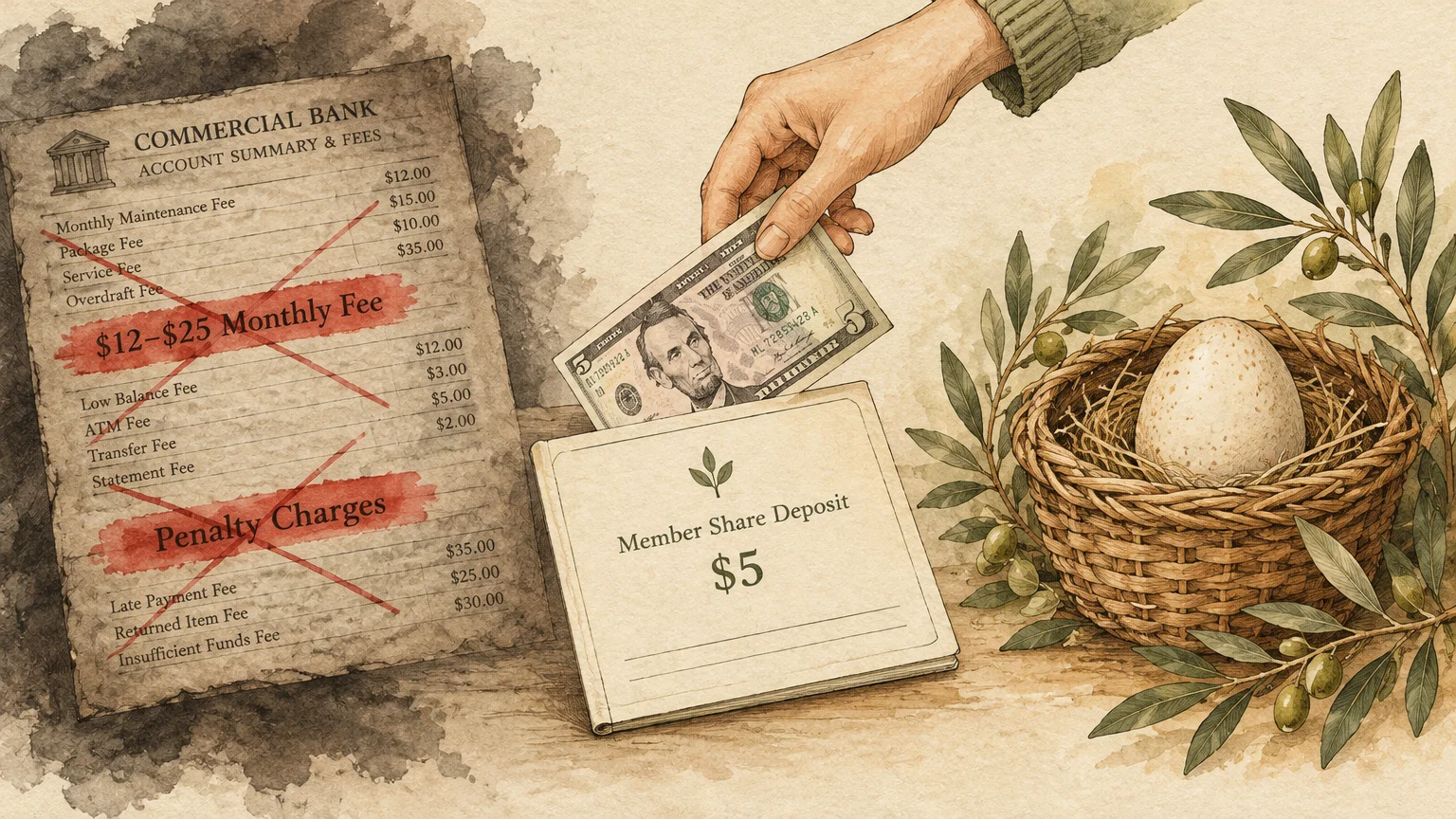
Unexpected maintenance charges quietly drain bank balances when you live on a fixed income. Many commercial banks impose monthly fees simply for maintaining an everyday savings account.
Major retail banks frequently charge $12 to $25 each month unless you maintain large minimum daily balances. Credit unions rarely subject their members to these predatory balance rules.
Most credit union savings accounts require an initial deposit of only $5 to establish your ownership share. After funding that base share, you rarely face recurring monthly maintenance costs.
Credit unions also maintain far lower auxiliary fees across everyday banking tasks. Cashier’s checks, stop-payment requests, wire transfers, and paper account statements generally cost significantly less than at commercial competitors.
Research published by the Consumer Financial Protection Bureau (CFPB) confirms that credit unions rely far less on consumer penalty charges than large commercial banks.
Avoiding these monthly administrative deductions preserves your cash balance. Eliminating small recurring fees protects your purchasing power against ongoing cost-of-living increases.
3. Identical Federal Safety Backed by the NCUA
Some retirees hesitate to switch institutions because they wonder whether non-bank cooperatives are safe. In reality, credit unions provide the exact same federal deposit protection as commercial banks.
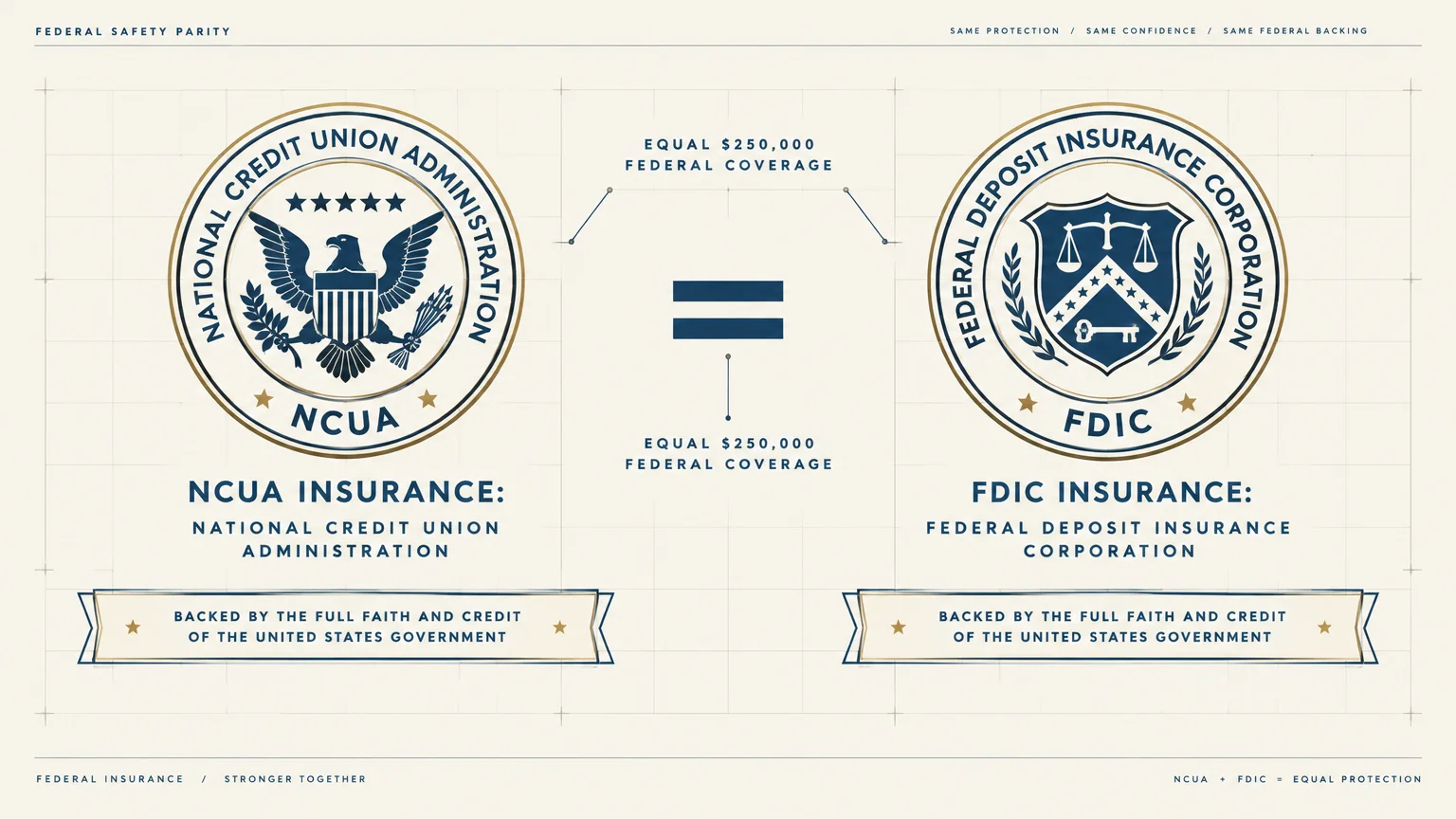
The National Credit Union Share Insurance Fund (NCUSIF) insures deposits at all federally chartered credit unions. This fund is administered directly by the NCUA, an independent federal agency.
Just like insurance from the Federal Deposit Insurance Corporation (FDIC), NCUA coverage protects up to $250,000 per depositor, per institution, per ownership category.
Both insurance funds share the full faith and credit backing of the United States government. No member has ever lost a single cent of insured savings within an NCUA-insured credit union.
Joint accounts receive $250,000 in coverage for each co-owner, giving a married couple up to $500,000 in total protection. That coverage applies automatically without paying extra policy premiums.
Retirement savings held in individual retirement accounts (IRAs) receive their own separate $250,000 insurance tier. You can maintain both a regular savings account and an IRA under full federal protection.

Credit Union vs Bank: Comparing Key Retiree Features
Understanding the operational differences between credit unions and retail banks clarifies why older Americans are moving their money. The table below outlines how these two models compare across critical banking categories.
| Feature | Credit Unions | Commercial Banks |
|---|---|---|
| Ownership Structure | Member-owned cooperative | For-profit shareholder owned |
| Money Market Average ($2,500) | 0.74% APY | 0.52% APY |
| 1-Year Certificate ($10,000) | 2.95% APY | 2.29% APY |
| 5-Year Certificate ($10,000) | 2.83% APY | 2.11% APY |
| Regular Savings ($2,500) | 0.19% APY | 0.32% APY |
| Federal Deposit Insurance | NCUA ($250,000 per category) | FDIC ($250,000 per category) |
| Surcharge-Free ATM Access | Over 30,000 (CO-OP Network) | Varies by bank chain size |
| Statutory Loan Rate Cap | 18% maximum APR on most loans | No federal statutory cap |
This side-by-side comparison reveals that credit unions deliver superior value across certificates and borrowing. While regular savings accounts show minor variance, promotional high-yield credit union accounts easily bridge that gap.
Retirees managing larger liquid cash balances benefit substantially from the higher returns on money market accounts and share certificates. Those extra yields add stability to your distribution schedule.

4. Simplified Estate Planning and Generous Trust Coverage
Preserving family assets for heirs requires clean account structures and reliable insurance rules. Estate planning becomes far simpler when you understand how federal share insurance evaluates trust agreements.
Under 12 CFR Part 745, the NCUA implemented a modernized share insurance rule for trust accounts. This comprehensive framework took effect on December 1, 2026, streamlining coverage for account holders.
The revised rule combines revocable trusts, irrevocable trusts, and Payable on Death (POD) accounts into a single, unified insurance category. This reform eliminates the legal ambiguities that previously confused estate planners.
Your credit union savings accounts receive up to $250,000 in federal protection for each eligible beneficiary named on the trust. This calculation applies regardless of whether the trust is revocable or irrevocable.
A single grantor designating five unique beneficiaries can secure up to $1.25 million in total federal deposit insurance. Two joint grantors, such as married spouses, can protect up to $2.5 million.
This streamlined structure allows you to maintain substantial cash balances safely within one institution. You avoid having to open accounts at multiple banks simply to maintain complete insurance coverage.
Credit union member service representatives routinely assist members with updating beneficiary designations. Keeping these records accurate ensures your savings pass seamlessly to your family without probate delays.

5. Nationwide Convenience Through Shared Branching Networks
Many retirees travel during retirement or relocate seasonally to escape cold winter weather. Leaving a local community institution often sparks concerns about accessing money while away from home.
The CO-OP Shared Branch network, operated under Velera, eliminates this geographic limitation. This national cooperative network connects thousands of independent credit unions into a unified service system.
Members can conduct business at more than 5,600 physical shared branches spread throughout the United States. You can step into another credit union across the country and complete standard teller transactions.
Shared branches allow you to deposit checks, withdraw cash, make loan payments, and transfer funds between accounts. You enjoy the personal touch of a physical branch wherever your retirement travels take you.
The network also provides access to more than 30,000 surcharge-free ATMs nationwide. That footprint exceeds the proprietary ATM networks of even the largest commercial retail banks.
To combat identity theft, shared branches enforce digital identity verification procedures for transactions involving out-of-state driver’s licenses. This protocol adds an important layer of defense to keep your money safe.
This nationwide access gives you the neighborhood feel of a local credit union alongside national physical convenience. You never have to sacrifice personal service for geographic flexibility.

6. Dedicated Customer Support and Elder Fraud Safeguards
Navigating automated phone trees and offshore call centers can be deeply frustrating for older bank customers. When urgent financial questions arise, you want to speak with a knowledgeable professional directly.
Credit unions prioritize relationship-based service over transaction volume. Branch employees take the time to answer complex questions about direct deposits, disbursements, and account maintenance.
This close personal connection also helps shield older Americans from aggressive financial scams. Tellers and branch managers often recognize long-time members and notice irregular withdrawal patterns quickly.
Credit union staff frequently intervene when criminals attempt to manipulate seniors into sending wire transfers or purchasing gift cards. Having an observant ally behind the teller counter provides vital protection.
Guidance from the Federal Trade Commission (FTC) highlights early detection and direct communication as critical defenses against elder fraud. Credit unions excel at this proactive vigilance.
Credit unions also provide complimentary on-site services that commercial banks increasingly restrict or monetize. You can often obtain free notary services and medallion signature guarantees at your local branch.
Those specialized legal verifications are essential for transferring securities, managing estate documents, and executing pension paperwork. Accessing them locally saves you time, frustration, and unnecessary administrative fees.
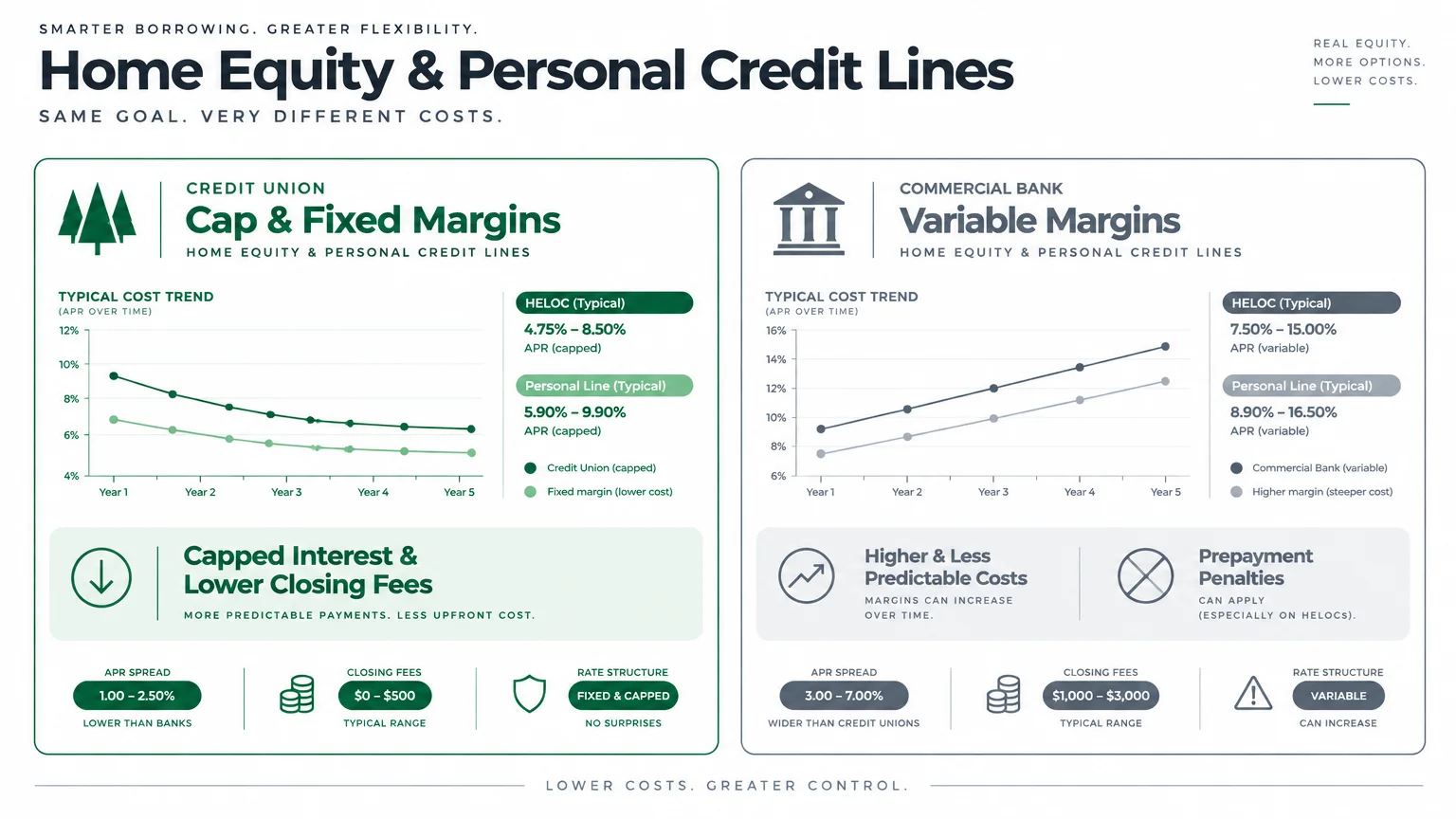
7. Lower Borrowing Rates When You Need Credit Lines
Even after retiring, you might need financing to replace a vehicle, update your home, or manage unexpected emergencies. Credit unions provide significantly better borrowing terms than profit-seeking commercial lenders.
Federal law caps the interest rates on most loans issued by federal credit unions at 18%. Commercial banks face no statutory rate limit and frequently charge credit card interest rates above 25% or 30%.
NCUA market reports confirm this consistent interest rate advantage across common borrowing categories. Credit union classic credit cards average an APR of 12.58%, compared to 15.27% at traditional banks.
Vehicle financing shows an even greater cost disparity between the two financial models. A 60-month new auto loan averages 5.44% APR at credit unions versus 7.41% APR at commercial banks.
Borrowing at lower interest rates helps you manage essential purchases without depleting your core investment portfolio. Keeping your savings intact avoids triggering taxable capital gains or early distribution penalties.
Credit unions also offer home equity lines of credit (HELOCs) with minimal closing fees and competitive margins. These credit lines give you flexible access to home equity for renovations or medical costs.

8. Member Ownership Keeps Capital Working for You
Commercial banks exist to generate profits for outside shareholders and corporate executives. Their institutional incentives reward paying you lower savings yields while maximizing account fees.
Credit unions operate under an entirely different democratic framework. As an account holder, you are an equal owner and a full voting member of the cooperative.
Every member receives an equal vote for the volunteer board of directors, regardless of account balance size. That democratic structure ensures operational decisions prioritize member value rather than Wall Street profit expectations.
Operating profits return directly to members through higher savings yields, lower loan rates, and expanded digital services. When the cooperative succeeds financially, you receive direct financial benefits.
Credit unions also reinvest capital locally by financing small businesses, affordable mortgages, and neighborhood charitable programs. Your deposits help build economic strength within your local community.
Aligning your personal finances with a cooperative institution creates genuine peace of mind. You partner with a financial home that measures success by member satisfaction instead of quarterly dividend payouts.
“Do not save what is left after spending, but spend what is left after saving.” — Warren Buffett
Costly Mistakes to Avoid When Moving Savings
Transitioning your cash balances to a credit union is straightforward, but avoiding common execution errors saves unnecessary stress. Keep these critical considerations in mind before closing your old accounts.
- Ignoring membership eligibility rules: Most credit unions serve specific geographic areas, employers, or association memberships. Confirm that you qualify through residency, family ties, or a small association donation before applying.
- Overlooking network participation: Ensure your chosen institution participates in the CO-OP Shared Branch network. Confirming shared branching access is vital if you travel regularly or live in multiple states.
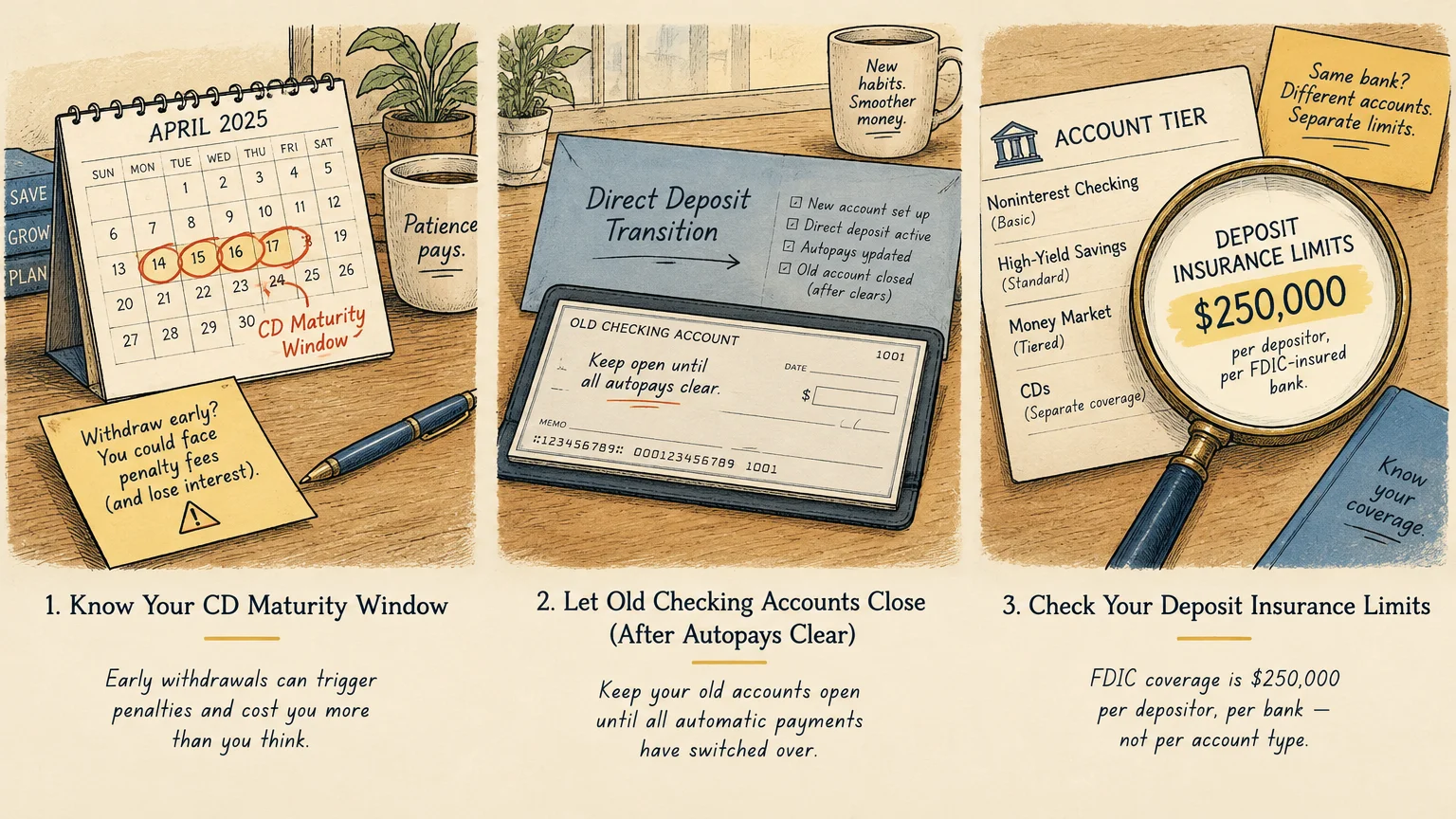
- Prematurely closing former bank accounts: Leave your existing bank account open with a cash buffer for at least two billing cycles. This transition window prevents bounced payments while automated direct deposits switch over.
- Mismanaging automated deposit transitions: Update your direct deposit information with the Social Security Administration, pension providers, and annuity companies carefully. Verify that your first deposit lands in your new account before transferring all remaining funds.
- Exceeding federal insurance boundaries: Review your total balances if your household holds more than $250,000 at a single institution. Structure accounts under joint ownership or formal trust designations to preserve complete NCUA coverage.
Addressing these practical details prevents direct deposit interruptions and keeps your retirement income flowing smoothly. A methodical transition ensures complete safety for every dollar you move.

Don’t DIY These Decisions
Managing liquid savings and day-to-day checking accounts is generally a do-it-yourself project for most households. However, complex estate planning and tax strategies require specialized professional oversight.
Work with a fee-only Certified Financial Planner (CFP) to structure your overall cash reserve strategy. An advisor helps you balance liquid savings against inflation risks across your multi-decade retirement horizon.
Consult a Certified Public Accountant (CPA) when restructuring large taxable certificate balances or moving retirement distributions. Shifting significant cash sums can trigger unintended tax bracket adjustments or Medicare premium surcharges.
Engage a qualified estate planning attorney when establishing revocable trusts or drafting formal legacy instructions. Legal professionals ensure your trust documentation aligns perfectly with NCUA insurance rules under 12 CFR Part 745.
Taking a collaborative approach protects you against costly tax mistakes and legal oversights. Professional guidance ensures your cash management strategy integrates cleanly with your broader retirement estate plan.
Frequently Asked Questions About Credit Union Savings Accounts
Are credit union savings accounts as safe as commercial bank accounts?
Yes, deposits at federally insured credit unions carry the exact same level of federal protection as traditional banks. The National Credit Union Share Insurance Fund (NCUSIF) protects your funds up to $250,000 per depositor, per institution, per ownership category.
Can anyone join a credit union for retirees?
Most credit unions maintain broad membership eligibility requirements based on geographic location, employer affiliation, or community organizations. Many institutions allow anyone to join simply by making a small one-time contribution to an affiliated non-profit association.
How do shared branches work if I spend winters in another state?
Credit unions participating in the CO-OP network grant you access to more than 5,600 shared branches nationwide. You can visit any participating branch with your account number and government photo identification to perform everyday teller transactions.
How are credit union earnings taxed compared to commercial bank interest?
Credit unions refer to their earnings payouts as “dividends” rather than interest, but the IRS treats them identically for tax purposes. You report credit union savings dividends as ordinary taxable interest on federal tax returns using Form 1099-INT.
Next Steps for Your Retirement Cash
Begin by reviewing your current bank statements to evaluate the interest yields and administrative fees you currently receive. Compare those figures against the rates and terms offered by local and national credit unions.
Once you select an institution, open a core share savings account and initiate direct deposit updates for Social Security and pension income. Shifting your cash reserves into a member-owned cooperative preserves your capital, maximizes yields, and provides dedicated community service.
Financial outcomes vary based on individual income, credit history, and circumstances. This article provides general guidance only. Consult a qualified financial planner, CPA, or consumer attorney for advice specific to your situation.
Last updated: October 2026. Rates, benefit amounts, and tax rules change—always verify current details at official sources.