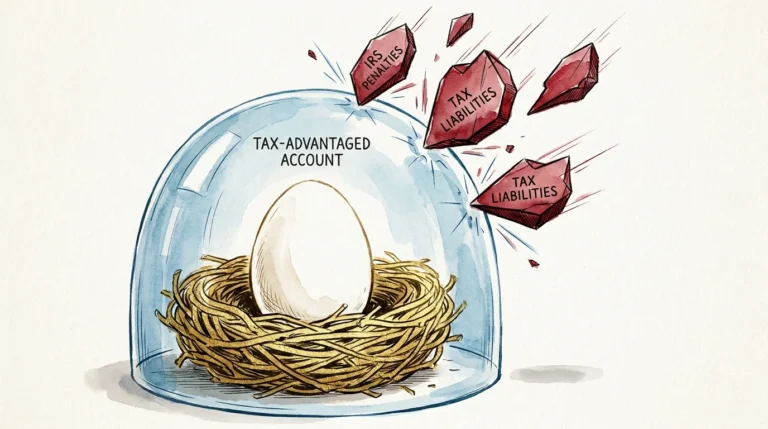
Elder financial abuse quietly drains billions of dollars from American families every year. Learning the behavioral and transactional warning signs early can save your aging loved one’s entire life savings from predatory theft.
Most exploitation happens out of sight, often carried out by people your family trusts. Sudden changes in banking habits or unexpected relationships should immediately raise red flags.
Recognizing these subtle shifts allows you to step in before irreversible financial damage occurs. Proactive oversight protects both family wealth and an aging parent’s dignity and independence.
The Real Scope of Elder Financial Abuse in America
Financial exploitation of older adults has surged to historic highs across the United States. Criminal syndicates and opportunistic individuals increasingly target the accumulated nest eggs of retirees.
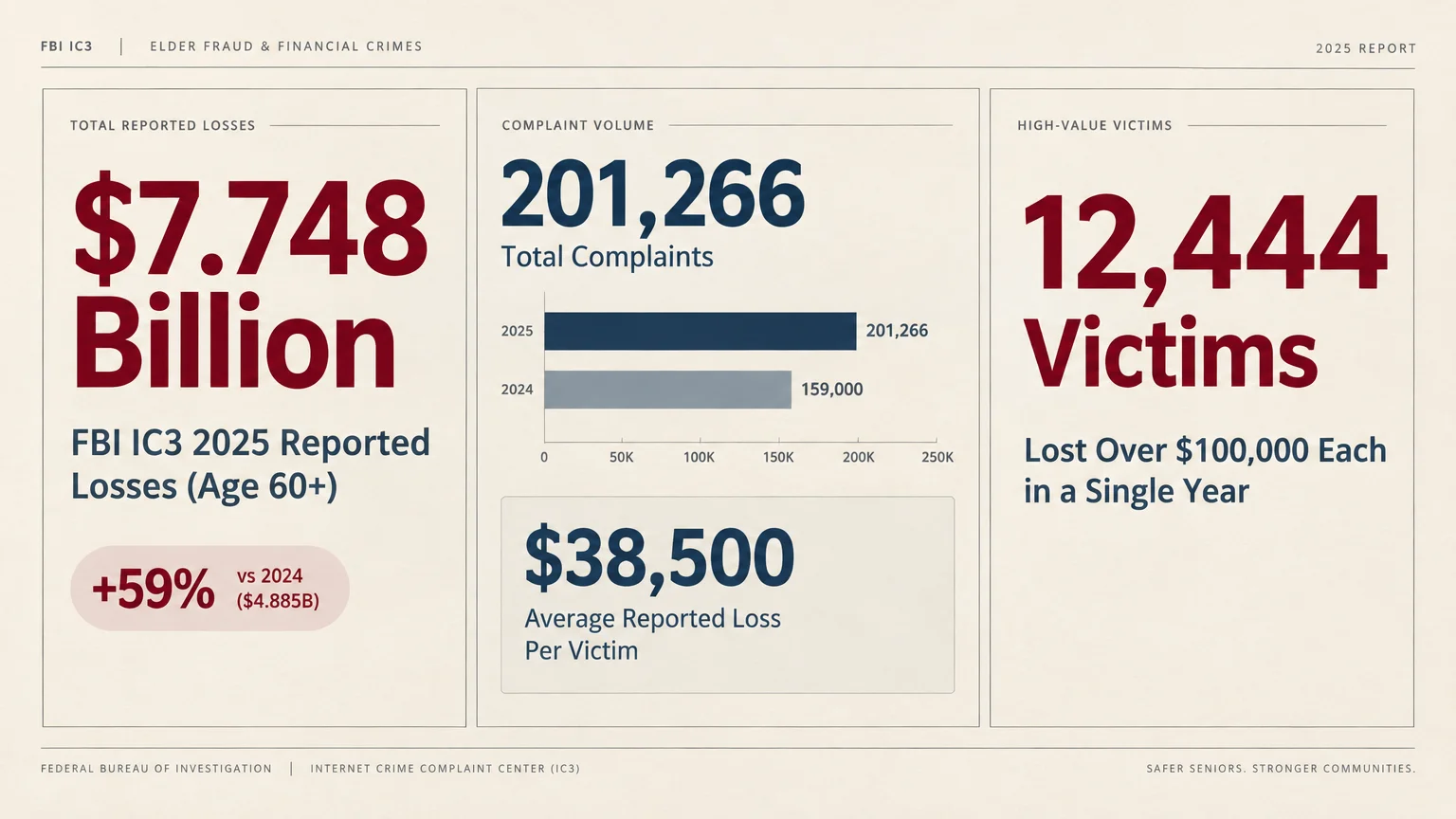
According to the FBI Internet Crime Complaint Center (IC3) 2025 Annual Report, Americans aged 60 and older filed 201,266 complaints. These victims reported $7.748 billion in total losses.
That staggering figure represents a 59% increase from the $4.885 billion reported in 2024. Older adults now represent the largest victim group by total dollar losses tracked by federal law enforcement.
The financial impact on individual households is often devastating. The average reported loss per complaint for victims 60 and older reached $38,500 in 2025.
Even worse, 12,444 older Americans lost more than $100,000 each in a single year. These losses wipe out retirement security and eliminate options for long-term healthcare.
Data from the Federal Trade Commission reinforces this alarming reality. In its Protecting Older Consumers report, the agency noted that older adults reported losing $3 billion to fraud in 2025.
That marks a fivefold increase compared to the $600 million reported in 2020. Furthermore, adults aged 80 and older suffered the highest median loss of any age bracket at $2,000.
Federal agencies emphasize that reported statistics reflect only a fraction of the problem. Because many victims feel embarrassment, the FTC estimates the true annual loss falls between $13.5 billion and $119.5 billion.
AARP research estimates that overall elder financial exploitation drains $28.3 billion annually from older Americans. Around $20.5 billion in stolen funds goes entirely unreported each year.

Behavioral Warning Signs You Should Never Ignore
Financial exploitation rarely begins with an empty bank account; it starts with subtle psychological shifts. You must monitor changes in your loved one’s demeanor, routines, and social interactions.
Victims frequently experience intense anxiety surrounding communication. If your parent suddenly panics when the phone rings or rushes to hide incoming mail, investigate immediately.
Perpetrators often coach their targets to maintain strict secrecy. Your loved one might become unusually defensive or evasive when you ask routine questions about household bills or grocery expenses.
Social isolation serves as the primary weapon for both professional scammers and predatory acquaintances. Scammers convince older adults that their own family members intend to steal their money or put them in nursing homes.
Watch for the sudden emergence of a new “best friend,” romantic interest, or overly attentive neighbor. These individuals often insert themselves into daily routines and volunteer to manage errands or financial paperwork.
You should also monitor your loved one’s emotional state around specific caregivers. Noticeable fear, submissiveness, or extreme eagerness to please a helper indicates an unhealthy power dynamic.
Relinquishing lifelong interests or hobbies can also indicate financial distress. When seniors exhaust their liquidity sending money to fraudsters, they frequently cut back on social outings and prescription medications.

Banking and Transactional Red Flags
Regular review of financial accounts provides the most reliable defense against exploitation. You should watch for atypical banking activity that diverges sharply from decades of established personal habits.
Unexplained ATM withdrawals from a homebound senior’s account represent an immediate warning sign. Physical limitations make sudden, frequent cash disbursements at odd hours highly suspicious.
Review bank statements for large, round-dollar transfers to unknown domestic or overseas accounts. Wire transfers and peer-to-peer payment platform transactions warrant immediate verification.
Look closely at check registers for missing checks or checks written out of sequence. Forged signatures and checks made payable directly to “Cash” or third-party service providers demand scrutiny.
Unpaid household utilities and past-due notices provide concrete evidence of financial disruption. If your parent receives adequate pension or Social Security income but faces shutoff notices, funds are leaving the household elsewhere.
Be alert to sudden applications for new credit cards, personal loans, or home equity lines of credit. Criminals frequently force seniors to borrow against their home equity once their liquid cash disappears.
Abrupt modifications to legal instruments signal grave danger. Be on guard if your loved one suddenly alters wills, living trusts, durable powers of attorney, or transfer-on-death designations.
Adding an unauthorized signer or joint owner to a checking account is another critical warning sign. Third parties often manipulate elders into granting complete account access under the guise of “helping with bills.”
“It’s not how much money you make, but how much money you keep, how hard it works for you, and how many generations you keep it for.” — Robert Kiyosaki

Perpetrators: Strangers vs. Trusted Family Members
Many families assume online hackers and international cartels pose the primary threat to aging relatives. While cybercrime remains dangerous, research shows exploitation most commonly originates from within the victim’s social circle.
AARP research reveals that perpetrators known to the victim account for 72% of annual exploitation losses—amounting to $20.3 billion. In contrast, strangers account for 28% of losses, or $8 billion.
Known perpetrators include adult children, extended relatives, neighbors, friends, and hired caregivers. These individuals exploit established trust, daily physical access, and emotional vulnerability to redirect wealth.
Internal family theft remains chronically underreported. AARP found that 87.5% of older adults victimized by someone they know never report the abuse to law enforcement, compared to 33% of victims scammed by strangers.
| Exploitation Metric | Known Perpetrators (Family/Caregivers) | Strangers (Syndicates/Scammers) |
|---|---|---|
| Share of Annual Losses | 72% ($20.3 billion annually) | 28% ($8 billion annually) |
| Primary Tactics | Emotional coercion, unauthorized checks, altered deeds, caregiver pressure | Impersonation, crypto investment schemes, tech support scams, romance traps |
| Non-Reporting Rate | 87.5% never reported to authorities | 33% never reported to authorities |
| Targeted Assets | Real estate deeds, joint bank accounts, physical valuables, Social Security checks | Retirement investment accounts, home equity lines, wire transfers, gift cards |
| Initial Red Flag | Isolation from relatives, sudden changes to legal wills, missing heirloom jewelry | Sudden secret online relationships, urgent calls claiming government arrest warrants |
Recognizing the difference between stranger-led schemes and familial abuse helps you tailor your protection strategy. You need legal controls for family members and technical safeguards against external fraudsters.

The Most Costly Scams Targeting Older Americans
When external syndicates target older adults, they rely on sophisticated manipulation and high-pressure psychological tactics. Knowing the top loss categories helps you warn your family about specific threats.
Federal data highlights the scam categories causing the highest financial destruction. According to the FBI IC3 2025 report, five specific fraud categories drain the vast majority of stolen funds:
- Investment Scams ($3.519 billion): Fraudulent cryptocurrency platforms and bogus real estate opportunities promise guaranteed returns. FTC data shows reported investment fraud losses jumped 42% in 2025 to over $1 billion.
- Tech and Customer Support Scams ($1.041 billion): Pop-up computer warnings urge seniors to call fake support agents. Callers convince victims to grant remote desktop access and move money to “secure government lockers.”
- Romance Scams ($584 million): Criminals build intimate relationships via social media and messaging platforms over several months. Once trust is established, they request urgent financial help for medical crises or travel.
- Business Email Compromise ($568 million): Hackers compromise real estate attorney or title company email accounts during property sales. They divert mortgage payoffs and closing funds to offshore accounts.
- Government Impersonation Scams ($413 million): Callers pose as agents from the Social Security Administration or IRS. They threaten immediate arrest or asset forfeiture unless the victim pays with wire transfers or cash.
Criminals frequently initiate investment schemes on popular social media platforms. The Federal Trade Commission reports that older social media users face relentless solicitations from fraudulent trading mentors.
These schemes move rapidly. Once an elder wires money or converts cash to cryptocurrency, recovery becomes exceptionally difficult without immediate federal intervention.
Legal and Institutional Safeguards to Put in Place Now
Protecting family assets requires setting up structural defenses before cognitive decline or predatory third parties appear. Formal safeguards remove pressure from your aging loved one’s shoulders.
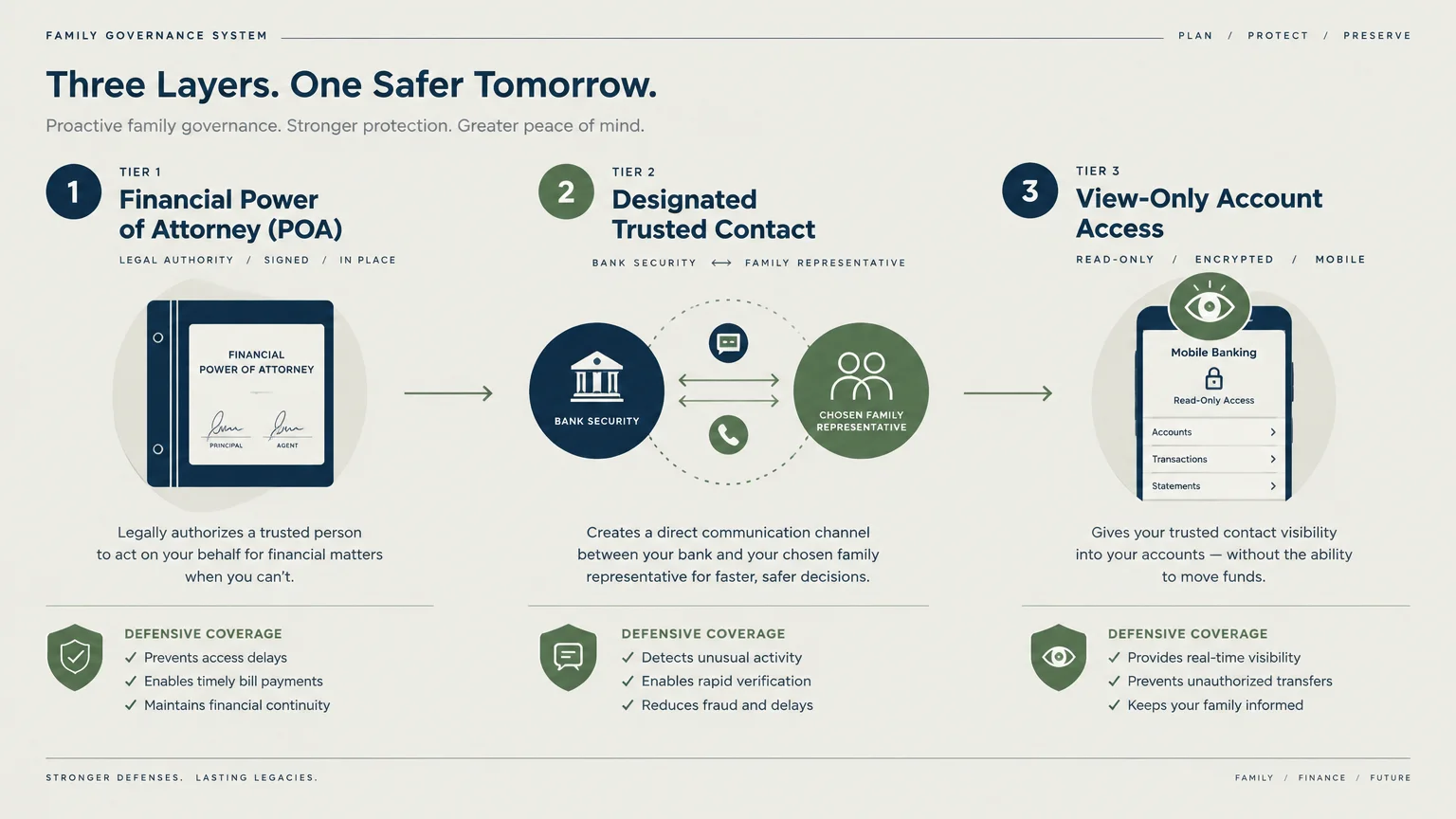
Start by establishing a comprehensive Durable Financial Power of Attorney. This legal document appoints a trusted fiduciary to manage financial affairs if the senior becomes incapacitated.
Incorporate accountability measures directly into the power of attorney agreement. Require the designated agent to submit quarterly financial statements and receipts to an independent third party, such as a CPA.
Take advantage of regulations designed to protect brokerage and retirement accounts. Under FINRA Rule 2165 and Rule 4512, brokerage firms must request that clients designate a “Trusted Contact Person.”
Designating a trusted contact gives your financial advisor someone to notify if they observe signs of cognitive decline or suspect elder financial exploitation. The rule also empowers brokerages to place temporary holds on suspicious disbursements.
Firms can hold account disbursements for 15 to 25 or more business days while investigating potential abuse. This critical pause gives financial institutions time to coordinate with family members and local authorities.
You can review consumer safety materials provided by the Consumer Financial Protection Bureau (CFPB) to structure these accounts safely. Their guides outline clear fiduciary boundaries for caregivers.
Help your parent place security freezes on their credit reports with Experian, Equifax, and TransUnion. Freezing credit files stops fraudsters from opening fraudulent credit cards or home equity loans in their name.
You can manage and inspect your family’s annual credit profiles securely through AnnualCreditReport.com at zero cost. Routine monitoring uncovers unauthorized inquiries before balances balloon.
Implement view-only digital banking access for an adult child or trusted family advocate. View-only access allows you to monitor daily transactions, balances, and cleared checks without possessing the legal power to spend money.
Enroll your loved one in automated bill payments for recurring expenses like mortgages, utilities, and insurance premiums. Direct deposit and autopay prevent physical checks from sitting in unlocked residential mailboxes.
“A budget is telling your money where to go instead of wondering where it went.” — John C. Maxwell

Errors That Cost Families Thousands
Well-meaning families often make fundamental legal and logistical mistakes when attempting to assist aging relatives. These administrative missteps expose assets to catastrophic losses and lengthy courtroom battles.
The most widespread mistake involves adding an adult child as a joint owner on a parent’s checking or savings account. Families choose this option because it appears quick, convenient, and avoids probate fees.
Adding a joint owner grants that individual full legal ownership of all deposited capital. If that adult child faces a divorce, business failure, auto accident lawsuit, or bankruptcy, creditors can legally seize the parent’s funds.
Furthermore, joint ownership overrides the instructions in a parent’s last will and testament. Upon the parent’s death, the remaining account balance passes entirely to the joint owner, often triggering bitter inheritance disputes among siblings.
Instead of joint ownership, execute a formal power of attorney or implement a convenience account. A convenience account permits bill paying without granting ownership rights or survivorship privileges.
Another major error is hiring private, in-home caregivers without conducting comprehensive background checks or securing surety bonding. Private arrangements may seem cheaper than hiring through licensed home care agencies, but they lack administrative oversight.
Unvetted workers gain unmonitored physical access to checkbooks, credit cards, tax returns, and sensitive identity documents. The savings realized on hourly rates vanish when an unscrupulous caregiver drains bank accounts.
Families also lose immense wealth by delaying intervention out of fear of causing emotional friction. Adult children notice bizarre withdrawals or erratic behavior but hesitate to intervene, hoping the situation self-corrects.
Predatory exploitation escalates quickly once perpetrators confirm no one monitors account balances. Stepping in at the very first red flag limits losses to hundreds of dollars rather than hundreds of thousands.

When to Get Expert Help
Addressing elder financial exploitation quickly exceeds the capability of informal family mediation. You must know when to engage specialized professionals to protect your loved one’s physical safety and financial security.
If you suspect exploitation by a family member, caregiver, or acquaintance, contact Adult Protective Services (APS) immediately. You can reach your local APS agency through the national Eldercare Locator hotline at 1-800-677-1116.
Adult Protective Services caseworkers possess statutory authority to investigate domestic abuse, interview victims privately, and secure protective orders. They coordinate closely with local social services and county district attorneys.
When dealing with stranger fraud, computer extortion, or investment scams, report the incident immediately to federal law enforcement. Call the Department of Justice National Elder Fraud Hotline at 1-833-FRAUD-11 (1-833-372-8311).
Federal staff guide victims through reporting mechanisms and coordinate with active investigative teams. You should also file detailed complaints with the Federal Trade Commission Consumer Advice portal at ReportFraud.ftc.gov.
If cybercriminals stole retirement assets or personal credentials online, lodge a formal report at the FBI Internet Crime Complaint Center at ic3.gov. Act within 24 hours of a fraudulent wire transfer to maximize asset recovery chances.
Consult an experienced elder law attorney if you discover that someone compromised existing legal documents. An elder law attorney can revoke tainted powers of attorney, establish protective guardianships, or reclaim misappropriated real estate titles.
If identity theft occurred, visit IdentityTheft.gov to create a federally recognized recovery plan. This FTC service issues formal documentation to dispute fraudulent debts with credit bureaus and collection agencies.
Consider retaining a fee-only forensic accountant or certified public accountant if financial records appear heavily manipulated. A forensic CPA tracks diverted capital, calculates total tax liabilities, and prepares evidence for criminal prosecution.
Frequently Asked Questions
What is the difference between elder financial abuse and financial fraud?
Elder financial abuse encompasses exploitation committed by both trusted individuals and external criminals. Financial fraud generally refers to illegal schemes, deceptive scams, and identity theft run by outside syndicates.
Can a bank freeze my parent’s account if they suspect financial exploitation?
Yes, financial institutions possess legal authority under federal and state laws to delay suspicious transactions. Bank compliance officers can place temporary holds on funds while contacting designated trusted contacts or investigating potential coercion.
How can I monitor my elderly parent’s finances without taking away their independence?
Set up read-only access to their bank accounts and configure automated text alerts for transactions exceeding specific dollar thresholds. This framework lets your parent spend freely while allowing you to spot suspicious activity instantly.
Will homeowners or umbrella insurance cover losses from elder scams?
Standard homeowners and umbrella policies rarely cover voluntary transfers sent to scammers. However, select insurance carriers offer specialized identity theft or cyber fraud riders that reimburse specific forensic costs and stolen assets.
How to Take Action Today
Open an honest, non-judgmental dialogue with your aging family members about current fraud trends this week. Frame the discussion around external predatory threats rather than questioning their personal financial competence or mental sharpness.
Review their account security, set up trusted contacts at brokerage firms, and secure their credit reports today. Taking these basic institutional safeguards builds an impenetrable wall around your family’s hard-earned generational wealth.
Financial outcomes vary based on individual income, credit history, and circumstances. This article provides general guidance only. Consult a qualified financial planner, CPA, or consumer attorney for advice specific to your situation.
Last updated: October 2026. Rates, benefit amounts, and tax rules change—always verify current details at official sources.