Your monthly Social Security check arrived with a 2.8% boost for 2026, but your bills climbed much faster. Essential living expenses surged across the board, shrinking financial cushions for millions of households.
The annual inflation rate accelerated to 3.7% in September 2026. This widening gap between fixed benefit adjustments and real-world prices forces many older Americans to rethink their spending.
Discover the eleven specific price spikes hitting retirees hardest this year and see where households cut back to protect their savings.
The Inflation Squeeze on Fixed Incomes in 2026
Managing money on a fixed income requires predictable expenses. When retail prices spike unpredictably, your household budget faces immediate pressure.
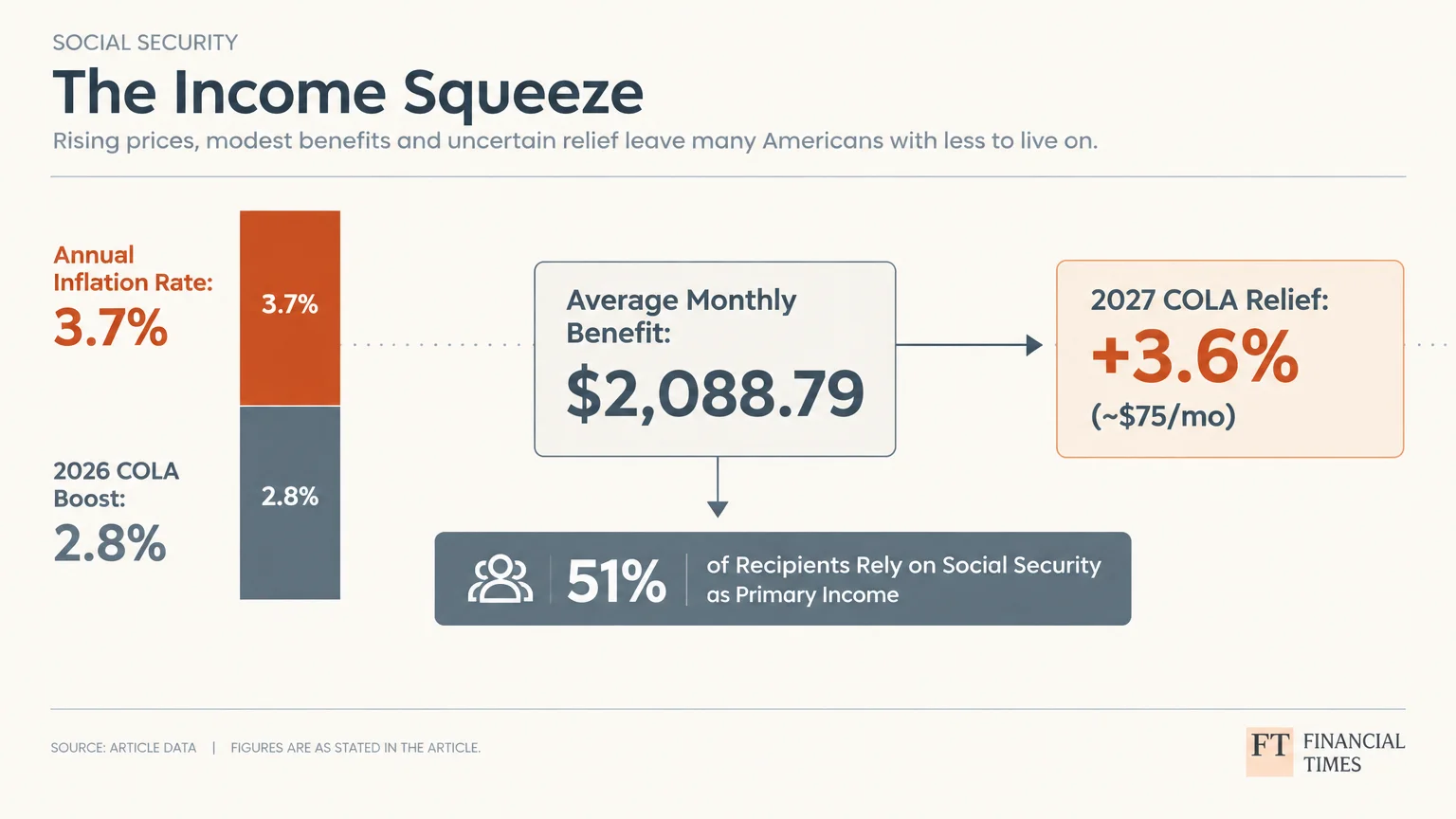
The annual inflation rate climbed to 3.7% in September 2026, according to the Bureau of Labor Statistics. That acceleration outpaced the 2.8% Cost-of-Living Adjustment (COLA) that retirees received earlier in the year.
As of September 2026, the average retired worker received a gross monthly benefit of $2,088.79 from the Social Security Administration. Even small price spikes can quickly erode that monthly margin.
An August 2026 AARP survey revealed that 51% of Social Security recipients rely on their monthly check as their main income source. For these households, rising living costs leave very little room for error.
Relief is on the horizon for next year. On October 14, 2026, officials announced a 3.6% COLA for 2027, which will boost the average retirement benefit by approximately $75 per month starting in January.
Until those updated payments arrive, retirees must navigate noticeable cost increases across basic necessities. Knowing where those increases hit hardest helps you adjust your household cash flow effectively.
11 Prices Retirees Say Jumped Most This Year
Inflation does not affect every spending category equally. In 2026, non-discretionary expenses—the basic bills you cannot avoid—experienced the steepest surges.
1. Fuel Oil and Heating Fuel
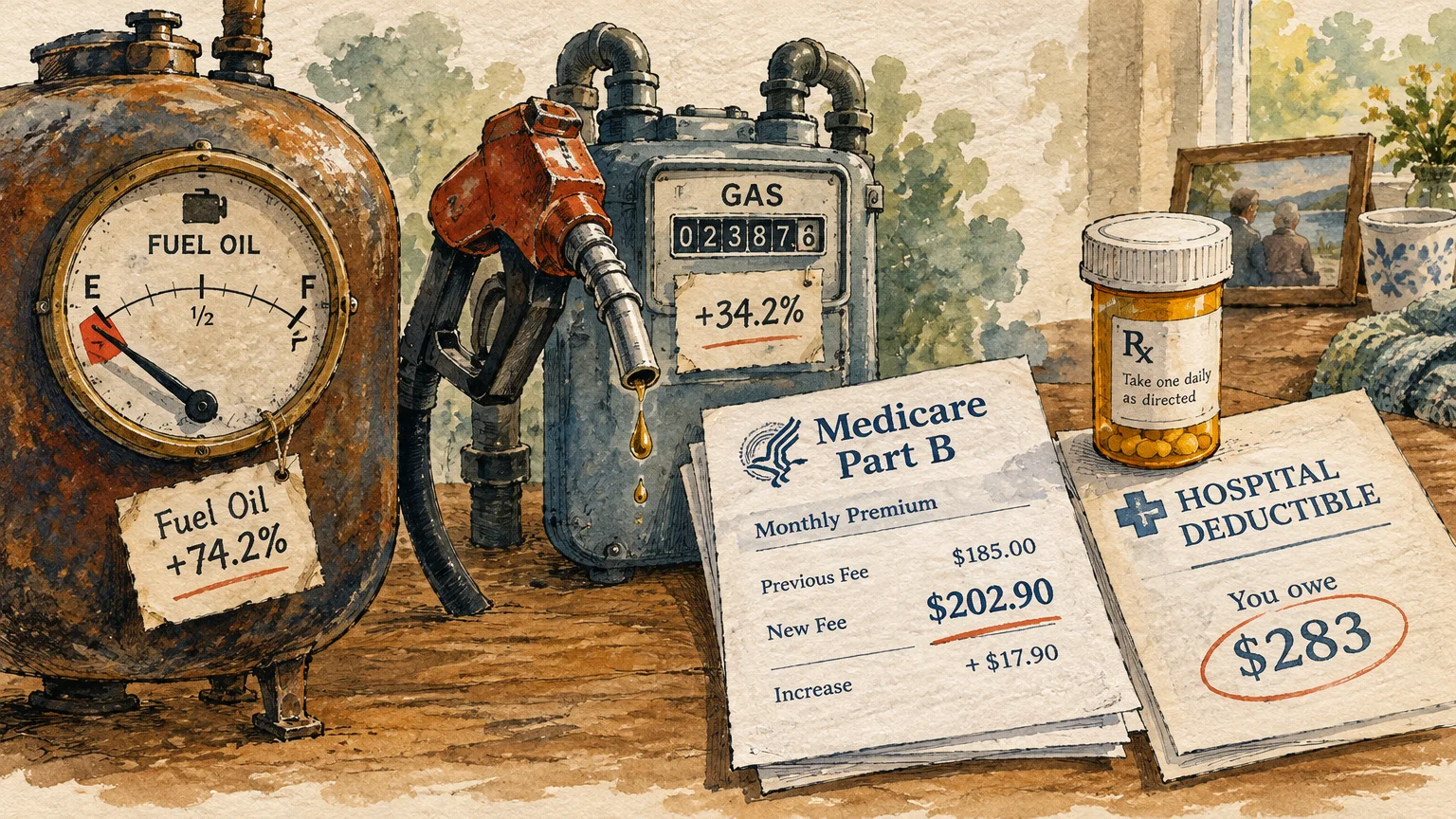
Home heating oil posted the most dramatic increase across consumer spending. In the twelve months ending September 2026, fuel oil prices surged by 74.2%.
Retirees living in the Northeast and Midwest bear the brunt of this spike. Filling an empty residential tank now requires hundreds of dollars more than it did a year ago.
Because heating is an essential survival need during colder months, households often drain cash reserves simply to keep their furnaces running.
2. Motor Gasoline
Transportation expenses spiked sharply as energy markets tightened. Regular gasoline prices jumped 34.2% year-over-year through September 2026.
Much of that pain arrived late in the year, driven by a 9.1% price spike in September alone. Even retirees who drive less than working adults noticed the immediate dent at the pump.
Visiting family members, driving to medical appointments, and running weekly errands now consume a substantially larger share of monthly cash flow.
3. Medicare Part B Premiums and Deductibles
Healthcare costs continue to outrun general inflation rates. For 2026, the standard monthly premium for Medicare Part B jumped nearly 10% to $202.90.
That adjustment represents a direct monthly increase of $17.90 over the 2025 rate of $185.00. Because premiums are deducted directly from Social Security checks, many beneficiaries saw their net COLA gain shrink immediately.
The annual Part B deductible also rose, climbing $26 to reach $283 in 2026. You must pay this upfront amount before outpatient coverage begins.
4. Inpatient Hospital and Facility Care
Hospital care recorded substantial price increases over the past year. In September 2026, hospital services jumped 5.6% year-over-year.
Medicare Part A inpatient deductibles rose alongside facility costs. Beneficiaries now face an inpatient deductible of $1,736 per benefit period in 2026.
Extended stays cost more as well. Daily coinsurance for hospital days 61 through 90 reached $434 per day, while skilled nursing facility coinsurance climbed to $217 per day for days 21 through 100.
5. Motor Vehicle Maintenance and Repairs
Keeping an older vehicle on the road has become significantly more expensive. Motor vehicle maintenance and repair costs jumped 5.8% over the twelve months ending September 2026.
Supply chain constraints for replacement components and elevated shop labor rates drove these increases. Routine brake jobs, tire replacements, and scheduled mechanical inspections now carry premium pricing.
Auto insurance offered slight short-term relief, cooling by 5.0% in September 2026. However, cumulative auto insurance premiums remain up 48.1% between 2020 and late 2026.
6. Dining Out and Restaurant Meals
Eating meals away from home became noticeably pricier this year. Restaurant prices rose 3.5% year-over-year in September 2026.
That pace almost doubled the inflation rate of grocery store food. Higher commercial wages and elevated wholesale ingredient costs forced restaurant owners to raise menu prices repeatedly.
For many older Americans, routine lunches with friends and weekend family dinners represent primary social outlets. The rising cost of dining out has made casual restaurant visits a calculated luxury.
7. Residential Electricity and Piped Gas
Keeping the lights on and cooking meals at home requires a larger budget allocation. Electricity prices rose 4.0% over the twelve months ending June 2026.
Piped utility natural gas rose 3.0% over the same period. While modest over twelve months, utility gas prices stand 52.9% higher cumulatively compared to January 2020 levels.
Power companies across the nation implemented base rate adjustments to upgrade regional transmission grids. These administrative rate hikes hit fixed-income customers regardless of personal power conservation efforts.
8. Fresh Fruits and Vegetables
Nutritious food items registered steady price climbs throughout the year. Fresh fruit and vegetable costs rose 4.0% year-over-year by mid-2026.
Other grocery categories also accelerated, with the broader “other foods” category rising 5.3%. In contrast, overall grocery store prices rose at a more manageable 1.8% annual pace.
Older adults managing chronic health conditions like hypertension or diabetes require fresh produce. Paying premium prices for dietary staples strains tight monthly grocery budgets.
9. Prescription Drug Deductibles and Spending Caps
Prescription medications remain a primary budget item for seniors. For 2026, the maximum allowable deductible for standard Medicare Part D drug plans rose to $615.
This change represents an increase from $590 in 2025. Beneficiaries must satisfy this deductible before their prescription drug plan starts sharing medication expenses.
The annual out-of-pocket prescription cap established under federal reforms also adjusted upward for inflation, moving from $2,000 to $2,100 in 2026. According to Fidelity Investments, an average 65-year-old retiring in 2026 will spend $185,500 on healthcare throughout retirement.
10. Shelter and Housing Expenses
Housing remains the largest single driver of inflation for American households. Shelter costs rose 3.2% year-over-year in September 2026.
Shelter accounted for approximately two-fifths of all annual consumer inflation recorded in September. Owners’ equivalent rent climbed 3.3%, while direct residential rents rose 2.8%.
Retirees who rent face compounding annual increases. Meanwhile, aging homeowners encounter escalating municipal property tax assessments and surging home maintenance bills that track elevated shelter indexes.
11. Everyday Packaged Goods and Specialty Items
A variety of secondary consumer products experienced aggressive price increases. Tobacco and smoking products jumped 7.4% year-over-year in 2026.
Apparel costs climbed 3.4% as well. From basic footwear to seasonal outerwear, clothing manufacturers passed higher shipping and production costs directly to consumers.
When secondary retail categories inflate alongside essential utilities, households lose the flexibility to shift dollars between budget categories.
How Price Surges Compare to Fixed Income Adjustments
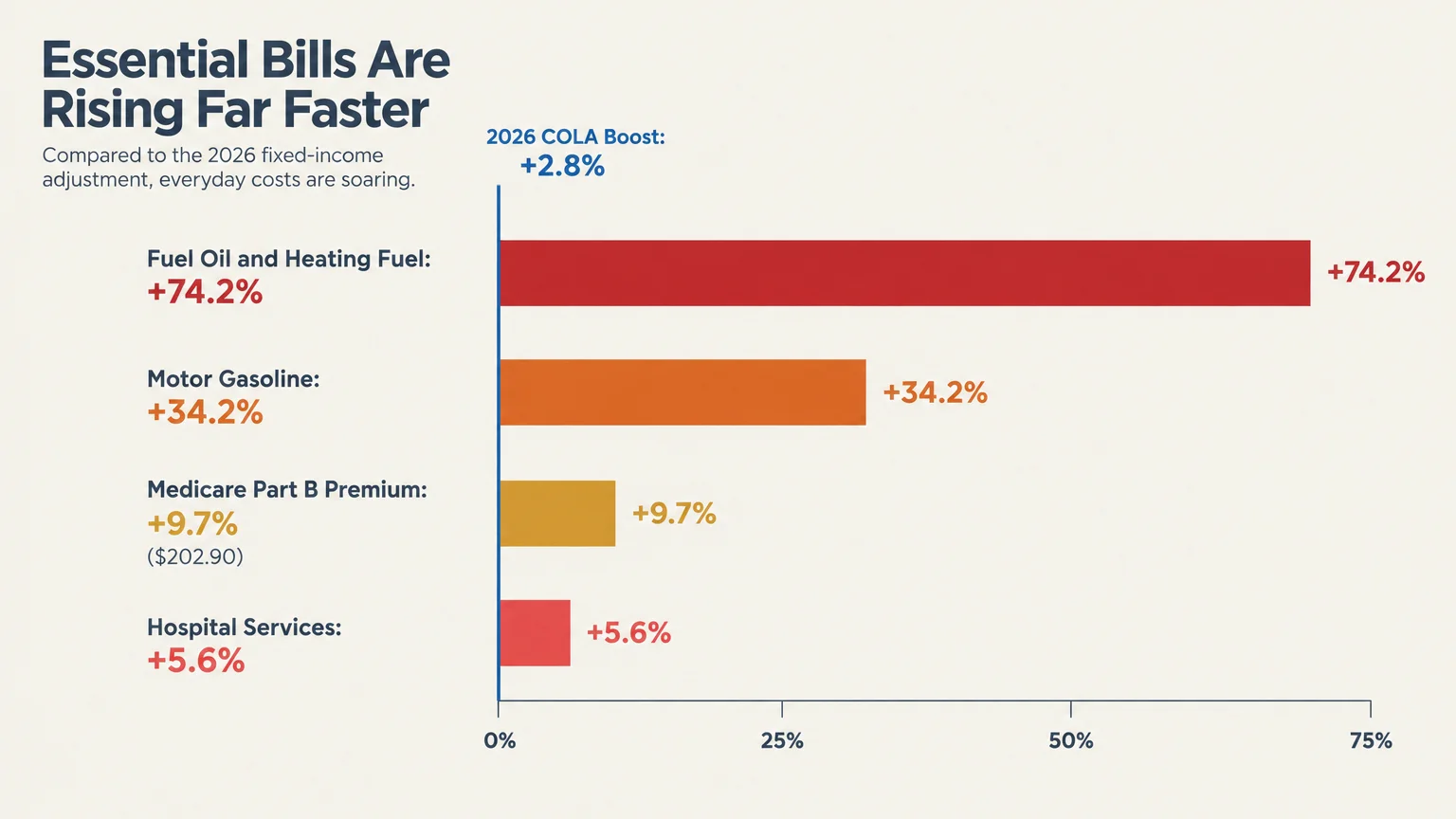
Comparing price changes against fixed income adjustments highlights why so many households feel pinched. When core necessities outpace COLA adjustments, real purchasing power declines.
The table below compares key 2026 consumer price surges against the standard 2026 Social Security cost-of-living adjustment.
| Expense Category | 2026 Price Change | Primary Budget Impact |
|---|---|---|
| Fuel Oil | +74.2% | Extreme spike in winter home heating bills |
| Gasoline | +34.2% | Higher costs for daily errands and travel |
| Medicare Part B Premium | +9.7% | Reduces net monthly Social Security checks |
| Hospital Services | +5.6% | Larger out-of-pocket costs for inpatient stays |
| Auto Maintenance & Repair | +5.8% | Costlier upkeep for older personal vehicles |
| Residential Electricity | +4.0% | Higher baseline utility bills year-round |
| Fresh Fruits & Vegetables | +4.0% | Increased cost to maintain a healthy diet |
| Dining Out (Food Away) | +3.5% | Discretionary spending cuts on social meals |
| Shelter & Housing | +3.2% | Higher property taxes, rent, and maintenance |
| 2026 Social Security COLA | +2.8% | Base income adjustment lagging key expenses |
Notice that nearly every essential category outpaced the 2.8% COLA granted to retirees. That difference explains why households must actively trim expenses elsewhere.

Where Retirees Are Cutting Back Spending
Faced with rising prices 2026, older adults are altering their spending patterns. Survey data reveals that retirees cut back spending across discretionary lifestyle categories first.
The Prudential Financial 2026 Retirement Pulse Survey of over 3,000 adults age 50 and older revealed striking spending hesitation. An overwhelming 86% of respondents do not feel comfortable spending their retirement savings on enjoyment.
This psychological hesitation touches affluent households too. Even among retirees with $500,000 or more in investable assets, 61% feel uncomfortable spending money on personal enjoyment.
Spending guilt forces retirees to trim specific activities. The Prudential survey found that 86% feel guilt spending on bucket-list items, 63% feel guilt over entertainment, and 61% cut back on major trips.
Retirees point to clear financial pressures for their spending restraint. Doubts about Social Security stability lead the concerns at 44%, followed closely by inflation and living costs at 42%, and healthcare expenses at 34%.
A July 2026 TIAA study reinforced these concerns. The survey found that 77% of respondents view rising healthcare costs as a direct threat to their retirement, while 53% worry about running out of money.
Declining confidence is widespread across pre-retirees and retirees alike. The Employee Benefit Research Institute (EBRI) reported that retirement confidence dropped in 2026 to its lowest point since 2017.
Goldman Sachs Asset Management found similar sentiment shifts in July 2026. The share of Baby Boomers reporting their retirement savings are on track dropped from 69% in 2025 down to 60% in 2026.
To offset these pressures, many older workers are simply refusing to step away from the workforce entirely. An October 2026 F&G Annuities & Life survey revealed that 31% of Americans over age 50 now consider themselves semi-retired or plan to pursue part-time work.
“Financial peace isn’t the acquisition of stuff. It’s learning to live on less than you make.”
Practical Strategies Where Retirees Save Money
Managing inflation requires proactive spending choices rather than passive worry. You can implement several targeted strategies to reclaim control over your monthly budget.
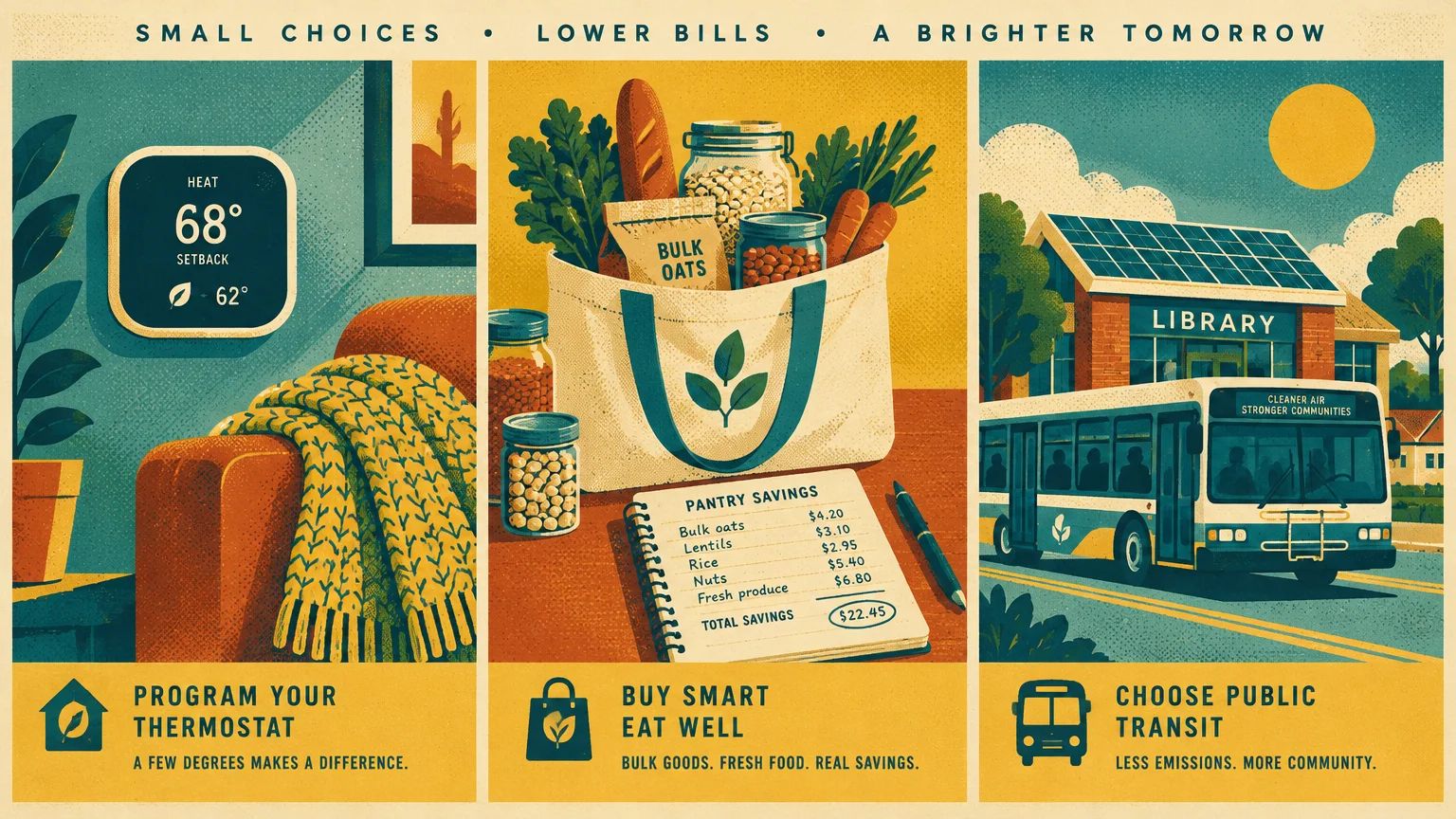
- Audit Energy Usage at Home: Contact your local electric and gas utility to request a free residential energy audit. Sealing drafts and installing programmable thermostats reduces ongoing power consumption.
- Review Medicare Drug Coverage: Use the official Medicare.gov plan finder during the annual Open Enrollment period. Comparing formularies can save hundreds of dollars on prescription tiers.
- Shop Auto and Home Insurance: While auto maintenance costs jumped 5.8%, insurance premiums cooled by 5.0% in late 2026. Compare carrier quotes annually to capture competitive rates.
- Shift Meal Spending In-House: Restaurant meals rose 3.5% this year, compared to grocery inflation of 1.8%. Preparing meals at home and buying seasonal produce generates immediate monthly savings.
- Claim Local Senior Tax Relief: Many municipal tax authorities offer property tax freezes or homestead exemptions for residents age 65 and older. Check your county tax assessor’s office for eligibility rules.
Making small structural adjustments across several categories protects your liquid reserves. Consistent adjustments keep your long-term investment portfolios untouched during temporary inflationary spikes.
“A budget is telling your money where to go instead of wondering where it went.” — John C. Maxwell

Costly Mistakes to Avoid
Reacting emotionally to inflation can cause more financial damage than rising prices themselves. Avoid these critical mistakes when adjusting your household budget.
Never skip prescribed medical care or ration medications to reduce monthly expenses. Deferring basic healthcare leads to avoidable complications, emergency room visits, and severe hospital deductibles down the road.
Avoid liquidating long-term equity investments during market downturns to cover temporary utility spikes. Pulling principal out of your portfolio locks in capital losses and permanently reduces your future investment income.
Do not rely on high-interest credit cards to bridge monthly deficits. Accumulating revolving debt at elevated interest rates creates a compounding burden that fixed retirement incomes cannot easily resolve.
Avoid cancelling essential insurance policies just to save on monthly premiums. Dropping supplemental health coverage or property insurance exposes your lifetime savings to catastrophic loss from a single unexpected event.
Don’t DIY These Decisions
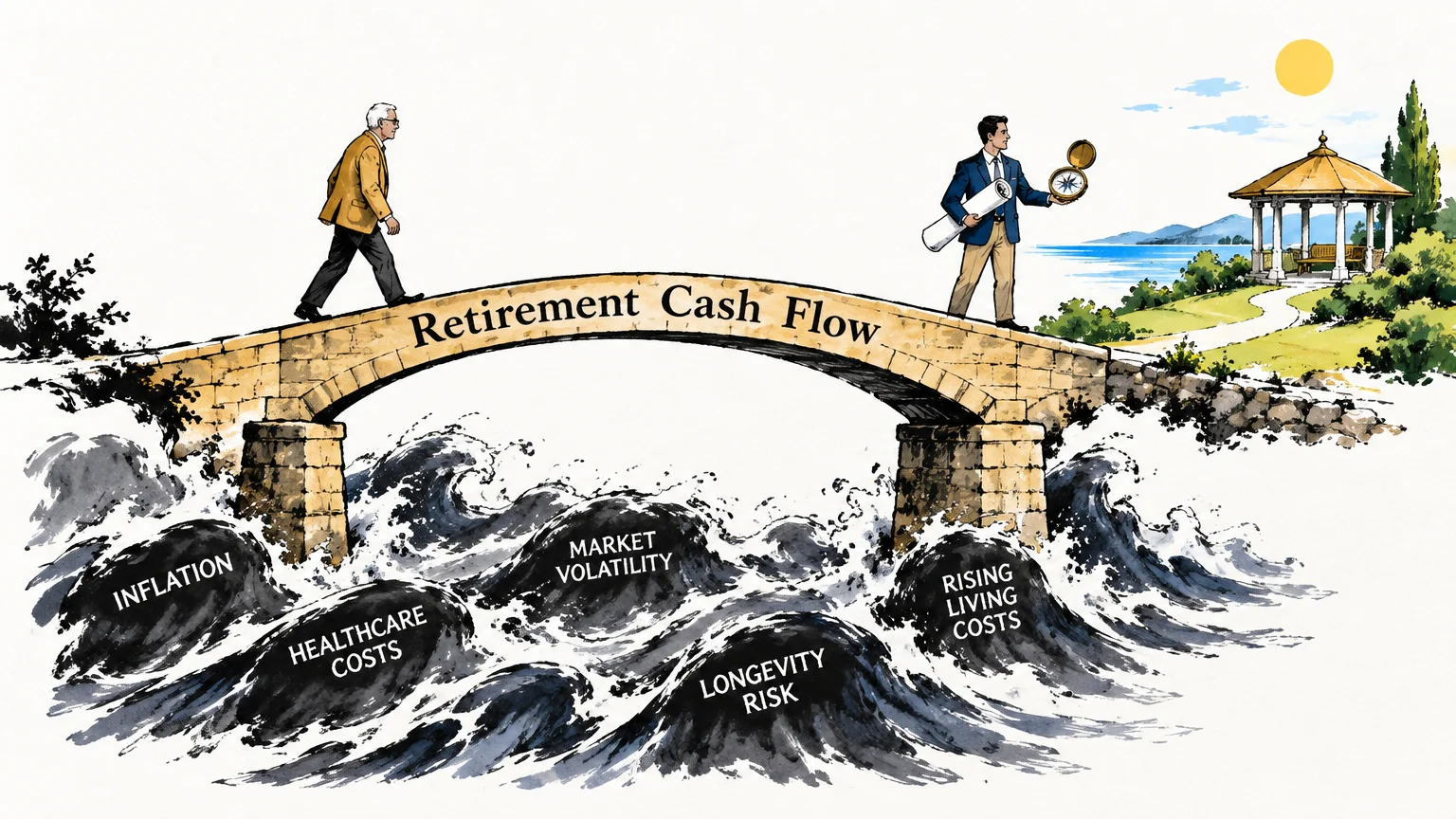
Certain financial decisions carry permanent tax and legal consequences. Partnering with certified professionals ensures you make informed choices tailored to your household.
Consult a fee-only certified financial planner (CFP) before altering your investment withdrawal rate. An advisor helps model multi-year tax brackets and guides sustainable withdrawal strategies through inflationary cycles.
Work with a licensed CPA to optimize your required minimum distributions (RMDs) and capital gains. Strategic tax planning prevents unnecessary taxation on your Social Security benefits.
Connect with a State Health Insurance Assistance Program (SHIP) counselor for unbiased Medicare enrollment guidance. These trained volunteers provide personalized assistance without sales commissions.
If you face housing distress or mortgage challenges, contact a housing counselor approved by the Department of Housing and Urban Development. You can also explore consumer protections through the Consumer Financial Protection Bureau.
Frequently Asked Questions
Why did Social Security COLA lag behind actual inflation in 2026?
The Social Security COLA uses the Consumer Price Index for Urban Wage Earners and Clerical Workers (CPI-W) from the third quarter of the prior year. If inflation accelerates later in the year, your benefit adjustment temporarily trails actual consumer price increases.
How will the 2027 Social Security COLA affect my budget?
The announced 3.6% COLA for 2027 increases average monthly retirement benefits by approximately $75 starting in January 2027. This larger bump will help offset recent surges in energy, healthcare, and residential utility bills.
What can I do if my Medicare Part B premium went up?
Medicare Part B premiums are mandatory for outpatient coverage, but you can review your total healthcare plan during Open Enrollment. Switching to a plan with lower copayments or reviewing drug tiers can help offset the premium increase.
Is returning to part-time work a practical way to fight inflation?
Yes, working part-time has become popular, with 31% of adults over 50 considering themselves semi-retired. Earning supplemental income covers rising baseline bills without requiring you to draw down retirement savings.
Securing Your Financial Peace
Coping with cost of living increases requires active financial management and realistic spending trade-offs. By identifying price surges early and trimming non-essential lifestyle expenses, you protect your long-term savings.
Review your household spending plan this week, audit recurring bills, and make the small adjustments needed to stay ahead of rising prices.
Financial outcomes vary based on individual income, credit history, and circumstances. This article provides general guidance only. Consult a qualified financial planner, CPA, or consumer attorney for advice specific to your situation.
Last updated: October 2026. Rates, benefit amounts, and tax rules change—always verify current details at official sources.