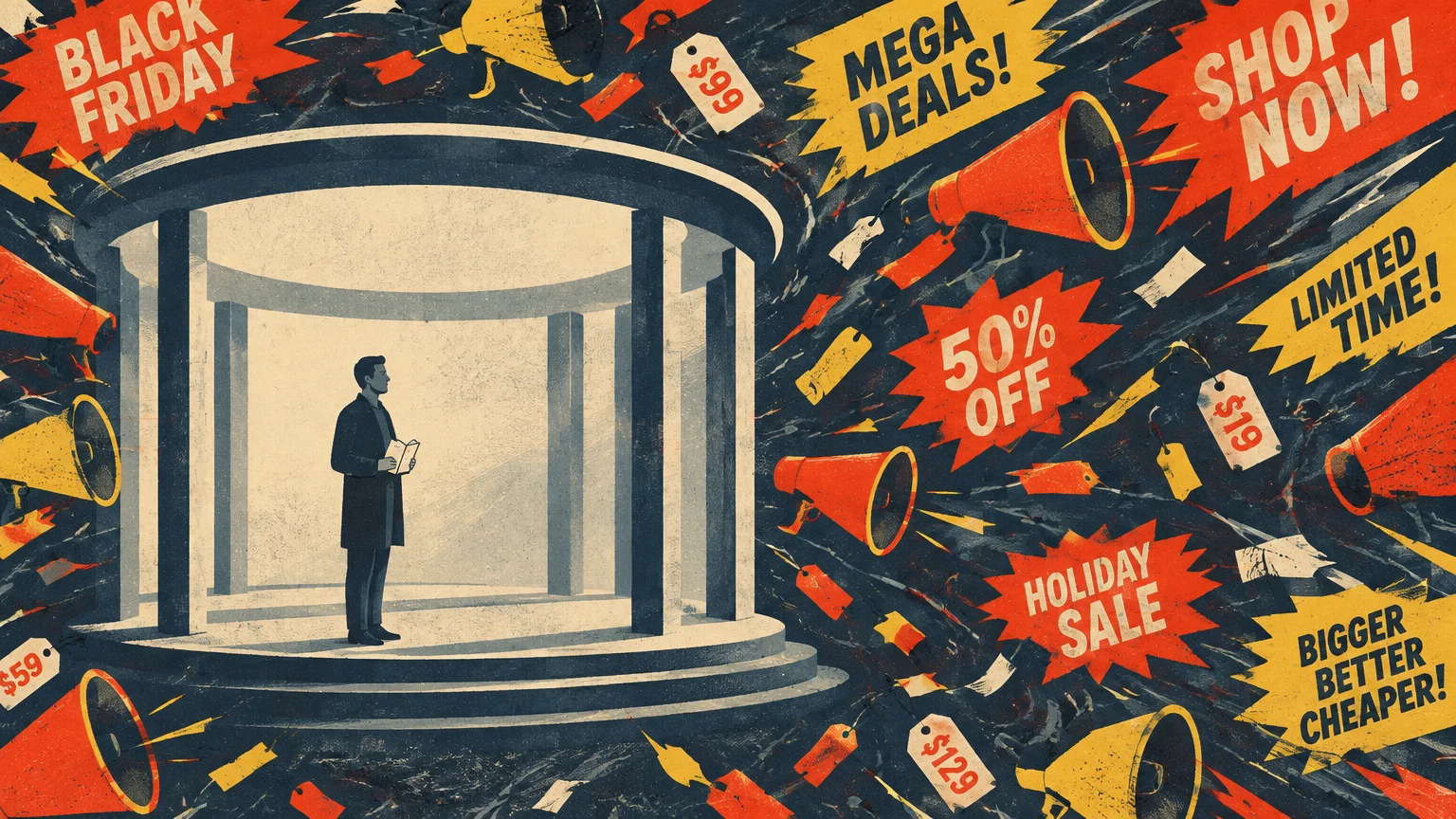
Holiday retail marketing wants you to believe that scoring a discount guarantees a smart financial decision. In reality, buying items you do not need at 30% off drains your cash reserves just as quickly.
According to Deloitte, average household holiday spending will reach $1,654 this season. With higher prices hitting household balance sheets, entering the retail rush without a defense strategy puts your long-term goals at immediate risk.
Taking proactive steps right now gives you complete control over your money. Here are eight essential money moves before Black Friday spending begins to protect your household budget.
Key Takeaways for Smart Holiday Spending
Preparing your finances before promotional events begin protects your household from high-interest debt and seasonal buyer remorse.
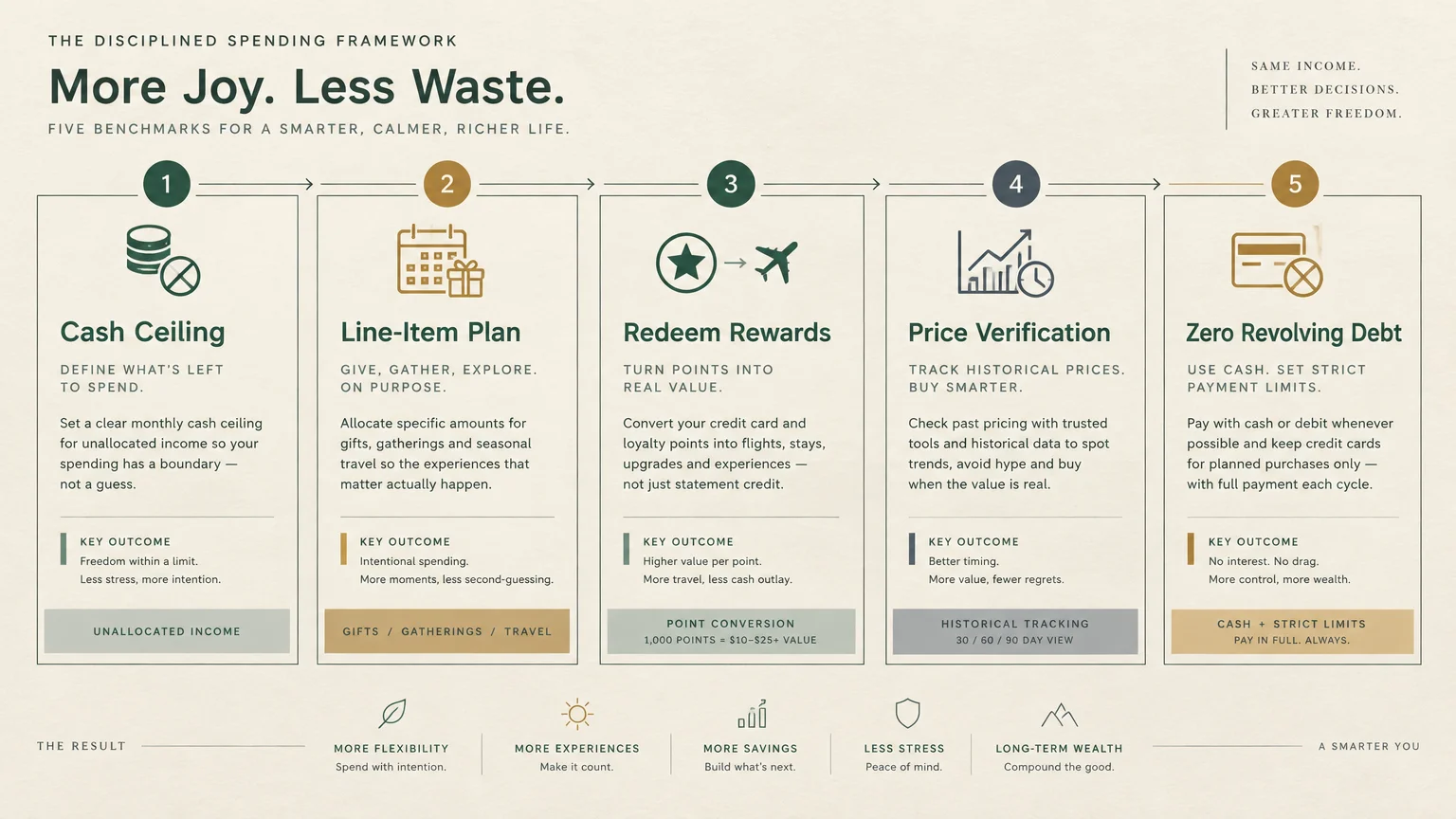
Keep these foundational principles in mind as you review your holiday spending plan:
- Establish a firm cash ceiling based strictly on unallocated monthly income rather than emergency savings.
- Construct an itemized holiday spending plan covering gifts, gatherings, seasonal travel, and miscellaneous holiday overhead.
- Redeem accrued cash back and credit card points to offset out-of-pocket holiday shopping costs.
- Verify advertised promotional discounts by analyzing historical item pricing with independent price-tracking tools.
- Avoid high-interest revolving balances by relying on cash, debit, or strict zero-interest repayment strategies.
Executing these steps early allows you to capitalize on genuine discounts without jeopardizing your broader financial security.
1. Calculate Your Absolute Cash Spending Ceiling
Retailers spend billions studying consumer behavior to engineer impulse purchases. Counteracting their marketing funnels requires setting an uncompromising spending limit before browsing sales.
Start by reviewing your net household income and non-negotiable living expenses for November and December. Calculate exactly how much unallocated cash remains after covering housing, food, transportation, insurance, utilities, and retirement contributions.
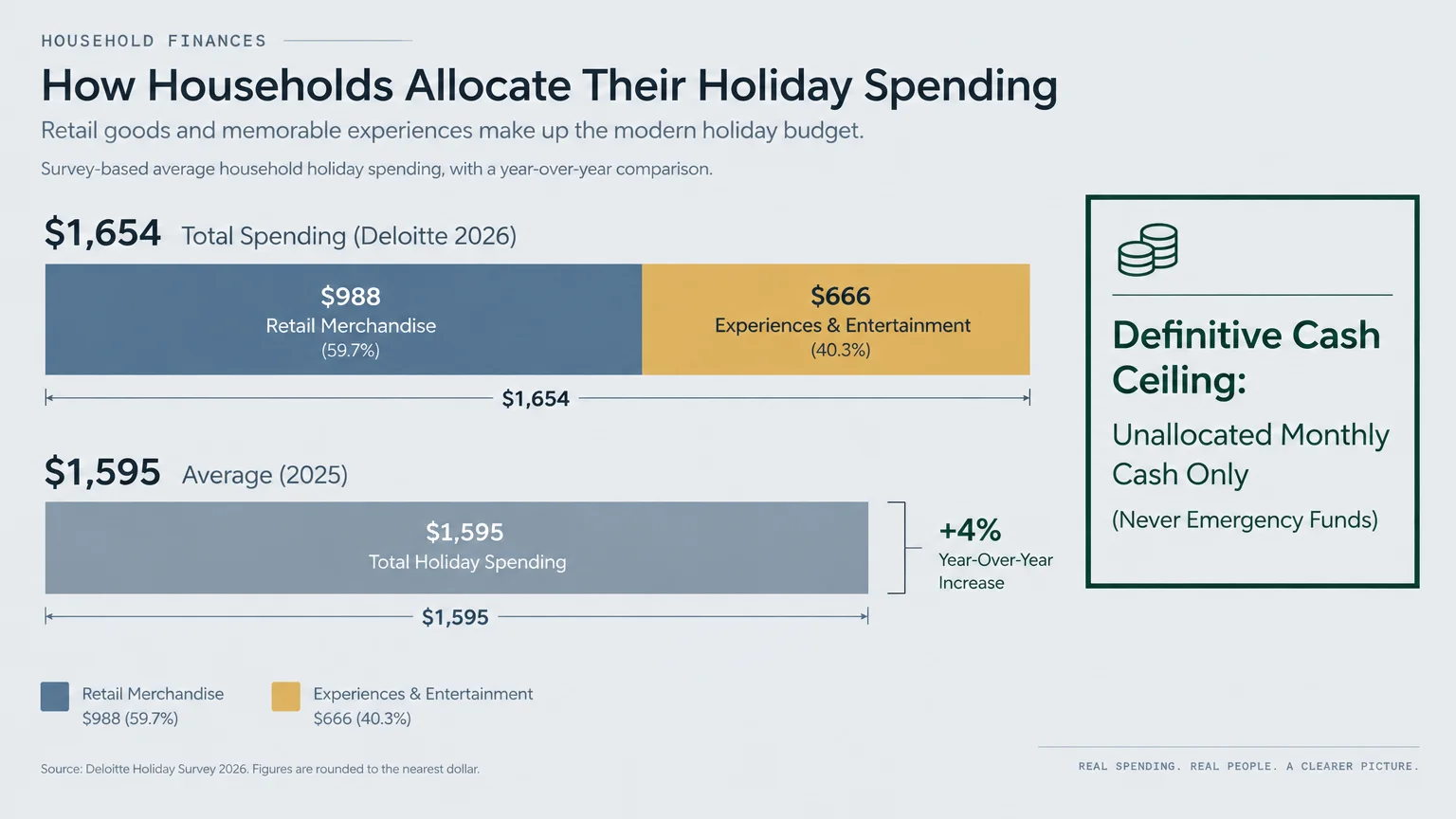
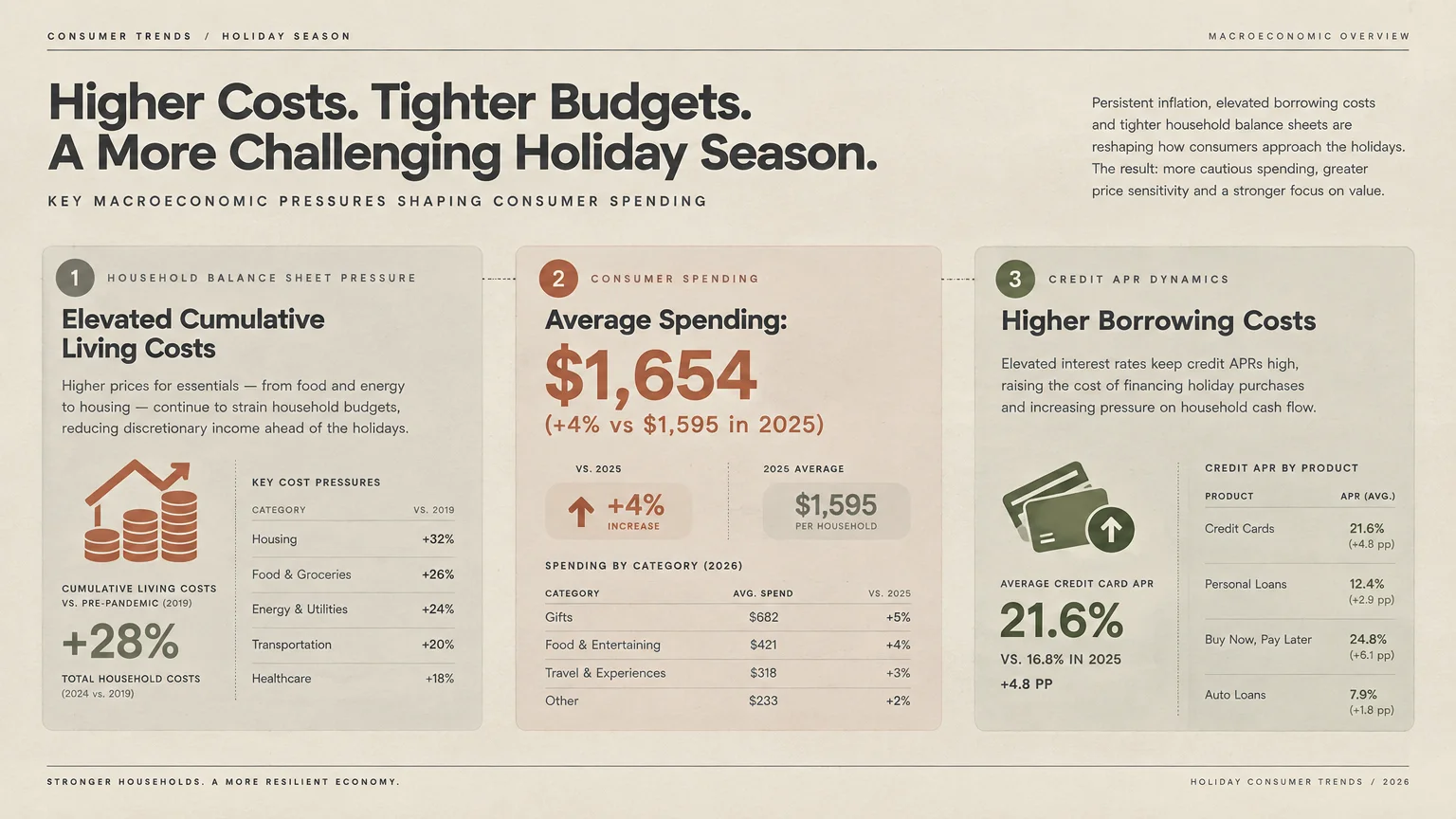
According to Deloitte’s 2026 holiday retail survey, American consumers plan to spend an average of $1,654 this season. That represents a 4% increase from the $1,595 average reported in 2025.
Deloitte projects shoppers will dedicate $988 to retail merchandise and $666 to holiday experiences and entertainment. If your current cash flow cannot comfortably fund those totals, do not attempt to match them.
Your spending ceiling must come exclusively from unencumbered cash flow or designated short-term savings. Never draw from your emergency fund to pay for holiday presents, decor, or seasonal travel.
Emergency funds exist to shield your family from job losses, emergency medical bills, and sudden vehicle repairs. Depleting those funds for temporary holiday items leaves your household vulnerable heading into the new year.
Once you establish your net disposable figure, declare that number as your hard ceiling. If your calculation reveals you have $750 available, that is your definitive black friday budget for the entire holiday season.
Write down this number where you will see it regularly. Committing to a hard limit eliminates the guesswork when retail promotions begin competing for your attention.

2. Construct a Line-Item Holiday Spending Plan
A single lump-sum figure rarely protects your bank account once holiday promotions launch. You need an itemized holiday spending plan that designates a clear purpose for every single dollar.
Begin by listing every recipient you intend to buy a gift for over the holidays. Write down a specific, maximum dollar allocation next to each individual name on your roster.
Next, catalog secondary holiday expenses that frequently catch households off guard. Account for items such as holiday greeting cards, gift wrap, ribbon, shipping postage, and teacher appreciation gifts.
Holiday entertaining and meals also represent substantial budget drains if left unmanaged. Allocate distinct funds for special baking supplies, holiday dinners, festive drinks, and hostess contributions.
“A budget is telling your money where to go instead of wondering where it went.” — John C. Maxwell
Assigning money before entering stores eliminates emotional negotiations with yourself at the register. When an unexpected expense emerges, you must reduce another line item to balance your total ledger.
Store your shopping budget tips and individual allocations in a mobile spreadsheet or budgeting app. Update your figures immediately after making a purchase to monitor your remaining allowance in real time.
Sharing your spending plan with your spouse or partner ensures complete household alignment. When both partners operate under identical guidelines, staying within your seasonal limits becomes far easier.
3. Audit and Redeem Dormant Credit Card Rewards
Consumers frequently leave hundreds of dollars in earned credit card rewards sitting idle. Conducting a thorough audit of your accumulated balances before Black Friday can substantially lower your out-of-pocket costs.
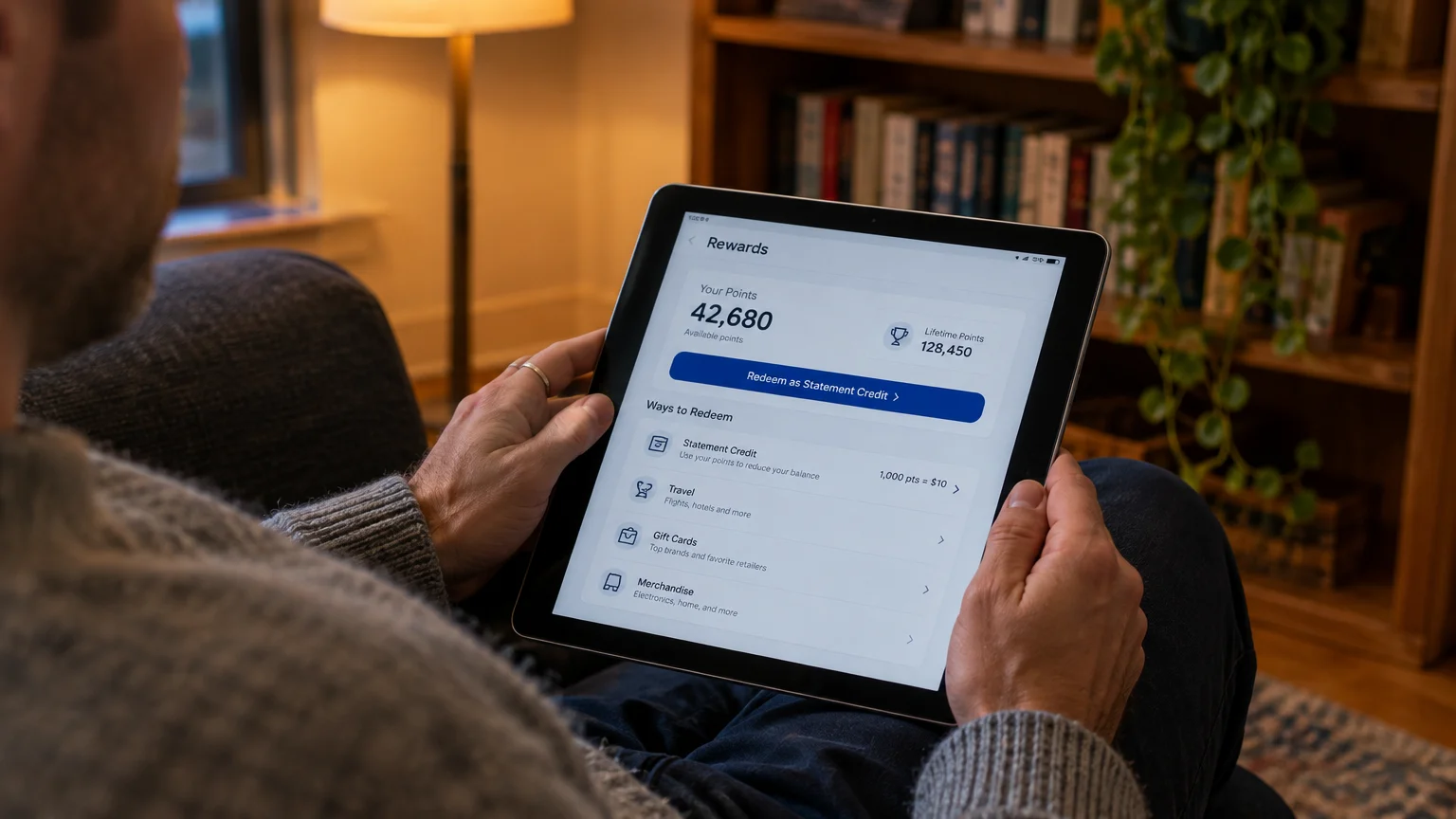
Log into all your primary credit card accounts and document your accumulated points, miles, and cash-back balances. Review available redemption options to identify the highest financial yield for each rewards balance.
Direct statement credits and cash deposits into checking accounts usually deliver the most versatile financial value. Applying cash back directly against holiday statements lowers your net out-of-pocket expense immediately.
Certain card issuers offer discounted merchant gift cards when redeeming points through their shopping portals. Securing a $100 retailer gift card for $80 in points gives you an instant 20% discount on planned gifts.
The Consumer Financial Protection Bureau emphasizes the importance of understanding card reward terms and expiration timelines. Leaving points unredeemed exposes your hard-earned value to sudden program devaluations or account closures.
Check retail store loyalty programs, fuel rewards, and unused store credit vouchers as well. Combining these existing balances provides immediate breathing room for your holiday shopping budget.
Avoid redeeming points for overpriced retail merchandise inside credit card shopping portals. Transferring points for merchandise often yields inferior redemption value compared to straightforward statement credits.
4. Track Historical Prices to Spot Manufactured Discounts
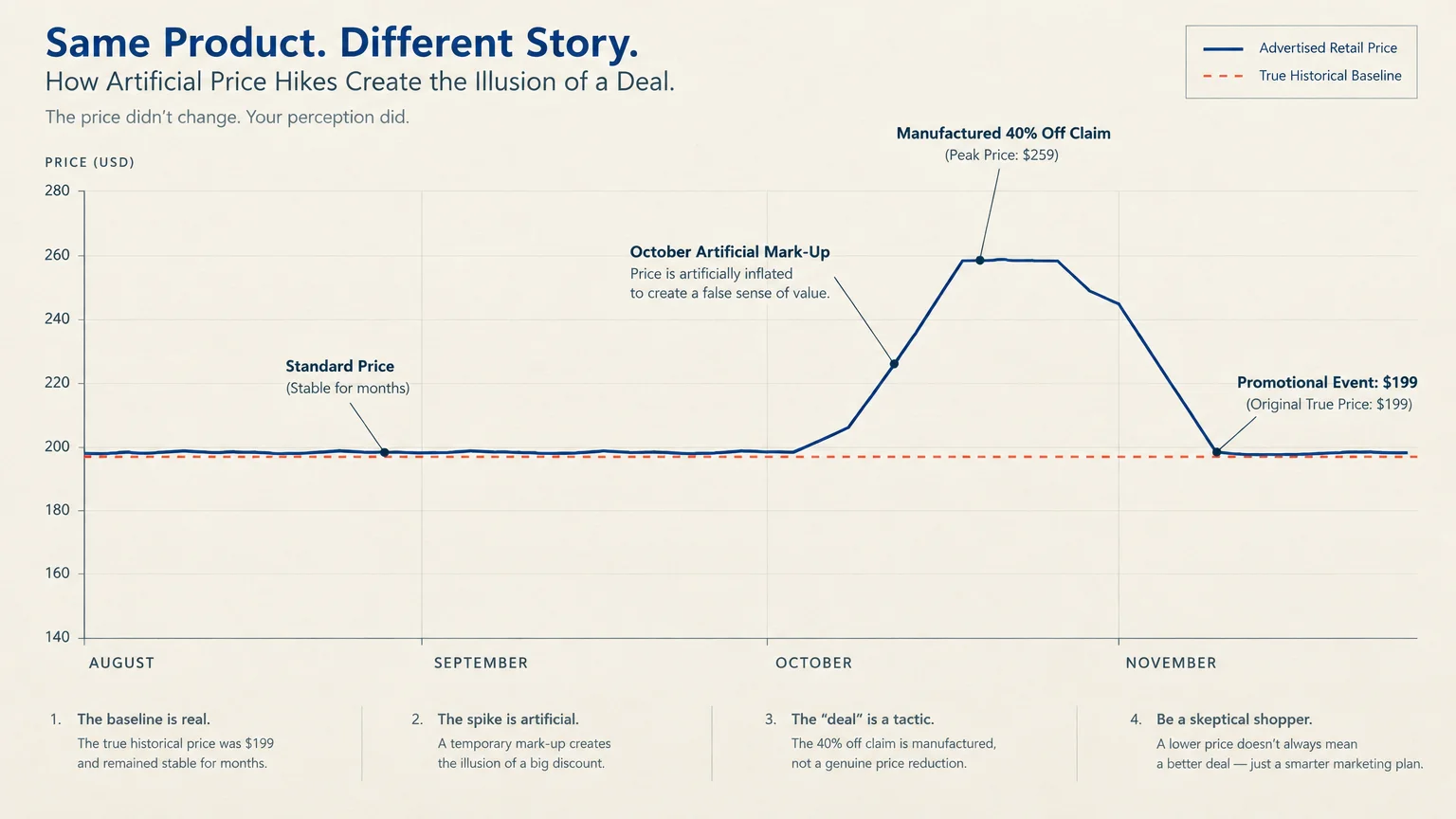
A flashy promotional banner does not guarantee that an item is selling at a true discount. Retailers routinely inflate base prices weeks in advance, making standard Black Friday prices appear dramatic.
Adobe Analytics projects that Cyber Week discounts will peak at up to 30% off across major categories. Verifying whether those advertised markdowns reflect genuine savings requires examining past pricing patterns.
Utilize independent price-tracking browser extensions and websites such as Camelcamelcamel, Keepa, and Honey. These platforms chart the historical pricing trends of products across several months or years.
Checking price histories lets you see whether a product routinely sells for less during other seasons. Many consumer electronics, kitchen appliances, and apparel items drop to lower prices during late summer clearances.
The Federal Trade Commission warns consumers to compare total costs across competitors rather than trusting retailer discount claims. A merchant advertising 40% off may still charge more than a rival offering standard everyday pricing.
Document the baseline price of your top target purchases several weeks before promotions begin. This reference list allows you to recognize genuine bargains instantly and bypass misleading sales promotions.
Factor shipping fees, return shipping policies, and restocking fees into the final item price. A modest discount can disappear entirely if the merchant charges hefty delivery or return fees.

5. Establish Payment Ground Rules to Avoid Holiday Debt
Carrying unpaid holiday charges into the new year turns short-term discounts into persistent financial strain. Establishing strict payment rules before shopping ensures you avoid holiday debt entirely.
Monetary policy moves by the Federal Reserve keep household borrowing costs at elevated levels. Financing seasonal shopping with revolving credit cards carries severe financial consequences in this interest rate environment.
The average APR on credit card accounts accruing interest reached 22.36% during the third quarter of 2026. Meanwhile, average interest rates on new credit card offers hit 24.94% by late October 2026.
Purchasing $1,000 in gifts on a card with a 24.94% APR quickly erodes any initial retail discount. Making only minimum monthly payments will cost you hundreds in interest over several years.
If you choose to use credit cards for fraud protection or points, pay the balance immediately. Transfer funds from your checking account the day the charge clears to avoid carrying balances.
If you have struggled with credit discipline in previous years, switch entirely to debit cards or cash. Physically parting with your funds enforces an instinctive boundary against overspending.
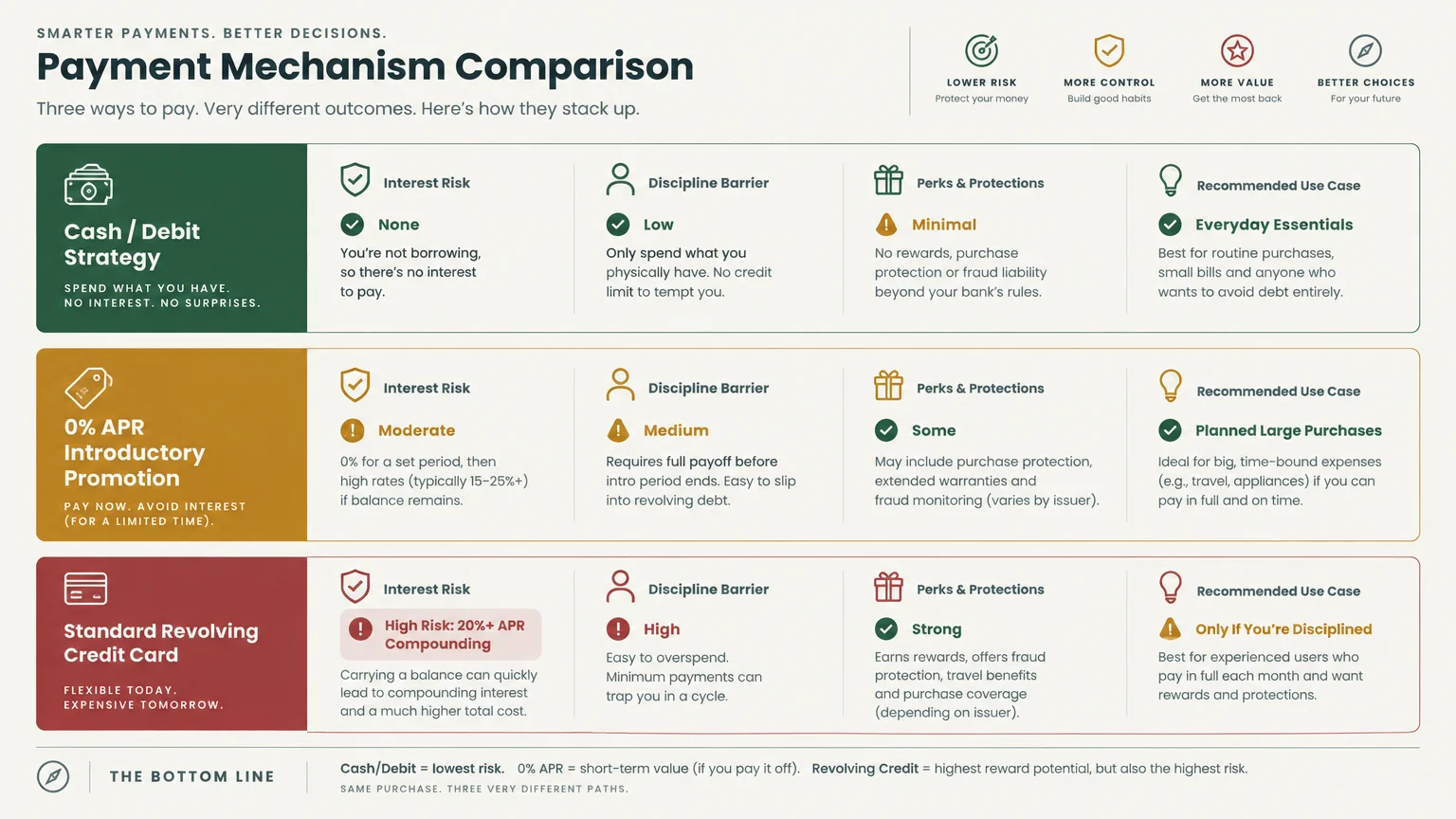
Payment Strategies Compared: Managing Holiday Purchases
Every payment method brings distinct trade-offs between consumer security, borrowing risks, and budget control. Review how popular payment methods compare for financing holiday purchases.
| Payment Method | Interest Risk | Purchase Protection | Overspending Risk |
|---|---|---|---|
| Cash or Debit Cards | Zero interest charges | Basic bank fraud liability limits | Low; purchases stop when cash runs out |
| Credit Cards (Paid in Full) | Zero interest if statement is cleared | Robust dispute rights and fraud defense | Moderate; requires disciplined ledger tracking |
| Revolving Credit Cards | Extreme risk (22.36% to 24.94% APR) | Standard statutory consumer protections | High; compounding interest inflates balances |
| Buy Now, Pay Later (BNPL) | Zero if on time; high fees if missed | Limited dispute and return protections | High; split payments obscure total expenditure |
While Buy Now, Pay Later arrangements seem convenient, they often encourage consumers to overspend. Juggling multiple installment plans across various retailers makes tracking your total monthly cash flow extremely difficult.
Missing an installment triggers steep late fees and potential negative reports to credit bureaus. Treat deferred payment options with the same financial caution you apply to traditional credit cards.

6. Establish a Dedicated Holiday Sinking Fund
Mixing your holiday gift money with your everyday checking account invites accidental overspending. Segregating your seasonal shopping funds into an isolated account provides essential visual and structural discipline.
Open a dedicated high-yield savings account designated exclusively for your holiday spending plan. Transfer your predetermined holiday allocation into this separate account well before sales begin.
Isolating your shopping money prevents you from accidentally spending funds intended for household bills. When the balance in your dedicated holiday account hits zero, your holiday shopping ends immediately.
“Do not save what is left after spending, but spend what is left after saving.” — Warren Buffett
Automate weekly or bi-weekly transfers from your primary checking account into your holiday fund. Building this reserve systematically ensures you shop with accumulated savings rather than future income.
Connect a dedicated debit card directly to this secondary savings or checking account. Using this specific card creates an unmistakable visual boundary that tracks your remaining seasonal runway.
If you prefer physical shopping, withdraw your allocated funds as cash and place them in labeled envelopes. Cash creates tangible psychological friction that prevents impulse purchases effectively.

7. Cleanse Your Digital Environment and Remove Retail Triggers
E-commerce websites utilize behavioral design techniques to prompt immediate, emotional purchasing decisions. Removing digital temptations from your everyday routine protects your holiday spending plan from unintended leaks.
Unsubscribe from promotional retailer newsletters and marketing emails before November shopping events accelerate. Eliminating deal notifications from your inbox prevents artificial scarcity from dictating your purchasing schedule.
Delete saved credit card details from online store profiles and web browser autofill settings. Forcing yourself to locate your wallet and type payment details creates valuable time to reconsider purchases.
Disable push notifications from retail and shopping applications on your mobile devices. Removing shopping apps entirely from your smartphone until January provides even stronger impulse protection.
Retailers design mobile apps to encourage casual browsing during downtime throughout your day. Confining your holiday shopping to deliberate, planned sessions on a desktop computer minimizes impulse buys.
Clear your browser cookies or browse promotional sales in private browsing windows. Online merchants use tracking cookies to implement dynamic pricing and deliver targeted ads that follow you across the internet.

8. Cap Self-Gifting and Enforce an Impulse Cooling Period
Purchasing personal items while shopping for family members is a primary reason holiday budgets collapse. Retailers deliberately place enticing personal electronics and accessories alongside popular gift displays.
Deloitte’s retail survey shows shoppers who plan to buy gifts for themselves expect to spend $299 this season. That represents a 13% increase over self-gifting totals reported in 2025.
If you need a specific personal item, include it as an explicit line item in your spending plan. Never absorb unplanned personal splurges into general holiday entertainment or gift categories.
Institute a mandatory 72-hour cooling-off rule for any unplanned item that catches your eye. Step away from the checkout page, close the browser, and reassess the item after three full days.
Most impulse cravings dissolve once the urgency of a promotional countdown timer fades. If the item remains genuinely necessary after 72 hours, review whether your budget can accommodate it.
Discuss large planned purchases with an accountability partner or spouse before checking out. Having an objective second opinion helps you distinguish between genuine bargains and clever marketing maneuvers.
How Macroeconomic Trends Impact Your 2026 Holiday Shopping
Broad economic conditions directly influence the retail landscape, inventory levels, and available promotional markdowns. Understanding these macroeconomic factors helps you navigate Black Friday sales with realistic expectations.
Data from the Bureau of Labor Statistics shows the Consumer Price Index climbed 3.7% over the 12 months ending September 2026. Cumulative price increases mean household budgets must work harder to purchase standard goods.
The National Retail Federation forecasts holiday sales in November and December will rise 4.2% over 2025 to reach $1.013 trillion. This marks the first time holiday retail sales will surpass the one-trillion-dollar threshold.
Economists observe that higher baseline prices drive approximately half of that projected 4.2% spending growth. Consumers are paying more for similar quantities of items rather than purchasing significantly more merchandise.
Adobe Analytics projects total online holiday sales will reach $275.1 billion, representing a 6.7% increase over 2025. Black Friday online sales alone are projected to jump 9.2% to $12.9 billion.
Fierce competition among online merchants means discounts will appear aggressive during peak shopping days. However, elevated baseline costs make verifying historical prices essential before committing your capital.
Don’t Make These Mistakes When Shopping Early Sales
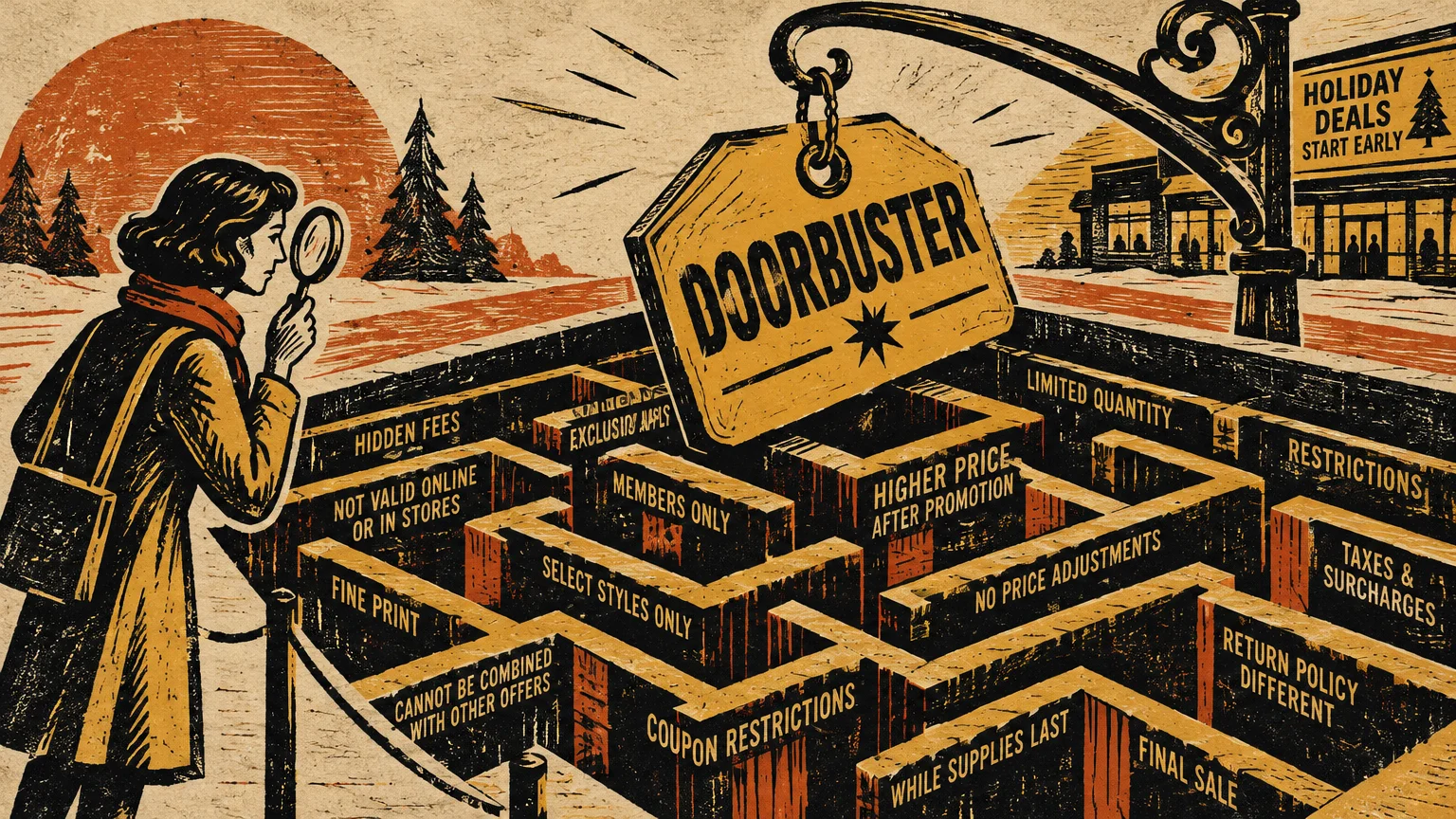
Retailers continue stretching holiday sales deeper into autumn to capture consumer spending early. Sidestepping common seasonal shopping errors protects your hard-earned money from deceptive promotional traps.
Do not assume early retail events deliver the best possible prices of the season. For example, Target scheduled an early Black Friday promotion for November 5–7, 2026, alongside daily deals starting November 1.
While early promotions spread out your shopping tasks, steep price cuts often appear closer to Cyber Week. Check return windows and price-adjustment policies so you can claim refunds if prices drop later.
Avoid falling into the overspending trap common among value-seeking shoppers. Deloitte found that 79% of surveyed shoppers expect higher prices, leading 38% to identify as holiday value seekers.
Value seekers rely heavily on promotional codes, rewards programs, and store brands to maximize their budgets. Yet this group actually expects to spend 12% more overall than shoppers who do not actively seek bargains.
Hunting for discounts frequently leads shoppers to buy extra discounted items they never needed. A product discounted by 40% still represents a complete waste of money if you had no prior plan to buy it.
Do not open store credit cards at checkout counters to secure a one-time 15% discount. Retail cards carry interest rates far exceeding standard credit cards, easily erasing your initial discount if carried past the grace period.

When Professional Advice Is Worth It
Managing holiday spending is usually a matter of personal discipline and thoughtful household planning. However, complex personal finance circumstances sometimes warrant guidance from qualified professionals.
If high-interest credit card debt or holiday overspending threatens your essential living expenses, consult a certified non-profit credit counselor. Non-profit credit counseling agencies offer structured debt management plans without predatory service charges.
Households navigating major life transitions, such as impending retirement or significant estate planning, benefit from working with fee-only financial planners. A fiduciary planner helps you align seasonal spending with long-term wealth preservation.
If you face mortgage payment stress or housing insecurity, connect with a HUD-approved housing counseling agency. HUD counselors provide objective, free or low-cost budgeting advice to keep your home finances stable.
Seeking professional advice early prevents minor budget shortfalls from evolving into long-term financial distress. Experienced counselors offer objective strategies tailored to your household’s unique balance sheet.
Frequently Asked Questions
When is Black Friday 2026, and when do holiday sales actually start?
Black Friday takes place on Friday, November 27, 2026, following Thanksgiving on November 26. Cyber Week promotions kick off on Monday, November 23, and Cyber Monday falls on November 30, 2026.
However, major retailers begin offering holiday deals much earlier. For instance, Target launched daily promotional events starting November 1 and an early Black Friday sale from November 5–7, 2026.
How much does the average American household spend during the holidays?
According to Deloitte’s 2026 survey, consumers plan to spend an average of $1,654 during the holiday season. This includes $988 on physical retail goods and $666 on holiday activities and experiences.
Your personal spending plan should align with your specific household cash flow rather than national averages. Focus on what you can afford comfortably without borrowing.
How can I avoid holiday debt if inflation has strained my budget?
Prioritize a lean gift list, utilize cash or debit cards exclusively, and redeem existing credit card rewards points. Establishing a firm spending ceiling protects your household from high-interest revolving balances.
Consider organizing gift exchanges or drawing names among adult family members to reduce total gift obligations. Offering personal time, baked goods, or shared experiences often provides deeper value than store-bought presents.
Are Buy Now, Pay Later plans a safe alternative to credit cards?
Buy Now, Pay Later plans divide purchases into manageable installments, but they frequently encourage impulse spending. Managing multiple repayment schedules across various merchants increases the risk of missed payments and penalty fees.
If you utilize deferred financing, record every upcoming installment directly inside your master monthly budget. Never commit future income to purchases without verifying that your cash flow can support the payments.
Take Control of Your Holiday Finances Today
Navigating the holiday retail blitz requires strategic planning, objective price evaluation, and disciplined cash management. Putting these eight money moves into practice before Black Friday ensures you remain in complete command of your finances.
Review your bank accounts, set your spending ceiling, and stick to your itemized holiday spending plan. Entering January with an intact emergency reserve and zero credit card debt is the best gift you can give yourself.
This article is for informational purposes only and does not constitute financial, legal, or tax advice. Rates, benefit amounts, and tax rules change regularly—verify current details with the relevant agency or a licensed professional.
Last updated: October 2026. Rates, benefit amounts, and tax rules change—always verify current details at official sources.