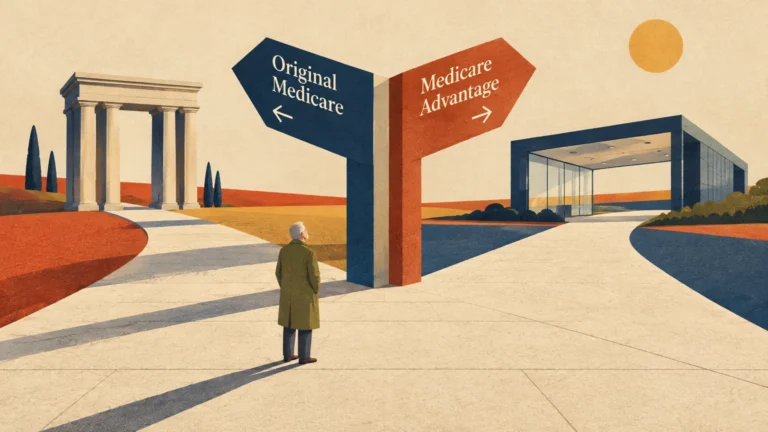
A higher Social Security Cost-of-Living Adjustment sounds like an automatic raise, but your Medicare Part B premium often takes the first bite. If you count on every dollar of your monthly check, understanding this deduction is critical for protecting your household budget.
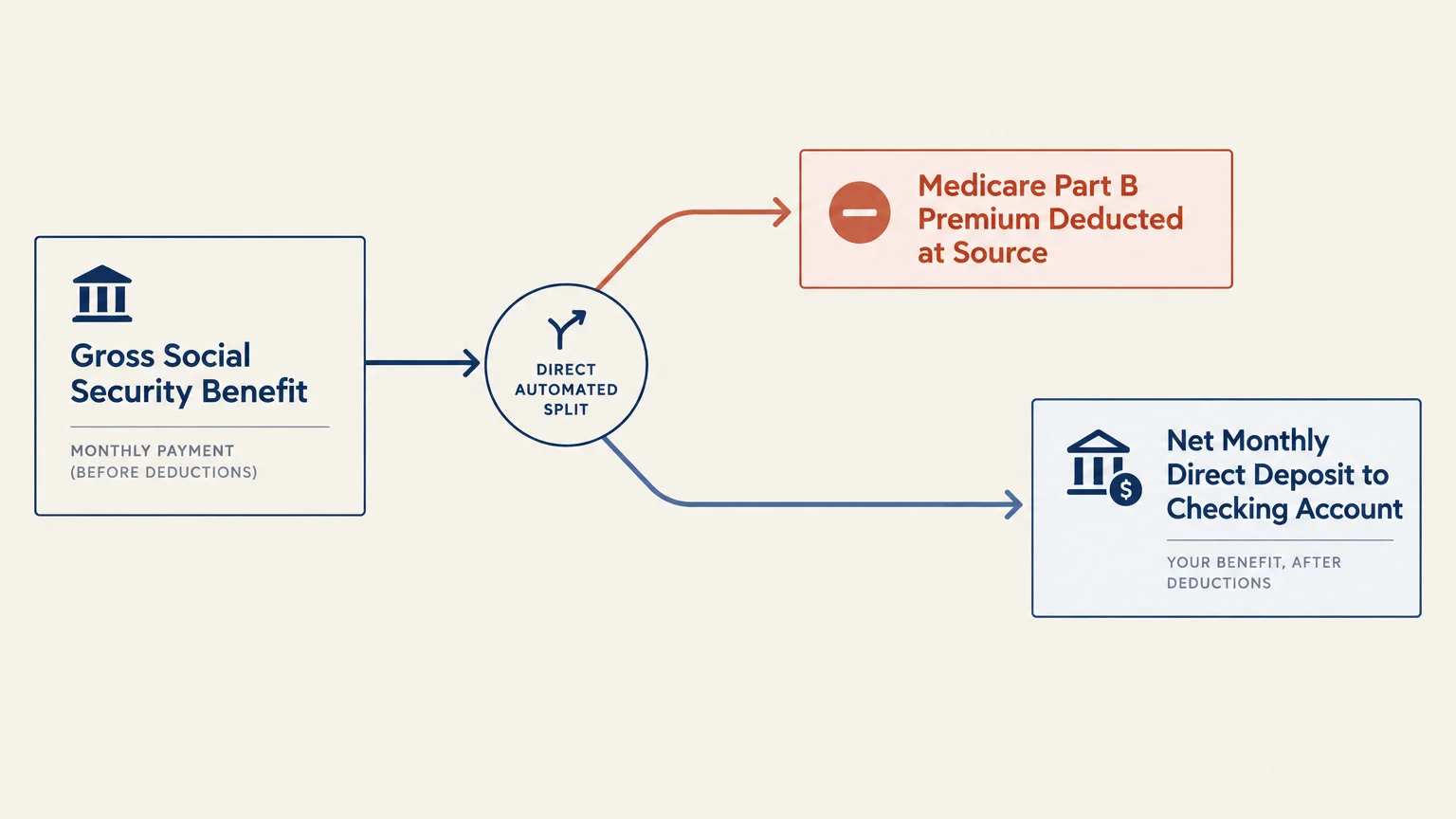
Every autumn, the federal government announces a benefit increase designed to counter inflation. Soon after, Medicare publishes its updated premiums, which are subtracted directly from your gross monthly payment before the deposit reaches your bank account.
Knowing how the latest COLA estimates interact with rising healthcare costs helps you anticipate your actual net income. Here is what the upcoming numbers mean for your wallet and how you can plan ahead effectively.
The Direct Link Between Social Security COLA and Medicare Part B
The relationship between your annual cost-of-living bump and healthcare expenses centers on the standard social security medicare deduction. Federal law requires the government to deduct your Medicare Part B premium directly from your Social Security check each month.
Because of this automated process, you never see the full gross adjustment hit your checking account. When Medicare Part B premiums rise faster than the COLA percentage, healthcare absorbs a substantial portion of your raise.
The Social Security Administration calculates COLA using third-quarter data from the Consumer Price Index for Urban Wage Earners and Clerical Workers (CPI-W). Officials compare inflation numbers from July, August, and September against the prior year to set the rate.
Meanwhile, the Centers for Medicare & Medicaid Services sets Part B premiums based on projected program spending. Because healthcare costs frequently outpace general inflation, the two calculations often pull in opposing directions.
Recent Trends: 2025, 2026, and the 2027 Projections
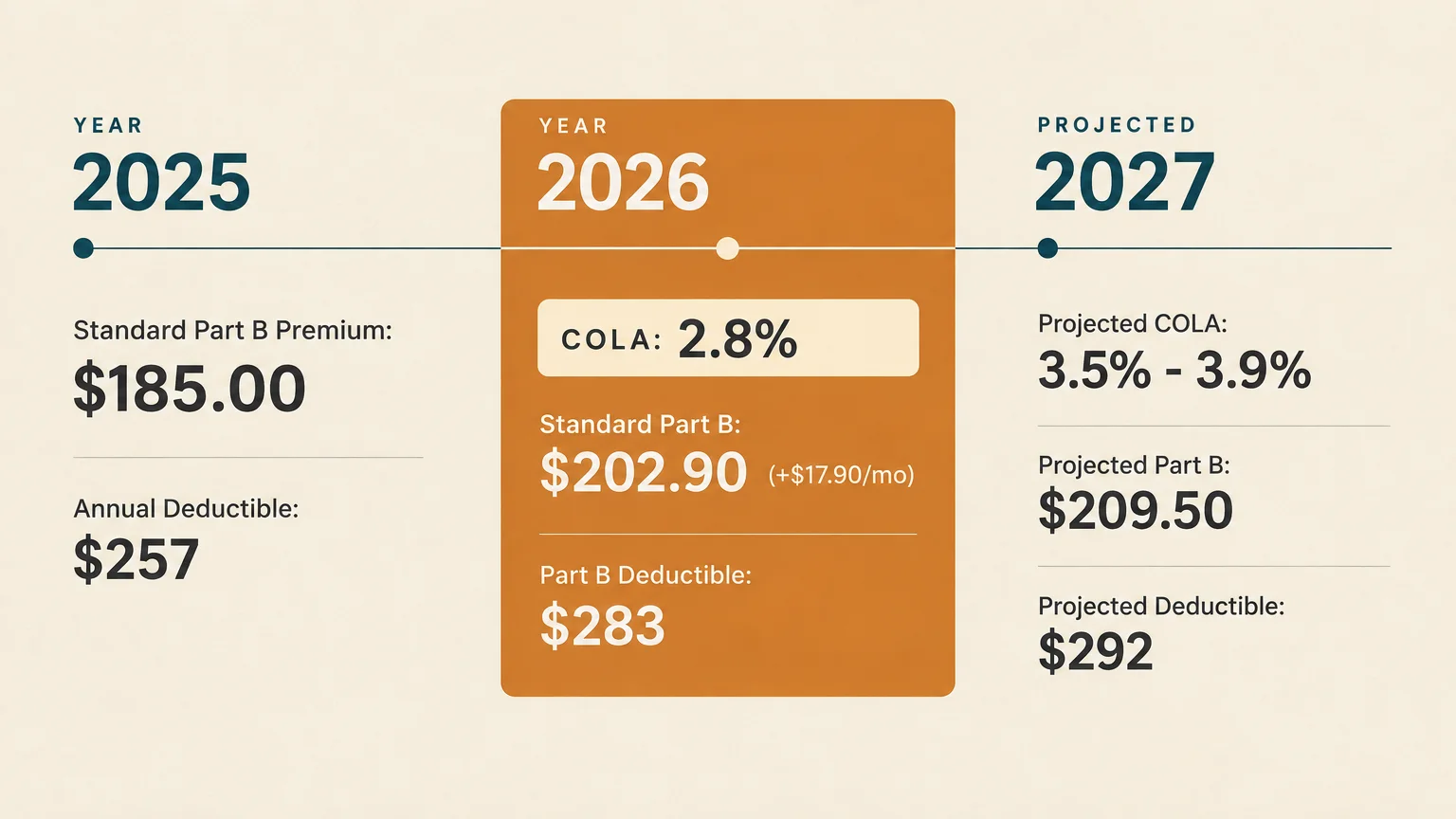
Examining recent figures illustrates why retirees feel financial pressure despite regular annual increases. In 2025, beneficiaries paid a standard monthly Part B premium of $185.00 with an annual deductible of $257.
For 2026, the SSA established a 2.8% COLA for monthly benefits. However, standard Part B premiums jumped 9.7% to $202.90 per month, crossing the $200 threshold for the first time.
The Part B annual deductible also climbed to $283 in 2026. This $17.90 monthly premium surge swallowed a large share of the 2.8% boost for millions of households.
Looking ahead, nonpartisan groups like The Senior Citizens League project a 2027 COLA between 3.5% and 3.9%. Concurrently, early forecasts point toward another medicare premium increase 2027, with premiums projected near $209.50 and deductibles approaching $292.
“A budget is telling your money where to go instead of wondering where it went.” — John C. Maxwell
Understanding the Math: How Premiums Erode Your Raise
To grasp the true cola impact medicare has on your finances, you must examine dollar amounts rather than percentages. A percentage raise yields vastly different dollar gains depending on your primary insurance amount.
Conversely, the Medicare Part B premium increase is a flat, fixed-dollar cost for everyone paying standard rates. This fixed deduction takes a much larger percentage bite from modest benefit checks.
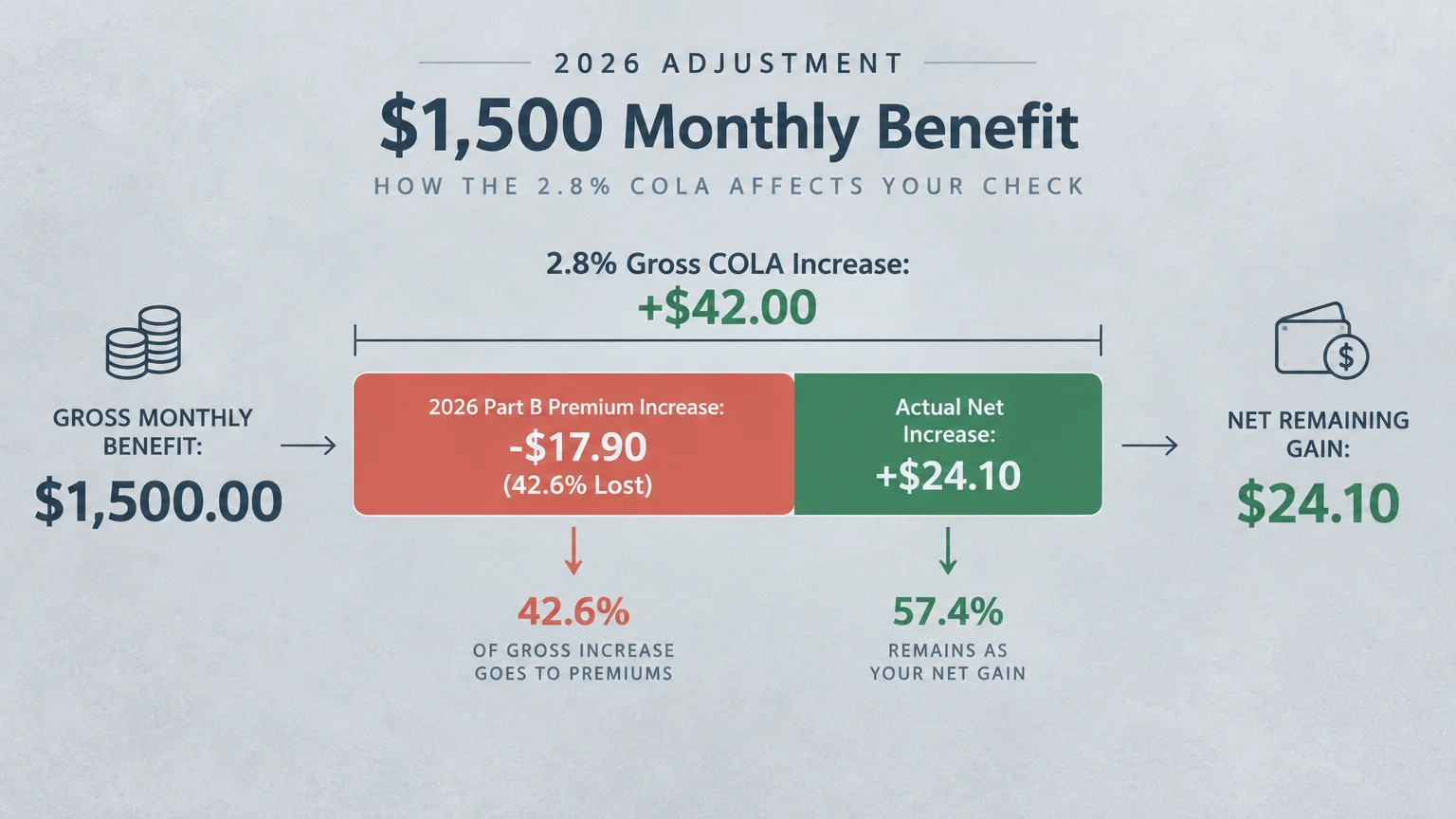
Consider how the 2026 adjustment played out across different monthly gross benefit levels after the $17.90 Part B premium hike:
| Gross Monthly Benefit | 2.8% Gross COLA Increase | 2026 Part B Premium Increase | Actual Net Increase | Percentage of COLA Lost |
|---|---|---|---|---|
| $1,500.00 | $42.00 | $17.90 | $24.10 | 42.6% |
| $2,000.00 | $56.00 | $17.90 | $38.10 | 32.0% |
| $2,500.00 | $70.00 | $17.90 | $52.10 | 25.6% |
As the table demonstrates, someone receiving $1,500 lost more than 42% of their cost-of-living raise to Medicare. Even higher earners surrendered over a quarter of their gross gain immediately.
When you pair that reduction with local property taxes and grocery inflation, purchasing power diminishes quickly. Planning for net cash flow rather than gross numbers prevents severe budgetary surprises.

The Hold Harmless Rule: Your Statutory Protection
Congress recognized that soaring medical expenses could theoretically erase a beneficiary’s entire check. To prevent this, lawmakers created the “Hold Harmless” provision under Section 1839(f) of the Social Security Act.
This rule guarantees that your net Social Security payment cannot decrease from December to January due to a Part B increase. If your dollar COLA raise is smaller than the premium hike, Medicare reduces its fee increase to match your raise.
For example, if your monthly COLA increase equals $10, but Part B rises by $15, your premium only increases by $10. Your net monthly deposit remains identical to the previous year rather than dropping.
While this statute provides valuable stability during years with zero or minimal inflation adjustments, it does not apply to everyone. Roughly 30% of Medicare beneficiaries remain completely outside this protection.
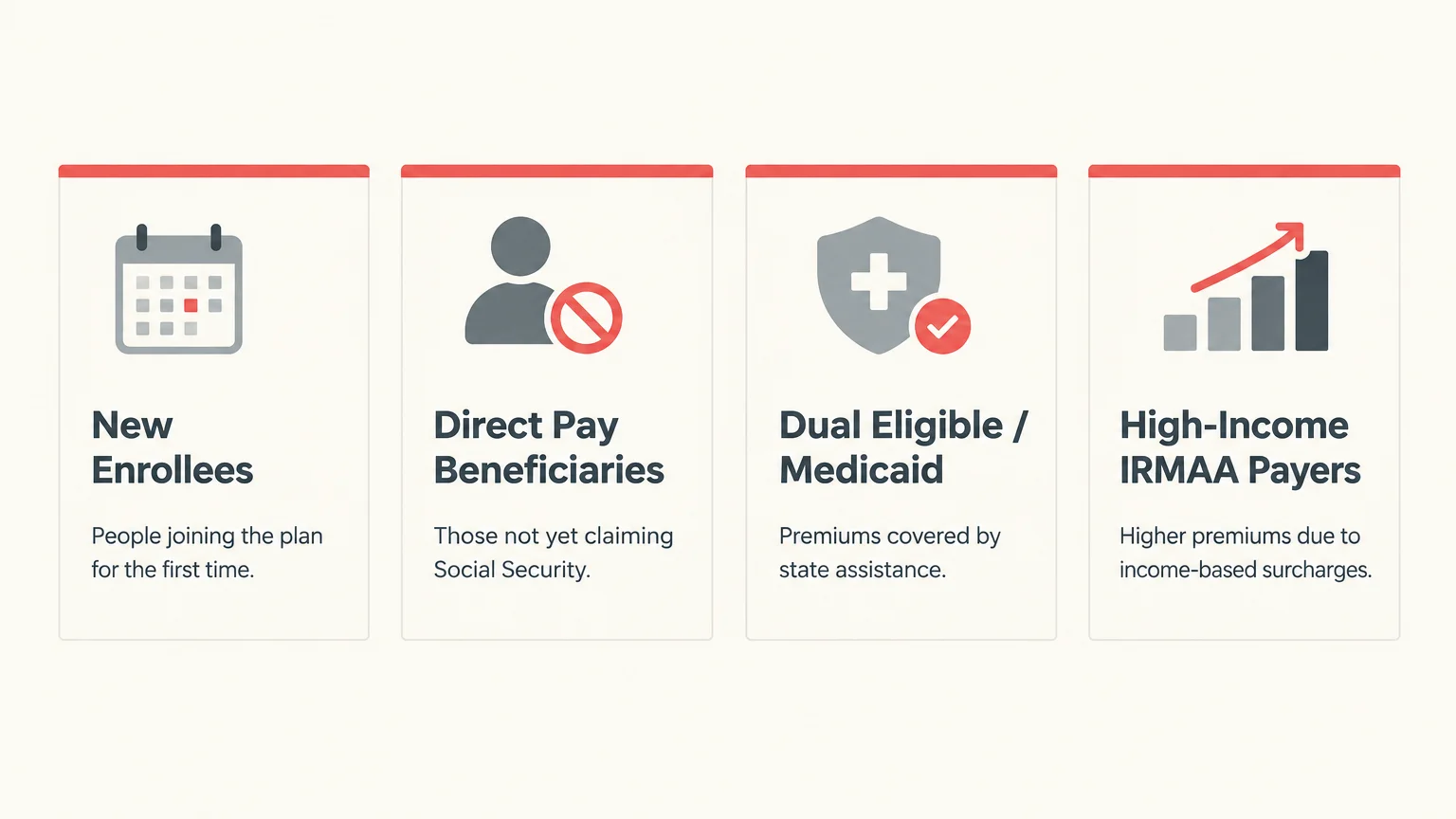
Who Misses Out: The Four Major Hold Harmless Exemptions
If you fall into specific administrative categories, Medicare will bill you the full premium hike regardless of your Social Security adjustment. You should review these categories annually to verify your status.
- New Enrollees: Individuals enrolling in Medicare Part B for the first time have no prior baseline benefit to preserve.
- Direct Bill Payers: Beneficiaries who delayed their Social Security benefits pay Medicare directly, leaving them uncovered by automatic deduction rules.
- Dual-Eligible Beneficiaries: Individuals enrolled in Medicaid or a Medicare Savings Program have premiums paid by state agencies, bypassing individual protections.
- Higher Earners Subject to IRMAA: Anyone paying high-income surcharges must shoulder all premium changes in full.
If you delay Social Security past age 65 while enrolling in Medicare, monitor your premium bills closely. You will absorb standard increases directly from your personal checking account.
Navigating IRMAA: High-Income Surcharges in 2026 and Beyond
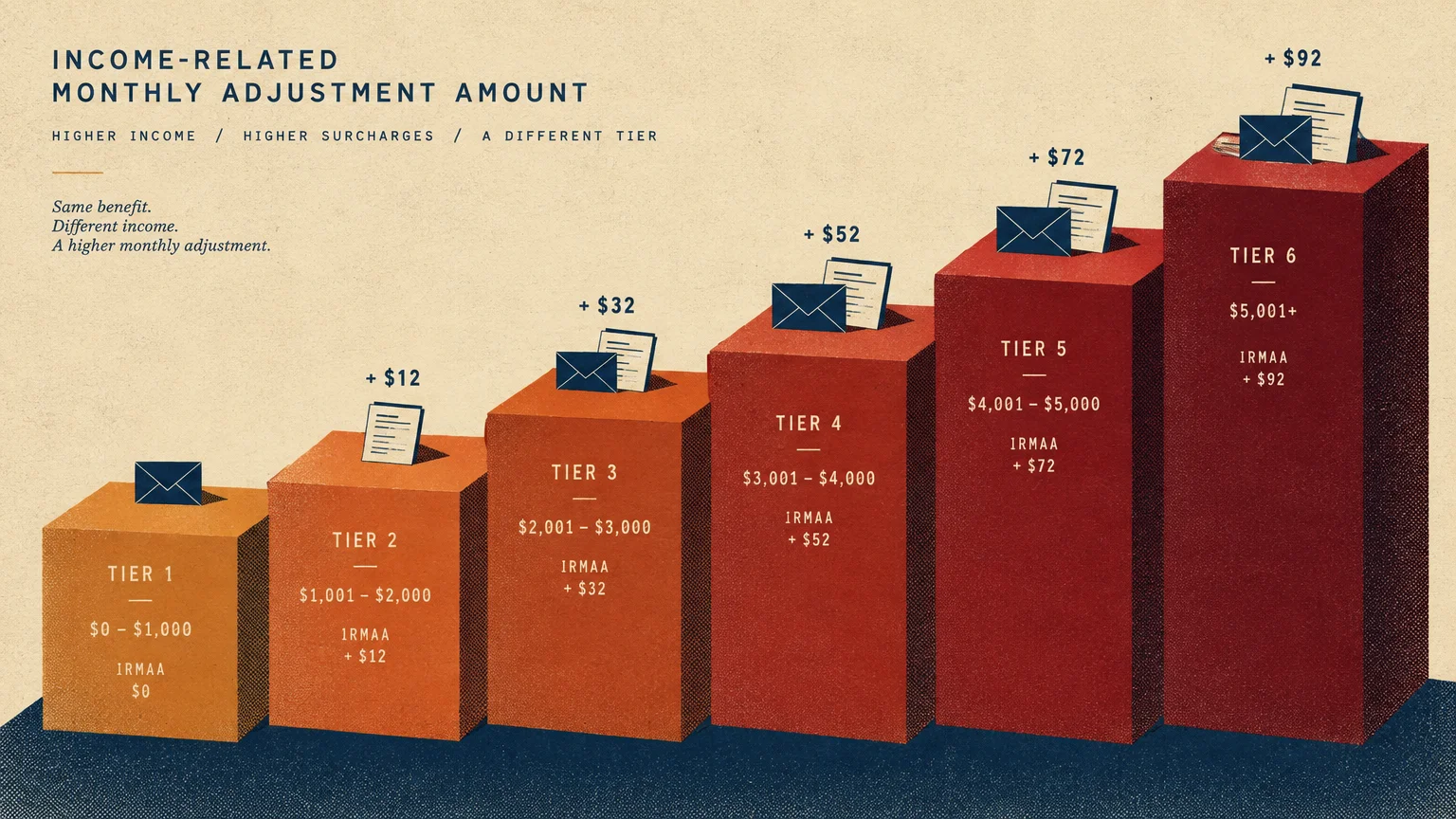
The Income-Related Monthly Adjustment Amount (IRMAA) adds extra surcharges to Part B and Part D premiums for higher earners. The government assesses these surcharges using your tax returns from two years prior.
For 2026 premiums, the Social Security Administration examined Modified Adjusted Gross Income reported on 2024 federal tax filings. The initial surcharge tier began at $109,000 for single filers and $218,000 for married couples filing jointly.
Surpassing a threshold by even one single dollar triggers the entire surcharge for the full calendar year. Unlike income tax brackets, IRMAA functions as a financial cliff rather than a marginal rate system.
Unexpected income spikes—such as capital gains, home sales, or large Roth conversions—can unexpectedly trigger these expensive surcharges. Anticipating your tax posture two years in advance remains vital for preserving your cash flow.
“It’s not how much money you make, but how much money you keep, how hard it works for you, and how many generations you keep it for.” — Robert Kiyosaki

Strategic Moves to Protect Your Monthly Cash Flow
You do not have to accept premium erosion passively. Taking proactive ownership of your retirement income helps you counter rising healthcare overhead.
First, adjust your voluntary federal and state income tax withholding on form W-4V. Reducing withholding slightly can restore take-home cash if your net benefit dropped below expectations.
Second, track your benefit arrival dates using the official SSA payment schedule. Aligning bill due dates with your specific Wednesday distribution window prevents costly overdraft fees.
Third, explore Medicare Savings Programs through your state Medicaid agency if your income falls below statutory limits. These state-administered programs cover Part B premiums entirely for qualified participants.
Finally, carefully stage traditional retirement withdrawals to stay beneath the IRMAA brackets. Using Qualified Charitable Distributions or health savings account assets keeps your reportable income manageable.

Common Money Traps
Many individuals make costly assumptions when government agencies publish inflation updates. Avoiding these recurring errors will keep your retirement budget secure.
One frequent mistake involves budgeting around your gross COLA headline figure. Always calculate your net payment by subtracting updated Part B and Part D deductions first.
Another common misstep is triggering an avoidable IRMAA surcharge cliff through poorly timed asset liquidations. Selling high-value taxable stocks without tax planning can spike your Medicare costs two years later.
Additionally, retirees often overlook annual changes to their Part D prescription drug deductibles and copays. A Part B calculation tells only part of your total annual medical story.

When to Consult a Professional
Navigating the interplay between benefit deductions, taxes, and healthcare rules can become complex. Certain situations call for personalized guidance from certified specialists.
You should consult a fee-only financial planner or a certified public accountant if you plan major asset sales or Roth conversions. They can calculate precise income cutoffs to prevent multi-year IRMAA penalties.
If your income is modest and medical premiums overwhelm your household budget, contact your local State Health Insurance Assistance Program (SHIP). These non-profit counselors provide free, unbiased assistance with Medicare Savings Programs and Part D plan optimization.
Frequently Asked Questions
Does the Social Security COLA apply to Medicare premiums?
No, the COLA applies only to your gross Social Security benefit. The Centers for Medicare & Medicaid Services sets Medicare premiums separately based on national healthcare expenditures.
Can my Social Security check decrease if Medicare premiums jump?
If you qualify for the Hold Harmless rule, your net monthly check will not drop below the previous December amount. However, individuals exempt from this rule can see their net checks decrease.
When will officials confirm the 2027 Social Security COLA and Medicare Part B premiums?
The Social Security Administration announces the final COLA in mid-October following September inflation releases. Medicare typically confirms its Part B premiums and deductibles in November.
Can I appeal an IRMAA surcharge increase on my Medicare premium?
Yes, you can file Form SSA-44 to request a reconsideration if you experienced a qualifying life-changing event. Eligible events include marriage, divorce, job loss, retirement, or loss of income-producing property.
Mastering the balance between annual benefit updates and rising healthcare expenses keeps your finances stable. Review your annual SSA benefit statement each December, calculate your true net deposit, and update your spending plan accordingly.
This article is for informational purposes only and does not constitute financial, legal, or tax advice. Rates, benefit amounts, and tax rules change regularly—verify current details with the relevant agency or a licensed professional.
Last updated: February 2026. Rates, benefit amounts, and tax rules change—always verify current details at official sources.