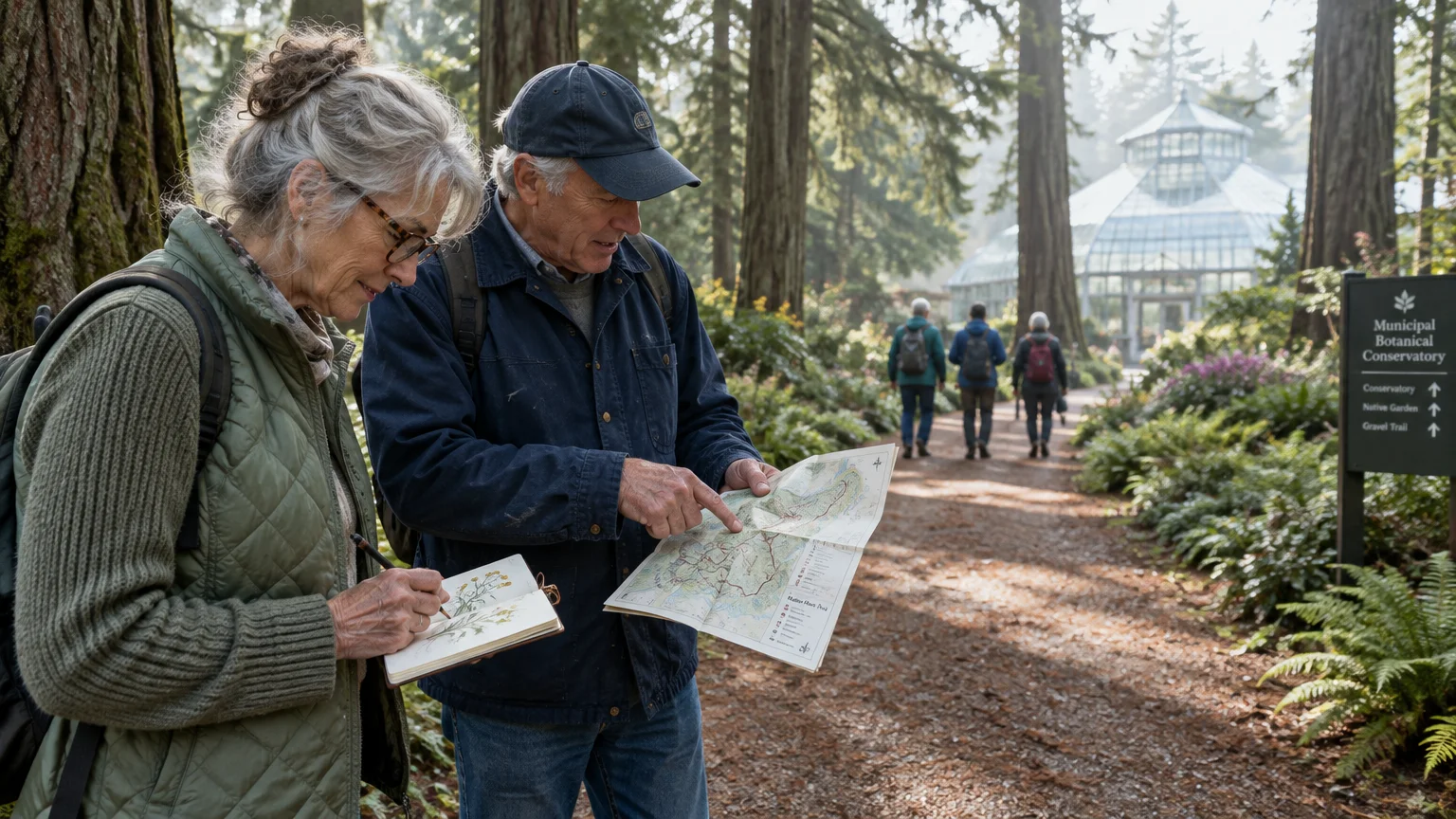
Leaving the workforce gives you back roughly 40 hours every week, but filling that open calendar can strain your nest egg. Recreation and leisure expenses quickly erode a fixed income if you do not plan carefully.
Fortunately, you do not need to spend your savings to lead an active, socially rich lifestyle. High-value community partnerships, federal programs, and hidden insurance perks unlock premier free activities for seniors across the country.
Structuring your routine around these reliable opportunities lets you enjoy meaningful weekly experiences while keeping your retirement budget completely secure.
1. Check Out Free Museum and Culture Passes at Public Libraries
Your local public library card acts as a passport to free entertainment and cultural exploration. Modern library branches provide far more than physical bookshelves and quiet reading tables.
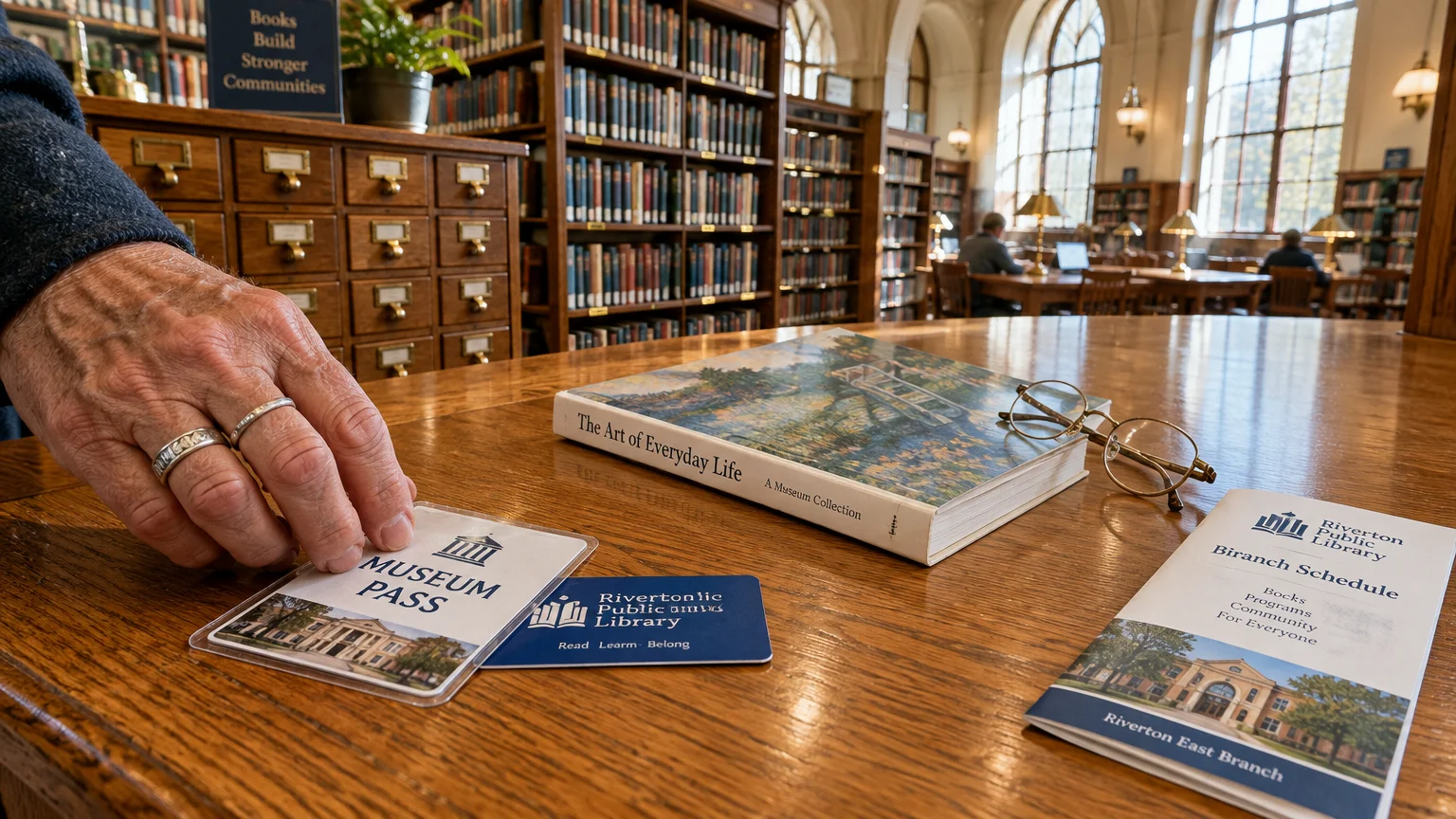
Many library systems partner with cultural institutions to offer physical culture passes. These passes provide free single-day general admission for cardholders and family members to botanical gardens, historical societies, and art museums.
Beyond physical outings, libraries offer premier digital lending platforms like Libby for audiobooks and e-books. You can also stream documentaries and classic films at no charge using platforms such as Kanopy or Hoopla.
Reserving passes on Monday mornings ensures you secure weekend slots before they run out. Incorporating digital media into your weekly routine provides endless free things for retirees right at home.
2. Audit College Courses Tuition-Free at Public Universities
Retirement offers the perfect opportunity to study subjects you never had time to explore during your working years. State statutes across the country allow older adults to audit university courses without paying expensive tuition fees.
Auditing allows you to attend lectures, participate in class discussions, and complete readings without taking exams or receiving grades. It delivers pure academic enrichment on a space-available basis.
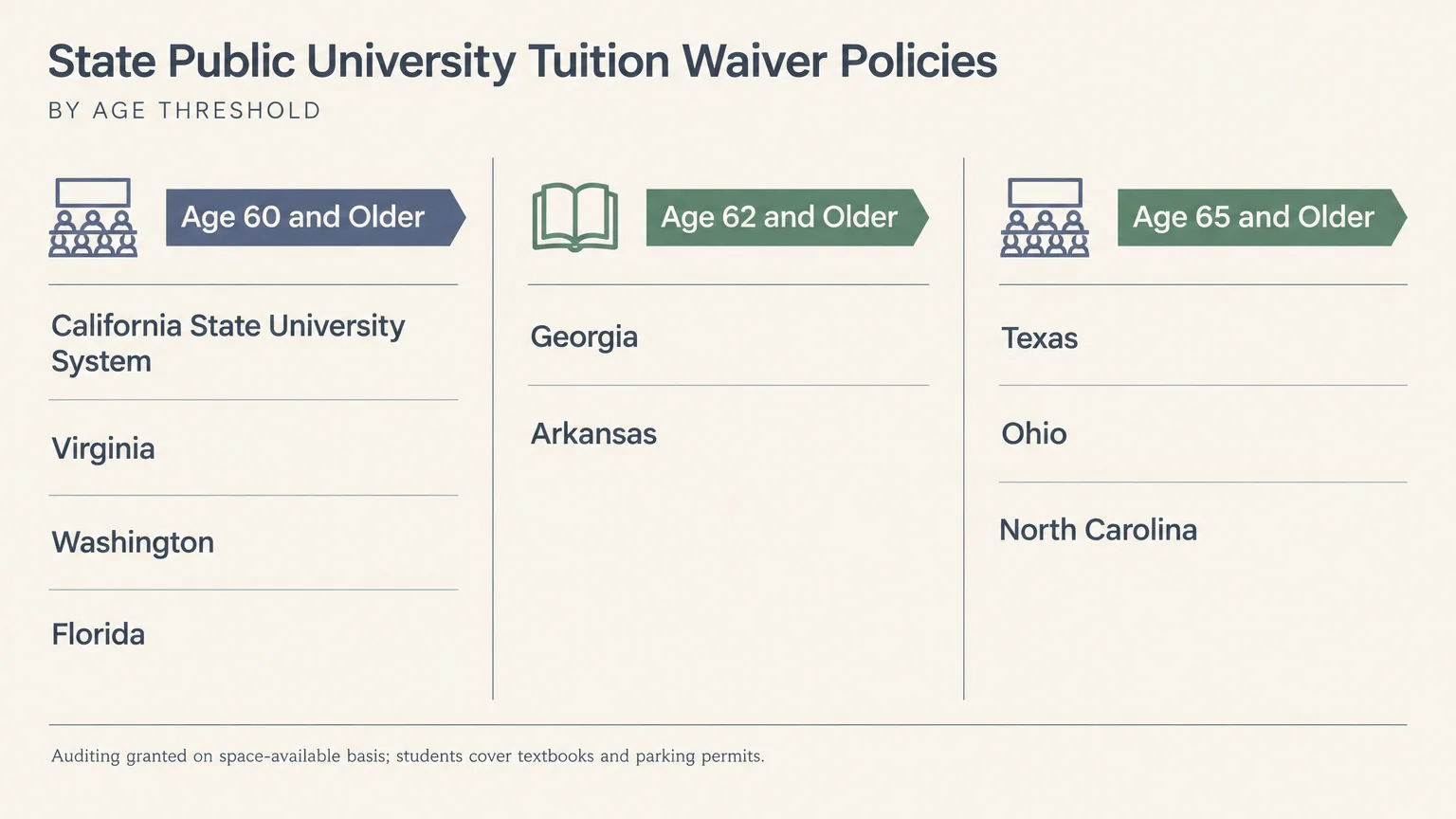
Age thresholds for tuition waivers vary significantly depending on where you live. State policies establish specific requirements:
- Age 60 and older: California State University system, Virginia, Washington, and Florida.
- Age 62 and older: Georgia and Arkansas public higher education systems.
- Age 65 and older: Texas, Ohio, and North Carolina state universities.
While tuition is waived, you remain responsible for campus parking permits, textbooks, and laboratory supplies. Contact your local university registrar every semester to submit your non-degree auditing paperwork before registration closes.

3. Access Free Gym Memberships via Medicare Wellness Perks
Staying active preserves physical mobility and protects your long-term healthcare budget. While Original Medicare Parts A and B do not cover gym memberships, private plan options bridge the gap.
Many Medicare Advantage (Part C) and select Medigap plans offer specialized wellness benefits like SilverSneakers or Renew Active. You can verify plan details directly through Medicare.gov during annual open enrollment periods.
These programs grant free access to thousands of fitness centers, YMCA locations, and municipal swimming pools nationwide. They also provide instructor-led weekly classes designed specifically to build core stability and cardiovascular endurance.
If you prefer exercising at home, these programs offer live digital fitness sessions and on-demand video libraries. Checking your insurance card for fitness benefit codes can save you over $600 each year in commercial gym dues.

4. Attend Enriching Programs at Older Americans Act Community Centers
Authorized under Title III of the federal Older Americans Act, local Area Agencies on Aging fund dedicated community centers for adults aged 60 and older. These facilities serve as vibrant social and educational hubs.
Municipal senior centers host weekly exercise routines, duplicate bridge tournaments, watercolor painting classes, and nutritional cooking workshops. Most of these activities are completely free or operate on small suggested donations.
Many locations also provide congregate lunch programs that serve balanced meals in a friendly group setting. This setup fosters valuable neighborhood friendships while trimming your weekly grocery bills.
Review your municipal recreation catalog every month to identify newly scheduled classes and special social events. Regular participation helps you build an active routine with peers who share your personal interests.
“A budget is telling your money where to go instead of wondering where it went.” — John C. Maxwell
5. Give Back on Your Schedule with AmeriCorps Seniors RSVP
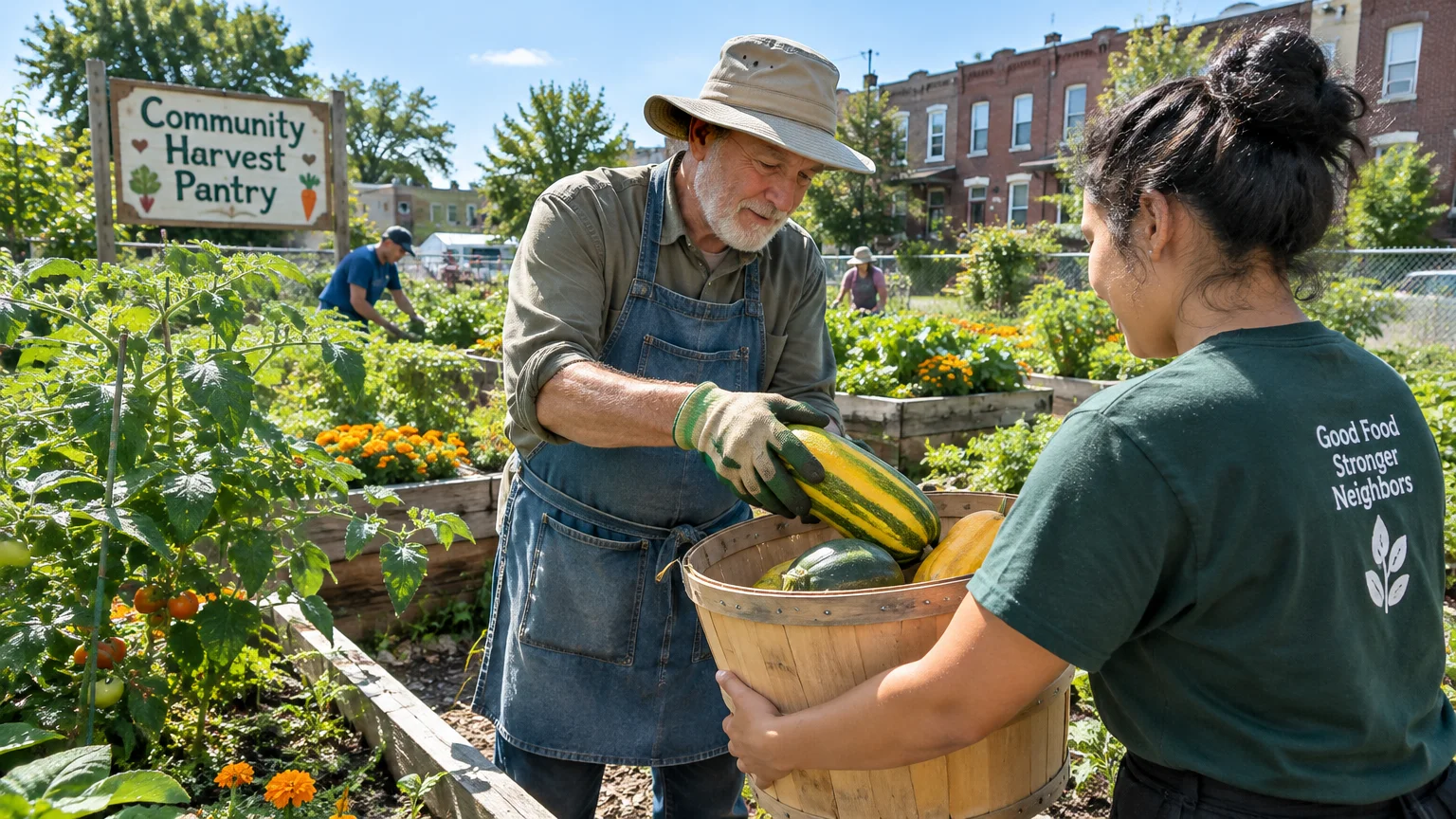
Volunteering connects you with your community while providing structured weekly purpose during retirement. The federally supported Retired and Senior Volunteer Program (RSVP) connects adults aged 55 and older with impactful volunteer roles.
You can tutor elementary school students, mentor young entrepreneurs, or deliver meals to homebound neighbors. Programs offer flexible scheduling, allowing you to serve anywhere from two to forty hours each week.
Unlike informal community volunteering, the RSVP network provides formal training, pre-screened placements, and supplemental accident and liability coverage while on duty. This added protection shields your personal finances while you serve.
Regular service creates strong social bonds that combat retirement isolation and sharpen your cognitive health. Reach out to your regional AmeriCorps coordinator to align your professional skills with urgent community needs.

6. Explore Federal Public Lands and State Nature Preserves
Spending time outdoors improves cardiovascular health, reduces stress, and costs nothing when you leverage federal park programs. If you are 62 or older, the America the Beautiful Senior Pass unlocks incredible recreational savings.
An in-person pass costs $20 for an annual permit or $80 for a lifetime credential. Ordering by mail or online includes an additional $10 processing fee, yet it pays for itself after just two visits.
This pass covers entrance fees at more than 2,000 federal recreation sites, including all National Parks, National Forests, and wildlife refuges. In addition, the National Park Service designates five or six fee-free days annually for all visitors.
State parks and regional conservation districts also offer free weekly admission or mid-week discounts for mature residents. Pack a picnic lunch and explore marked hiking trails to enjoy refreshing, low cost retirement fun.

7. Visit Premier Art and History Museums on Free Admission Days
Exploring cultural exhibits does not require spending $25 to $35 on admission tickets every week. Major financial institutions and municipal cultural councils frequently subsidize free museum access.
For instance, Bank of America cardholders can leverage the “Museums on Us” program during the first full weekend of every month. Presenting an active debit or credit card grants one free general admission to hundreds of institutions.
Many civic museums and botanical gardens also offer designated free admission afternoons on Tuesdays or Wednesdays for county residents. Checking museum websites ahead of time reveals free admission windows and complimentary docent-led tours.
Visiting during scheduled quiet hours lets you absorb historic collections at an unhurried, contemplative pace. These cultural visits offer stimulating senior budget activities that keep your mind sharp without depleting your wallet.
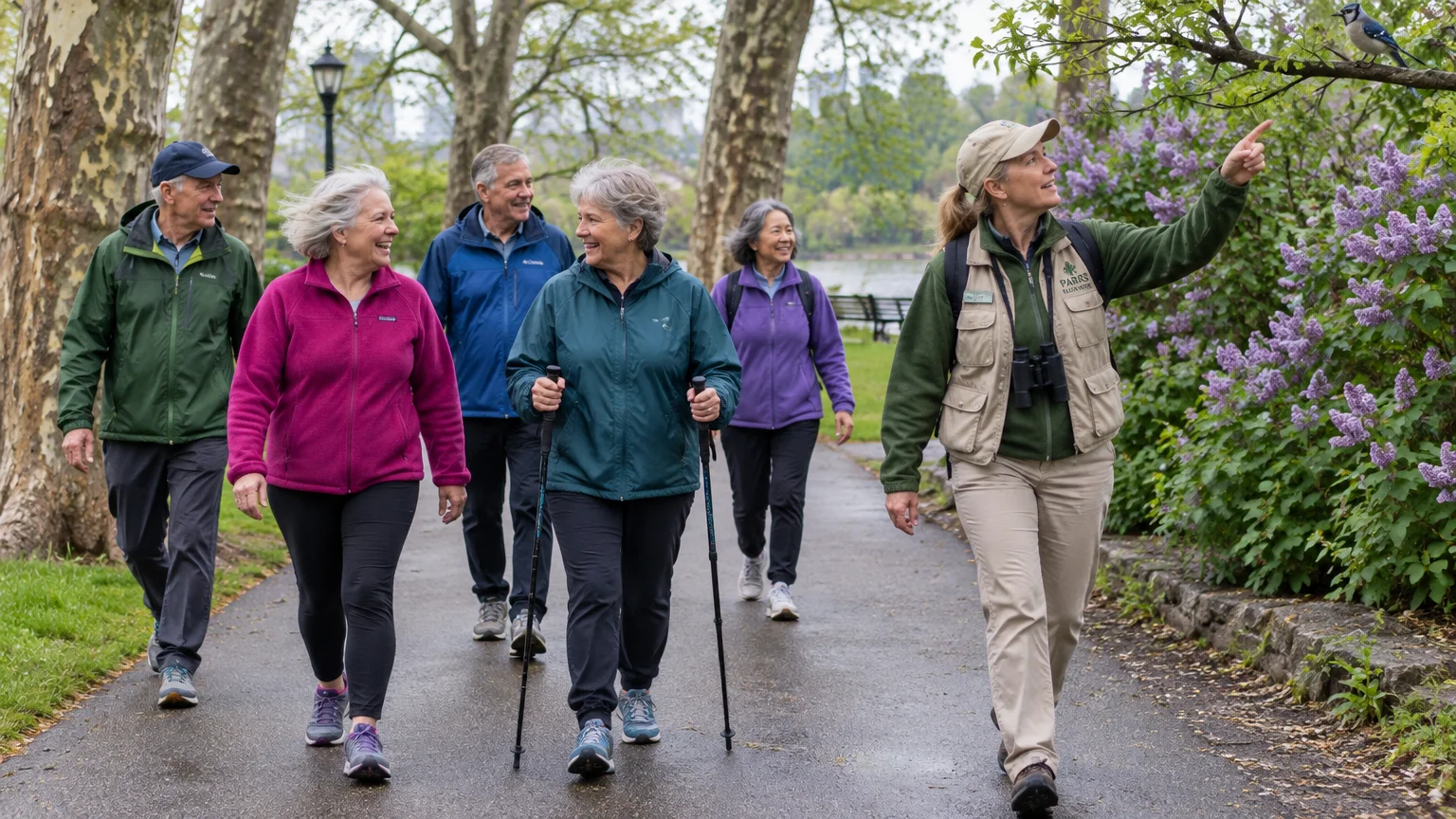
8. Join Municipal Walking Groups and Parks Department Nature Tours
Many city recreation departments sponsor weekly walking clubs through public parks and paved greenways. These groups offer a welcoming atmosphere where walkers of all endurance levels can socialize while staying active.
Walking clubs often pair with local naturalists who lead guided educational walks covering local wildlife, tree identification, and bird migration. These guided outings turn an ordinary stroll into an engaging ecology seminar.
Research from public health institutions demonstrates that habitual brisk walking lowers blood pressure and supports joint health. It also establishes an accountability network that keeps you consistent without any membership fees.
Check your county parks and recreation portal to find meeting times, trail difficulty ratings, and starting locations. Bring a sturdy pair of walking shoes and a refillable water bottle to participate each week.

9. Master Digital Skills Through Senior Planet and Library Tech Labs
Navigating smartphones, video conferencing software, and digital banking tools can feel challenging without structured guidance. Fortunately, non-profit initiatives offer free, patient technology instruction tailored to mature learners.
Senior Planet from AARP provides weekly online and in-person workshops on subjects ranging from cybersecurity to cloud storage. Local libraries also provide free computer labs and one-on-one technology coaching sessions.
Learning to identify online phishing scams and fraudulent text messages protects your hard-earned retirement assets. You can also master video calls to stay closely connected with grandchildren across the country.
Drop by your local library’s help desk to ask about scheduled computer lab open hours. Building technical fluency ensures you manage digital household accounts with complete independence.

10. Attend Free Community Financial and Consumer Workshops
Staying informed on changing tax codes, estate laws, and consumer scams is vital when living on a fixed income. Many reputable public institutions offer free weekly or monthly financial literacy classes.
Local credit unions, state extension offices, and public libraries frequently host unbiased workshops on Social Security strategies and Medicare choices. You can cross-reference benefit timelines directly with the Social Security Administration.
The Consumer Financial Protection Bureau also provides downloadable guides and free webinars to help older consumers spot deceptive practices. Attending these educational sessions shields your household from predatory schemes.
Always avoid workshops held at commercial hotels that promise free steak dinners in exchange for annuity sales pitches. Stick to non-commercial seminars led by public agencies, fiduciary professionals, or non-profit consumer groups.
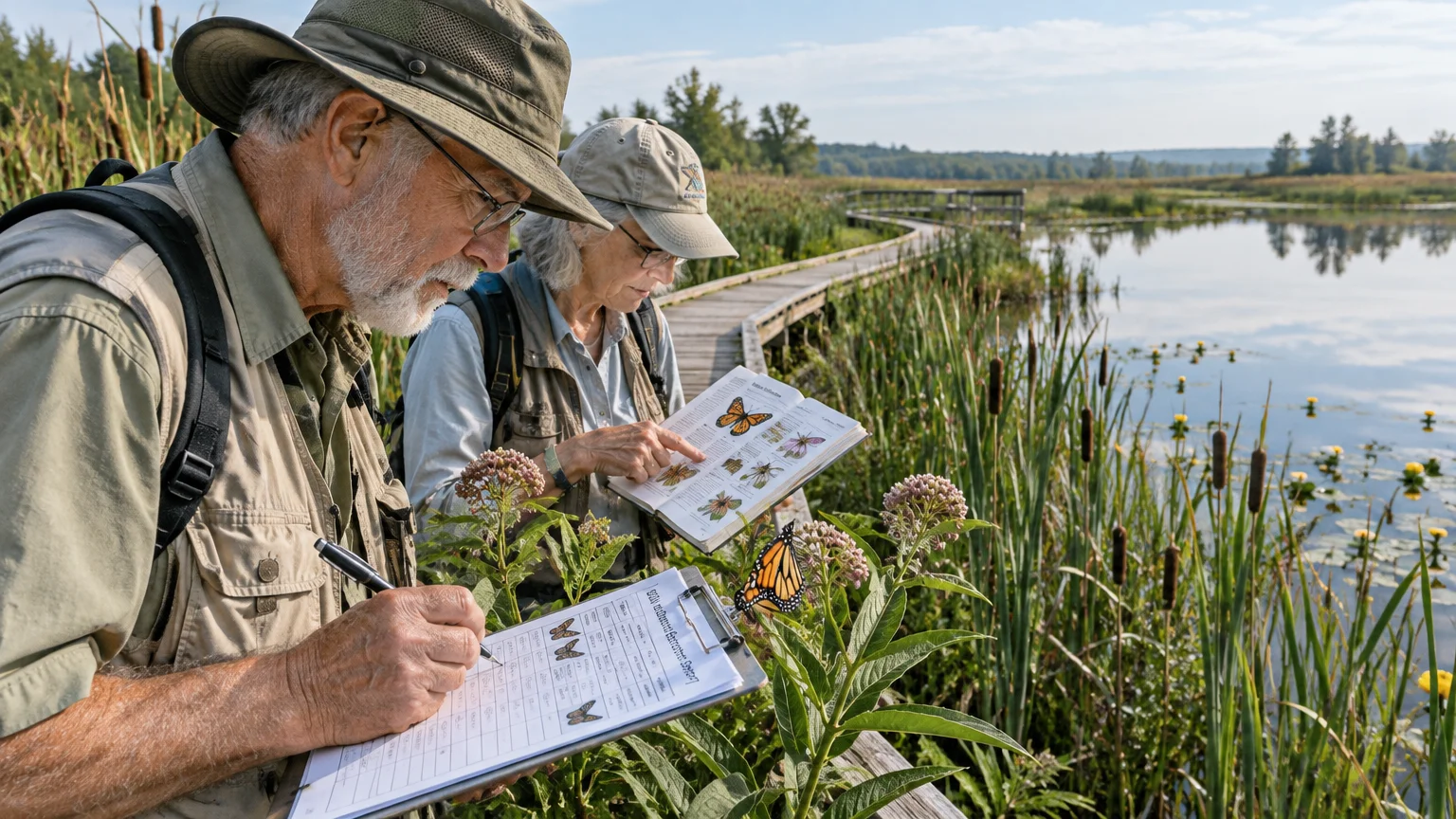
11. Participate in Citizen Science Research Projects
If you love research and the natural world, citizen science projects offer a captivating weekly hobby. Global scientific institutions rely on observant volunteers to gather and categorize real-world scientific data.
Platforms like Zooniverse allow you to assist researchers from home by transcribing historical documents or classifying deep-space telescope images. You do not need specialized degrees to make meaningful contributions to active research teams.
For outdoor enthusiasts, the Audubon Society and the Community Collaborative Rain, Hail and Snow Network (CoCoRaHS) welcome daily precipitation and wildlife logs. Your regional observations help meteorologists and biologists track broader environmental patterns.
Engaging in scientific discovery stimulates analytical thinking and keeps your intellectual curiosity thriving. These collaborative projects turn spare weekly hours into tangible contributions toward global knowledge.

12. Participate in Weekly Public Chess, Bridge, and Game Clubs
Strategic board games stimulate cognitive processing, memory retention, and problem-solving abilities. Community centers, independent bookstores, and park pavilions frequently host weekly drop-in game clubs at zero cost.
Chess clubs, Scrabble meetups, and duplicate bridge circles bring players together for friendly, intellectual competition. These groups welcome players of all proficiencies, from beginners learning the rules to seasoned competitive veterans.
Many municipalities have also converted unused outdoor courts into pickleball facilities with scheduled open-play hours. Dropping by during community hours lets you match up with rotational doubles partners without paying court fees.
These casual weekly gatherings foster long-lasting friendships while exercising your reflexes and tactical reasoning. Review local community boards or town recreational websites to locate free things to do weekly in your neighborhood.
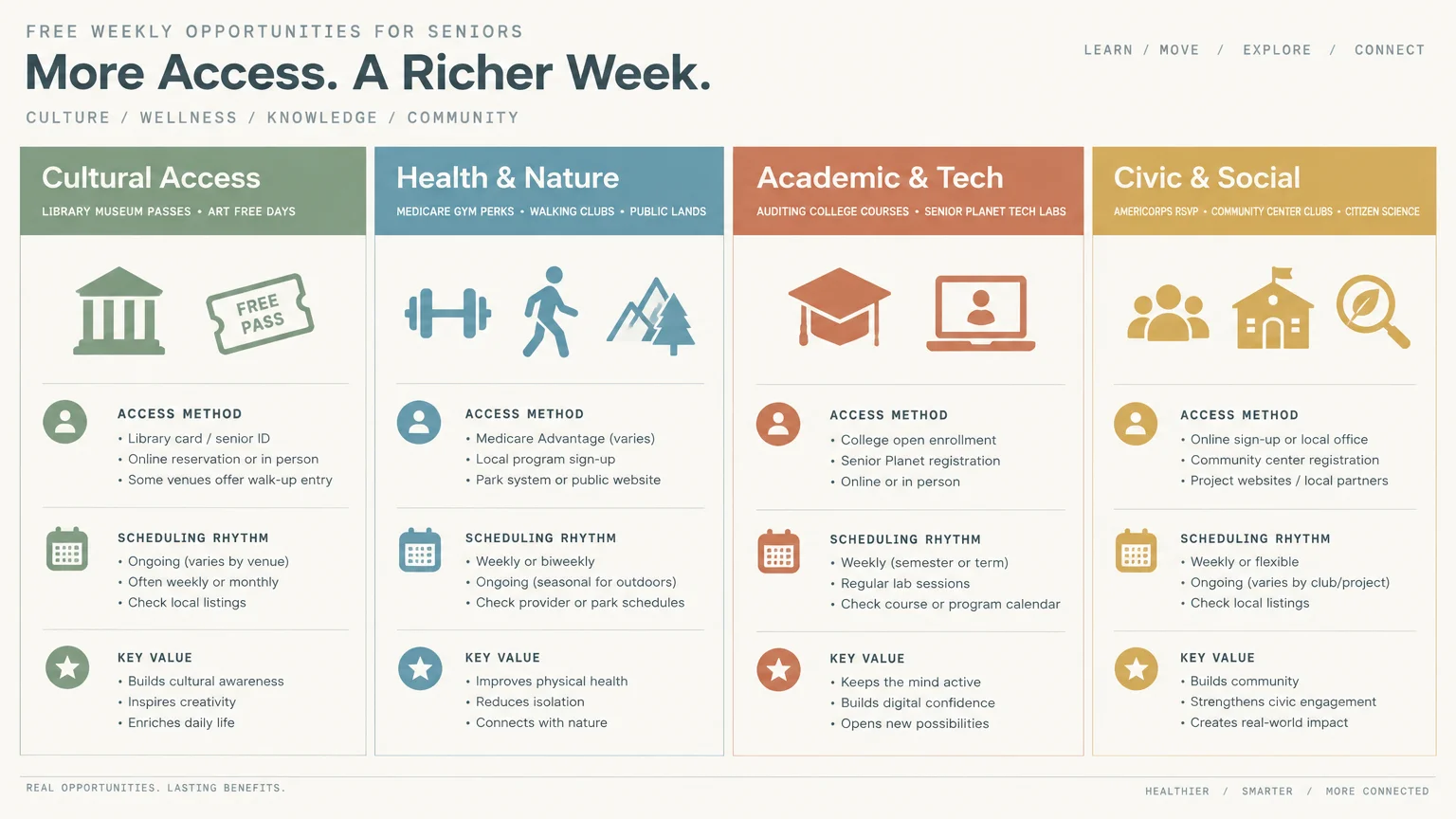
Comparing Free Weekly Senior Activities
To help you prioritize your calendar, the table below highlights eligibility criteria, access requirements, and core benefits across top free weekly programs.
| Activity or Program | Eligibility Age | Access Requirement | Primary Weekly Benefit |
|---|---|---|---|
| Public Library Culture Passes | All ages | Active local library card | Free admission to regional botanical gardens, zoos, and museums |
| State University Course Auditing | Ages 60–65 (varies by state) | State residency and registrar application | Tuition-free academic lecture access on a space-available basis |
| SilverSneakers or Renew Active | Typically 65+ | Eligible Medicare Advantage or Medigap plan | Unlimited free gym access, swimming facilities, and group fitness classes |
| Older Americans Act Centers | Age 60+ | Local Area Agency on Aging registration | Social clubs, health workshops, and congregate nutrition programs |
| AmeriCorps Seniors RSVP | Age 55+ | Volunteer enrollment and background check | Flexible service roles with supplemental liability coverage included |
| Bank of America Museums on Us | All ages | Active BofA, Merrill, or Private Bank card | One free general museum admission on the first full weekend each month |

Costly Mistakes to Avoid When Planning Your Weekly Schedule
Even free activities can carry hidden costs or risks if you do not plan ahead. Avoiding common scheduling traps ensures your retirement activities remain truly expense-free.
Watch out for deceptive financial seminars advertised in local mailers. Promoters often advertise a complimentary dinner at a high-end restaurant, but these presentations exist solely to sell high-commission financial products.
Always calculate secondary transportation and parking expenses before committing to recurring classes. A free university lecture can become expensive if daily campus parking passes cost $15 per visit.
Additionally, check registration deadlines for limited-capacity library passes and university audits. Waiting until the start of a semester or a holiday weekend usually means missing out on popular free admission slots.
Frequently Asked Questions About Free Activities for Seniors
Do all state colleges allow seniors to audit courses for free?
Most state university systems offer tuition waivers for older residents, but specific rules vary by state legislation. Some states grant waivers starting at age 60, while others require participants to be 62 or 65.
Can I get free gym access if I only have Original Medicare?
Original Medicare Parts A and B do not cover routine fitness memberships or gym dues. To access programs like SilverSneakers or Renew Active, you must enroll in a participating Medicare Advantage or Medigap plan.
How do I find senior programs funded by the Older Americans Act?
You can locate funded community centers by contacting your local Area Agency on Aging or visiting the official Eldercare Locator portal. These agencies maintain direct directories of senior centers, meal programs, and recreational offerings.
What documents do I need to get the America the Beautiful Senior Pass?
You must provide proof of U.S. citizenship or permanent residency alongside government identification proving you are 62 or older. A standard driver’s license or passport fulfills both requirements when purchasing your pass.
Protect Your Retirement Cash Flow Today
Building an engaging weekly calendar does not require depleting your retirement savings or sacrificing quality experiences. By taking full advantage of municipal libraries, university audits, and community wellness perks, you can stay active without overspending.
Pick two free activities from this list to incorporate into your schedule over the coming week. Establishing this balanced routine will expand your social circle, stimulate your mind, and keep your household budget firmly on track.
This article is for informational purposes only and does not constitute financial, legal, or tax advice. Rates, benefit amounts, and tax rules change regularly—verify current details with the relevant agency or a licensed professional.
Last updated: February 2026. Rates, benefit amounts, and tax rules change—always verify current details at official sources.