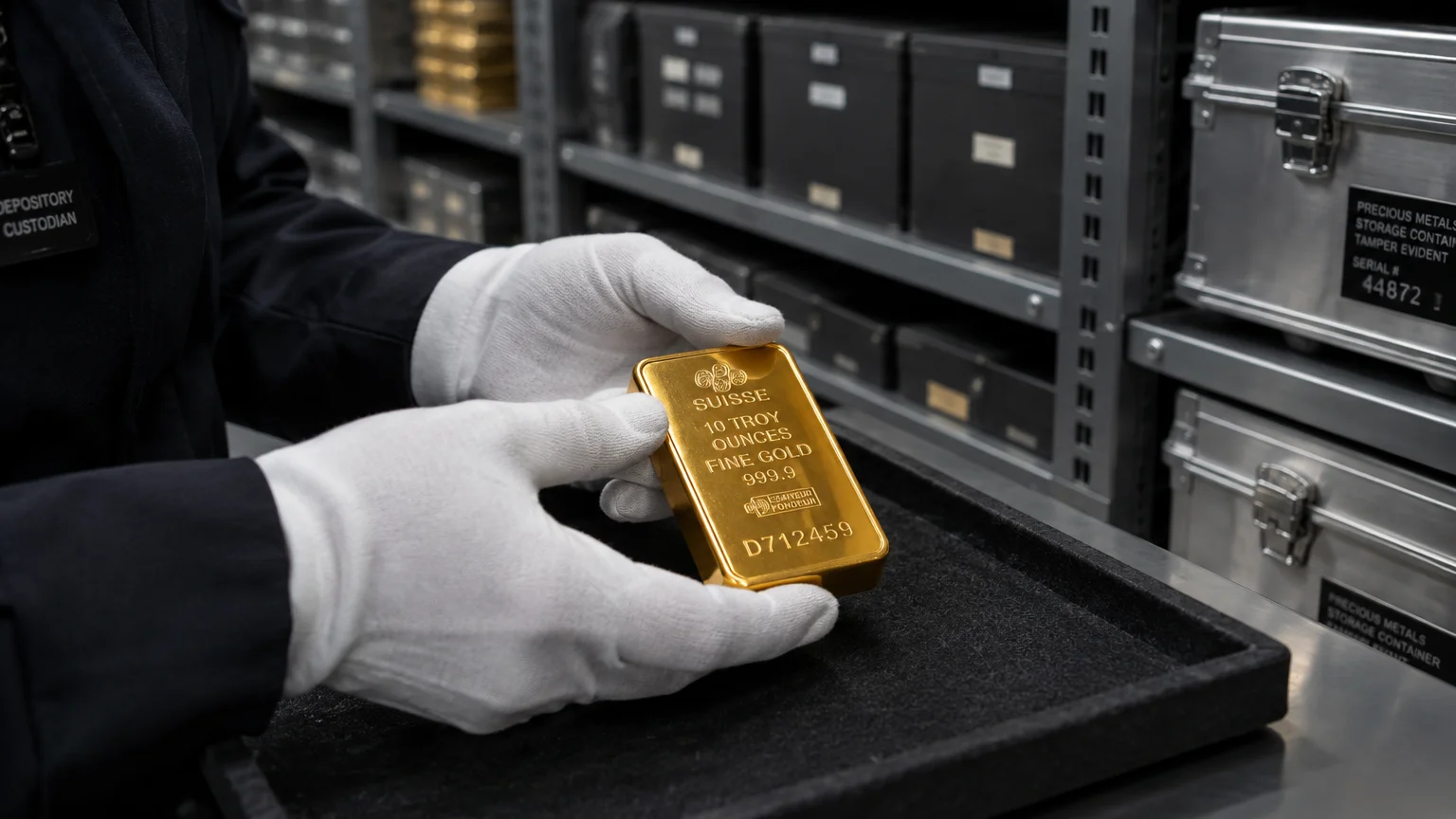
With spot gold trading near $4,000 per ounce, adding physical bullion to your retirement portfolio shields your buying power against inflation. Choosing the right custodian safeguards your nest egg from excessive dealer markups and costly compliance errors.
Internal Revenue Service regulations demand strict metal purity standards and approved depository storage for all tax-advantaged accounts. A single paperwork misstep can trigger severe tax penalties, making an experienced provider essential for your retirement security.
We evaluated top dealers across minimum investment requirements, annual maintenance fees, and consumer satisfaction ratings. This guide pinpoints the premier Gold IRA providers to help you make an informed decision for December 2026.
The Bottom Line Up Front
A precious metals IRA allows you to hold physical gold, silver, platinum, and palladium inside a tax-sheltered account. You gain real asset diversification while preserving the standard tax advantages of conventional retirement plans.
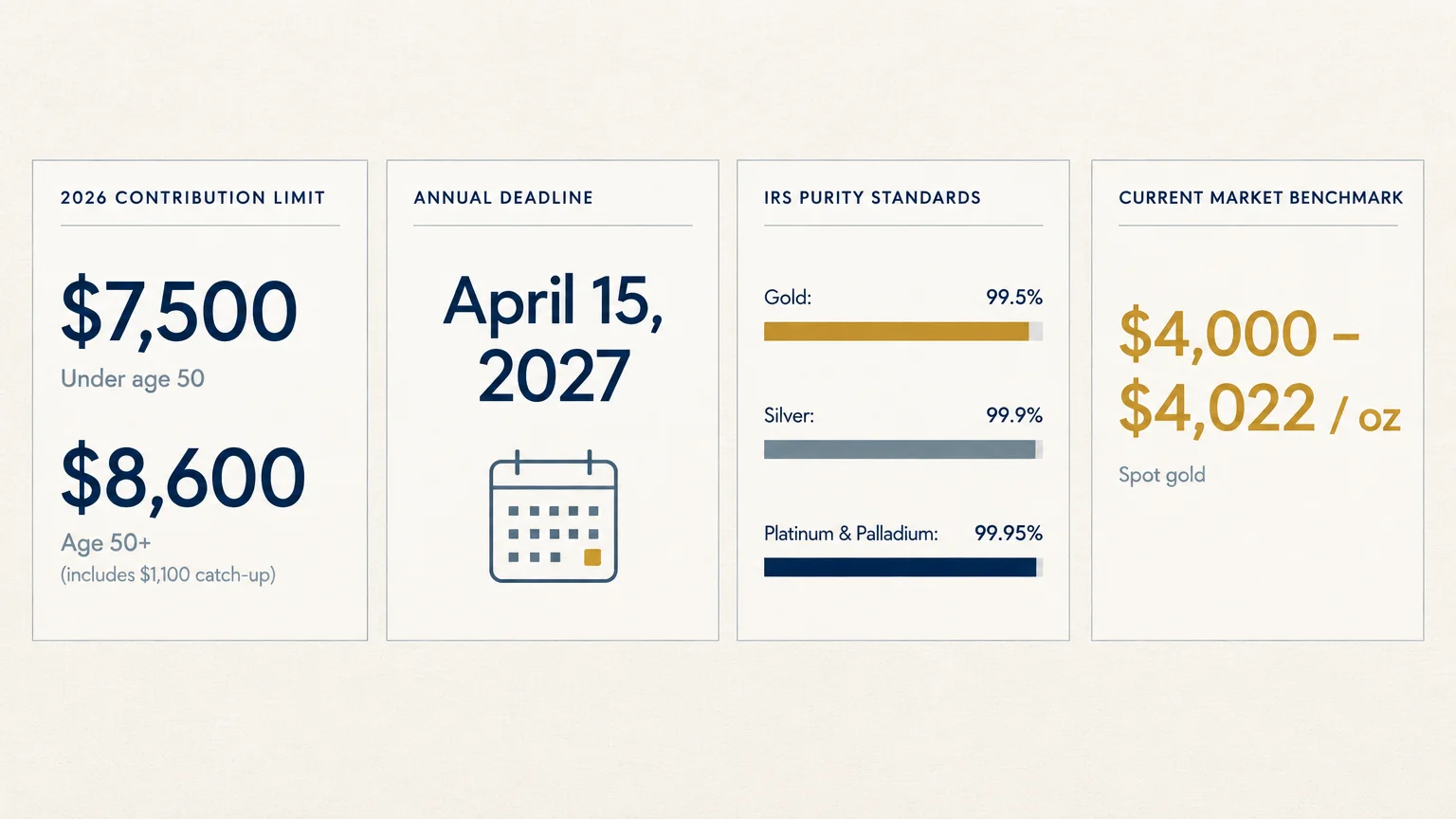
Before selecting a dealer, review these core baseline figures and regulatory benchmarks for the 2026 tax year:
- 2026 IRA Contribution Limit: $7,500 for individuals under age 50; $8,600 for individuals aged 50 and older (which includes an extra $1,100 catch-up contribution).
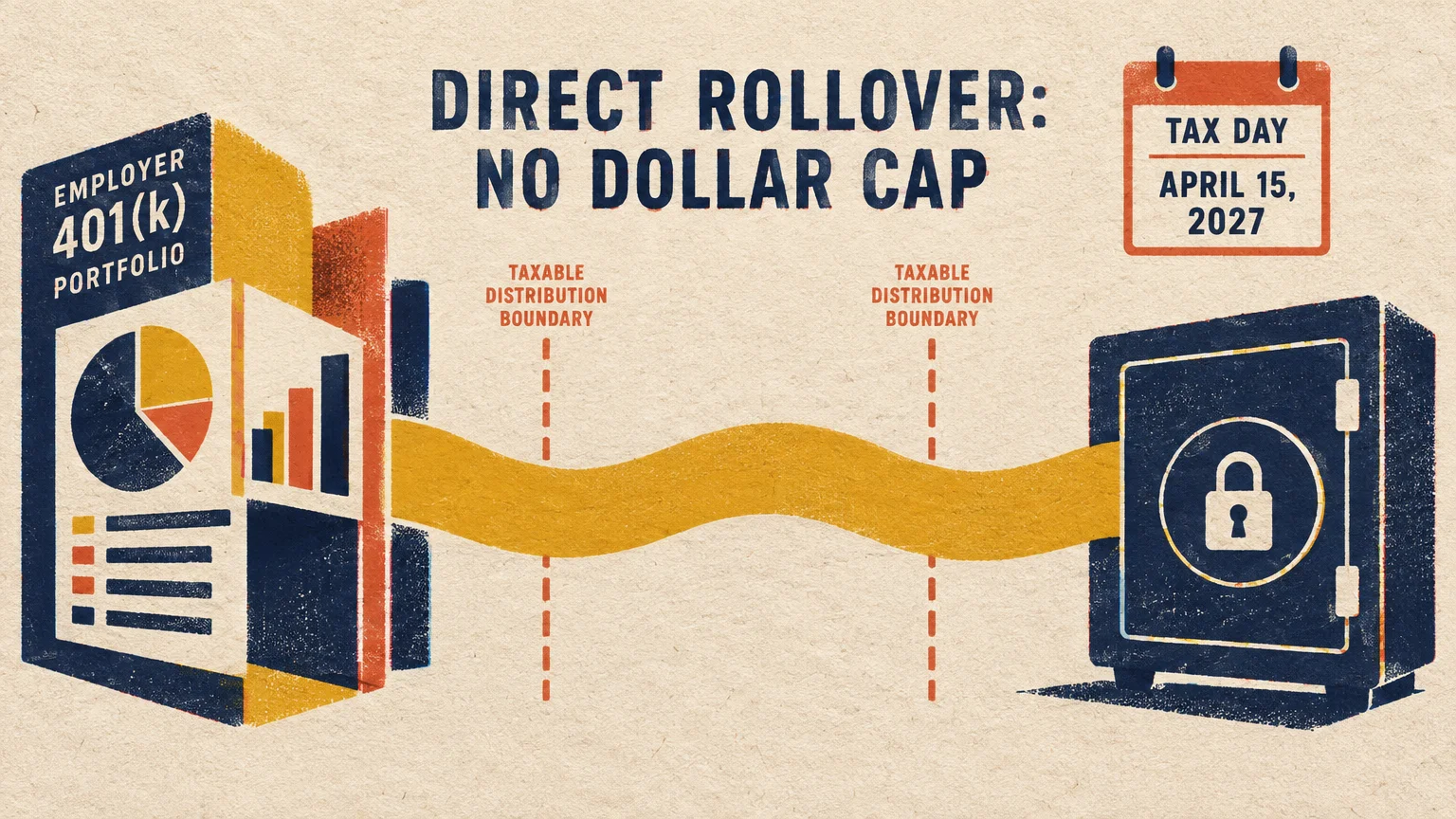
- Tax Year Deadline: You have until Tax Day, April 15, 2027, to complete your 2026 annual IRA contributions.
- Rollover Flexibility: Direct rollovers from qualified workplace plans or traditional IRAs carry no dollar cap, enabling larger account allocations.
- Purity Requirements: The IRS mandates minimum fineness levels of 99.5% for gold, 99.9% for silver, and 99.95% for platinum and palladium.
- Current Market Value: Physical spot gold is trading between $4,000 and $4,022 per troy ounce as central banks expand their reserves.
- Storage Legality: The IRS strictly forbids home storage; you must house all account metals in an IRS-approved depository facility.
Comprehensive Comparison of the Top 8 Gold IRA Companies
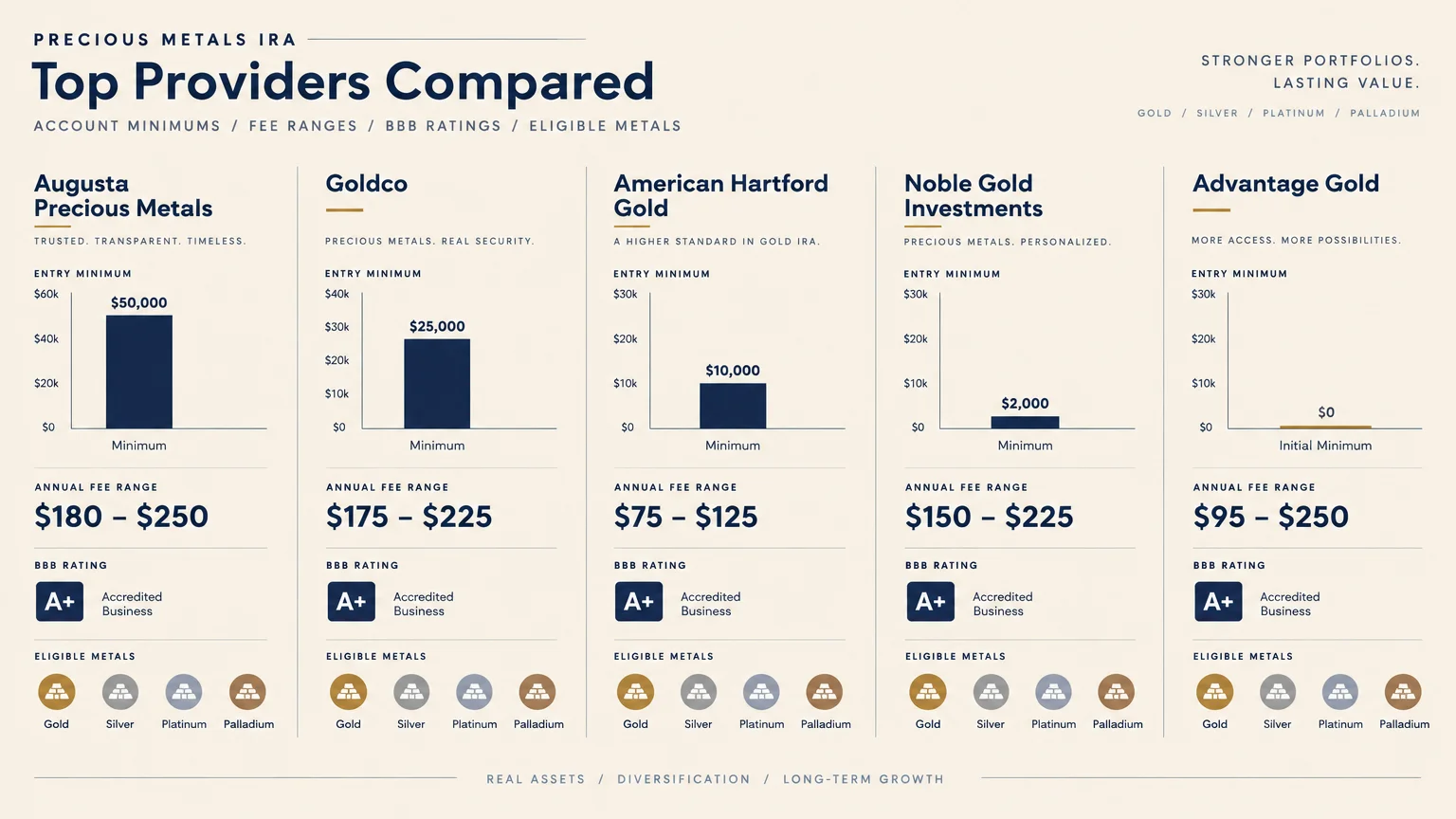
Selecting a precious metals dealer requires balancing account minimums, depository options, and custodial charges. Every firm structures its fee schedule differently depending on transaction volume and vault selection.
The comparison table below details the top eight precious metals IRA providers serving American retirement savers in December 2026.
| Company | Minimum Investment | Annual Fees | Eligible Metals | Better Business Bureau Rating | Standout Advantage |
|---|---|---|---|---|---|
| Augusta Precious Metals | $50,000 | $180 – $250 | Gold, Silver | A+ | Exceptional transparency and one-on-one web education |
| Goldco | $25,000 | $175 – $225 | Gold, Silver | A+ | Highest-price buyback guarantee and white-glove rollovers |
| American Hartford Gold | $10,000 | $75 – $125 | Gold, Silver | A+ | Low annual maintenance fees and silver promotions |
| Birch Gold Group | $10,000 | $180 – $200 | Gold, Silver, Platinum, Palladium | A+ | Full four-metal availability and flat annual fees |
| Noble Gold Investments | $2,000 | $150 – $225 | Gold, Silver, Platinum, Palladium | A+ | Accessible entry minimums and Texas depository options |
| Advantage Gold | $0 Initial Minimum | $95 – $250 | Gold, Silver, Platinum, Palladium | A+ | Beginner-friendly framework with zero purchase minimums |
| American Bullion | $0 Initial Minimum | $75 – $290 | Gold, Silver, Platinum, Palladium | A+ | Pioneering rollover specialists with extensive digital guides |
| Lear Capital | $0 Setup Fee | $180 – $280 | Gold, Silver, Platinum, Palladium | A+ | Decades of industry experience and 24-hour purchase guarantee |
Fee schedules vary based on whether your depository charges segregated or non-segregated storage rates. Always request a written fee disclosure before initiating a fund transfer.

In-Depth Reviews of the Best Gold IRA Providers
Each precious metals dealer serves distinct financial needs and account balances. Examining their pricing models, metals availability, and operational histories will help you choose your ideal partner.
1. Augusta Precious Metals: Best for Transparent Pricing
Augusta Precious Metals stands out for its high level of investor education and fee transparency. The company assigns a dedicated representative to guide you through every administrative phase.
Account setup requires a $50,000 minimum investment, making Augusta ideal for serious retirement savers. You will not face surprise markups; their pricing schedule remains completely transparent during trade execution.
You participate in private web conferences led by an on-staff economic team before purchasing metals. These educational sessions outline economic cycles and explain dealer spreads in plain terms.
Augusta coordinates directly with reputable depositories such as Delaware Depository and Brink’s Global Services. Their strong compliance record has earned them an A+ rating with the Better Business Bureau.
2. Goldco: Best for Rollovers and Buyback Guarantees
Goldco has assisted retirement savers with precious metals rollovers for over two decades. The firm specializes in moving assets out of standard 401(k) accounts into self-directed IRAs.
Their minimum investment requirement generally sits at $25,000 for retirement rollovers. They occasionally offer $0 minimum entry thresholds for direct, non-IRA cash bullion purchases.
A primary benefit of working with Goldco is their contractual highest-price buyback guarantee. When you take required minimum distributions, they buy back your metals without charging administrative liquidation fees.
Goldco partners with established trust companies like Equity Trust to handle custodial oversight. Customers consistently cite their responsive rollover specialists and straightforward paperwork execution.
3. American Hartford Gold: Best for Low Minimums and Promotions
American Hartford Gold offers accessible entry points for retirement savers testing alternative asset allocations. You can establish a self-directed precious metals IRA with a modest $10,000 minimum deposit.
Their fee structure remains highly competitive for conservative account balances. Accounts valued at $100,000 or less pay an annual IRA management fee of only $75.
Accounts exceeding $100,000 pay $125 annually, while liquidation transactions carry a $0 buyback fee. They also offer promotions that include waived first-year storage fees and free silver on qualifying orders.
The company maintains an A+ BBB rating and provides real-time market tracking tools. Their representatives help you choose qualifying coins and bars that fulfill all IRS purity standards.
4. Birch Gold Group: Best for Metal Selection
Birch Gold Group has operated from Southern California since 2003, assisting thousands of retirement savers. They require an accessible minimum investment threshold of $10,000 to launch an account.
Unlike dealers that restrict choices to gold and silver, Birch provides all four IRS-approved metals. You can purchase gold, silver, platinum, and palladium bars and coins under a single roof.
Birch Gold charges flat annual custodial and storage fees that total roughly $180 to $200. This flat-rate model benefits growing portfolios because your fees stay constant as your asset balance rises.
The company holds an A+ rating with the BBB and an AAA rating with the Business Consumer Alliance. Their specialists excel at explaining precious metal market fundamentals to practical savers.
5. Noble Gold Investments: Best for Low Investment Thresholds
Founded in 2017 in Pasadena, California, Noble Gold Investments lowers the barrier to precious metals investing. You can initiate a purchase with an account minimum of just $2,000.
Certain full-service IRA rollover packages require a $20,000 threshold to qualify for promotional fee waivers. Noble Gold charges an $80 initial setup fee alongside $150 to $225 in annual maintenance fees.
They partner with Equity Trust as custodian and store client metals inside secure vaults, including specialized Texas depositories. They supply all four IRS-approved metals to facilitate broad asset diversification.
Noble Gold offers a no-quibble buyback program that lets you liquidate metals whenever personal circumstances change. Their digital client dashboard makes monitoring asset balances simple and efficient.
6. Advantage Gold: Best for First-Time Precious Metals Buyers
Advantage Gold caters directly to investors who are brand new to physical precious metals ownership. The company operates with a $0 minimum initial purchase requirement, making account initiation effortless.
Their annual custodian and storage charges range between $95 and $250, depending on your storage configuration. They work with industry-standard custodial firms like STRATA Trust Company to ensure total regulatory compliance.
The firm maintains an extensive library of educational resources, analytical handbooks, and video tutorials. These tools demystify the mechanics of rolling funds out of conventional employer-sponsored retirement plans.
Advantage Gold holds an A+ Better Business Bureau rating backed by hundreds of positive client reviews. Their representatives focus on answering technical questions rather than applying high-pressure sales techniques.
7. American Bullion: Best for 401(k) Rollover Support
Established in 2009 in Los Angeles, American Bullion was an early pioneer of the Gold IRA rollover process. They have streamlined the operational steps required to move money between plan administrators.
The firm maintains a $0 initial purchase minimum, allowing you to establish an account without arbitrary thresholds. Annual custodial and depository expenses range from $75 to $290 based on storage selection.
Their rollover team coordinates directly with your prior 401(k) or 403(b) custodian to complete transfers smoothly. This direct communication eliminates procedural errors and prevents unwanted tax withholding events.
American Bullion supplies an extensive selection of IRS-compliant gold, silver, platinum, and palladium bullion products. Their educational guides break down spot price movements and historical supply dynamics clearly.
8. Lear Capital: Best for Longstanding Track Record
Operating since 1997, Lear Capital brings nearly three decades of transactional experience to the precious metals industry. The firm has processed more than $3 billion in bullion transactions across its history.
Lear Capital offers a $0 setup fee promotion on qualified accounts and features a 24-hour risk-free purchase guarantee. This price match policy provides price protection during volatile trading periods.
Annual maintenance and depository fees range between $180 and $280 depending on the selected storage provider. You can check real-time pricing on their digital platform before committing any investment capital.
If you prefer digital execution with minimal overhead, alternative modern platforms like iTrustCapital also deserve consideration. iTrustCapital eliminates annual storage fees entirely, charging a flat $50 markup over spot per ounce of gold.
Understanding IRS Rules and Purity Standards for Precious Metals
The Internal Revenue Service enforces strict regulations governing which precious metals you can hold in retirement accounts. You cannot simply buy antique jewelry or commemorative trinkets and place them into an IRA.
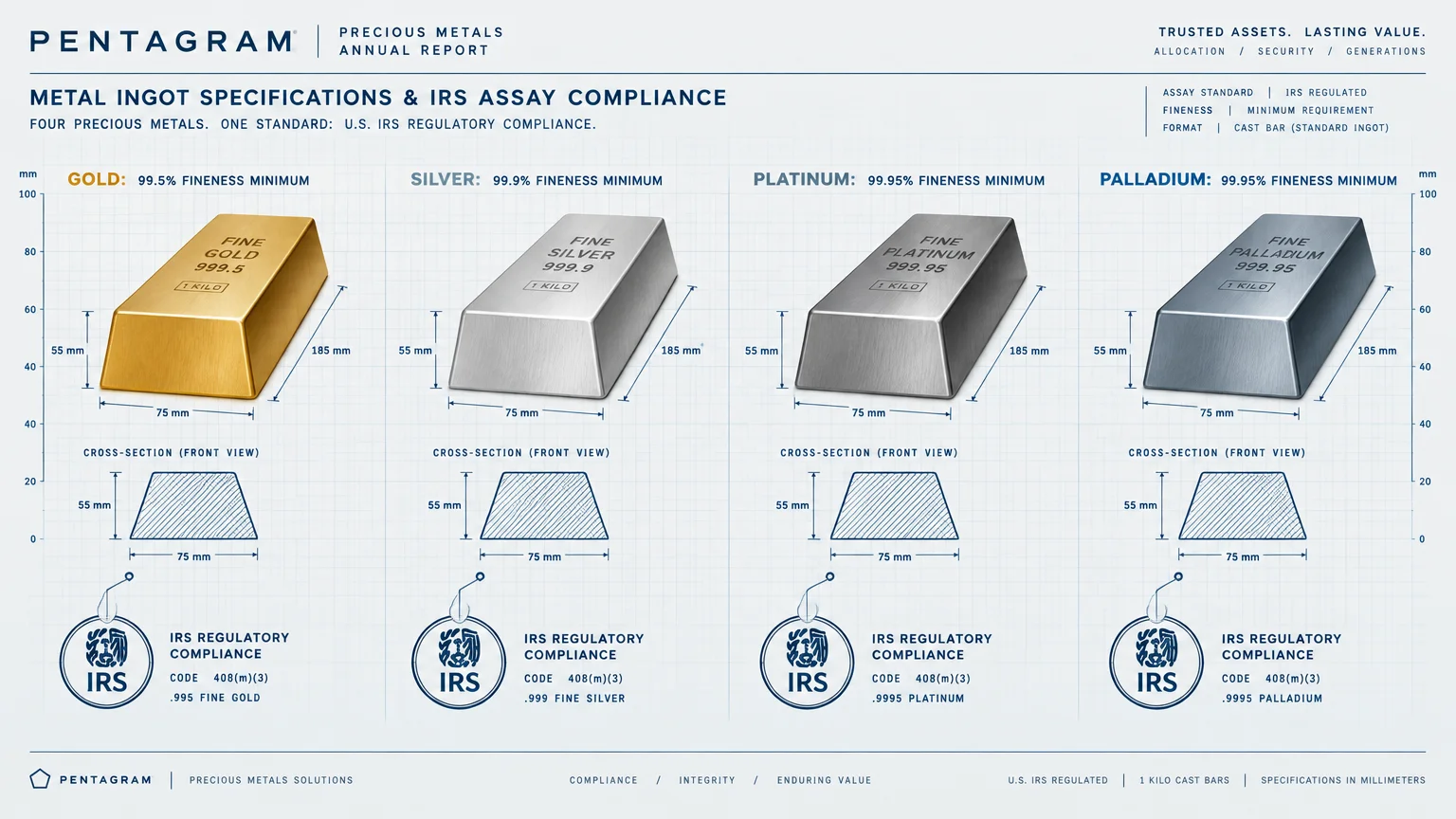
Internal Revenue Code Section 408(m) outlines the exact fineness requirements for tax-advantaged bullion:
- Gold Bullion: Must attain a minimum purity level of 99.5% (.995 fineness) to qualify.
- American Eagle Exception: The IRS permits American Gold Eagle coins even though they are 91.67% (22-karat) pure.
- Silver Bullion: Must meet a rigorous 99.9% (.999 fineness) minimum purity threshold.
- Platinum and Palladium: Both industrial metals must reach a minimum fineness of 99.95% (.9995).
You can review detailed statutory rules directly through the IRS Retirement Plans portal. Verifying metal eligibility protects your portfolio from disqualification and immediate tax assessments.
IRS regulations also govern how and where your physical metals are stored. The tax code mandates that a qualified trustee or custodian must retain physical custody of the assets.
Promotions pitching “home storage Gold IRAs” or “checkbook control physical vaults” violate federal tax regulations. The IRS treats unauthorized personal storage as an immediate, fully taxable distribution from your account.
To avoid tax penalties, store your metals inside an approved depository facility such as Brink’s or Delaware Depository. These institutions provide multi-layered security, physical audits, and comprehensive insurance coverage.
2026 Contribution Limits, Rollovers, and Tax Guidelines
Funding a Gold IRA requires following annual contribution caps or executing a qualified account rollover. Understanding these limitations prevents unintended tax penalties and over-contribution excise fees.
For the 2026 tax year, the annual IRA contribution limit is $7,500 for individuals under age 50. If you are age 50 or older, your limit rises to $8,600 due to an allowable $1,100 catch-up contribution.
You have until Tax Day, April 15, 2027, to complete your 2026 tax-year IRA contributions. These annual caps apply across all your traditional and Roth IRAs combined.
While cash contributions face low annual caps, asset rollovers from prior retirement accounts carry no dollar limitations. You can roll over $50,000 or $500,000 from an old 401(k) without incurring penalty fees.
Workplace 401(k) plans feature a 2026 employee deferral limit of $24,500, plus an $8,000 catch-up for individuals age 50 and older. Savers aged 60 through 63 receive an enhanced workplace catch-up limit of $11,250 in 2026.
Always execute a direct trustee-to-trustee transfer rather than taking personal possession of rollover funds. With a direct transfer, your existing custodian sends the money straight to your new Gold IRA custodian.
If you take an indirect 60-day rollover, your old plan administrator may withhold 20% for federal taxes. Furthermore, failing to deposit the total balance within 60 days converts the transfer into a taxable distribution.
“It’s not how much money you make, but how much money you keep, how hard it works for you, and how many generations you keep it for.” — Robert Kiyosaki
You can take penalty-free distributions from your precious metals IRA once you reach age 59½. Taking cash or physical bullion before that age triggers ordinary income taxes plus a 10% IRS early withdrawal penalty.

Don’t Make These Mistakes
Investing in alternative physical assets presents unique operational traps for unwary savers. Avoiding these four common errors will preserve your retirement principal and prevent costly tax assessments.
First, never purchase numismatic or collectible coins inside a tax-sheltered retirement account. Predatory dealers often push collectible proofs with markups exceeding 30% to 50% over spot price.
Stick strictly to common bullion bars and recognized investment coins like American Eagles and Canadian Maples. Bullion products track the spot gold price closely and carry far smaller dealer premiums.
Second, ignore sales pitches claiming you can legally store IRA-owned gold inside your personal home safe. Tax courts routinely reject these arrangements and levy back taxes, interest, and substantial penalties on investors.
Third, do not over-allocate your total retirement savings to precious metals. Physical metals produce no interest, dividends, or corporate earnings to reinvest over time.
Most fiduciary advisors suggest allocating no more than 5% to 10% of your total portfolio to gold. This proportion provides meaningful crisis protection without crippling the compound growth of your equities.
Fourth, watch out for high liquidation markdowns when selling your precious metals back to a dealer. Always confirm buyback terms and historical spreads in writing before signing an account agreement.

When Professional Advice Is Worth It
Navigating alternative asset retirement accounts often touches complex areas of tax and estate law. Consulting independent financial professionals helps you make balanced, objective allocation decisions.
A fee-only financial planner can analyze whether precious metals fit your overall retirement timeline and risk tolerance. Unlike commission-based sales representatives, fee-only fiduciaries do not profit from your metal purchases.
A Certified Public Accountant (CPA) should review large rollover transactions before you transfer funds. Your accountant ensures that direct transfers comply with current IRS rollover timing restrictions.
You can review consumer alerts and verify custodial practices through the Consumer Financial Protection Bureau. Doing your homework safeguards your retirement capital from misleading marketing campaigns.
If you encounter high-pressure sales tactics or deceptive promotional schemes, consult guidance from the Federal Trade Commission Consumer Advice bureau. Professional guidance ensures you protect your hard-earned wealth.
Frequently Asked Questions About Gold IRAs
Can I store my Gold IRA precious metals at home?
No, storing IRA-owned precious metals at home violates Internal Revenue Code Section 408. The IRS requires a qualified third-party custodian and an approved depository vault to hold your physical bullion.
Attempting to store retirement metals at home triggers an immediate distribution assessment on the total asset value. You will face ordinary income taxes and potentially a 10% early withdrawal penalty.
What is the minimum investment required to open a Gold IRA?
Minimum investment thresholds depend entirely on the dealer and custodian you select. Some companies require a minimum balance of $50,000, while others permit initial purchases starting at $0 or $2,000.
Consider your overall net worth when evaluating minimums so you do not overallocate to commodities. Maintain balance across your conventional equity and fixed-income accounts.
How do liquidations work when I reach retirement age?
When you reach age 59½, you can choose between an in-kind distribution or an asset cash liquidation. An in-kind distribution ships the physical gold bars or coins directly to your residence.
A cash liquidation directs your custodian to sell the metals back to the dealer at current spot rates. The custodian then wires the net cash proceeds straight to your personal bank account.
Does gold produce dividends or regular investment income?
Physical gold does not generate dividends, interest payments, or operational cash flows. Its value depends entirely on capital appreciation driven by supply, demand, and currency movements.
Consequently, holding too much gold can reduce the compounding growth potential of your retirement nest egg. Treat precious metals as a defensive hedge rather than an income-generating asset.
Next Steps for Your Retirement Portfolio
Shielding your retirement savings against persistent inflation requires careful planning and reliable partners. If you decide to add precious metals to your portfolio, request fee schedules from at least three custodians.
“Do not save what is left after spending, but spend what is left after saving.” — Warren Buffett
Take time to review dealer buyback policies, compare depository storage options, and confirm metal purity ratings. Taking deliberate, educated steps today ensures your golden years remain financially secure.
This article is for informational purposes only and does not constitute financial, legal, or tax advice. Rates, benefit amounts, and tax rules change regularly—verify current details with the relevant agency or a licensed professional.
Last updated: October 2026. Rates, benefit amounts, and tax rules change—always verify current details at official sources.