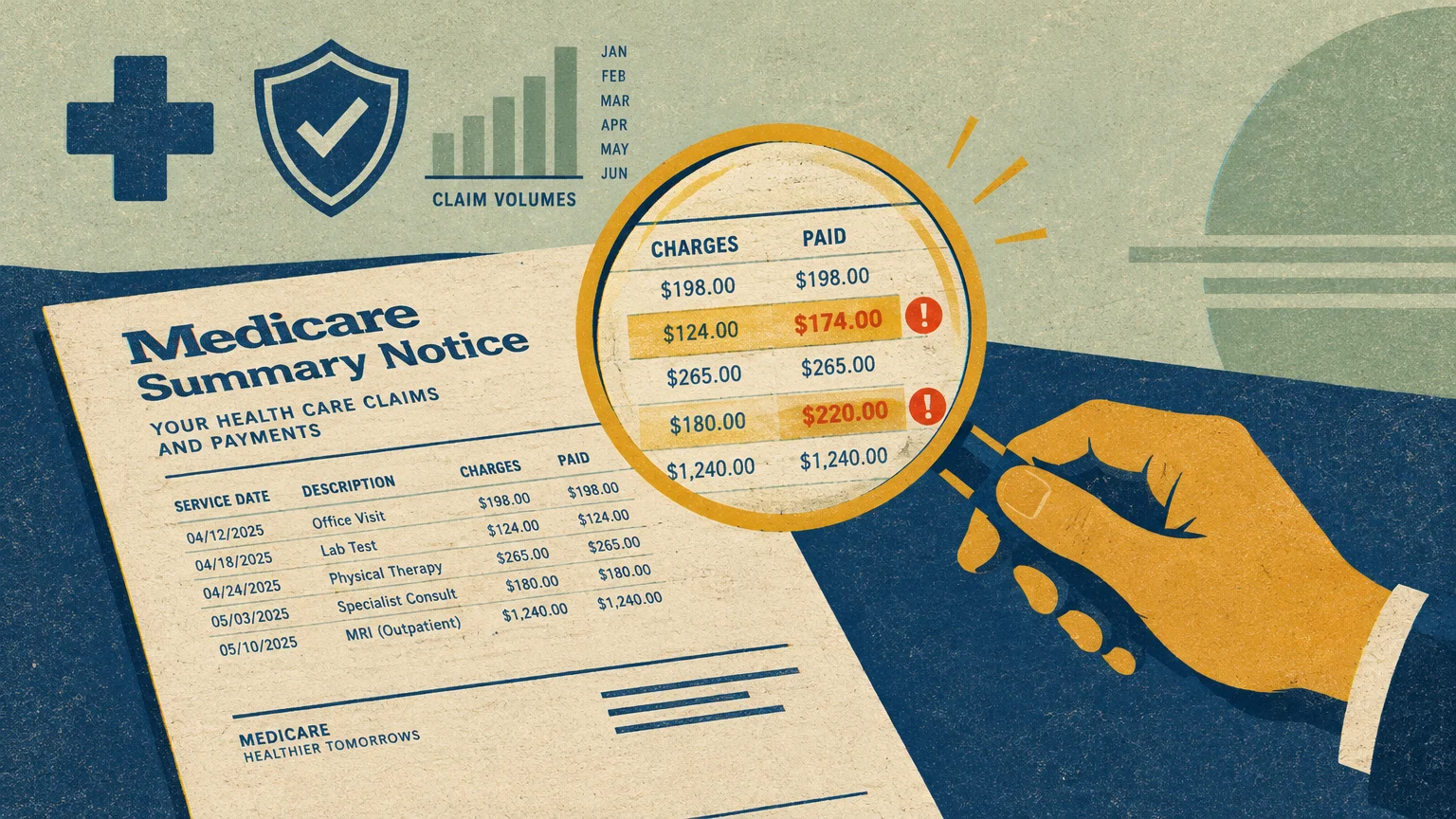
Health care fraud costs Americans up to $100 billion every year, and billing mistakes quietly drain family budgets. Discarding your health notices without opening them leaves you vulnerable to paying for care you never received.
Taking five minutes to read Medicare statement documents every month protects your retirement savings from preventable losses. You will spot suspicious claims immediately instead of discovering depleted benefits during an unexpected medical crisis.
Whether you enroll in Original Medicare or private Medicare Advantage, monitoring your claims keeps your coverage intact. Regular reviews ensure providers bill your accounts accurately throughout the calendar year.
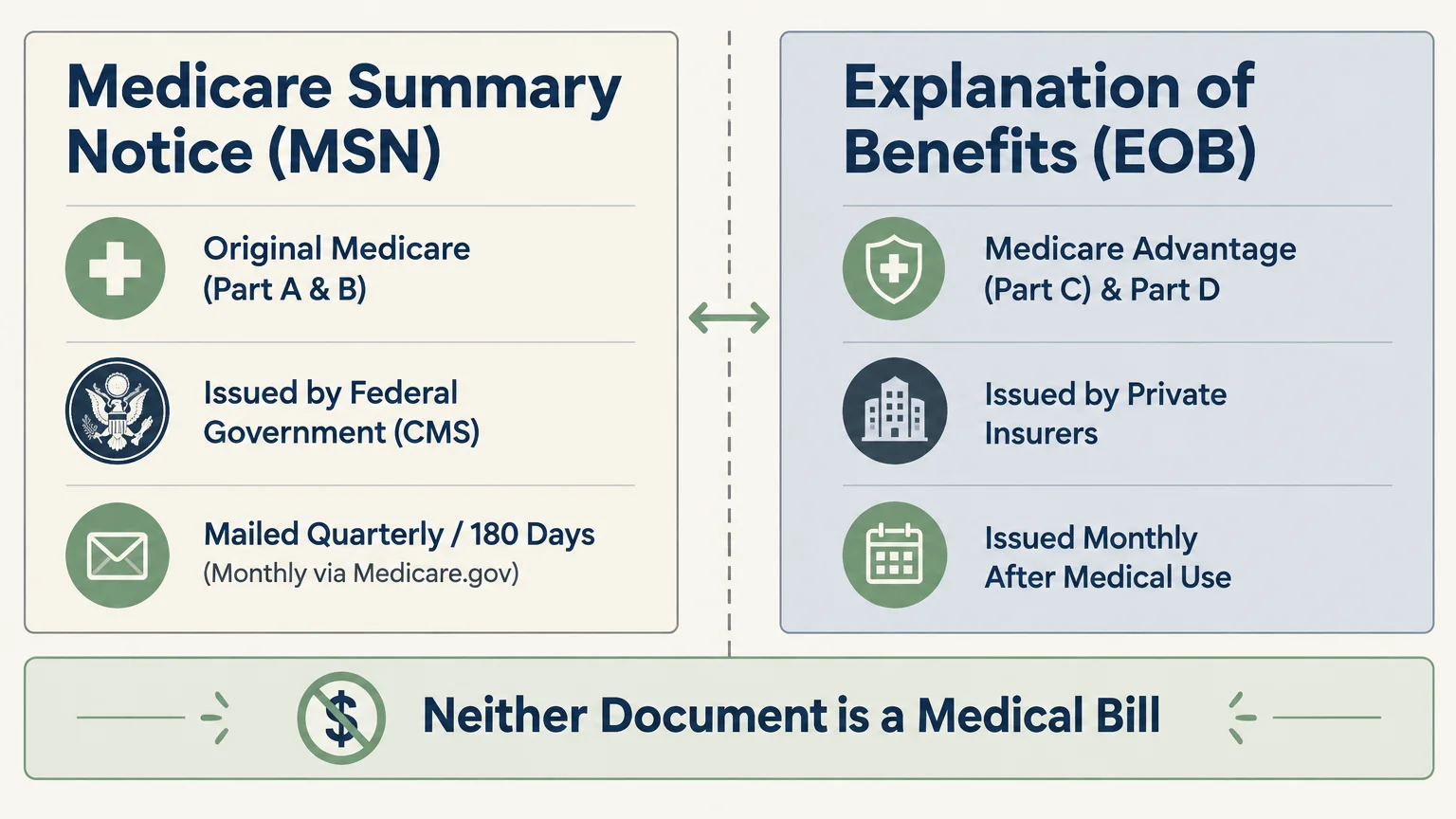
Understanding Your Statement: MSN vs. EOB
Before reviewing your monthly claims, you must recognize which document you receive. The paperwork differs depending on how you receive your Medicare coverage.
If you have Original Medicare (Part A and Part B), the federal government issues a Medicare Summary Notice. This document is not a medical bill; it summarizes services billed in your name.
The Centers for Medicare & Medicaid Services mails paper notices quarterly or every 180 days. However, you can access your statements monthly by creating an account at Medicare.gov and selecting electronic notices.
Electronic statements show processed claims within 24 hours of contractor approval. This online access allows you to review transactions monthly rather than waiting months for paper summaries.
Beneficiaries enrolled in Medicare Advantage (Part C) or Part D prescription drug plans receive an Explanation of Benefits. Private insurance companies issue these statements monthly whenever you use medical services or fill prescriptions.
Like the government summary, an Explanation of Benefits is never a bill. It tracks what your plan paid, what your doctor charged, and what you may owe out of pocket.
“A budget is telling your money where to go instead of wondering where it went.” — John C. Maxwell

1. Catching Costly Medicare Billing Errors Early
Medical billing departments process thousands of complex claim codes every week. Clerical mistakes happen frequently, and even a single wrong digit can trigger massive copay demands.
Common Medicare billing errors include upcoding, which occurs when a clinic bills for an extensive visit instead of a routine exam. A 15-minute consultation can mistakenly be billed as an hour-long specialist procedure.
Unbundling represents another frequent billing mistake. This happens when a clinic bills multiple laboratory tests separately rather than using a discounted group billing code.
When you check Medicare claims every month, you can catch these discrepancies before providers send balances to collections. You can call your doctor’s billing office immediately to request a corrected claim submission.
Fixing clerical mistakes early prevents unnecessary deductible exhaustion. It also ensures you only pay legitimate coinsurance amounts negotiated by your coverage plan.
2. Halting Medical Identity Theft Before Damage Spreads
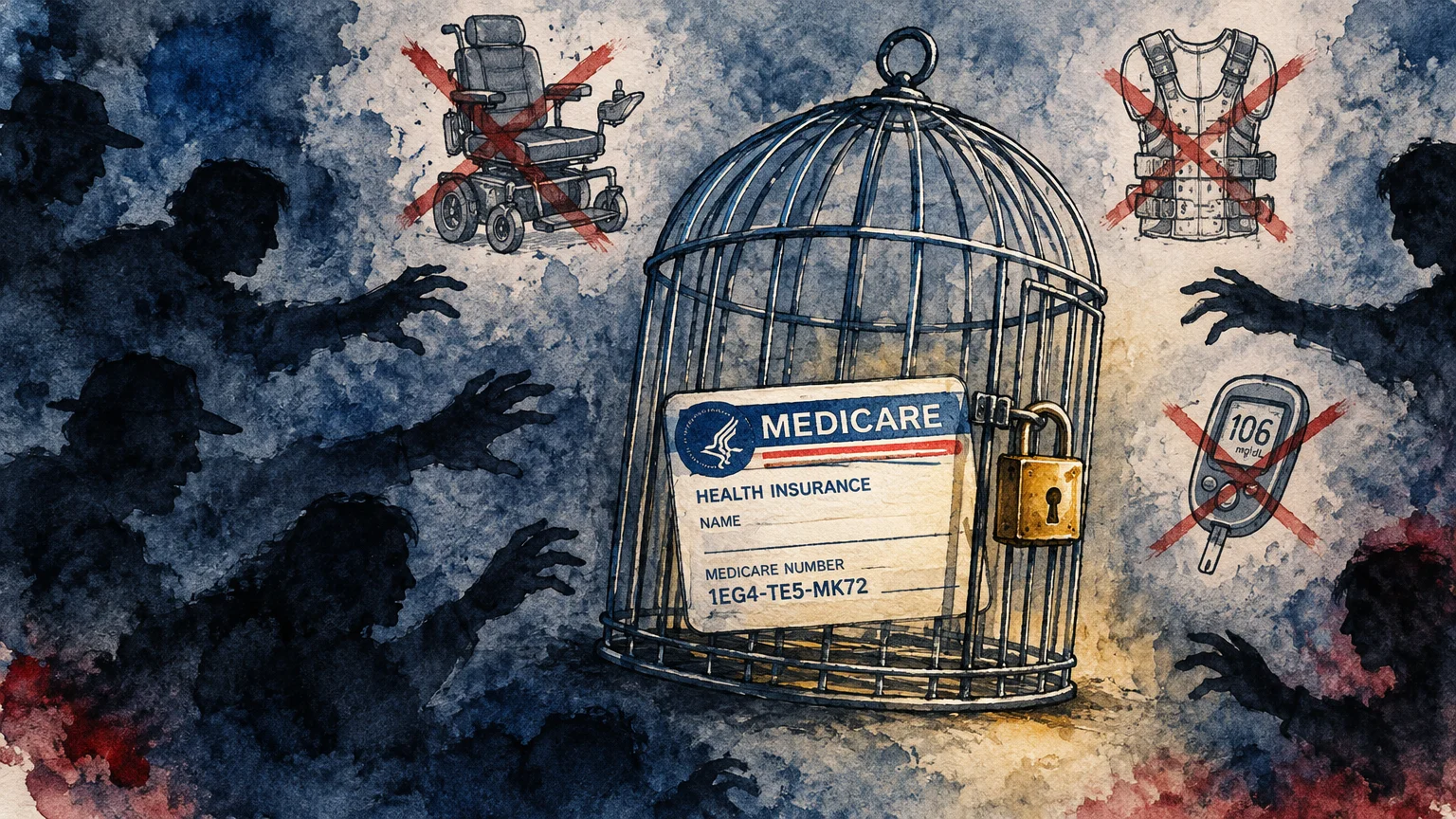
Your Medicare number gives bad actors direct access to valuable federal benefits. Thieves buy, sell, and trade stolen beneficiary numbers across sophisticated criminal networks.
If scammers acquire your Medicare details, they can bill Medicare for durable medical equipment you never requested. They frequently bill for expensive back braces, diabetic monitors, or electric wheelchairs.
Worse, criminal rings sometimes bill Medicare for hospice care or complex oncology treatments in your name. These fraudulent entries can disrupt your actual medical treatments when your legitimate physician attempts to prescribe necessary care.
Reviewing your statement monthly helps you uncover unauthorized claims within weeks of submission. Early detection enables you to flag compromised identifiers before criminals exhaust your policy maximums.
If you spot unauthorized activity, report the incident immediately at IdentityTheft.gov. Freezing compromised credentials protects your financial reputation and your future health coverage.
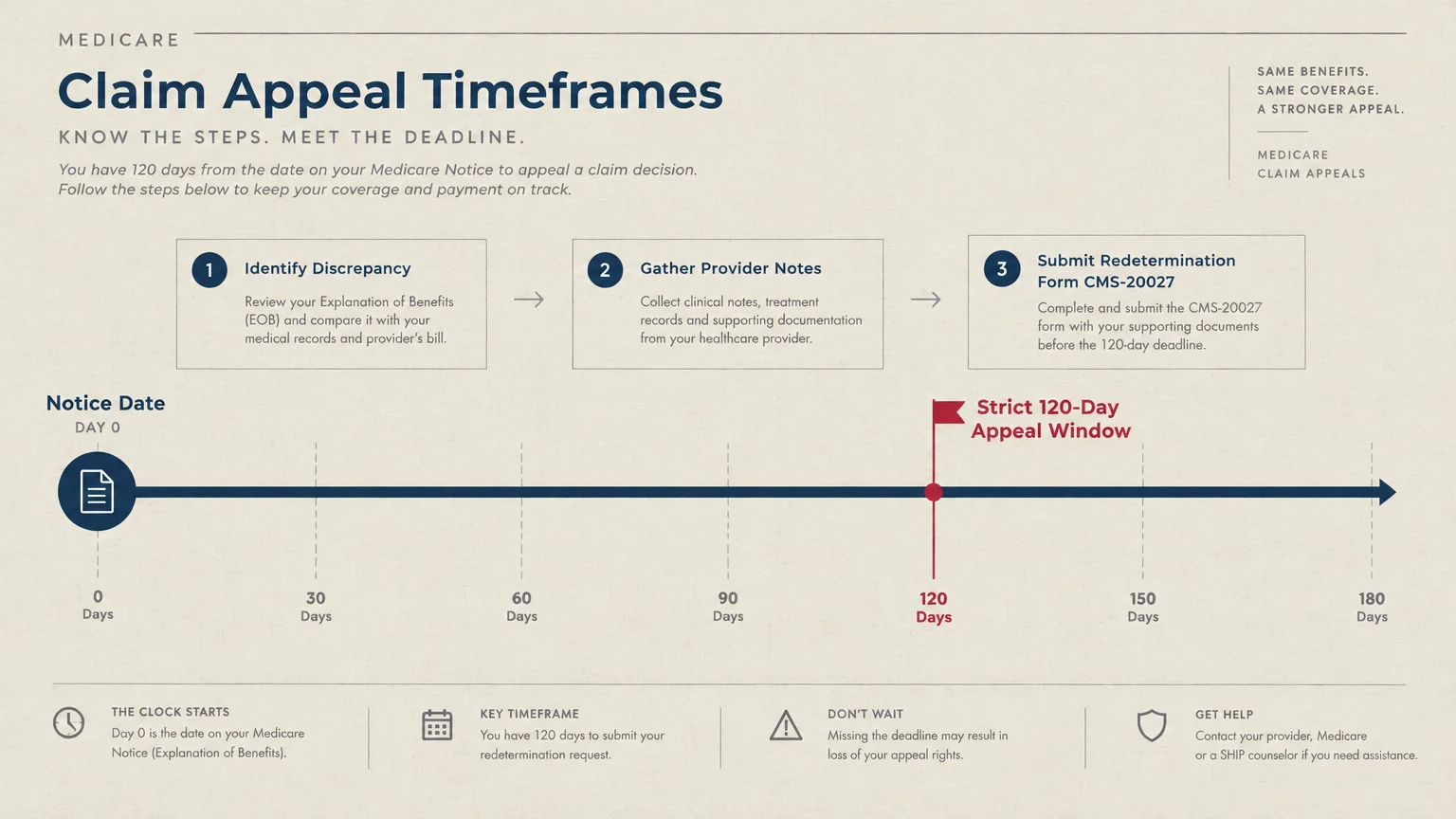
3. Protecting Your Strict Claim Appeal Deadlines
Medicare does not cover every service your physician orders. When Medicare denies coverage for an appointment, procedure, or medical device, you face strict administrative deadlines to challenge the decision.
Under Original Medicare, you have exactly 120 days from the date listed on your Medicare Summary Notice to file a Level 1 appeal. This initial challenge is called a Redetermination.
Federal rules presume you received the notice within five days of the printed mailing date. If you let paper statements sit unopened for months, your 120-day appeal window can expire before you even notice the denial.
The timeline is even stricter for private Medicare Advantage plans. Most Medicare Advantage plans grant you just 60 calendar days from the denial notice date to submit an initial appeal.
Missing an appeal deadline forces you to accept full personal liability for the denied medical charge. Monthly reviews ensure you retain every day of your legal appeal window.
4. Tracking Deductibles and Out-of-Pocket Maximums Accurately
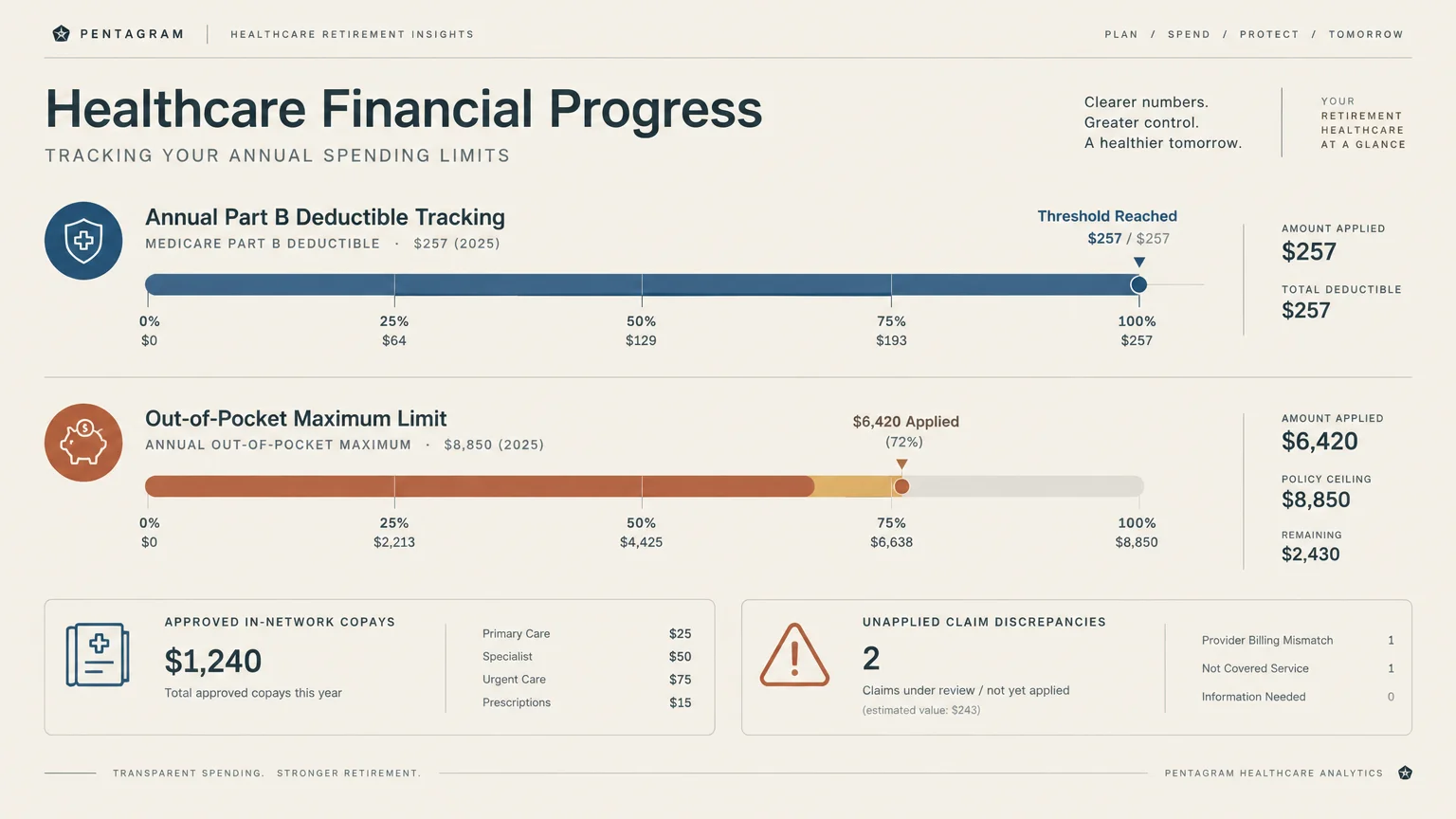
Every dollar you spend on covered services should apply toward your annual deductibles and out-of-pocket spending limits. However, processing glitches can miscalculate your accumulated spending totals.
In 2026, the Medicare Part B annual deductible is $257. Once you satisfy that threshold, Medicare typically pays 80% of approved costs, leaving you responsible for the remaining 20% coinsurance.
If a claims contractor misapplies your deductible payments, you might continue paying full price for outpatient services long after reaching the threshold. Your monthly statement displays your exact deductible progress in plain numbers.
Medicare Advantage plans also feature mandatory maximum out-of-pocket limits for in-network care. In 2026, federal regulations cap this in-network threshold at $9,350, though many private plans set lower maximums.
Monitoring your monthly statements ensures your insurer tracks every qualifying copay toward that safety cap. Once you reach your maximum, your plan must pay 100% of covered in-network services for the remainder of the year.

5. Exposing Phantom Services and Duplicate Claims
Duplicate billing drains billions from federal programs and inflates patient expenses. A medical clinic might bill Medicare twice for a single blood draw or routine diagnostic scan.
Sometimes providers bill for appointments that you canceled or never attended. These transactions are known in the health care industry as phantom billings.
According to Government Accountability Office data, government-wide improper payments reached $186 billion for fiscal year 2025. Medicare programs represent one of the largest shares of those improper disbursements.
Medicare Advantage plans alone accounted for an estimated $23.7 billion in payment errors during that fiscal cycle. These numbers demonstrate why personal beneficiary oversight remains critical.
When you read Medicare statement records every month, compare each line item against your personal calendar. You can quickly spot dates when you were out of town or never visited a medical facility.

6. Protecting Lifetime Benefit Reserves and Coverage Caps
Certain Medicare benefits carry strict lifetime caps or utilization rules. When fraudulent or erroneous claims hit these categories, they permanently diminish your future safety net.
Under Medicare Part A, you receive 60 lifetime reserve days for inpatient hospital stays lasting longer than 90 consecutive days. Once you use these 60 days, they never replenish.
If an inaccurate hospital claim consumes your reserve days through administrative error, you lose critical protection for future medical emergencies. Recovering those days requires extensive paperwork and formal dispute filings.
Home health care and physical therapy visits also require documentation showing strict medical necessity. Erroneous claims can cause Medicare to conclude that you exceeded clinical therapy thresholds.
Reviewing statements each month preserves your long-term benefit reserves. You verify that Medicare logs only legitimate, medically necessary hospital days against your policy record.

7. Earning Rewards Through the Medicare Incentive Reward Program
Federal authorities rely on observant beneficiaries to help identify rogue providers and dishonest medical clinics. The Department of Justice estimates health care fraud costs between $68 billion and $100 billion every year.
To combat this waste, federal regulations established the Medicare Incentive Reward Program under 42 CFR § 420.405. This program pays everyday citizens for reporting substantiated fraud.
If your fraud tip leads directly to the recovery of stolen Medicare funds, you may qualify for a cash reward. The government awards up to 10% of the recovered money, capped at a maximum payout of $1,000.
To qualify for the reward, you must report specific details regarding providers who submit fraudulent claims. You cannot collect rewards for reporting simple administrative errors or duplicate charges resolved through standard billing channels.
Monthly audits position you to spot suspicious billing schemes early. Reporting organized scams protects American taxpayers while rewarding your vigilance.

8. Keeping Your Permanent Medical History Accurate
Billing claims do not just move money; they also create your permanent electronic medical record. Insurance companies, hospital systems, and government databases log every diagnosis code submitted by billing departments.
If a dishonest clinic bills Medicare for diabetes or chronic cardiovascular disease to inflate payouts, that diagnosis attaches to your health profile. Future physicians may see incorrect diagnoses and alter your clinical treatments accordingly.
Inaccurate medical codes can also complicate applications for private supplemental coverage, life insurance policies, or long-term care insurance. Underwriters inspect medical claims databases when evaluating personal health risk profiles.
Spotting inaccurate diagnostic codes on your monthly statement lets you demand immediate medical record corrections. Both Medicare and the Health Insurance Portability and Accountability Act give you the legal right to amend incorrect medical records.
Protecting your medical record accuracy ensures future physicians treat your actual symptoms. It prevents phantom health conditions from compromising your future care plans.
Comparing Statements: Original Medicare vs. Medicare Advantage
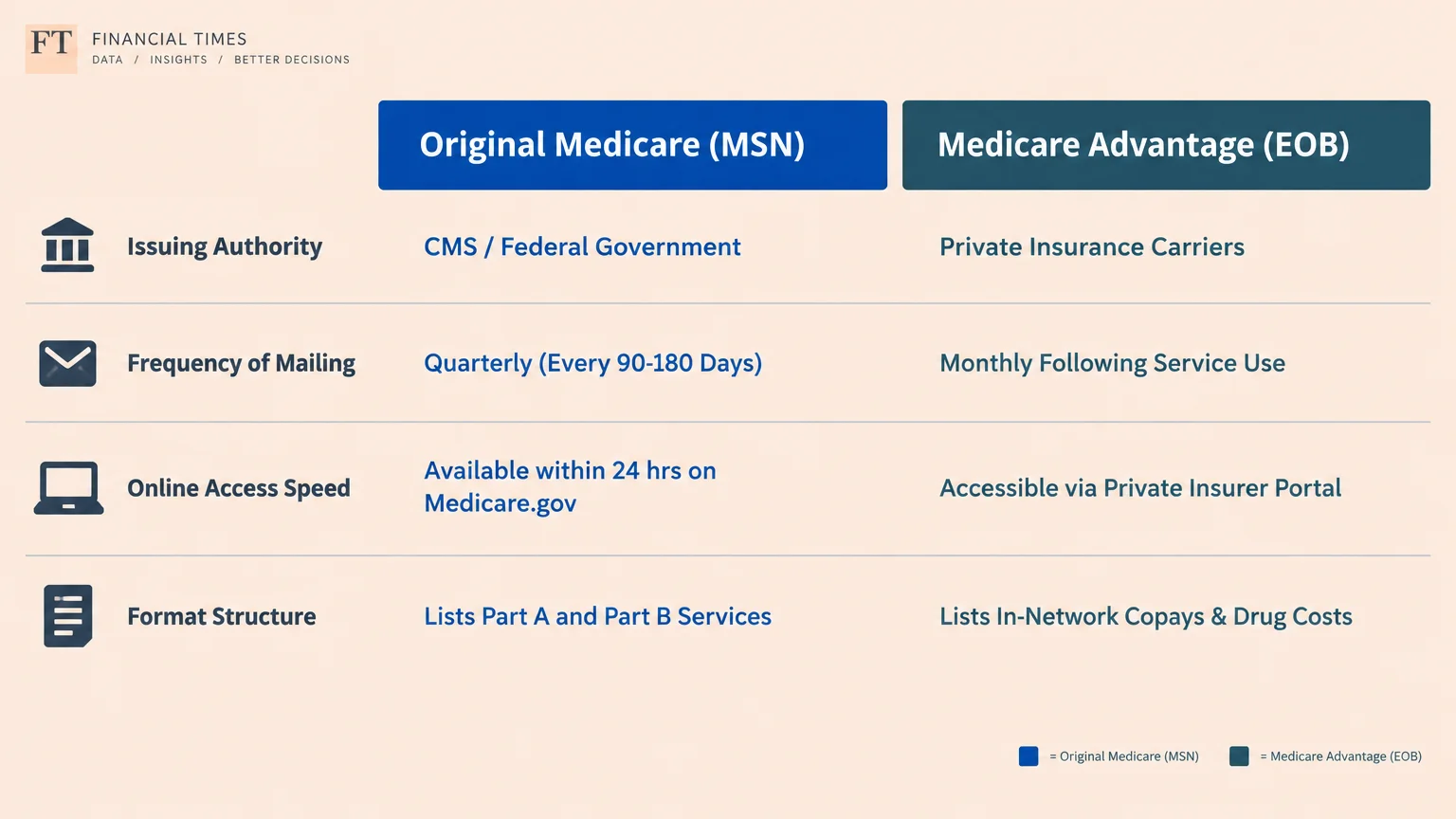
Understanding which statement format applies to your coverage ensures you follow the correct auditing procedure. The table below details key operational differences between Original Medicare and private Medicare Advantage paperwork.
| Feature | Original Medicare (Part A & B) | Medicare Advantage (Part C) |
|---|---|---|
| Statement Name | Medicare Summary Notice (MSN) | Explanation of Benefits (EOB) |
| Standard Mailing Schedule | Quarterly or every 180 days (paper) | Monthly when services occur |
| Monthly Review Option | Online portal via Medicare.gov (eMSN) | Standard paper mail or plan portal |
| Is It a Medical Bill? | No, informational summary only | No, informational summary only |
| Initial Appeal Window | 120 days from notice date | 60 calendar days from notice date |
| Contractor/Issuer | Medicare Administrative Contractor | Private Insurance Company |

Errors That Cost Families Thousands
Failing to inspect monthly statements exposes families to unnecessary medical debt. The most damaging error occurs when patients pay provider invoices before checking their Medicare summary.
Clinics often generate automatic billing notices before Medicare processes the underlying claim. If you pay the clinic’s initial balance immediately, you might pay charges that Medicare subsequently covers or discounts.
Another expensive error involves ignoring out-of-network provider designations on Medicare Advantage statements. In non-emergency settings, using an out-of-network provider can leave you responsible for 100% of the balance.
Families also lose money by overlooking unapproved equipment charges. Unscrupulous suppliers sometimes bill for top-tier motorized wheelchairs while delivering basic manual chairs, pocketing the price difference.
Failing to challenge coverage denials within required windows creates avoidable debt. Once your appeal deadline lapses, medical providers can assign unpaid balances to aggressive debt collectors.
Always cross-reference doctor bills with your monthly statement before writing a check. Confirm that the physician’s requested balance matches the exact patient responsibility column on your Medicare paperwork.
How to Audit Your Monthly Statements
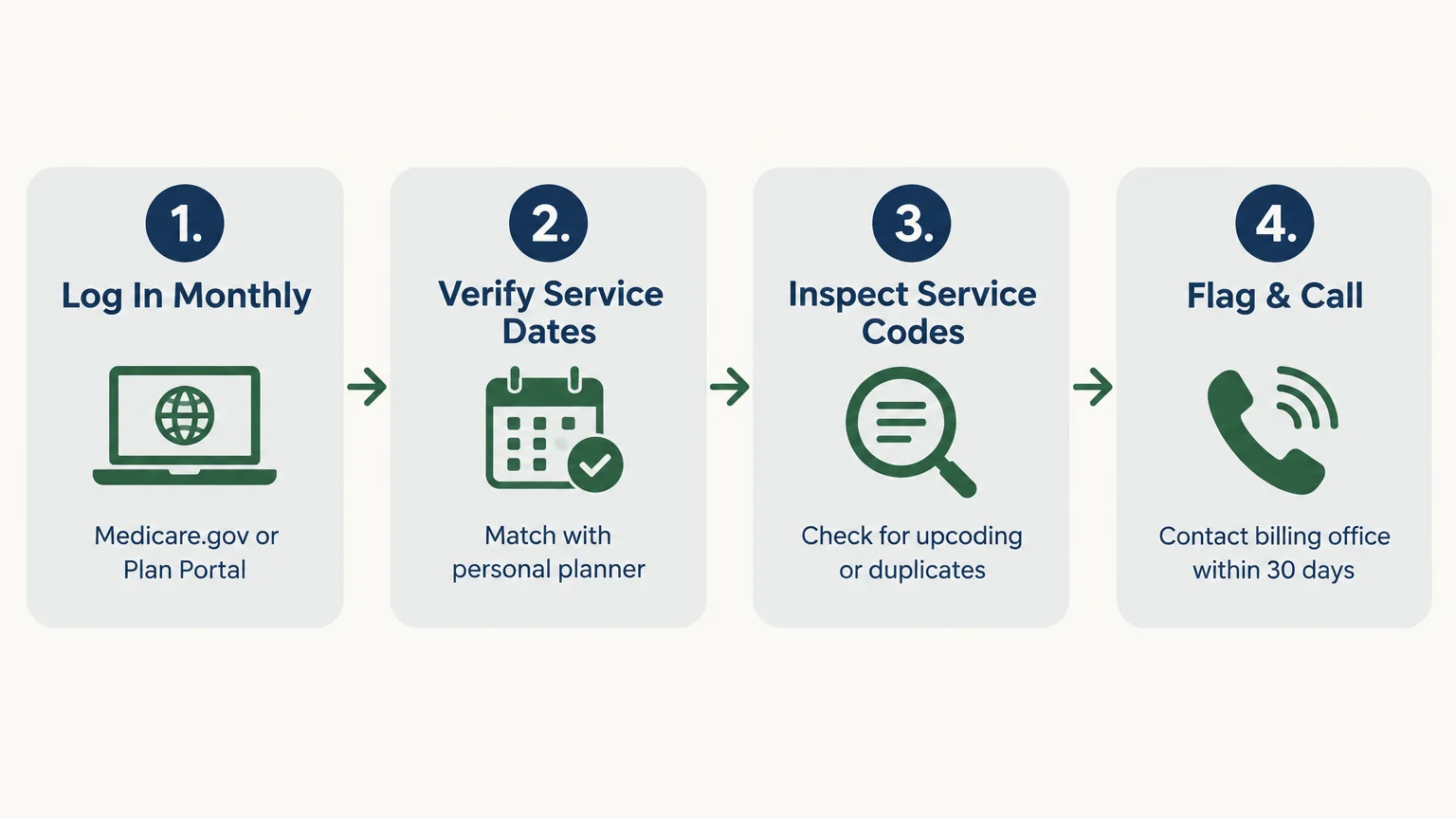
Auditing your statements does not require specialized financial training. Following a structured five-step review process takes fewer than ten minutes each month.
- Check the dates of service: Match every listed date against your personal appointment calendar or pocket planner.
- Verify the provider and location: Confirm you actually visited the doctor, clinic, or testing facility named on the claim.
- Review the description of services: Ensure the listed procedures match the actual care or equipment you received.
- Inspect the patient responsibility amount: Confirm that copayments align with your plan handbook and deductible status.
- File statements securely: Store reviewed notices in a dedicated folder or secure digital file for at least two years.
If you discover an unfamiliar charge, contact the provider’s billing office first. Many errors stem from simple administrative typos that clinic staff can resolve quickly.
If the provider insists the charge is valid, or if you suspect intentional fraud, contact official oversight channels immediately. Federal programs provide dedicated hotlines to assist consumers.
For broader guidance on managing unfair debt claims or questionable collection letters, consult consumer protection resources at the Federal Trade Commission.

When to Get Expert Help
Disputing complex Medicare billing errors or battling medical identity theft can feel overwhelming. Fortunately, you do not have to resolve these challenges alone.
If you suspect intentional Medicare fraud, call the Senior Medicare Patrol at 1-877-808-2468. This federally funded network trains volunteers and counselors to help beneficiaries identify, resolve, and report billing scams.
You can also contact the Department of Health and Human Services Office of Inspector General Fraud Hotline directly at 1-800-HHS-TIPS (1-800-447-8477). For 24/7 account assistance, reach Medicare directly at 1-800-MEDICARE (1-800-633-4227).
If you need assistance navigating a formal coverage appeal, contact your local State Health Insurance Assistance Program (SHIP). SHIP counselors provide free, unbiased guidance to help you gather medical evidence and meet filing deadlines.
When billing disputes involve substantial sums or aggressive debt collectors, consult a consumer rights attorney or elder law specialist. Legal professionals can protect your rights under the Fair Debt Collection Practices Act.
Frequently Asked Questions
Is my Medicare Summary Notice an actual bill?
No, your Medicare Summary Notice is never a bill. It simply reports what services providers billed, what Medicare approved, and the maximum amount providers can charge you.
How do I switch from quarterly paper notices to monthly electronic statements?
Log in to your official account at Medicare.gov and navigate to your communication preferences. Select the electronic Medicare Summary Notice option to receive email alerts whenever new monthly claims post.
What should I do first if I spot an incorrect charge on my statement?
Call the provider’s billing department directly to confirm whether the entry was an administrative clerical error. If the provider confirms an error, ask them to submit a corrected claim to Medicare.
Does Medicare penalize you for reporting suspected fraud that turns out to be an error?
No, Medicare never penalizes beneficiaries for reporting suspicious claims in good faith. Regulators encourage consumers to report discrepancies so investigators can distinguish honest clerical mistakes from intentional criminal schemes.
Take Control of Your Health Care Finances
Protecting your retirement wealth requires active attention to monthly medical expenses. Make reviewing your Medicare statements a regular habit alongside balancing your household checking account.
Set a recurring calendar reminder on the first of every month to log in to your portal and check Medicare claims. That simple five-minute audit protects your benefits, halts fraud, and keeps your hard-earned savings where they belong.
This article is for informational purposes only and does not constitute financial, legal, or tax advice. Rates, benefit amounts, and tax rules change regularly—verify current details with the relevant agency or a licensed professional.
Last updated: February 2026. Rates, benefit amounts, and tax rules change—always verify current details at official sources.