You can save hundreds of dollars each holiday season simply by knowing how store rules shift before you swipe your card. Major retailers quietly alter their return windows, price guarantees, and fee structures between October and January.
While extended return deadlines give you extra breathing room for gifts, hidden restocking charges and return shipping fees can quietly erode your household budget.
Learning these seasonal policy shifts helps you protect your cash, avoid checkout traps, and keep more money in your family bank account.
What You Need to Know
Holiday shopping rules differ significantly from everyday retail standards. Retailers expand certain conveniences while tightening restrictions on fees and price adjustments.
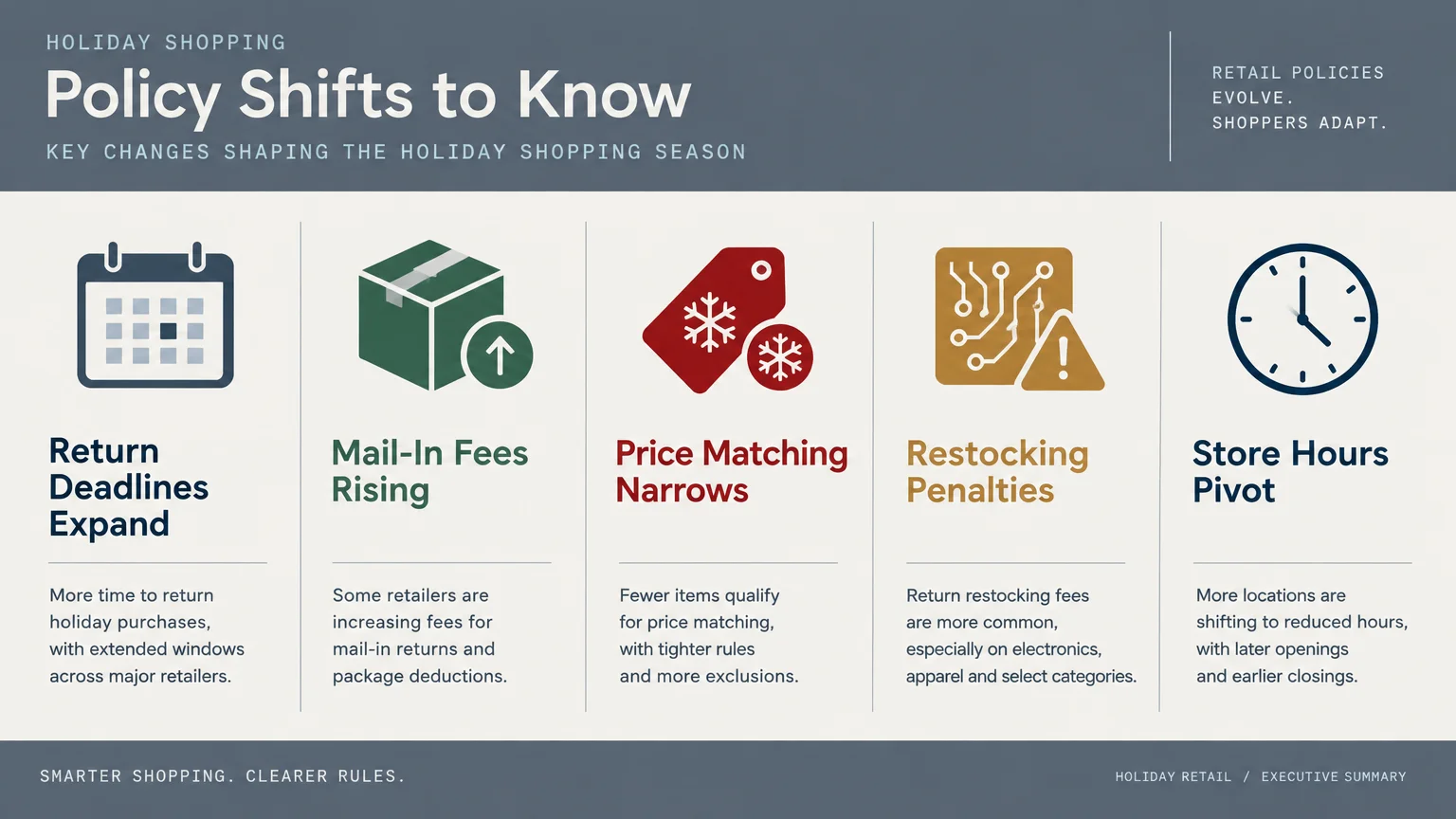
Keep these fundamental shifts in mind before you shop:
- Return deadlines expand: Most major retailers push standard deadlines out into late January, but specific product exclusions still apply.
- Mail-in fees are rising: Many stores now deduct shipping charges from your refund check unless you return items to a physical storefront.
- Price matching narrows: Retailers frequently freeze external price-matching guarantees during peak holiday promotional weeks.
- Restocking penalties persist: High-ticket electronics and mobile devices often carry fixed fees or shortened return clocks.
- Store hours pivot: Major chains close entirely on Thanksgiving Day and reopen with early morning hours on Black Friday.
1. Extended Return and Exchange Windows
Standard return windows usually give you 14 to 30 days to bring back merchandise. Retailers know consumers buy gifts weeks in advance, so they push these deadlines into early the following year.
However, you cannot assume every item qualifies for the same extended timeline. Each major retailer establishes unique start dates, cutoffs, and product categories.
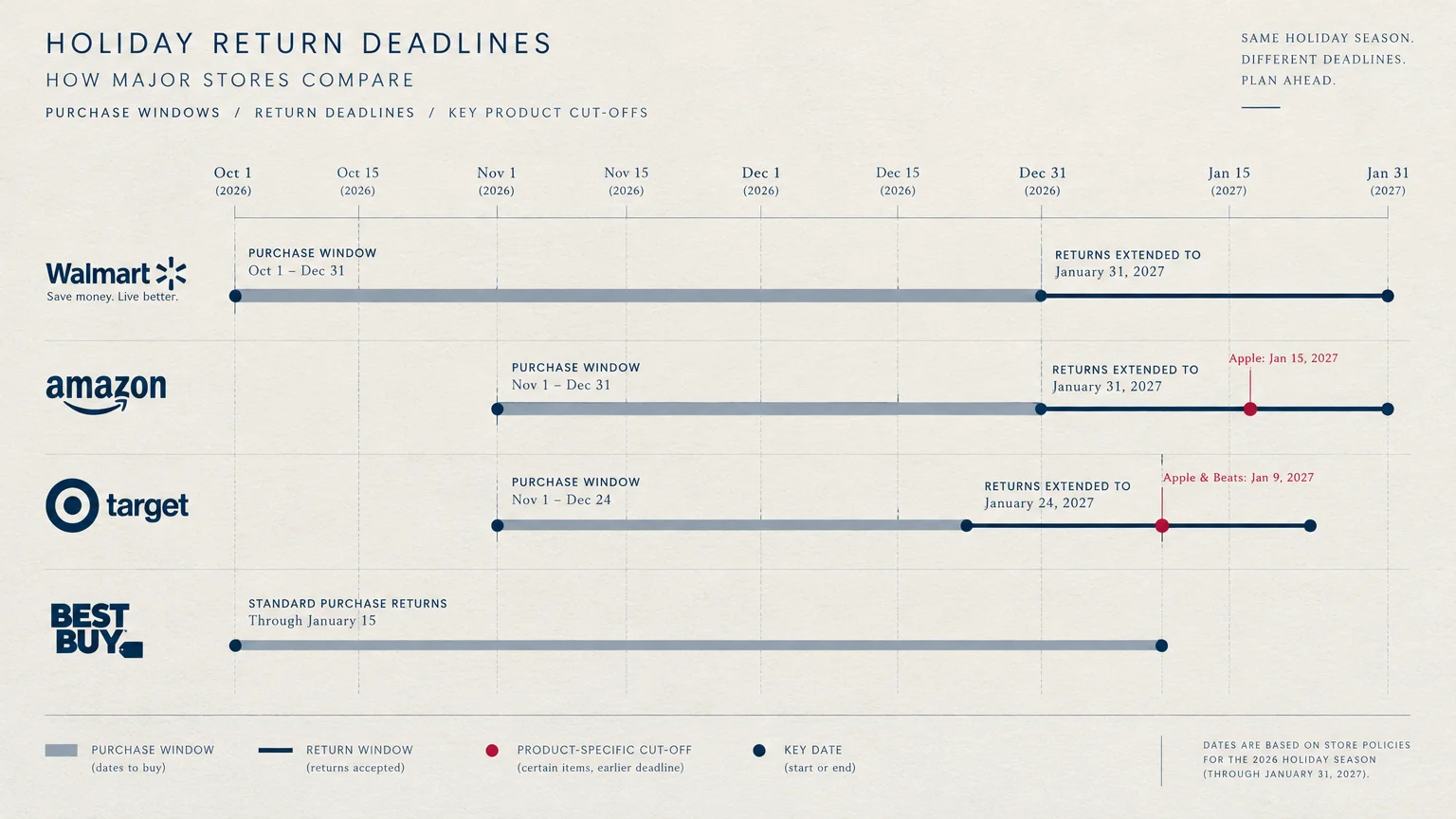
For the 2026 holiday shopping season, Amazon allows items bought between November 1, 2026, and December 31, 2026, to be returned through January 31, 2027. This replaces their standard 30-day window.
Watch out for Apple products purchased on Amazon, however. Amazon requires you to return Apple-branded items by January 15, 2027.
Walmart provides an even earlier start date for holiday purchases. Most items bought between October 1, 2026, and December 31, 2026, qualify for returns through January 31, 2027.
Walmart’s extension covers electronics and Marketplace items that normally carry 14-day or 30-day limits. Keep in mind that wireless phones, major appliances, protection plans, and luxury goods remain excluded from this perk.
Target operates on a different schedule altogether. Target offers a generous 90-day return window on standard merchandise year-round, but electronics and entertainment items normally carry a strict 30-day limit.
For electronics, entertainment products, and Target Plus items bought between November 1, 2026, and December 24, 2026, Target starts the return clock on December 26. This gives you until January 24, 2027, to complete your return.
If you purchase Apple or Beats products at Target, your window is tighter. Those items normally carry a 15-day limit and must be returned by January 9, 2027.
Best Buy standard members receive a basic 15-day return window during the year. Paid My Best Buy Plus and Total members receive 60 days.
During the holidays, Best Buy historically extends standard purchases through January 15. You must track your exact purchase dates to ensure you do not miss these compressed January deadlines.
2. Return Shipping Fees and Mail-In Deductions
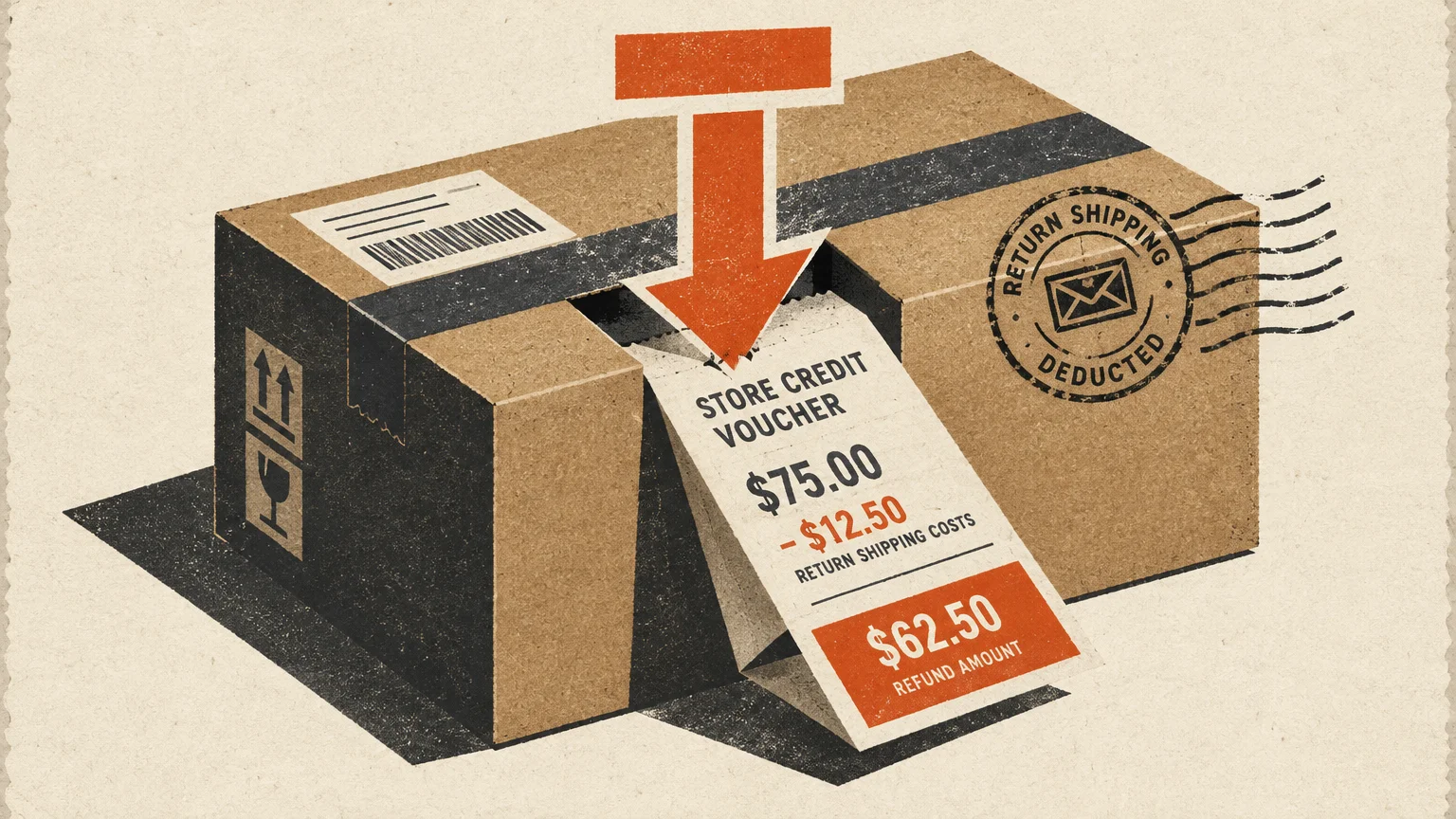
Returning an online order by mail is no longer guaranteed to be free. Retailers are actively cutting the cost of processing returns by transferring shipping expenses directly to consumers.
A benchmark report by the National Retail Federation and Happy Returns projects retail returns at $849.9 billion. This volume represents 15.8% of total retail sales and 19.3% of online purchases.
To combat these staggering costs, 72% of large U.S. retailers now charge consumers a fee for at least one return method. The most common charge is a mail-in return deduction.
When you generate a prepaid shipping label to return a sweater or toy by mail, the retailer often deducts $5.99 to $9.99 from your refund. That deduction directly reduces your recovered cash.
You can usually bypass these fees by taking the item to a local store. Most big-box merchants process in-person returns for free, even for orders placed online.
Before purchasing items online, inspect the merchant’s return shipping policy. The Federal Trade Commission (FTC) Consumer Advice offers helpful guidance on your rights regarding online order cancellations, delivery delays, and refund standards.
3. Restocking Fees on Electronics and Activatable Devices
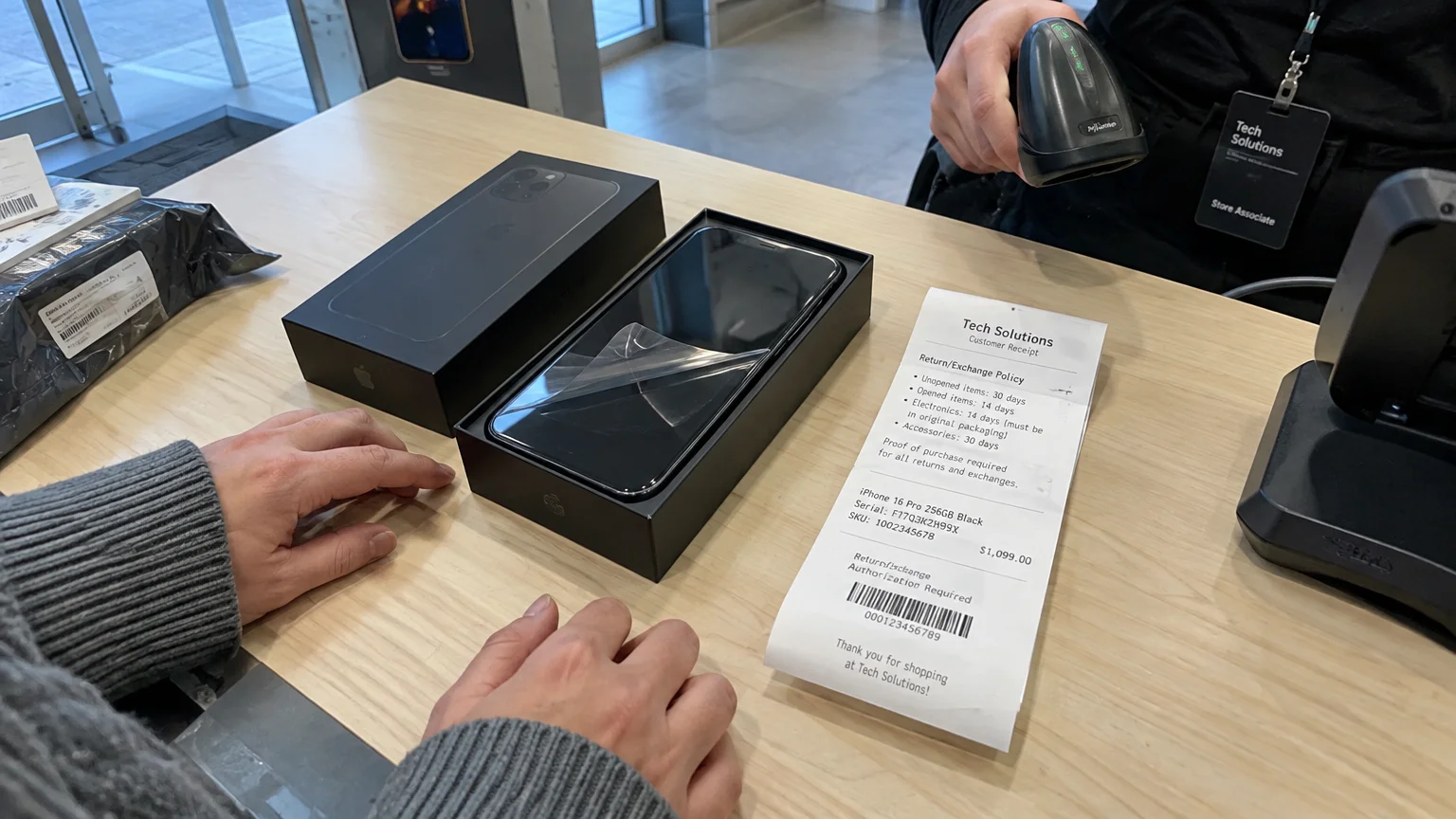
High-end gadgets represent some of the most popular holiday gifts. Unfortunately, they also carry the strictest return penalties across the entire retail sector.
Retailers cannot easily resell opened electronics at full retail value. To protect their margins, companies enforce restocking fees that surprise unwary gift recipients.
Best Buy enforces strict year-round policies that do not relax during the holidays. Activatable devices—including smartphones, cellular smartwatches, and connected tablets—remain locked to a rigid 14-day return window.
If you return an opened activatable device, Best Buy deducts a standard $45 restocking fee from your refund. This fee applies even if the device was purchased as a holiday gift months prior.
Best Buy also charges a 15% restocking fee on returned drones, digital projectors, and special-order appliances. On a $1,000 drone, an open-box return will cost you $150 out of pocket.
Always ask recipients not to open packaging until they are certain they want to keep the item. Breaking a factory seal can trigger mandatory penalties that wipe out any sale savings.
4. Price Matching Suspensions and Internal Adjustments
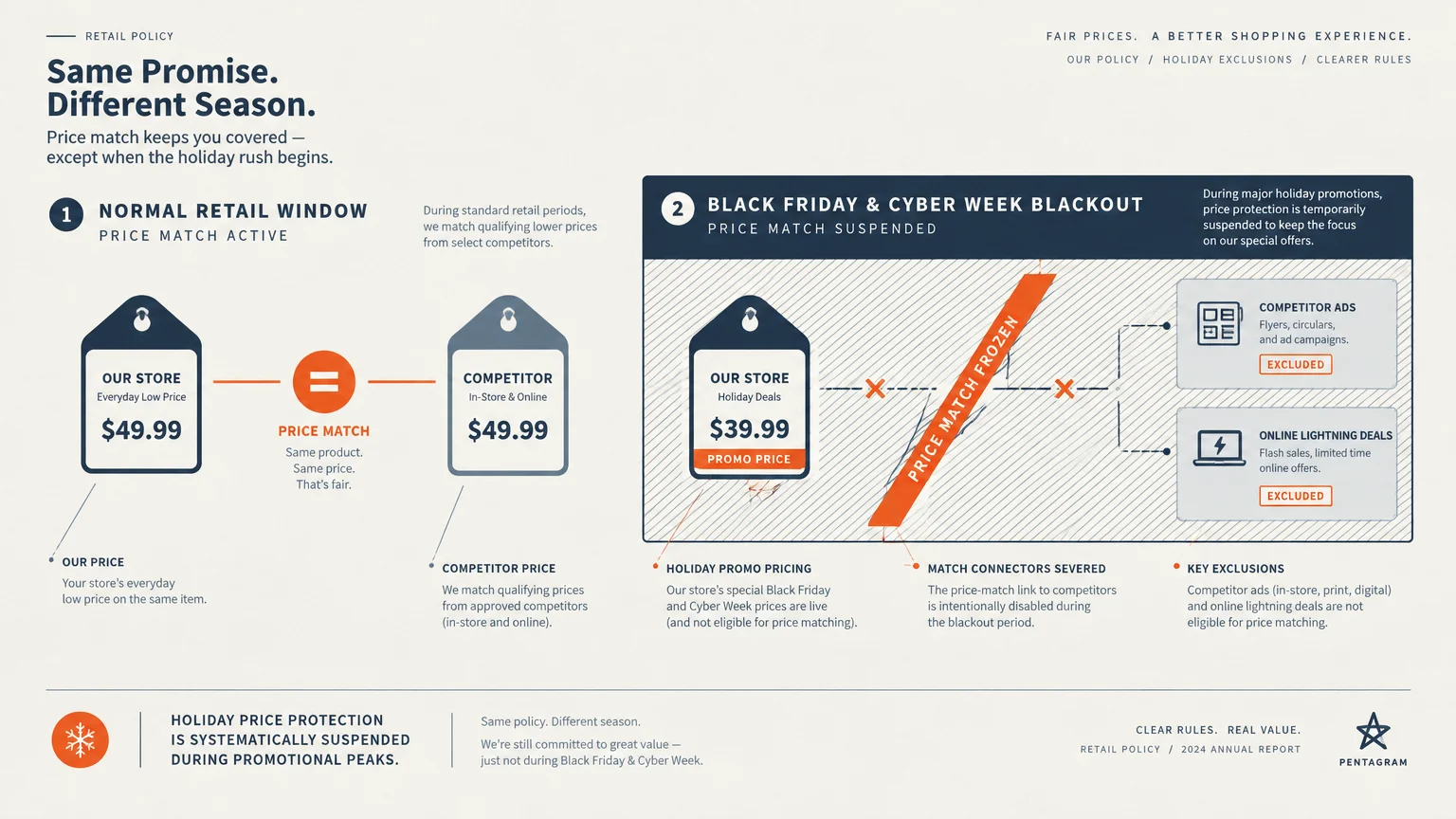
Price matching allows you to claim the difference when a competitor offers an item for less. Around the holidays, retailers frequently alter or suspend these guarantees to protect peak seasonal profits.
Target significantly changed its price match landscape when it permanently ended external competitor price matching on July 28, 2025. Target no longer matches advertised prices from external competitors like Amazon or Walmart.
For the 2026 holiday season, Target only matches prices within its own retail channels. This includes Target stores, Target.com, and promotional Target Circle pricing.
Target does offer a Holiday Price Match Guarantee for purchases made between November 1, 2026, and December 24, 2026. If Target lowers its own price on or before December 24, you can request an adjustment for the difference.
Standard Target price adjustments outside the holidays only allow 14 days. The extended holiday adjustment window gives you nearly eight weeks of price protection on qualifying items.
Many other major retailers completely freeze competitor price matching during Black Friday and Cyber Week. They exclude limited-quantity doorbusters, flash sales, and special coupon promotions from any price adjustment claims.
If you suspect unfair billing practices or deceptive pricing adjustments, you can review consumer protections outlined by the Consumer Financial Protection Bureau (CFPB).

5. Thanksgiving Day Closures and Black Friday Store Hours
Store operating schedules shift dramatically around Thanksgiving week. Retailers that once opened their doors on Thanksgiving evening have abandoned that practice permanently.
Major national retailers will remain closed all day on Thanksgiving, Thursday, November 26, 2026. This includes Walmart, Target, Best Buy, Costco, Sam’s Club, Home Depot, Lowe’s, Kohl’s, JCPenney, and Macy’s.
Shopping on Thanksgiving Day is now entirely an online activity. Retailers launch their primary doorbusters on their websites while physical storefronts remain dark.
Physical stores open early the following morning. Walmart, Target, Best Buy, and Kohl’s plan to open doors at 6:00 a.m. local time on Black Friday, November 27, 2026.
Curbside pickup hours also compress during peak holiday days. While stores open early, drive-up and curbside fulfillment slots often face multi-hour processing delays due to intense order volume.
Plan your in-person shopping runs carefully. Trying to grab early doorbusters or pick up online orders during peak morning rushes requires checking individual store schedules in advance.
6. Stricter Receipt Rules and ID Tracking for Fraud Prevention
Returning an item without a receipt becomes significantly harder during December and January. Retailers deploy aggressive loss-prevention measures to combat elevated rates of holiday return abuse.
The National Retail Federation reports that 9% of all retail returns are fraudulent. Dishonest returns include returning stolen merchandise, shoplifted items, or used goods disguised as brand new.
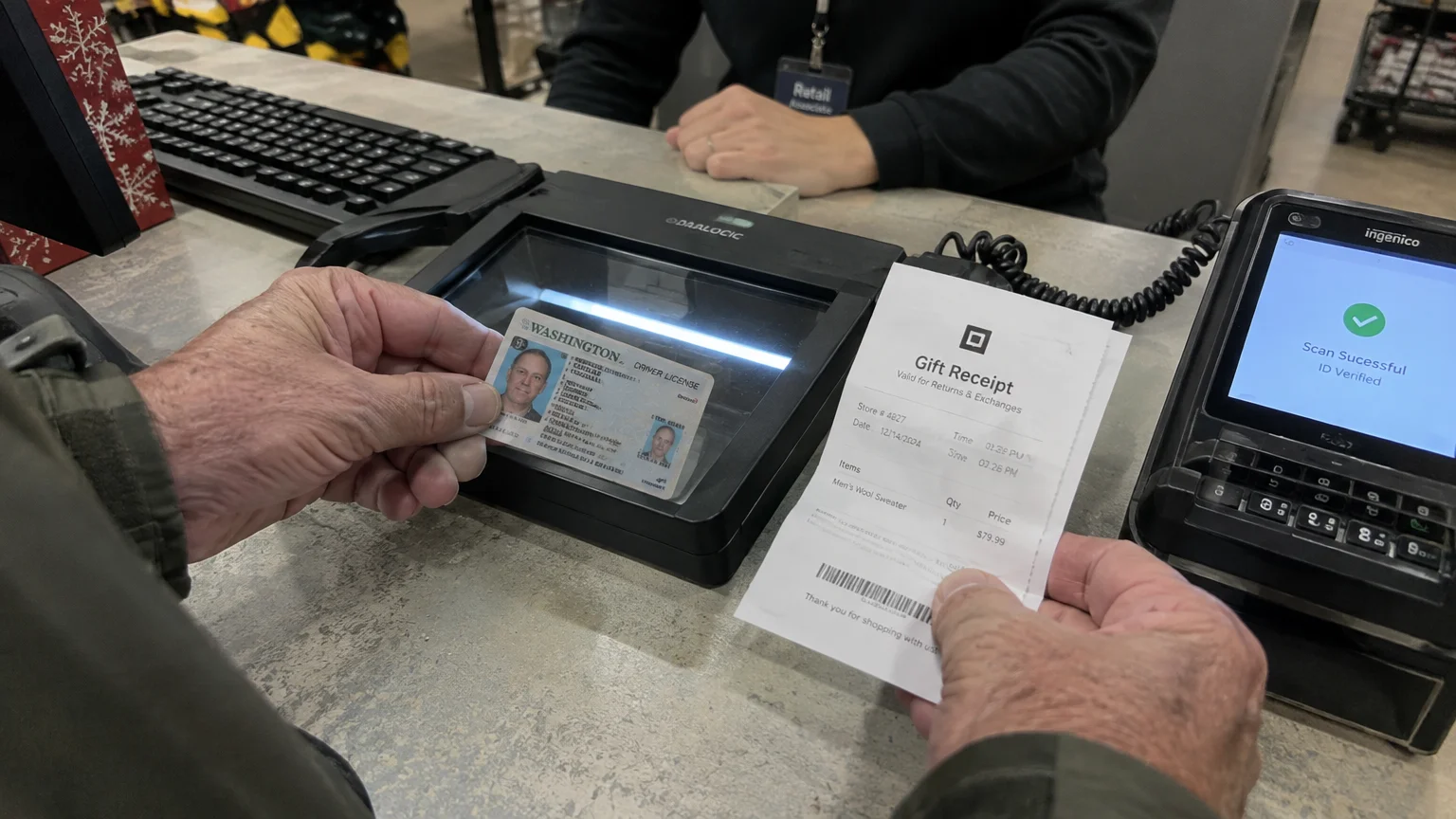
To curb these losses, stores partner with third-party tracking services to monitor customer return activity. Retailers log your state-issued driver’s license or government identification card whenever you attempt a return without a receipt.
These systems track your return frequency and dollar amounts across multiple chains. If the algorithm flags your account for excessive non-receipted returns, the system automatically denies your transaction.
Even if a store approves a return without a receipt, you rarely get full cash back. Retailers typically issue store credit matching the lowest promotional sale price the item carried over the past 90 days.
Always request gift receipts at the checkout counter. Providing a gift receipt ensures your recipient receives full value or an even exchange without risking an ID rejection.
7. The Replacement of Layaway with Buy Now, Pay Later Plans
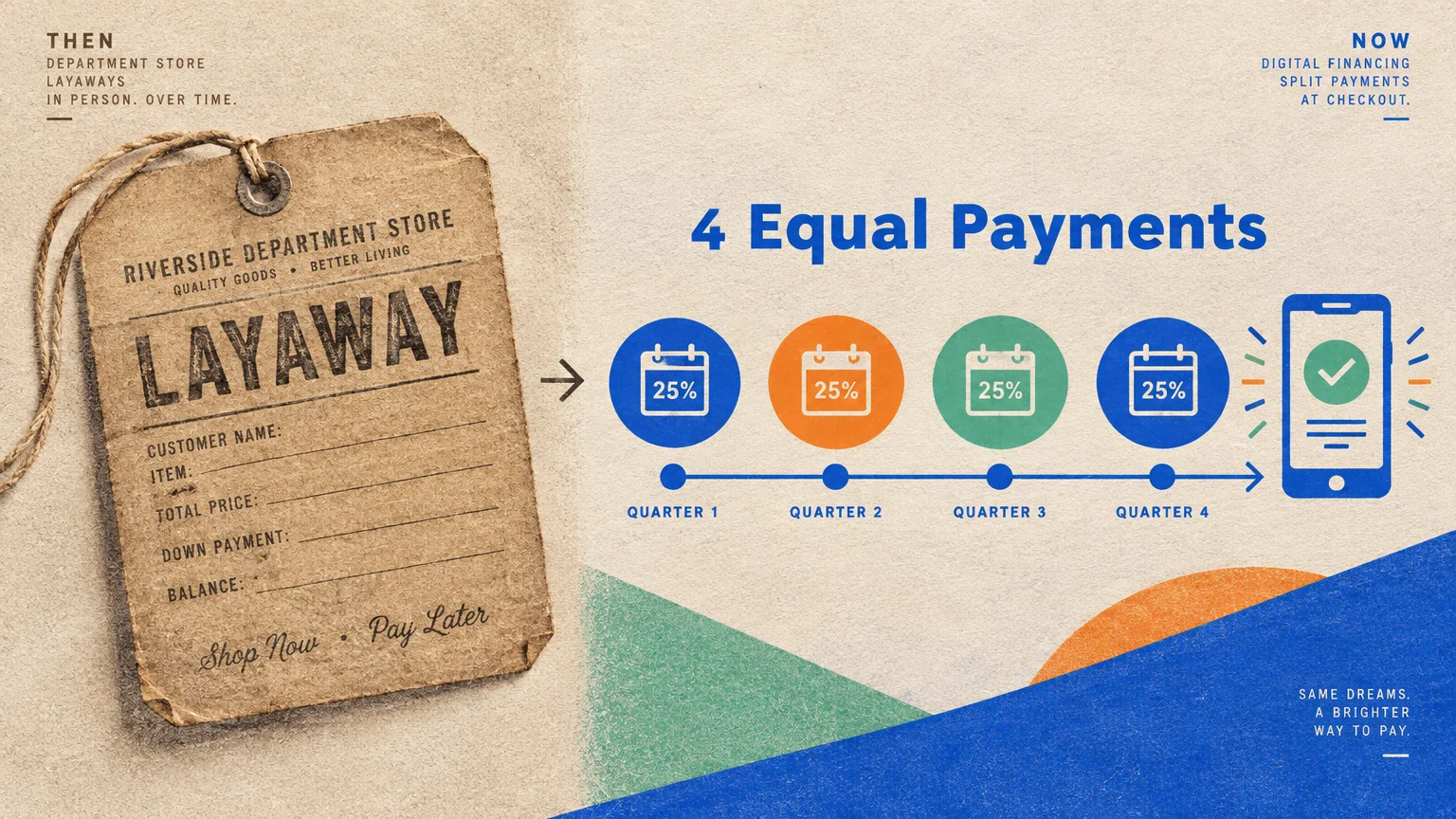
Traditional holiday layaway has vanished from almost every major retail chain. Decades ago, families paid incremental cash installments over several months to hold gifts at a customer service desk.
Today, retailers have replaced layaway desks with third-party Buy Now, Pay Later (BNPL) platforms at online checkouts and payment terminals. Providers like Affirm, Klarna, and Afterpay split your total into four biweekly installments.
While BNPL provides immediate possession of gifts, returns become noticeably more complex. Returning an item purchased through a BNPL provider does not immediately cancel your payment schedule.
The store must first issue a credit back to the financing company. If processing delays occur, the lender will still draft upcoming scheduled installments from your linked checking account.
Failing to monitor these drafts can trigger overdraft charges or late payment penalties. Treat point-of-sale financing with the same discipline you apply to conventional credit cards.
“A budget is telling your money where to go instead of wondering where it went.” — John C. Maxwell
Review the payment terms before financing holiday purchases. The Federal Reserve provides extensive consumer education regarding credit agreements, payment systems, and interest rate disclosures.
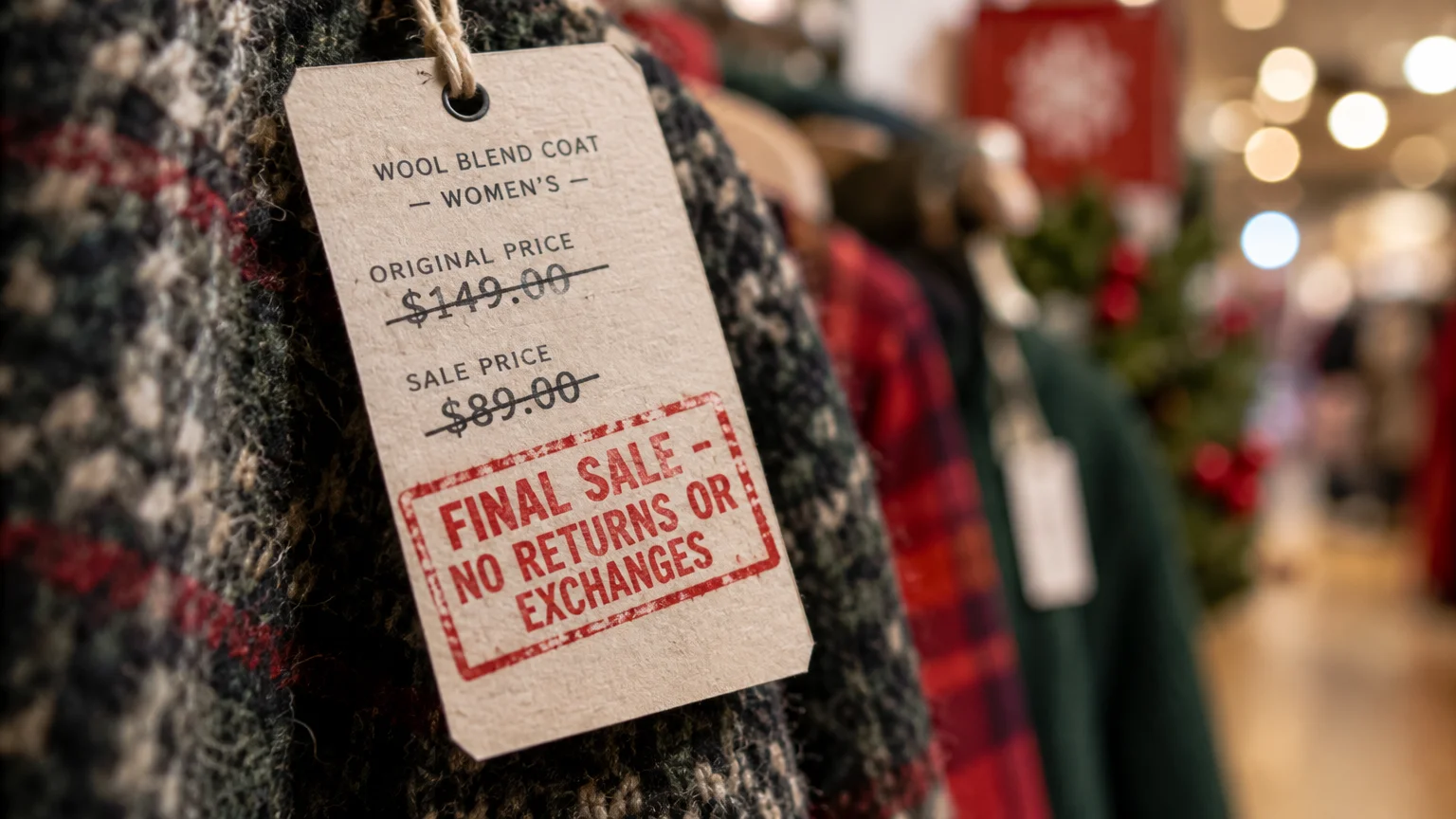
8. Final Sale Exclusions on Clearance and Seasonal Bundles
Retailers regularly adjust their definition of returnable merchandise during holiday clearance events. Items marked with deep price cuts often carry permanent “final sale” restrictions.
Pre-packaged gift baskets, cosmetic sets, holiday greenery, and seasonal home decor frequently fall under strict no-return policies. Retailers want to clear holiday inventory rapidly to make room for new merchandise.
Once December 25 passes, post-holiday clearance markdowns accelerate rapidly. Retailers typically mark clearance items down by 50% to 75%, but they also stamp receipts with final sale disclaimers.
Manufacturer warranties can also be compromised on clearance purchases. Some manufacturers decline warranty coverage if an item was purchased as an open-box or discontinued final-sale unit.
Always read the fine print printed on your receipt before walking out of the store. If an item cannot be returned or repaired under warranty, a steep discount might cost you more in the long run.

9. Promotional Gift Cards and Expiration Restrictions
Retailers love using gift card promotions to drive holiday sales volume. A store might advertise a deal offering a free $15 gift card when you spend $75 on qualifying apparel or toys.
Many consumers assume all gift cards carry federal protections against rapid expiration. Under federal law, standard retail gift cards cannot expire for at least five years from their issuance date.
However, promotional bonus cards operate under completely different legal standards. Free promotional cards given as a reward for a purchase are legally exempt from federal five-year rules.
Retailers frequently set short expiration windows on holiday bonus vouchers. A $20 promotional card earned in November or December might expire on January 31 or February 15.
If you return the merchandise that qualified you for the promotional card, the store will adjust your refund. The cashier will deduct the full value of the promotional card from your returned cash if you have already spent it.
Check the fine print on the back of any bonus voucher immediately. Mark its expiration date on your personal calendar so you do not leave free money behind.
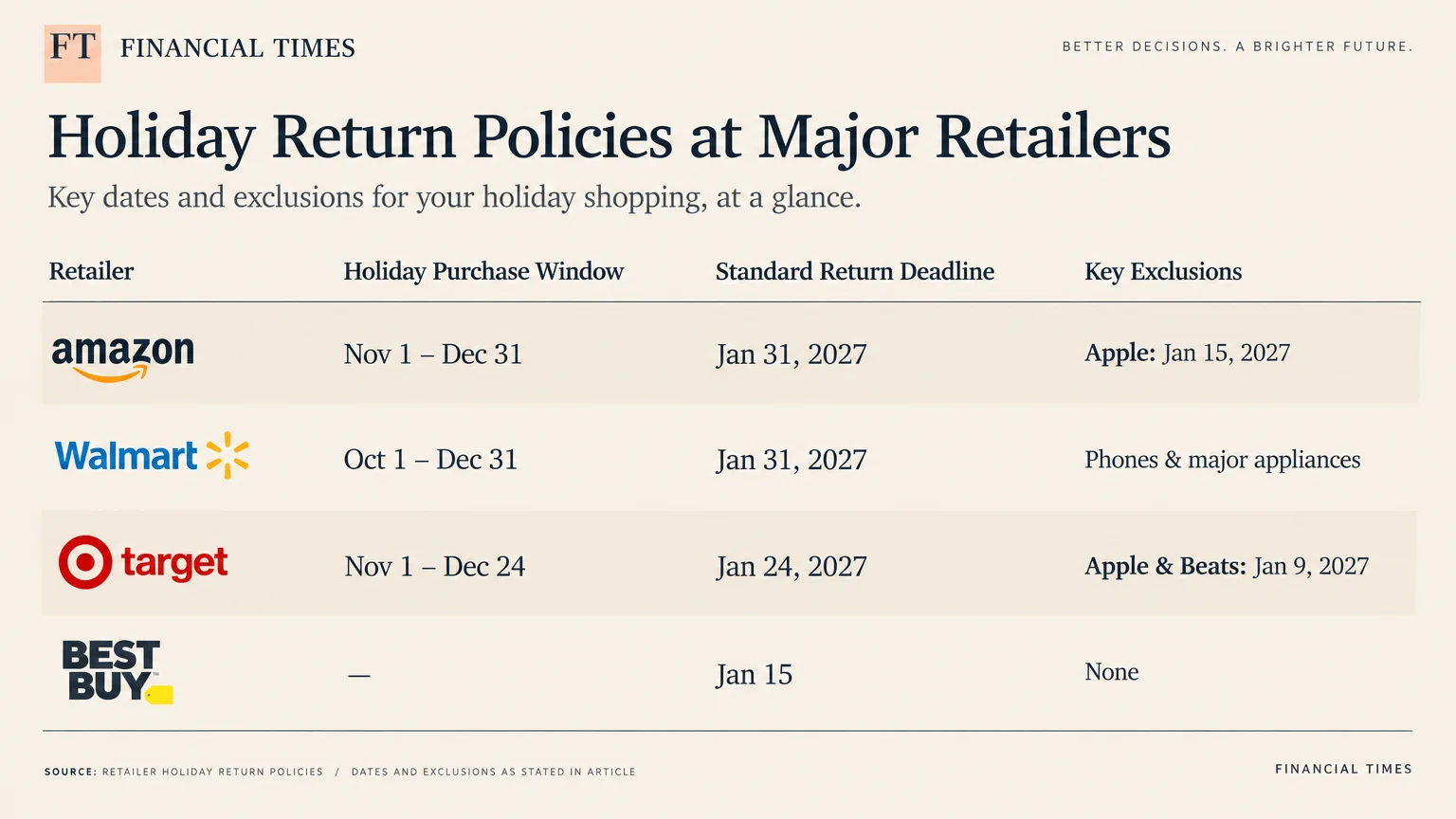
Retailer Holiday Policy Comparison (2026–2027)
Reviewing holiday terms side by side helps you choose where to shop with confidence. The table below outlines key policies across major retail chains for the 2026 holiday season.
| Retailer | Holiday Return Window | Key Exceptions | Restocking or Return Fees | Price Match Rules |
|---|---|---|---|---|
| Amazon | Nov 1 to Dec 31, 2026 purchases returnable through Jan 31, 2027 | Apple products must be returned by Jan 15, 2027 | Free returns at drop-off sites; select mail returns carry shipping fees | Does not offer price matching against competitors or prior purchases |
| Walmart | Oct 1 to Dec 31, 2026 purchases returnable through Jan 31, 2027 | Wireless phones, major appliances, and luxury items excluded | Free returns in-store; mail returns free for Walmart+ or qualifying orders | Matches Walmart.com prices; freezes competitor matching during major sales |
| Target | Standard 90 days; electronics bought Nov 1 to Dec 24 extended through Jan 24, 2027 | Apple and Beats products must be returned by Jan 9, 2027 | Free in-store returns; free mail returns with Target Circle Card | Matches internal Target prices Nov 1 to Dec 24; competitor matching ended July 2025 |
| Best Buy | Standard 15 days; holiday purchases typically extended to Jan 15 | Activatable devices remain strictly locked to 14 days | $45 on activatable devices; 15% on drones, projectors, and appliances | Price matches select retail competitors; excludes Black Friday doorbusters |
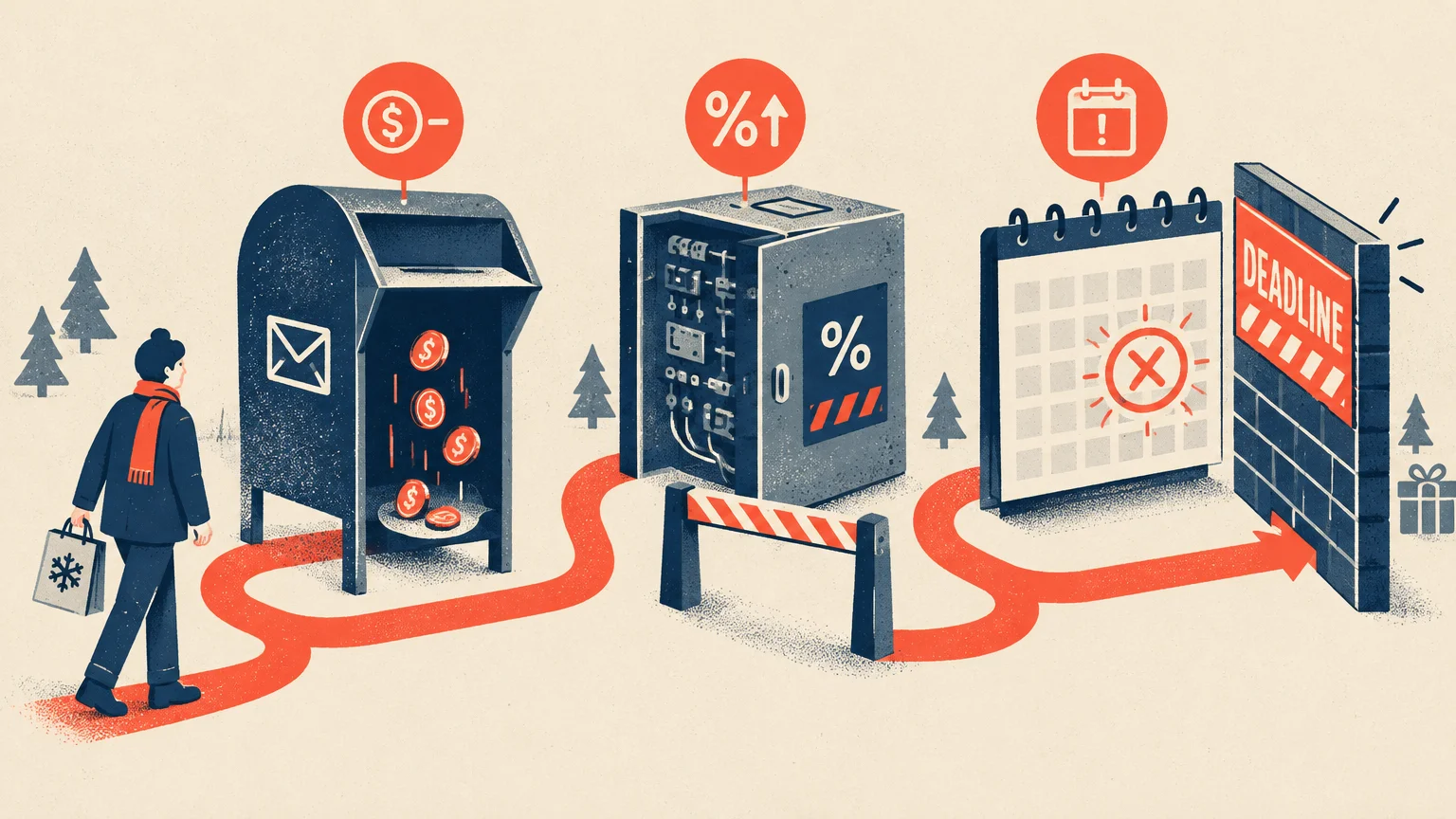
Common Money Traps
Holiday store policies can easily catch shoppers off guard if they fail to plan ahead. Avoiding these common traps keeps your household budget intact throughout the season.
- Returning by mail by default: Mailing back an unwanted item often triggers an automatic deduction of $6 to $10. Drop items off at physical customer service desks whenever possible to secure a full refund.
- Discarding original product packaging: Opening packaging aggressively or discarding manufacturer boxes can void your return eligibility. Retailers often refuse tech returns without original boxes, cables, and manuals.
- Letting promotional vouchers expire: Retailers intentionally issue short deadlines on bonus reward cards. Spend your promotional rewards on necessary household goods in early January before they expire.
- Ignoring the 14-day phone window: If you buy a smartphone as a Christmas gift in late November, the 14-day return window will expire long before December 25. Purchase mobile devices as close to the holiday as possible.
- Skipping price-adjustment checks: Retailers frequently lower prices in mid-December to clear surplus inventory. Monitor the prices of items you bought in November and request adjustments before cutoffs pass.

Actionable Holiday Shopping Strategies for Families
A few practical steps can keep you organized and protect your consumer rights throughout the holiday rush. Implement these habits before beginning your seasonal shopping.
Create a dedicated mobile folder for digital purchase receipts. Snap clear photos of paper receipts immediately after checkout so faded ink or lost paper slips never prevent a legitimate return.
Always request separate gift receipts for every present you purchase. Place the gift receipt inside the gift box so recipients can manage exchanges without asking you for payment documentation.
Review the shipping deduction rules on smaller boutique websites before buying. Independent sellers often enforce stricter return shipping deductions and shorter adjustment windows than national chains.
Check your credit card benefits before buying expensive consumer electronics. Many premium cards provide built-in price protection, return protection, and extended warranty coverage that surpass store policies.
Frequently Asked Questions
Can retailers legally charge a restocking fee if an item is unopened?
Retailers can legally charge restocking fees on unopened items if the policy was clearly disclosed to you prior to purchase. Most retailers waive restocking fees for unopened products, but specialty merchandise and appliances may carry mandatory charges.
What happens if you return a gift without a gift receipt?
Returning an item without a receipt usually limits you to merchandise store credit rather than cash. The credit will reflect the lowest promotional price the store offered over the previous 90 days, and the transaction requires government photo identification.
Do holiday return policies apply to third-party marketplace sellers?
Major marketplaces like Amazon and Walmart require third-party sellers to match baseline holiday return deadlines, but specific exceptions exist. Independent merchants selling customized, personalized, or perishable goods are often exempt from standard extended holiday windows.
Why do promotional gift cards expire faster than purchased gift cards?
Under federal regulations, standard gift cards purchased with money must remain valid for at least five years. Free promotional gift cards, bonus vouchers, and loyalty rewards do not involve personal funds, allowing retailers to establish arbitrary expiration dates.
Final Thoughts
Navigating holiday shopping policies requires balancing seasonal sales opportunities against stricter retail enforcement rules. Tracking return deadlines, price match windows, and restocking terms ensures that holiday shopping does not derail your broader financial goals.
Take control of your household spending by staying organized and verifying return terms before paying. This article is for informational purposes only and does not constitute financial, legal, or tax advice. Rates, benefit amounts, and tax rules change regularly—verify current details with the relevant agency or a licensed professional.
Last updated: October 2026. Rates, benefit amounts, and tax rules change—always verify current details at official sources.