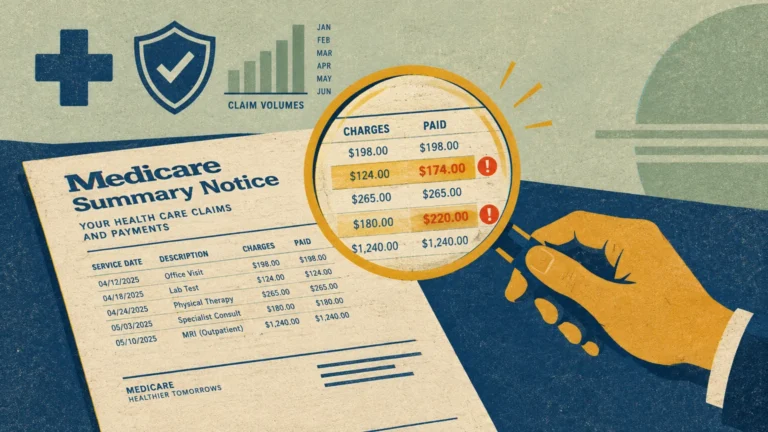
Your 2027 Social Security cost-of-living adjustment brings an unwelcome side effect: higher Medicare deductions that eat into your monthly raise. Knowing how these benefit formulas interact allows you to protect your household cash flow before adjustments take effect.
The Social Security Administration announced a 3.6% COLA for 2027, boosting the typical retired worker’s benefit by roughly $75 per month. Yet rising healthcare expenses quickly claim a portion of that additional income.
Medicare premium hikes, frozen tax brackets, and delayed income surcharges can shrink your expected raise substantially. Here is how the 2027 COLA affects your premiums and what you can do about it.
Inside the 2027 Social Security COLA Calculation
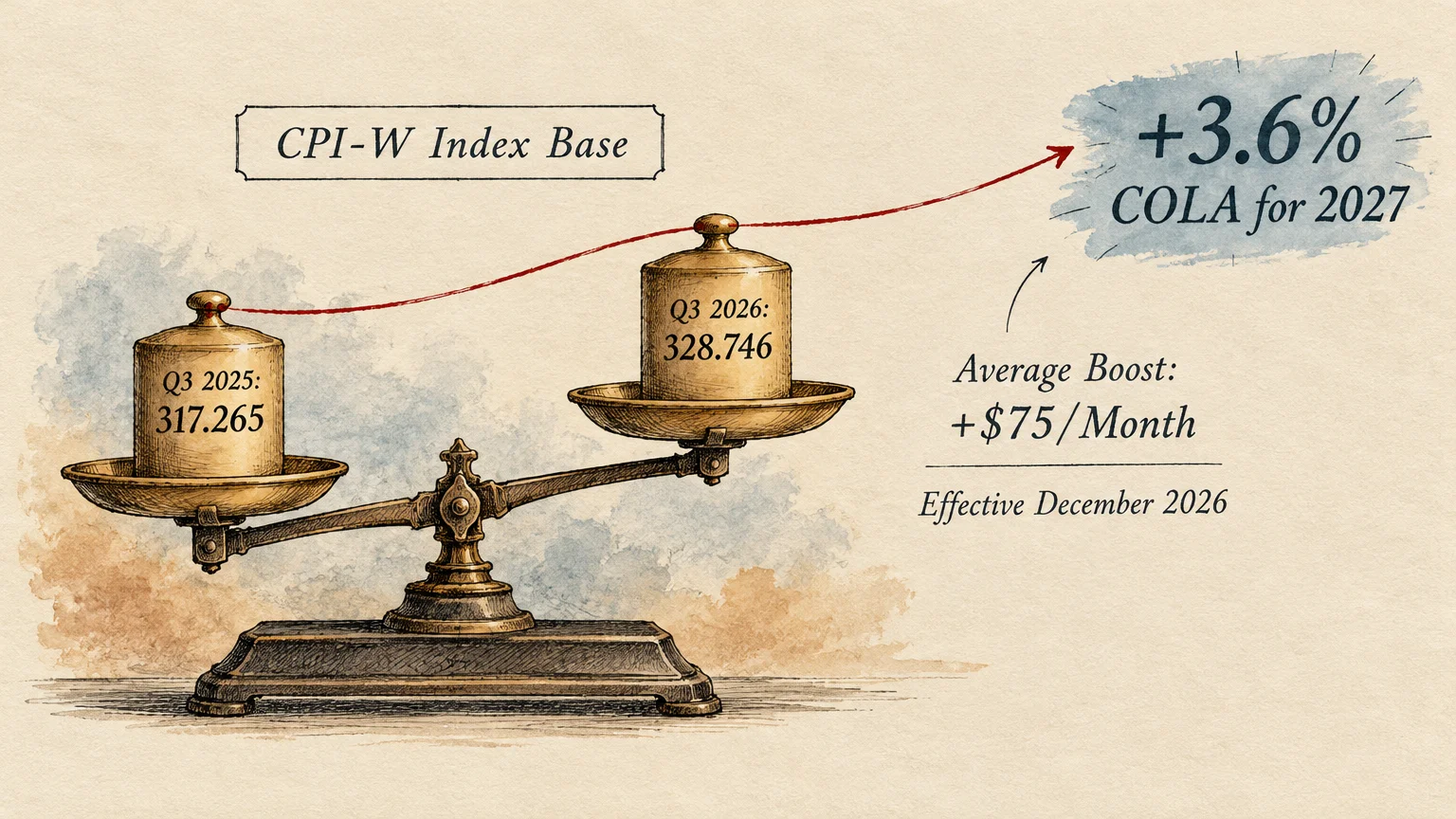
The Social Security Administration officially announced a 3.6% cost-of-living adjustment on October 14, 2026. This adjustment marks the largest annual boost for beneficiaries in four years.
For comparison, beneficiaries received a 2.8% increase in 2026 and a 2.5% raise in 2025. Inflation pressures throughout mid-2026 drove this larger upward adjustment.
The government determines the annual COLA using the Consumer Price Index for Urban Wage Earners and Clerical Workers (CPI-W). The Bureau of Labor Statistics compiles this data monthly.
Statisticians compare the average CPI-W index levels from the third quarter of the current year against the third quarter of the prior year. The difference determines the final increase percentage.
For the 2027 calculation, the third-quarter base average rose from 317.265 in 2025 to 328.746 in 2026. That measured increase translates directly to the official 3.6% raise.
The increased payments take effect with December 2026 benefits, reaching more than 75 million Americans in January 2027. SSI recipients see their higher payments on December 31, 2026, due to the federal holiday.
Before the adjustment, the average retired worker received approximately $2,086 per month in 2026. A 3.6% bump adds roughly $75 per month, or about $900 annually.
Across all Social Security recipients, where average monthly benefits sat at approximately $1,940 in 2026, the raise delivers roughly $70 per month. However, your gross raise does not equal your take-home pay.
How the 2027 Medicare Part B Premium Increase Absorbs Your Raise
Most retirees never see their full Social Security COLA in their checking accounts. The federal government automatically deducts Medicare Part B premiums before depositing your check.
In 2026, the standard monthly Medicare Part B premium was $202.90, alongside an annual outpatient deductible of $283. These standard costs apply to the majority of enrolled beneficiaries.
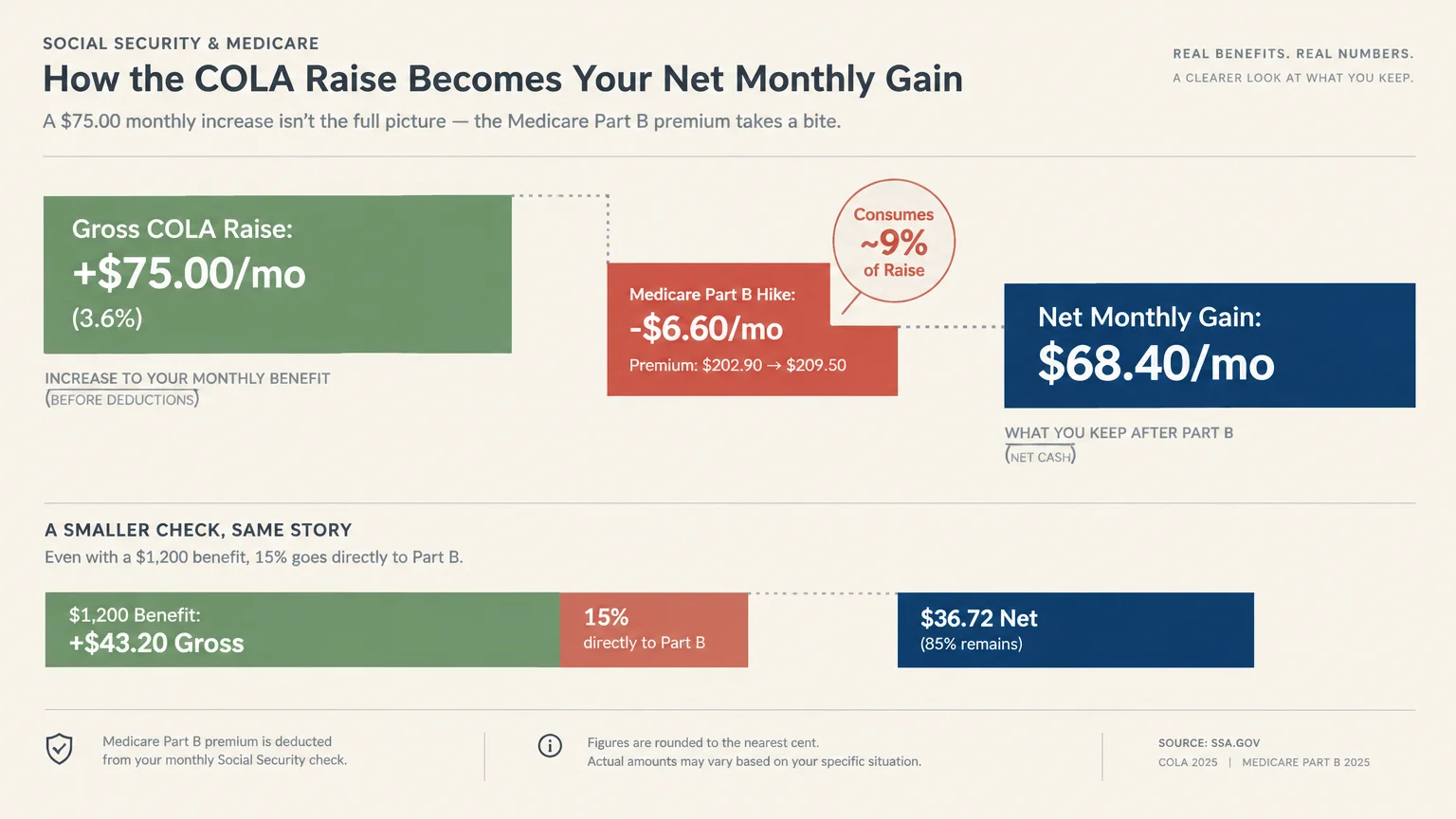
According to projections from the Medicare Trustees, the standard Part B premium rises by $6.60 to reach $209.50 per month in 2027. The Centers for Medicare & Medicaid Services releases final rates each autumn.
This projected $6.60 monthly premium increase reduces the financial benefit of the 3.6% COLA. A higher premium immediately offsets a portion of your larger gross check.
For an average retiree receiving a $75 gross monthly boost, the $6.60 Medicare deduction consumes roughly 9% of the raise. That deduction leaves you with a net cash gain of about $68.40 monthly.
Beneficiaries receiving lower monthly checks lose an even larger percentage of their COLA to this baseline Medicare increase. A recipient receiving $1,200 monthly gains only $43.20 gross, losing 15% of that bump directly to Part B.

The Stealth Tax Trap: Unindexed Social Security Thresholds
Healthcare premium increases represent only the first financial leak in your gross raise. A higher monthly benefit also pushes thousands of retirees into paying federal income taxes on their Social Security checks.
The Internal Revenue Service calculates tax liability using your combined income. Your combined income equals your adjusted gross income, plus nontaxable interest, plus half of your total annual Social Security benefits.
You can verify current tax filing rules directly on the Internal Revenue Service website. Federal law taxes up to 50% of your benefits if your combined income exceeds $25,000 for single filers.
For married couples filing jointly, that 50% taxable threshold begins at just $32,000. Up to 85% of your benefits become taxable if combined income exceeds $34,000 for singles or $44,000 for joint filers.
Congress established these static dollar thresholds in 1983 and never indexed them for inflation. Because of this flaw, every annual Social Security COLA pulls more retirees over the tax limits.
A $900 annual gross raise from the 2027 COLA increases your combined income by at least $450. That increase can push you past a threshold, triggering unexpected taxes on thousands of benefit dollars.
When benefit taxation combines with higher Part B premiums, your net monthly gain shrinks rapidly. Many seniors find their actual purchasing power declines despite the higher top-line benefit figure.
The IRMAA Trap: How 2027 Benefits Trigger Future Premium Surcharges
Higher gross benefits create an even more expensive hazard for middle- and upper-income households: the Income-Related Monthly Adjustment Amount, or IRMAA. IRMAA adds expensive surcharges to both Medicare Part B and Part D.
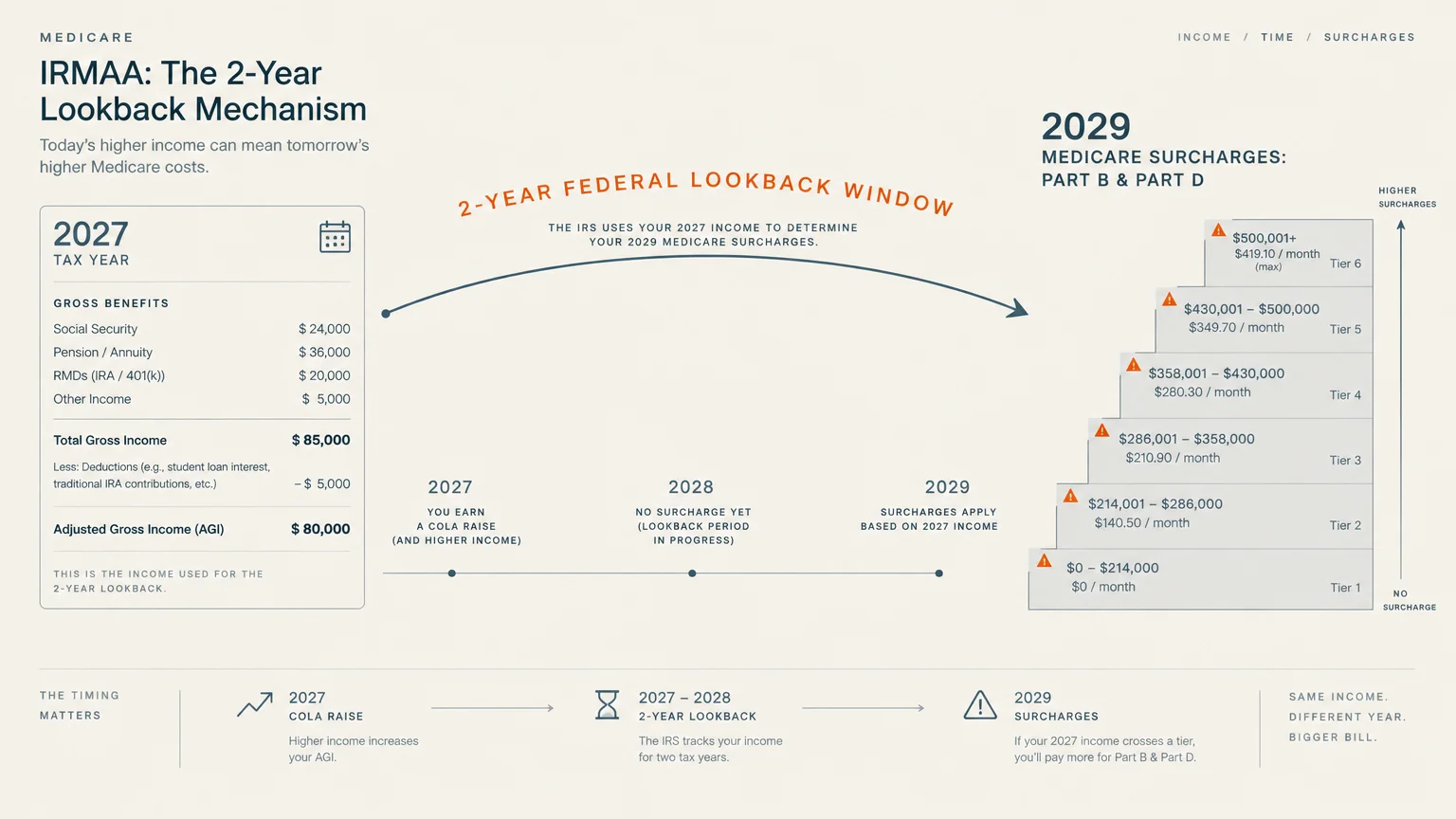
Medicare does not determine your monthly surcharge based on current earnings. Instead, the government uses a strict two-year lookback rule based on your federal tax returns.
Under this system, your 2026 IRMAA surcharges depend entirely on your 2024 tax return. Your 2027 surcharges reflect your 2025 earnings.
Consequently, the extra taxable income generated by the 2027 COLA will directly affect your Medicare premiums in 2029. Failing to anticipate this two-year delay creates severe financial surprises down the road.
In 2026, the official IRMAA thresholds began at a Modified Adjusted Gross Income (MAGI) above $109,000 for single tax filers. The initial married filing jointly threshold stood at $218,000.
Exceeding those 2026 limits triggered an extra $81.20 monthly charge for Part B, pushing total monthly premiums to $284.10. It also added a mandatory $14.50 monthly surcharge to Part D prescription coverage.
For 2027, projections place the starting IRMAA threshold above $112,000 for single filers and $224,000 for joint filers. The projected first-tier Part B surcharge climbs to $83.70 monthly.
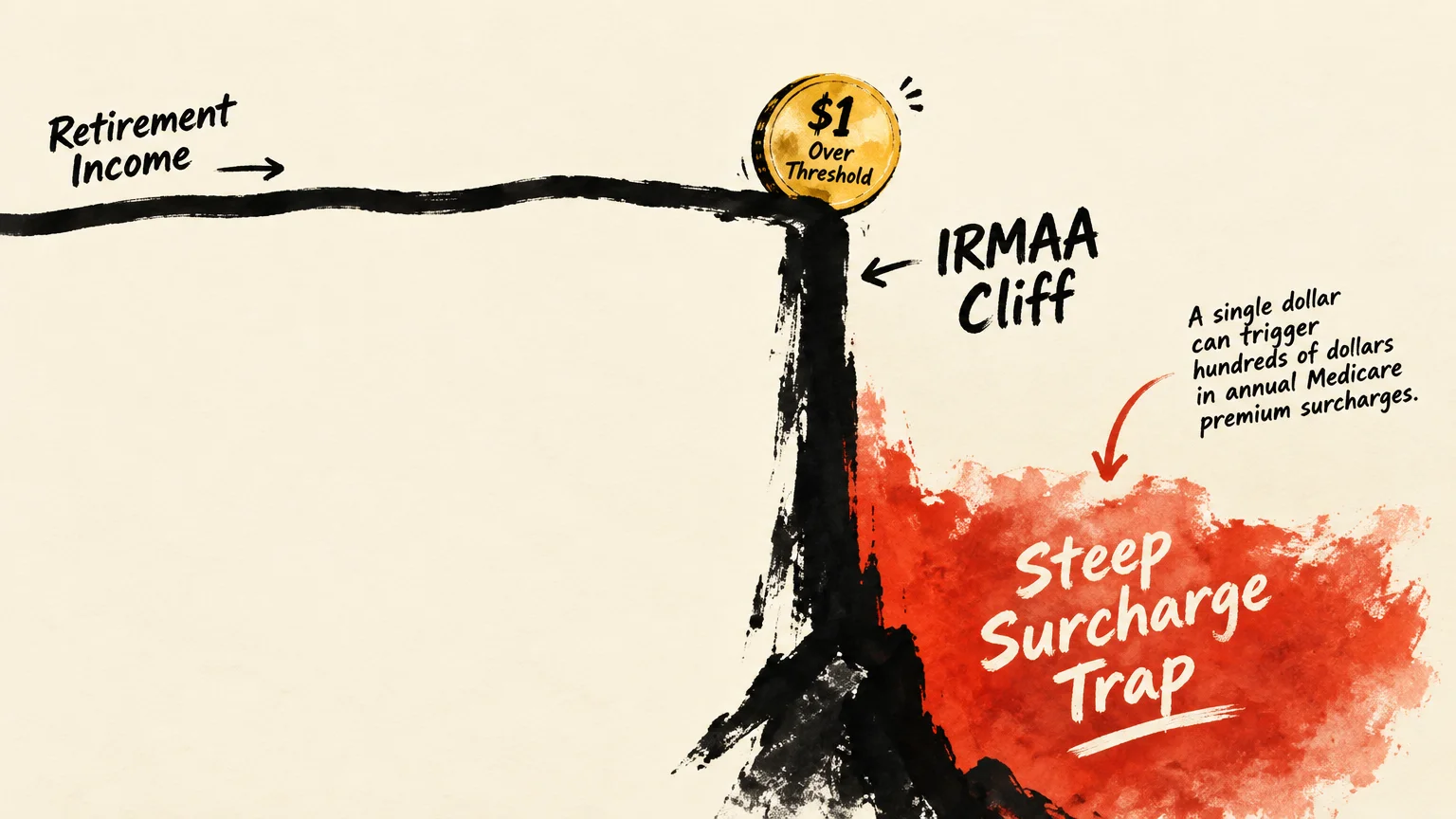
IRMAA functions as a financial cliff rather than a gradual phase-in. If your taxable income exceeds a threshold by a single dollar, you owe the entire monthly surcharge for all twelve months.
If your 2027 COLA pushes your MAGI across that cliff, you will pay over $1,000 in extra annual Medicare premiums two years later. You must track your income carefully to avoid crossing these thresholds accidentally.

Understanding the Hold Harmless Provision in 2027
Federal law contains a specific safeguard designed to shield seniors from aggressive healthcare inflation. This protection is known as the hold harmless provision.
Codified under Section 1839(f) of the Social Security Act, the rule guarantees that your net monthly Social Security check cannot decrease from one calendar year to the next.
If the dollar increase in Medicare Part B exceeds the dollar increase of your annual COLA, the government caps your Part B premium hike. The state adjusts your premium downward so your check remains flat.
However, the hold harmless provision will protect almost nobody during 2027. Because the 2027 COLA is a relatively robust 3.6%, benefit increases easily outpace the standard premium increase.
The average retired worker receives an extra $75 per month starting in January 2027. That $75 easily absorbs the projected $6.60 Part B premium hike without violating the statute.
Only beneficiaries receiving extraordinarily small monthly Social Security checks—under $185 per month—would see their COLA wiped out by a $6.60 increase. Such low benefit levels represent an tiny fraction of retirees.
Furthermore, the law strictly excludes several key groups of seniors from hold harmless protection under any circumstances. You receive zero hold harmless protection if you pay IRMAA surcharges.
The statute also excludes individuals enrolling in Medicare Part B for the first time in 2027. You must have had premiums deducted from December checks to qualify for protection.
Finally, beneficiaries who pay their Part B premiums directly via monthly billing do not receive protection. Dual-eligible recipients whose premiums are covered by Medicaid are likewise excluded from the provision.
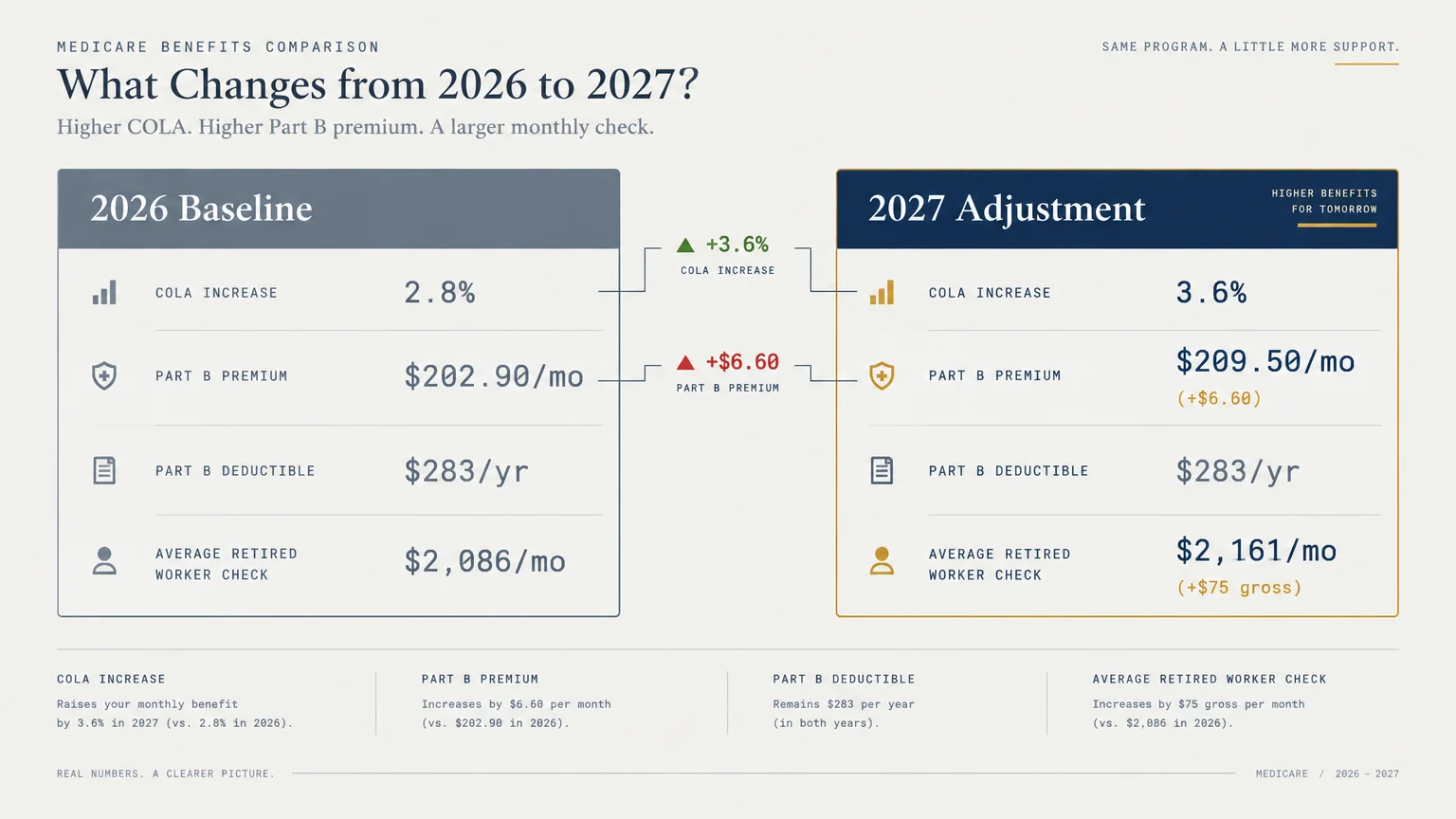
Side-by-Side Comparison: 2026 vs. 2027 Costs and Thresholds
Reviewing all moving pieces side by side clarifies how changes impact your retirement budget. The following figures highlight baseline costs, adjustments, and income limits.
| Financial Metric | 2026 Level | 2027 Level (Projected / Official) | Net Change |
|---|---|---|---|
| Social Security COLA Rate | 2.8% | 3.6% | +0.8% increase |
| Average Retired Worker Benefit | $2,086.00 / month | $2,161.00 / month | +$75.00 / month |
| Standard Medicare Part B Premium | $202.90 / month | $209.50 / month | +$6.60 / month |
| Annual Medicare Part B Deductible | $283.00 | Pending CMS confirmation | Projected increase |
| Starting IRMAA Threshold (Single) | $109,000 MAGI | $112,000 MAGI (Projected) | +$3,000 threshold increase |
| Starting IRMAA Threshold (Joint) | $218,000 MAGI | $224,000 MAGI (Projected) | +$6,000 threshold increase |
| Tier 1 Part B Surcharge | $81.20 / month | $83.70 / month (Projected) | +$2.50 / month |
| Average Medicare Advantage Premium | $14.37 / month | $12.00 / month (Projected) | -$2.37 / month (-16.5%) |
| Average Part D Standalone Premium | $35.09 / month | $36.00 / month (Projected) | +$0.91 / month (+2.6%) |
These shifting figures illustrate the dynamic nature of your net retirement income. While gross benefits expand, Medicare deductions steadily advance across multiple categories.
Monitoring these changes each autumn allows you to adjust your spending plans before your January deposit arrives. Proper tracking prevents cash flow shortfalls in your household budget.

Shifts in Medicare Advantage and Part D Prescription Plans
Your total healthcare costs extend beyond Medicare Part B outpatient coverage. You must also evaluate changing premiums for Medicare Advantage plans and standalone Medicare Part D prescription coverage.
You can research specific insurance options and coverage details on Medicare.gov. Fortunately, some areas of the 2027 healthcare market show stabilizing costs.
The Centers for Medicare & Medicaid Services projects that the average monthly Medicare Advantage premium will drop 16.5%. Average premiums decline from $14.37 in 2026 to $12.00 in 2027.
Seniors enrolled in Medicare Advantage may see this monthly savings balance out the higher Part B premium deduction. Plan availability and network structures vary widely across individual counties.
Conversely, standalone Medicare Part D prescription drug plan premiums are projected to rise slightly. Average national premiums move upward from $35.09 in 2026 to approximately $36.00 in 2027.
To lock in the lowest possible overall expenses, you must actively shop your coverage options every autumn. Medicare Open Enrollment runs annually from October 15 through December 7.
Plan changes made during this fall window become effective on January 1, 2027. Reviewing plan formularies during enrollment ensures your prescription drugs remain affordable throughout the coming year.
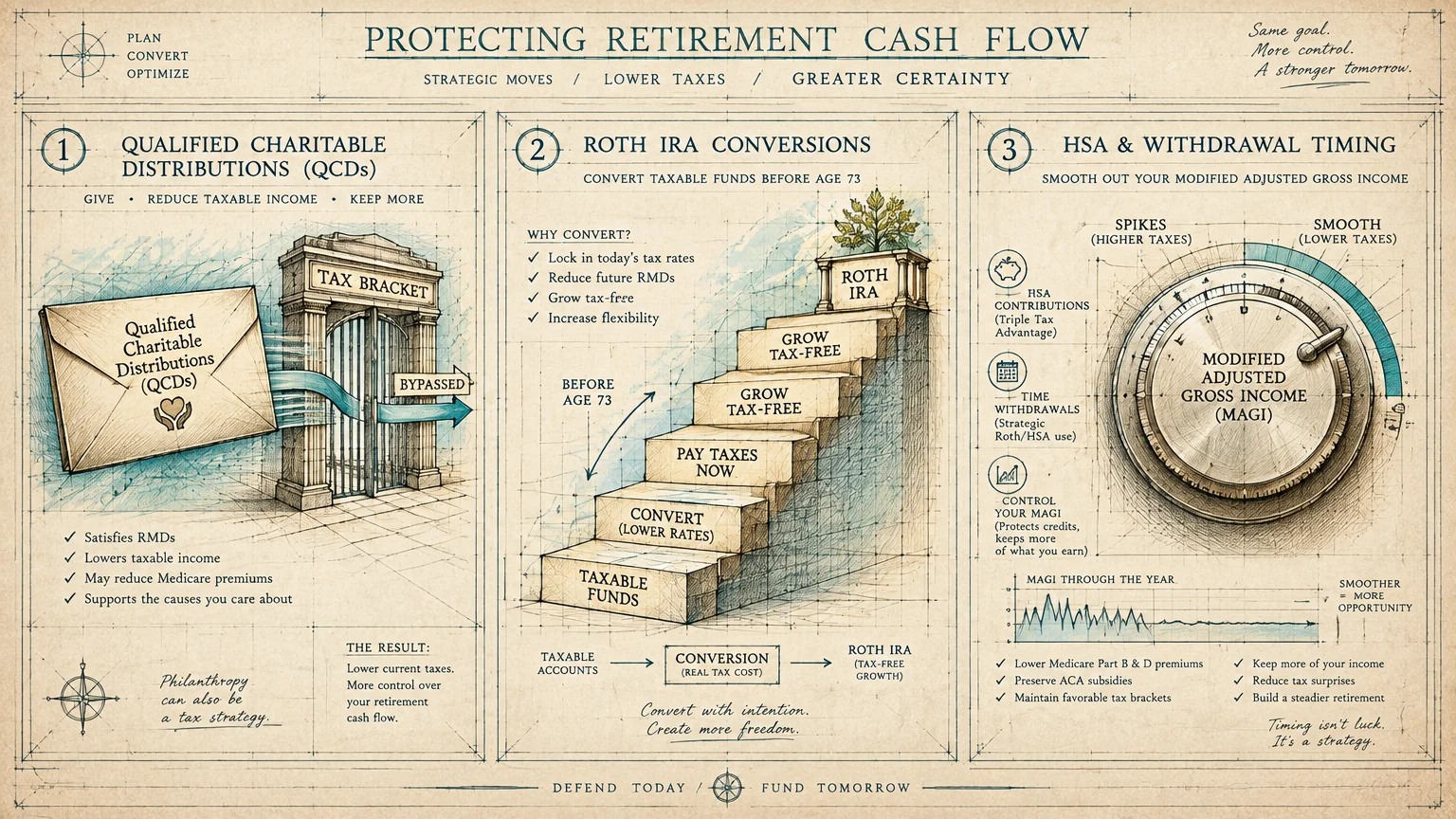
Proactive Steps to Protect Your Net Benefit
Retirees can implement concrete financial maneuvers to prevent Medicare hikes and taxes from consuming their annual raise. Smart income timing preserves your take-home retirement cash.
“It’s not how much money you make, but how much money you keep, how hard it works for you, and how many generations you keep it for.” — Robert Kiyosaki
To keep more of your money, execute these proven tax and income strategies across your household accounts:
- Use Qualified Charitable Distributions (QCDs): If you are 70½ or older, donate directly from an IRA to a registered charity. QCDs fulfill your required minimum distributions without increasing your adjusted gross income.
- Time Your Roth Conversions Carefully: Avoid executing large Roth IRA conversions that push your MAGI into an IRMAA surcharge bracket. Spread conversions across multiple calendar years to manage bracket exposure.
- Manage Capital Gains Realization: Offset realized capital gains with tax-loss harvesting in taxable brokerage accounts. Keeping net investment gains low prevents sudden jumps in combined income.
- Audit Annual Health Plans: Switch to a lower-cost Part D plan or Medicare Advantage plan during Open Enrollment. Lower drug deductibles and copays can offset higher standard Part B premiums.
- Monitor Statutory Threshold Proximity: Keep taxable income at least $1,000 below IRMAA cliffs to account for unexpected year-end dividend distributions from mutual funds.
Each dollar you keep out of your taxable income protects both your Social Security benefits and your Medicare premiums. Discipline during tax planning produces substantial compounding savings over your retirement.
Common Money Traps
Many households fall into predictable traps that destroy their net retirement income. Recognizing these mistakes early prevents costly deductions down the road.
The most frequent trap involves ignoring the two-year IRMAA lookback window. Seniors who sell real estate or withdraw large sums from traditional retirement accounts often face sudden premium spikes two years later.
Another major trap is assuming the hold harmless provision guarantees your net check will never shrink. As shown, hold harmless rarely applies when the Social Security COLA rate sits at 3.6%.
Many beneficiaries also fail to contest IRMAA surcharges following major life changes. If you experienced retirement, divorce, or loss of pension income, you do not have to accept higher premiums.
You can file Form SSA-44 with the Social Security Administration to request an immediate premium recalculation. Providing proof of your life-changing event eliminates outdated tax figures from your assessment.
Finally, avoid the mistake of keeping your Medicare plan on auto-pilot. Drug formularies and pharmacy tiers change annually, meaning last year’s optimal plan could be next year’s most expensive mistake.

When to Consult a Professional
Navigating the intersection of Medicare premiums, Social Security rules, and federal tax brackets requires careful technical calculation. Certain financial situations warrant professional guidance.
You should consult a Certified Public Accountant (CPA) if your taxable income sits near the IRMAA cliffs. A CPA models distribution timing from retirement accounts to minimize exposure to benefit taxation.
Engage a fee-only financial planner when planning major financial transactions, such as selling a business or liquidating real estate. These professionals structure sales over time to protect your future Medicare costs.
For help choosing health plans, connect with your local State Health Insurance Assistance Program (SHIP) counselor. SHIP provides free, unbiased assistance to help you evaluate Medicare Advantage and Part D options.
Frequently Asked Questions
Can a Medicare Part B increase reduce my monthly Social Security check?
No, the hold harmless provision protects most beneficiaries from a net check decrease. However, with a 3.6% COLA in 2027, your raise is large enough that the rule will not trigger.
How do I know if the 2027 COLA will subject my benefits to taxation?
Calculate your combined income by adding your AGI, tax-exempt interest, and half your annual Social Security. If the total exceeds $25,000 for singles or $32,000 for couples, taxation occurs.
When does Medicare notify me of my new premium amount?
The Centers for Medicare & Medicaid Services typically issues official notices in November or December. The Social Security Administration also uploads updated benefit notices to your online account in December.
Can I appeal an IRMAA surcharge if my income drops after 2025?
Yes, you can file Form SSA-44 with the Social Security Administration. Qualifying events include retirement, marriage, divorce, or an unexpected loss of income-producing property.
Does the 2027 COLA apply to Medicare Part D drug plan costs?
The COLA does not directly alter drug prices, but it can push you into IRMAA. Crossing an IRMAA threshold adds a mandatory monthly surcharge to your standalone Part D or Advantage plan.
Taking Control of Your 2027 Benefits
A 3.6% Social Security COLA offers valuable relief against stubborn living expenses, but you must actively defend your net income. Understanding the interplay between benefit checks and Medicare premiums prevents costly financial surprises.
Review your tax return, evaluate your Open Enrollment health plan options, and monitor your adjusted gross income closely. Small proactive adjustments today keep more of your hard-earned benefits in your wallet tomorrow.
Information in this article reflects rules and figures current as of the publication date and may change. Always confirm details directly with your bank, the IRS, the Social Security Administration, or other official sources before making decisions.
Last updated: February 2026. Rates, benefit amounts, and tax rules change—always verify current details at official sources.