
You can secure a six-figure income without stepping into a traditional corporate office. Remote work has matured into a permanent career engine that rewards high-value skills and strategic expertise.
With the right credentials, you can bypass daily commutes while earning well above national averages. These ten proven roles offer sustainable six-figure earnings and solid remote stability heading into 2027.
Whether you specialize in technology, finance, or people operations, remote compensation models continue to evolve. Here is your roadmap to finding the highest-paying work-from-home careers right now.
The Remote Work Landscape Leading Into 2027
Remote employment is no longer an emergency experiment; it is an established pillar of modern business operations. Companies across the country prioritize performance metrics over physical desk presence.
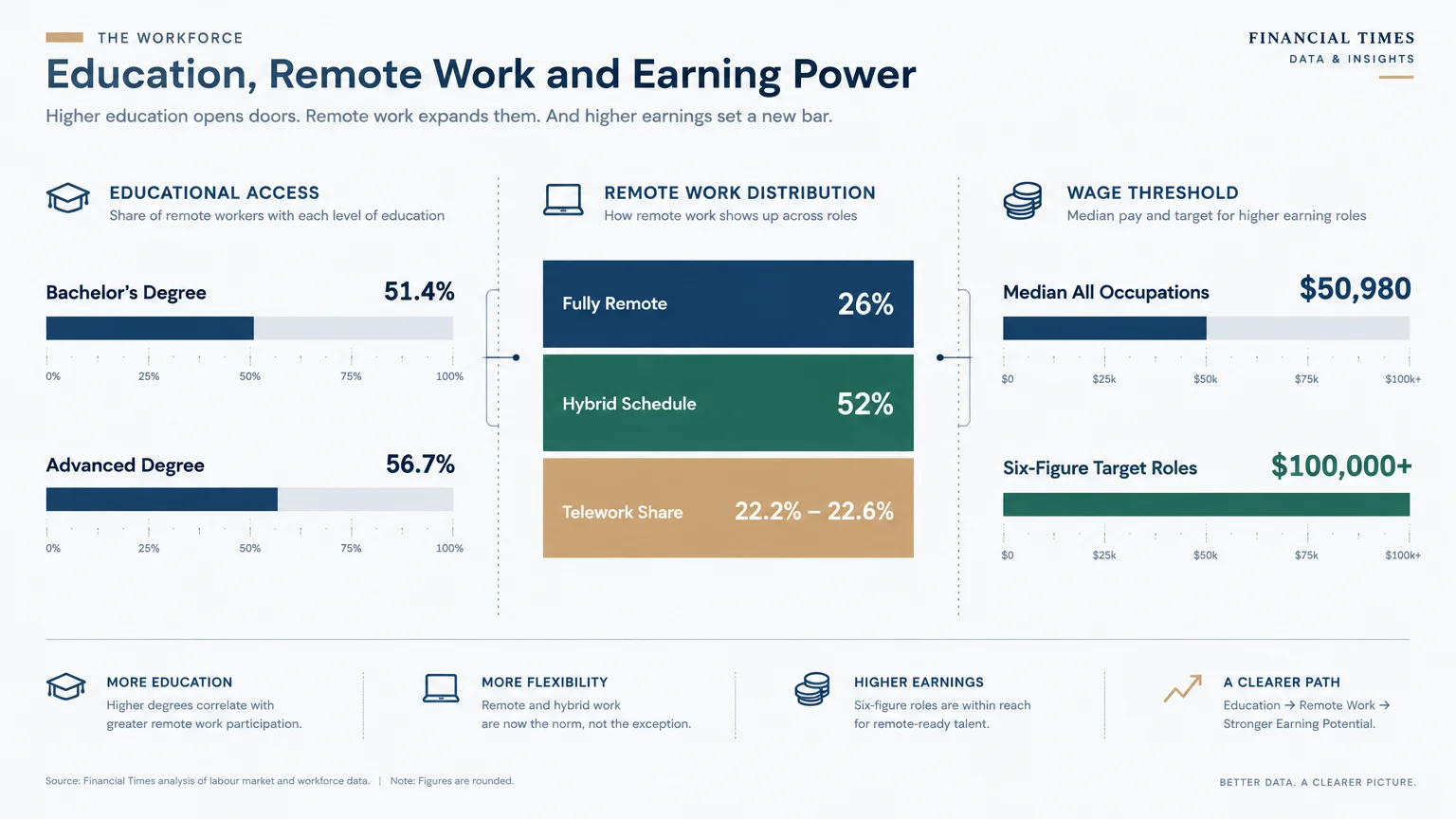
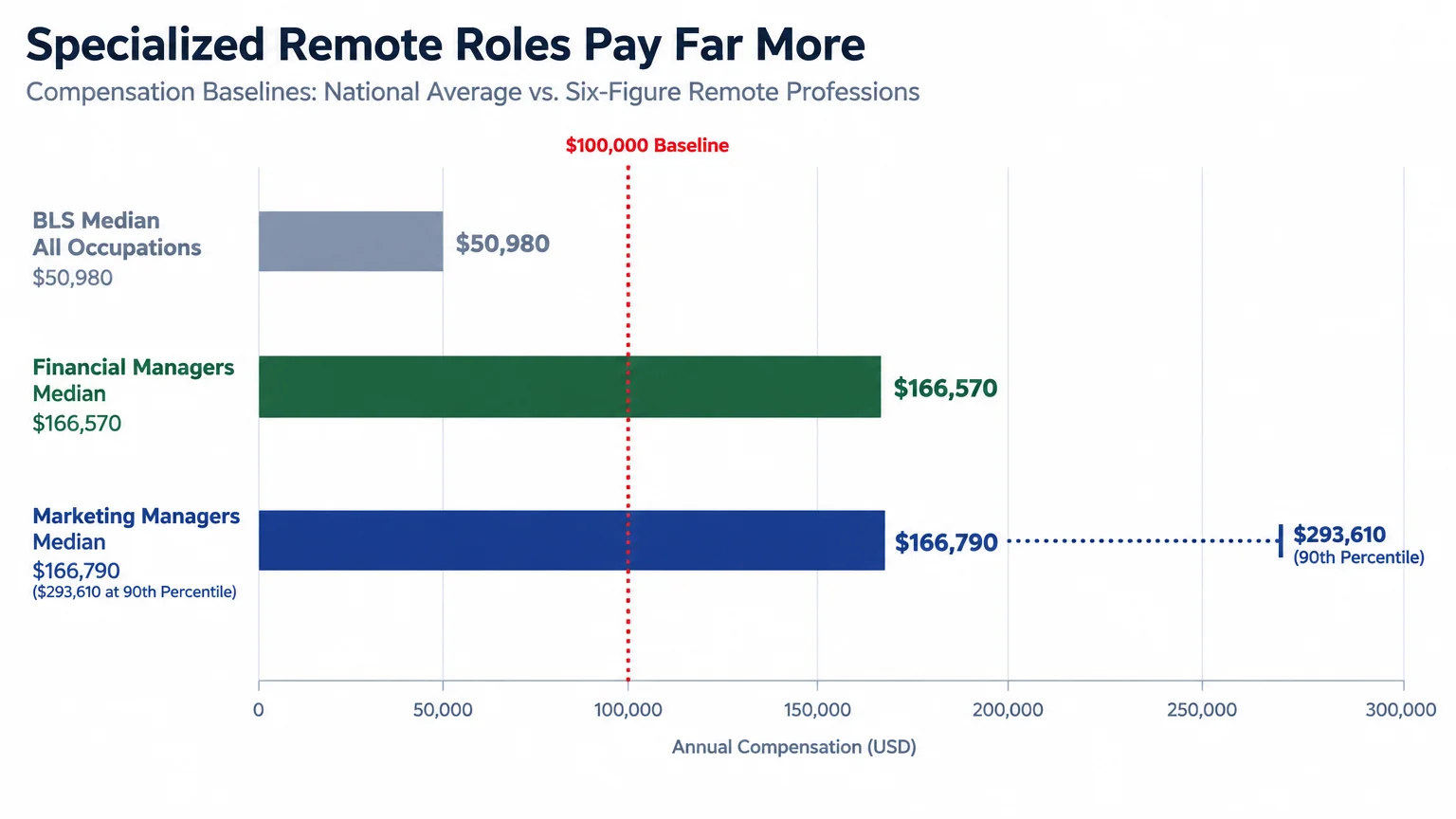
According to the Bureau of Labor Statistics (BLS), the median annual wage across all occupations sits at $50,980. The careers featured here earn more than double that baseline figure.
BLS data shows that 22.2% to 22.6% of American workers telework for pay, with 11.0% working remotely for all their hours. Access correlates strongly with education and technical skill.
In fact, 51.4% of workers with bachelor’s degrees and 56.7% of those with advanced degrees regularly work from home. High-paying firms actively recruit across state lines to secure specialized talent.
Gallup reports that among employees with remote-capable jobs, 26% work completely remotely and 52% maintain hybrid schedules. That creates abundant opportunities for experienced professionals seeking location independence.

1. Marketing Managers: Driving Digital Growth
Marketing managers oversee brand positioning, customer acquisition strategies, and multimillion-dollar promotional budgets. In a digital economy, these professionals direct distributed marketing campaigns from home offices.
BLS wage benchmarks establish the median annual wage for marketing managers at $166,790. Top earners in the 90th percentile command annual salaries surpassing $293,610.
Employment is projected to expand by 6.9% through 2035, producing approximately 34,000 job openings each year. Businesses rely heavily on digital channels to drive revenue across competitive markets.
Day-to-day duties involve coordinating remote creative teams, analyzing web traffic metrics, and managing paid acquisition budgets. You will run virtual campaign reviews and deliver strategic presentations to corporate executives.
Most employers require a bachelor’s degree in marketing, business, or communications, alongside several years of campaign leadership. Mastery of marketing automation tools and performance analytics platforms will position you for premium offers.
High compensation in this role often includes quarterly performance bonuses tied directly to corporate revenue milestones. Managing marketing budgets remotely requires sharp analytical discipline and transparent reporting systems.

2. Financial Managers: Directing Remote Corporate Capital
Financial managers develop long-term fiscal strategies, generate financial forecasts, and safeguard organizational assets. Cloud-based accounting platforms and secure data pipelines make this work fully compatible with remote setups.
The median annual salary for financial managers is $166,570. The sector demonstrates robust long-term stability, with employment projected to expand by 10% through 2035.
This projected growth rate will generate an estimated 65,600 job openings annually across corporate, banking, and healthcare environments. Demand remains intense for leaders who understand liquidity management and capital structures.
Your responsibilities center on analyzing cash flows, overseeing virtual audit preparations, and mitigating operational financial risks. You will steer corporate investments while working with distributed financial analyst teams.
Entering this tier requires a bachelor’s degree in finance, accounting, or economics, often paired with a master’s degree. Professional credentials such as Chartered Financial Analyst (CFA) or Certified Public Accountant (CPA) boost earning power significantly.
Financial managers must also maintain strict compliance with regulatory accounting standards while working outside physical headquarters. Your ability to translate complex financial data into practical strategy drives your market value.

3. Human Resources Managers: Leading Distributed Teams
As organizations hire across diverse geographical regions, human resources managers have become vital operational anchors. They craft remote workplace cultures, build competitive compensation packages, and manage complex cross-border employment policies.
Human resources managers earn a median annual wage of $149,280, according to official BLS wage statistics. The top 10% of high-performing HR executives earn more than $267,810 per year.
The profession is projected to grow by 6% through 2035, opening around 16,800 management positions every year. Companies operating remote or hybrid structures require specialized HR leaders to navigate distributed talent challenges.
In this position, you will oversee digital recruitment pipelines, manage virtual conflict resolution, and implement digital onboarding workflows. You will also oversee compliance with varying state labor regulations and benefit mandates.
Most employers seek a bachelor’s degree in human resources or business administration, supplemented by five or more years of management. Certifications like SHRM-SCP or SPHR prove your readiness to lead complex workforce initiatives.
This role provides immense flexibility because HR software suites operate entirely in the cloud. Your success depends on maintaining strong interpersonal communication across digital collaboration channels.

4. Software Developers: Building Cloud-Native Solutions
Software developers write the code, architecture, and applications that drive global commerce and mobile services. This profession pioneered remote work arrangements and continues to offer unmatched location flexibility.
The BLS reports a median annual wage of $135,980 for software developers across the United States. Elite developers and technical leads in the top 10% earn over $214,670 annually.
Demand for software developers is set to grow by 10% through 2035, well above the national occupational average. Companies in every industry require custom software, secure APIs, and mobile application platforms.
Your daily routine involves writing clean code, reviewing asynchronous pull requests, and participating in virtual sprint retrospectives. You will solve technical debt issues while collaborating across distributed engineering teams.
A bachelor’s degree in computer science or computer engineering remains common, though demonstrated technical skill carries equal weight. Expertise in languages such as Python, Java, TypeScript, and Go ensures competitive positioning in the job market.
Software developers frequently receive equity compensation, restricted stock units (RSUs), and annual performance incentives alongside base salaries. That structure provides accelerated wealth-building potential for disciplined remote engineers.
5. Computer Network Architects: Designing Cloud Infrastructure
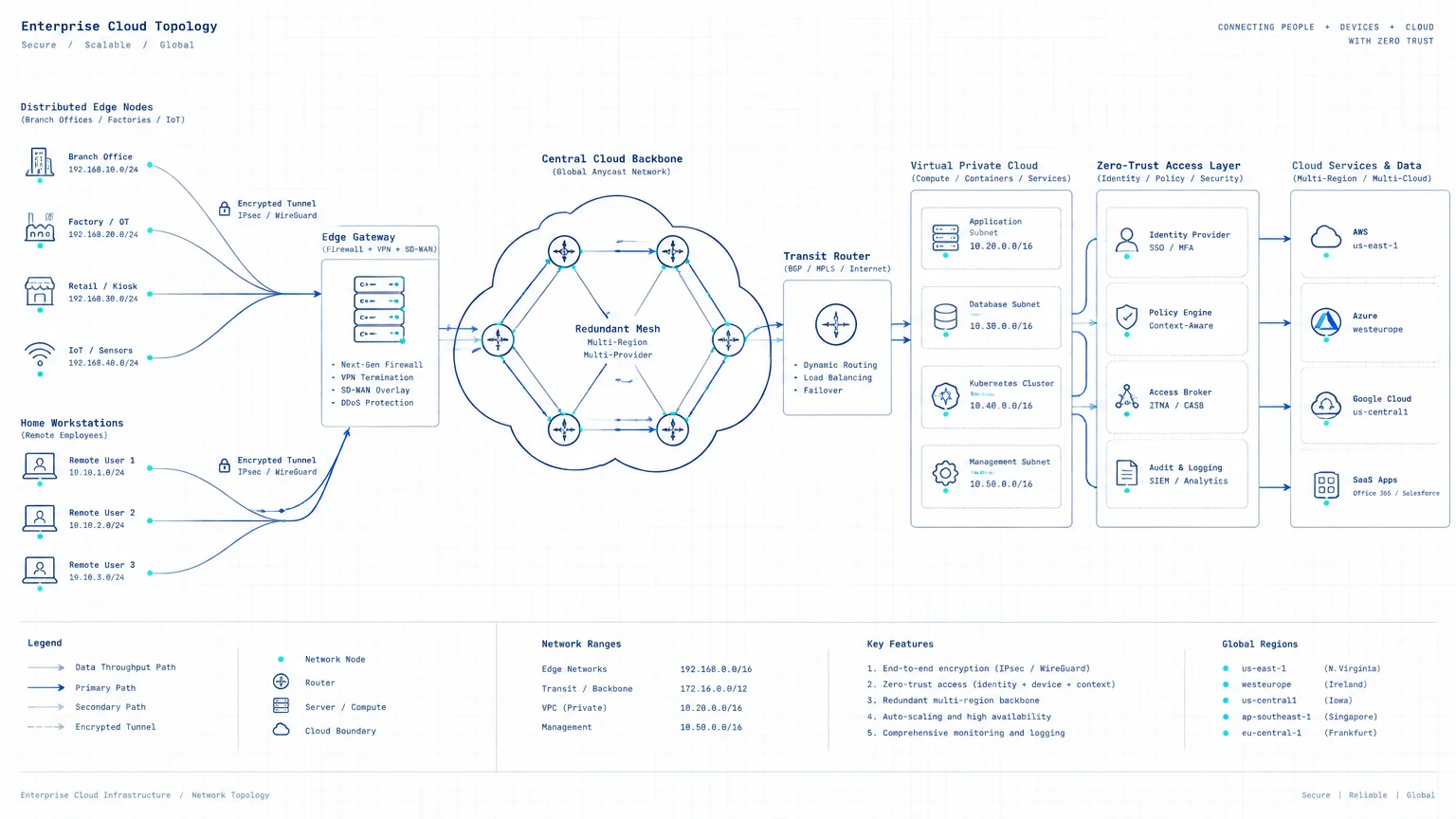
Computer network architects build the secure digital infrastructures that support remote workforces and enterprise cloud networks. They design everything from wide area networks (WANs) to complex multi-cloud environments.
The median annual wage for computer network architects is $134,050. These specialists operate at the strategic layer of information technology, commanding top-tier corporate compensation packages.
Employment for network architects is projected to increase by 8% through 2035, creating roughly 9,600 specialized openings each year. Businesses continually modernize legacy network architectures to support distributed workforces.
Working remotely, you will design redundant cloud topologies, model network traffic patterns, and evaluate cutting-edge hardware solutions. You will produce detailed architectural blueprints that implementation engineers execute.
A bachelor’s degree in computer science, information systems, or engineering is standard for this specialized role. Industry certifications, such as Cisco Certified Network Associate (CCNA) or AWS Solutions Architect, validate your technical credibility.
Organizations rely on network architects to prevent costly downtime and eliminate single points of operational failure. Your strategic designs directly safeguard enterprise productivity and confidential corporate communications.

6. Actuaries: Managing Risk and Financial Probability
Actuaries apply mathematical models and statistical probability to measure financial risk for insurers, pension funds, and investment firms. Their analytical focus makes this profession an exceptional fit for quiet, focused remote work.
BLS data indicates that actuaries earn a median annual wage of $130,000. Senior actuaries in the top 10% of the profession bring home salaries topping $215,100.
Actuarial employment demonstrates steady expansion, fueled by emerging enterprise risks, climate-related property insurance modeling, and complex health benefit policies. Actuarial teams rely heavily on cloud-hosted statistical computing packages.
Your work involves designing pricing models, evaluating liability reserves, and testing catastrophic loss scenarios using historical data. You will draft technical reports and present findings to executive leadership via secure video conferences.
To enter this field, you will need a bachelor’s degree in actuarial science, mathematics, or statistics. Career progression relies on passing a rigorous series of professional credentialing exams administered by the Society of Actuaries (SOA).
Every exam passed typically unlocks automatic salary increases and corporate bonuses, regardless of your physical location. The actuarial path offers unmatched compensation predictability alongside high remote autonomy.

7. Information Security Analysts: Defending Virtual Perimeters
Information security analysts protect corporate data systems, cloud networks, and employee workstations from cyber threats and intrusions. With corporate networks now spread across millions of home offices, cybersecurity professionals are indispensable.
Information security analysts earn a median annual wage of $129,180. Experienced cybersecurity specialists in the 90th percentile collect annual compensation exceeding $199,850.
The BLS projects phenomenal growth for this profession, estimating a 21% surge in employment through 2035. That translates to approximately 14,100 high-paying job openings every single year.
Your responsibilities include monitoring automated intrusion detection feeds, coordinating security patch schedules, and performing vulnerability scans. You will also formulate incident response plans and guide distributed staff on security best practices.
A bachelor’s degree in cybersecurity, computer science, or information assurance provides the standard foundational path. Top remote employers value credentials like the Certified Information Systems Security Professional (CISSP) or CompTIA Security+.
Cybersecurity operations center (SOC) software runs natively in the cloud, enabling complete operational capability from home. Strong analytical reasoning and rapid problem-solving skills make you an invaluable defensive asset.
8. Database Administrators and Architects: Structuring Corporate Data
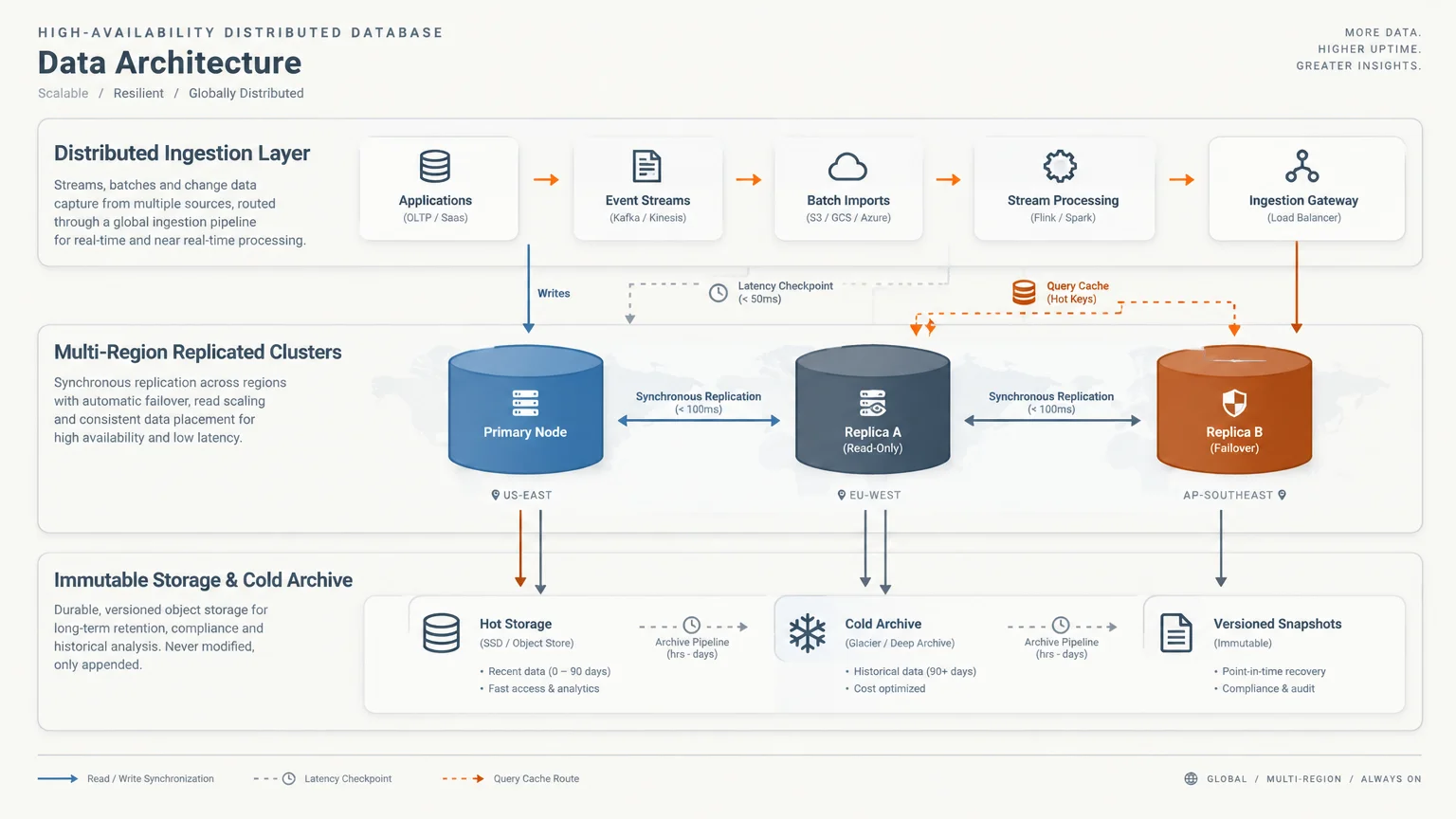
Database administrators and architects build, optimize, and maintain the secure data storage platforms that modern businesses depend on. They guarantee that critical business information remains organized, accessible, and protected from hardware failures.
Database administrators and architects earn a combined median annual wage of $126,760. When broken out specifically, data architects earn a median annual wage of $139,506.
Overall employment in database administration is projected to grow 4% through 2035, while dedicated data architect roles will expand by 9%. Companies generate enormous volumes of transactional information that require disciplined architectural management.
From your home office, you will tune query performance, implement automated cloud backup procedures, and manage database security permissions. You will design data schemas that scale smoothly as customer demands fluctuate.
A bachelor’s degree in information technology, management information systems, or computer science is standard. Mastery of relational database engines like PostgreSQL and enterprise platforms like Snowflake provides a competitive advantage.
Because database management relies on secure command-line interfaces and cloud consoles, remote work is seamless. You can maintain enterprise databases across multiple global availability zones without entering a data center.

9. Data Scientists: Transforming Data Into Strategic Action
Data scientists construct machine learning models, design predictive algorithms, and extract actionable business intelligence from complex unstructured datasets. Their insights shape marketing funnels, supply chain logistics, and executive decision-making.
The median annual wage for data scientists sits at $120,230, according to BLS wage benchmarks. Top practitioners who master advanced artificial intelligence and neural network workflows earn over $199,130 annually.
Data science continues to rank among the fastest-expanding professional fields in the American economy. Organizations across every market sector invest heavily in data-driven automation and predictive analytics tools.
Your remote responsibilities encompass cleaning messy data pipelines, training statistical models, and publishing interactive performance dashboards. You will communicate your experimental findings to non-technical stakeholders through virtual presentations.
Most data science positions require a bachelor’s or master’s degree in data science, mathematics, statistics, or computer science. Proficiency in Python, R, SQL, and distributed computing frameworks like Apache Spark is mandatory.
Collaborative cloud notebook environments make data science inherently suited for remote collaboration. High analytical rigor and clear visual communication skills will elevate your earning ceiling.

10. Computer Systems Analysts: Aligning Remote Technology and Business
Computer systems analysts study an organization’s existing computing workflows and engineer improvements to enhance overall operational efficiency. They bridge the communication gap between business managers and technical development squads.
Computer systems analysts earn a median annual salary of $105,850. Specialized senior analysts in the top 10% take home more than $167,710 each year.
Employment for computer systems analysts is projected to grow by 8% through 2035, generating thousands of openings annually. Firms hire analysts to modernize enterprise resource planning (ERP) platforms and integrate cloud services.
In a home office setting, you will document technical specifications, analyze workflow bottlenecks, and conduct cost-benefit analyses on new software. You will lead cross-functional video meetings to ensure software aligns with organizational objectives.
A bachelor’s degree in computer information systems or business administration provides the standard educational foundation. Candidates who combine strong coding literacy with financial acumen enjoy the strongest bargaining power.
Because this work revolves around research, process mapping, and documentation, it thrives in asynchronous remote environments. You can easily balance independent analytical tasks with virtual stakeholder alignment.
Comparing the Top Six-Figure Remote Careers
Choosing the right remote career requires weighing earning potential against projected industry demand and technical prerequisites. Reviewing these verified figures will help you target the career path that aligns with your strengths.
| Career Field | Median Annual Wage | Projected Growth (2025–2035) | Primary Focus |
|---|---|---|---|
| Marketing Managers | $166,790 | 6.9% | Digital acquisition, brand campaigns, and revenue generation |
| Financial Managers | $166,570 | 10.0% | Capital allocation, investment strategy, and cash flow control |
| Human Resources Managers | $149,280 | 6.0% | Distributed talent strategy, benefits, and workplace policy |
| Software Developers | $135,980 | 10.0% | Application development, cloud systems, and software engineering |
| Computer Network Architects | $134,050 | 8.0% | Enterprise cloud infrastructure and wide area network design |
| Actuaries | $130,000 | Above Average | Statistical risk analysis, insurance modeling, and probability |
| Information Security Analysts | $129,180 | 21.0% | Cyber defense, vulnerability auditing, and intrusion protection |
| Database Architects & DBAs | $126,760 | 4.0% to 9.0% | Data storage architecture, query tuning, and cloud redundancy |
| Data Scientists | $120,230 | Faster Than Average | Machine learning models, predictive modeling, and data pipelines |
| Computer Systems Analysts | $105,850 | 8.0% | Process optimization, business system design, and software planning |
Notice how technology and analytical roles dominate the six-figure remote landscape. Developing deep quantitative capabilities or specialized technical expertise creates durable pricing power in the labor market.

Navigating the Financial Realities of High Remote Incomes
Earning a six-figure salary from home can transform your household finances, but it introduces distinct financial responsibilities. Increased income must be paired with disciplined wealth preservation habits.
“It’s not how much money you make, but how much money you keep, how hard it works for you, and how many generations you keep it for.” — Robert Kiyosaki
Working remotely often lowers your commuting and wardrobe expenses, but home office overhead falls squarely on you. You must budget for reliable enterprise-grade internet, ergonomic equipment, and increased home utility usage.
Earning over $100,000 also pushes your household into higher marginal tax brackets. You should utilize workplace tax-advantaged accounts to lower your current adjusted gross income.
Check the guidelines from the Internal Revenue Service (IRS) to maximize annual contributions to traditional 401(k) plans or health savings accounts (HSAs). Pre-tax contributions shield substantial portions of your earnings from immediate federal income taxation.
Additionally, examine your consumer credit profile as your income expands. The Consumer Financial Protection Bureau (CFPB) offers resources on maintaining clean credit files, which helps secure favorable terms on mortgages and investment financing.

Common Money Traps for High-Earning Remote Workers
High salaries can generate a false sense of perpetual financial invulnerability. Remote professionals frequently encounter specific financial hazards that undermine long-term wealth accumulation.
- Lifestyle Creep: Expanding discretionary spending to match every salary increase slows down long-term savings accumulation.
- Multi-State Tax Surprises: Living in one state while your employer is registered in another can trigger unexpected tax liabilities.
- Misclassifying Employment Status: Accepting 1099 independent contractor arrangements without adjusting rates for self-employment taxes erodes net take-home pay.
- Equipment Underinvestment: Relying on consumer-grade hardware causes operational downtime that damages client trust and performance ratings.
- Overlooking Municipal Taxes: Failing to track local city income taxes when establishing home offices can cause severe penalties during annual filings.
Tax rules regarding physical presence and corporate withholding vary widely across state borders. You must establish which jurisdiction claims tax authority over your remote earnings from day one.
“Do not save what is left after spending, but spend what is left after saving.” — Warren Buffett
Automate your savings allocations so that bonuses and compensation bumps funnel straight into brokerage or retirement accounts. Removing manual friction prevents lifestyle inflation from consuming your six-figure wage gains.

When to Consult a Professional
Reaching a six-figure income level elevates the complexity of your annual financial planning. Navigating multi-state tax obligations or restructuring stock options warrants guidance from certified experts.
You should consult a Certified Public Accountant (CPA) if you relocate while working remotely or operate as an independent 1099 contractor. A tax professional ensures you claim eligible home office deductions legally without triggering audit flags.
Consider partnering with a fee-only Certified Financial Planner (CFP) to design an investment and asset-allocation strategy. Fee-only advisors operate under a fiduciary standard, meaning they must act strictly in your best financial interest.
If you face contract disputes regarding remote work stipends or restrictive non-compete covenants, speak with an employment attorney. Professional legal review protects your intellectual property and future earning mobility.
Frequently Asked Questions
Can you realistically make six figures working from home without a degree?
Yes, especially in software development and cybersecurity, where demonstrated technical competency, open-source contributions, and certifications can outweigh formal diplomas. However, managerial and actuarial paths usually mandate a bachelor’s degree.
Do companies reduce salaries if you move to a lower cost-of-living area?
Some companies adjust base pay using localized cost-of-labor indexes, while others provide flat national pay scales regardless of geography. Always clarify an employer’s geographic compensation policy before planning an interstate move.
How do taxes work if my remote employer is based in another state?
You generally pay income tax to the state where you physically perform the work, though convenience-of-the-employer rules apply in certain states like New York. Consult a CPA to establish correct state withholding and avoid double taxation.
What home office expenses can W-2 remote workers deduct on their taxes?
Under current federal tax laws, W-2 employees cannot claim the federal home office deduction. Only self-employed individuals and 1099 contractors can deduct business-related home office expenses on Schedule C.
Your Next Step Toward a Six-Figure Remote Career
Transitioning into a high-earning remote role requires deliberate skill building and targeted positioning. Identify the career path that matches your current background, audit your credential gaps, and build a digital portfolio showcasing measurable results.
Financial outcomes vary based on individual income, credit history, and circumstances. This article provides general guidance only. Consult a qualified financial planner, CPA, or consumer attorney for advice specific to your situation.
Last updated: October 2026. Rates, benefit amounts, and tax rules change—always verify current details at official sources.