
Retirement income often falls short when inflation surges, but standard day jobs disrupt your daytime freedom. Quiet night side gigs allow you to generate extra cash without fighting traffic, office politics, or daytime interruptions.
Whether you prefer remote night work from your desk or peaceful on-site shifts, off-peak hours offer unmatched autonomy. Nearly one in five older Americans stays in the workforce, with many choosing late hours to preserve their daylight routines.
Selecting the right nighttime role provides dependable cash flow while protecting your retirement lifestyle. Here are twelve quiet side jobs that let you boost your household budget on your own schedule.
Financial Rules and Earnings Limits for Working Retirees
Earning supplemental cash during retirement demands a firm grasp of federal income thresholds. If you collect Social Security before reaching your full retirement age (FRA), wage limits apply directly to your benefits.
According to the Bureau of Labor Statistics (BLS), 19.1% of Americans aged 65 and older participate in the labor force. Knowing the income rules ensures that you keep the money you earn.
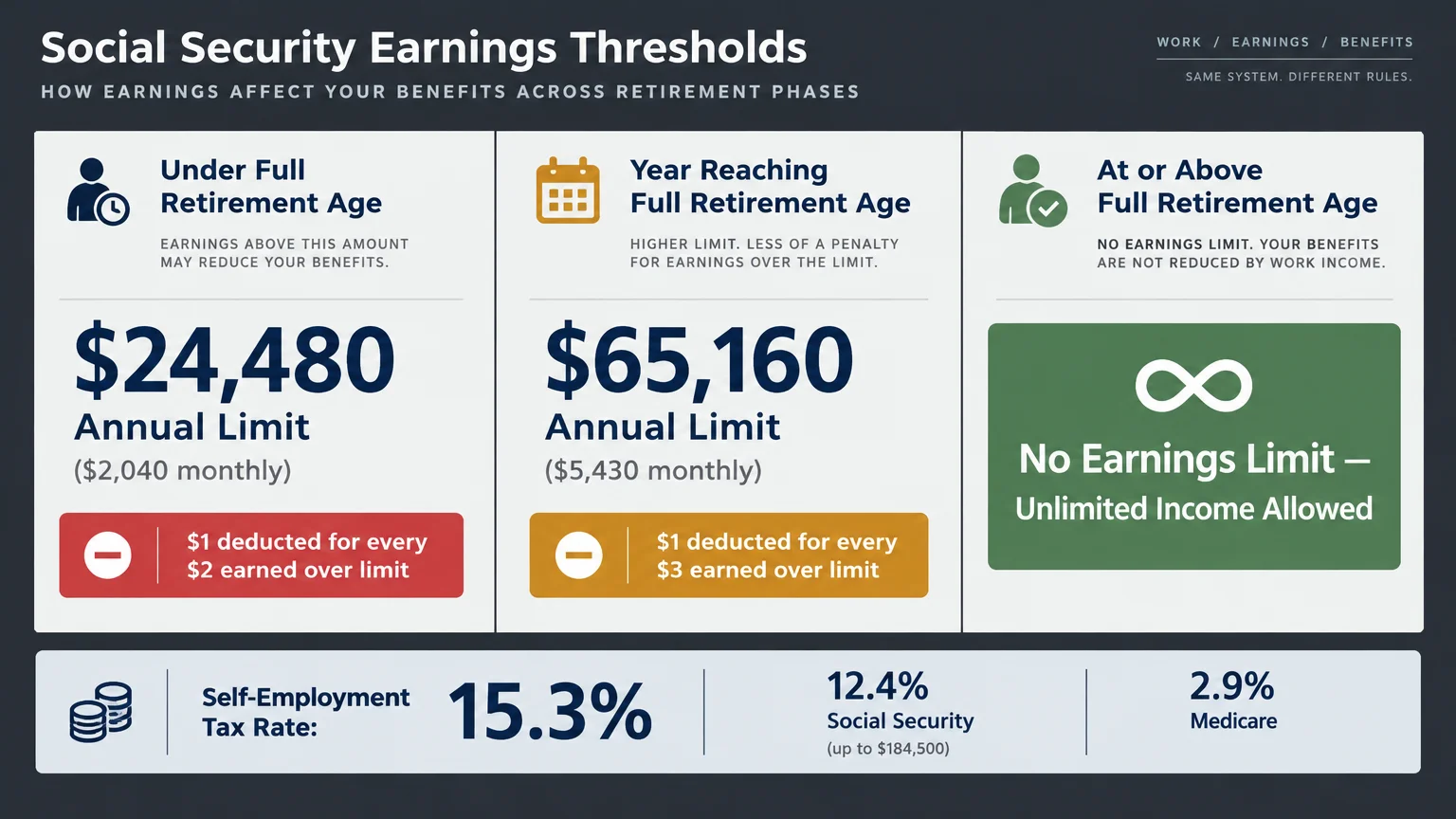
For retirees under full retirement age for all of 2026, the annual earnings threshold sits at $24,480 ($2,040 per month). The Social Security Administration (SSA) deducts $1 in benefits for every $2 earned above that cap.
In the calendar year you reach full retirement age, that annual earnings ceiling increases to $65,160 ($5,430 monthly). During that year, the SSA deducts $1 for every $3 earned above the limit prior to your birth month.
Once you reach full retirement age, all earnings caps vanish. You can earn an unlimited income from overnight side gigs without triggering any benefit reductions.
Tax liability also depends heavily on how your employer classifies your work. If you provide freelance services as an independent contractor, you must prepare for self-employment taxes.
The IRS requires you to pay a 15.3% self-employment tax on net earnings of $400 or more. This rate covers 12.4% for Social Security on earnings up to $184,500, alongside 2.9% for Medicare.
W-2 employees receive distinct tax advantages under recent federal legislation. Under P.L. 119-21, workers can deduct up to $12,500 of qualified overtime pay, or $25,000 if married filing jointly.
The Fair Labor Standards Act does not mandate extra shift differentials for overnight hours. However, federal regulation 29 CFR 778.207 requires employers to include any shift differential in your regular pay rate when computing overtime.
“It’s not how much money you make, but how much money you keep, how hard it works for you, and how many generations you keep it for.” — Robert Kiyosaki

1. Remote Night Proofreading and Editing
Proofreading requires uninterrupted concentration and quiet surroundings. Many digital publishing houses, marketing agencies, and academic authors submit drafts late in the day for overnight review.
You can complete assignments entirely from home using a computer and word-processing software. Clients communicate primarily through email or project dashboards, eliminating telephone interruptions and noisy meetings.
According to the BLS, proofreaders and copy markers earn a national median wage of $24.58 per hour ($51,120 annually). High-volume editors working on technical documents can negotiate higher project rates.
Most proofreading positions operate on a 1099 freelance contract model. You invoice clients per project, per word, or by the hour, giving you full control over your workload.
To begin, build a portfolio on freelance platforms such as Upwork or specialized proofreading agencies. Polish your knowledge of common style manuals, including APA and Chicago, before applying.

2. After-Hours Bookkeeping and Account Reconciliation
Small businesses generate hundreds of receipts, daily sales logs, and vendor invoices every day. Owners rarely have the time to organize their ledgers during normal retail hours.
Remote night bookkeeping allows you to log into accounting software after business hours to reconcile accounts. You match daily transactions, verify bank feeds, and organize expense entries while the business sleeps.
The BLS reports that bookkeeping, accounting, and auditing clerks earn a median wage of $24.36 per hour ($50,670 per year). Experienced clerks who understand payroll and tax filing can charge premium hourly rates.
Because bookkeeping involves private numbers, quiet focus is an asset. You will rarely encounter interruptions from customers or staff members during nighttime shifts.
You can land clients by earning certifications in QuickBooks Online or Xero. Local service businesses and e-commerce stores frequently hire independent bookkeepers for late-night record management.

3. Overnight Remote Customer Chat Representative
Global e-commerce companies, software platforms, and travel services operate around the clock. Rather than staffing noisy call centers, many organizations hire remote chat agents to handle nighttime inquiries.
This work takes place entirely through text-based chat windows and ticketing software. You assist users with account logins, order tracking, and general questions without speaking on the phone.
Customer service representatives earn a national median wage of $21.53 per hour ($44,780 per year), according to BLS data. Companies frequently offer modest shift differentials for overnight hours to maintain continuous coverage.
These roles are usually W-2 employee positions with regular weekly schedules. That structure guarantees predictable earnings, making income tracking simpler under Social Security earnings limits.
Look for remote overnight chat openings on corporate career portals and remote job boards. High typing accuracy and a calm, polite written tone are the primary hiring requirements.

4. Late-Night Online Tutoring and Global ESL Instruction
If you enjoy teaching, international time differences create immediate opportunities. When it is midnight in North America, students across Asia and Europe are starting their school days.
Online tutors teach English as a second language, guide academic subjects, or review test-preparation materials. Lessons take place over video platforms, but the atmosphere remains structured and calm.
The BLS lists a median wage of $20.84 per hour ($43,350 annually) for employed tutors. Independent online tutors frequently set their own rates between $20 and $35 or more per hour.
You can teach single students or small groups based on your comfort level. Established tutoring platforms supply curriculum slides, which sharply reduces lesson-planning time outside your scheduled hours.
To secure assignments, register with platforms like Cambly, Preply, or VIPKid. A bachelor’s degree or a simple TEFL certification helps you qualify for higher-paying international student tiers.

5. Remote Overnight Data Entry Keyer
Data entry remains one of the most reliable side gigs for night owls who value solitude. Medical systems, logistics firms, and financial institutions need raw data transferred into digital records nightly.
You review scanned invoices, shipping manifests, or patient forms and key the details into central software. The work requires zero phone interaction and allows you to listen to audiobooks while working.
The BLS reports that data entry keyers earn a national median wage of $19.88 per hour ($41,340 annually). On freelance platforms like Upwork, general data entry gigs typically range from $10 to $20 hourly.
Because the work relies heavily on speed and precision, employers value dependable adults with sharp attention to detail. Consistent keystroke accuracy prevents costly errors for inventory and billing departments.
Watch out for data entry scams that demand upfront software fees or training payments. Legitimate employers provide software access without charging you a dime.
6. Medical Transcription and Audio Documentation
Healthcare providers dictate patient examination notes, surgical summaries, and discharge instructions throughout their daytime rounds. Medical transcriptionists convert these audio recordings into written medical records overnight.
Doctors need these records transcribed accurately before morning clinics open. Working overnight allows you to process audio files in complete silence from your home office.
According to federal data from the BLS, medical transcriptionists earn a median wage of $19.43 per hour ($40,410 per year). Specialized legal and corporate transcription roles offer comparable compensation levels.
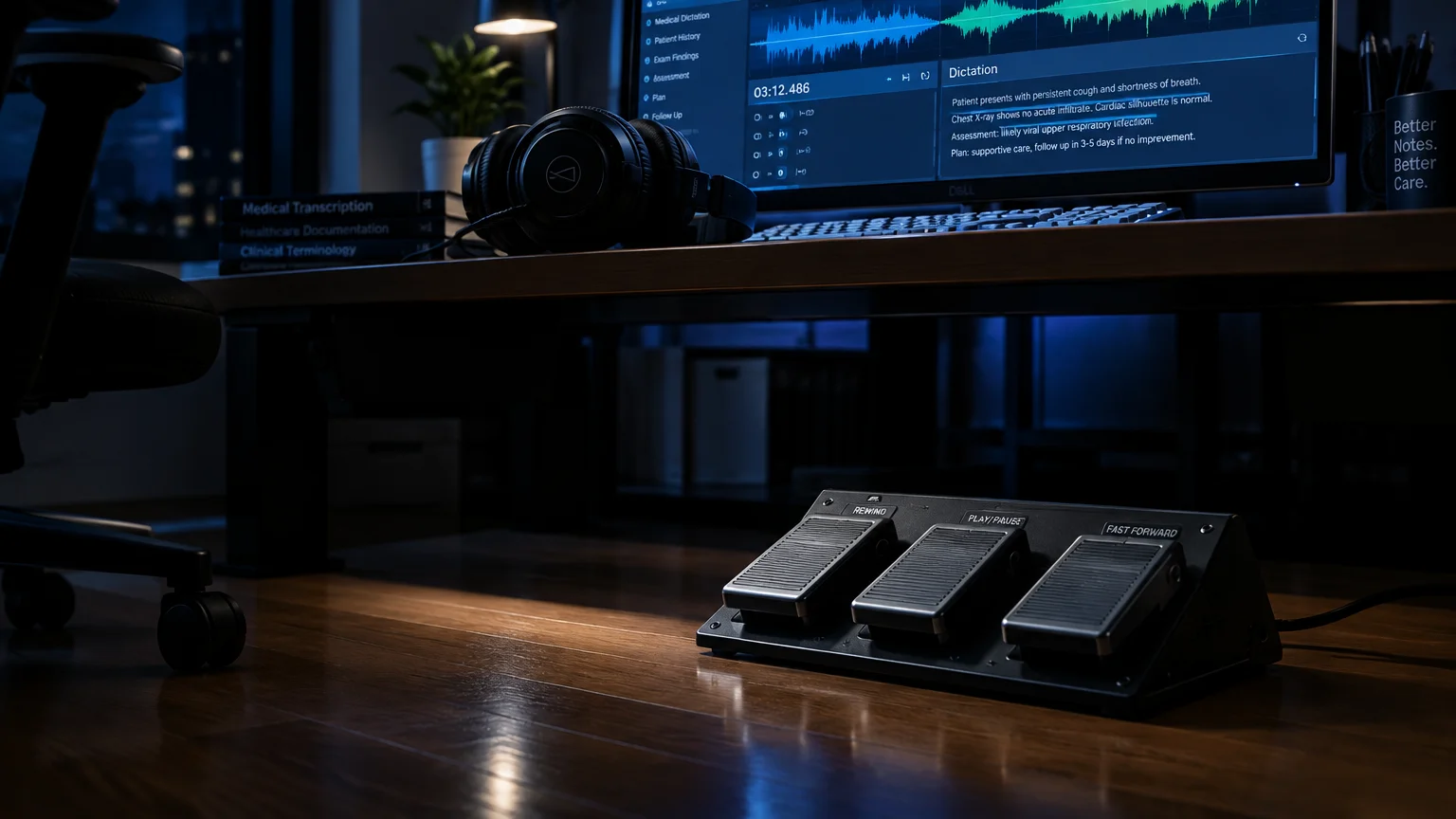
This role requires a dependable computer, noise-canceling headphones, and a specialized foot pedal to control audio playback. You must also understand medical terminology, pharmacology terms, and HIPAA privacy rules.
Many hospitals and transcription agencies hire part-time contractors for evening coverage. Completing an accredited transcription certificate program can help you secure regular hospital contracts.

7. Overnight Emergency Veterinary Clinic Assistant
If you prefer active work away from a desk, twenty-four-hour animal hospitals need overnight support. These facilities treat injured or sick pets long after regular veterinary clinics close.
Overnight clinic assistants monitor resting animals, replace bedding, clean kennels, and restock medical supplies. Aside from occasional emergency admissions, the hospital environment remains quiet through the late hours.
The BLS reports that veterinary assistants and laboratory animal caretakers earn a median wage of $18.34 per hour ($38,150 per year). Emergency clinics often add hourly shift premiums for overnight shifts.
This role offers predictable W-2 wages and avoids the isolation of remote computer work. It also provides meaningful contact with animals without the customer-facing pressure of daytime veterinary clinics.
Contact local emergency veterinary hospitals directly to inquire about overnight assistant roles. Prior experience handling pets or volunteering at animal shelters makes you an attractive applicant.
8. Commercial Facility Security Monitor
Corporate office parks, manufacturing plants, and closed residential properties require security surveillance through the night. These roles prioritize observation and prevention rather than confrontation.
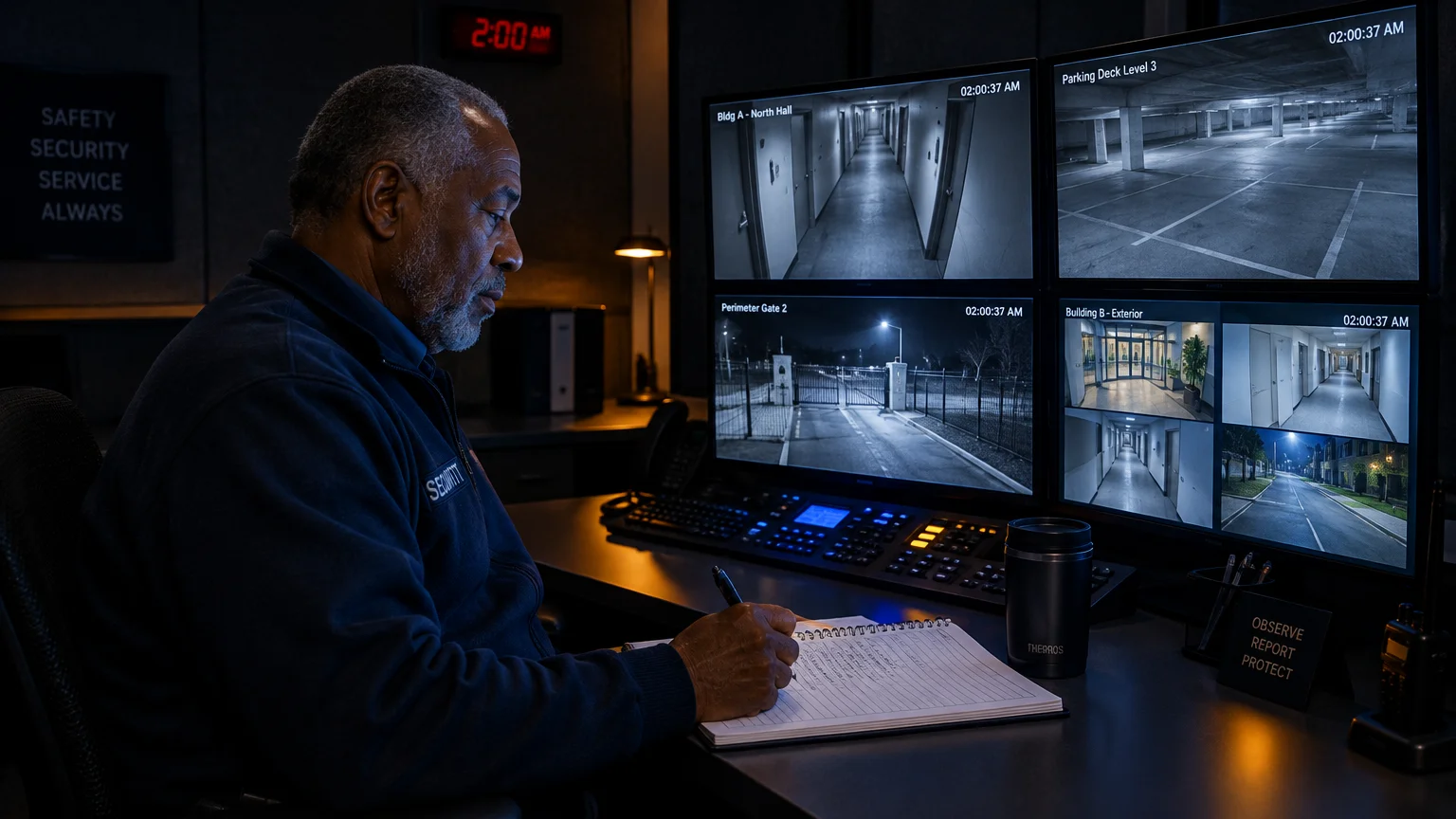
As a night security guard or facility monitor, you sit in a quiet control room monitoring camera feeds. Your primary duties include logging visitor entries, checking locked doors, and recording facility status reports.
Security guards earn a national median wage of $18.28 per hour ($38,020 annually), according to the BLS. Because these facilities are unoccupied, the work environment is exceptionally calm.
Many private security firms hire retirees specifically for their reliability, punctuality, and maturity. Shifts are typically structured as W-2 employment, providing regular weekly hours and steady paychecks.
Most states require security guards to obtain a basic guard card or license. This process involves a background check, fingerprinting, and a brief classroom training session on safety protocol.

9. After-Hours Retail Inventory Stocker
Supermarkets, home improvement warehouses, and department stores restock their sales floors after closing doors to shoppers. Stocking crews work through the night to prepare shelves for morning business.
As an overnight stocker, you unload product pallets, verify shipment counts, and arrange merchandise neatly on shelves. You work alongside a small crew without having to assist customers or handle cash registers.
Stockers and order fillers earn a national median wage of $17.95 per hour ($37,330 per year), according to BLS data. Major retailers often provide small night-shift differentials to compensate for overnight hours.
This role offers physical exercise that keeps you active during retirement. However, you should evaluate your physical condition, as the work involves repetitive lifting, bending, and standing.
Retailers frequently post these overnight positions on their corporate career websites. Shifts commonly run from 10:00 p.m. to 6:00 a.m., allowing you to complete your work before daytime traffic begins.

10. Commercial Night Baker Assistant
Artisan bakeries, local bagel shops, and specialty cafes mix dough and bake goods during pre-dawn hours. This timing guarantees that fresh bread and pastries are warm when morning commuters arrive.
Baker assistants measure ingredients, operate commercial mixers, shape loaves, and monitor baking ovens. The bakery floor is quiet and focused, filled with repetitive, rhythmic tasks rather than chaotic customer interactions.
According to the BLS, commercial bakers earn a median wage of $17.87 per hour ($37,160 annually). Experienced pastry assistants and artisanal dough makers can negotiate higher compensation.
This job appeals to retirees who enjoy culinary work and tactile hobbies. The hours generally start around 2:00 a.m. or 3:00 a.m., leaving your entire afternoon open for personal interests.
Inquire at independent neighborhood bakeries, bagel shops, or wholesale catering kitchens. Passion for baking and a willingness to maintain strict kitchen hygiene are more important than formal culinary degrees.

11. Quiet Commercial Office Janitorial Cleaner
Professional buildings, medical offices, and bank branches contract cleaning crews to service their facilities after workers leave. Janitorial work lets you operate in complete privacy within empty buildings.
Duties include emptying trash bins, vacuuming carpets, sanitizing restrooms, and dusting workstations. You can work at your own pace while listening to podcasts or music through headphones.
Janitors and building cleaners earn a median wage of $17.71 per hour ($36,840 per year), based on BLS statistics. Cleaning multiple small office suites each evening can generate significant monthly revenue.
You can choose between working as a W-2 employee for a commercial cleaning franchise or launching your own independent service. Operating an independent cleaning gig lets you set direct client rates and retain all profits.
If you launch your own business, secure basic general liability insurance to protect against accidental property damage. Approach local dental clinics, accounting firms, and law practices to pitch evening cleaning services.

12. In-Home Overnight Pet Sitter
Pet owners frequently travel for business or vacations and prefer not to board their pets in noisy commercial kennels. They hire overnight pet sitters to sleep in their homes and keep animals comfortable.
Your responsibilities include evening feeding, a short nighttime walk, and staying overnight in the client’s guest room. The hours are peaceful, letting you read, relax, or sleep normally while earning money.
Animal caretakers earn a median wage of $17.00 per hour ($35,360 per year), according to the BLS. Private overnight home sitters often charge flat nightly rates ranging from $50 to $90 or more.
This gig offers a low-stress way to earn cash while enjoying the companionship of domestic pets. Because you stay inside the client’s home, you avoid hard physical labor and industrial environments.
Create a profile on pet-sitting networks such as Rover or Wag to connect with local pet owners. Collecting positive reviews and personal references quickly establishes a dependable base of recurring clients.
Side Gig Compensation and Demands Compared
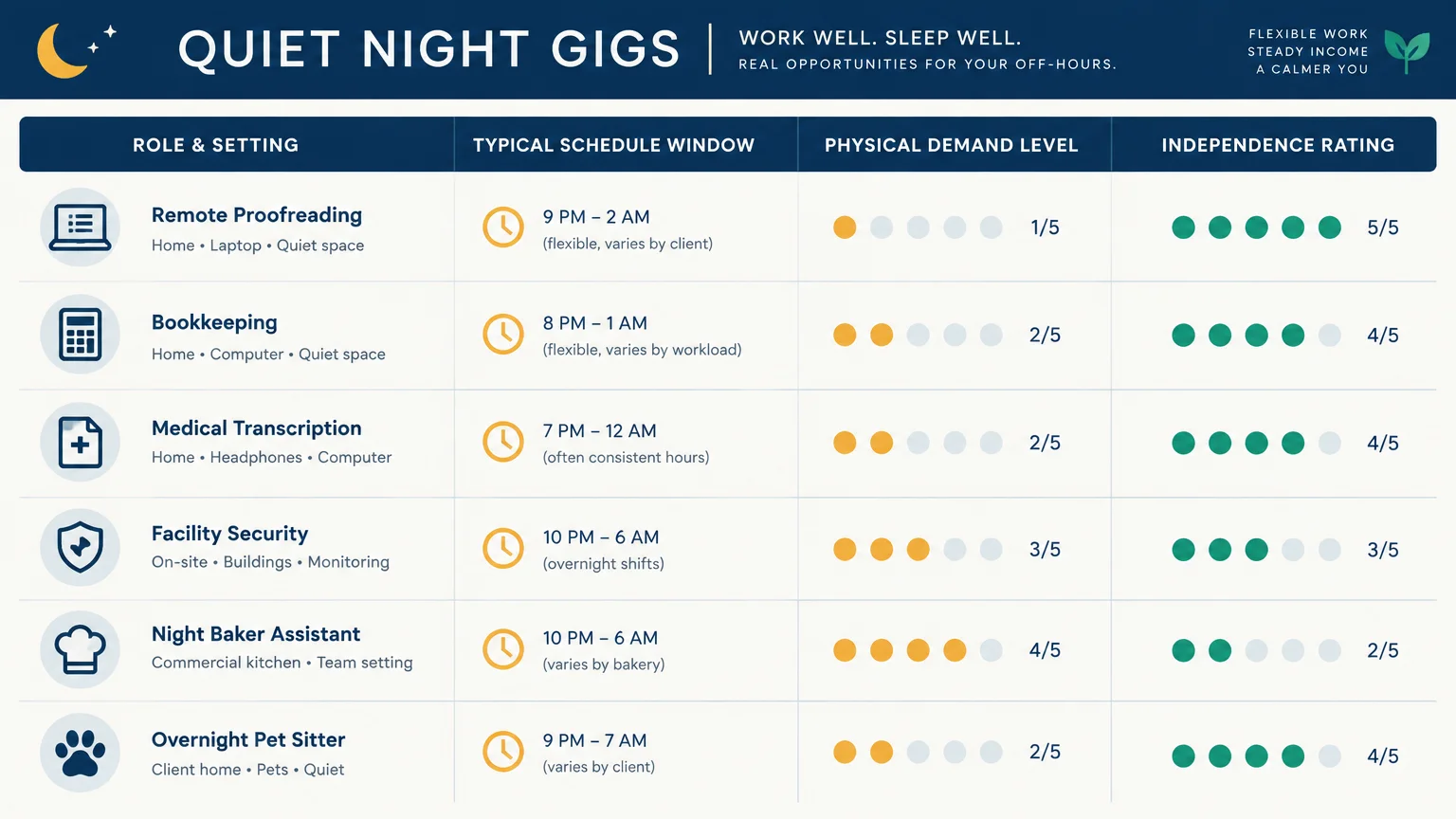
Comparing compensation, work setting, and physical demands helps you pick the best gig for your situation. The table below details national median earnings and job traits for all twelve side gigs.
| Side Gig Role | Work Setting | BLS Median Hourly Pay | Physical Demand | Typical Tax Status |
|---|---|---|---|---|
| Proofreading & Editing | Remote / Home | $24.58 | Sedentary | 1099 Contractor |
| After-Hours Bookkeeping | Remote / Office | $24.36 | Sedentary | 1099 or W-2 |
| Customer Chat Support | Remote / Home | $21.53 | Sedentary | W-2 Employee |
| Online Tutoring / ESL | Remote / Home | $20.84 | Sedentary | 1099 Contractor |
| Data Entry Keyer | Remote / Home | $19.88 | Sedentary | W-2 or 1099 |
| Medical Transcription | Remote / Home | $19.43 | Sedentary | 1099 or W-2 |
| Veterinary Assistant | Emergency Clinic | $18.34 | Moderate | W-2 Employee |
| Facility Security Guard | Commercial Building | $18.28 | Light to Moderate | W-2 Employee |
| Inventory Stocker | Retail Store | $17.95 | Heavy | W-2 Employee |
| Night Baker Assistant | Commercial Bakery | $17.87 | Moderate | W-2 Employee |
| Office Janitorial Cleaner | Commercial Office | $17.71 | Moderate | W-2 or 1099 |
| Overnight Pet Sitter | Client Residence | $17.00 | Light | 1099 Contractor |
National median wages reflect baseline figures from the May 2025 BLS survey. Actual local earnings vary based on regional living costs, specialized skills, and employer shift differential policies.
“A budget is telling your money where to go instead of wondering where it went.” — John C. Maxwell

Common Money Traps for Working Retirees
Earning supplemental cash can create unintended tax consequences if you fail to plan ahead. Avoiding these common financial traps will protect your retirement benefits and overall net income.
The first trap involves breaching the Social Security earnings limit while under full retirement age. Earning more than $24,480 triggers a $1 deduction for every $2 earned above the limit.
The SSA withholds entire monthly checks until they recover the penalty amount. If you plan to earn substantial side income, track your monthly gross wages closely.
A second trap involves ignoring estimated quarterly tax payments on 1099 freelance contracts. The IRS expects self-employed workers to pay income and self-employment taxes throughout the year.
If you owe more than $1,000 in federal taxes at filing time, the IRS assesses underpayment penalties. Set aside 25% to 30% of every freelance payment in a high-yield savings account for quarterly estimated taxes.
A third trap is failing to account for sleep deprivation and healthcare costs. Working overnight hours can disrupt your circadian rhythm, leading to fatigue, health issues, or prescription adjustments.

When to Consult a Professional
Managing retirement distributions alongside side income requires careful tax and benefits planning. Consulting a qualified professional prevents expensive mistakes with federal benefit programs.
Consult a certified public accountant (CPA) if your combined income pushes you into a higher federal income tax bracket. A CPA can also help you calculate quarterly estimated taxes and identify legitimate home-office deductions.
Speak with a fee-only financial planner if your extra earnings threaten to trigger Medicare Part B and Part D premium surcharges. Higher income brackets can increase your monthly healthcare costs through the Income-Related Monthly Adjustment Amount (IRMAA).
Frequently Asked Questions
Will working overnight side gigs reduce my Social Security benefits?
Your benefits will only decrease if you are younger than full retirement age and earn more than the annual limit. For retirees under full retirement age all year, that earnings limit is $24,480.
If you have already reached full retirement age, you can earn unlimited income without benefit deductions. The SSA recalculates your lifetime earnings annually, which could even increase your future benefit checks.
Are private employers required to pay extra shift differentials for night work?
No, the federal Fair Labor Standards Act does not require employers to pay extra pay for overnight hours. Extra pay for evening or overnight work is entirely a matter of agreement between employer and employee.
However, under 29 CFR 778.207, if an employer pays a shift differential, they must include it in your regular pay rate when computing overtime. That rule ensures your overtime pay reflects your true hourly earnings.
How does self-employment tax apply to remote night freelancing?
When you work as a 1099 independent contractor, clients do not withhold payroll taxes from your payments. If your net self-employment earnings reach $400 or more, you owe the 15.3% self-employment tax.
This tax consists of 12.4% for Social Security up to $184,500 and 2.9% for Medicare. You report this income on Schedule C and calculate the tax on Schedule SE with your annual tax return.
Can I deduct overtime wages earned on night shifts from my federal taxes?
Yes, under P.L. 119-21, eligible workers can deduct up to $12,500 of qualified overtime compensation on their federal income tax return. Married couples filing jointly can deduct up to $25,000 of overtime pay.
This deduction applies specifically to FLSA-qualified overtime pay earned through W-2 employment. Review your year-end W-2 wage statements to confirm that your employer correctly documented your overtime earnings.
Next Steps for Night Owls
Choose one side gig from this list that matches your current physical stamina, technical tools, and quiet preferences. Review your annual earnings against the Social Security earnings threshold before accepting your first paid shift.
Open a separate bank account to hold tax reserves and track business-related expenses before your first paycheck arrives. Consistent financial management ensures that your nighttime earnings build genuine wealth and security.
This article is for informational purposes only and does not constitute financial, legal, or tax advice. Rates, benefit amounts, and tax rules change regularly—verify current details with the relevant agency or a licensed professional.
Last updated: October 2026. Rates, benefit amounts, and tax rules change—always verify current details at official sources.